
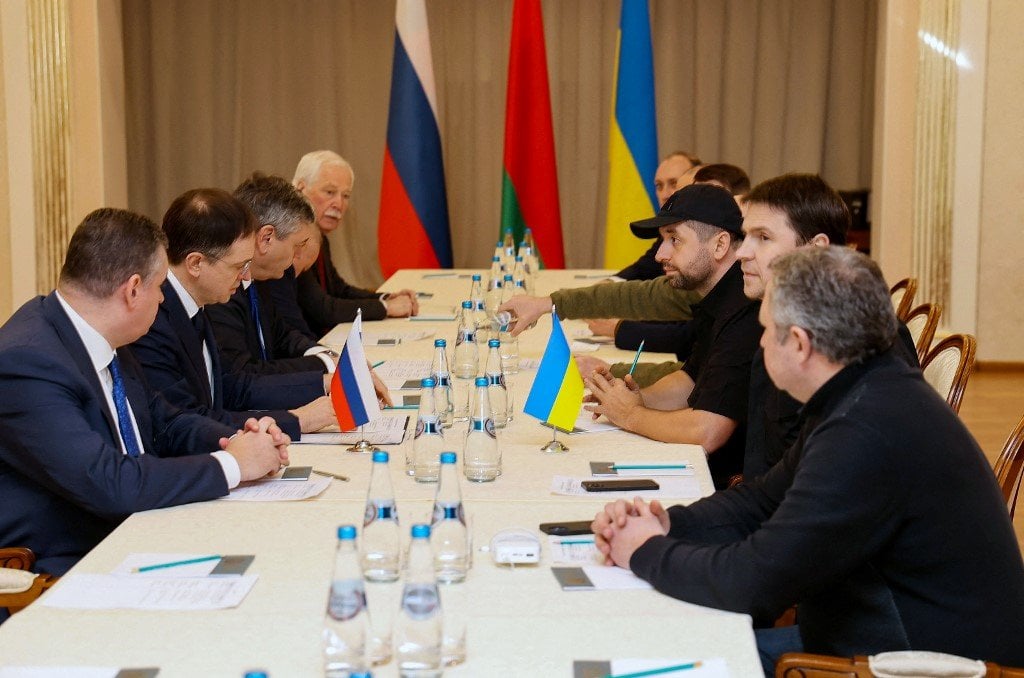
Anatol Lieven: Ukraine – What Russia wants, what the West can do

Anatol Lieven

March 7, 2022

For those who understand Moscow’s establishment and view of their country’s vital interests, none of this should be a surprise.

The illegal Russian invasion of Ukraine has shocked the West and many ordinary Russians. But for those who understand the Russian establishment and its view of Russia’s vital interests, it should not have come as a complete surprise.

Since NATO expansion first began in the mid-1990s, Russian officials and other establishment figures have been warning that if the West tried to turn Ukraine into an ally against Russia, this would lead to confrontation and quite possibly war. As the great international relations scholar Hans Morgenthau taught, to craft a viable U.S. policy towards other major states, it is essential to understand from within how they see the world and their country’s place in it. Today, we need to do this if we are to craft a policy towards Russia that will bring about an end to this war, a Russian withdrawal from Ukraine, and a restoration of Ukrainian sovereignty.

Originally posted on Responsible Statecraft’s official website on February 25, 2022 here

The foreign and security establishments of all major states operate on the basis of what might be called doctrines concerning their countries’ vital interests and place in the world. The Russian establishment believes that Moscow must be one pole of a multipolar world. If you do not believe in that, you do not belong to the Russian establishment, just as if you do not believe in U.S. global primacy, you do not belong to the U.S. establishment.

Ukraine is critical to that vision. A Ukraine hostile to Russia and strongly linked to the West negates any possibility of Russia leading a reasonably strong regional bloc of states. From this point of view, most Western observers have not understood just how severe was the defeat suffered by Russia when Ukraine experienced the revolution of 2014 and rejected membership of the Eurasian Union. Seizing part of the Donbas, and even annexing Crimea, were very miserable consolation prizes by comparison.

Ukraine is by far the biggest former Soviet republic apart from Russia, with 44 million people to Kazakhstan’s 18 million and Belarus’ nine million. Ukraine has by far the largest Russian ethnic minority outside Russia. Without a largely Russian-speaking Ukraine, Russia loses most of its status as an international language. Without Ukrainian membership, the Eurasian Union is a pathetic shadow. At the very least, the Russian establishment — going back to Boris Yeltsin’s administration in the 1990s — has been absolutely determined that Ukraine should not join an anti-Russian alliance.

Russia’s interest in Ukraine however goes far beyond the economic and strategic. As emphasized in Putin’s articles and speeches, Russians see their own cultural and historical identity as closely bound up with that of Ukraine. This owes something to the origins of the Russian state and Orthodox religion in Kievan Rus, and something to the role of Ukrainians in modern Russian culture, as symbolized by Nikolai Gogol (Mykola Hohol in Ukrainian), a great Ukrainian writer who identified with the Russian Empire and wrote in Russian. 

This factor imparts a strong element of historically-based nationalism to the Russian and Putin attitude towards Ukraine. There is some understanding in Russia of why Ukrainians would want their own state, but almost none of why Ukrainians would want to define that state against Russia. Hence the Russian demonology of “Nazism” and “U.S. manipulation.” In other words, while Russian officials use the term “Monroe Doctrine” to explain and justify their desire to prevent Ukraine joining a hostile alliance, their interest in that country has an emotional force wholly absent from U.S. attitudes to Mexico.

Whether Russia would have accepted a Western offer of compromise (if one had been made) involving a moratorium on NATO expansion and mutual arms limitation, we will probably never know, and this question is now academic. L’appetit vient en manger (“appetite grows with eating”) as the French say, and the more of Ukraine Russia now occupies, the more ambitious its goals in Ukraine are likely to be. 

The point is, however, that these goals are now overwhelmingly focused on Ukraine. Nobody in Moscow now appears to believe that there is any possibility of an agreement with NATO on conventional arms limitation, or on some form of new European security architecture. The most that can be hoped for by Moscow is a Cold War-style treaty on nuclear arms reductions, and perhaps some agreement on cybersecurity. When the Russian government decided to invade Ukraine, it chose to accept that relations with the West would be basically hostile for a long time to come.

The Russian government aims to establish a Russian sphere of influence, not a new version of the Soviet Union. Putin has stated that “whoever does not miss the Soviet Union has no heart, but whoever wants it back has no brain.” The Eurasian Union falls vastly far short of the USSR. Kazakhstan for example is a member, and has always sought good relations with Russia. But Kazakh officials have stated publicly and repeatedly that it is not some form of super-state; and Kazakhstan has repeatedly refused to follow Russia’s lead in international affairs — including most recently by refusing to recognize the independence of the Donbas republics. The Eurasian Union and Collective Security Treaty Organization (CSTO) are loose partnerships.

“Whoever does not miss the Soviet Union has no heart, but whoever wants it back has no brain.” – Putin

As for Russian domination of Eastern Europe beyond the borders of the former USSR, this is vastly beyond Russia’s ambitions and capability. Not merely would it involve Russia in an attack on NATO, with all the hideous risks that this would entail (whereas the United States and NATO have declared explicitly that they will not fight to defend Ukraine); but it would require Russia to subjugate and hold down Poland. Russian officials and commentators with whom I have raised this possibility have simply burst out laughing at the absurdity of the idea. 

Concerning Ukraine, there are two possible paths for Russia to take. Which one will be chosen will become apparent in the next days, or possibly hours. The first would be an agreement with the existing Ukrainian government (as publicly demanded by Russia immediately after the invasion) that would guarantee Ukrainian neutrality and the exclusion of Western armaments. Moscow will almost certainly also demand that the Donbas republics, and any other Russian-speaking areas occupied by the Russian army, receive fully autonomous status within a federal Ukraine. Moscow would likely present this to the West as an expanded version of the Minsk II agreement of 2015 on autonomy for the Donbas within Ukraine.

The second path would be for Russia to occupy Kiev itself, replace the Ukrainian government with Russian puppets, and draw up a new Ukrainian federal constitution by Russian diktat. At this point, Moscow might also try to force its Ukrainian client state to join the Eurasian Union and CSTO. This would be a vastly more dangerous project for Russia. 

Unlike local governments in the Russian-speaking areas, which Moscow at least hopes could gain a measure of local legitimacy, a puppet government in Kiev and the Ukrainian ethnic heartland would only survive with the permanent presence of a Russian army. The government and army would face permanent mass unrest and violent resistance,which it only could quell through savage repression.

This would be atrocious for the people of Ukraine, and very dangerous for NATO. If the United States decided to arm a guerrilla war in Ukraine, such a force could only be supplied through Poland — which Russia then might directly target, which likely would expand and escalate the conflict dramatically. Furthermore, this guerrilla war would inevitably turn into an ethnic conflict of Ukrainian nationalists against the local Russian population, making any long-term unity of Ukraine next to impossible and probably lead to the eventual Russian annexation of the Russian-speaking areas of Ukraine.

The purpose of Western sanctions against Russia should be to press Russia to withdraw its army from Ukraine and restore Ukrainian sovereignty and territorial integrity (minus Crimea). This however will inevitably now require some form of compromise with Russia on Ukrainian neutrality (but not membership of the Eurasian Union) and federalism. Short of the military defeat of the Russian army or the collapse of the Russian state, it appears impossible now to achieve unconditional Russian withdrawal from Ukraine. 

The alternative is for the United States to use sanctions not to change Russian policy in Ukraine, but to overthrow the regime in Russia itself by crippling the Russian state and economy. This would be a vastly more ambitious and dangerous project, and probably futile. The U.S. use of sanctions to bring about regime change has been a universal and unmitigated failure – in Cuba, Venezuela, Iraq, Iran and North Korea. 

Russia is much stronger than those states, and will probably receive much greater help from China, whose economy has now overtaken that of the United States. Such a strategy would sooner or later also open up a gulf between the United States and its European allies, involving as it would the indefinite sponsorship of an armed struggle in Ukraine, with all the consequences of that for Europe.

Above all, Western sanctions should be intended to help the Ukrainian people. The latter strategy of guerilla warfare would instead instrumentalize Ukrainians as a weapon to weaken Russia and recall some of the worst U.S. actions of the Cold War, when Washington supported local insurgencies (sometimes led by evil figures like Jonas Savimbi and extremist ideologies like that of the Afghan Mujahedin), with no regard whatsoever for the interests of local peoples. 

Outside Europe, the Cold War was waged over the corpses of innumerable Africans, Asians and Central Americans, and there was often no moral difference at all between the “pro-Western” and “pro-Soviet forces.” For America to go down this path would be a betrayal of those very Ukrainians whom the U.S. administration says that it wants to help.

Please support TFF’s work for peace through research and public education. We are all-volunteer, people-financed and do not accept money from governments or corporations. In other words, one of the very last free research think tanks in this world – and for a noble purpose: Peace by peaceful – intelligent – means. Thanks!
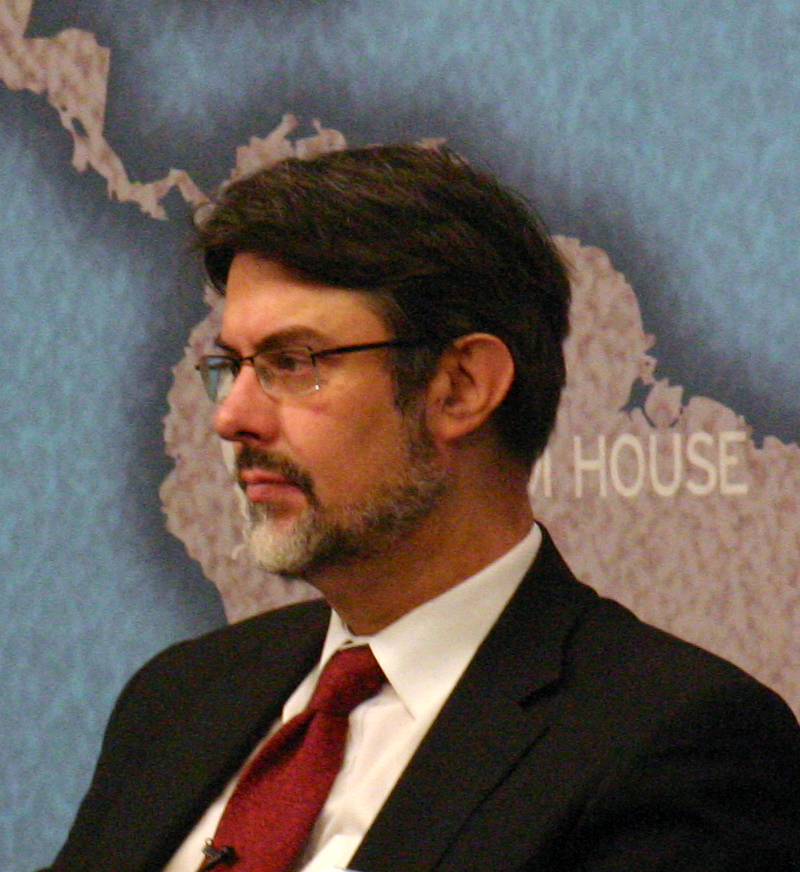
Anatol Lieven is senior research fellow on Russia and Europe at the Quincy Institute for Responsible Statecraft. He was formerly a professor at Georgetown University in Qatar  and in the War Studies Department of King’s College London. He is a member of the academic board of the Valdai discussion club in Russia, and a member of the advisory committee of the South Asia Department of the British Foreign and Commonwealth Office. He holds a BA and PhD from Cambridge University in England.
More about Lieven on Wikipedia


Related Posts

The MSC’s closed groupthink militarism offers only one prescription — more weapons — even as record military expenditures, squeezed from taxpayers in economic crisis, destroy diplomacy and drive escalation to the highest war risks in decades. Jan Oberg TFF director February 13, 2026 From Dialogue Forum to Militarised Ritual For decades, the Munich Security Conference (MSC) – which opened today and runs till Sunday – was one of the few places where adversaries could meet without theatrics. Founded in 1963 as the Wehrkundetagung, it served as a discreet Cold War dialogue forum between NATO and the Warsaw Pact. Even at moments of high tension, Soviet and later Russian representatives were present, and Munich allowed uncomfortable messages to be delivered directly rather than through press releases or military manoeuvres. That era has vanished. The MSC has become something entirely different: a €13–20 million annual gathering of a closed Western security elite, a polished meeting...
PART 2 — Diplomacy, Law and Nonviolent Power By Jan ObergTFF co-founder and director January 26, 2026 This is the second of four TFF-created idea portfolios designed to curb the global reach of the United States and, in both the short and long term, help catalyse a worldwide nonviolent resistance to what many observers describe as the Trump administration’s uniquely confrontational, destructive and world-threatening policies. These portfolios outline what governments and citizens across the world can do through dynamic diplomacy, creative initiatives, and strictly nonviolent means. They are typical TFF works in that we do not only tell what the problem is and how bad it will go – as 90+% of all commentators, experts and scholars do – we tell what we think can be done, inviting you to think of what you think you can do. It seems painfully clear to me that the current political dynamics in Washington increasingly resemble the most dangerous...
TFF’s comprehensive proposal for dialogue about true peace in Ukraine is due in a day or two Jan Oberg November 20, 2025 What is being whispered through diplomatic corridors today is not peace, but quackery. The alleged 28‑point plan drafted in Washington and Moscow is mentioned as a solution to the Ukraine war. It is being negotiated by US businessman, real estate developer and Trump ally, Steve Witkoff, and by Kirill Dmitriev, who is CEO of the Russian Direct Investment Fund and a close ally of Putin, according to India’s Economic Times. For presumably good reasons, their education, qualifications and experience in international conflict analysis and peace-making remain untold. They look like surgeons who have never opened a medical textbook. It is nothing more than a mirage: a framework of concessions imposed on Ukraine’s citizens, negotiated without Kyiv, and excluding Europe. Like Gaza, it promises “peace” while institutionalising injustice. If half of what is available about...

Recent Articles

Below are TFF-related media mentions, comments, videos and social media posts published elsewhere but not on this homepage. We happen to catch and list only a fraction. Regarding video comments and debates, we recommend that you go to the TFF Video Channel on Substack where many of them are reproduced. Jan Oberg is a contributor to China Daily – 52 million daily clicks – and Global Times, CGTN and CCTV (the national television), China Investment, Xinhua News Agency and several others. Articles and videos on these media very often multiply into countless Chinese (and Western media) that re-post them from these main media. Thanks to The China Academy, his analyses, interviews and comments are frequently posted on YouTube channels such as Thinkers Forum and Wave Media. These videos are often re-posted on Bilibili (China’s YouTube), the China Content Center on TikTok, and on the Chinese edition of TikTok, Douyin.com. This means reaching hundreds of millions of viewers worldwide over a year. While there are too many to catch on all these...
Jan Oberg TFF director October 13, 2026 According to Alfred Nobel’s will, the Nobel Peace Prize shall be awarded: ”to the person who has done the most or best to advance fellowship among nations, the abolition or reduction of standing armies, and the establishment and promotion of peace congresses.” Further down, he also expresses how the prize for the “champions of peace” shall be decided: “that for champions of peace by a committee of five persons to be selected by the Norwegian Storting. Alfred Nobel’s will is remarkably short and clear. But few seem to have read it. Nobel did not say that the committee itself should consist of members of parliament. He entrusted the Storting with appointing five persons. In principle, it could have selected diplomats, mediators, peace researchers, conflict-resolution specialists, or other individuals with recognised expertise in matters of peace from around the world. Instead, the Storting gradually...
The Quest for Humane Survival Richard Falk Professor emeritus, Princeton UniversityTFF Associate since 1986October 12, 2026 After decades of teaching and writing about international law in academic frameworks that were not institutionally situated within law school environments—at Princeton and the University of California, Santa Barbara—I found myself most receptive to the TWAIL outlook. It has been especially illuminating in clarifying the extent to which international law evolved as a dialogical critique of Europe’s efforts to legitimize its colonial undertakings. In particular, TWAIL has exposed how international law has functioned to legalize the subjugation of Third World peoples, securing conditions for exploitative investment and trade relations, the coercive enforcement of public debts, and an ideology of cultural superiority. TWAIL’s exposure of these economic legacies of colonialism has influenced my understanding of the history and development of international law, broadly conceived, as an ideological project of the Western sub-system of the world...

TFF on Substack

Discover and subscribe to more peace materials on TFF Substack

Most Popular

Below are TFF-related media mentions, comments, videos and social media posts published elsewhere but not on this homepage. We happen to catch and list only a fraction. Regarding video comments and debates, we recommend that you go to the TFF Video Channel on Substack where many of them are reproduced. Jan Oberg is a contributor to China Daily – 52 million daily clicks – and Global Times, CGTN and CCTV (the national television), China Investment, Xinhua News Agency and several others. Articles and videos on these media very often multiply into countless Chinese (and Western media) that re-post them from these main media. Thanks to The China Academy, his analyses, interviews and comments are frequently posted on YouTube channels such as Thinkers Forum and Wave Media. These videos are often re-posted on Bilibili (China’s YouTube), the China Content Center on TikTok, and on the Chinese edition of TikTok, Douyin.com. This means reaching hundreds of millions of viewers worldwide over a year. While there are too many to catch on all these...
Jan Oberg TFF director October 13, 2026 According to Alfred Nobel’s will, the Nobel Peace Prize shall be awarded: ”to the person who has done the most or best to advance fellowship among nations, the abolition or reduction of standing armies, and the establishment and promotion of peace congresses.” Further down, he also expresses how the prize for the “champions of peace” shall be decided: “that for champions of peace by a committee of five persons to be selected by the Norwegian Storting. Alfred Nobel’s will is remarkably short and clear. But few seem to have read it. Nobel did not say that the committee itself should consist of members of parliament. He entrusted the Storting with appointing five persons. In principle, it could have selected diplomats, mediators, peace researchers, conflict-resolution specialists, or other individuals with recognised expertise in matters of peace from around the world. Instead, the Storting gradually...
The Quest for Humane Survival Richard Falk Professor emeritus, Princeton UniversityTFF Associate since 1986October 12, 2026 After decades of teaching and writing about international law in academic frameworks that were not institutionally situated within law school environments—at Princeton and the University of California, Santa Barbara—I found myself most receptive to the TWAIL outlook. It has been especially illuminating in clarifying the extent to which international law evolved as a dialogical critique of Europe’s efforts to legitimize its colonial undertakings. In particular, TWAIL has exposed how international law has functioned to legalize the subjugation of Third World peoples, securing conditions for exploitative investment and trade relations, the coercive enforcement of public debts, and an ideology of cultural superiority. TWAIL’s exposure of these economic legacies of colonialism has influenced my understanding of the history and development of international law, broadly conceived, as an ideological project of the Western sub-system of the world...
Read More
girl-5894831_1280
Below are TFF-related media mentions, comments, videos and social media posts published elsewhere but not on this homepage. We happen to catch and list only a fraction. Regarding video comments and debates, we recommend that you go to the TFF Video Channel on Substack where many of them are reproduced. Jan Oberg is a contributor to China Daily – 52 million daily clicks – and Global Times, CGTN and CCTV (the national television), China Investment, Xinhua News Agency and several others. Articles and videos on these media very often multiply into countless Chinese (and Western media) that re-post them from these main media. Thanks to The China Academy, his analyses, interviews and comments are frequently posted on YouTube channels such as Thinkers Forum and Wave Media. These videos are often re-posted on Bilibili (China’s YouTube), the China Content Center on TikTok, and on the Chinese edition of TikTok, Douyin.com. This means reaching hundreds of millions of viewers worldwide over a year. While there are too many to catch on all these...
Nobel-Prize-Plaque
Jan Oberg TFF director October 13, 2026 According to Alfred Nobel’s will, the Nobel Peace Prize shall be awarded: ”to the person who has done the most or best to advance fellowship among nations, the abolition or reduction of standing armies, and the establishment and promotion of peace congresses.” Further down, he also expresses how the prize for the “champions of peace” shall be decided: “that for champions of peace by a committee of five persons to be selected by the Norwegian Storting. Alfred Nobel’s will is remarkably short and clear. But few seem to have read it. Nobel did not say that the committee itself should consist of members of parliament. He entrusted the Storting with appointing five persons. In principle, it could have selected diplomats, mediators, peace researchers, conflict-resolution specialists, or other individuals with recognised expertise in matters of peace from around the world. Instead, the Storting gradually...
law-419057_1280
The Quest for Humane Survival Richard Falk Professor emeritus, Princeton UniversityTFF Associate since 1986October 12, 2026 After decades of teaching and writing about international law in academic frameworks that were not institutionally situated within law school environments—at Princeton and the University of California, Santa Barbara—I found myself most receptive to the TWAIL outlook. It has been especially illuminating in clarifying the extent to which international law evolved as a dialogical critique of Europe’s efforts to legitimize its colonial undertakings. In particular, TWAIL has exposed how international law has functioned to legalize the subjugation of Third World peoples, securing conditions for exploitative investment and trade relations, the coercive enforcement of public debts, and an ideology of cultural superiority. TWAIL’s exposure of these economic legacies of colonialism has influenced my understanding of the history and development of international law, broadly conceived, as an ideological project of the Western sub-system of the world...
images-2
Advocates of nuclear disarmament are regularly dismissed by the champions of nuclear deterrence as naïve and unrealistic, utopian or even irresponsible. Yet this ‘doctrine’ of deterrence, regarded by France as the ‘cornerstone’ of its national security, is based on quasi-religious beliefs, a theory that cannot be proven, risky gambles and fragile assumptions. So much so that one might legitimately ask which side the ‘Care Bears’ are on. Marc FinaudVice-President of Initiatives for Nuclear Disarmament (IDN) October 9, 2026 This article was originally published on Pressenza When it comes to these things being treated as religious concepts, look here. Idealists and realists It was Hubert Védrine, François Mitterrand’s former Foreign Minister, who repeatedly coined the phrase: ‘Europeans are a sort of Care Bears who don’t realise they’re living in Jurassic Park’. He applies this reference to the cartoon for well-behaved children not only to what he regards as weakness or idealism...
8824b09f-33a5-43f9-9fd0-550f28cda24d_1536x1024
What the West Borrowed from Asia and What It Left Behind Jan Krikke October 8, 2026 The article was originally published here In the late 1960s, the musical Hair announced that the Age of Aquarius was dawning. Its opening anthem promised a transformation of human consciousness: an era of peace, harmony and understanding. Half a century later, a familiar echo of that promise is a meditation app offered by your employer. You can find it in the same list of benefits as the pension plan and the gym discount. How did a spiritual revolution become an employee benefit? The answer lies in the history of the movement known as New Age: where it came from, what it borrowed from Asia, and why the meaning of what it borrowed changed in the process. Two definitions will help. New Age is a loose label for a wide range of spiritual practices and...
Screenshot 2026-10-04 210142
Small and different + among the 10% most active + 9,000 texts + 150 Associates + 60 000 a day — and a stubborn belief that peace is smarter and must be secured by peaceful means. In 2026, the Transnational Foundation for Peace and Future Research (TFF) turns 40. On Monday, October 5, 2026, a new TFF homepage will go live — a new gateway to more than 9,000 articles, analyses, research papers and other contributions produced over four decades of independent peace research. But this is not simply a new website. For four decades, TFF has worked from a simple conviction: peace is smarter than militarism and can be brought about by peaceful means. This is not merely an aspiration. It is the principle expressed in the UN Charter and the Gandhian tradition that has guided our work from the beginning. TFF is a research-based, independent and people-financed foundation....



