Cold war

Category

Year

Author / Contributor

Region

Sort by

Showing 1-10 of 216 stories

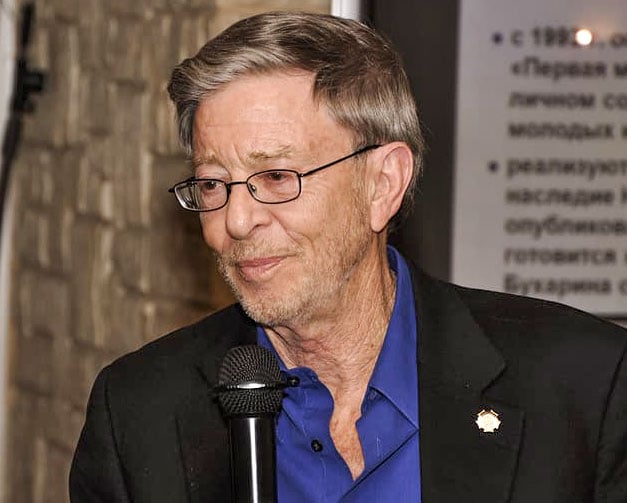
StephenFCohen
Several factors make this US-Russian Cold War more dangerous than its predecessor – is “Russo-madness” one of them?   By Stephen F. Cohen April 4, 2018 Stephen F. Cohen, professor emeritus of Russian Studies and Politics at NYU and Princeton, and John Batchelor continue their (usually) weekly discussions of the new US-Russian Cold War. (Previous installments, now in their fourth year, are at TheNation.com.) Originally published by The Nation here   Cohen has previously explained why the new Cold War is potentially even more dangerous than was its 40-year predecessor, citing factors such as the political epicenter’s now being on Russia’s borders, lack of a mutual code of conduct, and the unprecedented demonization of the Kremlin leader. He had not much considered the role of Russophobia because he thought it had not been a large causal factor, unlike anti-Communism, in the preceding one, recalling an episode in his own family...
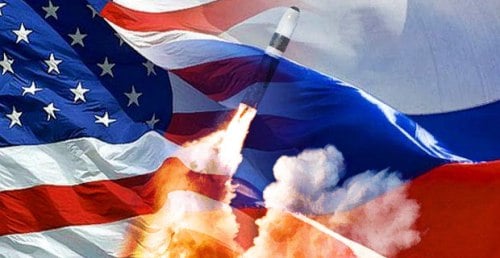
russia-us-nuclear_missile_war
    By Gordon M. Hahn February 14, 2018 The US and the rest of the West continue to carry out the same failed Russia policy that let to the ‘new Cold War. That policy can be summed up in the following words: We, with our NATO and EU expansion, will ignore your interests and national security concerns; you must follow our model immediately or feel our wrath. Beginning in the 1990s a Western expansion model’ — NATO and EU expansion without Russia — drove Moscow to retrench on democracy and establish a soft authoritarian regime and led inevitably to the Ukrainian conflict and ‘new cold war.’ Originally published at Gordon Hahn’s website here The new cold war – for now limited in its hot sphere to proxy wars in Ukraine and Syria – has led to a doubling down on this failed Western approach by continuously intensifying sanctions and...
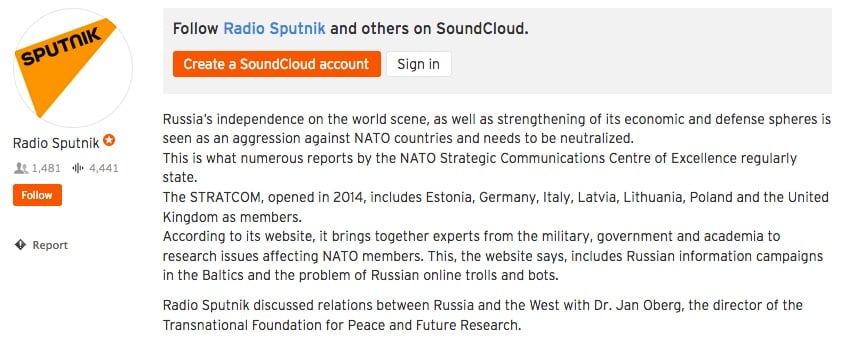
Screenshot
  A conversation with Sputnik Radio on the ongoing and increasing confrontational policies and media demonization of Russia by West – seen here through the lenses of imperial decline. You may also click on this image to hear the conversation:    
logo3
  Interview with Stephen Cohen For requesting evidence of Russian culpability in the poisoning of former spy Sergei Skripal and his daughter, UK Labour Leader Jeremy Corbyn has been denounced by PM Theresa May and even members of his own party. We discuss the case with Stephen F. Cohen, Professor Emeritus of Russian Studies at New York University and Princeton. On The Real News on YouTube     Jan Oberg comments Corbyn is a courageous man, indeed, and you see and hear the reactions around him from the British government representatives. We should pay very much attention when one of the West’s indisputably leading authorities on Russia says that the present situation is worse than the First Cold War and could, from various angles, be considered as dangerous as the Cuban Missile Crisis. Professor Cohen also says that there is no one in the US who calls for a robust...
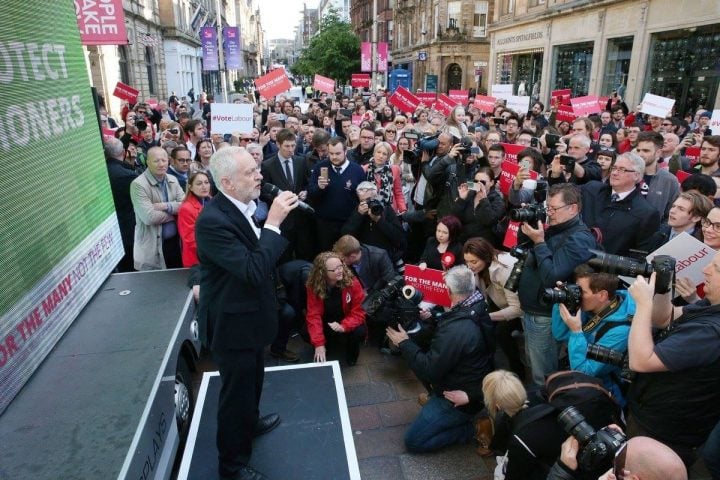
xBE6082B0-F4F4-4448-98FF-752CB68D3A47-720x480.jpeg.pagespeed.ic_.ddpPx9foRs
Jeremy Corbyn June 2017 (Image by Jeremy Corbyn Facebook)   By Silvia Swinden A Russian father, former double spy convicted in Russia and exchanged by Britain for other spies, and his daughter were found unconscious on a bench in Salisbury. Preliminary assessment suggests a nerve gas agent. The government has jumped to accuse Russia and in particular Putin of ordering this assassination attempt. The word “war” has been repeated in many speeches from PM May and other members of her government. Originally published by Pressenza here Jeremy Corbyn has appealed for clam and to involve international bodies that deal with chemical warfare in order to test the substance properly as well as establishing controls on the money laundering activities of Russian oligarchs and mafias operating in the UK rather than a simple diplomatic tit-for-tat. Unsurprisingly this has caused a deluge of criticism from the media (the BBC photoshoped his picture...
sharon-at-podium
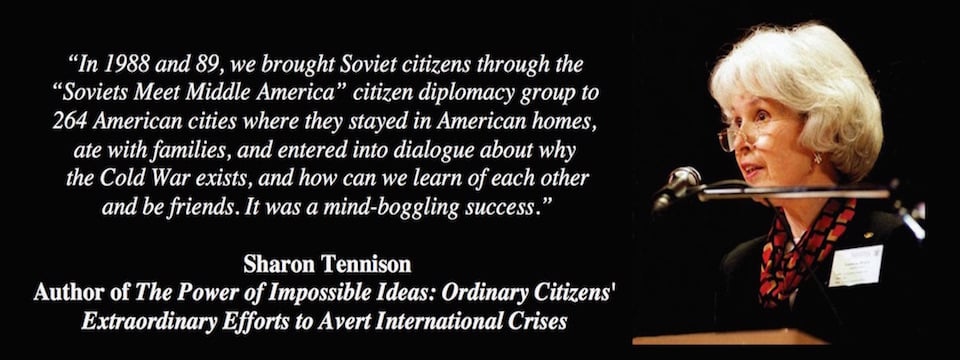
    By Sharon Tennison February 7, 2018 Friends and colleagues, As the Ukraine situation has worsened, unconscionable misinformation and hype is being poured on Russia and Vladimir Putin. Journalists and pundits must scour the Internet and thesauruses to come up with fiendish new epithets to describe both. Wherever I make presentations across America, the first question ominously asked during Q&A is always, “What about Putin?”. It’s time to share my thoughts which follow: Putin obviously has his faults and makes mistakes. Based on my earlier experience with him, and the experiences of trusted people, including U.S. officials who have worked closely with him over a period of years, Putin most likely is a straight, reliable and exceptionally inventive man. He is obviously a long-term thinker and planner and has proven to be an excellent analyst and strategist. He is a leader who can quietly work toward his goals under mounds of accusations and myths that have been steadily...
против-всех-e1518695833363
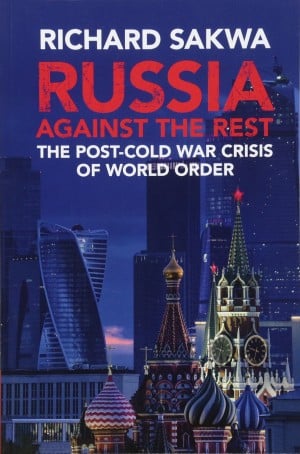
    Rethinking Russia sat down with University of Kent’s Professor Richard Sakwa to discuss his new book Russia Against The Rest, its relations with the West, its role in a new world order as well as its greatest challenges in 2018. Originally published on February 15,2018 at Rethinking Russia here   University of Kent’s Professor Richard Sakwa believes that there will be the intensification of an anti-Russian policy in the West in the future. He also writes about it in his new book Russia Against The Rest: The Post-Cold War Crisis of World Order that was released in October 2017. Rethinking Russia sat down with him to discuss the book, Russia’s role in a new global order as well as its greatest challenge in 2018.   Rethinking Russia: How could you explain the title of your book “Russia Against The Rest”? Richard Sakwa: The point is to stress the...
StephenFCohen
Its allegations and practices suggest disdain for American institutions, principles, best interests, and indeed for the American people. Stephen F. Cohen, professor emeritus of Russian Studies and Politics at NYU and Princeton, and John Batchelor continue their (usually) weekly discussions of the new US-Russian Cold War. (Previous installments, now in their fourth year, are at TheNation.com.) The nearly two-year-long series of allegations and investigations now known as “Russiagate” was instigated by top American political, media, and (probably) intelligence elites (mostly Democratic or pro-Democratic, but not only). What they have wrought suggests profoundly disturbing characteristics of people who play a very large role in governing this country. Cohen specifies six such barely concealed truths, which he and Batchelor then discuss. 1. Russiagate promoters evidently have little regard for the current or future institution of the American presidency. At the center of their many allegations is the claim that the current president,...
putin
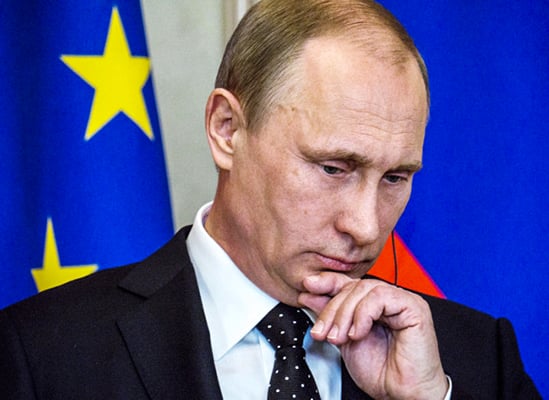
  By Stephen F. Cohen Delivered on the annual Nation cruise, December 2, 2017, introduced by Nation Editor and Publisher Katrina vanden Heuvel.     Jan Oberg comments Listening to professor Cohen gives you hope. Hope that there is something called solid scholarship and the courage to share it publicly in spite of the incredibly, systematic biases about Russia and Vladimir Putin in the Western media and policy circles. It’s a concise presentation, making very clear points in the best of academic traditions. Cohen debunks a series of central domain assumptions which – and there must be a purpose – shape the Western generalized view of Russia/Putin in this era of the Second Cold War. Any student, scholar and concerned citizen should see this before talking about these issues.  
lenin_300
• Published in Bulletin of Peace Proposals 3-1990, pp 287-298 and on TFF’s homepage at the same time   1. Four hypotheses The West has lost a close enemy, the Soviet Union and Eastern Europe. Which reactions can be discerned and what psycho-political emotions are they indicative of? How did the West cope with the first years of this new post-Cold War situation? Can we mourn the death of an enemy, can we heal ourselves after the loss? How does one learn to live a new life without a close enemy? Has the West done what it ought to do for itself and for the former enemy? “The West” of course is a term hanging loose. We employ it in this article as meaning interchangeably “NATO, the Western hemisphere, the United States and Western Europe and a few cases, Western or Occidental culture”. The first hypothesis of this essay is...
4_1
Via gwu.edu Washington D.C., December 12, 2017 – U.S. Secretary of State James Baker’s famous “not one inch eastward” assurance about NATO expansion in his meeting with Soviet leader Mikhail Gorbachev on February 9, 1990, was part of a cascade of assurances about Soviet security given by Western leaders to Gorbachev and other Soviet officials throughout the process of German unification in 1990 and on into 1991, according to declassified U.S., Soviet, German, British and French documents posted today by the National Security Archive at George Washington University ( http://nsarchive.gwu.edu). The documents show that multiple national leaders were considering and rejecting Central and Eastern European membership in NATO as of early 1990 and through 1991, that discussions of NATO in the context of German unification negotiations in 1990 were not at all narrowly limited to the status of East German territory, and that subsequent Soviet and Russian complaints about being...
4_1
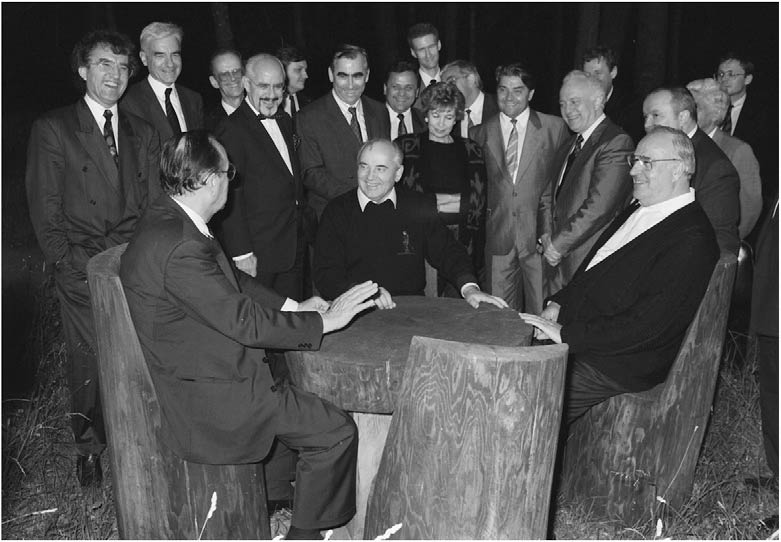
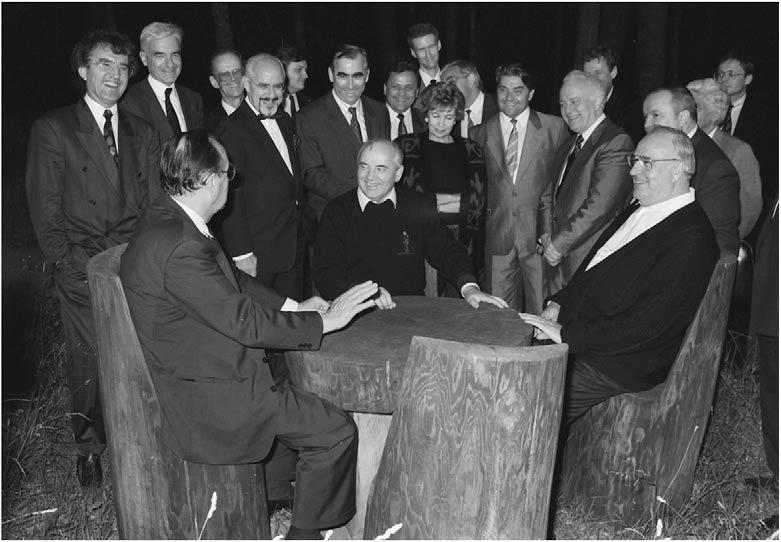
Michail Gorbachev discussing German unification with Hans-Dietrich Genscher and Helmut Kohl in Russia, July 15, 1990. Photo: Bundesbildstelle / Presseund Informationsamt der Bundesregierung. By Svetlana Savranskaya and Tom Blanton January 7, 2022 Declassified documents show security assurances against NATO expansion to Soviet leaders from Baker, Bush, Genscher, Kohl, Gates, Mitterrand, Thatcher, Hurd, Major, and Woerner. Slavic Studies Panel Addresses “Who Promised What to Whom on NATO Expansion?” Washington D.C., December 12, 2017 – U.S. Secretary of State James Baker’s famous “not one inch eastward” assurance about NATO expansion in his meeting with Soviet leader Mikhail Gorbachev on February 9, 1990, was part of a cascade of assurances about Soviet security given by Western leaders to Gorbachev and other Soviet officials throughout the process of German unification in 1990 and on into 1991, according to declassified U.S., Soviet, German, British and French documents posted today by the National Security Archive at George Washington...

Categories

Year

Author / Contributor

Region