Cold war

Category

Year

Author / Contributor

Region

Sort by

Showing 1-10 of 216 stories

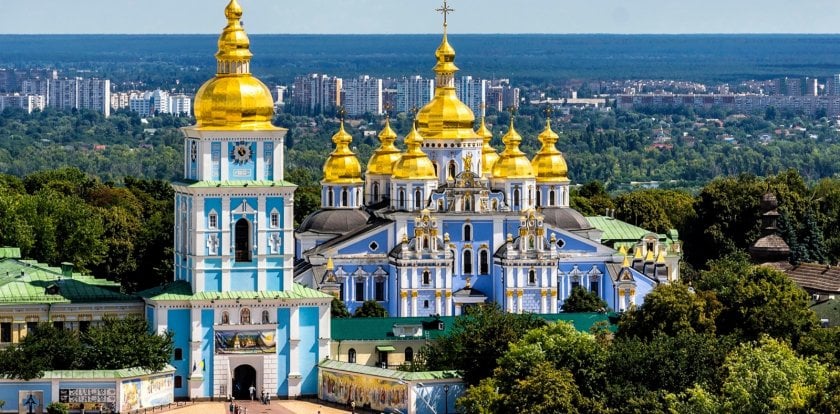
KievPix
Robin Edward Poulton February 11, 2022 1 Feb 2022 – Secretary of State Blinken’s statement on January 26th was a disaster: a statement pleading for peace in Ukraine that was laden with aggression against Russia. The statement suffered from the lack of imagination we associate with U.S. imperialism, and a wanton refusal to understand how and why Russia feels threatened by NATO and the USA. Originally published at Transcend Media Service (TMS) Ukraine is a buffer state between Russia and Germany/Europe/NATO. And we need buffer states. Buffer States are often necessary for stable peace. No less a person than the Secrétaire Permanente de l’Académie Française – Madame Hélène Carrère d’Encausse – commented recently that Helmut Kohl and James Baker had promised Mikael Gorbachev that NATO would not expand eastwards…. which it then did, now expanded to 30 member states. Madame Hélène Carrère d’Encausse was born in Russia. Her magisterial book L’Empire Eclaté described the break-up of the Soviet...
Pilger
This documentary by John Pilger hardly needs any introduction. It is eminently useful for public education about the history and the events in and around China that has fuelled containment for decades – elements of an understanding of the present Cold War on China that the US or NATO mainstream media will never convey to you. February 8, 2022 John Pilger – one of the most important journalists in international affairs – does not seem to have changed the settings for this documentary on Vimeo to permit embedding it, so go here to see it on Vimeo. Much more interesting materials on John Pilger’s homepage here.
russ-georg
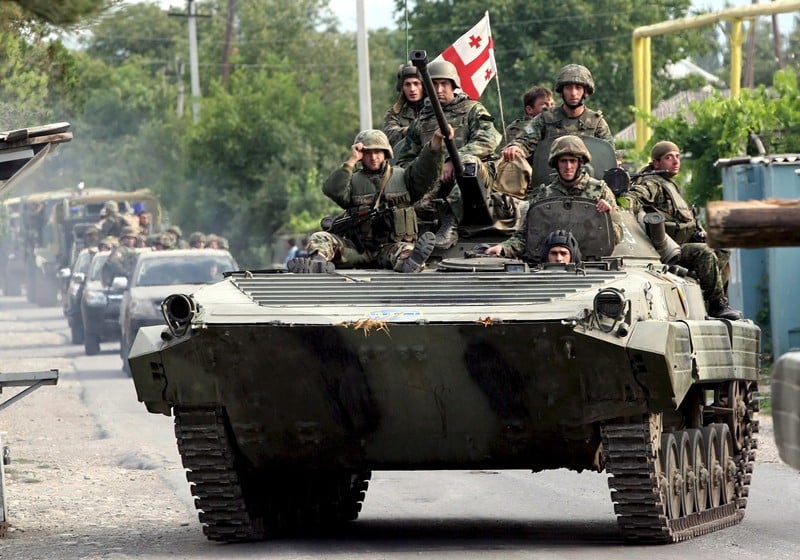
Thomas De Waal February 3, 2022 Many people are trying to rewrite the history of the 2008 Georgia-Russia War in the light of the Ukraine crisis. The EU’s report on the war is still a useful baseline and a reminder of how different the two conflicts are. Originally published at Carnegiemoscow Six years ago, on September 30, 2009, the European Union made a bold and mostly successful attempt to deal with recent history. The report on the Georgia-Russia war of 2008—known informally as the “Tagliavini Report” after its team-leader, Swiss diplomat Heidi Tagliavini—came out little more than a year after the events themselves. The idea of the “Report of the Independent International Fact-Finding Mission on the Conflict in Georgia,” was to separate truth from fiction in the information war which both sides had waged and in particular to explain how the conflict started. It would be wrong to simplify the...
weaponstoukraine
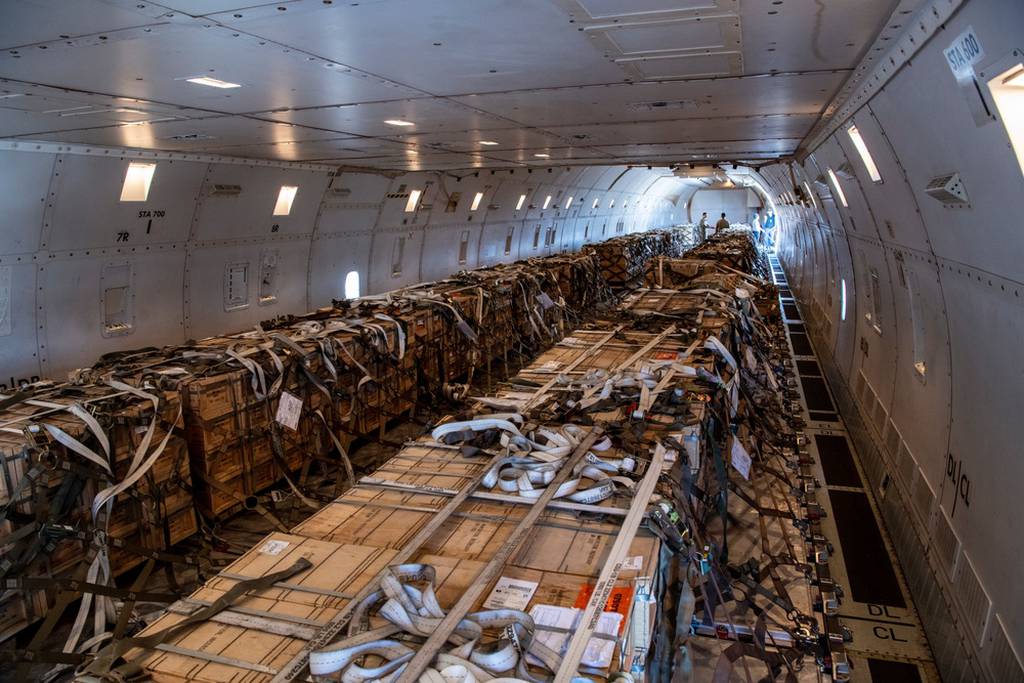
David SwansonTFF Associate January 27, 2021 Have yall learned absolutely nothing? The U.S. government’s internal memos said that the only way to get Iraq to use its weapons if it even had any would be to attack it. The U.S. government’s public statements were that Iraq certainly had weapons and therefore must be attacked. The U.S. government itself had every single one of the weapons in question, and knew Iraq used to have some of them because the U.S. had provided them. Originally posted on Let’s Try Democracy on January 25, 2022 This was not a question of faulty information. This was not a question of political ideology. This was a question of absofuckinglute insanity. The U.S. government’s internal memos right now, if we see them years from now, will be found to have said that expanding NATO and putting troops and weapons into Eastern Europe including Ukraine has provoked...
Ruptly-screenshot
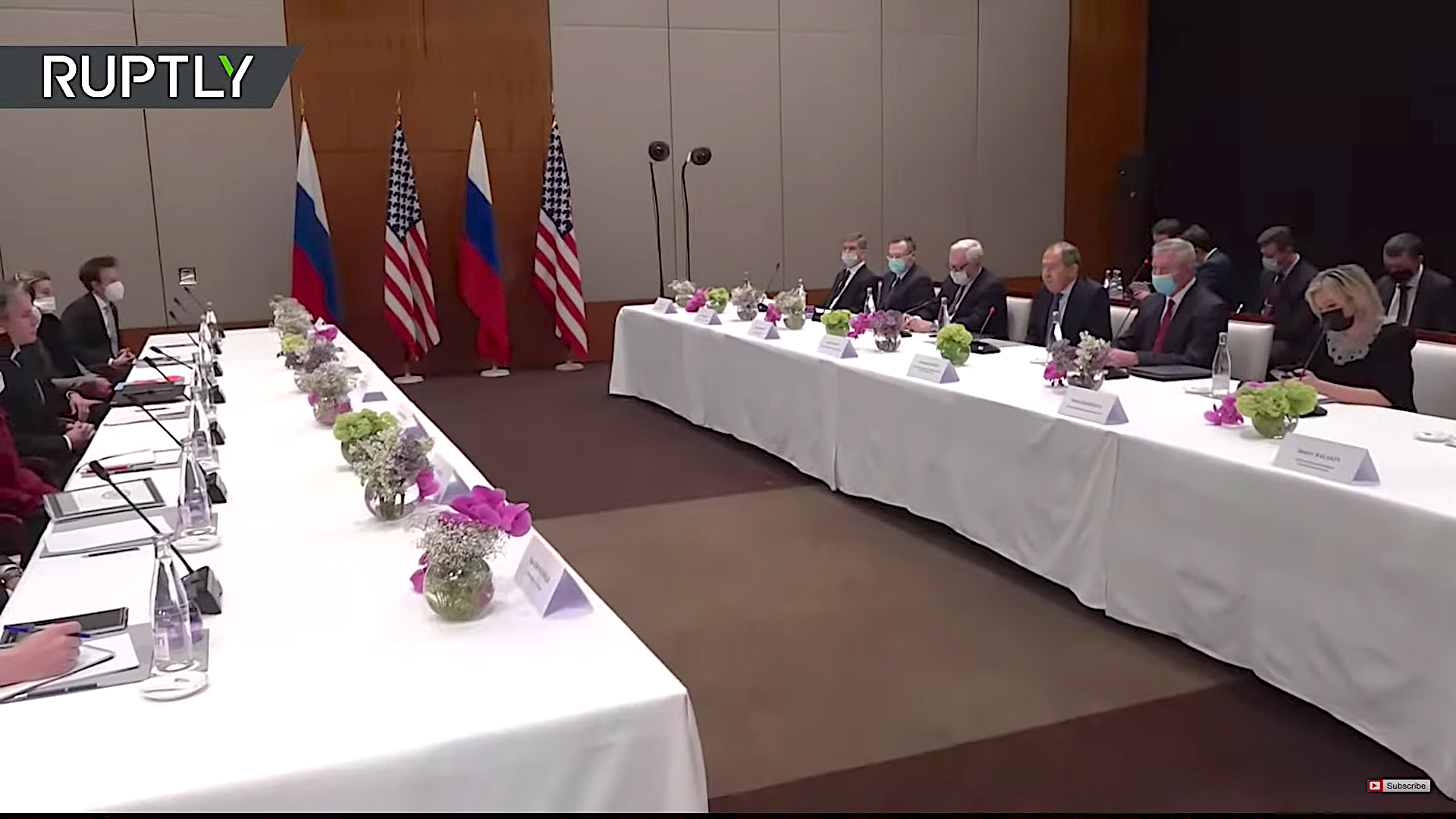
Public opening session between Lavrov and Blinken on Friday. (Ruptly screenshot.) The toolbox is empty. Russia knows this. Biden knows this. Blinken knows this. CNN knows this. The only ones who aren’t aware of this are the American people, says Scott Ritter. Scott Ritter January 26, 2022 Originally published by Consortiumnews on January 22, 2022 U.S. Secretary of State Antony Blinken met with his Russian counterpart, Sergei Lavrov, in a hastily scheduled, 90-minute summit in Geneva yesterday, after which both sides lauded the meeting as worthwhile because it kept the door open for a diplomatic resolution to the ongoing crisis in Ukraine. What “keeping the door open” entails, however, represents two completely different realities. For Blinken, the important thing appears to be process, continuing a dialogue which, by its very essence, creates the impression of progress, with progress being measured in increments of time, as opposed to results. A results-oriented outcome was...
redlinedrawn
Ted Snider January 20, 2022 Since its assurances not to move “one inch” outside Germany, the alliance has moved 600 miles closer to Russia. Originally posted on Responsible Statecraft on December 4, 2021 It is possible to actually measure Washington’s dishonesty. How big is it? It’s about 600 miles. In 1990, according to declassified documents, Secretary of State James Baker assured Soviet leader Mikhail Gorbachev that NATO would not expand “one inch” east of Germany. Thirty years ago, that was Russia’s red line. On December 2, that red line moved from one inch to 600 miles as Vladimir Putin said he would now seek a promise that NATO would not expand further east to Ukraine. Since these assurances, NATO has wandered its way through Hungary, the Czech Republic, Estonia, Latvia, Lithuania, Bulgaria, Romania, Slovakia, Slovenia, Albania, Croatia, Montenegro and Poland. Six hundred miles of broken pledges have brought the U.S. and...

Ukraine-flag
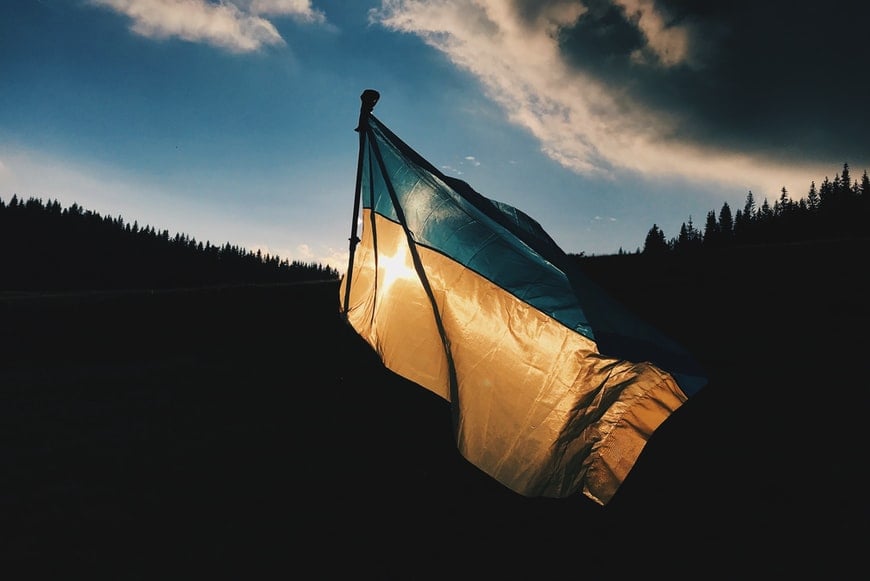
By Ted Snider January 19, 2022 On January 10, American and Russian officials met to discuss Putin’s proposal on mutual security guarantees. Western media and political analysts have cast Putin’s demands that NATO not expand further east to Ukraine and that NATO not establish military bases in former Soviet states nor use them to carry out military activity as bold and impossible. Here are six crucial pieces of background that the western media will not tell you. Originally published at Antiwar.com The NATO Promise Putin’s demands are only bold if it is bold to ask NATO to keep its promises; his demands are only impossible if it is impossible for NATO to keep its promises. On February 9, 1990, Secretary of State James Baker assured Gorbachev that if NATO got Germany – a huge concession – NATO would not expand one inch east of Germany. The next day, West German Foreign...
Lieven-Ukraine-ftr_img
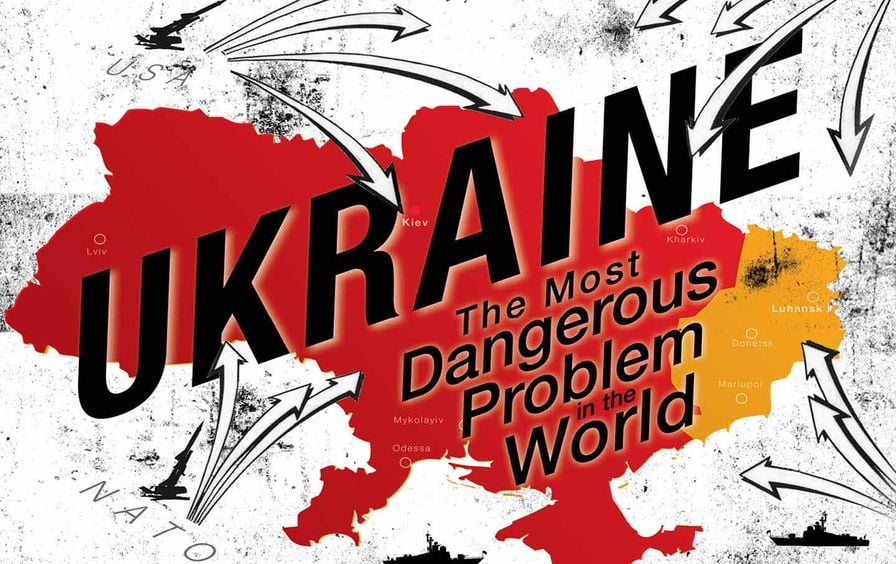
But there’s already a solution. Anatol Lieven January 19, 2022 Amid the public storm in America over the fall of Kabul, it is important not to lose sight of other looming crises around the world – some of them potentially much more dangerous than Afghanistan. For if the US political elites were so surprised by the speed of the Afghan state’s collapse, that was largely because the US media stopped paying attention to developments on the ground in Afghanistan once most US forces withdrew and Americans stopped dying there in large numbers. Originally published at The Nation in November 2021 Of these potential crises, one of the most menacing is the armed standoff between the Ukrainian military and Russian-supported separatist forces in eastern Ukraine. Limited numbers of Russian troops (lightly disguised as “volunteers”) are stationed in the Donbas region, and Russia has deployed large forces in southern Russia to defend...
maskingA
Secretary of State Antony Blinken and NATO’s chief Jens Stoltenberg January 13, 2022 Jan Oberg To deceive, telling half-truths, or a complete lie is nothing new in politics, particularly security in politics. But until some 20-30 years ago, I would – perhaps naively – see it as an exception. Tragically – and perhaps to many readers’ surprise – it is now the rule. At least in U.S. and NATO circles, and that is particularly regrettably since The West professes to be a democratic system with specific values and even a moral leader to The Rest. Lying systematically about facts – historical facts – and other countries and cultures should be incompatible with The West’s perception of itself. But, today, it isn’t. Lies are widespread in so-called security politics when some militarist project doesn’t make any (common) sense to intelligent people, when the real motives have to be covered up and...
1_naples_1994_
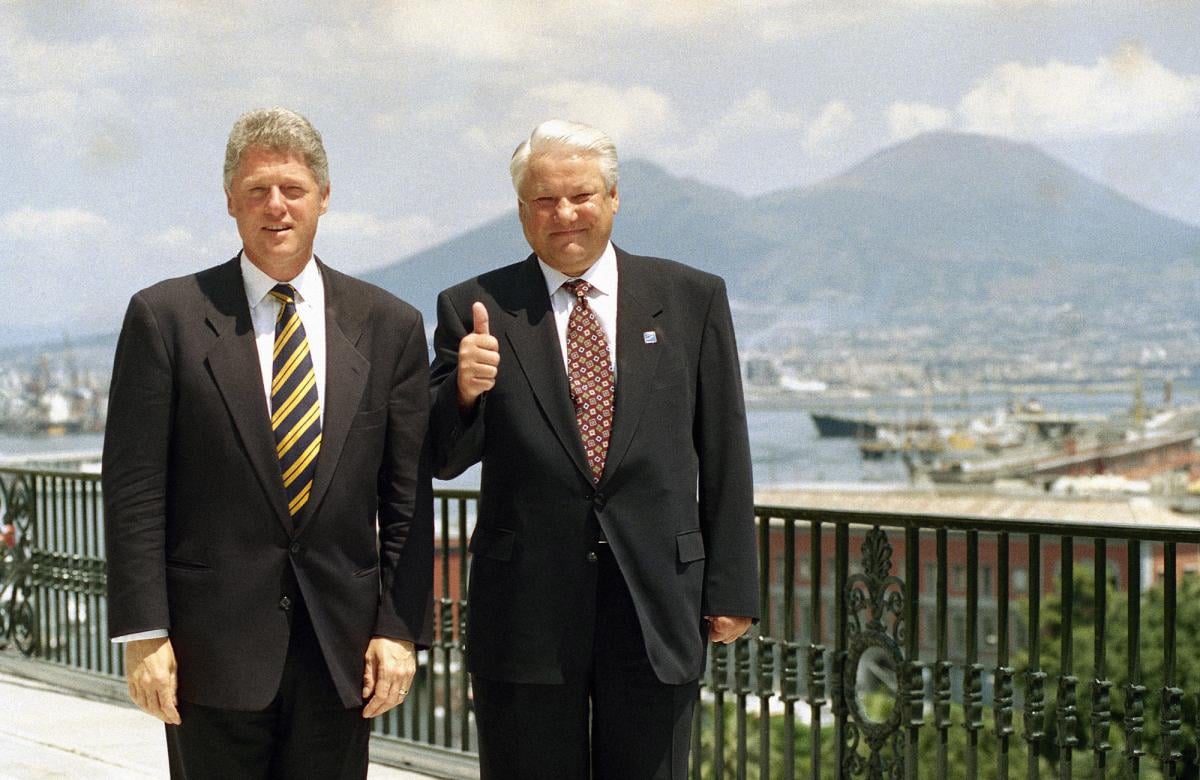
Clinton and Yeltsin in Naples, July 10, 1994.  Dormant Vesuvius is in the background.  (Eruption wouldn’t happen until Budapest).  Source:  Inosmi.ru Declassified documents show security assurances against NATO expansion to Soviet leaders from Baker, Bush, Genscher, Kohl, Gates, Mitterrand, Thatcher, Hurd, Major, and Woerner Slavic Studies Panel Addresses “Who Promised What to Whom on NATO Expansion?” By Svetlana Savranskaya and Tom Blanton (Compiled and edited) January 7, 2022 Washington, D.C., November 24, 2021 – The biggest train wreck on the track to NATO expansion in the 1990s – Boris Yeltsin’s “cold peace” blow up at Bill Clinton in Budapest in December 1994 – was the result of “combustible” domestic politics in both the U.S. and Russia, and contradictions in the Clinton attempt to have his cake both ways, expanding NATO and partnering with Russia at the same time, according to newly declassified U.S. documents published today by the National Security Archive....
photo-ukraine-eu-us-rf-2
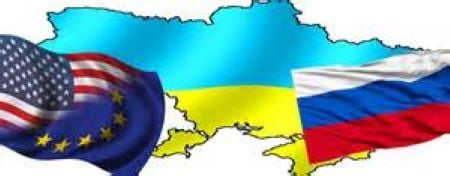
By Gordon M. Hahn December 15, 2021 It is now quite clear, as I have stated for decades, that NATO expansion is the main cause of U.S.-Russian and WesternRussian tensions, and the Russian Angst over said expansion is the cause of the Ukrainian crisis sparked in winter 2013-2014. It appears that Putin is escalating the stakes in the Ukrainian crisis in an effort to solve it and the overall problem of NATO expansion and European security. The positioning of Russian troops closer to the Ukrainian border – not on the border as is being reported – is an attempt to concentrate the minds of the West and bring the main driver of the Ukrainian crisis on the Western side – the U.S. – into the Minsk 2 process directly or otherwise. His highlighting the issue has the important side benefit of putting the issue in a central place before Western...
88ac4373e00144709addd67d57871bc2-1920
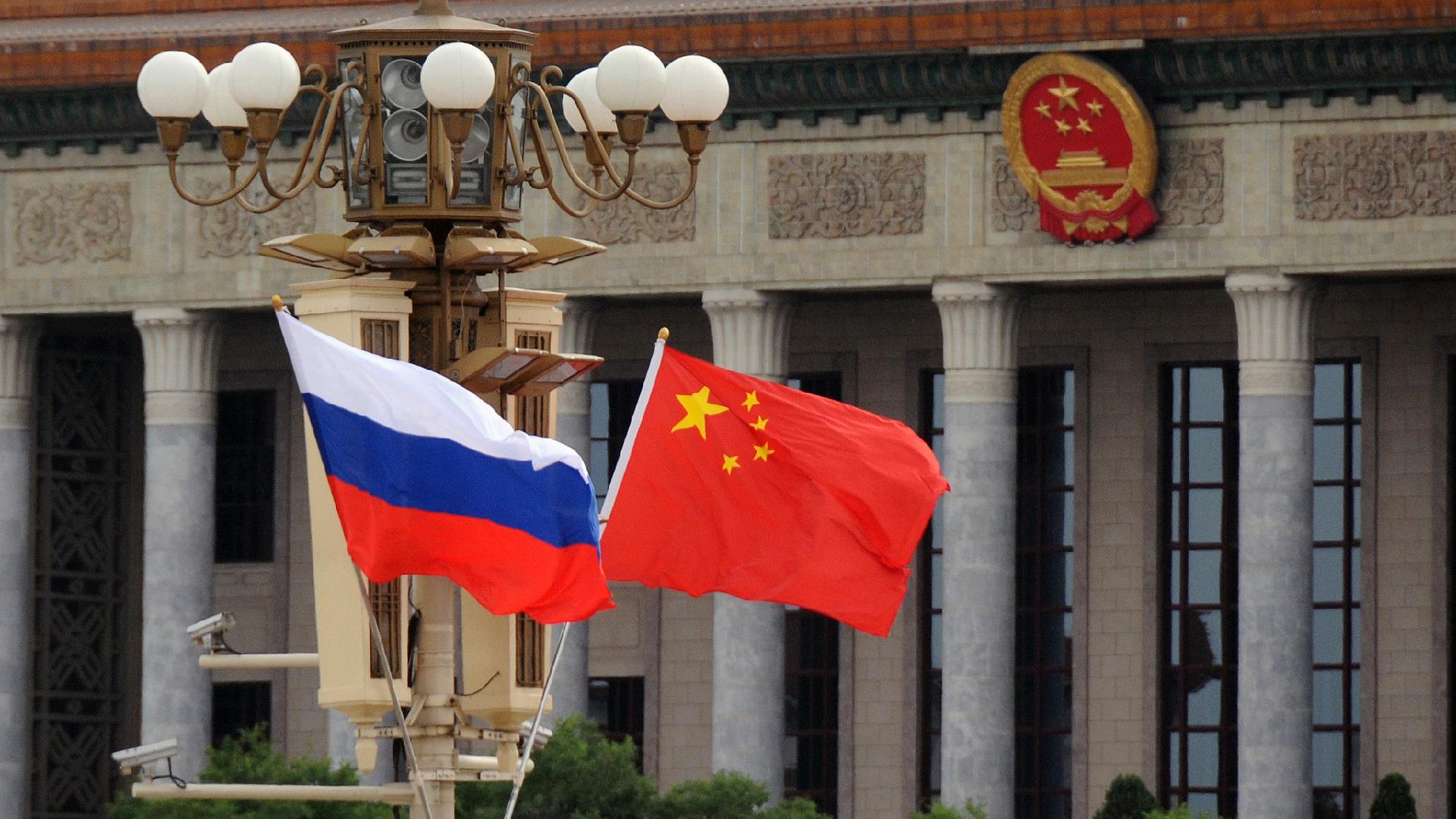
The embassy of the People’s Republic of China in the United States of America 10 December 2021 This Joint Article was published on ”The National Interest”. Qin Gang is the Chinese Ambassador to the United States. Anatoly Antonov is the Russian Ambassador to the United States. We publish it here on The Transnational because we believe it is a historic document both because of China-Russia cooperation which is increasing rapidly and because it makes the important point that the US no longer has any legitimate – or exceptionalist – right to tell others how to operate. The upcoming American-led online Summit for Democracy will stoke ideological confrontation. Faced with an array of global challenges, countries urgently need to strengthen coordination and cooperation for common progress. The United States will be hosting the online Summit for Democracy on December 9-10, 2021, empowering itself to define who is to attend the event and who is not, who is a “democratic country” and who is not eligible for such status. An evident...
Categories

Year

Author / Contributor

Region