China and Silk

Category

Year

Author / Contributor

Region

Sort by

Showing 1-10 of 181 stories

ChDailyFront
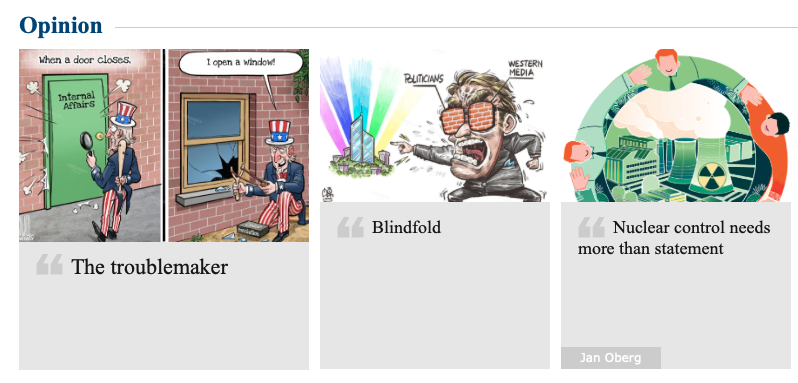
, as Op-Ed for China Daily * One description of the contemporary world is more accurate and ominous than any other, namely that we live in the nuclear age or the age of nuclearism, i.e. the weapons plus the thinking and power structures that surround these doomsday weapons. In 1946, Albert Einstein stated that “the unleashed power of the atom has changed everything save our modes of thinking and we thus drift toward unparalleled catastrophe.” Even limited use of nuclear weapons would lead to a global human and environmental catastrophe. It is enigmatic that everybody talks about the much slower climate change, while the numerous destructive links between militarism and environmental destruction are hardly ever made even by leading experts, politicians or civil society leaders. Therefore, it must be welcomed that the five nuclear weapons states of the UN Security Council have issued a joint statement. They know there is...
88ac4373e00144709addd67d57871bc2-1920
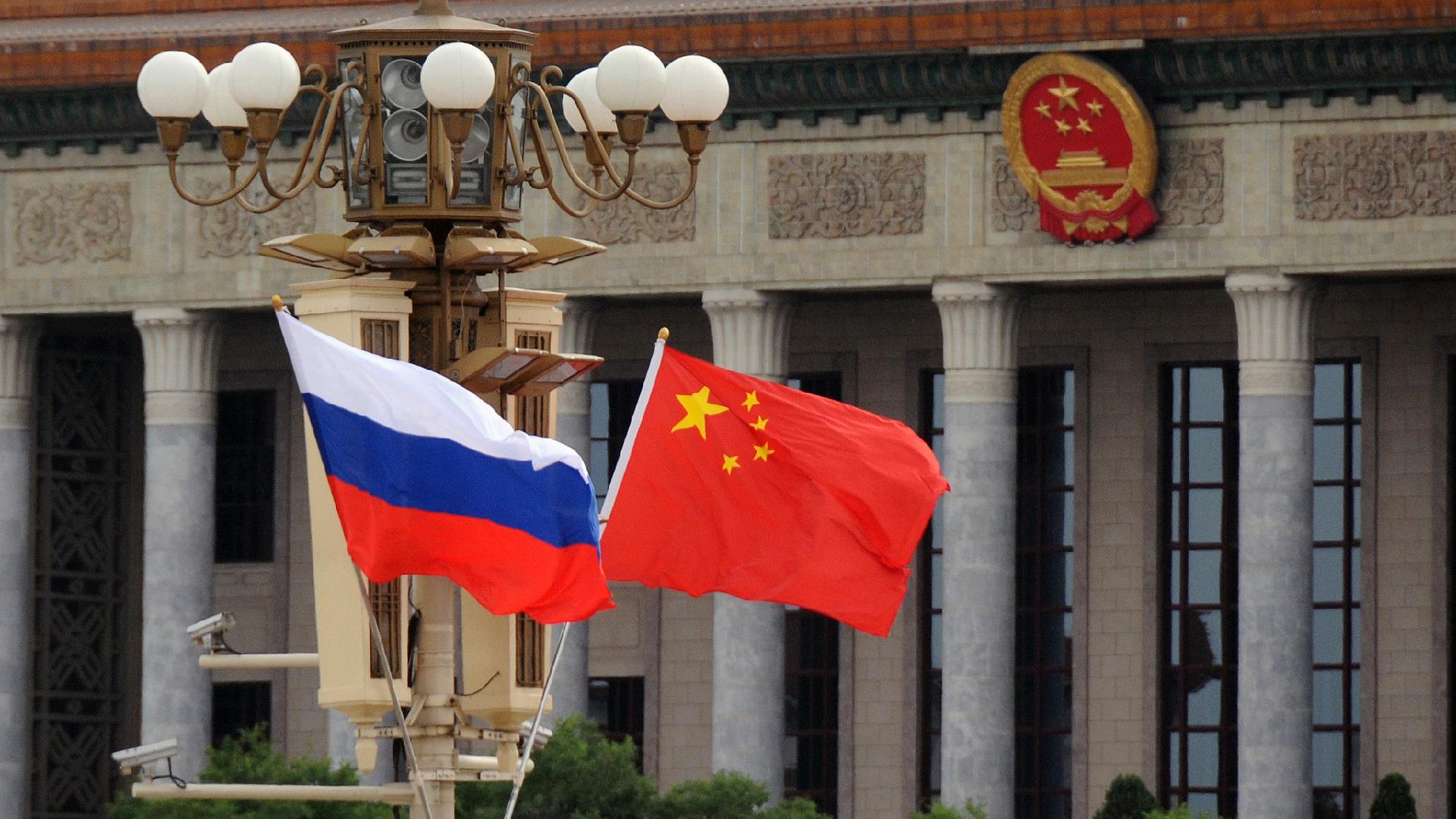
The embassy of the People’s Republic of China in the United States of America 10 December 2021 This Joint Article was published on ”The National Interest”. Qin Gang is the Chinese Ambassador to the United States. Anatoly Antonov is the Russian Ambassador to the United States. We publish it here on The Transnational because we believe it is a historic document both because of China-Russia cooperation which is increasing rapidly and because it makes the important point that the US no longer has any legitimate – or exceptionalist – right to tell others how to operate. The upcoming American-led online Summit for Democracy will stoke ideological confrontation. Faced with an array of global challenges, countries urgently need to strengthen coordination and cooperation for common progress. The United States will be hosting the online Summit for Democracy on December 9-10, 2021, empowering itself to define who is to attend the event and who is not, who is a “democratic country” and who is not eligible for such status. An evident...
19c32d4ad8294f02bbfd045b0bf9d671
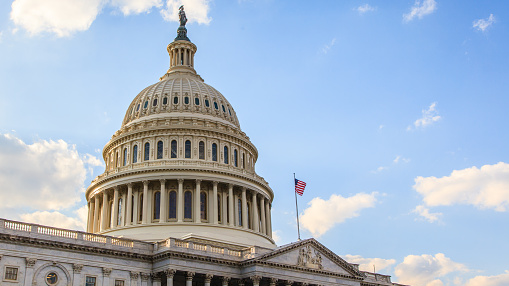
The United States Capitol Building in Washington, D.C., U.S. /Getty By Josef Gregory Mahoney December 15, 2021 Editor’s note: Josef Gregory Mahoney is a professor of politics at East China Normal University in Shanghai. The article reflects the author’s opinions and not necessarily the views of CGTN. There has been an active debate among American scholars and pundits for many years over whether the United States is a republic or democracy. One of the keys to this discussion is the argument advanced by some, particularly those on the right, that these two terms are somehow opposites – that one cannot be both at the same time, and that the U.S. is definitively a republic and not a democracy. Originally published at CGTN On the face of it, this assertion is ridiculous. It’s absolutely possible to be both a republic and democratic, and to whatever extent one regards the U.S. as democratic,...
BoyLookingBack_1200_100dpi
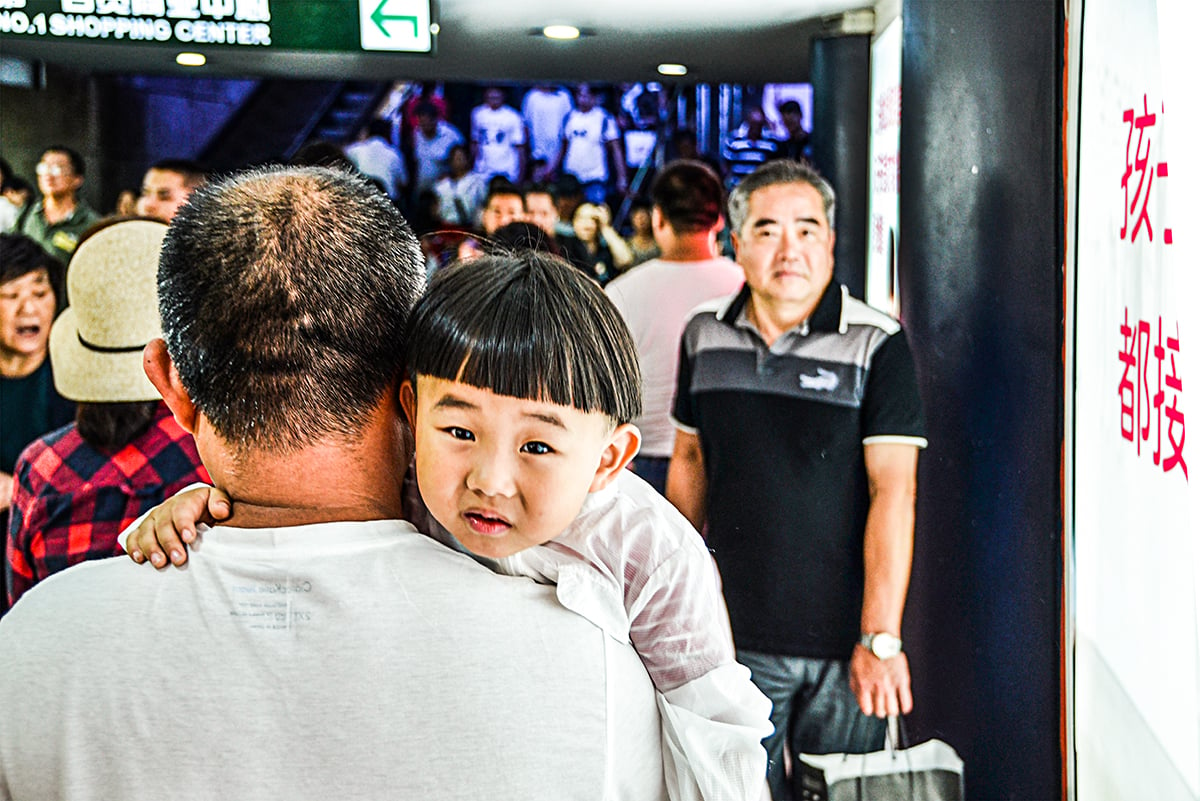
Photo © Jan Oberg “Boy Looking Back” – 2018 Charles Hampden-Turner, Peter Peverelli and Fons Trompenaars November 23, 2021 This is Chapter 9 of a new book “Has China Devised a Superior Path to Wealth Creation? The Role of Secular Values” by three leading experts on China, cultural dimensions of societies and culture for business. Almost nothing does China more harm in the estimation of the world than the accusation that it is not a democracy and has no announced intention of becoming one. It is accused of totalitarianism. This is profoundly disturbing to the world for several reasons. First China has the largest population on earth at 1.4 billion and it suggests that large populations may not be able to cohere democratically. In a world population that is exploding this is bad news. India has the world’s second-largest population and democracy there shows signs of morphing into Hindu nationalism...
yellow-peril
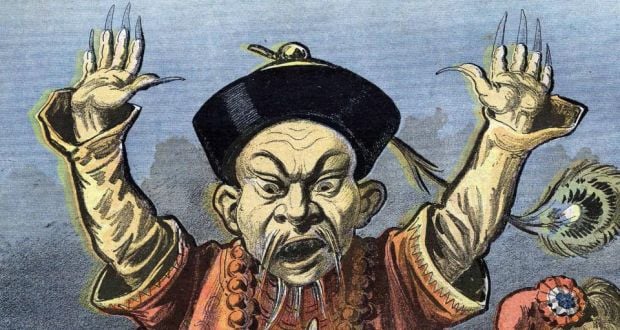
By Leung Wing-Fai November 16, 2021 Review: Fascination mixed with fear is how many in the West culturally construct the East Apocalyptic pollution, “Asian” flu, unfettered economic growth, boot camps for internet addiction, hacker attacks on western businesses and governments:– there is no shortage of fascination mixed with fear directed towards the culturally constructed East. Yellow Peril! An Archive of Anti-Asian Fear distils and presents a collection of accounts, images and essays related to this fear. The phrase yellow peril (sometimes yellow terror or yellow spectre), coined by Kaiser Wilhelm II of Germany, in the 1880s, after a dream in which he saw the Buddha riding a dragon threatening to invade Europe, blends western anxieties about sex, racist fears of the alien other, and the Spenglerian belief that the West will become outnumbered and enslaved by the East. These fears became increasingly reinscribed as ideology through popular cultural products. In the late...
ChiUS-kopia
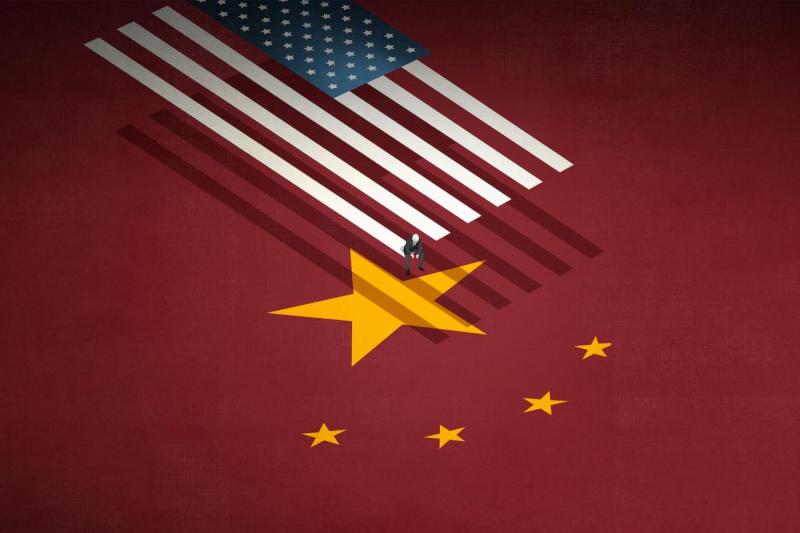
Carlos Martinez November 16, 2021 Since the launch of Obama’s ‘Pivot to Asia’ in 2012, the US has prioritised China containment over all other foreign policy commitments. This includes steadily increasing its presence in the South China Sea and encouraging China’s neighbours in their various territorial claims. Obama also initiated an expansion of US military, diplomatic and economic cooperation with other countries in the region. The overarching strategic goal of the proposed Trans-Pacific Partnership (TPP) was to isolate China and to draw East and Southeast Asia back into the US economic – and ideological – orbit. The Trump administration, while dropping the TPP due to its domestic unpopularity, escalated the Pivot in other respects: launching a trade war in January 2018, imposing a ban on Huawei, attempting to ban TikTok and WeChat, spreading conspiracy theories about the origins of Covid-19, and turning ‘decoupling’ into a buzzword. Anti-China propaganda became –...
president-xi-climate-and-capital-media-economy-1200x675-1
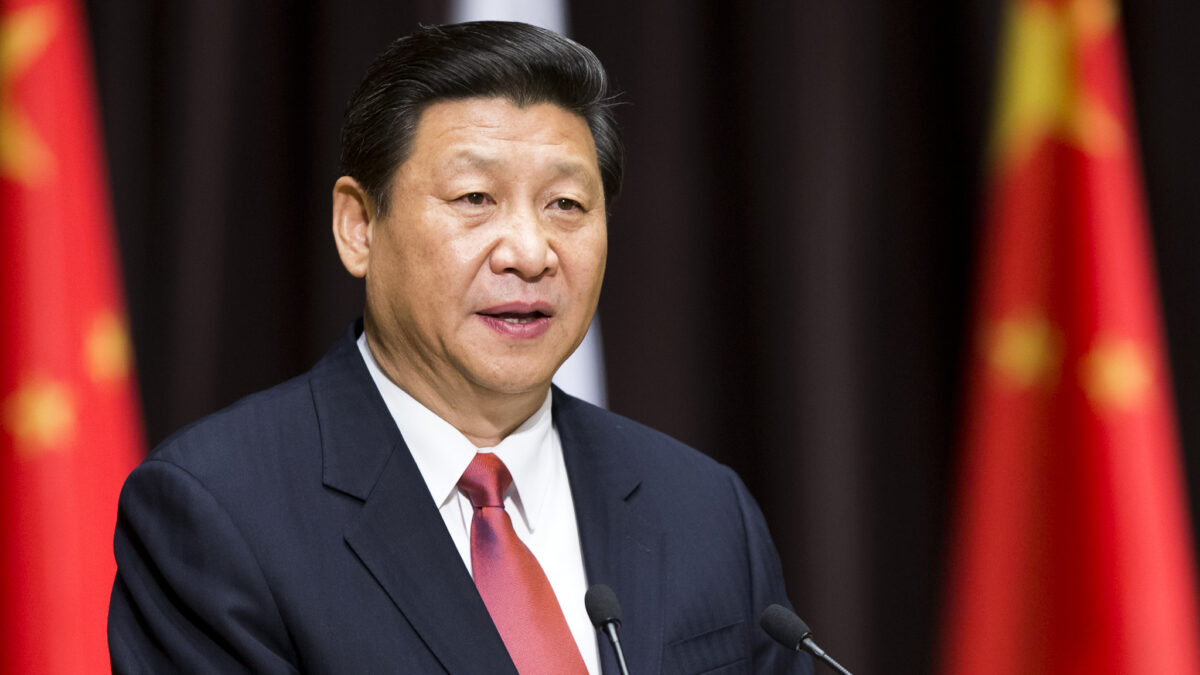
Peter McKillop November 8, 2021 The Chinese president did not attend COP26, but China already has a master plan for climate action. Do you, President Biden? It may be one of the great ironies of COP26 that the leader of the nation that emits more carbon than the United States, India and the European Union combined is skipping the climate conference in Glasgow. For China and President Xi Jinping, it’s politics as usual. Perhaps it’s about maintaining COVID protocols, or he is still smarting from the new nuclear submarine deal between the U.S. and Australia. For whatever reason, President Xi will limit his COP presence to a video link. But Xi’s physical absence at the summit should not be mistaken for inaction on climate change. Besides a commitment to check the increase in greenhouse gas emissions in 2030 and reach net zero by 2060, China has quietly put together an...
ThinkstockPhotos-145089239-1200x803-1
Ash Center research team unveils findings from long-term public opinion survey By Dan Harsha – Ash Center Communications November 6, 2021 Understanding what Chinese citizens think about their own government has proven elusive to scholars, policymakers, and business people alike outside of the country. Opinion polling in China is heavily scrutinized by the government, with foreign polling firms prohibited from directly conducting surveys. Given China’s global rise in the economic, military, and diplomatic spheres, understanding public opinion there has arguably never been more important. Originally published at The Harvard Gazette A new study from the Ash Center fills in this gap for the first time, providing a long-term view of how Chinese citizens view their government at the national, as well as the regional and local levels. What started as an exercise in building a set of teaching tools for an executive education class eventually transformed into the longest academic survey of...
janssen
November 8, 2021 Cyrus Janssen is an American expat who has lived in Shanghai, Hong Kong, and Vancouver over the past 14 years. He is passionate about showing a true insight into China and loves sharing his travels around the world. He is a very knowledgeable and competent communicator of complex issues and Janssen’s Youtube Channel has no less than 171 000 subscribers at the moment – i.e. it’s much bigger than many local newspapers around the world. It’s one of many examples of why you are wasting your time if you spend all of it on mainstream, public service or prime time news – because there is so much more interesting and truly independent information and knowledge available in places such as Janssen’s. I recommend his Channel very warmly because you will really learn something important about China – and the US – when you spend a little time...
Bild1
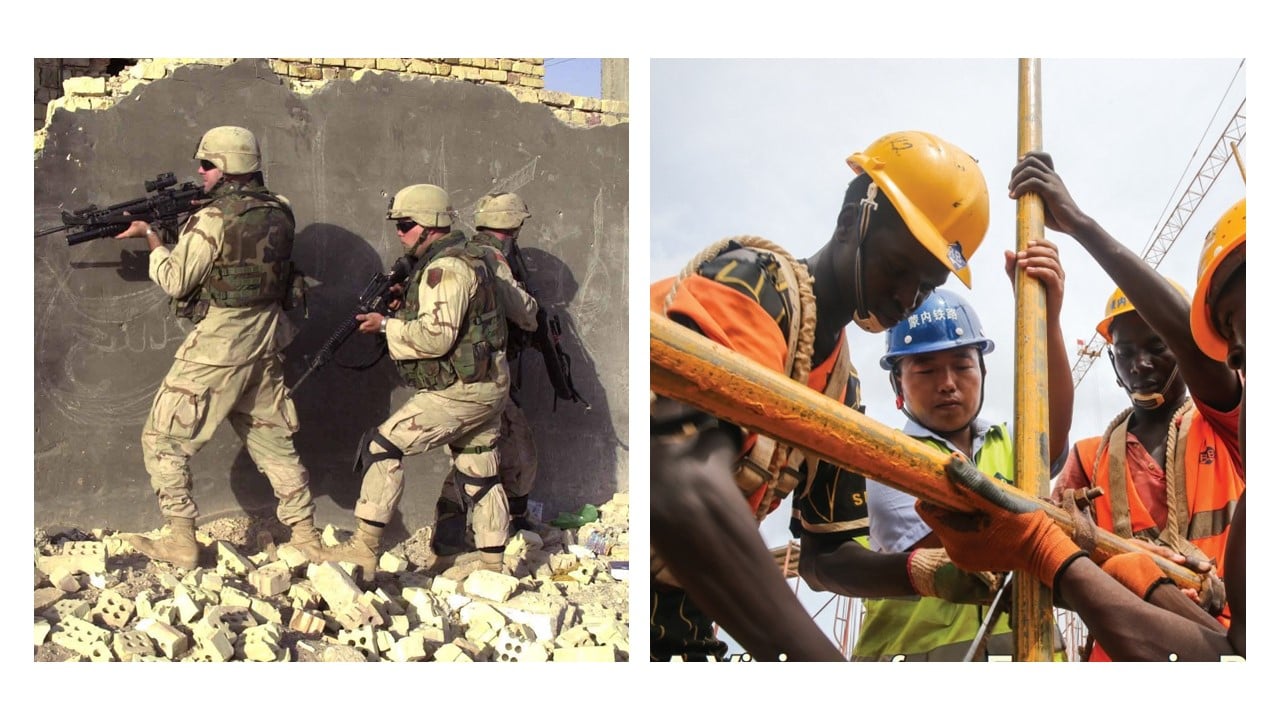
Photo from the original article Hussein Askary November 1, 2021 According to well-documented statistics provided by American research institutions and universities the human, economic, and financial costs of all wars the United States launched since the terror attacks of September 11, 2001, are in the millions of killed, maimed, and traumatized (mostly civilians); destruction of infrastructure in the hundreds of billions; and financial cost for the war effort itself in the trillions of U.S. Dollars. Added to that is a lost economic opportunity in dozens of countries and several regions. These wars and regime-change operations started with Afghanistan (and Pakistan) in October 2001, and continued to Iraq in 2003, Libya, Syria, and Yemen, in addition to so-called anti-terror operations in Africa that are continuing to date. Originally posted on Brix Sweden’s homepage on September 6, 2021 In the meantime, China, which has been more criticized in Western media than the...

9341b8f4-7c18-11e7-83c9-6be3df13972a_972x_173110
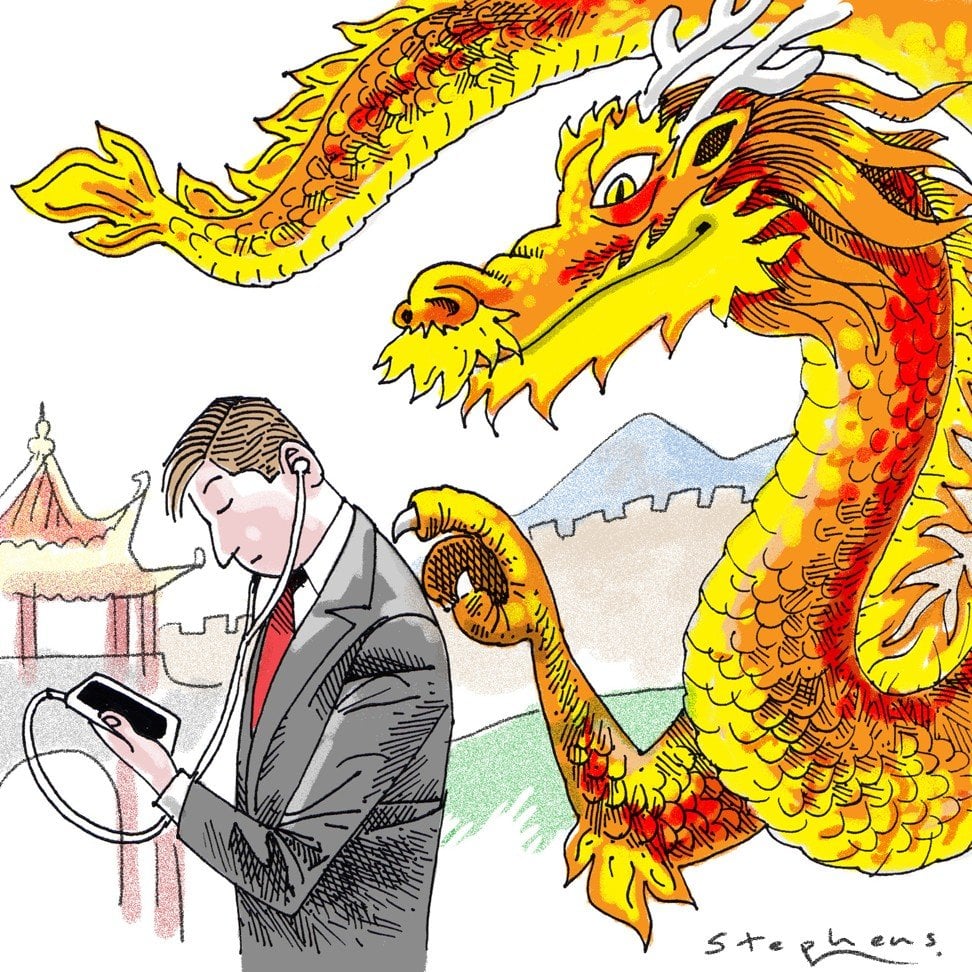
It is dispiriting and indeed alarming to see how ignorant the West is about China. Illustration: Craig Stephens In 2017, shortly before his death, Jean-Pierre Lehmann said that the country’s centrality in our 21st-century world makes it imperative that outsiders understand what is shaping its views and decisions, and Hong Kong could do more to facilitate such learning Jean-Pierre Lehmann October 29, 2021 Far from ushering in a “new world order”, so far the 21st century has been marked by turbulent uncertainties. There are very few things on which a consensus could arise – even on the most critical issues. For example, will there be war, or not, and, if so, between who? There is, however, one thing that seems incontestable: in stark contrast to the 19th and 20th centuries, when China was a peripheral passive actor in global affairs, in the 21st century its role is and will be...
China_70_years-1500-2
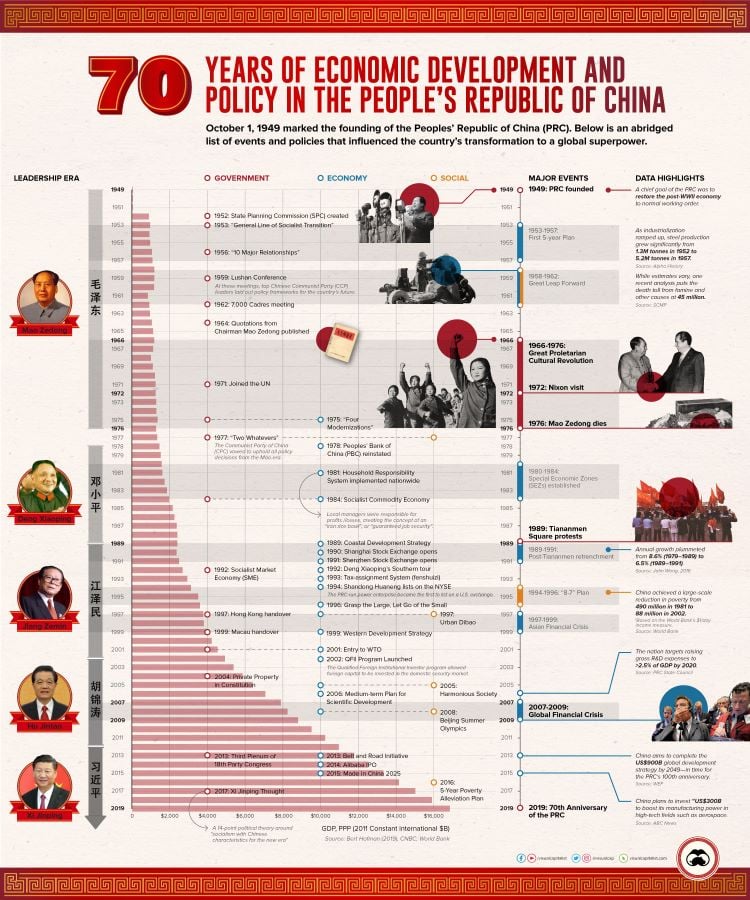
View a high-resolution version of this graphic here. Iman Ghosh October 21, 2021 Chart: 70 Years of China’s Economic Growth From agrarian economy to global superpower in half a century – China’s transformation has been an economic success story unlike any other. Today, China is the world’s second largest economy, making up 16% of $86 trillion global GDP in nominal terms. If you adjust numbers for purchasing power parity (PPP), the Chinese economy has already been the world’s largest since 2014. The upward trajectory over the last 70 years has been filled with watershed moments, strategic directives, and shocking tragedies — and all of this can be traced back to the founding of the People’s Republic of China (PRC) on October 1st, 1949. Originally published in 2019 at Visualcapitalist.com How the PRC Came to Be The Chinese Civil War (1927–1949) between the Republic of China (ROC) and the Communist Party of China (CPC) caused a fractal...
Categories

Year

Author / Contributor

Region