China and Silk

Category

Year

Author / Contributor

Region

Sort by

Showing 1-10 of 181 stories

Boks
And its positive attitude to the West Jan Oberg Shanghai, China, September 16, 2024 When travelling around China, one of many things to note is that the Chinese are very positive toward the West, make use of Western inspirations, and know much more about the West than Westerners know about China.This is quite remarkable because, historically, China has been the object of ruthless Western colonialism and warfare as well as racism—e.g. the ”yellow fewer/danger” syndrome—while China has done nothing similar to the West. Here are some examples, big and small, of the mentioned knowledge and fascination of the West: • Many young Chinese have chosen to have a Western name, like, say, Alison or Kevin. They say it is difficult for us in the West to remember and pronounce Chinese names. • The Chinese know all the Western brands and gladly call their products something related to the West. They...
NATOFivePrinc
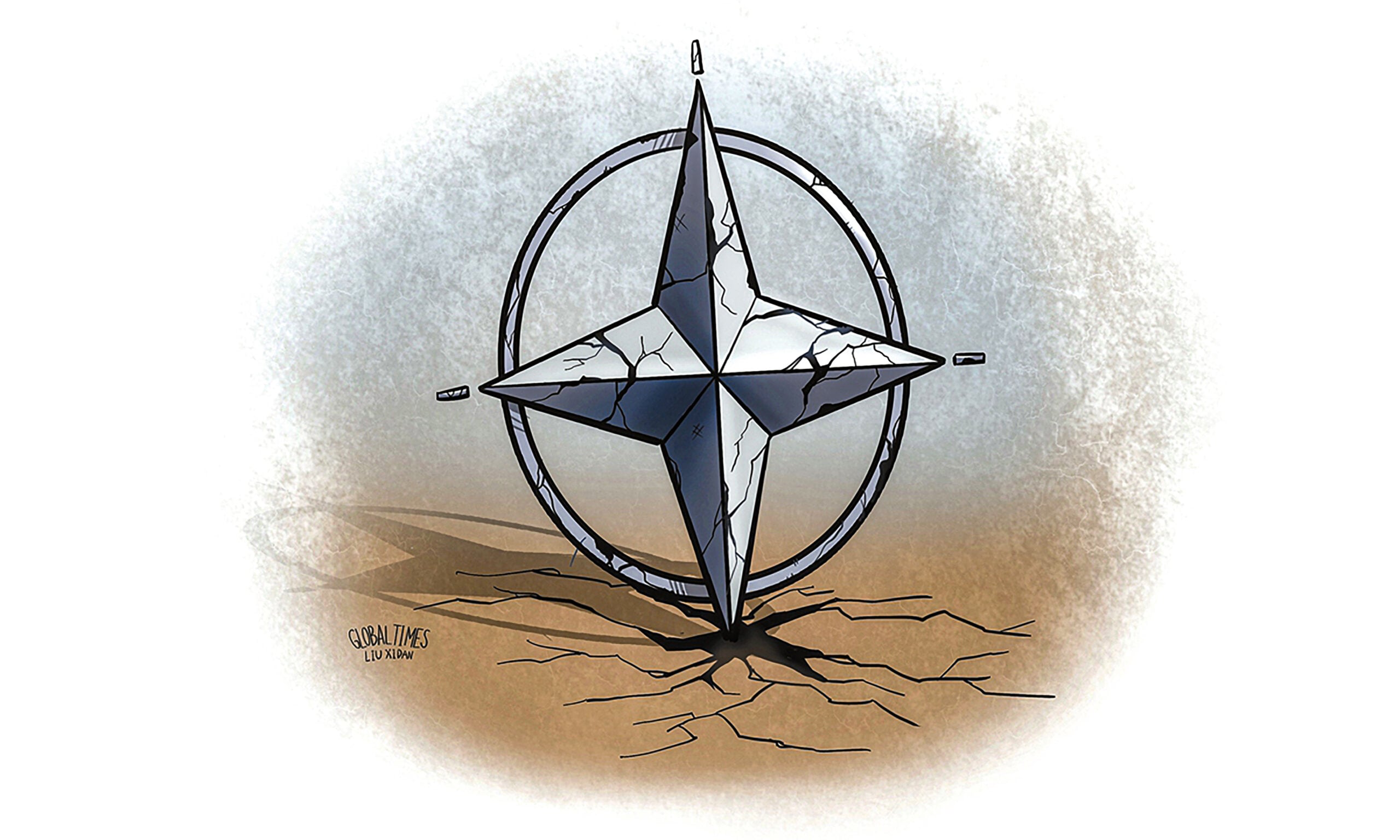
Jan Oberg July 16, 2024 On July 11, 2024, after the NATO Washington Summit, Global Times in Beijing was so kind as to publish my comparative thoughts on the famous Five Principles on Peaceful Coexistence – just celebrated in Beijing – and five principles I have extracted from NATO’s concepts and policies. Quite a contrast! Here is how it begins: “The West showed virtually no interest in the recent celebration of the 70th anniversary of the Five Principles of Peaceful Coexistence in Beijing. These Five Principles, created by then China’s premier Zhou Enlai and Indian leader Jawaharlal Nehru, are enshrined in the Chinese Constitution and aim to promote peaceful, nonviolent relations among nations. However, this is not the case with NATO, which marks its 75th anniversary on July 9-11. If officially it too had five principles, they would be: 1. offensive deterrence; 2. forward “defence”; 3. nuclear weapons and the...
shubham-dhage-_JrZM1Gy2fI-unsplash
The issue of state sovereignty under international law and its inconsistencies and duplicities has become more complex than ever, especially after the outbreak of the Ukraine war and the “Ukrainization” of the Taiwan issue (even though Taiwan is not a sovereign state like Ukraine). However, the focus of this analysis is relatively modest: we examine a region of the Western Balkans in which the countries have already (more or less voluntarily) lost or given up their statehood and sovereignty. The concept of the so-called “Western Balkans” (WB) – comprising Serbia, Montenegro, Albania, Kosovo, North Macedonia, and Bosnia and Herzegovina – was concocted in the corridors of power in Brussels and Washington. This artificial sub-region, with its flexible geography and borders, lacks logical coherence. It effectively creates a buffer zone of weak states that are unlikely to ever meet the criteria for EU integration despite being offered European perspectives and hopes. However, these...
Xi_JO-1
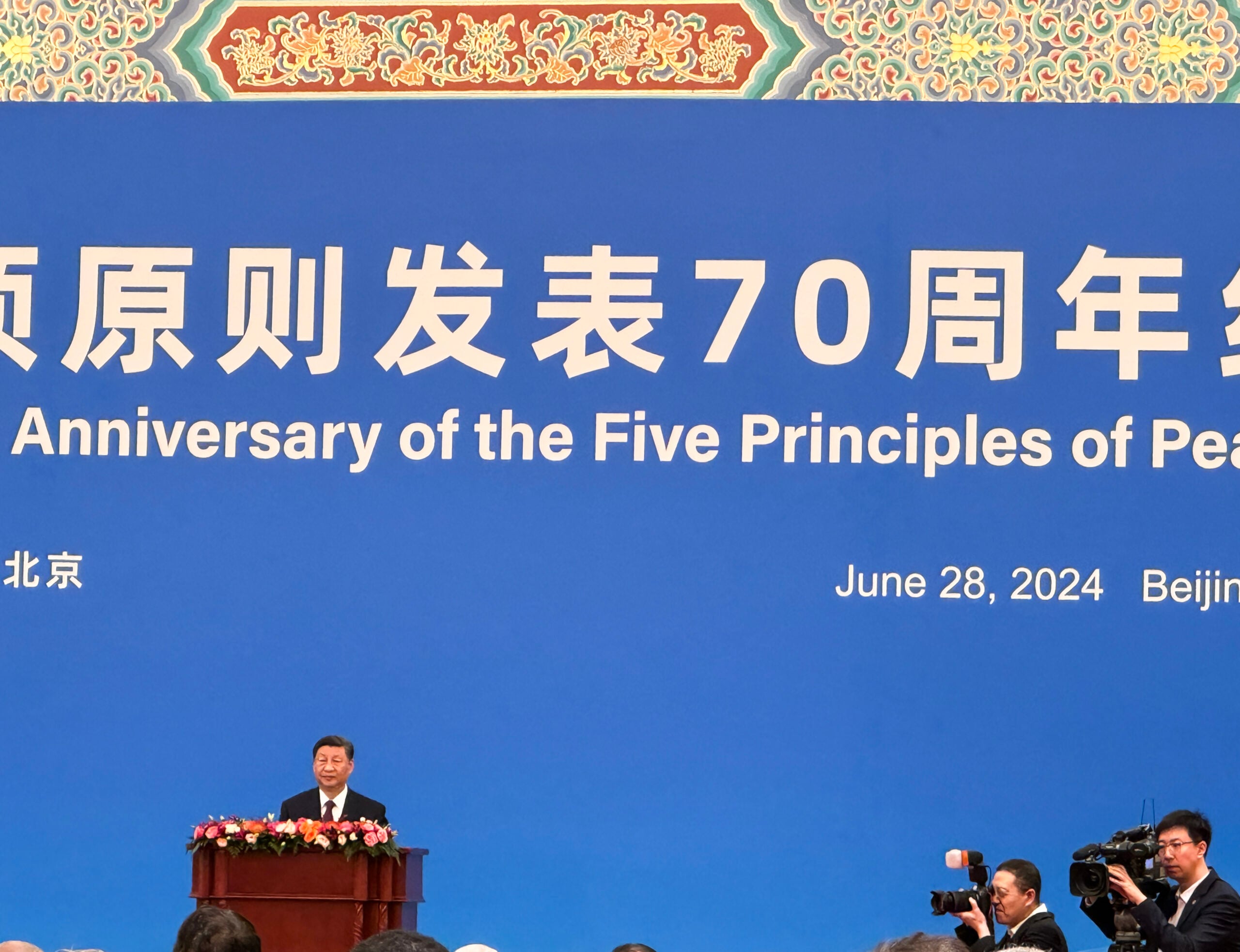
Photo © Jan Oberg 2024 July 5, 2024 Please find below a link to Chinese President Xi Jinping’s remarkable speech on the highly significant event for future world peace. TFF’s Jan Oberg was invited to attend the conference (and took the above photo from a long distance in the Great Hall of the People). When reading it, you’ll immediately notice that it is a comprehensive overview of why and how the world, in all its diversity, can shape a cooperative future for humankind that is also much more peaceful than the present. It illustrates that China’s foreign policy is based on long-term thinking and on unalterable principles. You’ll notice that there are no attacks on anyone; that President Xi talks about a global “us” and not a “we and them”; that there is a consistent philosophy about equality and win-win cooperation and that such cooperation – getting to know each...
664a92aca31082fc2b6e461d
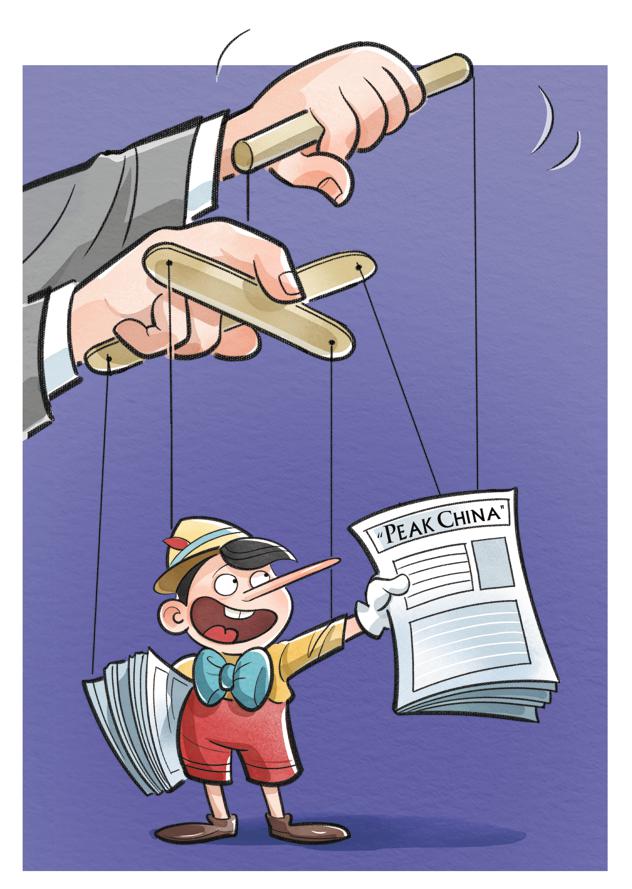
It is the West that has peaked, not China Li Xing & Jan Oberg May 24, 2024 Published in China Daily Global – 2024-05-20 08:00 TFF recommends that, when you have read this article, you browse China Daily and get a feel for this distinguished newspaper and what to learnfrom it about China and China’s view of the West.This article marks the beginning of a new cooperative effort between TFF, the two authors and Chinese media in both English and Chinese editions, which means a very large readership. More to come. 20240520_Ling_Oberg_China_DailyDownload zgshkxb_20240524_A03Download The authorsLi Xing is a Yunshan leading scholar and a distinguished professor at Guangdong Institute for Interna-tional Strategies, and a professor of international relations at Aalborg University, Denmark. Jan Oberg is a former professor and co-founder and director of the independent Transnational Foundation for Peace and Future Research, Sweden. The authors contributed this article to China Watch,...
663d616ba31082fc2b6db43f
Jan Oberg May 16, 2024 This is a column from May 5, 2024, in The China Daily Chinese and Western ways of thinking are complementary not mutually exclusive We learn about other cultures mostly through the media and through books, films, travels and personal encounters. All news reports are micro glimpses of a time and place. This challenges us in at least two ways: how do we get a more accurate and holistic perspective of the world, and how can we learn to understand each other across cultural diversity. One way to understand societies is to look for similarities and differences in the ways people think. Or, what is in their general attitude to “others” — are they perceived as a danger, potential friends, “barbaric”, or as someone to be curious about, explore and learn from? Next, do the citizens think in terms of either/or, or both/and? Exclusivity or inclusivity?...
cti
Jan Oberg April 8, 2024 This 7-minute video was shot by The China Academy in January 2024, posted on Wave Media on YouTube and then picked up by Taiwan’s CTi News and the Chinese Global Times magazine. This means a very large audience. Here is the link to see the many comments it created. I’m simply trying, in the shortest possible manner, to summarise what is happening these years from a macrohistorical perspective. If you think this way of thinking is interesting, why not reward TFF for bringing you fresh, different perspectives and always with a touch of a better future and a more peaceful world? It’s fast, simple and safe. Just hit this Big Red Button
China-US-Economic-Risk
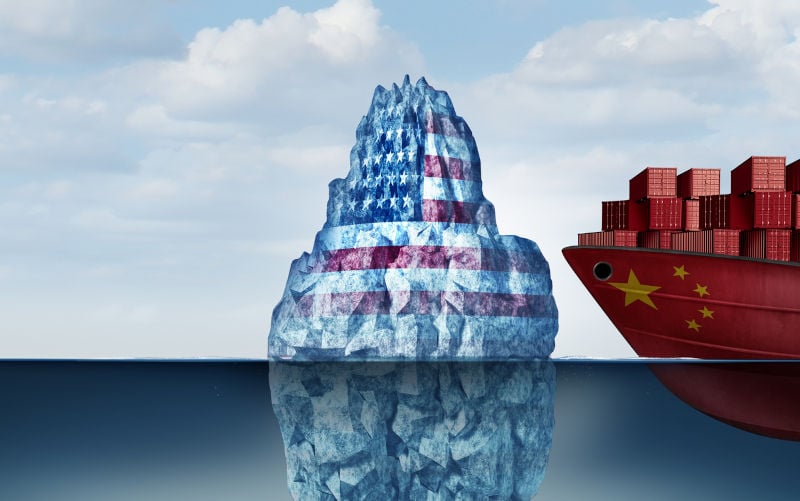
John Menadue March 6, 2024 Pearls and Irritations has posted an outstanding series of articles by Percy Allan on the so-called ‘China Threat‘. He highlighted that America is deeply divided and that promoting the China threat helps unite Americans; that unlike the UK and the US, China has no imperial legacy; that unlike the Soviet Union, China is not exporting ideology; that China is concerned about managing its large ethnic and religious minorities; and that surrounded by scores of US bases, China’s military is defensive. Most important of all, Percy Allan emphasises that China’s focus is economic. Initially published by Pearls and Irritations. John Menadue’s Public Policy Journal here Western media, including in Australia, has become quite unhinged about the China threat. Our political ‘leadership’ slavishly follows Washington propaganda conducted mainly through the help of security agencies and the Five Eyes. The China threat agencies are unwilling to stand back...
Eclecticism_90cm_300dpi_1200_100dpi
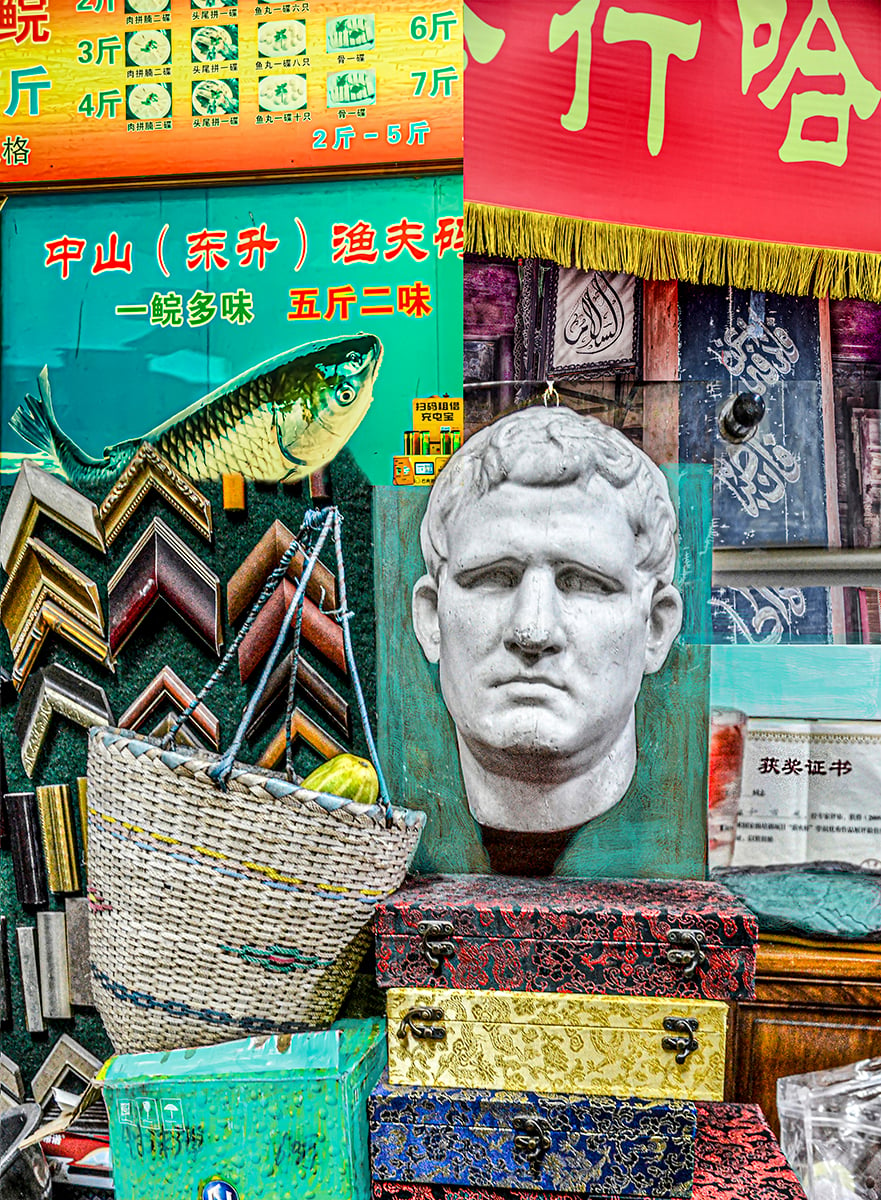
Photo © Jan Oberg “Eclecticism” 2019 Johan Galtung 2015 February 29, 2024 A theory serves comprehension, prediction and identification of conditions for change. Seven such historical-cultural pointers will be indicated for China; using the West in general, and the USA in particular, for comparisons. The presentation draws on countless dialogues in China over 40 years, since 1973. Published by Counterpunch in 2015 China: in time, as dynasties; West: in space as empires. Look at a histomap combining world history and geography, time and space: China shows up through 4,000 years as relatively coherent dynasties with complex transitions – and the West as empires–birth-growth-peaking-decline-fall, like the Roman, UK and now the US empire – duration vs bubbles that burst; as China-centric vs Western hegemonic. Chinese space: Barbarian; US time: to create, past irrelevant. China marginalized space peopled by South-West-North-East barbarians – outside the “Chinese pocket” between Himalayas-Gobi desert-Tundra-Sea–except for Silk roads...
CGTN-MIMAC-Int
Interview on CGTN’s “First Voice.” CGTN is China’s main global TV network. At present, CGTN Digital has over 150 million followers across the globe. Instead of embedding the video here, we offer the direct link so you can see the comments that it elicited and also comment yourself if you like. And when there, browse CGTN as an absolutely leading global news outlet. And then… Please support TFF, which continues to deliver truthful, pro-peace public education based on decades of research. So press that red button for peace!
gandhi-mao
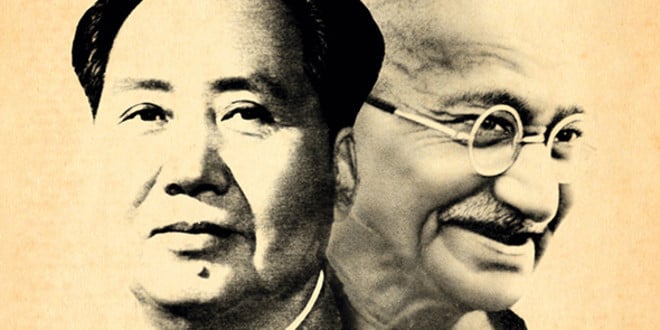
Published here on the birthday of Mao Zedong (26 December 1893 – 9 September 1976) Last October, we had two important anniversary messages. One came through loud and clear in the Western media: the anniversary of the triumph of the Chinese Revolution, guided by Mao, restoring China to its own people, violently, on October 1. The other message was considerably more subdued: the anniversary of the birth of Gandhi, the Father of the Indian nation, restoring India to its own people, nonviolently, on October 2. Of course, the West focused on China, its military parades, its display of glittering affluence after decades of growth, true to its fascination with violence and economic growth.  Of course, India is also a BRIC country–Brazil-Russia-India-China–to be taken seriously because of its high growth and “muscle”. But this obsession with military and economic power makes the West lose the essence of the two anniversaries, the...

IMG_6045-1
In 2020, I wrote an impressionistic article, ”Could everyday micro malfunctions be signs of a coming macro breakdown?” It was inspired by the brilliant sociologist C. Wright Mill’s concept of the sociological imagination. Out of many more, I selected 14 examples of everyday things that I had experienced simply did not work, from lost luggage and flight delays to bank cards that prevent payment, postal services that do not bring out parcels and letters on time, and French pay road toll that prevents you from paying, etc. To quote one example from the article: ”A little story about the decay in my town: I arrive in Lund where I live, after 6 weeks travelling around entirely on my own in China. Everything has worked perfectly there – trains, flights, ticket reservations, no queues anywhere, my WeChat app, ATMs, etc – although English is still a problem for an ignorant person...
Categories

Year

Author / Contributor

Region