

Build the “Global Village” on Ground Zero, Literally!

Ground Zero is a place of profound sadness and heart breaking sorrow. Its earth is filled with the blood of thousands who lost their lives. For what did these people die? Their deaths seem so meaningless. Could we, the living, give their deaths meaning, even if only postmortem?

What would the dead want us, the living, to build on their graves? What would they reply, if they could speak? Would they want us to leave Ground Zero empty, literally “zero”? Or would they want us, the living, build a memorial for the unspeakable tragedy that happened?

I believe the dead would want to offer life, they would be delighted by symbols of liveliness and joy, and not be willing to invest in past sufferings. The dead would wish to dedicate their deaths to be the seeds for future peace, not for future divisions. To die for peace provides ultimate sublime and divine meaning, much more meaning than to die for future war and hatred.

Therefore I propose to build the “Global Village,” build it literally, on Ground Zero. How often do we use the term “global village,” we use it as a symbol, a dream, a myth, why not build it? Why not envision its materialization on Ground Zero? Why not think up a conglomerate of styles and architectural ideas from around the globe, brought together under One roof, a conglomerate that symbolizes our hopes for a peaceful future of our planet? Why not forge into bricks, glass, and steel, concrete and wood, a vision of a future where neighbors live amicably together in the global village? Why not give tangibility to this dream? Offices, apartments, restaurants, theatres, everything could be imagined and built within the idea that the Global Village is to be expressed.

The “Global Village” area should not only house a global trade center but also global centers of culture with music, art, dance, and literature, as well as centers of food, of religion, of the environment, of medicine and science, and of local governments. It could be a complement to the UN. A place in which people of different foci of interest, from different national and cultural backgrounds, would be able to interact about their common interests in an area where they would inevitably come into contact with people with different interests. William Hartung from the World Policy Institute at the New School University in New York, told me that Lewis Mumford (1895-1990), a philosopher, writer, architectural critic and urban planner, reflected on the UN building in New York and that it symbolized hierarchy instead of a more egalitarian vision of the future of the global village. The new “Global Village” could remedy that!

Which place would be more predestined for such a powerful symbol than Ground Zero? The World Trade Towers housed people from around the globe. In other words, those who died were already messengers of the dream of a global village that cooperates and works together. Why not fulfill their unfinished message? On Ground Zero, we should not increase the rifts of the past; we should increase bridges for the future.

In 1991, when I came to Europe after having worked as a psychological counselor in Egypt for seven years (among others at the American University in Cairo), I was alarmed by the blindness and egocentric illusion of security among the rich. In 1993 I organized a festival under the motto “better global understanding” and “global responsibility,” where I asked a whole city, the German city of Hamburg, with 1.5 million inhabitants, to reflect on the contributions every individual could provide to build a “global village” that really deserves this name. About 20 000 people came, 4000 of them brought objects that they had prepared, such as, for example, sheets of paper with texts of ideas, speeches, or reflections, or canvases with drawings of imagined futures for the globe. This very special festival was called “Hamburg’s Chain of Ideas.”

Subsequent to this festival, inspired by the thousands of ideas that had streamed in, I developed and discussed with architects the idea of the Global Village being built as a conglomerate of houses coming together under One large roof. I contacted architects who experimented with large and innovative roof constructions that could span many buildings and give material expression to the idea that humankind, as diverse as it may be, has to learn to enjoy its diversity peacefully under One Roof.

Upon returning to Europe after many years of experience in Asia and the Middle East, European attitudes reminded me of Marie Antoinette, a member of the French aristocracy at the outset of the French revolution, who displayed heartless naivety when she chose to stay uninformed about the poverty of her underlings; she is reported to have asked why the poor did not eat cake when they ran out of bread. She had to pay with her life for her naivety: the guillotine cut off her head.

The problem was that the French aristocracy was used to underlings who accepted humiliation, and these aristocrats were therefore unprepared, when their underlings “woke up.” The English aristocracy, in comparison, did not face the guillotine, a fact that shows that an elite indeed can contribute to constructive change, and that feelings of humiliation among downtrodden underlings do not necessarily lead to either apathetic submission or violent uprising, but may lead instead to benign and creative measures of reconciliation, such as those the name of Nelson Mandela stands for.

The notion of humiliation has been my topic of research since 1996. It is common knowledge to assume that World War II was triggered, at least partly, by the humiliation that the Versailles Treaties inflicted on Germany after the First World War. This assumption represents a social-psychological hypothesis that has been taken seriously by politicians and historians; the Marshall Plan, for example, avoided to humiliate Germany again after the Second World War.

In 1996 I asked myself whether this hypothesis has ever been explored by social psychology proper. A literature search showed that the answer was no. The notion of humiliation has hardly ever been researched on its own account, except by a handful of researchers. The phenomenon of humiliation clearly is ubiquitous and permeates research on trauma, violence, or aggression; however it is usually confounded with the terminus of shame or other related notions.

In 1996 I designed a doctoral research project with the aim to focus on the concept of humiliation, differentiate it from other notions, and explore its role, not only in the distant past, but also in more recent events of violence, genocide and war. I interviewed over 200 people who were either implicated in or knowledgeable on the genocides in Rwanda and Somalia. This fieldwork was backed up by interviews with people involved in German history. From 1997-2001 this project was financed by the Norwegian Research Council (on behalf of the Norwegian Ministry of Foreign Affairs within the Research Programme on Multilateral Development Assistance). I concentrated on building a “Psychology and Theory of Humiliation” and have through this work created a new multidisciplinary niche in the academic landscape. (In 2001 I defended my doctoral dissertation on humiliation at the Department of Psychology at the University of Oslo, and thus earned my second Ph.D., subsequent to a doctorate in Psychological Medicine in 1994 in Germany).

The phenomenon of humiliation seems to be at the core of current global and local conflicts, be it the global threat of terrorism, or urban or family violence. Humiliation seems to be the mediating link that turns grievances, such as poverty or abuse, into “nuclear bombs of emotions.” Poverty, for example, as well as abuse, does not unavoidably trigger violence, on the contrary, living under harsh circumstances may lead to apathy, depression, submission, or even heroism. A Nelson Mandela gives unsurpassed guidance on the latter. Yet, as soon as such sufferings are translated into overarching narratives of illegitimate lowering and humiliation, the desire for retaliation may emerge. Victims may yearn for and plan acts of humiliation against perceived humiliators (real or imagined) and thus victims may become perpetrators. If this happens at the group level, such plans may be channeled into group violence, as has happened in Rwanda and other places. A Mandela could have become a Hitler. And an Osama bin Laden may not be the last aspirant.

At present we live in a world that invites humankind into embracing the human rights message that every human being, by virtue of being born as a human being, possesses an inner core of dignity that ought not to be humiliated. This invitation is indeed heard and listened to around the globe, and it is understood as an invitation into dignifying quality of life for all. Poverty, under this new paradigm, is no longer fate or bad luck or “my own fault only;” poverty acquires the status of a violation of human rights, perpetrated by the rich on the poor. Environments that are disabling are no longer accepted, they are seen as massive acts of humiliation. To create “enabling environments” for all, this is the call of the day. Only under the paradigm of enabling environments for all in the global village can diversity flourish without any undercurrent of oppression. This is because there are two notions of freedom around and the world yearns for “freedom for all,” as opposed to “freedom for elites to humiliate the rest.”

Let us build a symbol of a free and democratic Global Village in which neighbors live together in dignity and mutual respect, without humiliation. Let us build this symbol on Ground Zero. There is no better opportunity for the healing of the world’s wounds and demonstrating our dedication to future peace. The world needs to be united in this vision. Ground Zero should serve this noble goal. Building the Global Village on Ground Zero is a unique chance for America to invite the world into its dream of freedom, democracy, and happiness for all.

I am currently concentrating on writing a book on humiliation and founding an institute or center for the studies of humiliation. Columbia University, especially Professors at Teachers College such as Morton Deutsch, or Clifford Hill who is the guardian of this text, have been of immeasurable inspiration to my work.
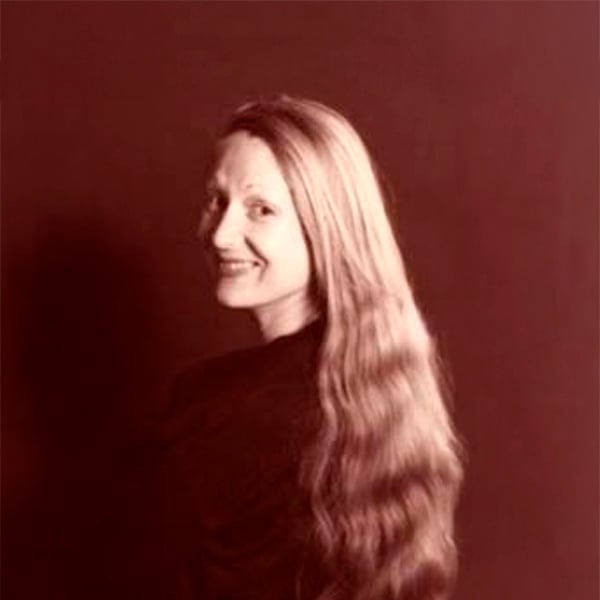

MD, PhD, PhD (Dr psychol, Dr med)

Related Posts

LONDON – So far so good, at least on the wider level. While internally Iraq seems on the edge of chaos, the much heralded clash of civilizations between the Muslim and Judaeo-Christian worlds has yet to become apparent. We have anger and despair aplenty in the Arab and Muslim worlds. But very little rushing to the standard and there was no great pilgrimage of warriors to join the fight, as happened when the Soviet Union invaded Afghanistan twenty years ago, and then, having driven the Red Army out, were left to ferment in that mountainous redoubt. With the armaments supplied by the CIA the mujahidin were transformed into Al Qaeda that became, for a relatively brief moment as these things go, ‘the greatest threat to the homeland that America has ever known.’ Nevertheless a ‘Cold War’ between much of the Muslim world and the West is certainly in full swing. Winston...
The Challenge of Nuclear Weaponsin the Twenty-first CenturyA Path Forward The peoples and governments of the world face an urgent challenge relating to weaponry of mass destruction and particularly to nuclear weaponry.  At the crossroads of technology, terrorism, geopolitical ambition, and policies of preemption are new and potent dangers for humanity. Despite ending the nuclear standoff of the Cold War era, nuclear weaponry is again menacing the peoples of the world with catastrophic possibilities.  We recognize the need for any government to pursue its security interests in accordance with international law; and further, we recognize that distinctive threats to these interests now exist as a result of an active international terrorist network having declared war on the United States and its allies. Nonetheless, we reject the assessment of the current US administration that upgrading a reliance on nuclear weapons is in any sense justified as a response. We find it...
By Karin Wegestal MP, the Social Democratic Partyon behalf of the Swedish Committee for Solidarity with the Yugoslav People During the last decade, the Federal Republic of Yugoslavia has received more than 500,000 refugees from Croatia and Bosnia, and another 300,000 internally displaced persons, mainly from the province Kosovo and Metohia. For a country with about ten million inhabitants, such an influx of homeless people is obviously a very heavy burden – even under peaceful conditions. But in addition to that, the Federal Republic of Yugoslavia has been the subject to sanctions from the western powers for close to ten years and its infrastructure was badly hurt through Nato’s intense bombardment during 78 days in 1999. The result of all this is that Yugoslavia, once the most developed industrial country in Eastern Europe, is today the poorest country in Europe. In Serbia excluding Kosovo, with about ten million inhabitants and...

Recent Articles

Photo above: Carl Fredrik Reuterswärd’s Non-Violence outside UN Headquarters in New York. Kirill Levin, CC BY-NC-SA 2. Jan Oberg November 3, 2026 I am happy to be published in Horizons which is produced by the Center for International Relations and Sustainable Development, CIRSD, in Belgrade. My contribution brings out a radical re-thinking of what concepts such as defence, security, deterrence – and peace – may mean if we want to create a more peaceful world. It also summarises a few things I have been working with the last few decades. Please read it here Og her er den på dansk, takket være Johnny Baltzersens lynhurtige oversættelse
UNITE-tillid, DREAM-velstand og andre konstruktive komponenter Normally we publish articles in English here. But this is a translation of a very important TFF document that should reach as many as possible in Denmark since this country’s government has been one of the most hardline in Europe and, up till now at least, has refused to use diplomacy and, instead, spent tremendous sums on arming Ukraine with the express goal of defeating Russia. Thus this – unique – article is in Danish. Vi er Johnny Baltzersen og hans Fælles Sikkerhed – Fælles Fremtid på Substack overmåde taknemmelige for at have oversat og publiceret TFF’s 2025-portfølje for fredsidéer med henblik på Ukraines fremtid. Vi håber den nu kan nå mange flere danskere – som også vil sprede den og skabe debat – nu den danske regerings og folketingspartiernes politik på dette område siden 2022 står nu – forudsigeligt – ved vejs ende....
Jan Oberg TFF director October 28, 2026 Exactly one month has now passed since I published my criticism of the introduction to the special issue on Johan Galtung published by the Journal of Global Security Studies, JoGSS, and of Tor Egil Førland’s chapter about Galtung which serves as a preview to his forthcoming biography of Galtung to be published by PRIO. See the original on The Transnational here and the same article on TFF Substack with many general and critical comments and, in particular, the people who decided to withdraw from the biography project in protest. The special issue itself was extraordinary. It was devoted to the intellectual legacy of one of the founders of peace research and contained a number of strong assessments of his personality, scholarship, intellectual trajectory, and public role. Such assessments are, of course, entirely legitimate. No scholar is beyond criticism, and neither was Johan Galtung....

TFF on Substack

Discover and subscribe to more peace materials on TFF Substack

Most Popular

Photo above: Carl Fredrik Reuterswärd’s Non-Violence outside UN Headquarters in New York. Kirill Levin, CC BY-NC-SA 2. Jan Oberg November 3, 2026 I am happy to be published in Horizons which is produced by the Center for International Relations and Sustainable Development, CIRSD, in Belgrade. My contribution brings out a radical re-thinking of what concepts such as defence, security, deterrence – and peace – may mean if we want to create a more peaceful world. It also summarises a few things I have been working with the last few decades. Please read it here Og her er den på dansk, takket være Johnny Baltzersens lynhurtige oversættelse
UNITE-tillid, DREAM-velstand og andre konstruktive komponenter Normally we publish articles in English here. But this is a translation of a very important TFF document that should reach as many as possible in Denmark since this country’s government has been one of the most hardline in Europe and, up till now at least, has refused to use diplomacy and, instead, spent tremendous sums on arming Ukraine with the express goal of defeating Russia. Thus this – unique – article is in Danish. Vi er Johnny Baltzersen og hans Fælles Sikkerhed – Fælles Fremtid på Substack overmåde taknemmelige for at have oversat og publiceret TFF’s 2025-portfølje for fredsidéer med henblik på Ukraines fremtid. Vi håber den nu kan nå mange flere danskere – som også vil sprede den og skabe debat – nu den danske regerings og folketingspartiernes politik på dette område siden 2022 står nu – forudsigeligt – ved vejs ende....
Jan Oberg TFF director October 28, 2026 Exactly one month has now passed since I published my criticism of the introduction to the special issue on Johan Galtung published by the Journal of Global Security Studies, JoGSS, and of Tor Egil Førland’s chapter about Galtung which serves as a preview to his forthcoming biography of Galtung to be published by PRIO. See the original on The Transnational here and the same article on TFF Substack with many general and critical comments and, in particular, the people who decided to withdraw from the biography project in protest. The special issue itself was extraordinary. It was devoted to the intellectual legacy of one of the founders of peace research and contained a number of strong assessments of his personality, scholarship, intellectual trajectory, and public role. Such assessments are, of course, entirely legitimate. No scholar is beyond criticism, and neither was Johan Galtung....
Read More
knotted gun
Photo above: Carl Fredrik Reuterswärd’s Non-Violence outside UN Headquarters in New York. Kirill Levin, CC BY-NC-SA 2. Jan Oberg November 3, 2026 I am happy to be published in Horizons which is produced by the Center for International Relations and Sustainable Development, CIRSD, in Belgrade. My contribution brings out a radical re-thinking of what concepts such as defence, security, deterrence – and peace – may mean if we want to create a more peaceful world. It also summarises a few things I have been working with the last few decades. Please read it here Og her er den på dansk, takket være Johnny Baltzersens lynhurtige oversættelse
TFFPortfolioVign
UNITE-tillid, DREAM-velstand og andre konstruktive komponenter Normally we publish articles in English here. But this is a translation of a very important TFF document that should reach as many as possible in Denmark since this country’s government has been one of the most hardline in Europe and, up till now at least, has refused to use diplomacy and, instead, spent tremendous sums on arming Ukraine with the express goal of defeating Russia. Thus this – unique – article is in Danish. Vi er Johnny Baltzersen og hans Fælles Sikkerhed – Fælles Fremtid på Substack overmåde taknemmelige for at have oversat og publiceret TFF’s 2025-portfølje for fredsidéer med henblik på Ukraines fremtid. Vi håber den nu kan nå mange flere danskere – som også vil sprede den og skabe debat – nu den danske regerings og folketingspartiernes politik på dette område siden 2022 står nu – forudsigeligt – ved vejs ende....
JoGSS-Silent
Jan Oberg TFF director October 28, 2026 Exactly one month has now passed since I published my criticism of the introduction to the special issue on Johan Galtung published by the Journal of Global Security Studies, JoGSS, and of Tor Egil Førland’s chapter about Galtung which serves as a preview to his forthcoming biography of Galtung to be published by PRIO. See the original on The Transnational here and the same article on TFF Substack with many general and critical comments and, in particular, the people who decided to withdraw from the biography project in protest. The special issue itself was extraordinary. It was devoted to the intellectual legacy of one of the founders of peace research and contained a number of strong assessments of his personality, scholarship, intellectual trajectory, and public role. Such assessments are, of course, entirely legitimate. No scholar is beyond criticism, and neither was Johan Galtung....
Screenshot 2026-10-26 115647
An aspect of Iran’s culture and civilisation you’ve probably never heard about. Don’t be surprised if the US and Israel also try to bomb them. Jan ObergTFF director October 26, 2026 Today – under the “USraeli” threat of new “annihilating” bombings – opens the 7th International Conference on Peace and Conflict Resolution at Tehran’s University. As far as I can tell, this is the only permanent, advanced peace research institution in West Asia/the Middle East. Perhaps more countries in that region could be inspired? I mean, how many military “security” institutes and military academies do they have? Many peace research institutes and university departments have been established since the 1950s in the West. They are now all under attack; some have closed down, some have gone mainstream, yet others kept the name but do nothing to research peace and disseminate results or advice; instead, they cooperate with militarism’s platforms such...
Screenshot 2026-10-15 141837
Let’s discuss using AI to create peace – in contrast to boring geopolitics devoid of creative healing and visions. Jan Oberg TFF director October 15, 2026 I asked VEED to create a short video exemplifying how peace is preferable to war, then chose the lady as a template. Simple as that. In less than a minute, it produced this video, which any peace-loving person would appreciate. The only problem is that human intelligence (HI), at least the one that exists among Western decision-makers, isn’t half as moral or smart as AI. I have used AI to dialogue about peace and peace plans, creative conflict resolution and visions of a better future for humankind. It so happens that I am having more stimulating, intelligent, creative and moral discussions with AI than I could possibly have with any EU or NATO leader today. Yes, AI has very problematic and dangerous aspects; used...
girl-5894831_1280
Below are TFF-related media mentions, comments, videos and social media posts published elsewhere but not on this homepage. We happen to catch and list only a fraction. Regarding video comments and debates, we recommend that you go to the TFF Video Channel on Substack where many of them are reproduced. Jan Oberg is a contributor to China Daily – 52 million daily clicks – and Global Times, CGTN and CCTV (the national television), China Investment, Xinhua News Agency and several others. Articles and videos on these media very often multiply into countless Chinese (and Western media) that re-post them from these main media. Thanks to The China Academy, his analyses, interviews and comments are frequently posted on YouTube channels such as Thinkers Forum and Wave Media. These videos are often re-posted on Bilibili (China’s YouTube), the China Content Center on TikTok, and on the Chinese edition of TikTok, Douyin.com. This means reaching hundreds of millions of viewers worldwide over a year. While there are too many to catch on all these...




