
Biden cannot counter China with a team that lacks expertise

William H. Overhalt

July 20, 2021

President Biden’s foreign policy team says China is the priority, but the team lacks China expertise. Other than trade experience at the Office of the United States Trade Representative, Biden’s Cabinet has no China expertise. Secretary of State Antony Blinken has worked on issues involving Europe, Canada and the Middle East. Defense Secretary Lloyd Austin has a distinguished career as a general in Iraq and as leader of U.S. forces in the Middle East. National security adviser Jake Sullivan’s biography highlights work on Libya, Syria, Iran and Myanmar. 

Originally posted by The Hill on July 7th, 2021

Biden’s lead candidate for ambassador to Beijing continues the pattern. Nicholas Burns has served in the Middle East and Europe. An Indiaphile and Sinophobe, he lacks China experience and disdains China experts with more complex views. 

I’m a lifelong Democrat who criticized George W. Bush’s foreign policies. But Bush had outstanding success with U.S.-China relations. He gained enduring respect and appreciation from both Beijing and Taipei. He strongly supported Taiwan but forbade dangerous Taipei provocations. He managed difficult problems, starting with the downing of a U.S. surveillance plane on Hainan. Bush’s China success was created by his team — notably, Hank Paulsen at Treasury, Dennis Wilder at the National Security Council, and Sandy Randt as ambassador. They knew China. 

Presidents Obama and Trump lacked top-level China expertise and their Asia policies were successive fumbles. Obama’s team idled while North Korea built nuclear weapons. He sacrificed U.S. allies’ confidence by failing to defend Scarborough Shoal, validated the Japanese breaking of a four-decade peace understanding over the Senkakus, used phony arguments in failed opposition to the Asian Infrastructure Investment Bank (AIIB), and invested too little, too late in the Trans-Pacific Partnership. Trump’s record was worse.

Below Cabinet level, Biden’s key Asia officials are Kurt Campbell at the National Security Council and Ely Ratner at the Department of Defense. State’s Sung Kim is rock-solid but less prominent. Neither Campbell nor Ratner has deep, direct experience with China. Obama’s Asia failures happened on Campbell’s watch. Campbell and Ratner are famous for a 2018 Foreign Affairs article asserting that U.S. engagement with China has failed because it assumed that engagement would make China a liberal polity — fatuous historical revisionism based on out-of-context quotes. Congressional testimony shows that all key engagement decisions hinged on national security and economic risks and opportunities, uneasily mixed with moral opprobrium. The Campbell-Ratner misrepresentation of history should have disqualified them from their current government positions. 

Campbell’s primary contribution under Obama was “the pivot” to Asia, a conceptually valid shift of U.S. resources away from the Middle East and South Asia to East Asia. The Middle East focus of Biden’s team so far proves the pivot’s strategic failure. The pivot’s biggest contribution to U.S. strength was the pitiful shift of a couple thousand U.S. troops to northern Australia, but its management provoked Beijing to anticipate a major strategic challenge — a big net loss for the United States.  

The Biden team’s record on Pacific Asia has been a series of missteps. Blinken’s antagonism in Anchorage played well domestically but could hamper productive dialogue for years. Blinken called Taiwan a “country,” although his professional colleagues walked that back; someone who understood China would never make that gaffe. Biden’s policy toward North Korea lacks substance and is hopeless without a China dimension. Blinken half-snubbed the Association of Southeast Asian Nations (ASEAN), which holds the balance of Chinese and American power in Asia, by offering their meeting only an in-flight video conference because he gave priority to a Middle East meeting — and then he couldn’t make the meeting technology work. 

Blinken has warned countries not to accept Chinese infrastructure loans, lest China end up owning the projects, echoing the falsehood put forth by former Vice President Mike Pence and former Secretary of State Mike Pompeo that Beijing lends money inappropriately so that it can seize collateral. In more than a thousand African loans, Beijing has never seized collateral and never sought to take advantage of a squeezed borrower. The Pence citation of a 2017 Chinese lease agreement with Sri Lanka’s Hambantota port was such a distortion that some scholars call it a lie.     

The Biden administration does not know how to be tough but not provocative on Taiwan. If you sell Taiwan advanced weaponry and send three carrier task forces to the Taiwan Strait, you’re tough — but don’t break the 1972 agreement that underlies Taiwan’s democracy and prosperity. However, if you invite the Taiwan representative to the presidential inauguration, send members of Congress as official emissaries, and characterize Taiwan as a “security partner,” you don’t strengthen Taiwan but nearly abandon the 1972 agreement to sever official diplomatic and alliance ties. That risks putting Chinese leader Xi Jinping in a position where keeping his job could require decisive action. 

Would America have accepted a Cold War leadership without Soviet expertise? The more you see China as a dangerous adversary, the more important it is to actually understand China. It is insufficient for officials to be well-connected, experienced on Middle East issues, and dislike China. 

We bring you high-quality analyses and documents like this on a permanent basis. Why not appreciate TFF’s true independence and productivity by contributing if you benefited from this article? Thanks.
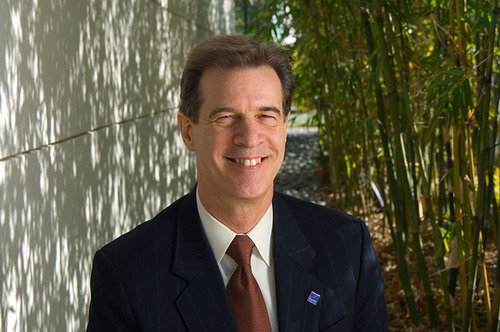
William H. Overholt is a senior research fellow at Harvard’s Kennedy School. The author most recently of “China’s Crisis of Success,” he has served as Asia Policy Distinguished Chair at RAND and president of the Fung Global Institute.

One Response

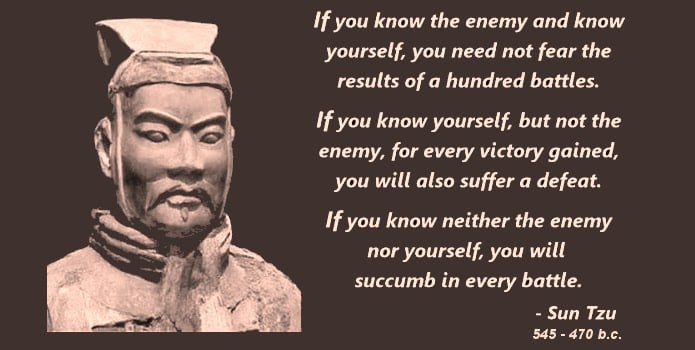
  1. Thank you very much for this informative article. One problem with many American politicians, but certainly not most American people as a whole, is that they want everybody else to be just like them. They have the Manichaean view of seeing the world divided into good and evil. You are either with us or against us. They are not capable of seeing the shades of grey. This is a dangerous attitude that has so far led to many unnecessary wars. They should copy Sun Tzu’s lines quoted above and read them every day.

Related Posts

Photo above: Carl Fredrik Reuterswärd’s Non-Violence outside UN Headquarters in New York. Kirill Levin, CC BY-NC-SA 2. Jan Oberg November 3, 2026 I am happy to be published in Horizons which is produced by the Center for International Relations and Sustainable Development, CIRSD, in Belgrade. My contribution brings out a radical re-thinking of what concepts such as defence, security, deterrence – and peace – may mean if we want to create a more peaceful world. It also summarises a few things I have been working with the last few decades. Please read it here Og her er den på dansk, takket være Johnny Baltzersens lynhurtige oversættelse
Johan Galtung 1930-2024October 2015 Published here on October 3, 2026 Let us focus on Civilization for conflict analysis and remedies. Major forms of disorder use violence; war is state organized violence. The most belligerent states are the United States of America and Israel, both with civilization roots. National Evangelism, the US Protestant Christian civilization– more national than evangelical–justifies US warfare as exceptionalism of a people chosen by God, with a manifest destiny to run the world. Orthodox Judaism justifies Israeli warfare to conquer and expand from Nile to Euphrates as a religious right and duty to the Eternal One. The third most belligerent country, the UK, no longer believes it is God-chosen but chosen by the USA; not quite the same but something. But the root cause of global disorder lies in the Occident–with Islam–seeing itself as the single, universal civilization valid for all at all times, all others being...
Jan Oberg May 15, 2026 Go to this Fox News page and scroll the whole way down: President Donald Trump tells the world that his meeting with President Xi Jinping yielded a lot of very concrete political and economic results – of course, only where the Chinese side, according to him, agreed with him. He does not mention the Taiwan issue, but Secretary of State, Marco Rubio, says that it did not feature prominently in their talks and that the US policy on Taiwan has not changed. Then go to China Daily – or Global Times – and you will see that for the Chinese it is framework, principles, structure of cooperation etc. that matters – all embedded in the overall idea of “constructive bilateral relationship of strategic stability.” Nowhere is any concrete agreement or deal – all that Trump refers to – mentioned. At the general level, this gives you insights into the very different social...

Recent Articles

Photo above: Carl Fredrik Reuterswärd’s Non-Violence outside UN Headquarters in New York. Kirill Levin, CC BY-NC-SA 2. Jan Oberg November 3, 2026 I am happy to be published in Horizons which is produced by the Center for International Relations and Sustainable Development, CIRSD, in Belgrade. My contribution brings out a radical re-thinking of what concepts such as defence, security, deterrence – and peace – may mean if we want to create a more peaceful world. It also summarises a few things I have been working with the last few decades. Please read it here Og her er den på dansk, takket være Johnny Baltzersens lynhurtige oversættelse
UNITE-tillid, DREAM-velstand og andre konstruktive komponenter Normally we publish articles in English here. But this is a translation of a very important TFF document that should reach as many as possible in Denmark since this country’s government has been one of the most hardline in Europe and, up till now at least, has refused to use diplomacy and, instead, spent tremendous sums on arming Ukraine with the express goal of defeating Russia. Thus this – unique – article is in Danish. Vi er Johnny Baltzersen og hans Fælles Sikkerhed – Fælles Fremtid på Substack overmåde taknemmelige for at have oversat og publiceret TFF’s 2025-portfølje for fredsidéer med henblik på Ukraines fremtid. Vi håber den nu kan nå mange flere danskere – som også vil sprede den og skabe debat – nu den danske regerings og folketingspartiernes politik på dette område siden 2022 står nu – forudsigeligt – ved vejs ende....
Jan Oberg TFF director October 28, 2026 Exactly one month has now passed since I published my criticism of the introduction to the special issue on Johan Galtung published by the Journal of Global Security Studies, JoGSS, and of Tor Egil Førland’s chapter about Galtung which serves as a preview to his forthcoming biography of Galtung to be published by PRIO. See the original on The Transnational here and the same article on TFF Substack with many general and critical comments and, in particular, the people who decided to withdraw from the biography project in protest. The special issue itself was extraordinary. It was devoted to the intellectual legacy of one of the founders of peace research and contained a number of strong assessments of his personality, scholarship, intellectual trajectory, and public role. Such assessments are, of course, entirely legitimate. No scholar is beyond criticism, and neither was Johan Galtung....

TFF on Substack

Discover and subscribe to more peace materials on TFF Substack

Most Popular

Photo above: Carl Fredrik Reuterswärd’s Non-Violence outside UN Headquarters in New York. Kirill Levin, CC BY-NC-SA 2. Jan Oberg November 3, 2026 I am happy to be published in Horizons which is produced by the Center for International Relations and Sustainable Development, CIRSD, in Belgrade. My contribution brings out a radical re-thinking of what concepts such as defence, security, deterrence – and peace – may mean if we want to create a more peaceful world. It also summarises a few things I have been working with the last few decades. Please read it here Og her er den på dansk, takket være Johnny Baltzersens lynhurtige oversættelse
UNITE-tillid, DREAM-velstand og andre konstruktive komponenter Normally we publish articles in English here. But this is a translation of a very important TFF document that should reach as many as possible in Denmark since this country’s government has been one of the most hardline in Europe and, up till now at least, has refused to use diplomacy and, instead, spent tremendous sums on arming Ukraine with the express goal of defeating Russia. Thus this – unique – article is in Danish. Vi er Johnny Baltzersen og hans Fælles Sikkerhed – Fælles Fremtid på Substack overmåde taknemmelige for at have oversat og publiceret TFF’s 2025-portfølje for fredsidéer med henblik på Ukraines fremtid. Vi håber den nu kan nå mange flere danskere – som også vil sprede den og skabe debat – nu den danske regerings og folketingspartiernes politik på dette område siden 2022 står nu – forudsigeligt – ved vejs ende....
Jan Oberg TFF director October 28, 2026 Exactly one month has now passed since I published my criticism of the introduction to the special issue on Johan Galtung published by the Journal of Global Security Studies, JoGSS, and of Tor Egil Førland’s chapter about Galtung which serves as a preview to his forthcoming biography of Galtung to be published by PRIO. See the original on The Transnational here and the same article on TFF Substack with many general and critical comments and, in particular, the people who decided to withdraw from the biography project in protest. The special issue itself was extraordinary. It was devoted to the intellectual legacy of one of the founders of peace research and contained a number of strong assessments of his personality, scholarship, intellectual trajectory, and public role. Such assessments are, of course, entirely legitimate. No scholar is beyond criticism, and neither was Johan Galtung....
Read More
knotted gun
Photo above: Carl Fredrik Reuterswärd’s Non-Violence outside UN Headquarters in New York. Kirill Levin, CC BY-NC-SA 2. Jan Oberg November 3, 2026 I am happy to be published in Horizons which is produced by the Center for International Relations and Sustainable Development, CIRSD, in Belgrade. My contribution brings out a radical re-thinking of what concepts such as defence, security, deterrence – and peace – may mean if we want to create a more peaceful world. It also summarises a few things I have been working with the last few decades. Please read it here Og her er den på dansk, takket være Johnny Baltzersens lynhurtige oversættelse
TFFPortfolioVign
UNITE-tillid, DREAM-velstand og andre konstruktive komponenter Normally we publish articles in English here. But this is a translation of a very important TFF document that should reach as many as possible in Denmark since this country’s government has been one of the most hardline in Europe and, up till now at least, has refused to use diplomacy and, instead, spent tremendous sums on arming Ukraine with the express goal of defeating Russia. Thus this – unique – article is in Danish. Vi er Johnny Baltzersen og hans Fælles Sikkerhed – Fælles Fremtid på Substack overmåde taknemmelige for at have oversat og publiceret TFF’s 2025-portfølje for fredsidéer med henblik på Ukraines fremtid. Vi håber den nu kan nå mange flere danskere – som også vil sprede den og skabe debat – nu den danske regerings og folketingspartiernes politik på dette område siden 2022 står nu – forudsigeligt – ved vejs ende....
JoGSS-Silent
Jan Oberg TFF director October 28, 2026 Exactly one month has now passed since I published my criticism of the introduction to the special issue on Johan Galtung published by the Journal of Global Security Studies, JoGSS, and of Tor Egil Førland’s chapter about Galtung which serves as a preview to his forthcoming biography of Galtung to be published by PRIO. See the original on The Transnational here and the same article on TFF Substack with many general and critical comments and, in particular, the people who decided to withdraw from the biography project in protest. The special issue itself was extraordinary. It was devoted to the intellectual legacy of one of the founders of peace research and contained a number of strong assessments of his personality, scholarship, intellectual trajectory, and public role. Such assessments are, of course, entirely legitimate. No scholar is beyond criticism, and neither was Johan Galtung....
Screenshot 2026-10-26 115647
An aspect of Iran’s culture and civilisation you’ve probably never heard about. Don’t be surprised if the US and Israel also try to bomb them. Jan ObergTFF director October 26, 2026 Today – under the “USraeli” threat of new “annihilating” bombings – opens the 7th International Conference on Peace and Conflict Resolution at Tehran’s University. As far as I can tell, this is the only permanent, advanced peace research institution in West Asia/the Middle East. Perhaps more countries in that region could be inspired? I mean, how many military “security” institutes and military academies do they have? Many peace research institutes and university departments have been established since the 1950s in the West. They are now all under attack; some have closed down, some have gone mainstream, yet others kept the name but do nothing to research peace and disseminate results or advice; instead, they cooperate with militarism’s platforms such...
Screenshot 2026-10-15 141837
Let’s discuss using AI to create peace – in contrast to boring geopolitics devoid of creative healing and visions. Jan Oberg TFF director October 15, 2026 I asked VEED to create a short video exemplifying how peace is preferable to war, then chose the lady as a template. Simple as that. In less than a minute, it produced this video, which any peace-loving person would appreciate. The only problem is that human intelligence (HI), at least the one that exists among Western decision-makers, isn’t half as moral or smart as AI. I have used AI to dialogue about peace and peace plans, creative conflict resolution and visions of a better future for humankind. It so happens that I am having more stimulating, intelligent, creative and moral discussions with AI than I could possibly have with any EU or NATO leader today. Yes, AI has very problematic and dangerous aspects; used...
girl-5894831_1280
Below are TFF-related media mentions, comments, videos and social media posts published elsewhere but not on this homepage. We happen to catch and list only a fraction. Regarding video comments and debates, we recommend that you go to the TFF Video Channel on Substack where many of them are reproduced. Jan Oberg is a contributor to China Daily – 52 million daily clicks – and Global Times, CGTN and CCTV (the national television), China Investment, Xinhua News Agency and several others. Articles and videos on these media very often multiply into countless Chinese (and Western media) that re-post them from these main media. Thanks to The China Academy, his analyses, interviews and comments are frequently posted on YouTube channels such as Thinkers Forum and Wave Media. These videos are often re-posted on Bilibili (China’s YouTube), the China Content Center on TikTok, and on the Chinese edition of TikTok, Douyin.com. This means reaching hundreds of millions of viewers worldwide over a year. While there are too many to catch on all these...




