
Baher Kamal: All Humans Are Born Equal in Rights? That’s Still Far from Being True

By Baher Kamal

December 25, 2021

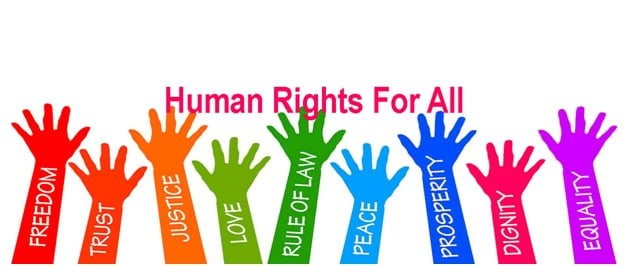
MADRID, Dec 6 2021 (IPS) – ”All human beings are born free and equal in dignity and rights.” These words are a sound introduction to the transcendental issue of human rights and equalities, as stated by the 1948 Universal Declaration of Human Rights (UDHR).

The Declaration proclaims the “inalienable rights that everyone is entitled to as a human being – regardless of race, colour, religion, sex, language, political or other opinion, national or social origin, property, birth or other status.”

“All Human, All Equal” is the slogan for the 2021 Human Rights Day, marked 10 December. Its theme relates to equality: “The principles of equality and non-discrimination are at the heart of human rights.”According to the UN, “equality, inclusion and non-discrimination, in other words – a human rights-based approach to development  – is the best way to reduce inequalities and resume the path towards realising the 2030 Agenda”

“Equality includes addressing and finding solutions for deep-rooted forms of discrimination that have affected the most vulnerable people in societies, including women and girls, indigenous peoples, people of African descent, LGBTI people, migrants and people with disabilities, among others.”

According to the UN, “equality, inclusion and non-discrimination, in other words – a human rights-based approach to development – is the best way to reduce inequalities and resume the path towards realising the 2030 Agenda,” which principle is leaving no one behind.

Shamefully, this is not the case. In spite of all well-intentioned words, declarations, statements and appeals, the grave spread of inequalities all over the world remains prevailing and expanding.

The numerous and severe aspects of inequality are manifested in rampant poverty, pervasive inequalities and structural discrimination are human rights violations and among the greatest global challenges of the current time.

A new social contract urgent

Human rights, including economic, social and cultural rights as well as the right to development and the right to a safe, clean, healthy and sustainable environment, are central to building a new human rights-based economy that supports better, fairer and more sustainable societies for present and future generations. A human rights-based economy should be the foundation of a new social contract, according to World Day.

Here are just some examples of the prevailing violation of the most basic freedom, equality and human rights.

Racism

Racism is just one of the various severe forms of inequality.

In fact, racism, xenophobia and related discrimination and intolerance exist in all societies, everywhere. Racism harms not just the lives of those who endure it, but also society as a whole.

“We all lose in a society characterised by discrimination, division, distrust, intolerance, and hate. The fight against racism is everyone’s fight. We all have a part to play in building a world beyond racism,” the UN urges.

The COVID generation

Successive financial and health crises have had long-lasting and multidimensional impacts on millions of young people, according to this year’s World Day.

Unless their rights are protected, including through decent jobs and social protection, the “COVID generation” runs the risk of falling prey to the detrimental effects of mounting inequality and poverty.

Vaccine inequality

Vaccine injustice through unfair vaccine distribution and hoarding contravenes international legal and human rights norms and the spirit of global solidarity.

In fact, while rich societies have reached between 70 and 80 per cent of vaccination, only 1 per cent of the population of some countries in Africa has been vaccinated.

Climate injustice

Environmental degradation, including climate change, pollution and nature loss, disproportionately impacts persons, groups and peoples in vulnerable situations. These impacts exacerbate existing inequalities and negatively affect the human rights of present and future generations.

In a follow-up to the Human Rights Council’s recognition of the human right to a clean, healthy and sustainable environment, urgent action must be taken to respect, protect and fulfil this right.

“Such action should be the cornerstone of a new human rights-based economy that will produce a green recovery from COVID-19 and a just transition.”

According to recent estimates, the number of climate migrants and refugees could rise to up to one billion in the coming few years.

They would proceed from continents and countries that are the least polluting and the least responsible for the ongoing climate emergency.

For example, Africa has generated around four per cent of the causes of the climate crisis, while bearing the brunt of 80 per cent of its consequences.

Conflicts inequality

Human rights have the power to tackle the root causes of conflict and crisis, by addressing grievances, eliminating inequalities and exclusion and allowing people to participate in decision-making that affects their lives, says the UN.

“Equality and non-discrimination are key to prevention: all human rights for all ensure everyone has access to the preventive benefits of human rights but, when certain people or groups are excluded or face discrimination, the inequality will drive the cycle of conflict and crisis.”

Women, girls

Such an abhorrent abuse against women and girls is carried out all over the world. In fact, one-third of all women and girls have been subjected to physical or sexual violation in their lifetime.

And it is estimated that 800 million girls are being pushed into early marriage and forced to become child-mothers.

Child forced labour

Meanwhile, it has been reported that more than 160 million boys and girls are subjected to the abuse of forced child labour.

Many of them are recruited as child soldiers in armed conflicts. Others are being smuggled and trafficked for sexual exploitation, begging, and organs removals, among other forms of cruelty.

‘Modern’ slavery

It is estimated that one billion humans are victims of the so-called ‘modern’ slavery, including forced labour, migrants smuggling, sexual exploitation, youth sold and bought in public squares, migrants and refugees stranded in borders behind barbed walls, millions of displaced due to violence and armed conflicts they did not launch.

Smuggling, trafficking

“Human trafficking and migrant smuggling have evolved a lot since I first took over this job. They have become more severe, in the sense of what the criminals involved inflict on people. There is more violence, victims are younger and there are more child victims,” said Ilias Chatzis who heads up a global team of more than 60 experts at the UN Office on Drugs and Crime (UNODC), committed to countering Human Trafficking and Migrant Smuggling.

“It is a crime that can sometimes happen in front of our eyes, as we go to work, do our shopping, drive our children to school or meet friends for dinner. There are industries that we come into contact within our everyday lives, like hospitality, agriculture, construction, and others where trafficking victims are exploited.”

Traffickers in Europe take groups of children from country to country and force them to beg. Then they take all the money and often let them starve. For criminals, it is all about the money, and people are just a way to make a profit, the expert warned.

Poverty, hunger

The number of the poor and poorest and hungry is steadily rising. It is estimated that the figure is now approaching one billion, in a world that produces enough food for the global population. And that rich societies waste up to one-third of purchased food.

”All human beings are born free and equal in dignity and rights.” Nice words. But the dramatic reality shows all the opposite.

*Source: IPS. Go to the original.

2021 Human Wrongs Watch

Originally published at Human Wrongs Watch

About the author

Baher Kamal is Senior Advisor to IPS Director General on Africa & the Middle East. He is an Egyptian-born, Spanish-national, secular journalist, with over 43 years of experience. Since the late 70s, he specialised in all development related issues, as well as international politics. He also worked as Senior Information Expert for the Euro-Mediterranean Partnership at the European Commission in Brussels, and as the first-ever Information Officer and Spokesperson at UNEP’s Mediterranean Action Plan in Athens. Kamal speaks Spanish, Arabic, English and Italian. And he is the editor of the excellent Human Wrongs Watch.

Please help TFF remain truly independent by contributing if you benefited from this article

Related Posts

PART 2 — Diplomacy, Law and Nonviolent Power By Jan ObergTFF co-founder and director January 26, 2026 This is the second of four TFF-created idea portfolios designed to curb the global reach of the United States and, in both the short and long term, help catalyse a worldwide nonviolent resistance to what many observers describe as the Trump administration’s uniquely confrontational, destructive and world-threatening policies. These portfolios outline what governments and citizens across the world can do through dynamic diplomacy, creative initiatives, and strictly nonviolent means. They are typical TFF works in that we do not only tell what the problem is and how bad it will go – as 90+% of all commentators, experts and scholars do – we tell what we think can be done, inviting you to think of what you think you can do. It seems painfully clear to me that the current political dynamics in Washington increasingly resemble the most dangerous...
TFF’s comprehensive proposal for dialogue about true peace in Ukraine is due in a day or two Jan Oberg November 20, 2025 What is being whispered through diplomatic corridors today is not peace, but quackery. The alleged 28‑point plan drafted in Washington and Moscow is mentioned as a solution to the Ukraine war. It is being negotiated by US businessman, real estate developer and Trump ally, Steve Witkoff, and by Kirill Dmitriev, who is CEO of the Russian Direct Investment Fund and a close ally of Putin, according to India’s Economic Times. For presumably good reasons, their education, qualifications and experience in international conflict analysis and peace-making remain untold. They look like surgeons who have never opened a medical textbook. It is nothing more than a mirage: a framework of concessions imposed on Ukraine’s citizens, negotiated without Kyiv, and excluding Europe. Like Gaza, it promises “peace” while institutionalising injustice. If half of what is available about...
PRESS RELEASE – 6 OCTOBER 2025 LAY DOWN YOUR ARMSPEACE PRIZE FOR 2025 is awarded Francesca Albanese The United Nations Special Rapporteur on the occupied Palestinian territories – as the person who, in accordance with Alfred Nobel’s will, has “done the most or the best work for fraternity between nations and for the abolition or reduction of standing armies as well as for the holding and promotion of peace congresses.” Francesca Albanese has forcefully and unwaveringly worked against Israel’s full-scale war on the occupied Palestinian territories, in particular Israel´s ongoing genocide against the Palestinian people. She has confronted Israel’s systematic war crimes and crimes against humanity in a truly global outreach. Further, she has brought governments, international organisations and people’s groups together to underline the responsibility of the world at large to act and to stop arming, enabling, and profiting from Israel’s ongoing criminal actions. But first of all, Albanese...

Recent Articles

Photo above: Carl Fredrik Reuterswärd’s Non-Violence outside UN Headquarters in New York. Kirill Levin, CC BY-NC-SA 2. Jan Oberg November 3, 2026 I am happy to be published in Horizons which is produced by the Center for International Relations and Sustainable Development, CIRSD, in Belgrade. My contribution brings out a radical re-thinking of what concepts such as defence, security, deterrence – and peace – may mean if we want to create a more peaceful world. It also summarises a few things I have been working with the last few decades. Please read it here Og her er den på dansk, takket være Johnny Baltzersens lynhurtige oversættelse
UNITE-tillid, DREAM-velstand og andre konstruktive komponenter Normally we publish articles in English here. But this is a translation of a very important TFF document that should reach as many as possible in Denmark since this country’s government has been one of the most hardline in Europe and, up till now at least, has refused to use diplomacy and, instead, spent tremendous sums on arming Ukraine with the express goal of defeating Russia. Thus this – unique – article is in Danish. Vi er Johnny Baltzersen og hans Fælles Sikkerhed – Fælles Fremtid på Substack overmåde taknemmelige for at have oversat og publiceret TFF’s 2025-portfølje for fredsidéer med henblik på Ukraines fremtid. Vi håber den nu kan nå mange flere danskere – som også vil sprede den og skabe debat – nu den danske regerings og folketingspartiernes politik på dette område siden 2022 står nu – forudsigeligt – ved vejs ende....
Jan Oberg TFF director October 28, 2026 Exactly one month has now passed since I published my criticism of the introduction to the special issue on Johan Galtung published by the Journal of Global Security Studies, JoGSS, and of Tor Egil Førland’s chapter about Galtung which serves as a preview to his forthcoming biography of Galtung to be published by PRIO. See the original on The Transnational here and the same article on TFF Substack with many general and critical comments and, in particular, the people who decided to withdraw from the biography project in protest. The special issue itself was extraordinary. It was devoted to the intellectual legacy of one of the founders of peace research and contained a number of strong assessments of his personality, scholarship, intellectual trajectory, and public role. Such assessments are, of course, entirely legitimate. No scholar is beyond criticism, and neither was Johan Galtung....

TFF on Substack

Discover and subscribe to more peace materials on TFF Substack

Most Popular

Photo above: Carl Fredrik Reuterswärd’s Non-Violence outside UN Headquarters in New York. Kirill Levin, CC BY-NC-SA 2. Jan Oberg November 3, 2026 I am happy to be published in Horizons which is produced by the Center for International Relations and Sustainable Development, CIRSD, in Belgrade. My contribution brings out a radical re-thinking of what concepts such as defence, security, deterrence – and peace – may mean if we want to create a more peaceful world. It also summarises a few things I have been working with the last few decades. Please read it here Og her er den på dansk, takket være Johnny Baltzersens lynhurtige oversættelse
UNITE-tillid, DREAM-velstand og andre konstruktive komponenter Normally we publish articles in English here. But this is a translation of a very important TFF document that should reach as many as possible in Denmark since this country’s government has been one of the most hardline in Europe and, up till now at least, has refused to use diplomacy and, instead, spent tremendous sums on arming Ukraine with the express goal of defeating Russia. Thus this – unique – article is in Danish. Vi er Johnny Baltzersen og hans Fælles Sikkerhed – Fælles Fremtid på Substack overmåde taknemmelige for at have oversat og publiceret TFF’s 2025-portfølje for fredsidéer med henblik på Ukraines fremtid. Vi håber den nu kan nå mange flere danskere – som også vil sprede den og skabe debat – nu den danske regerings og folketingspartiernes politik på dette område siden 2022 står nu – forudsigeligt – ved vejs ende....
Jan Oberg TFF director October 28, 2026 Exactly one month has now passed since I published my criticism of the introduction to the special issue on Johan Galtung published by the Journal of Global Security Studies, JoGSS, and of Tor Egil Førland’s chapter about Galtung which serves as a preview to his forthcoming biography of Galtung to be published by PRIO. See the original on The Transnational here and the same article on TFF Substack with many general and critical comments and, in particular, the people who decided to withdraw from the biography project in protest. The special issue itself was extraordinary. It was devoted to the intellectual legacy of one of the founders of peace research and contained a number of strong assessments of his personality, scholarship, intellectual trajectory, and public role. Such assessments are, of course, entirely legitimate. No scholar is beyond criticism, and neither was Johan Galtung....
Read More
knotted gun
Photo above: Carl Fredrik Reuterswärd’s Non-Violence outside UN Headquarters in New York. Kirill Levin, CC BY-NC-SA 2. Jan Oberg November 3, 2026 I am happy to be published in Horizons which is produced by the Center for International Relations and Sustainable Development, CIRSD, in Belgrade. My contribution brings out a radical re-thinking of what concepts such as defence, security, deterrence – and peace – may mean if we want to create a more peaceful world. It also summarises a few things I have been working with the last few decades. Please read it here Og her er den på dansk, takket være Johnny Baltzersens lynhurtige oversættelse
TFFPortfolioVign
UNITE-tillid, DREAM-velstand og andre konstruktive komponenter Normally we publish articles in English here. But this is a translation of a very important TFF document that should reach as many as possible in Denmark since this country’s government has been one of the most hardline in Europe and, up till now at least, has refused to use diplomacy and, instead, spent tremendous sums on arming Ukraine with the express goal of defeating Russia. Thus this – unique – article is in Danish. Vi er Johnny Baltzersen og hans Fælles Sikkerhed – Fælles Fremtid på Substack overmåde taknemmelige for at have oversat og publiceret TFF’s 2025-portfølje for fredsidéer med henblik på Ukraines fremtid. Vi håber den nu kan nå mange flere danskere – som også vil sprede den og skabe debat – nu den danske regerings og folketingspartiernes politik på dette område siden 2022 står nu – forudsigeligt – ved vejs ende....
JoGSS-Silent
Jan Oberg TFF director October 28, 2026 Exactly one month has now passed since I published my criticism of the introduction to the special issue on Johan Galtung published by the Journal of Global Security Studies, JoGSS, and of Tor Egil Førland’s chapter about Galtung which serves as a preview to his forthcoming biography of Galtung to be published by PRIO. See the original on The Transnational here and the same article on TFF Substack with many general and critical comments and, in particular, the people who decided to withdraw from the biography project in protest. The special issue itself was extraordinary. It was devoted to the intellectual legacy of one of the founders of peace research and contained a number of strong assessments of his personality, scholarship, intellectual trajectory, and public role. Such assessments are, of course, entirely legitimate. No scholar is beyond criticism, and neither was Johan Galtung....
Screenshot 2026-10-26 115647
An aspect of Iran’s culture and civilisation you’ve probably never heard about. Don’t be surprised if the US and Israel also try to bomb them. Jan ObergTFF director October 26, 2026 Today – under the “USraeli” threat of new “annihilating” bombings – opens the 7th International Conference on Peace and Conflict Resolution at Tehran’s University. As far as I can tell, this is the only permanent, advanced peace research institution in West Asia/the Middle East. Perhaps more countries in that region could be inspired? I mean, how many military “security” institutes and military academies do they have? Many peace research institutes and university departments have been established since the 1950s in the West. They are now all under attack; some have closed down, some have gone mainstream, yet others kept the name but do nothing to research peace and disseminate results or advice; instead, they cooperate with militarism’s platforms such...
Screenshot 2026-10-15 141837
Let’s discuss using AI to create peace – in contrast to boring geopolitics devoid of creative healing and visions. Jan Oberg TFF director October 15, 2026 I asked VEED to create a short video exemplifying how peace is preferable to war, then chose the lady as a template. Simple as that. In less than a minute, it produced this video, which any peace-loving person would appreciate. The only problem is that human intelligence (HI), at least the one that exists among Western decision-makers, isn’t half as moral or smart as AI. I have used AI to dialogue about peace and peace plans, creative conflict resolution and visions of a better future for humankind. It so happens that I am having more stimulating, intelligent, creative and moral discussions with AI than I could possibly have with any EU or NATO leader today. Yes, AI has very problematic and dangerous aspects; used...
girl-5894831_1280
Below are TFF-related media mentions, comments, videos and social media posts published elsewhere but not on this homepage. We happen to catch and list only a fraction. Regarding video comments and debates, we recommend that you go to the TFF Video Channel on Substack where many of them are reproduced. Jan Oberg is a contributor to China Daily – 52 million daily clicks – and Global Times, CGTN and CCTV (the national television), China Investment, Xinhua News Agency and several others. Articles and videos on these media very often multiply into countless Chinese (and Western media) that re-post them from these main media. Thanks to The China Academy, his analyses, interviews and comments are frequently posted on YouTube channels such as Thinkers Forum and Wave Media. These videos are often re-posted on Bilibili (China’s YouTube), the China Content Center on TikTok, and on the Chinese edition of TikTok, Douyin.com. This means reaching hundreds of millions of viewers worldwide over a year. While there are too many to catch on all these...




