
America even at its best is a strange place, alive with contradictions, a Teflon political culture that has an unshakable faith in its innocent and virtuous national character and its overall impact on the world, impervious to the ghosts of slavery and of ethnic cleansing of native Americans that should be tormenting our sleep and darkening our dreams, comfortable with its robust gun culture, and with its promiscuous reliance on rogue drones engineered to kill on command and on the brutal happenings that take place in black sites immorally situated in countries whose leaders agree to avert their gaze from the dirty work taking place.

Looked at from a short distance this is not a pretty picture.

Yet there are still those rare moments when this unsavory national profile seems not to be telling the whole story. For instance, I felt heartened by a recent news item reporting that the conservative Nebraska Legislature voted to abolish capital punishment, and in doing so went so far as to override the governor’s veto. That’s right, Nebraska!

Unfortunately, the welcome Nebraska move may not survive the backlash in the making. The Republican state governor, Pete Ricketts, vows to overturn the new law: “My words cannot express how appalled I am that we have lost a critical law to protect law enforcement and Nebraska families.” He is supported in this lethal passion by a pro-capital punishment legislator who proposes arranging a ballot initiative that supposedly will allow Nebraskans to reinstate the death penalty. It is not yet certain whether this is a legally permissible tactic.

While the abolitionist move stands there is a strong temptation to commend Nebraska for such an unexpected show of humanistic sensitivity, but that would be misleading, overlooking what actually swayed the majority to vote the way they did. Speaking for this majority, Peter Collins put it this way, “We went into it wanting to remain objective. This is purely about costs.”

And sure enough, it seems that it was primarily conservatives, not liberals, that pushed hardest for abolition on the amoral grounds of fiscal conservatism and a commitment to “philosophical consistency” when it comes to entrusting the government with authority over life and death. As a Republican legislator, Laure Elke, insisted the bill was “a matter of conscience,” because if you are not able to trust the government on health care, how can it be trusted on such irrevocable life/death decisions.

A few other conservatives were apparently troubled by the seeming contradiction between supporting the right to life for the unborn as a sacred matter while permitting a state government to impose death on a life in being.

The main crusader for the bill was a Democrat, Senator Ernie Chambers who had tried 37 times during his forty years in the Nebraska Legislature to get rid of the death penalty before achieving this notable victory.

Even Chambers was forced to acknowledge that it was ‘conservative pragmatism’ not liberal idealism that made the difference, taking note of a growing Republican trend to oppose capital punishment because it is viewed as costly, inefficient, and for some, un-Christian. On one level, who cares why capital punishment was abolished. It is the outcome that counts. Yet on a second level, it is worth caring, because if the decision reflects cost/benefit assessments rather than a principled ethical stand, it could be quickly reversed when calculations changed.

It is indeed a strange country: rapid public strides in the direction of freedom to shape one’s own gender identity giving rise to a series of vindictive pushbacks by those that want to impose their particular life style on those that seek to live differently in ways that do no harm. The opportunistic rants of right wing politicians on such issues as same sex marriage, trans gender identity, and abortion may not be meant to hurt and demean but they do.

They hurt and demean those who want to live openly their authentic identities or deeply felt needs, which is what freedom should mean for all of us, not just for ourselves but our neighbors, that is, for every sentient being on the planet. and are so often elsewhere in our world forced to live in locked closets or face harsh criminal punishments. Is not this the deeper meta-religious significance of globalization.

For all that is wrong with what the United States is doing to others throughout the world, these explorations on the frontiers of personal freedom might be the start of a better page of national history if this forward momentum can be sustained and exported in relation to personal self-determination.

Perhaps, and only perhaps, what we insist upon for ourselves might finally spill over with respect to what we to do to others. I don’t expect the drones to disappear anytime soon or even for capital punishment to become a bad memory, but at least more folks will begin to draw the sort of connection that to align themselves with a conservative repositioning similar to what turned a big majority of legislators against the death penalty in Nebraska.

Given the political climate in the country, ‘conservative pragmatism’ may be the best we can currently hope for at this time for America. Sadly, the 99% have once again left the playing field of political life enabling the 1% to indulge their inexhaustible appetites.

Of course, for me the abolition of capital punishment has never been a matter of cost/benefit analysis whether measured in dollars or bureaucratic efficiency. It is a matter purely situated in the domain of values.

I believe that no government should ever be given the authority to kill its own citizens, or that anyone anywhere should be vested with authority to kill without proper submission to the rule of law, whether acting domestically or internationally, and I believe it would benefit prospects for species survival if many of us as possible strive for and advocate a comprehensive ethos of nonviolence or what Glenn Paige has dubbed ‘a non-killing politics.’

For now, this is a utopian wish, but this goal has long struck me as being a time sensitive ethical and biopolitical imperative. In the domain of social practice, I feel the same way about same-sex marriage, gender self-determination, and the reproductive rights of women. Capital punishment is about wrongful death, same-sex marriage is an emotional component of the right to life, and reproductive rights recognize the sacred endowments and personal responsibility of women in relation to their own bodies.

America is not alone in being strange. All countries are strange reflecting the particularities of tradition and experience.

Strangeness is bound up with originality and contradiction, and is not necessarily negative. We can be inspired by what is strange and wonderful, and appalled by what is strange and abusive. It is this negative strangeness that we must struggle to mitigate, whether it be capital punishment, human trafficking, or the subjugation that accompanies deep poverty and all forms of forcible dispossession.


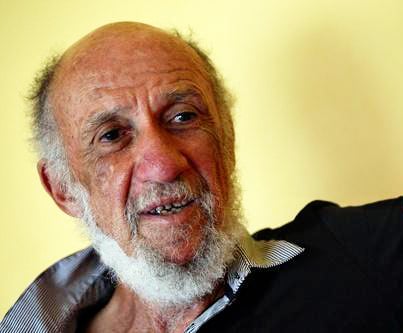
Professor Falk became an adviser to TFF when it was established in 1985.

Related Posts

What the West Borrowed from Asia and What It Left Behind Jan Krikke October 8, 2026 The article was originally published here In the late 1960s, the musical Hair announced that the Age of Aquarius was dawning. Its opening anthem promised a transformation of human consciousness: an era of peace, harmony and understanding. Half a century later, a familiar echo of that promise is a meditation app offered by your employer. You can find it in the same list of benefits as the pension plan and the gym discount. How did a spiritual revolution become an employee benefit? The answer lies in the history of the movement known as New Age: where it came from, what it borrowed from Asia, and why the meaning of what it borrowed changed in the process. Two definitions will help. New Age is a loose label for a wide range of spiritual practices and...
It’s a matter of principles, courage, vision and pulling together – while the militarist world is falling apart… Peter Langille October 3, 2026 “Here, then, is the problem which we present to you, stark and dreadful and inescapable: Shall we put an end to the human race; or shall mankind renounce war?”The Bertrand Russell—Albert Einstein Manifesto, July 9, 1955 ⁕ The forecast for what’s ahead is worrisome. The sharp rise in armed conflicts over the past three years is adding to what was already the highest level in over seventy years. Genocides, which should be prevented are supported. A shared climate emergency that jeopardises survival is ignored. Diverse polls now suggest that people are war-weary, worried and interested in a more effective United Nations. And, there are viable policy options for a more secure world! Yet governments are doubling-down, betting on more war and investing heavily. If current trends persist,...
Lena Petrova of “World Affairs In Context” with more than half a million subscribers on YouTube wanted to explore what a peace researcher like me has to say about, among other things, the First and the Second Cold War and why eethics has disappeared from politics. I am particularly happy about this conversation that also yielded an amazing number of very appreciative comments on YouTube. No doubt, people are longing for alternatives, including peace perspectives.

Recent Articles

Photo above: Carl Fredrik Reuterswärd’s Non-Violence outside UN Headquarters in New York. Kirill Levin, CC BY-NC-SA 2. Jan Oberg November 3, 2026 I am happy to be published in Horizons which is produced by the Center for International Relations and Sustainable Development, CIRSD, in Belgrade. My contribution brings out a radical re-thinking of what concepts such as defence, security, deterrence – and peace – may mean if we want to create a more peaceful world. It also summarises a few things I have been working with the last few decades. Please read it here Og her er den på dansk, takket være Johnny Baltzersens lynhurtige oversættelse
UNITE-tillid, DREAM-velstand og andre konstruktive komponenter Normally we publish articles in English here. But this is a translation of a very important TFF document that should reach as many as possible in Denmark since this country’s government has been one of the most hardline in Europe and, up till now at least, has refused to use diplomacy and, instead, spent tremendous sums on arming Ukraine with the express goal of defeating Russia. Thus this – unique – article is in Danish. Vi er Johnny Baltzersen og hans Fælles Sikkerhed – Fælles Fremtid på Substack overmåde taknemmelige for at have oversat og publiceret TFF’s 2025-portfølje for fredsidéer med henblik på Ukraines fremtid. Vi håber den nu kan nå mange flere danskere – som også vil sprede den og skabe debat – nu den danske regerings og folketingspartiernes politik på dette område siden 2022 står nu – forudsigeligt – ved vejs ende....
Jan Oberg TFF director October 28, 2026 Exactly one month has now passed since I published my criticism of the introduction to the special issue on Johan Galtung published by the Journal of Global Security Studies, JoGSS, and of Tor Egil Førland’s chapter about Galtung which serves as a preview to his forthcoming biography of Galtung to be published by PRIO. See the original on The Transnational here and the same article on TFF Substack with many general and critical comments and, in particular, the people who decided to withdraw from the biography project in protest. The special issue itself was extraordinary. It was devoted to the intellectual legacy of one of the founders of peace research and contained a number of strong assessments of his personality, scholarship, intellectual trajectory, and public role. Such assessments are, of course, entirely legitimate. No scholar is beyond criticism, and neither was Johan Galtung....

TFF on Substack

Discover and subscribe to more peace materials on TFF Substack

Most Popular

Photo above: Carl Fredrik Reuterswärd’s Non-Violence outside UN Headquarters in New York. Kirill Levin, CC BY-NC-SA 2. Jan Oberg November 3, 2026 I am happy to be published in Horizons which is produced by the Center for International Relations and Sustainable Development, CIRSD, in Belgrade. My contribution brings out a radical re-thinking of what concepts such as defence, security, deterrence – and peace – may mean if we want to create a more peaceful world. It also summarises a few things I have been working with the last few decades. Please read it here Og her er den på dansk, takket være Johnny Baltzersens lynhurtige oversættelse
UNITE-tillid, DREAM-velstand og andre konstruktive komponenter Normally we publish articles in English here. But this is a translation of a very important TFF document that should reach as many as possible in Denmark since this country’s government has been one of the most hardline in Europe and, up till now at least, has refused to use diplomacy and, instead, spent tremendous sums on arming Ukraine with the express goal of defeating Russia. Thus this – unique – article is in Danish. Vi er Johnny Baltzersen og hans Fælles Sikkerhed – Fælles Fremtid på Substack overmåde taknemmelige for at have oversat og publiceret TFF’s 2025-portfølje for fredsidéer med henblik på Ukraines fremtid. Vi håber den nu kan nå mange flere danskere – som også vil sprede den og skabe debat – nu den danske regerings og folketingspartiernes politik på dette område siden 2022 står nu – forudsigeligt – ved vejs ende....
Jan Oberg TFF director October 28, 2026 Exactly one month has now passed since I published my criticism of the introduction to the special issue on Johan Galtung published by the Journal of Global Security Studies, JoGSS, and of Tor Egil Førland’s chapter about Galtung which serves as a preview to his forthcoming biography of Galtung to be published by PRIO. See the original on The Transnational here and the same article on TFF Substack with many general and critical comments and, in particular, the people who decided to withdraw from the biography project in protest. The special issue itself was extraordinary. It was devoted to the intellectual legacy of one of the founders of peace research and contained a number of strong assessments of his personality, scholarship, intellectual trajectory, and public role. Such assessments are, of course, entirely legitimate. No scholar is beyond criticism, and neither was Johan Galtung....
Read More
knotted gun
Photo above: Carl Fredrik Reuterswärd’s Non-Violence outside UN Headquarters in New York. Kirill Levin, CC BY-NC-SA 2. Jan Oberg November 3, 2026 I am happy to be published in Horizons which is produced by the Center for International Relations and Sustainable Development, CIRSD, in Belgrade. My contribution brings out a radical re-thinking of what concepts such as defence, security, deterrence – and peace – may mean if we want to create a more peaceful world. It also summarises a few things I have been working with the last few decades. Please read it here Og her er den på dansk, takket være Johnny Baltzersens lynhurtige oversættelse
TFFPortfolioVign
UNITE-tillid, DREAM-velstand og andre konstruktive komponenter Normally we publish articles in English here. But this is a translation of a very important TFF document that should reach as many as possible in Denmark since this country’s government has been one of the most hardline in Europe and, up till now at least, has refused to use diplomacy and, instead, spent tremendous sums on arming Ukraine with the express goal of defeating Russia. Thus this – unique – article is in Danish. Vi er Johnny Baltzersen og hans Fælles Sikkerhed – Fælles Fremtid på Substack overmåde taknemmelige for at have oversat og publiceret TFF’s 2025-portfølje for fredsidéer med henblik på Ukraines fremtid. Vi håber den nu kan nå mange flere danskere – som også vil sprede den og skabe debat – nu den danske regerings og folketingspartiernes politik på dette område siden 2022 står nu – forudsigeligt – ved vejs ende....
JoGSS-Silent
Jan Oberg TFF director October 28, 2026 Exactly one month has now passed since I published my criticism of the introduction to the special issue on Johan Galtung published by the Journal of Global Security Studies, JoGSS, and of Tor Egil Førland’s chapter about Galtung which serves as a preview to his forthcoming biography of Galtung to be published by PRIO. See the original on The Transnational here and the same article on TFF Substack with many general and critical comments and, in particular, the people who decided to withdraw from the biography project in protest. The special issue itself was extraordinary. It was devoted to the intellectual legacy of one of the founders of peace research and contained a number of strong assessments of his personality, scholarship, intellectual trajectory, and public role. Such assessments are, of course, entirely legitimate. No scholar is beyond criticism, and neither was Johan Galtung....
Screenshot 2026-10-26 115647
An aspect of Iran’s culture and civilisation you’ve probably never heard about. Don’t be surprised if the US and Israel also try to bomb them. Jan ObergTFF director October 26, 2026 Today – under the “USraeli” threat of new “annihilating” bombings – opens the 7th International Conference on Peace and Conflict Resolution at Tehran’s University. As far as I can tell, this is the only permanent, advanced peace research institution in West Asia/the Middle East. Perhaps more countries in that region could be inspired? I mean, how many military “security” institutes and military academies do they have? Many peace research institutes and university departments have been established since the 1950s in the West. They are now all under attack; some have closed down, some have gone mainstream, yet others kept the name but do nothing to research peace and disseminate results or advice; instead, they cooperate with militarism’s platforms such...
Screenshot 2026-10-15 141837
Let’s discuss using AI to create peace – in contrast to boring geopolitics devoid of creative healing and visions. Jan Oberg TFF director October 15, 2026 I asked VEED to create a short video exemplifying how peace is preferable to war, then chose the lady as a template. Simple as that. In less than a minute, it produced this video, which any peace-loving person would appreciate. The only problem is that human intelligence (HI), at least the one that exists among Western decision-makers, isn’t half as moral or smart as AI. I have used AI to dialogue about peace and peace plans, creative conflict resolution and visions of a better future for humankind. It so happens that I am having more stimulating, intelligent, creative and moral discussions with AI than I could possibly have with any EU or NATO leader today. Yes, AI has very problematic and dangerous aspects; used...
girl-5894831_1280
Below are TFF-related media mentions, comments, videos and social media posts published elsewhere but not on this homepage. We happen to catch and list only a fraction. Regarding video comments and debates, we recommend that you go to the TFF Video Channel on Substack where many of them are reproduced. Jan Oberg is a contributor to China Daily – 52 million daily clicks – and Global Times, CGTN and CCTV (the national television), China Investment, Xinhua News Agency and several others. Articles and videos on these media very often multiply into countless Chinese (and Western media) that re-post them from these main media. Thanks to The China Academy, his analyses, interviews and comments are frequently posted on YouTube channels such as Thinkers Forum and Wave Media. These videos are often re-posted on Bilibili (China’s YouTube), the China Content Center on TikTok, and on the Chinese edition of TikTok, Douyin.com. This means reaching hundreds of millions of viewers worldwide over a year. While there are too many to catch on all these...




