

August 22, 2021
When it comes to Western mainstream media’s coverage of international affairs, I would today dare the hypothesis that 10-20% is truthful, 20-30% is fake and narratives and 50-70% is omitted (see definition in point 2 below).
This is not a scientific statement or hypothesis that I have tested empirically; rather, it is my judgement based on two things: a) witnessing over some forty years the decay of the mainstream media’s international affairs coverage and b) my experiences from conflict zones such as e.g. all parts of former Yugoslavia, Georgia, Iraq before it was occupied, Iran, Syria and China and comparing them with the media images conveyed by the mainstream Western press.
Originally written as an editorial for Transcend Media Service, TMS, here
In TFF’s recent analysis ”Behind The Smokescreen. An Analysis of the West’s Destructive China Cold War Agenda And Why It Must Stop”, we make use of the following nine Mainstream Media Manipulation Methods, MMMM:
- Fake – lies, deception, inventions or whatever else that cannot be judged/verified as empirically valid; presentation of institutes and scholars as ‘independent’ and defining publications as based on scholarly research when they are not – are typical examples.
- Omission – leaving out essential perspectives, facts, analyses, experts/expertise, literature, counter views, possible alternative hypothesis and explanations of found results. When taken together, the omission is often much more distortive than fake (and less easy for the public to detect).
- Censorship – meaning a government tells the media (by law or less open and verifiable methods) what the limits are. When a few of the countless millions of possible stories that could be told from around the world are selected for the front-pages, it is also the result of censorship, not only omission.
- Self-censorship – news bureaus, editors, reports and journalists know the standard operating procedures and stick to them because it is convenient and typically secures that they keep their job. It’s built on a kind of group think. Censorship and self-censorship define the discourse and its framework and what the truth is, commonly understood/accepted as part of that local culture and perceived as ‘natural’ – that is, also politically correct.
- Framing – is a somewhat difficult concept because it can mean many different things. It can mean setting the frames of “what are we talking about here?” It can also be framing as orientation and interpretation – “In social theory, framing is a kind of interpretation, perhaps a set of anecdotes, historical events and stereotypes that individuals rely on to understand and respond to events.” Media framing builds on these dimensions but adds something specific – “the parameters of the discussion itself – the words, symbols, overall content, and tone used to frame the topic. When compared to agenda setting, framing includes a broader range of cognitive processes – such as moral evaluations, causal reasoning, appeals to principles, and recommendations for treatment of problems.” Simply put, it’s about how a story is packaged.
- Constructed narratives – stories that more or less substitute for reality and makes reality- and source checks superfluous or even dangerous (for the maintenance of the fake/omission report). Narratives are often gross simplifications of a complex reality and use everyday ways of thinking that everybody can relate to without much knowledge of the substantive issues. Boiling down a complex conflict to a struggle between bad guyes and good guys is an example.
- Propaganda and other distortions – let us quote the Cambridge Dictionary: “information, ideas, opinions, or images, often only giving one part of an argument, that are broadcast, published or in some other way spread with the intention of influencing people’s opinions” – one example being political/wartime propaganda.
- Psychological warfare or psychological operations (PsyOps) – close, of course, to propaganda but often defined as influencing other people, not our own. However, that is not the case today. Undoubtedly, governments also do PsyOps on their own citizens – such as constantly instilling in them a sense of being threatened by foreign countries, weapons, terrorists – or by China. Some has called this fearology – governance by instigating fear. People who fear are much more willing to accept controls and limitations and to obey than those who do not fear – as we have seen when it comes to accepting all kinds of measures to combat terrorism and pandemics. PsyOps are broader and aim to influence a target audience’s value system, belief system, emotions, motives, reasoning, or behaviour. It can be used to induce confessions or reinforce attitudes and behaviours favourable to the originator’s objectives and are sometimes combined with black operations or false flag tactics.
- Cancel culture – a more recent term – is a modern form of ostracism in which someone is thrown out of social or professional circles – whether it be online, on social media, or in person. Those subject to this ostracism have been “cancelled” mostly because of their views or behaviours. The expression “cancel culture” has predominantly negative connotations and is commonly used in free speech and censorship debates. From another perspective, it is a demand/punishment having to do with someone who is politically (non)correct and/or challenges the framework of the “Zeitgeist.”
These methods are an integral part of today’s Western mainstream media and, thus, political reality. While each has its distinct character, they also overlap and are used in clusters that fit the chosen political agenda.
In the above-mentioned report, we apply them to the Western mainstream media’s treatment of everything in China, but it is part and parcel of all mainstream global media coverage.
In what follows, I shall try to apply some of them to the war on Afghanistan in general and the August 15, 2021, Western military withdrawal from Afghanistan in particular – aware that it can only be hints without lots of documentary links. (The numbers below do not indicate priorities).
We are/were told…
1… that all this started on October 7, 2001. It didn’t. The ”it” that started was not the violence but the conflict and that was all about the first Cold War between the US/NATO and Soviet Union/Warsaw Pact. Concerning Afghanistan, it began with Operation Cyclone in July 1979, four months before the Soviet invasion. It is one of the longest CIA operation having cost more than US$ 20 billion. More here.
2… that the purpose of the war and occupation was to fight terrorism which had manifested itself in New York and Washington on ”9/11.” That was the pretext; however not one Afghan had participated in the terrible terror attack (which wasn’t a war by any definition) and should never have been misused to start the thousand-fold more killing Global War on Terror (GWOT) still going on with exclusively counter-productive results (see later). George W. Bush refused to deliver documentation for the US assertion that 9/11 was masterminded by Osama bin Laden and, therefore, the Taliban refused to deliver him in exchange for such documentation.
3… that the installed government and the Afghan military forces cowardly ran away and there was no purpose in trying to fight for Afghanistan when its own government and military didn’t do it;
The simple fact is that the US spent US $ 86 billion on giving Afghanistan the wrong kind of military with which no one would have been able to win in what is fundamentally a rather low-tech guerilla war in a mountainous environment. (Nothing learned since Vietnam).
4… that it wasn’t about nation-building but about eradicating the forces that hit the US on 9/11 and develop a national defence force to guarantee that Afghanistan would no longer serve as a base for terrorism that could reach the West.On the contrary. It was, at the very least, about some nation-building and imposition of Western values. The US has promoted and increased militarism and terrorism worldwide instead of defeating it. In 2000, US State Department had about 400 people dying in global terrorism annually; according to the latest Global Terror Index, the figure today is 16.000, or 40 times higher. GWOT must simply be the most stupid war ever fought.

5…that improving the lot of Afghan women through e.g. education was a major – noble – motivation for the invasion and occupation. Undoubtedly, over these 20 years of Western presence, millions of Afghan women have been educated and now see more opportunities. However, it is naive beyond the acceptable to believe that such a human rights motivation was central to US/NATO policies. Additionally, if you improve education – what’s the use if you do not do a lot of other things – which could have been done as US economist Jeffrey Sachs states so eloquently in this video. Had the US done anything wise and good for the Afghan people, the Taliban would not have had a chance to come back.
So, it can be argued, the US has fought the Taliban for 20 years only to make its return unavoidable. Had the US/West’s mission been predominantly civilian, respectful of Afghan culture and really about human rights – the military would have gone home at least 15 years ago and the rest been one huge foreign-assisted development project. And a final observation on this: Western mainstream media’s only reference to George W. Bush – perhaps the largest contemporary non-convicted war criminal – is that the withdrawal was bad because he fears for the future of Afghanistan’s girls and women – one of the more shameful interviews brought by Deutsche Welle here.
We were/are not told…
1… that 9/11 was a pretext rather than a cause. Neither what the real story of 9/11 was. Too much in the official account doesn’t make sense.
2… that Afghanistan’s geo-political position and its incredible reservoir of minerals was a much stronger motivator for the operation.
3… that the US fundamentally saw Afghanistan as a piece in a very large puzzle of the game at the time against the Soviet Union – and, more recently, against China. Remember Kissinger and Brzezinski? And the writings of Ahmed Rashid? And the role of the Pakistani Inter-Services Intelligence, ISI – there isn’t much it has not been involved in…
4… that the US has created (the preconditions for) and supported terrorist movements where and whenever it saw it fit be it the Taliban, al-Qaeda, ISIS and, and the Muslim Uyghurs from Xinjiang – 5000 of the latter operating in Syria fighting with Western-supported terror groups mostly trained, equipped and financed by leading NATO members, Turkey in particular. Their organisation, East Turkistan Islamic Movement, ETIM, has its exile government in – yes, of course – Washington. Former Afghan president, Hamid Karzai, already in 2017 told VOA that ISIS is a ‘tool of the US.’
5… that NATO’s involvement in Afghanistan, as in – say – Yugoslavia, is one huge violation of the letters and spirit of its North Atlantic Treaty of 1949 (and the UN Charter, Article 1 in particular) and that 9/11 was not a war and, therefore, the Treaty’s paragraph 5 should never have been activated and NATO should never have been in Afghanistan.
6… that there were alternatives to war on Afghanistan and that it would not take much intelligence to have shaped some kind of presence in and influence on the Afghan society in ways totally different from the militarist approach that would likely have yielded much better results today.
7… that the heroin element of it all has always been very important – among other reasons to finance CIA’s covert operations in and around Afghanistan.
8… that the US has operated in ways that could not but make Afghanistan one of the most corrupt places on earth and that the US gave up already in 2011 to do anything about corruption. And corruption here means both economic and in terms of the ”puppet” people (and CIA operatives) it appointed and relied upon, fleeing President Ashraf Ghani only being the latest.
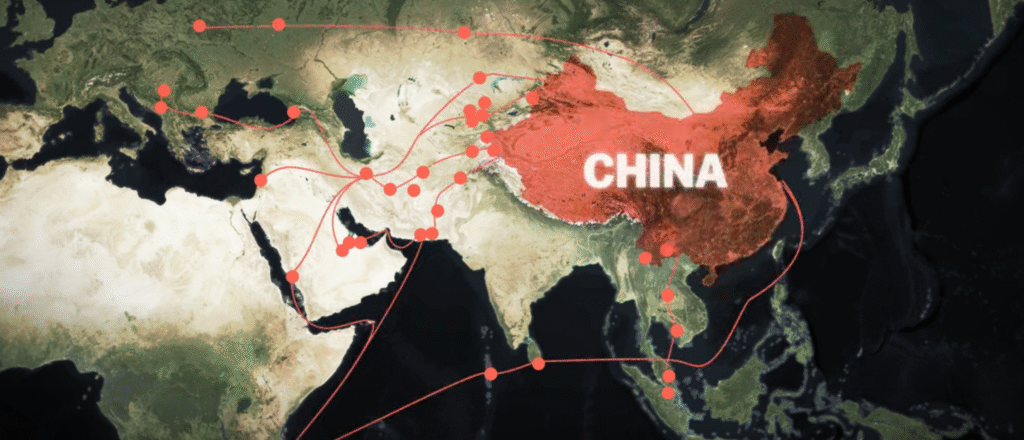
9… that if you look at maps of oil and gas pipelines, a huge Great Game has been played for decades; one of the world’ leading analysts and commentators on this region, Pepe Escobar, has called Afghanistan and the whole region ”Pipelinestan” for a reason. (Financial Times maps here).
10… that Afghanistan – and the withdrawal – may have a lot to do with the US’ China Cold War Agenda, CCWA, and the Biden Administration’s Number 1 priority to destabilise, contain and demonise China and its Belt & Road Initiative, BRI. Much more here.
11… that the US has learned nothing from its war fiascos since Vietnam and that, as Andy Mack stated it brilliantly as far back as 1975 that big countries lose small wars or wars in small countries mainly because, over time, the aggressor loses domestic cohesion and the war itself legitimacy. Afghanistan has always been ”the graveyard of empires” – it may well turn out to be the fate of the US Empire too, but Afghanistan won’t be in the future simply because after the demise of the US Empire, there will be nobody who is mad enough to impose its own system on the rest of the world or try once again a ”mission civilisatrice;”
12… that every and operation of this type fundamentally rests on racism or white ”cultural” superiority or as Norwegian philosopher, Harald Ofstad, has termed the same – our contempt for weakness quite similar to the values of Nazi-Germany. See his immensely important book, Our Contempt for Weakness (1989).
13… that the human and other costs of the war on Afghanistan and all the Global War On Terror, GWOT, are obscene and absurd and a major reason the United States is in decline and its empire will fall (which will lead to the breakdown of NATO); a very comprehensive – and heart-breaking – documentation is found at the Costs of War Project at Brown University.
14… that, simply put, to fight terrorism by killing terrorists is as stupid and morally reprehensible as eradicating diseases by killing the patients; one must understand the much more comprehensive mechanisms by which a human being turns into a terrorist. But that is too sophisticated for an Empire which is/will be second-to-none only in military power and therefore has only one tool in its toolbox – a hammer.
Questions on the way to a conclusion
With Afghanistan being yet another predictable fiasco, one must ask questions today such as:
How would it be possible to spend US$ 2,261 trillion, cause millions of deaths in the Middle East as well as 37- 50 million people’s displacement plus 7 000 US servicemen and 30 000 veteran suicides – the latter alone 10 times the number of people killed on September 11 – only to achieve nothing good and still be seen as a world leader? It won’t.
The Soviet Union wasted 7 years in the ”Graveyard of Empires,” and Gorbachev was smart enough to see that it was futile and morally wrong to be there. It took the US more than double that time and with a disastrous withdrawal chaos and suffering still going on at the time of writing. What fragmentation inside the US is this the consequence of? And how much stronger will that fragmentation become now inside the US – thanks to real issues and blame games in (Brain)washington and NATO?
Is The US Empire survivable or will it be over in 4-5 years like the Soviet Union after Afghanistan? (Add this to the above 14 points of what is omitted from the media – and political debate and research).
Will the US try to be in Afghanistan in another way because the withdrawal also has to do with freeing resources for the new US-led China Cold War Agenda? And how will China, India, Pakistan, Iran and Russia handle this new situation?
Will Russia, Iran, India and, not the least, China the next 10-20 years handle Afghanistan in a fundamentally different way? (It would be easy to do better than the US).
Will Afghanistan’s future as an important member of the BRI become something different from what it was and is at this moment?
We are living in extraordinarily interesting – and dangerous – times. And we will until the – new Evil – US Empire has sunk like Titanic and the US decides to pursue fundamental domestic structural changes, abolishes its Military-Industrial-Media-Academic Complex, MIMAC, and – thus – can again thrive as a normal and creative country that is a force for the global common good and not the common evil of the world.
It’s perfectly possible and those who can should lend the self-destructive US a helping hand before it is too late.
Note
I have written a longer piece – ”US-Afghanistan August 15, 2021: Eight conclusions and the mean words ’What was it we said all the time?’”





2 Responses
A very useful list of methods used by the media to frame, distort or sanitise news that they wish to convey! One major method of manipulation is to provide access to the mainstream media to only special groups of journalists and to a limited range of opinions, and to block the rest that may provide an alternative version of events. Of course, in most democracies, some people are allowed to deviate from the establishment views, but they are marginalised and only reach a small number of people, while the mainstream media reaches the mases. This is why control of media is the most effective way of controlling the people by providing them only with the permitted range of views. Samuel Johnson said: “Give me a child for five years and I give you a Papist for life.” The same could be said about the media: “Indoctrinate the people by the media and you will have a supportive or at least a silent population for life.”
Dear Farhang – you are so to the point. Thanks a lot! And enjoy you weekend in spite of all that…