

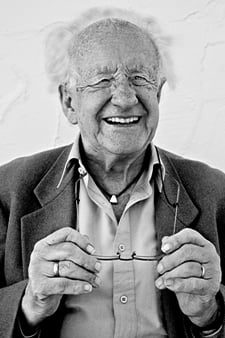
johangaltung

What a Christmas gift to all of us from that amazing Pope Francis, his first Message for the World Day of Peace, Fraternity, the Foundation and Pathway to Peace. A tightly reasoned statement in ten sections; here is an effort to summarize some key points:

1. An irrepressible wish for fraternity enables us to see others not as enemies or rivals, but as brothers and sisters. However, reference to a common Father is needed; otherwise it becomes “a mere do ut des /I give so that you give/ which is both pragmatic and selfish”.

2. The story of Cain and Abel /the first brothers, sons of the first couple, Adam and Eve/ “teaches that we have an inherent calling to fraternity, but also the tragic capacity to betray that calling”: Cain killed Abel out of jealousy because God preferred Abel.

3. Human fraternity is regenerated in and by Jesus Christ through his death and resurrection–the Cross is the definitive foundational focus of that fraternity-/no/ separation between the people of the Covenant and the Gentiles–not party to the pact of the Promise.

4. Fraternity is the foundation and pathway–peace is work, an opus solidaritatis, a duty of solidarity, of social justice, of universal charity, of a more human and sustainable development.

5. Fraternity is indispensable to fight poverty, poor relationships, increasingly pathological dependencies–but it has to be in the heart of families and communities, through the sharing of joys and sorrows– /to inspire/ policies that lighten an excessive inequality.

6. Rediscovery of fraternity in the economy should overcome the greedy pursuit of material goods and impoverishment of interpersonal and community relations, /lead to/ a rethinking of our models of economic development and to change of lifestyles in favor of prudence, temperance, justice and strength–in favor of human dignity.

7. Fraternity extinguishes war by hearing the cry of suffering of the defenseless victims, and instead of seeing the other as an enemy to be beaten, discovers your brother and sister and goes out to meet the other in dialogue, pardon and reconciliation, /making/ peace a fundamental human right and a prerequisite for every other right.

8. Corruption and organized crime threaten fraternity–people should compete with one another in mutual esteem remembering that we are brothers and sisters, overcoming corruption and criminal organization, money trafficking and financial speculation, prostitution and rape.

9. Fraternity preserves and cultivates nature as a common gift from the Creator by acknowledging the “grammar” inscribed in nature and exercise a responsible stewardship over it, like in the agricultural sector to avoid the continuing disgrace of hunger in the world.

10. Fraternity must be discovered, loved, experienced, proclaimed, witnessed through love, not technical know-how bereft of ideals and unconcerned with the transcendent dimension through service, the soul of a fraternity that brings peace to each person on our beloved earth.

So much beauty and wisdom, also based on many predecessors. A humanity struggling for peace can be grateful to a pope reminding us of direct peace through solidarity, of structural peace through development, and of the spiritual quality of peace, cultural peace. Take the spiritual dedication to something beyond ourselves away from human beings and we get human machines with technical know-how and exchange dominated by pragmatism and selfishness. So far so good.

The problem comes with the fraternity–later broadened to brothers and sisters–brought about by having the same Father, the Christian God, confirmed through the faith in the Son, the Christ, as the savior. The Pope bases fraternity on the Christian narrative and the family model. But there is a broader concept: the we-culture of exactly sharing joys and sorrows, as opposed to an I-culture based on individual ethical budgets that become pragmatic and selfish. Like a marriage without the love of the we-ness.

Thus, for peace among Nordic countries, among EU countries, in the whole world, there must be some feeling, not only an idea-value of being Nordic, European, a part of humanity. There are faultlines in our soul to be overcome to expand the circles of we-ness against all the efforts by media and power-hungry “leaders” to deepen them as reasons for killing.

Actually, the Pope explores fraternity only for believers in the Father and the Son, bridging only the gap between Jews and Christians. But no Christianity is needed to see the other as a possible dialogue partner and not an automatic enemy. This is already spiritual in its we-ness. The Pope’s Christian pathway may work for the believers but fortunately there are many others, some of them more global.

The ever expanding human rights from individualism to collective rights is one; and the Pope sees peace as prerequisite for the other rights ( point 7 above). So does the Universal Declaration in Article 28:

Everyone is entitled to a social and international order in which the rights and freedoms set forth in this Declaration can be fully realized.

We find in this path-breaking text cooperation for mutual and (less un)equal benefit, harmony as sharing joys and sorrows, pardon and reconciliation, but not Francis d’Assisi conflict resolution, the key to negative peace as reduction of violence. We find a Father who prefers one brother to the other, engendering jealousy; who admonishes Abraham to sacrifice his son Isaac but in the last second stays his hand; yet sacrifices his own son Jesus who cries for mercy rather than the mystery of John 3:16 [For God so loved the world, that he gave his only begotten Son, that whosoever believeth in him should not perish, but have everlasting life]. We find Jesus and his opus solidaritatis gone, the stern Father and the Roman Empire surviving.

Imagine an alternative Christian narrative.

The two women, Mary and Magdalena, mediate in the hexagon conflict with Father and Son, the Jews and the Pharisees, Pontius Pilate and the Roman Empire. The Father liberates the Son from the Cross for many years of samaritan work inspired by compassion and conscience (and fulfilment of love with Magdalena), the Pharisees are assured that the kingdom of which Jesus spoke is within and beyond, not as INRI (Iesus Nazarenus Rex Iudeorum), the king of Jews, who then pardon both him and Barrabas.

Pontius Pilate argues with Rome in favor of an empire more as a community of nations, one of them Jewish, possibly with him as the first governor, presaging the Muslim Ottoman Empire – the extension not that different – 1500 years later. The Son, jointly with his wife, focuses on ministry; the Father on love and fraternity-sorority by deed and faith, not by fear of punishment like the horror of the Machiavellian Italian prince–De Principatibus was written 500 years ago–so obviously modelled on the stern Father (and for that reason given model character in the West).

It may be objected that this is not the Christianity of the church of Pope Francis. True, but the Roman Empire collapsed, and the world is moving, with the role of women and democracy-autonomy-human rights at least as ideals, not authoritarianism-empire-sacrifice.

Pope Francis is a Jesuit. Maybe more Son, less Father?

Originally published here.

Related Posts

What the West Borrowed from Asia and What It Left Behind Jan Krikke October 8, 2026 The article was originally published here In the late 1960s, the musical Hair announced that the Age of Aquarius was dawning. Its opening anthem promised a transformation of human consciousness: an era of peace, harmony and understanding. Half a century later, a familiar echo of that promise is a meditation app offered by your employer. You can find it in the same list of benefits as the pension plan and the gym discount. How did a spiritual revolution become an employee benefit? The answer lies in the history of the movement known as New Age: where it came from, what it borrowed from Asia, and why the meaning of what it borrowed changed in the process. Two definitions will help. New Age is a loose label for a wide range of spiritual practices and...
Lena Petrova of “World Affairs In Context” with more than half a million subscribers on YouTube wanted to explore what a peace researcher like me has to say about, among other things, the First and the Second Cold War and why eethics has disappeared from politics. I am particularly happy about this conversation that also yielded an amazing number of very appreciative comments on YouTube. No doubt, people are longing for alternatives, including peace perspectives.
Jan Oberg, TFF director April 28, 2026 In this third TFF Peace Pulse, I make the important distinction between the violence and the conflict that violence is a symptom of. If you want peace, focus on the underlying conflict because that is the key to resolution, peacemaking, and a better future for the parties. The West is obsessed with violence, just look around you – and 90+ per cent of the public debate is about military issues and other violence – totally wasted for peace. These Peace Pulses will only be published here a few times. You will also not find them on YouTube and Vimeo because both platforms have blocked TFF and me; you know, peace is dangerous these days. Most TFF’s videos since 2007 are now on Rumble.

Recent Articles

Photo above: Carl Fredrik Reuterswärd’s Non-Violence outside UN Headquarters in New York. Kirill Levin, CC BY-NC-SA 2. Jan Oberg November 3, 2026 I am happy to be published in Horizons which is produced by the Center for International Relations and Sustainable Development, CIRSD, in Belgrade. My contribution brings out a radical re-thinking of what concepts such as defence, security, deterrence – and peace – may mean if we want to create a more peaceful world. It also summarises a few things I have been working with the last few decades. Please read it here Og her er den på dansk, takket være Johnny Baltzersens lynhurtige oversættelse
UNITE-tillid, DREAM-velstand og andre konstruktive komponenter Normally we publish articles in English here. But this is a translation of a very important TFF document that should reach as many as possible in Denmark since this country’s government has been one of the most hardline in Europe and, up till now at least, has refused to use diplomacy and, instead, spent tremendous sums on arming Ukraine with the express goal of defeating Russia. Thus this – unique – article is in Danish. Vi er Johnny Baltzersen og hans Fælles Sikkerhed – Fælles Fremtid på Substack overmåde taknemmelige for at have oversat og publiceret TFF’s 2025-portfølje for fredsidéer med henblik på Ukraines fremtid. Vi håber den nu kan nå mange flere danskere – som også vil sprede den og skabe debat – nu den danske regerings og folketingspartiernes politik på dette område siden 2022 står nu – forudsigeligt – ved vejs ende....
Jan Oberg TFF director October 28, 2026 Exactly one month has now passed since I published my criticism of the introduction to the special issue on Johan Galtung published by the Journal of Global Security Studies, JoGSS, and of Tor Egil Førland’s chapter about Galtung which serves as a preview to his forthcoming biography of Galtung to be published by PRIO. See the original on The Transnational here and the same article on TFF Substack with many general and critical comments and, in particular, the people who decided to withdraw from the biography project in protest. The special issue itself was extraordinary. It was devoted to the intellectual legacy of one of the founders of peace research and contained a number of strong assessments of his personality, scholarship, intellectual trajectory, and public role. Such assessments are, of course, entirely legitimate. No scholar is beyond criticism, and neither was Johan Galtung....

TFF on Substack

Discover and subscribe to more peace materials on TFF Substack

Most Popular

Photo above: Carl Fredrik Reuterswärd’s Non-Violence outside UN Headquarters in New York. Kirill Levin, CC BY-NC-SA 2. Jan Oberg November 3, 2026 I am happy to be published in Horizons which is produced by the Center for International Relations and Sustainable Development, CIRSD, in Belgrade. My contribution brings out a radical re-thinking of what concepts such as defence, security, deterrence – and peace – may mean if we want to create a more peaceful world. It also summarises a few things I have been working with the last few decades. Please read it here Og her er den på dansk, takket være Johnny Baltzersens lynhurtige oversættelse
UNITE-tillid, DREAM-velstand og andre konstruktive komponenter Normally we publish articles in English here. But this is a translation of a very important TFF document that should reach as many as possible in Denmark since this country’s government has been one of the most hardline in Europe and, up till now at least, has refused to use diplomacy and, instead, spent tremendous sums on arming Ukraine with the express goal of defeating Russia. Thus this – unique – article is in Danish. Vi er Johnny Baltzersen og hans Fælles Sikkerhed – Fælles Fremtid på Substack overmåde taknemmelige for at have oversat og publiceret TFF’s 2025-portfølje for fredsidéer med henblik på Ukraines fremtid. Vi håber den nu kan nå mange flere danskere – som også vil sprede den og skabe debat – nu den danske regerings og folketingspartiernes politik på dette område siden 2022 står nu – forudsigeligt – ved vejs ende....
Jan Oberg TFF director October 28, 2026 Exactly one month has now passed since I published my criticism of the introduction to the special issue on Johan Galtung published by the Journal of Global Security Studies, JoGSS, and of Tor Egil Førland’s chapter about Galtung which serves as a preview to his forthcoming biography of Galtung to be published by PRIO. See the original on The Transnational here and the same article on TFF Substack with many general and critical comments and, in particular, the people who decided to withdraw from the biography project in protest. The special issue itself was extraordinary. It was devoted to the intellectual legacy of one of the founders of peace research and contained a number of strong assessments of his personality, scholarship, intellectual trajectory, and public role. Such assessments are, of course, entirely legitimate. No scholar is beyond criticism, and neither was Johan Galtung....
Read More
knotted gun
Photo above: Carl Fredrik Reuterswärd’s Non-Violence outside UN Headquarters in New York. Kirill Levin, CC BY-NC-SA 2. Jan Oberg November 3, 2026 I am happy to be published in Horizons which is produced by the Center for International Relations and Sustainable Development, CIRSD, in Belgrade. My contribution brings out a radical re-thinking of what concepts such as defence, security, deterrence – and peace – may mean if we want to create a more peaceful world. It also summarises a few things I have been working with the last few decades. Please read it here Og her er den på dansk, takket være Johnny Baltzersens lynhurtige oversættelse
TFFPortfolioVign
UNITE-tillid, DREAM-velstand og andre konstruktive komponenter Normally we publish articles in English here. But this is a translation of a very important TFF document that should reach as many as possible in Denmark since this country’s government has been one of the most hardline in Europe and, up till now at least, has refused to use diplomacy and, instead, spent tremendous sums on arming Ukraine with the express goal of defeating Russia. Thus this – unique – article is in Danish. Vi er Johnny Baltzersen og hans Fælles Sikkerhed – Fælles Fremtid på Substack overmåde taknemmelige for at have oversat og publiceret TFF’s 2025-portfølje for fredsidéer med henblik på Ukraines fremtid. Vi håber den nu kan nå mange flere danskere – som også vil sprede den og skabe debat – nu den danske regerings og folketingspartiernes politik på dette område siden 2022 står nu – forudsigeligt – ved vejs ende....
JoGSS-Silent
Jan Oberg TFF director October 28, 2026 Exactly one month has now passed since I published my criticism of the introduction to the special issue on Johan Galtung published by the Journal of Global Security Studies, JoGSS, and of Tor Egil Førland’s chapter about Galtung which serves as a preview to his forthcoming biography of Galtung to be published by PRIO. See the original on The Transnational here and the same article on TFF Substack with many general and critical comments and, in particular, the people who decided to withdraw from the biography project in protest. The special issue itself was extraordinary. It was devoted to the intellectual legacy of one of the founders of peace research and contained a number of strong assessments of his personality, scholarship, intellectual trajectory, and public role. Such assessments are, of course, entirely legitimate. No scholar is beyond criticism, and neither was Johan Galtung....
Screenshot 2026-10-26 115647
An aspect of Iran’s culture and civilisation you’ve probably never heard about. Don’t be surprised if the US and Israel also try to bomb them. Jan ObergTFF director October 26, 2026 Today – under the “USraeli” threat of new “annihilating” bombings – opens the 7th International Conference on Peace and Conflict Resolution at Tehran’s University. As far as I can tell, this is the only permanent, advanced peace research institution in West Asia/the Middle East. Perhaps more countries in that region could be inspired? I mean, how many military “security” institutes and military academies do they have? Many peace research institutes and university departments have been established since the 1950s in the West. They are now all under attack; some have closed down, some have gone mainstream, yet others kept the name but do nothing to research peace and disseminate results or advice; instead, they cooperate with militarism’s platforms such...
Screenshot 2026-10-15 141837
Let’s discuss using AI to create peace – in contrast to boring geopolitics devoid of creative healing and visions. Jan Oberg TFF director October 15, 2026 I asked VEED to create a short video exemplifying how peace is preferable to war, then chose the lady as a template. Simple as that. In less than a minute, it produced this video, which any peace-loving person would appreciate. The only problem is that human intelligence (HI), at least the one that exists among Western decision-makers, isn’t half as moral or smart as AI. I have used AI to dialogue about peace and peace plans, creative conflict resolution and visions of a better future for humankind. It so happens that I am having more stimulating, intelligent, creative and moral discussions with AI than I could possibly have with any EU or NATO leader today. Yes, AI has very problematic and dangerous aspects; used...
girl-5894831_1280
Below are TFF-related media mentions, comments, videos and social media posts published elsewhere but not on this homepage. We happen to catch and list only a fraction. Regarding video comments and debates, we recommend that you go to the TFF Video Channel on Substack where many of them are reproduced. Jan Oberg is a contributor to China Daily – 52 million daily clicks – and Global Times, CGTN and CCTV (the national television), China Investment, Xinhua News Agency and several others. Articles and videos on these media very often multiply into countless Chinese (and Western media) that re-post them from these main media. Thanks to The China Academy, his analyses, interviews and comments are frequently posted on YouTube channels such as Thinkers Forum and Wave Media. These videos are often re-posted on Bilibili (China’s YouTube), the China Content Center on TikTok, and on the Chinese edition of TikTok, Douyin.com. This means reaching hundreds of millions of viewers worldwide over a year. While there are too many to catch on all these...





