
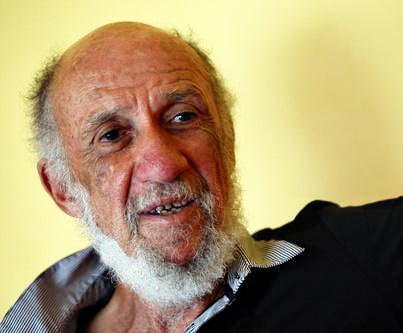
The post that follows is a modified version of an opinion piece published by Middle East Eye on 6 February 2016. Its focus on the metaphor of ‘shooting the messenger’ has usually been reserved for critics of Israel, and it is only when high officials depart from their scripted roles as faithful servants of the established order that their behavior results in demeaning rebukes.

Israel and its most ardent defenders have been repeatedly guilty of shooting the messenger, thereby diverting attention from the damaging message by defaming the agent who delivered the message. It is a tactic that works, partly because the media finds character assassination more marketable than substantive commentary of a controversial nature.

In my case, being frequently a messenger due to my UN role for six years, the nastier side of the attack tactics was to describe me (and others) as ‘a self-hating Jew’ or ‘anti-Semite.’ I tried to stay on message, largely ignoring the attacks, especially within the UN itself, but media coverage was preoccupied with an assessment of the personal vendetta that was difficult to ignore altogether without seemingly to acquiesce in the allegations.

I should add that my tormenters extended beyond Mr. Ban Ki-moon and included others on the UN Watch mailing list including Susan Rice, then U.S. Ambassador at the UN, and high officials from other white settler countries, including Canada and Australia.

Even the supposedly liberal Samantha Power, although previously a friendly acquaintance, joined the party, calling me biased and ill-suited for the position in statements to the press. She based her attack on the harshness of my criticisms leveled at Israel in my reports that highlighted the mismatch between their policies and practices as the Occupying Power in Palestine with the standards, duties, and principles set forth in the Geneva Conventions.

Dear Mr. Ban Ki-moon, Secretary General of the United Nations:

Having read of the vicious attacks on you for venturing some moderate, incontestable criticisms of Israel’s behavior, I understand well the discomfort you clearly feel. Not since Richard Goldstone chaired the group that released the report detailing apparent Israeli war crimes during its massive attack on Gaza at the end of 2008 have Israel’s big political guns responded with such unwarranted fury, magnified as usual by ultra-Zionist media commentary.

Netanyahu has the audacity to claim that your acknowledgement that it is not unnatural for the Palestinians oppressed for half century to resist and resort to extremism is tantamount to the encouragement of terrorism, what he described as giving a “tailwind to terrorism.”

The fact your intention was quite the opposite hardly matters. Or your repeated denunciation of terrorism will be disregarded by these irresponsible critics whose sole objective is to take attention away from the issues raised. Israel and its keenest supporters have found that there is no better way to do this than by defaming their critics, branding them as soft on terrorism or even as anti-Semites.

And it makes no difference, whatsoever, that you have leaned over backwards during years as Secretary General, almost falling to the ground, to deflect even the most justifiable criticisms of Israel during your time as leader of the UN.

It is hardly surprising that you should respond to these attacks directed at you by way of a New York Times opinion piece that chides Israeli officials and Zionist zealots for ‘shooting the messenger’ and instead of heeding the message. [Ban Ki-moon, “Don’t Shoot the Messenger, Israel.” NY Times, Feb. 1, 2016].

What both intrigues and appalls me is that while I was Special Rapporteur for Occupied Palestine during the period 2008-2014 you chose to attack me personally in public on several occasions, joining with U.S. and Israel diplomats calling for my dismissal and doing the utmost to undermine my credibility while I was working in this unpaid UN position under difficult conditions.

At the time I was doing my best to bear witness to some of the same truths about Israel’s unlawful and immoral behavior that recently got you in similar hot water. My UN mandate was to report upon the reality of Israeli violations of international law while sustaining their apartheid regime of oppressive control over the Palestinian people. The Palestinians need and deserve such a voice as provided by the UN to make governments of the world more aware of their responsibility to take steps that will bring this unprecedented ordeal endured by the Palestinian people to an end.

In carrying out these duties it is my hope that future UN Special Rapporteurs receive the support that they need from future Secretary Generals.

In my case, hurt and offended by being so unfairly attacked by you, the highest UN official, I was encouraged by some highly placed officials in the UN Office of the High Commissioner in Geneva to seek some kind of explanation from you or your office, and hopefully even an apology. You never criticized my reports on Palestine or objected to my criticisms of Israel’s policies and practices, but rather focused your venomous remarks on some comments attributed to my views as expressed on my personal blog that were concerned with the 9/11 attacks and the Boston marathon bombings.

It was obvious to me from the content of your attack that you relied on a letter written by Hillel Neuer, Executive Director of UN Watch, Israel’s faithful watchdog NGO in Geneva, that gave my rather carefully qualified blog comments deliberately inflammatory twists, but like you seemed wary of engaging in any debate about the substance of my criticisms of Israel’s polices and practices in my reports.

I called your office, and was referred to your affable aide de camp. He seemed immediately apologetic even before I was even able to register my complaint and explain to him my actual position on these controversial issues. After listening to what I had to say, he obliquely accepted my concerns by admitting that ‘we didn’t do due diligence,’ by which he evidently meant that the SG and his advisors relied on Neuer’s letter rather than reading what I actually wrote on the blog, which was nuanced and moderate in tone and content.

This UN official volunteered a further explanation to the effect that “we were under great pressure at the time from the U.S. Congress, and this was an opportunity to show that we were not anti-Israeli.” He ended the conversation with a promise to talk with you, and get back to me. I am sad to say, this never happened.

This incident occurred while you were campaigning successfully for a second term as SG, and apparently wanted to reassure Washington that you would not rock the boat if reelected.

I venture to say that if you had back then voiced such strong criticisms of Israel’s settlement policy or indicated a similar empathetic understanding of Palestinian resistance, you would never have received Washington’s blessings for a second term as Secretary General. I understand that your reticence back then was prudential, even a sensible, although dispiriting, concession to the realities of UN leadership.

What I have trouble to this day understanding is your willingness, in old Soviet style, to defame by name a lowly UN holding a position as appointed volunteer, so as to beef up your credentials as a team player when it came to Israel.

You even relied through a spokesperson at a news briefing on my status as someone outside the UN civil service to explain why you lacked the authority to dismiss me. Without contacting me in advance for an explanation or afterwards for an apology seems to me to exhibit an extreme version of bureaucratic immorality.

In light of this experience, I felt at the time that you were joining with others in shooting a messenger, and invoked the metaphor, who was seeking to convey some inconvenient truths about Israel’s behavior. These truths are rather similar to your own recent comments about the denial of Palestinian rights, especially with respect to the right of self-determination.

The folk wisdom of ‘what goes around comes around’ seems to fit your plight. You who expediently took shots at the messenger are now taking umbrage when the tactic is directed at you. This response is reasonable in this instance but awkwardly inconsistent with your own past behavior. You say, “..when heartfelt concerns about shortsighted or morally damaging policies emanate from so many sources, including Israel’s closest friends, it cannot be sustainable to keep lashing out at every well-intentioned critic.”

True, of course, but why only now? And only you?

Actually, although your critical stress on settlements and resistance is welcome and significant, your overall stance still falls far short of adopting a helpful way forward. You continue to insist misleadingly that compromises are called for by both sides in pursuing the goal of reaching a sustainable peace based on the establishment of Palestinian state.

I find puzzling the assertion in your article that “..I am so concerned that we are reaching a point of no return for the two-state solution.” In your statement of 26 January to the Security Council you urge Palestinian unity as necessary so that the Palestinians “can instead focus their energies on establishing a stable state as part of a negotiated two-state solution.”

Have you forgotten that every step taken by the Palestinian Authority and Hamas to establish unity has been opposed by anger, reinforced by punitive pushback on Israel’s part, a response endorsed by the United States? And wasn’t that ‘point of no return’ reached some time ago, and certainly after what the American Secretary of State, John Kerry, proclaimed as ‘the last chance’ negotiations broke down in the Spring of 2014 after a year of trading allegations and achieving not a single positive result?

And how, Mr. Ban, is a two-state solution to be achieved over the opposition and resolve of more than 600,000 Israeli settlers, with more expansion underway and even more promised?

You acknowledge being “disturbed by statements from senior members of the Israeli’s government that the aim [of a Palestinian state] should be abandoned altogether.” What you fail to say is that these ‘senior members’ include Israel’s elected prime minister, its president, its current ambassador to the UN.

In light of this unified opposition to a two-state approach by Israel’s highest governmental leaders, how can you encourage reliance on this discredited diplomatic path that has resulted in an ongoing process of severe territorial encroachment on occupied Palestine and subjection to a regime of intensified suffering for the Palestinian people? Clinging to the two-state mantra is not neutral. Delay benefits Israel, harms Palestine. There is every reason to believe that this pattern will continue as long as Israel is not seriously challenged diplomatically and by Palestinian resistance, as well as by the sorts of growing pressures mounted by the international solidarity movement and the BDS campaign.

More widely, and important to understand, shooting the messenger is part of a broader Israel strategy to minimize attention given to substantive criticisms of their behavior.

You are merely the latest victim, and one of the most highly placed. The intensity of defamation seems to be roughly proportional to the perceived impact of your criticism. In this sense, Mr. Secretary General, you have scored highly, especially due to your reminder to the Security Council that the UN will “continue to uphold the right of Palestinians to self-determination.” This is not the language Israel’s leaders hoped to hear coming from your lips, and hardly consistent with earlier your record of steadfast support for Israel that included condemning even the Second Freedom Flotilla that sought to deliver humanitarian assistance to Gaza.

To be meaningful beyond a ritual affirmation, self-determination must be understood, given present realities, as something more and other than another delusionary embrace of a diplomatically negotiated two-state solution. At the very least, you might have urged the Security Council to consider the applicability of the ‘responsibility to protect’ (R2P) norm to relieving the anguish of Gazan captivity, a timely move considering that Netanyahu has been warning of yet another massive attack, promising that it will be even more lethal than the earlier one-sided massacres.

You also tell the Security Council that “incitement has no place, and that questioning Israel’s right to exist cannot be tolerated.” Fair enough, but challenging Israel’s postures, policies, and practices should be placed high on the UN agenda of unfinished business if what you propose on behalf of the Palestinian people is ever to have the slightest chance of being achieved.

We need all to realize what else should not be tolerated: while the Palestinian flag flies outside UN Headquarters, the Palestinian people have lived for almost 70 years under the daily brutalities of occupation, refugee camps, Gazan captivity, and involuntary exile. Can you bring yourself to call this ordeal ‘intolerable’?

Then at least you could leave your UN post with a feeling that when your career was no longer in jeopardy you spoke truth to power.

Sincerely,

Richard Falk

UN Special Rapporteur of the Human Rights Council for Occupied Palestine

Professor of International Law
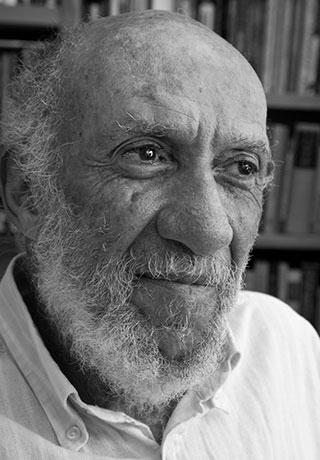
Professor Falk became an adviser to TFF when it was established in 1985.

Related Posts

This is not another geopolitical commentary on the Arctic. It is a visionary peace proposal that can save the region from militarised rivalry and ecological ruin. A blueprint for shared security, sustainable development, and human dignity — benefitting Greenland, the Arctic, and the rest of us. Jan Oberg TFF director Lund, Sweden, February 17, 2026 I. Four Principles for a New Arctic Vision The Arctic is often framed as a cold arena of rivalry — a place where great powers test each other’s resolve. But this worldview is outdated, unimaginative, and ultimately self‑defeating. The Arctic is not a vacuum waiting to be militarised; it is a living region, a climate stabiliser, and a cultural homeland whose future will shape the future of humanity. If we begin from that understanding, a far more rational Arctic order becomes possible — one that is peaceful, cooperative, and centred on the people who actually live there. This vision rests...
Photos © TFF 2000 Read PressInfo 90 “Lift the Sanctions and Bring More Aid to Yugoslavia” See Pictures from Belgrade © TFF 2000 Please reprint, copy, archive, quote or re-post this item, but please retain the source.
PART 2 — Diplomacy, Law and Nonviolent Power By Jan ObergTFF co-founder and director January 26, 2026 This is the second of four TFF-created idea portfolios designed to curb the global reach of the United States and, in both the short and long term, help catalyse a worldwide nonviolent resistance to what many observers describe as the Trump administration’s uniquely confrontational, destructive and world-threatening policies. These portfolios outline what governments and citizens across the world can do through dynamic diplomacy, creative initiatives, and strictly nonviolent means. They are typical TFF works in that we do not only tell what the problem is and how bad it will go – as 90+% of all commentators, experts and scholars do – we tell what we think can be done, inviting you to think of what you think you can do. It seems painfully clear to me that the current political dynamics in Washington increasingly resemble the most dangerous...

Recent Articles

Tony Robinson October 4, 2026 Violence is easy to recognise when someone is being beaten, shot or killed. It becomes more difficult when nobody is holding a weapon. Poverty, discrimination, exploitation and repression can restrict a human life just as effectively, although they do so in very different ways and with very different consequences. Simply adding more categories to an ever-growing list of forms of violence does not really solve the problem. The more interesting question is what all these different situations have in common and why it makes sense to describe them using the same word. Human beings do not simply react to what happens around them. They remember the past, imagine things that do not yet exist, make plans and undertake projects. Workers organise because they imagine different working conditions; people migrate because they imagine another life somewhere else; social movements emerge because people refuse to accept the...
It’s a matter of principles, courage, vision and pulling together – while the militarist world is falling apart… Peter Langille October 3, 2026 “Here, then, is the problem which we present to you, stark and dreadful and inescapable: Shall we put an end to the human race; or shall mankind renounce war?”The Bertrand Russell—Albert Einstein Manifesto, July 9, 1955 ⁕ The forecast for what’s ahead is worrisome. The sharp rise in armed conflicts over the past three years is adding to what was already the highest level in over seventy years. Genocides, which should be prevented are supported. A shared climate emergency that jeopardises survival is ignored. Diverse polls now suggest that people are war-weary, worried and interested in a more effective United Nations. And, there are viable policy options for a more secure world! Yet governments are doubling-down, betting on more war and investing heavily. If current trends persist,...
Johan Galtung 1930-2024October 2015 Published here on October 3, 2026 Let us focus on Civilization for conflict analysis and remedies. Major forms of disorder use violence; war is state organized violence. The most belligerent states are the United States of America and Israel, both with civilization roots. National Evangelism, the US Protestant Christian civilization– more national than evangelical–justifies US warfare as exceptionalism of a people chosen by God, with a manifest destiny to run the world. Orthodox Judaism justifies Israeli warfare to conquer and expand from Nile to Euphrates as a religious right and duty to the Eternal One. The third most belligerent country, the UK, no longer believes it is God-chosen but chosen by the USA; not quite the same but something. But the root cause of global disorder lies in the Occident–with Islam–seeing itself as the single, universal civilization valid for all at all times, all others being...

TFF on Substack

Discover and subscribe to more peace materials on TFF Substack

Most Popular

Tony Robinson October 4, 2026 Violence is easy to recognise when someone is being beaten, shot or killed. It becomes more difficult when nobody is holding a weapon. Poverty, discrimination, exploitation and repression can restrict a human life just as effectively, although they do so in very different ways and with very different consequences. Simply adding more categories to an ever-growing list of forms of violence does not really solve the problem. The more interesting question is what all these different situations have in common and why it makes sense to describe them using the same word. Human beings do not simply react to what happens around them. They remember the past, imagine things that do not yet exist, make plans and undertake projects. Workers organise because they imagine different working conditions; people migrate because they imagine another life somewhere else; social movements emerge because people refuse to accept the...
It’s a matter of principles, courage, vision and pulling together – while the militarist world is falling apart… Peter Langille October 3, 2026 “Here, then, is the problem which we present to you, stark and dreadful and inescapable: Shall we put an end to the human race; or shall mankind renounce war?”The Bertrand Russell—Albert Einstein Manifesto, July 9, 1955 ⁕ The forecast for what’s ahead is worrisome. The sharp rise in armed conflicts over the past three years is adding to what was already the highest level in over seventy years. Genocides, which should be prevented are supported. A shared climate emergency that jeopardises survival is ignored. Diverse polls now suggest that people are war-weary, worried and interested in a more effective United Nations. And, there are viable policy options for a more secure world! Yet governments are doubling-down, betting on more war and investing heavily. If current trends persist,...
Johan Galtung 1930-2024October 2015 Published here on October 3, 2026 Let us focus on Civilization for conflict analysis and remedies. Major forms of disorder use violence; war is state organized violence. The most belligerent states are the United States of America and Israel, both with civilization roots. National Evangelism, the US Protestant Christian civilization– more national than evangelical–justifies US warfare as exceptionalism of a people chosen by God, with a manifest destiny to run the world. Orthodox Judaism justifies Israeli warfare to conquer and expand from Nile to Euphrates as a religious right and duty to the Eternal One. The third most belligerent country, the UK, no longer believes it is God-chosen but chosen by the USA; not quite the same but something. But the root cause of global disorder lies in the Occident–with Islam–seeing itself as the single, universal civilization valid for all at all times, all others being...
Read More
Living-Peace-Sign-Budapest-copy
Tony Robinson October 4, 2026 Violence is easy to recognise when someone is being beaten, shot or killed. It becomes more difficult when nobody is holding a weapon. Poverty, discrimination, exploitation and repression can restrict a human life just as effectively, although they do so in very different ways and with very different consequences. Simply adding more categories to an ever-growing list of forms of violence does not really solve the problem. The more interesting question is what all these different situations have in common and why it makes sense to describe them using the same word. Human beings do not simply react to what happens around them. They remember the past, imagine things that do not yet exist, make plans and undertake projects. Workers organise because they imagine different working conditions; people migrate because they imagine another life somewhere else; social movements emerge because people refuse to accept the...
b54a1f10-8c65-4f0b-9dd5-4abc0a7d04cc_2659x2659
It’s a matter of principles, courage, vision and pulling together – while the militarist world is falling apart… Peter Langille October 3, 2026 “Here, then, is the problem which we present to you, stark and dreadful and inescapable: Shall we put an end to the human race; or shall mankind renounce war?”The Bertrand Russell—Albert Einstein Manifesto, July 9, 1955 ⁕ The forecast for what’s ahead is worrisome. The sharp rise in armed conflicts over the past three years is adding to what was already the highest level in over seventy years. Genocides, which should be prevented are supported. A shared climate emergency that jeopardises survival is ignored. Diverse polls now suggest that people are war-weary, worried and interested in a more effective United Nations. And, there are viable policy options for a more secure world! Yet governments are doubling-down, betting on more war and investing heavily. If current trends persist,...
010
Johan Galtung 1930-2024October 2015 Published here on October 3, 2026 Let us focus on Civilization for conflict analysis and remedies. Major forms of disorder use violence; war is state organized violence. The most belligerent states are the United States of America and Israel, both with civilization roots. National Evangelism, the US Protestant Christian civilization– more national than evangelical–justifies US warfare as exceptionalism of a people chosen by God, with a manifest destiny to run the world. Orthodox Judaism justifies Israeli warfare to conquer and expand from Nile to Euphrates as a religious right and duty to the Eternal One. The third most belligerent country, the UK, no longer believes it is God-chosen but chosen by the USA; not quite the same but something. But the root cause of global disorder lies in the Occident–with Islam–seeing itself as the single, universal civilization valid for all at all times, all others being...
Screenshot 2026-10-02 011738
Jan ObergPhD, director, The Transnational Foundation for Peace and Future Research, TFFLund, Sweden October 2, 2026 This is my full original manuscript. The Chinese Academy of Social Science, CASS, makes two publications out if it. 1. China’s Five-year plan emphasized the capabilities of basic research and original innovation. It is regarded as the goal of the future social development, which, as required, should be significantly enhanced. Can you comment on the importance of original innovation in research and academic study? I believe it is easier to define “original innovation” in the natural sciences than in social sciences. The breaking points of what constitutes something new, or innovative, are not quite as sharp in the latter. But in both fields it is about opening up something that was closed, unseen, unexplored before – making manifest what was earlier latent. Innovations come in many forms and shapes – naming something that was not...
arctic-circle-map
The agreement is catastrophic both because of what it says and what it doesn’t mention. It reduces further the major asset of security policies: Freedom of action. Jan Oberg TFF director September 25, 2026 A couple of hours before the agreement was signed on September 22, 2026, I published the following 13 hypotheses about what it would most likely contain on TFF Substack (in English). I was wrong on only the first point. Contrary to what Trump had written on his Truth Social platform, it does not appear to come into force immediately. In fact, it turned out to be worse than even I had anticipated. After these hypotheses now come a number of reflections in light of what the agreement actually contains, and does not contain, as well as the way in which it has generally been presented by major media outlets and by the public-service broadcaster DR. My...
girl-5894831_1280
Below are TFF-related media mentions, comments, videos and social media posts published elsewhere but not on this homepage. We happen to catch and list only a fraction. Regarding video comments and debates, we recommend that you go to the TFF Video Channel on Substack where many of them are reproduced. Jan Oberg is a contributor to China Daily – 52 million daily clicks – and Global Times, CGTN and CCTV (the national television), China Investment, Xinhua News Agency and several others. Articles and videos on these media very often multiply into countless Chinese (and Western media) that re-post them from these main media. Thanks to The China Academy, his analyses, interviews and comments are frequently posted on YouTube channels such as Thinkers Forum and Wave Media. These videos are often re-posted on Bilibili (China’s YouTube), the China Content Center on TikTok, and on the Chinese edition of TikTok, Douyin.com. This means reaching hundreds of millions of viewers worldwide over a year. While there are too many to catch on all these...





