
Samer Issawi, hunger strikes, and the Palestinian struggle

For the last three years Palestinian prisoners, mainly unlawfully detained in Israeli jails, have been engaged in a series of life threatening hunger strikes to protest administrative detention imprisonment (that is,without indictment, charges, and access to allegedly incriminating evidence), abusive arrest procedures (including nighttime arrests involving brutality in the presence of family members, detention for prolonged interrogations violating international standards, e.g. 22 hours at a time, sleep deprivation), and deplorable prison conditions (including unlawful transfer to Israeli prisons, denial of family visits, solitary confinement for prolonged periods).

No recent Palestinian prisoner has received more attention among the Palestinian than Samer Issawi, released a few days ago after reaching an extraordinary bargain with prison officials last April. He agreed then to stop his hunger strike, which had lasted an incredible 266 days, either partially or completely, in exchange for an Israeli pledge to release him in eight months at the end of 2013.

Notably, Issawi had rejected Israeli earlier offers to release him provided he would agree to a ten year deportation order to either Gaza or some distant country. Issawi refused this arrangement, a form of punitive release, which Israel had imposed on other hunger strikers, including Hana Shalabi. In Issawi’s words, “I do not accept to be deported out of my homeland.”

In the background also is the apparent Israeli effort to avoid having hunger strikers die, either because of their memory of the strong impact of Bobby Sands’ death on public opinion in Northern Ireland back in 1981 or as an aspect of the Israeli brand of ‘subsistence humanitarianism’ that has been explicitly most implemented in Gaza for the past decade. It involves a grouping of policies that seeks to make life extremely difficult for Palestinians but short of the point of death or epidemic, an extreme austerity reinforced periodically by what some Israelis referred to as ‘mowing the lawn,’ that is, relying on military incursion to ensure that the average collective material circumstances of Gazans don’t rise above subsistence levels.

Such an articulated cruelty, proclaimed to be the rationale for an occupation policy, is bound to sow seeds of hatred, resentment, and give rise to feelings of revenge among even the most moderate of Palestinians. I have encountered such responses to Israeli practices and policies among the gentlest of Gazans with whom I have met in recent years.

Issawi’s case stands out for several reasons aside from taking note of the length of his hunger strike.

His expressed motivation was an understandable reaction to being rearrested in July 7, 2012 after having been released the prior year as part of the arrangement in which 1,027 Palestinian prisoners were given their freedom in exchange for the return of Gilad Shalit, the captured Israeli soldier. Issawi was rearrested at the Juba checkpoint, accused of violating the terms of his release that restricted him to Jerusalem, his place of residence.

He was apparently still within the municipal limits of Jerusalem, but in an area treated as the West Bank by the Occupation authorities, and even so was claiming only to be seeking a shop for the repair of his car. For this possible technical violation of the release agreement, he was sentenced to eight months in prison, but then additional to this, a special committee, acting under Military Order 1651, Article 186, used its authority to rule that someone rearrested in this way could be returned, on the basis of a secret file, to prison for the completion of his original sentence, which in Issawi’s case meant twenty years.

There was no right to challenge such a seemingly outrageous ruling. Even Issawi’s lawyer was denied access to the file that contained the supposedly incriminating information. It was against this background that Issawi was unwilling to accept a reversal of his release from jail. He declared that a hunger strike was the only weapon available to him to protest such treatment, implying that he would either win his freedom in that way or die in prison.

Issawi’s family history is emblematic of what it has meant to live for most Palestinians decade after decade under military occupation.

Samer’s brother, Fadi, was killed in 1994 by Israeli security forces, and a second brother, Medhat has spent the last 19 years in prison, while his sister Shireen was detained during 2010. The family lives in the village of Issawiyeh, a suburb of Jerusalem, and a site of protest in recent years, especially in reaction to the confiscation of village land to create a ‘national park’ and to establish a waste dump. In other words, the context of occupation, annexation, expropriation of resources, and suppression are all part of the Issawi story. Indicatively, Israel banned any celebration of Issawi’s release in Issawiyeh, an order somewhat ignored by a warm welcoming crowd joyful about his release.

Even before his rearrest for violating the terms of his release, the Palestinian NGO that monitors Israeli prisons and policies, Addameer, indicated that Issawi was subjected to constant harassment by security forces. He was questioned at length several times a week, and was denied the opportunity to live a normal life. The daily ordeal of Palestinians living under occupation is a Kafka tale of lawless law, where those in charge decide whatever they wish, hide behind veils of secrecy, and impose their authority by relying on excessive force and a variety of humiliating obstacles to normalcy.

Issawi made clear that his struggle would not end with his release from prison: “It is our obligation as freedom fighters to free all Palestinian political prisoners.” Also, that there was a link between his kind of resistance by Palestinians and the broader international solidarity movement: “I draw my strength from all the free people in the world who want an end to the Israeli occupation.” Of course, there is mutuality present as those who support the Palestinian struggle from outside are inspired by the courage and resilience of individuals such as Samer Issawi, and should know these stories of nonviolent Palestinian defiance.

The Issawi story is more than the struggle of an individual or the sad saga of a family active in resistance or a village confronting the daily realities of an occupation that is also a scenario of resource confiscation and oppressive living conditions.

It represents a metaphoric summary of the Palestinian reality, epitomized by pervasive vulnerability, violent oppression, and the steady encroachment on the integrity of the Palestinian habitat, but also by the dynamics of resistance, struggle, and hope for a better, decent future. It is a reality we should all reflect upon at the turning of the year, wishing and acting for a better 2014 for Palestinians and for all of us.
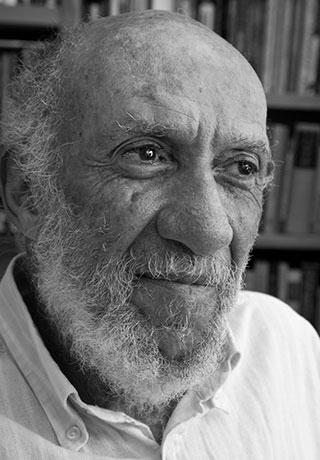

Professor Falk became an adviser to TFF when it was established in 1985.

Related Posts

This is not another geopolitical commentary on the Arctic. It is a visionary peace proposal that can save the region from militarised rivalry and ecological ruin. A blueprint for shared security, sustainable development, and human dignity — benefitting Greenland, the Arctic, and the rest of us. Jan Oberg TFF director Lund, Sweden, February 17, 2026 I. Four Principles for a New Arctic Vision The Arctic is often framed as a cold arena of rivalry — a place where great powers test each other’s resolve. But this worldview is outdated, unimaginative, and ultimately self‑defeating. The Arctic is not a vacuum waiting to be militarised; it is a living region, a climate stabiliser, and a cultural homeland whose future will shape the future of humanity. If we begin from that understanding, a far more rational Arctic order becomes possible — one that is peaceful, cooperative, and centred on the people who actually live there. This vision rests...
Photos © TFF 2000 Read PressInfo 90 “Lift the Sanctions and Bring More Aid to Yugoslavia” See Pictures from Belgrade © TFF 2000 Please reprint, copy, archive, quote or re-post this item, but please retain the source.
PART 2 — Diplomacy, Law and Nonviolent Power By Jan ObergTFF co-founder and director January 26, 2026 This is the second of four TFF-created idea portfolios designed to curb the global reach of the United States and, in both the short and long term, help catalyse a worldwide nonviolent resistance to what many observers describe as the Trump administration’s uniquely confrontational, destructive and world-threatening policies. These portfolios outline what governments and citizens across the world can do through dynamic diplomacy, creative initiatives, and strictly nonviolent means. They are typical TFF works in that we do not only tell what the problem is and how bad it will go – as 90+% of all commentators, experts and scholars do – we tell what we think can be done, inviting you to think of what you think you can do. It seems painfully clear to me that the current political dynamics in Washington increasingly resemble the most dangerous...

Recent Articles

Tony Robinson October 4, 2026 Violence is easy to recognise when someone is being beaten, shot or killed. It becomes more difficult when nobody is holding a weapon. Poverty, discrimination, exploitation and repression can restrict a human life just as effectively, although they do so in very different ways and with very different consequences. Simply adding more categories to an ever-growing list of forms of violence does not really solve the problem. The more interesting question is what all these different situations have in common and why it makes sense to describe them using the same word. Human beings do not simply react to what happens around them. They remember the past, imagine things that do not yet exist, make plans and undertake projects. Workers organise because they imagine different working conditions; people migrate because they imagine another life somewhere else; social movements emerge because people refuse to accept the...
It’s a matter of principles, courage, vision and pulling together – while the militarist world is falling apart… Peter Langille October 3, 2026 “Here, then, is the problem which we present to you, stark and dreadful and inescapable: Shall we put an end to the human race; or shall mankind renounce war?”The Bertrand Russell—Albert Einstein Manifesto, July 9, 1955 ⁕ The forecast for what’s ahead is worrisome. The sharp rise in armed conflicts over the past three years is adding to what was already the highest level in over seventy years. Genocides, which should be prevented are supported. A shared climate emergency that jeopardises survival is ignored. Diverse polls now suggest that people are war-weary, worried and interested in a more effective United Nations. And, there are viable policy options for a more secure world! Yet governments are doubling-down, betting on more war and investing heavily. If current trends persist,...
Johan Galtung 1930-2024October 2015 Published here on October 3, 2026 Let us focus on Civilization for conflict analysis and remedies. Major forms of disorder use violence; war is state organized violence. The most belligerent states are the United States of America and Israel, both with civilization roots. National Evangelism, the US Protestant Christian civilization– more national than evangelical–justifies US warfare as exceptionalism of a people chosen by God, with a manifest destiny to run the world. Orthodox Judaism justifies Israeli warfare to conquer and expand from Nile to Euphrates as a religious right and duty to the Eternal One. The third most belligerent country, the UK, no longer believes it is God-chosen but chosen by the USA; not quite the same but something. But the root cause of global disorder lies in the Occident–with Islam–seeing itself as the single, universal civilization valid for all at all times, all others being...

TFF on Substack

Discover and subscribe to more peace materials on TFF Substack

Most Popular

Tony Robinson October 4, 2026 Violence is easy to recognise when someone is being beaten, shot or killed. It becomes more difficult when nobody is holding a weapon. Poverty, discrimination, exploitation and repression can restrict a human life just as effectively, although they do so in very different ways and with very different consequences. Simply adding more categories to an ever-growing list of forms of violence does not really solve the problem. The more interesting question is what all these different situations have in common and why it makes sense to describe them using the same word. Human beings do not simply react to what happens around them. They remember the past, imagine things that do not yet exist, make plans and undertake projects. Workers organise because they imagine different working conditions; people migrate because they imagine another life somewhere else; social movements emerge because people refuse to accept the...
It’s a matter of principles, courage, vision and pulling together – while the militarist world is falling apart… Peter Langille October 3, 2026 “Here, then, is the problem which we present to you, stark and dreadful and inescapable: Shall we put an end to the human race; or shall mankind renounce war?”The Bertrand Russell—Albert Einstein Manifesto, July 9, 1955 ⁕ The forecast for what’s ahead is worrisome. The sharp rise in armed conflicts over the past three years is adding to what was already the highest level in over seventy years. Genocides, which should be prevented are supported. A shared climate emergency that jeopardises survival is ignored. Diverse polls now suggest that people are war-weary, worried and interested in a more effective United Nations. And, there are viable policy options for a more secure world! Yet governments are doubling-down, betting on more war and investing heavily. If current trends persist,...
Johan Galtung 1930-2024October 2015 Published here on October 3, 2026 Let us focus on Civilization for conflict analysis and remedies. Major forms of disorder use violence; war is state organized violence. The most belligerent states are the United States of America and Israel, both with civilization roots. National Evangelism, the US Protestant Christian civilization– more national than evangelical–justifies US warfare as exceptionalism of a people chosen by God, with a manifest destiny to run the world. Orthodox Judaism justifies Israeli warfare to conquer and expand from Nile to Euphrates as a religious right and duty to the Eternal One. The third most belligerent country, the UK, no longer believes it is God-chosen but chosen by the USA; not quite the same but something. But the root cause of global disorder lies in the Occident–with Islam–seeing itself as the single, universal civilization valid for all at all times, all others being...
Read More
Living-Peace-Sign-Budapest-copy
Tony Robinson October 4, 2026 Violence is easy to recognise when someone is being beaten, shot or killed. It becomes more difficult when nobody is holding a weapon. Poverty, discrimination, exploitation and repression can restrict a human life just as effectively, although they do so in very different ways and with very different consequences. Simply adding more categories to an ever-growing list of forms of violence does not really solve the problem. The more interesting question is what all these different situations have in common and why it makes sense to describe them using the same word. Human beings do not simply react to what happens around them. They remember the past, imagine things that do not yet exist, make plans and undertake projects. Workers organise because they imagine different working conditions; people migrate because they imagine another life somewhere else; social movements emerge because people refuse to accept the...
b54a1f10-8c65-4f0b-9dd5-4abc0a7d04cc_2659x2659
It’s a matter of principles, courage, vision and pulling together – while the militarist world is falling apart… Peter Langille October 3, 2026 “Here, then, is the problem which we present to you, stark and dreadful and inescapable: Shall we put an end to the human race; or shall mankind renounce war?”The Bertrand Russell—Albert Einstein Manifesto, July 9, 1955 ⁕ The forecast for what’s ahead is worrisome. The sharp rise in armed conflicts over the past three years is adding to what was already the highest level in over seventy years. Genocides, which should be prevented are supported. A shared climate emergency that jeopardises survival is ignored. Diverse polls now suggest that people are war-weary, worried and interested in a more effective United Nations. And, there are viable policy options for a more secure world! Yet governments are doubling-down, betting on more war and investing heavily. If current trends persist,...
010
Johan Galtung 1930-2024October 2015 Published here on October 3, 2026 Let us focus on Civilization for conflict analysis and remedies. Major forms of disorder use violence; war is state organized violence. The most belligerent states are the United States of America and Israel, both with civilization roots. National Evangelism, the US Protestant Christian civilization– more national than evangelical–justifies US warfare as exceptionalism of a people chosen by God, with a manifest destiny to run the world. Orthodox Judaism justifies Israeli warfare to conquer and expand from Nile to Euphrates as a religious right and duty to the Eternal One. The third most belligerent country, the UK, no longer believes it is God-chosen but chosen by the USA; not quite the same but something. But the root cause of global disorder lies in the Occident–with Islam–seeing itself as the single, universal civilization valid for all at all times, all others being...
Screenshot 2026-10-02 011738
Jan ObergPhD, director, The Transnational Foundation for Peace and Future Research, TFFLund, Sweden October 2, 2026 This is my full original manuscript. The Chinese Academy of Social Science, CASS, makes two publications out if it. 1. China’s Five-year plan emphasized the capabilities of basic research and original innovation. It is regarded as the goal of the future social development, which, as required, should be significantly enhanced. Can you comment on the importance of original innovation in research and academic study? I believe it is easier to define “original innovation” in the natural sciences than in social sciences. The breaking points of what constitutes something new, or innovative, are not quite as sharp in the latter. But in both fields it is about opening up something that was closed, unseen, unexplored before – making manifest what was earlier latent. Innovations come in many forms and shapes – naming something that was not...
arctic-circle-map
The agreement is catastrophic both because of what it says and what it doesn’t mention. It reduces further the major asset of security policies: Freedom of action. Jan Oberg TFF director September 25, 2026 A couple of hours before the agreement was signed on September 22, 2026, I published the following 13 hypotheses about what it would most likely contain on TFF Substack (in English). I was wrong on only the first point. Contrary to what Trump had written on his Truth Social platform, it does not appear to come into force immediately. In fact, it turned out to be worse than even I had anticipated. After these hypotheses now come a number of reflections in light of what the agreement actually contains, and does not contain, as well as the way in which it has generally been presented by major media outlets and by the public-service broadcaster DR. My...
girl-5894831_1280
Below are TFF-related media mentions, comments, videos and social media posts published elsewhere but not on this homepage. We happen to catch and list only a fraction. Regarding video comments and debates, we recommend that you go to the TFF Video Channel on Substack where many of them are reproduced. Jan Oberg is a contributor to China Daily – 52 million daily clicks – and Global Times, CGTN and CCTV (the national television), China Investment, Xinhua News Agency and several others. Articles and videos on these media very often multiply into countless Chinese (and Western media) that re-post them from these main media. Thanks to The China Academy, his analyses, interviews and comments are frequently posted on YouTube channels such as Thinkers Forum and Wave Media. These videos are often re-posted on Bilibili (China’s YouTube), the China Content Center on TikTok, and on the Chinese edition of TikTok, Douyin.com. This means reaching hundreds of millions of viewers worldwide over a year. While there are too many to catch on all these...




