
What can be done about Syria? Tragedy and impotence

The Houla Massacre of a week ago in several small Muslim villages near the Syrian city of Homs underscores the tragic circumstances of civilian vulnerability to the brutal violence of a criminal government. Reliable reports confirm that most of the 108 civilians who died in Houla were executed at close range in cold blood, over 50 of whom were children under the age of 10.

It is no wonder that the Houla Massacre is being called ‘a tipping point’ in the global response to this latest horrifying outbreak of Syrian violence, a process that started over 15 months ago. The chilling nature of this vicious attack that refused to spare the most innocent among us, young children, does seem like a point of no return.

What happened in Houla, although still contested as to details, seems established as mainly the work of the Shabiha, the notorious militia of thugs employed by Damascus to deal cruelly with opposition forces and their supposed supporters among the Syrian people.

This massacre also represents a crude repudiation of UN diplomacy, especially the ceasefire 280 unarmed UN observers have been monitoring since it was put into effect on April 12th. In this regard the events in Houla reinforced the impression that the Assad regime was increasingly relying on tactics of depraved criminality and state terror to destroy the movement that has been mounted against it. Such defiance also created new pressure on the UN and the international community to do something more interventionary than bemoaning and censuring when confronted by such evil, or face being further discredited as inept and even irrelevant.

But is not the Syrian situation better treated as a ‘tragic predicament’ of contemporary world order rather than presented as a tipping point that might justify military intervention?

The language of tipping point raises misleading hard power expectations that external coercive initiatives can redeem the situation? What kind of hitherto unimaginable action plan undertaken by the UN or NATO could hope to stop the violence at acceptable costs and thereby change the governing structure of Syria for the better?

There has long existed an international consensus that the Syrian response to a popular uprising that started nonviolently more than a year ago should be vigorously opposed, but this awareness was coupled with a growing realization that there were no good options in the event, as has proved to be the case, that the Assad regime defies international censure and media exposure.

Even those who supported the 6-Point Annan Plan in the UN acknowledged from its inception that it represented a desperate effort, which had almost no prospect of succeeding. Critics claimed that the Annan Plan was ‘accepted’ in bad faith by Assad to give Damascus breathing space while it went forward with its own plans to crush the opposition by all means at its disposal, and had no intention of reaching a political solution of the conflict.

In truth, the opposition may also have been unwilling to live within the limits of the Annan approach as it meant giving up its primary goal of establishing a new governance structure for Syria.

There was a widely shared sentiment at the UN and in the world media that it was unacceptable to stand back and watch further crimes against humanity take place, inducing a mood that ‘something more must be done,’ but what?

Remembering the awful failure of the world to look away while the genocide in Rwanda in 1994 or to remain passive in responding to the massacre at Srebrenica in 1995, there existed the feeling that the developments in Syria were heading toward a comparably unspeakable humanitarian catastrophe, already more than 10, 000 Syrians had died, and it seems likely that worse may still occur if the Assad leadership is not removed.

Diplomacy had been arduously pursued since the outset of the turmoil in Syria: originally by Turkey, then the Arab League, and finally by Kofi Annan, the Joint Envoy of the UN Secretary General and the Arab League, each phase greeted by deceptive welcoming gestures in Damascus but clearly without any intention to abandon or even mitigate reliance on indiscriminate violence directed at the civilian population.

The parties all along, including Bashar al-Assad sweet talked international emissaries, announced their willingness to stop the killing and other abuses, and even accepted monitoring arrangements. On occasion after occasion before negotiators had even left this tormented country the two sides resumed their fierce combat as if nothing had happened to alter their behavior, and for this, the opposition led by the Syrian Free Army deserves a share of the blame.

In effect, diplomacy has been given multiple chances, and continues to be put forward as the only way to make a difference in the conflict, and yet it clearly lacks the authority and capabilities to stop the bloodshed and suspend the political struggle for control of the Syrian state.

This frustration of diplomacy over many months naturally turns our attention to more coercive options. Russia has been blamed for preventing stronger action being endorsed by the UN Security Council, and is even being charged by the American Secretary of State, Hilary Clinton, with pushing Syria into a prolonged civil war due its unwillingness to back stronger collective measures in the Security Counil. Whether Russia will alter its stance in response to these latest developments remains uncertain, but there is a definite call for new initiatives within and outside the UN.

There are intimations of the formation of a new ‘coalition of the willing’ prepared to engage in military intervention, and even NGOs are demanding a stronger stand. For instance, Amnesty International has issued an appeal to the Security Council to call upon the International Criminal Court to issue indictments against the Syrian leadership for their role in the commission of severe crimes against humanity, culminating in the Houla Massacre.

Military intervention has been strongly advocated for several months by some irresponsibly belligerent political figures in the United States, most notably by John McCain, the Republican Senator who lost the presidential election to Barack Obama back in 2008. So far there seems little appetite for such a major new military undertaking even at the Pentagon, and certainly not among the American public. Also Syria has no substantial coveted oil reserves that might have swung the balance of governmental opinion toward intervention during the debate on what to do about Qaddafi’s Libya.

The logistics and politics surrounding any proposed military intervention in Syria make it an unrealistic option. There is not the political will to mount the kind of major military operation on the ground that would have reasonable hopes of combining regime change with an enforced stability until normalcy could be established by a new national leadership.

Unlike Libya where NATO’s reliance on air power without ground troops was able to turn the tide decisively, if destructively, in favor of rebel forces, such a scenario is viewed as inapplicable to Syria where there continues to exist more public support for the regime and more substantial military and paramilitary resources at its disposal, especially if it continue to receive military assistance from Iran.

All in all, the military option would likely make matters worse for the Syrian people, increasing the magnitude of internal violence without having the effect of bringing the conflict to an end, or producing better hopes for the future in a society as conflict and divided by enmities, bad memories, and fears as is the case of Syria.

A major reason why it is suspicious to be too interventionary, or for that matter dogmatically aloof, is the radical uncertainty surrounding the nature of the anti-Assad coalition of forces within Syria, and the motivations of their external backers.

Such uncertainty is particularly prevalent among Syrian minorities that seem to fear the collapse of the present regime in Damascus more than these dislike some of its oppressive behavior. How to act in such circumstances of uncertainty should counsel humility, but rarely does as this sort of acknowledgement hampers the kind of mobilization of support needed for bold action. What is certain is the bloody nature of the conflict, the indiscriminate tactics relied upon, and the efforts to terrorize the civilian population. While it is correct at this point to hold the government in power responsible and accountable, both sides have acted ruthlessly and in a manner that casts a dark cloud over Syria’s future.

The dilemma exposes the weakness of empathetic geopolitics in a world that continues to be dominated by territorially supreme sovereign states with insecure and antagonistic minorities. In the Syrian situation this tragic reality is revealed in all its horror, complexity, and contradictions.

It is unacceptable to remain a passive spectator in a media wired world where events are reported visually almost as they are occurring, or immediately thereafter, and there is no way to avert the gaze of the outside world that is both compassionate and untrustworthy.

It is morally unacceptable to stand by, watch, and do nothing. But the UN lacks the authority, capability, and legitimacy to impose the collective will of international society except in those rare instances when it is able to mobilize an effective geopolitical consensus as it did in Libya (but only by deceiving Russia and China as to the scope of the response contemplated by the authorization of force in March of 2011), but the outcome still being shrouded in uncertainty and controversy.

For reasons explained above, plus the lingering resentment due to the Libyan deception on the part of Russia and China, there has not yet emerged a similar geopolitical consensus favoring military intervention in Syria, and none seems likely. Just as doing nothing is unacceptable, mounting a military intervention is unrealistic, and perhaps undesirable, and for now politically impossible.

What is left to fill the gap between the unacceptable and the unrealistic is diplomacy, which has proved to be futile up to this point, but hanging on to the slim possibility that it might yet somehow produce positive results, is the only conceivable way forward with respect to the Syrian situation. It is easy to deride Kofi Annan and the frustrations arising from the repeated failures of Damascus to comply with the agreed framework, but it remains impossible to find preferable alternatives.

If diplomacy is finally admitted to be a deadend as seems almost certain it raises serious questions as to whether in a globalizing world the absence of stronger global institutions of a democratic character is not a fatal flaw in the 21st century structure of world order.

Moral awareness without the political capacity to act responsively points up a desperate need for global reform, but the grossly unequal distributions of power and wealth in the world make unfeasible such adjustments for the foreseeable future.

And so the peoples of the world seem destined to go on living in this tragic space between the unacceptable and the impossible. It will take a true miracle to overcome this gap for the benefit of the Syrian people, and others.
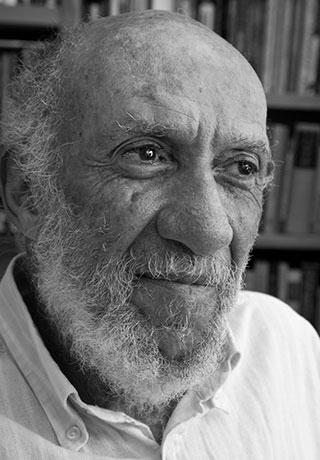

Professor Falk became an adviser to TFF when it was established in 1985.

Related Posts

This is not another geopolitical commentary on the Arctic. It is a visionary peace proposal that can save the region from militarised rivalry and ecological ruin. A blueprint for shared security, sustainable development, and human dignity — benefitting Greenland, the Arctic, and the rest of us. Jan Oberg TFF director Lund, Sweden, February 17, 2026 I. Four Principles for a New Arctic Vision The Arctic is often framed as a cold arena of rivalry — a place where great powers test each other’s resolve. But this worldview is outdated, unimaginative, and ultimately self‑defeating. The Arctic is not a vacuum waiting to be militarised; it is a living region, a climate stabiliser, and a cultural homeland whose future will shape the future of humanity. If we begin from that understanding, a far more rational Arctic order becomes possible — one that is peaceful, cooperative, and centred on the people who actually live there. This vision rests...
Photos © TFF 2000 Read PressInfo 90 “Lift the Sanctions and Bring More Aid to Yugoslavia” See Pictures from Belgrade © TFF 2000 Please reprint, copy, archive, quote or re-post this item, but please retain the source.
PART 2 — Diplomacy, Law and Nonviolent Power By Jan ObergTFF co-founder and director January 26, 2026 This is the second of four TFF-created idea portfolios designed to curb the global reach of the United States and, in both the short and long term, help catalyse a worldwide nonviolent resistance to what many observers describe as the Trump administration’s uniquely confrontational, destructive and world-threatening policies. These portfolios outline what governments and citizens across the world can do through dynamic diplomacy, creative initiatives, and strictly nonviolent means. They are typical TFF works in that we do not only tell what the problem is and how bad it will go – as 90+% of all commentators, experts and scholars do – we tell what we think can be done, inviting you to think of what you think you can do. It seems painfully clear to me that the current political dynamics in Washington increasingly resemble the most dangerous...

Recent Articles

Tony Robinson October 4, 2026 Violence is easy to recognise when someone is being beaten, shot or killed. It becomes more difficult when nobody is holding a weapon. Poverty, discrimination, exploitation and repression can restrict a human life just as effectively, although they do so in very different ways and with very different consequences. Simply adding more categories to an ever-growing list of forms of violence does not really solve the problem. The more interesting question is what all these different situations have in common and why it makes sense to describe them using the same word. Human beings do not simply react to what happens around them. They remember the past, imagine things that do not yet exist, make plans and undertake projects. Workers organise because they imagine different working conditions; people migrate because they imagine another life somewhere else; social movements emerge because people refuse to accept the...
It’s a matter of principles, courage, vision and pulling together – while the militarist world is falling apart… Peter Langille October 3, 2026 “Here, then, is the problem which we present to you, stark and dreadful and inescapable: Shall we put an end to the human race; or shall mankind renounce war?”The Bertrand Russell—Albert Einstein Manifesto, July 9, 1955 ⁕ The forecast for what’s ahead is worrisome. The sharp rise in armed conflicts over the past three years is adding to what was already the highest level in over seventy years. Genocides, which should be prevented are supported. A shared climate emergency that jeopardises survival is ignored. Diverse polls now suggest that people are war-weary, worried and interested in a more effective United Nations. And, there are viable policy options for a more secure world! Yet governments are doubling-down, betting on more war and investing heavily. If current trends persist,...
Johan Galtung 1930-2024October 2015 Published here on October 3, 2026 Let us focus on Civilization for conflict analysis and remedies. Major forms of disorder use violence; war is state organized violence. The most belligerent states are the United States of America and Israel, both with civilization roots. National Evangelism, the US Protestant Christian civilization– more national than evangelical–justifies US warfare as exceptionalism of a people chosen by God, with a manifest destiny to run the world. Orthodox Judaism justifies Israeli warfare to conquer and expand from Nile to Euphrates as a religious right and duty to the Eternal One. The third most belligerent country, the UK, no longer believes it is God-chosen but chosen by the USA; not quite the same but something. But the root cause of global disorder lies in the Occident–with Islam–seeing itself as the single, universal civilization valid for all at all times, all others being...

TFF on Substack

Discover and subscribe to more peace materials on TFF Substack

Most Popular

Tony Robinson October 4, 2026 Violence is easy to recognise when someone is being beaten, shot or killed. It becomes more difficult when nobody is holding a weapon. Poverty, discrimination, exploitation and repression can restrict a human life just as effectively, although they do so in very different ways and with very different consequences. Simply adding more categories to an ever-growing list of forms of violence does not really solve the problem. The more interesting question is what all these different situations have in common and why it makes sense to describe them using the same word. Human beings do not simply react to what happens around them. They remember the past, imagine things that do not yet exist, make plans and undertake projects. Workers organise because they imagine different working conditions; people migrate because they imagine another life somewhere else; social movements emerge because people refuse to accept the...
It’s a matter of principles, courage, vision and pulling together – while the militarist world is falling apart… Peter Langille October 3, 2026 “Here, then, is the problem which we present to you, stark and dreadful and inescapable: Shall we put an end to the human race; or shall mankind renounce war?”The Bertrand Russell—Albert Einstein Manifesto, July 9, 1955 ⁕ The forecast for what’s ahead is worrisome. The sharp rise in armed conflicts over the past three years is adding to what was already the highest level in over seventy years. Genocides, which should be prevented are supported. A shared climate emergency that jeopardises survival is ignored. Diverse polls now suggest that people are war-weary, worried and interested in a more effective United Nations. And, there are viable policy options for a more secure world! Yet governments are doubling-down, betting on more war and investing heavily. If current trends persist,...
Johan Galtung 1930-2024October 2015 Published here on October 3, 2026 Let us focus on Civilization for conflict analysis and remedies. Major forms of disorder use violence; war is state organized violence. The most belligerent states are the United States of America and Israel, both with civilization roots. National Evangelism, the US Protestant Christian civilization– more national than evangelical–justifies US warfare as exceptionalism of a people chosen by God, with a manifest destiny to run the world. Orthodox Judaism justifies Israeli warfare to conquer and expand from Nile to Euphrates as a religious right and duty to the Eternal One. The third most belligerent country, the UK, no longer believes it is God-chosen but chosen by the USA; not quite the same but something. But the root cause of global disorder lies in the Occident–with Islam–seeing itself as the single, universal civilization valid for all at all times, all others being...
Read More
Living-Peace-Sign-Budapest-copy
Tony Robinson October 4, 2026 Violence is easy to recognise when someone is being beaten, shot or killed. It becomes more difficult when nobody is holding a weapon. Poverty, discrimination, exploitation and repression can restrict a human life just as effectively, although they do so in very different ways and with very different consequences. Simply adding more categories to an ever-growing list of forms of violence does not really solve the problem. The more interesting question is what all these different situations have in common and why it makes sense to describe them using the same word. Human beings do not simply react to what happens around them. They remember the past, imagine things that do not yet exist, make plans and undertake projects. Workers organise because they imagine different working conditions; people migrate because they imagine another life somewhere else; social movements emerge because people refuse to accept the...
b54a1f10-8c65-4f0b-9dd5-4abc0a7d04cc_2659x2659
It’s a matter of principles, courage, vision and pulling together – while the militarist world is falling apart… Peter Langille October 3, 2026 “Here, then, is the problem which we present to you, stark and dreadful and inescapable: Shall we put an end to the human race; or shall mankind renounce war?”The Bertrand Russell—Albert Einstein Manifesto, July 9, 1955 ⁕ The forecast for what’s ahead is worrisome. The sharp rise in armed conflicts over the past three years is adding to what was already the highest level in over seventy years. Genocides, which should be prevented are supported. A shared climate emergency that jeopardises survival is ignored. Diverse polls now suggest that people are war-weary, worried and interested in a more effective United Nations. And, there are viable policy options for a more secure world! Yet governments are doubling-down, betting on more war and investing heavily. If current trends persist,...
010
Johan Galtung 1930-2024October 2015 Published here on October 3, 2026 Let us focus on Civilization for conflict analysis and remedies. Major forms of disorder use violence; war is state organized violence. The most belligerent states are the United States of America and Israel, both with civilization roots. National Evangelism, the US Protestant Christian civilization– more national than evangelical–justifies US warfare as exceptionalism of a people chosen by God, with a manifest destiny to run the world. Orthodox Judaism justifies Israeli warfare to conquer and expand from Nile to Euphrates as a religious right and duty to the Eternal One. The third most belligerent country, the UK, no longer believes it is God-chosen but chosen by the USA; not quite the same but something. But the root cause of global disorder lies in the Occident–with Islam–seeing itself as the single, universal civilization valid for all at all times, all others being...
Screenshot 2026-10-02 011738
Jan ObergPhD, director, The Transnational Foundation for Peace and Future Research, TFFLund, Sweden October 2, 2026 This is my full original manuscript. The Chinese Academy of Social Science, CASS, makes two publications out if it. 1. China’s Five-year plan emphasized the capabilities of basic research and original innovation. It is regarded as the goal of the future social development, which, as required, should be significantly enhanced. Can you comment on the importance of original innovation in research and academic study? I believe it is easier to define “original innovation” in the natural sciences than in social sciences. The breaking points of what constitutes something new, or innovative, are not quite as sharp in the latter. But in both fields it is about opening up something that was closed, unseen, unexplored before – making manifest what was earlier latent. Innovations come in many forms and shapes – naming something that was not...
arctic-circle-map
The agreement is catastrophic both because of what it says and what it doesn’t mention. It reduces further the major asset of security policies: Freedom of action. Jan Oberg TFF director September 25, 2026 A couple of hours before the agreement was signed on September 22, 2026, I published the following 13 hypotheses about what it would most likely contain on TFF Substack (in English). I was wrong on only the first point. Contrary to what Trump had written on his Truth Social platform, it does not appear to come into force immediately. In fact, it turned out to be worse than even I had anticipated. After these hypotheses now come a number of reflections in light of what the agreement actually contains, and does not contain, as well as the way in which it has generally been presented by major media outlets and by the public-service broadcaster DR. My...
girl-5894831_1280
Below are TFF-related media mentions, comments, videos and social media posts published elsewhere but not on this homepage. We happen to catch and list only a fraction. Regarding video comments and debates, we recommend that you go to the TFF Video Channel on Substack where many of them are reproduced. Jan Oberg is a contributor to China Daily – 52 million daily clicks – and Global Times, CGTN and CCTV (the national television), China Investment, Xinhua News Agency and several others. Articles and videos on these media very often multiply into countless Chinese (and Western media) that re-post them from these main media. Thanks to The China Academy, his analyses, interviews and comments are frequently posted on YouTube channels such as Thinkers Forum and Wave Media. These videos are often re-posted on Bilibili (China’s YouTube), the China Content Center on TikTok, and on the Chinese edition of TikTok, Douyin.com. This means reaching hundreds of millions of viewers worldwide over a year. While there are too many to catch on all these...




