
Seeking closure for the 1915 Armenian massacres

Recently the National Assembly, France’s lower legislative chamber, voted to criminalize the denial of the Armenian genocide in 1915, imposing a potential prison sentence of up to one year as well as a maximum fine of 45,000 Euros. The timing of this controversial initiative seemed to represent a rather blatant Sarkozy bid for the votes of the 500,000 French citizens of Armenian descent in the upcoming presidential election.

It follows similar pre-election initiatives in 2001 when the French Parliament officially declared that the massacres of Armenians in 1915 were an instance of genocide and in 2006 when the Assembly first voted to criminalize Armenian genocide denial, an initiative that never became law because the French Senate failed to give its assent. And this hopefully may happen again with respect to this recent Assembly move.

Predictably, the French action was perceived by Turkey as a hostile provocation. The Turkish government, which has so far refused to describe the 1915 events as ‘genocide,’ immediately reacted, warning France of adverse economic consequences if this initiative went forward, and has reacted by withdrawing its ambassador and freezing inter-governmental economic relations.

The Turkish Prime Minister, Recip Teyyip Erdogan, denounced the action of the French Assembly that had been initiated by a prominent member of Sarkozy’s party. Erdogan, known for his forthrightness, advised the French Government that instead of criminalizing the Turkish unwillingness to acknowledge the 1915 events as genocide, France should busy itself with determining whether its harsh tactics used during the 1950s in Algeria, and supposedly responsible for up to a million Algerian deaths during the long French campaign to hold onto to its north African colony constituted genocide.

There are many issues raised by this turn for the worse in French-Turkish relations, and its embittering dialogue about historic events. Perhaps, the most important, is whether it is ever justifiable to criminalize the expression of an opinion about a set of past occurrences that goes against a societal consensus. It is true that genocide or Holocaust denial can be hurtful to those who are survivors or descendants of survivors, and identify with the victims of such severe wrongdoing, and its attendant suffering, but whether the sensitivities of these communities should ever be protected by the criminal law seems doubtful, conflicting with freedom of expression and censuring inquiries into historical events that are unpopular and controversial, but occasionally illuminating enough to challenge conventional wisdom. It would seem that informed agreement and social pressure should be sufficient to deter all but the most extremist instances of denial if a genuine and sufficient consensus exists as to the locus of responsibility and the character of the events.

In this instance, such criminalization is especially unfortunate as even if the facts of the 1915 events are reasonably well established, the relevance of genocide is certainly ambiguous and somewhat problematic, especially from a legal perspective.

Against this background, where Turkey has not yet been willing to describe the events of 1915 as ‘genocide’ the criminalization of the denial is more likely to raise tensions that encourage a long overdue accommodation. Of course, there are related irritants to the Turkish-Armenian relationship, especially the unresolved conflict over the future of the Nagorno-Karabakh enclave in Azerbaijan.

Among thoughtful Turks there continues to be some questioning of the character of the World War I events in question, not about their tragic character or even a willingness to condemn Ottoman wrongdoing, but there remains a Turkish governmental and societal reluctance to pin the label of genocide on these occurrences. It is well known that the Armenian diaspora has long been seeking to induce key governments around the world to make formal declarations to the effect that what happened in 1915 was genocide, and some 25 governments have done so, as have many lesser political entities such as sub-divisions of the state or cities.

Such efforts to legalize historical truth, as distinct from mourning historical events, is itself a political gimmick to circumvent diplomacy and accommodation. But to criminalize genocidal denial represents a still further escalation of Armenian efforts to resolve the controversy over this potent g-word through branding of denial as a crime. We would insist that rather than resolving the conflict, such steps make a politics of reconciliation that much more difficult for both parties.

The discourse on genocide has always been confusing, multi-layered, and often toxic. The word ‘genocide’ is weighted down by its implications, explaining both why there is such a strong impulse to invoke it and an equally intense effort to deny its applicability.

We need to distinguish genocide as a crime in international law from the political assessment of historic events as genocide due to a clear pattern of deliberate killing of an ethnic or religious group. And such a political assessment needs to be further distinguished from a moral condemnation of a pattern designed to destroy systematically a beleaguered minority that might properly be described as ‘genocidal,’ or what has been more recently described as ‘ethnic cleansing’ in the setting of Bosnia, which is distinct from the judicially certified ‘genocide’ that shook the foundations of Rwanda in 1994.

From a legal perspective it is not plausible to call these events in 1915 as genocide. After all, the word did not exist until coined by Rafael Lemkin in 1943, and the crime was not so delimited until the Genocide Convention came into force in 1951. Beyond this, and more telling than this technical observation, is the fact that the indictments at Nuremberg did not charge the surviving Nazi leaders with genocide, but convicted these Germans of ‘crimes against humanity’ for their connection with genocidal conduct, and even here only if the alleged criminal acts were associated with World War II, found by the tribunal to be an unlawful war, and thus a ‘crime against peace.’

If the Holocaust perpetrated against Jews and others did not seem to the Nuremberg tribunal to be a distinct crime, then it seems untenable to regard the Armenian tragedy as embodying the crime of genocide. When the UN expert body, the International Law Commission, put into words what was done at Nuremberg it explicitly affirmed the Roman dictum prohibiting retroactivity: no crime without law (nulla crimen sine lege).

Such a dictum touches on a fundamental component of justice to the effect that behavior, however detestable from moral and political points of view, is not a ‘crime’ until so designated in advance of the acts in question by a competent judicial body. This principle has never been contested, and it pertains to the genocide debate whenever attached to pre-1951 events, whether the Armenian experience or to the destruction of a variety of indigenous peoples in various parts of the world or to the barbarous institution of slavery.

At the same time, if what took place in 1915 were to have occurred anytime after the Genocide Convention became effective, it would seem beyond any reasonable doubt to qualify as genocide. The International Court of Justice in the course of examining the Bosnian allegations of genocide, put the bar high by requiring written or documentary evidence of a clear intent by Serbian governmental leaders to commit the crime of genocide that was not available (except the particular incident involving the horrific massacre of several thousand Bosnian males at Srbrenica in 1995 was declared to be genocide).

While such evidence was difficult to provide to the satisfaction of the World Court in relation to this notorious Bosnian experience of the 1990s partly as a result of a questionable arrangement with the ad hoc International Criminal Tribunal for former Yugoslavia not to release documentary evidence tying the Belgrade regime to the anti-Muslim cleansing operations in Bosnia, the situation with respect to Armenia is different.

Unlike Bosnia, documentary evidence from the ruling Ottoman authorities does exist in sufficient quantity and quality to make a persuasive argument to the effect that ‘genocide’ took place in 1915, but because the events occurred 36 years before genocide formally became a crime such a showing is legally irrelevant.

If this reasoning is accepted, it has important implications, including establishing some political space for bringing closure to the issue: Turkey could formally declare that if what happened to the Armenians in 1915 took place in the 1960s it would have been genocide, while those on the Armenian side could accept the idea that the 1915 massacres were not then genocide, but that their extent, character, and evidence would constitute genocide if taking place now, or anytime after 1951.

The French move, if indeed it becomes law, is irresponsible in the extreme as it disallows the explorations of constructive ways that the violence and suffering of the past might be mitigated. As post-apartheid South Africa has illustrated, it might sometimes be politically and morally preferable for a victimized people to opt for ‘truth and reconciliation’ than to insist on the criminalization of past wrongs however heinous.

It seems to me that such an approach would have mutual benefits. It would bring a conflict that has endured for decades nearer to closure. It would allow Armenians to regard their victimization as genocide from a political and moral perspective, while enabling Turkey to make such a concession without fearing such legal implications as Armenian demands for reparations and the recovery of lost property.

Turkish good faith and remorse could be further expressed by appropriating funds for the establishment of a major museum of Armenian History and Culture in Ankara, by recognizing April 24th as a day of Armenian remembrance, and by encouraging honest historical inquiry into these horrific occurrences.

Of course, such a politics of reconciliation can only have any hope of succeeding if there is a large display of good will and a sincere search by Turkish and Armenian leaders for positive relations between the two peoples. It is to be expected that extremists on both sides would strenuously object to such an accommodation. Admittedly, there would not be complete satisfaction even among that largely silent majority of Armenians and Turks who might welcome a pacifying development.

What would be created is valuable – a new opening that would allow a more benevolent future to unfold for both peoples that could include a joint cathartic reexamination of the past. Such a development might add to the solemnity and dignity of the expected worldwide observances in 2015 of the 100th anniversary of these events and avoid these occasions from being little more than sad remembrances and shrill recriminations.
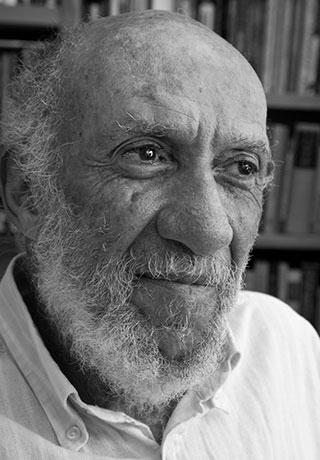

Professor Falk became an adviser to TFF when it was established in 1985.

Related Posts

This is not another geopolitical commentary on the Arctic. It is a visionary peace proposal that can save the region from militarised rivalry and ecological ruin. A blueprint for shared security, sustainable development, and human dignity — benefitting Greenland, the Arctic, and the rest of us. Jan Oberg TFF director Lund, Sweden, February 17, 2026 I. Four Principles for a New Arctic Vision The Arctic is often framed as a cold arena of rivalry — a place where great powers test each other’s resolve. But this worldview is outdated, unimaginative, and ultimately self‑defeating. The Arctic is not a vacuum waiting to be militarised; it is a living region, a climate stabiliser, and a cultural homeland whose future will shape the future of humanity. If we begin from that understanding, a far more rational Arctic order becomes possible — one that is peaceful, cooperative, and centred on the people who actually live there. This vision rests...
Photos © TFF 2000 Read PressInfo 90 “Lift the Sanctions and Bring More Aid to Yugoslavia” See Pictures from Belgrade © TFF 2000 Please reprint, copy, archive, quote or re-post this item, but please retain the source.
PART 2 — Diplomacy, Law and Nonviolent Power By Jan ObergTFF co-founder and director January 26, 2026 This is the second of four TFF-created idea portfolios designed to curb the global reach of the United States and, in both the short and long term, help catalyse a worldwide nonviolent resistance to what many observers describe as the Trump administration’s uniquely confrontational, destructive and world-threatening policies. These portfolios outline what governments and citizens across the world can do through dynamic diplomacy, creative initiatives, and strictly nonviolent means. They are typical TFF works in that we do not only tell what the problem is and how bad it will go – as 90+% of all commentators, experts and scholars do – we tell what we think can be done, inviting you to think of what you think you can do. It seems painfully clear to me that the current political dynamics in Washington increasingly resemble the most dangerous...

Recent Articles

Tony Robinson October 4, 2026 Violence is easy to recognise when someone is being beaten, shot or killed. It becomes more difficult when nobody is holding a weapon. Poverty, discrimination, exploitation and repression can restrict a human life just as effectively, although they do so in very different ways and with very different consequences. Simply adding more categories to an ever-growing list of forms of violence does not really solve the problem. The more interesting question is what all these different situations have in common and why it makes sense to describe them using the same word. Human beings do not simply react to what happens around them. They remember the past, imagine things that do not yet exist, make plans and undertake projects. Workers organise because they imagine different working conditions; people migrate because they imagine another life somewhere else; social movements emerge because people refuse to accept the...
It’s a matter of principles, courage, vision and pulling together – while the militarist world is falling apart… Peter Langille October 3, 2026 “Here, then, is the problem which we present to you, stark and dreadful and inescapable: Shall we put an end to the human race; or shall mankind renounce war?”The Bertrand Russell—Albert Einstein Manifesto, July 9, 1955 ⁕ The forecast for what’s ahead is worrisome. The sharp rise in armed conflicts over the past three years is adding to what was already the highest level in over seventy years. Genocides, which should be prevented are supported. A shared climate emergency that jeopardises survival is ignored. Diverse polls now suggest that people are war-weary, worried and interested in a more effective United Nations. And, there are viable policy options for a more secure world! Yet governments are doubling-down, betting on more war and investing heavily. If current trends persist,...
Johan Galtung 1930-2024October 2015 Published here on October 3, 2026 Let us focus on Civilization for conflict analysis and remedies. Major forms of disorder use violence; war is state organized violence. The most belligerent states are the United States of America and Israel, both with civilization roots. National Evangelism, the US Protestant Christian civilization– more national than evangelical–justifies US warfare as exceptionalism of a people chosen by God, with a manifest destiny to run the world. Orthodox Judaism justifies Israeli warfare to conquer and expand from Nile to Euphrates as a religious right and duty to the Eternal One. The third most belligerent country, the UK, no longer believes it is God-chosen but chosen by the USA; not quite the same but something. But the root cause of global disorder lies in the Occident–with Islam–seeing itself as the single, universal civilization valid for all at all times, all others being...

TFF on Substack

Discover and subscribe to more peace materials on TFF Substack

Most Popular

Tony Robinson October 4, 2026 Violence is easy to recognise when someone is being beaten, shot or killed. It becomes more difficult when nobody is holding a weapon. Poverty, discrimination, exploitation and repression can restrict a human life just as effectively, although they do so in very different ways and with very different consequences. Simply adding more categories to an ever-growing list of forms of violence does not really solve the problem. The more interesting question is what all these different situations have in common and why it makes sense to describe them using the same word. Human beings do not simply react to what happens around them. They remember the past, imagine things that do not yet exist, make plans and undertake projects. Workers organise because they imagine different working conditions; people migrate because they imagine another life somewhere else; social movements emerge because people refuse to accept the...
It’s a matter of principles, courage, vision and pulling together – while the militarist world is falling apart… Peter Langille October 3, 2026 “Here, then, is the problem which we present to you, stark and dreadful and inescapable: Shall we put an end to the human race; or shall mankind renounce war?”The Bertrand Russell—Albert Einstein Manifesto, July 9, 1955 ⁕ The forecast for what’s ahead is worrisome. The sharp rise in armed conflicts over the past three years is adding to what was already the highest level in over seventy years. Genocides, which should be prevented are supported. A shared climate emergency that jeopardises survival is ignored. Diverse polls now suggest that people are war-weary, worried and interested in a more effective United Nations. And, there are viable policy options for a more secure world! Yet governments are doubling-down, betting on more war and investing heavily. If current trends persist,...
Johan Galtung 1930-2024October 2015 Published here on October 3, 2026 Let us focus on Civilization for conflict analysis and remedies. Major forms of disorder use violence; war is state organized violence. The most belligerent states are the United States of America and Israel, both with civilization roots. National Evangelism, the US Protestant Christian civilization– more national than evangelical–justifies US warfare as exceptionalism of a people chosen by God, with a manifest destiny to run the world. Orthodox Judaism justifies Israeli warfare to conquer and expand from Nile to Euphrates as a religious right and duty to the Eternal One. The third most belligerent country, the UK, no longer believes it is God-chosen but chosen by the USA; not quite the same but something. But the root cause of global disorder lies in the Occident–with Islam–seeing itself as the single, universal civilization valid for all at all times, all others being...
Read More
Living-Peace-Sign-Budapest-copy
Tony Robinson October 4, 2026 Violence is easy to recognise when someone is being beaten, shot or killed. It becomes more difficult when nobody is holding a weapon. Poverty, discrimination, exploitation and repression can restrict a human life just as effectively, although they do so in very different ways and with very different consequences. Simply adding more categories to an ever-growing list of forms of violence does not really solve the problem. The more interesting question is what all these different situations have in common and why it makes sense to describe them using the same word. Human beings do not simply react to what happens around them. They remember the past, imagine things that do not yet exist, make plans and undertake projects. Workers organise because they imagine different working conditions; people migrate because they imagine another life somewhere else; social movements emerge because people refuse to accept the...
b54a1f10-8c65-4f0b-9dd5-4abc0a7d04cc_2659x2659
It’s a matter of principles, courage, vision and pulling together – while the militarist world is falling apart… Peter Langille October 3, 2026 “Here, then, is the problem which we present to you, stark and dreadful and inescapable: Shall we put an end to the human race; or shall mankind renounce war?”The Bertrand Russell—Albert Einstein Manifesto, July 9, 1955 ⁕ The forecast for what’s ahead is worrisome. The sharp rise in armed conflicts over the past three years is adding to what was already the highest level in over seventy years. Genocides, which should be prevented are supported. A shared climate emergency that jeopardises survival is ignored. Diverse polls now suggest that people are war-weary, worried and interested in a more effective United Nations. And, there are viable policy options for a more secure world! Yet governments are doubling-down, betting on more war and investing heavily. If current trends persist,...
010
Johan Galtung 1930-2024October 2015 Published here on October 3, 2026 Let us focus on Civilization for conflict analysis and remedies. Major forms of disorder use violence; war is state organized violence. The most belligerent states are the United States of America and Israel, both with civilization roots. National Evangelism, the US Protestant Christian civilization– more national than evangelical–justifies US warfare as exceptionalism of a people chosen by God, with a manifest destiny to run the world. Orthodox Judaism justifies Israeli warfare to conquer and expand from Nile to Euphrates as a religious right and duty to the Eternal One. The third most belligerent country, the UK, no longer believes it is God-chosen but chosen by the USA; not quite the same but something. But the root cause of global disorder lies in the Occident–with Islam–seeing itself as the single, universal civilization valid for all at all times, all others being...
Screenshot 2026-10-02 011738
Jan ObergPhD, director, The Transnational Foundation for Peace and Future Research, TFFLund, Sweden October 2, 2026 This is my full original manuscript. The Chinese Academy of Social Science, CASS, makes two publications out if it. 1. China’s Five-year plan emphasized the capabilities of basic research and original innovation. It is regarded as the goal of the future social development, which, as required, should be significantly enhanced. Can you comment on the importance of original innovation in research and academic study? I believe it is easier to define “original innovation” in the natural sciences than in social sciences. The breaking points of what constitutes something new, or innovative, are not quite as sharp in the latter. But in both fields it is about opening up something that was closed, unseen, unexplored before – making manifest what was earlier latent. Innovations come in many forms and shapes – naming something that was not...
arctic-circle-map
The agreement is catastrophic both because of what it says and what it doesn’t mention. It reduces further the major asset of security policies: Freedom of action. Jan Oberg TFF director September 25, 2026 A couple of hours before the agreement was signed on September 22, 2026, I published the following 13 hypotheses about what it would most likely contain on TFF Substack (in English). I was wrong on only the first point. Contrary to what Trump had written on his Truth Social platform, it does not appear to come into force immediately. In fact, it turned out to be worse than even I had anticipated. After these hypotheses now come a number of reflections in light of what the agreement actually contains, and does not contain, as well as the way in which it has generally been presented by major media outlets and by the public-service broadcaster DR. My...
girl-5894831_1280
Below are TFF-related media mentions, comments, videos and social media posts published elsewhere but not on this homepage. We happen to catch and list only a fraction. Regarding video comments and debates, we recommend that you go to the TFF Video Channel on Substack where many of them are reproduced. Jan Oberg is a contributor to China Daily – 52 million daily clicks – and Global Times, CGTN and CCTV (the national television), China Investment, Xinhua News Agency and several others. Articles and videos on these media very often multiply into countless Chinese (and Western media) that re-post them from these main media. Thanks to The China Academy, his analyses, interviews and comments are frequently posted on YouTube channels such as Thinkers Forum and Wave Media. These videos are often re-posted on Bilibili (China’s YouTube), the China Content Center on TikTok, and on the Chinese edition of TikTok, Douyin.com. This means reaching hundreds of millions of viewers worldwide over a year. While there are too many to catch on all these...




