A Russian Voice – Andrey Kortunov: The OSCE remains a platform for dialogue

Andrei Kortunov

December 28, 2022

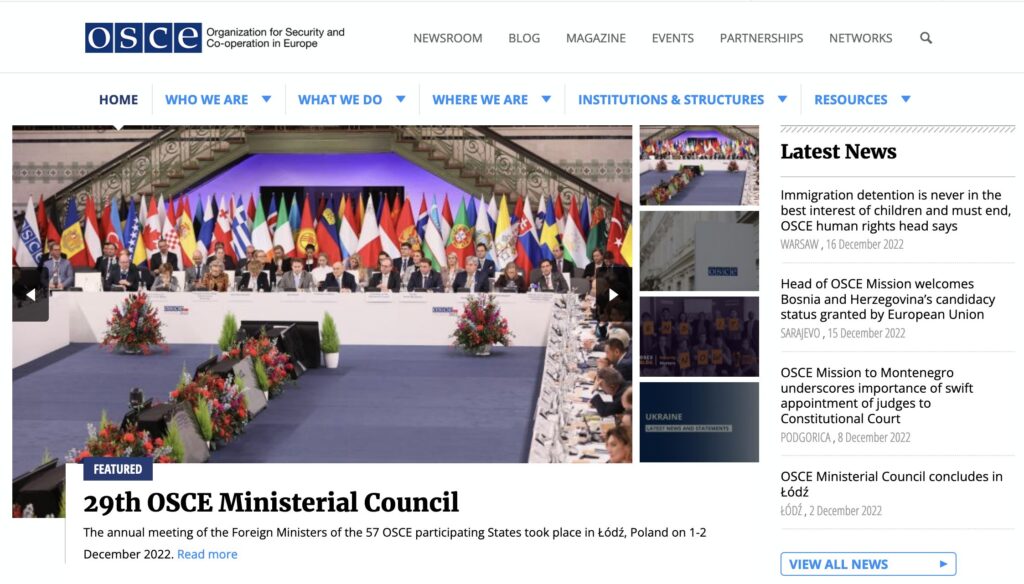
Poland’s defiant refusal to allow the Russian foreign minister’s attendance at the OSCE Ministerial Council meeting in Lodz on December 1-2 provoked a boisterous diplomatic uproar. As might be expected, it gave a new impulse to the long-standing debate about the OSCE’s value to Russia. With less than a month remaining before the Polish OSCE chairmanship expires, it is barely possible to imagine that the new chairmanships—North Macedonia in 2023, Estonia in 2024 and even Finland in 2025—might change the general algorithm of Moscow’s interaction with this organization for the better.

It is not surprising that the voices of those calling for a withdrawal from the OSCE altogether are getting louder in Russia, especially given that our country has already left the Council of Europe this spring. The cases for withdrawal range from ideological (“the OSCE promotes values alien to Russians”) to financial (“Russia could make a better use of EUR 8 million that it annually contributes to the OSCE budget”).

Some hope that the OSCE, without Russia, would not be able to function, perhaps even losing its legitimacy as a pan-European institution. Moscow, for its part, could start an alternative “Eurasian” OSCE—for example, on the basis of the SCO or some other Russia-friendly multilateral platform.

The desire to turn the page on Russia’s foreign policy of the past as soon as possible is understandable and, to some extent, even justified. Yet, it is far from accidental that the address of Alexander Lukashevich, the Russian Permanent Representative to the OSCE, at the final session of the Council of Foreign Ministers’ meeting sounded restrained and even stroke a note of cautious optimism.

The special military operation does not change the fact that Russia is the largest European nation. The tough stand-off between Moscow and Brussels does not mean that the European continent has ceased to be a common geographical space for Russia and its Western neighbors. And the OSCE remains one of the few threads that bind this space into a coherent whole.

Assuming that a full-fledged dialogue between Russia and NATO, as well as between Russia and the EU, won’t be reinstated in the foreseeable future, the OSCE appears to be the most promising, even if very modest for the time being, continent-wide platform for discussing issues pertaining to security and development.

Incidentally, this has always been the case, despite many alternative platforms present. It was at the OSCE summit late the previous century that an adapted version of the CFE Treaty was signed. It’s on the OSCE venues that the Vienna Document on Confidence and Security-Building Measures was negotiated and adopted in 2011. It is within the framework of the OSCE that the so-called structured dialogue on security issues was launched in 2016.

We should add that the OSCE was the only international organization that was able to deliver a tangible contribution to de-escalation of the conflict in eastern Ukraine by deploying a special monitoring mission to the Donbass as early as March 2014 and maintaining its presence in the conflict zone for eight years. Even though the experience of the OSCE observers does not look unambiguously successful and is heavily criticized both in Moscow and in Kiev, we must still admit the obvious: no other international structure has a comparable experience in the “field presence”. This means that this experience of OSCE will have to be invoked one way or another, as soon as the need for international monitoring of any prospective ceasefire agreement between Russia and Ukraine arises.
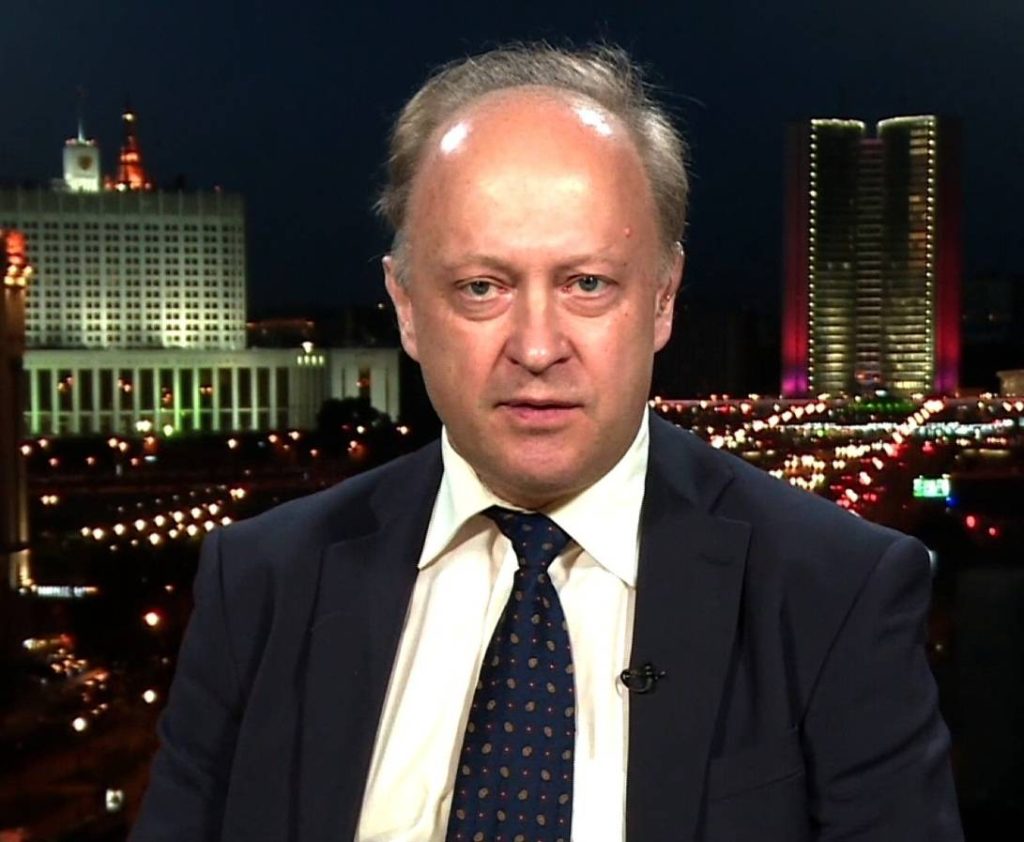
Dr Andrey Kortunov, RIAC Director General

No doubt, we should not overestimate the possible role of the OSCE in Europe’s future. If there ever was a chance to place this organization at the core of the future European security and development framework, that chance was irrevocably lost a quarter century ago. Neither the OSCE nor any other international institution will carry us back into the world that had existed prior to February 24, 2022, let alone into the world of hopes and illusions, dating from the Charter of Paris for a New Europe of 1990.

Yet, the Helsinki Final Act of the Conference on Security and Cooperation in Europe, dated 1975, which launched the process of multilateral pan-European cooperation, was signed in a deeply divided Europe. The main goal of the Helsinki process was not so much to immediately overcome a glaring divide between the East and the West, as to stabilize the European politics amid that split. In the present-day environment, the lessons learnt through the pan-European process about 50 years ago are becoming relevant once again.

First published in Izvestiya. The published by the RIAC – The Russian International Affairs Council on December 5, 2022 – of which Dr Kortunov is the director general since 2011.

Unlike our mainstream adversaries, warmongering propagandists and other destructive forces, TFF has no source of state, corporate or institutional finance whatsoever. Such are the conditions for truly independent peace research in these times. Everything peace has been cancelled. But we are still here – and will be. 

The foundation and this homepage run entirely on voluntary support from its readers and we who produce it, are all volunteers. To support TFF, you do not have to agree with every argument or article, only to welcome alternative voices, research-based knowledge and dialogue about important matters. Click to do a good deed:

Bonus video

An interview with Dr Kortunov from March 2022
Related Posts

The agreement is catastrophic both because of what it says and what it doesn’t mention. It reduces further the major asset of security policies: Freedom of action. Jan Oberg TFF director September 25, 2026 A couple of hours before the agreement was signed on September 22, 2026, I published the following 13 hypotheses about what it would most likely contain on TFF Substack (in English). I was wrong on only the first point. Contrary to what Trump had written on his Truth Social platform, it does not appear to come into force immediately. In fact, it turned out to be worse than even I had anticipated. After these hypotheses now come a number of reflections in light of what the agreement actually contains, and does not contain, as well as the way in which it has generally been presented by major media outlets and by the public-service broadcaster DR. My...
PART 2 — Diplomacy, Law and Nonviolent Power By Jan ObergTFF co-founder and director January 26, 2026 This is the second of four TFF-created idea portfolios designed to curb the global reach of the United States and, in both the short and long term, help catalyse a worldwide nonviolent resistance to what many observers describe as the Trump administration’s uniquely confrontational, destructive and world-threatening policies. These portfolios outline what governments and citizens across the world can do through dynamic diplomacy, creative initiatives, and strictly nonviolent means. They are typical TFF works in that we do not only tell what the problem is and how bad it will go – as 90+% of all commentators, experts and scholars do – we tell what we think can be done, inviting you to think of what you think you can do. It seems painfully clear to me that the current political dynamics in Washington increasingly resemble the most dangerous...
TFF’s comprehensive proposal for dialogue about true peace in Ukraine is due in a day or two Jan Oberg November 20, 2025 What is being whispered through diplomatic corridors today is not peace, but quackery. The alleged 28‑point plan drafted in Washington and Moscow is mentioned as a solution to the Ukraine war. It is being negotiated by US businessman, real estate developer and Trump ally, Steve Witkoff, and by Kirill Dmitriev, who is CEO of the Russian Direct Investment Fund and a close ally of Putin, according to India’s Economic Times. For presumably good reasons, their education, qualifications and experience in international conflict analysis and peace-making remain untold. They look like surgeons who have never opened a medical textbook. It is nothing more than a mirage: a framework of concessions imposed on Ukraine’s citizens, negotiated without Kyiv, and excluding Europe. Like Gaza, it promises “peace” while institutionalising injustice. If half of what is available about...

Recent Articles

Serious but also a lot of laughs and positive energy. Because peace is also about conviviality and enchantment… Jan Oberg, TFF director November 16, 2026 This is a long (129 minutes) conversation with me. We cover very many, also personal, issues that makes a somewhat unusual media event. I am very grateful to Flemming Blicher for giving me this opportunity. I can’t remember any channel or editor who spent as much time as he did preparing it – including also asking me to answer a series of pre-interview questions, which are now posted under the conversation. If you sympathise with its content, please share it. Watch it here
A Message from Jan Oberg November 6, 2026 Over the past fifty years, I have devoted roughly 175,000 hours to research and public education for a more peaceful world: thinking, researching, writing, organising, publishing, debating, maintaining websites, corresponding, reaching out, leading a foundation, work in conflict and war zones, professorships, teaching courses and giving public lectures and doing media work. In short, ten hours a day, seven days a week, for half a century. The focus was on international political peace – analysing and trying to stop wars, address underlying conflicts and making alternative peace plans – at the desk and on the ground. Important as that has been and remains, it is only one kind of peace and it is now in a tragic militarist state compared with what it could have been.  Lately, however, I have found myself thinking about a concept from economics as well as everyday...
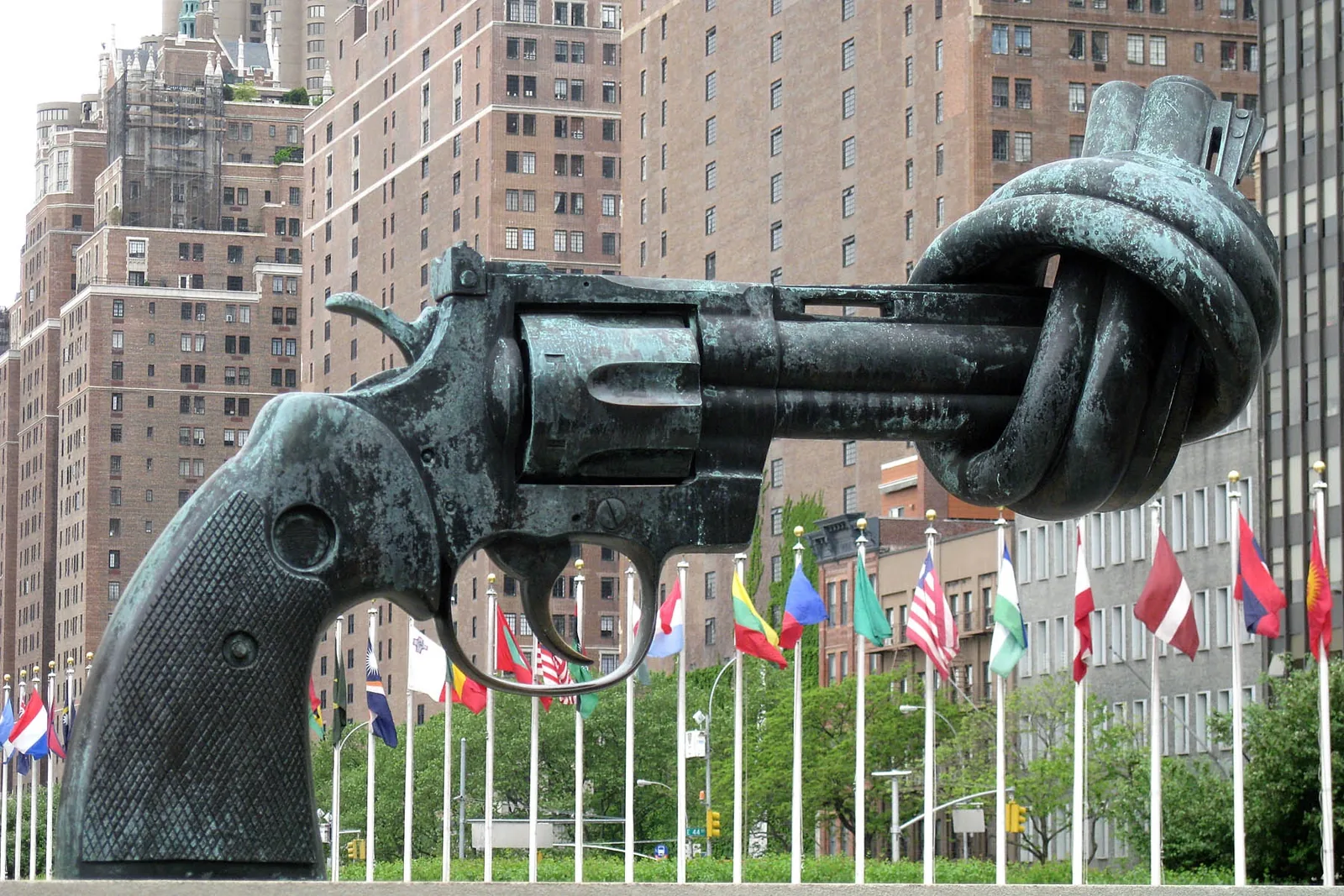
Photo above: Carl Fredrik Reuterswärd’s Non-Violence outside UN Headquarters in New York. Kirill Levin, CC BY-NC-SA 2. Jan Oberg November 3, 2026 I am happy to be published in Horizons which is produced by the Center for International Relations and Sustainable Development, CIRSD, in Belgrade. My contribution brings out a radical re-thinking of what concepts such as defence, security, deterrence – and peace – may mean if we want to create a more peaceful world. It also summarises a few things I have been working with the last few decades. Please read it here Og her er den på dansk, takket være Johnny Baltzersens lynhurtige oversættelse

TFF on Substack

Discover and subscribe to more peace materials on TFF Substack

Most Popular

Serious but also a lot of laughs and positive energy. Because peace is also about conviviality and enchantment… Jan Oberg, TFF director November 16, 2026 This is a long (129 minutes) conversation with me. We cover very many, also personal, issues that makes a somewhat unusual media event. I am very grateful to Flemming Blicher for giving me this opportunity. I can’t remember any channel or editor who spent as much time as he did preparing it – including also asking me to answer a series of pre-interview questions, which are now posted under the conversation. If you sympathise with its content, please share it. Watch it here
A Message from Jan Oberg November 6, 2026 Over the past fifty years, I have devoted roughly 175,000 hours to research and public education for a more peaceful world: thinking, researching, writing, organising, publishing, debating, maintaining websites, corresponding, reaching out, leading a foundation, work in conflict and war zones, professorships, teaching courses and giving public lectures and doing media work. In short, ten hours a day, seven days a week, for half a century. The focus was on international political peace – analysing and trying to stop wars, address underlying conflicts and making alternative peace plans – at the desk and on the ground. Important as that has been and remains, it is only one kind of peace and it is now in a tragic militarist state compared with what it could have been.  Lately, however, I have found myself thinking about a concept from economics as well as everyday...
Photo above: Carl Fredrik Reuterswärd’s Non-Violence outside UN Headquarters in New York. Kirill Levin, CC BY-NC-SA 2. Jan Oberg November 3, 2026 I am happy to be published in Horizons which is produced by the Center for International Relations and Sustainable Development, CIRSD, in Belgrade. My contribution brings out a radical re-thinking of what concepts such as defence, security, deterrence – and peace – may mean if we want to create a more peaceful world. It also summarises a few things I have been working with the last few decades. Please read it here Og her er den på dansk, takket være Johnny Baltzersens lynhurtige oversættelse
Read More
Screenshot 2026-11-10 174455
Serious but also a lot of laughs and positive energy. Because peace is also about conviviality and enchantment… Jan Oberg, TFF director November 16, 2026 This is a long (129 minutes) conversation with me. We cover very many, also personal, issues that makes a somewhat unusual media event. I am very grateful to Flemming Blicher for giving me this opportunity. I can’t remember any channel or editor who spent as much time as he did preparing it – including also asking me to answer a series of pre-interview questions, which are now posted under the conversation. If you sympathise with its content, please share it. Watch it here
AbstractVision_2017_#1_800 (kopia)
A Message from Jan Oberg November 6, 2026 Over the past fifty years, I have devoted roughly 175,000 hours to research and public education for a more peaceful world: thinking, researching, writing, organising, publishing, debating, maintaining websites, corresponding, reaching out, leading a foundation, work in conflict and war zones, professorships, teaching courses and giving public lectures and doing media work. In short, ten hours a day, seven days a week, for half a century. The focus was on international political peace – analysing and trying to stop wars, address underlying conflicts and making alternative peace plans – at the desk and on the ground. Important as that has been and remains, it is only one kind of peace and it is now in a tragic militarist state compared with what it could have been.  Lately, however, I have found myself thinking about a concept from economics as well as everyday...
knotted gun
Photo above: Carl Fredrik Reuterswärd’s Non-Violence outside UN Headquarters in New York. Kirill Levin, CC BY-NC-SA 2. Jan Oberg November 3, 2026 I am happy to be published in Horizons which is produced by the Center for International Relations and Sustainable Development, CIRSD, in Belgrade. My contribution brings out a radical re-thinking of what concepts such as defence, security, deterrence – and peace – may mean if we want to create a more peaceful world. It also summarises a few things I have been working with the last few decades. Please read it here Og her er den på dansk, takket være Johnny Baltzersens lynhurtige oversættelse
TFFPortfolioVign
UNITE-tillid, DREAM-velstand og andre konstruktive komponenter Normally we publish articles in English here. But this is a translation of a very important TFF document that should reach as many as possible in Denmark since this country’s government has been one of the most hardline in Europe and, up till now at least, has refused to use diplomacy and, instead, spent tremendous sums on arming Ukraine with the express goal of defeating Russia. Thus this – unique – article is in Danish. Vi er Johnny Baltzersen og hans Fælles Sikkerhed – Fælles Fremtid på Substack overmåde taknemmelige for at have oversat og publiceret TFF’s 2025-portfølje for fredsidéer med henblik på Ukraines fremtid. Vi håber den nu kan nå mange flere danskere – som også vil sprede den og skabe debat – nu den danske regerings og folketingspartiernes politik på dette område siden 2022 står nu – forudsigeligt – ved vejs ende....
JoGSS-Silent
Jan Oberg TFF director October 28, 2026 Exactly one month has now passed since I published my criticism of the introduction to the special issue on Johan Galtung published by the Journal of Global Security Studies, JoGSS, and of Tor Egil Førland’s chapter about Galtung which serves as a preview to his forthcoming biography of Galtung to be published by PRIO. See the original on The Transnational here and the same article on TFF Substack with many general and critical comments and, in particular, the people who decided to withdraw from the biography project in protest. The special issue itself was extraordinary. It was devoted to the intellectual legacy of one of the founders of peace research and contained a number of strong assessments of his personality, scholarship, intellectual trajectory, and public role. Such assessments are, of course, entirely legitimate. No scholar is beyond criticism, and neither was Johan Galtung....
Screenshot 2026-10-26 115647
An aspect of Iran’s culture and civilisation you’ve probably never heard about. Don’t be surprised if the US and Israel also try to bomb them. Jan ObergTFF director October 26, 2026 Today – under the “USraeli” threat of new “annihilating” bombings – opens the 7th International Conference on Peace and Conflict Resolution at Tehran’s University. As far as I can tell, this is the only permanent, advanced peace research institution in West Asia/the Middle East. Perhaps more countries in that region could be inspired? I mean, how many military “security” institutes and military academies do they have? Many peace research institutes and university departments have been established since the 1950s in the West. They are now all under attack; some have closed down, some have gone mainstream, yet others kept the name but do nothing to research peace and disseminate results or advice; instead, they cooperate with militarism’s platforms such...