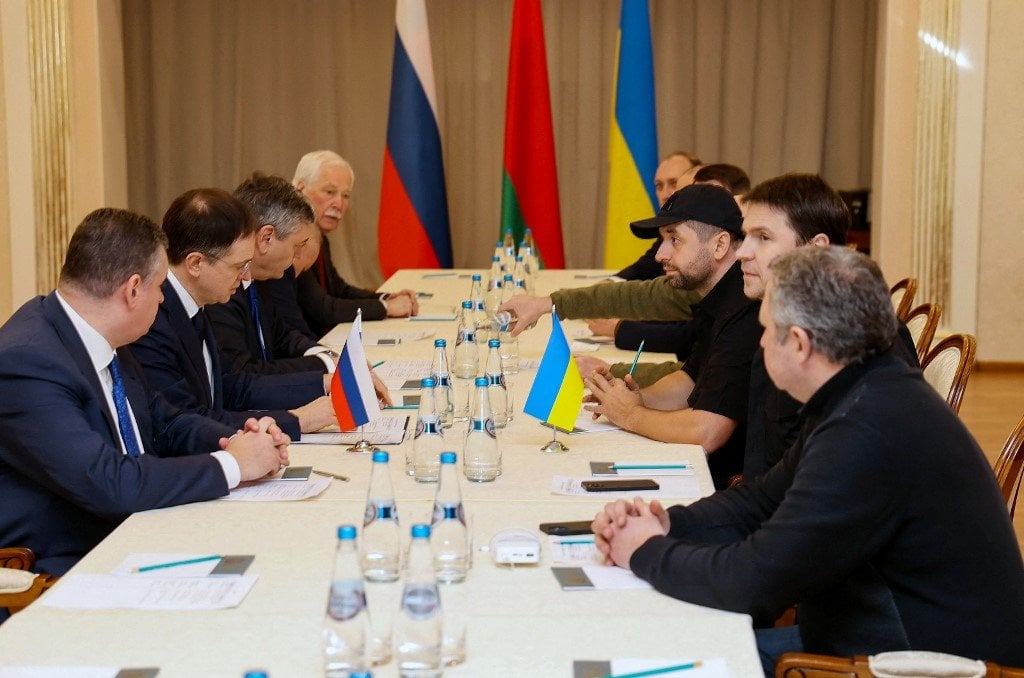
Anatol Lieven: Ukraine – What Russia wants, what the West can do

Anatol Lieven

March 7, 2022

For those who understand Moscow’s establishment and view of their country’s vital interests, none of this should be a surprise.

The illegal Russian invasion of Ukraine has shocked the West and many ordinary Russians. But for those who understand the Russian establishment and its view of Russia’s vital interests, it should not have come as a complete surprise.

Since NATO expansion first began in the mid-1990s, Russian officials and other establishment figures have been warning that if the West tried to turn Ukraine into an ally against Russia, this would lead to confrontation and quite possibly war. As the great international relations scholar Hans Morgenthau taught, to craft a viable U.S. policy towards other major states, it is essential to understand from within how they see the world and their country’s place in it. Today, we need to do this if we are to craft a policy towards Russia that will bring about an end to this war, a Russian withdrawal from Ukraine, and a restoration of Ukrainian sovereignty.

Originally posted on Responsible Statecraft’s official website on February 25, 2022 here

The foreign and security establishments of all major states operate on the basis of what might be called doctrines concerning their countries’ vital interests and place in the world. The Russian establishment believes that Moscow must be one pole of a multipolar world. If you do not believe in that, you do not belong to the Russian establishment, just as if you do not believe in U.S. global primacy, you do not belong to the U.S. establishment.

Ukraine is critical to that vision. A Ukraine hostile to Russia and strongly linked to the West negates any possibility of Russia leading a reasonably strong regional bloc of states. From this point of view, most Western observers have not understood just how severe was the defeat suffered by Russia when Ukraine experienced the revolution of 2014 and rejected membership of the Eurasian Union. Seizing part of the Donbas, and even annexing Crimea, were very miserable consolation prizes by comparison.

Ukraine is by far the biggest former Soviet republic apart from Russia, with 44 million people to Kazakhstan’s 18 million and Belarus’ nine million. Ukraine has by far the largest Russian ethnic minority outside Russia. Without a largely Russian-speaking Ukraine, Russia loses most of its status as an international language. Without Ukrainian membership, the Eurasian Union is a pathetic shadow. At the very least, the Russian establishment — going back to Boris Yeltsin’s administration in the 1990s — has been absolutely determined that Ukraine should not join an anti-Russian alliance.

Russia’s interest in Ukraine however goes far beyond the economic and strategic. As emphasized in Putin’s articles and speeches, Russians see their own cultural and historical identity as closely bound up with that of Ukraine. This owes something to the origins of the Russian state and Orthodox religion in Kievan Rus, and something to the role of Ukrainians in modern Russian culture, as symbolized by Nikolai Gogol (Mykola Hohol in Ukrainian), a great Ukrainian writer who identified with the Russian Empire and wrote in Russian. 

This factor imparts a strong element of historically-based nationalism to the Russian and Putin attitude towards Ukraine. There is some understanding in Russia of why Ukrainians would want their own state, but almost none of why Ukrainians would want to define that state against Russia. Hence the Russian demonology of “Nazism” and “U.S. manipulation.” In other words, while Russian officials use the term “Monroe Doctrine” to explain and justify their desire to prevent Ukraine joining a hostile alliance, their interest in that country has an emotional force wholly absent from U.S. attitudes to Mexico.

Whether Russia would have accepted a Western offer of compromise (if one had been made) involving a moratorium on NATO expansion and mutual arms limitation, we will probably never know, and this question is now academic. L’appetit vient en manger (“appetite grows with eating”) as the French say, and the more of Ukraine Russia now occupies, the more ambitious its goals in Ukraine are likely to be. 

The point is, however, that these goals are now overwhelmingly focused on Ukraine. Nobody in Moscow now appears to believe that there is any possibility of an agreement with NATO on conventional arms limitation, or on some form of new European security architecture. The most that can be hoped for by Moscow is a Cold War-style treaty on nuclear arms reductions, and perhaps some agreement on cybersecurity. When the Russian government decided to invade Ukraine, it chose to accept that relations with the West would be basically hostile for a long time to come.

The Russian government aims to establish a Russian sphere of influence, not a new version of the Soviet Union. Putin has stated that “whoever does not miss the Soviet Union has no heart, but whoever wants it back has no brain.” The Eurasian Union falls vastly far short of the USSR. Kazakhstan for example is a member, and has always sought good relations with Russia. But Kazakh officials have stated publicly and repeatedly that it is not some form of super-state; and Kazakhstan has repeatedly refused to follow Russia’s lead in international affairs — including most recently by refusing to recognize the independence of the Donbas republics. The Eurasian Union and Collective Security Treaty Organization (CSTO) are loose partnerships.

“Whoever does not miss the Soviet Union has no heart, but whoever wants it back has no brain.” – Putin

As for Russian domination of Eastern Europe beyond the borders of the former USSR, this is vastly beyond Russia’s ambitions and capability. Not merely would it involve Russia in an attack on NATO, with all the hideous risks that this would entail (whereas the United States and NATO have declared explicitly that they will not fight to defend Ukraine); but it would require Russia to subjugate and hold down Poland. Russian officials and commentators with whom I have raised this possibility have simply burst out laughing at the absurdity of the idea. 

Concerning Ukraine, there are two possible paths for Russia to take. Which one will be chosen will become apparent in the next days, or possibly hours. The first would be an agreement with the existing Ukrainian government (as publicly demanded by Russia immediately after the invasion) that would guarantee Ukrainian neutrality and the exclusion of Western armaments. Moscow will almost certainly also demand that the Donbas republics, and any other Russian-speaking areas occupied by the Russian army, receive fully autonomous status within a federal Ukraine. Moscow would likely present this to the West as an expanded version of the Minsk II agreement of 2015 on autonomy for the Donbas within Ukraine.

The second path would be for Russia to occupy Kiev itself, replace the Ukrainian government with Russian puppets, and draw up a new Ukrainian federal constitution by Russian diktat. At this point, Moscow might also try to force its Ukrainian client state to join the Eurasian Union and CSTO. This would be a vastly more dangerous project for Russia. 

Unlike local governments in the Russian-speaking areas, which Moscow at least hopes could gain a measure of local legitimacy, a puppet government in Kiev and the Ukrainian ethnic heartland would only survive with the permanent presence of a Russian army. The government and army would face permanent mass unrest and violent resistance,which it only could quell through savage repression.

This would be atrocious for the people of Ukraine, and very dangerous for NATO. If the United States decided to arm a guerrilla war in Ukraine, such a force could only be supplied through Poland — which Russia then might directly target, which likely would expand and escalate the conflict dramatically. Furthermore, this guerrilla war would inevitably turn into an ethnic conflict of Ukrainian nationalists against the local Russian population, making any long-term unity of Ukraine next to impossible and probably lead to the eventual Russian annexation of the Russian-speaking areas of Ukraine.

The purpose of Western sanctions against Russia should be to press Russia to withdraw its army from Ukraine and restore Ukrainian sovereignty and territorial integrity (minus Crimea). This however will inevitably now require some form of compromise with Russia on Ukrainian neutrality (but not membership of the Eurasian Union) and federalism. Short of the military defeat of the Russian army or the collapse of the Russian state, it appears impossible now to achieve unconditional Russian withdrawal from Ukraine. 

The alternative is for the United States to use sanctions not to change Russian policy in Ukraine, but to overthrow the regime in Russia itself by crippling the Russian state and economy. This would be a vastly more ambitious and dangerous project, and probably futile. The U.S. use of sanctions to bring about regime change has been a universal and unmitigated failure – in Cuba, Venezuela, Iraq, Iran and North Korea. 

Russia is much stronger than those states, and will probably receive much greater help from China, whose economy has now overtaken that of the United States. Such a strategy would sooner or later also open up a gulf between the United States and its European allies, involving as it would the indefinite sponsorship of an armed struggle in Ukraine, with all the consequences of that for Europe.

Above all, Western sanctions should be intended to help the Ukrainian people. The latter strategy of guerilla warfare would instead instrumentalize Ukrainians as a weapon to weaken Russia and recall some of the worst U.S. actions of the Cold War, when Washington supported local insurgencies (sometimes led by evil figures like Jonas Savimbi and extremist ideologies like that of the Afghan Mujahedin), with no regard whatsoever for the interests of local peoples. 

Outside Europe, the Cold War was waged over the corpses of innumerable Africans, Asians and Central Americans, and there was often no moral difference at all between the “pro-Western” and “pro-Soviet forces.” For America to go down this path would be a betrayal of those very Ukrainians whom the U.S. administration says that it wants to help.

Please support TFF’s work for peace through research and public education. We are all-volunteer, people-financed and do not accept money from governments or corporations. In other words, one of the very last free research think tanks in this world – and for a noble purpose: Peace by peaceful – intelligent – means. Thanks!
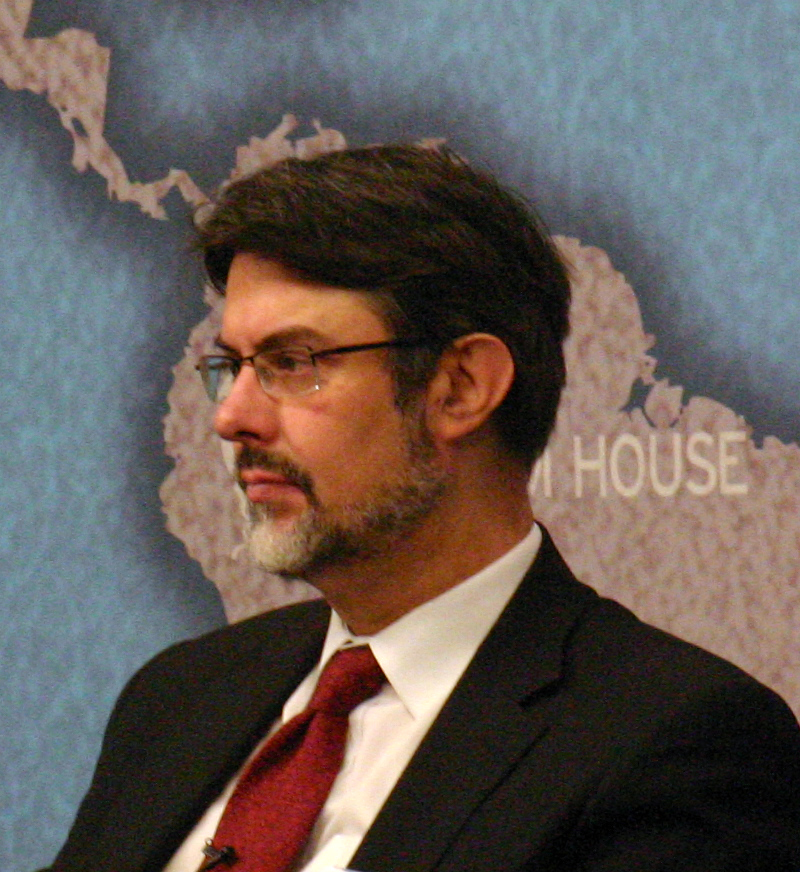
Anatol Lieven is senior research fellow on Russia and Europe at the Quincy Institute for Responsible Statecraft. He was formerly a professor at Georgetown University in Qatar  and in the War Studies Department of King’s College London. He is a member of the academic board of the Valdai discussion club in Russia, and a member of the advisory committee of the South Asia Department of the British Foreign and Commonwealth Office. He holds a BA and PhD from Cambridge University in England.
More about Lieven on Wikipedia
Related Posts

UNITE-tillid, DREAM-velstand og andre konstruktive komponenter Normally we publish articles in English here. But this is a translation of a very important TFF document that should reach as many as possible in Denmark since this country’s government has been one of the most hardline in Europe and, up till now at least, has refused to use diplomacy and, instead, spent tremendous sums on arming Ukraine with the express goal of defeating Russia. Thus this – unique – article is in Danish. Vi er Johnny Baltzersen og hans Fælles Sikkerhed – Fælles Fremtid på Substack overmåde taknemmelige for at have oversat og publiceret TFF’s 2025-portfølje for fredsidéer med henblik på Ukraines fremtid. Vi håber den nu kan nå mange flere danskere – som også vil sprede den og skabe debat – nu den danske regerings og folketingspartiernes politik på dette område siden 2022 står nu – forudsigeligt – ved vejs ende....
The agreement is catastrophic both because of what it says and what it doesn’t mention. It reduces further the major asset of security policies: Freedom of action. Jan Oberg TFF director September 25, 2026 A couple of hours before the agreement was signed on September 22, 2026, I published the following 13 hypotheses about what it would most likely contain on TFF Substack (in English). I was wrong on only the first point. Contrary to what Trump had written on his Truth Social platform, it does not appear to come into force immediately. In fact, it turned out to be worse than even I had anticipated. After these hypotheses now come a number of reflections in light of what the agreement actually contains, and does not contain, as well as the way in which it has generally been presented by major media outlets and by the public-service broadcaster DR. My...
The MSC’s closed groupthink militarism offers only one prescription — more weapons — even as record military expenditures, squeezed from taxpayers in economic crisis, destroy diplomacy and drive escalation to the highest war risks in decades. Jan Oberg TFF director February 13, 2026 From Dialogue Forum to Militarised Ritual For decades, the Munich Security Conference (MSC) – which opened today and runs till Sunday – was one of the few places where adversaries could meet without theatrics. Founded in 1963 as the Wehrkundetagung, it served as a discreet Cold War dialogue forum between NATO and the Warsaw Pact. Even at moments of high tension, Soviet and later Russian representatives were present, and Munich allowed uncomfortable messages to be delivered directly rather than through press releases or military manoeuvres. That era has vanished. The MSC has become something entirely different: a €13–20 million annual gathering of a closed Western security elite, a polished meeting...

Recent Articles

Serious but also a lot of laughs and positive energy. Because peace is also about conviviality and enchantment… Jan Oberg, TFF director November 16, 2026 This is a long (129 minutes) conversation with me. We cover very many, also personal, issues that makes a somewhat unusual media event. I am very grateful to Flemming Blicher for giving me this opportunity. I can’t remember any channel or editor who spent as much time as he did preparing it – including also asking me to answer a series of pre-interview questions, which are now posted under the conversation. If you sympathise with its content, please share it. Watch it here
A Message from Jan Oberg November 6, 2026 Over the past fifty years, I have devoted roughly 175,000 hours to research and public education for a more peaceful world: thinking, researching, writing, organising, publishing, debating, maintaining websites, corresponding, reaching out, leading a foundation, work in conflict and war zones, professorships, teaching courses and giving public lectures and doing media work. In short, ten hours a day, seven days a week, for half a century. The focus was on international political peace – analysing and trying to stop wars, address underlying conflicts and making alternative peace plans – at the desk and on the ground. Important as that has been and remains, it is only one kind of peace and it is now in a tragic militarist state compared with what it could have been.  Lately, however, I have found myself thinking about a concept from economics as well as everyday...
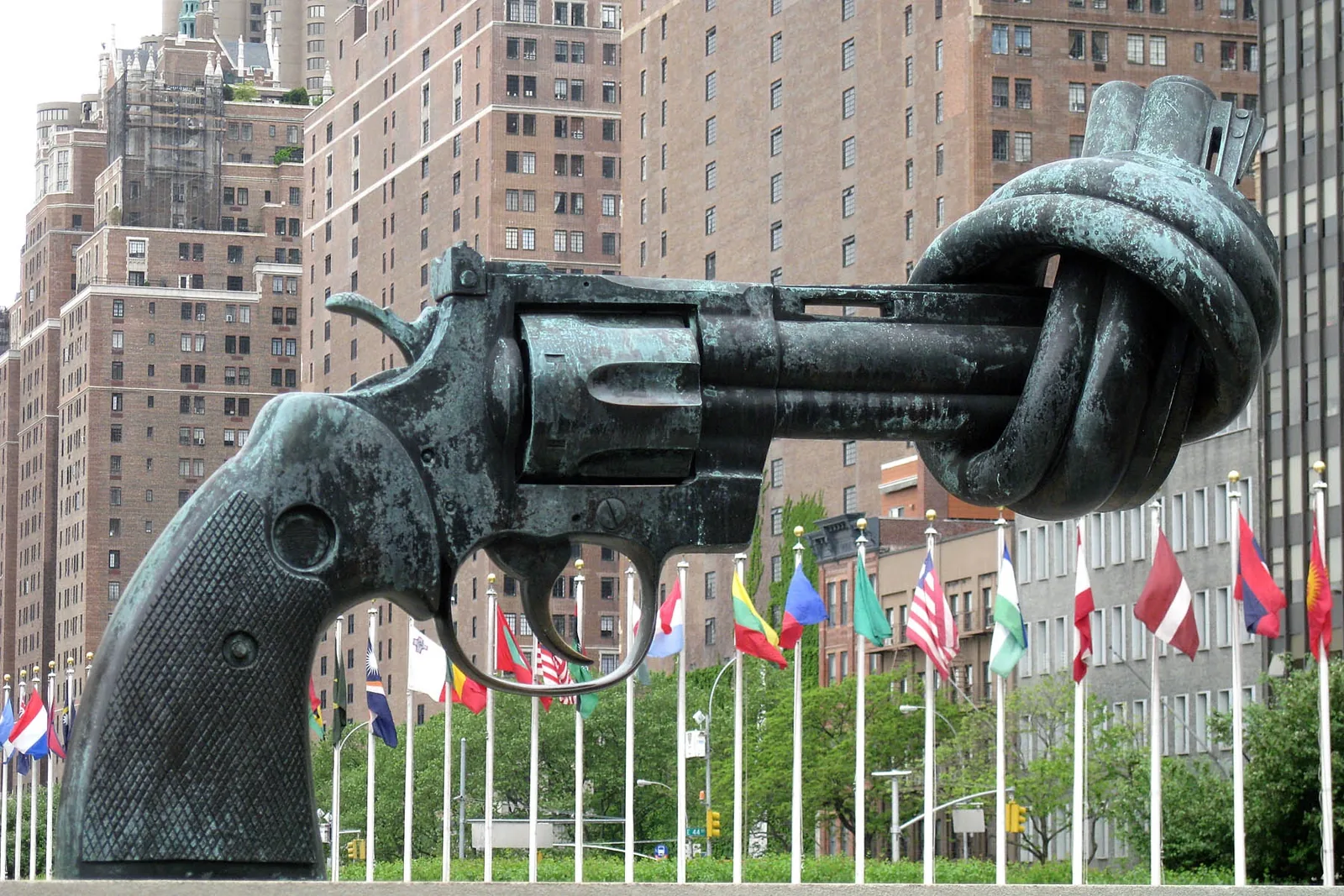
Photo above: Carl Fredrik Reuterswärd’s Non-Violence outside UN Headquarters in New York. Kirill Levin, CC BY-NC-SA 2. Jan Oberg November 3, 2026 I am happy to be published in Horizons which is produced by the Center for International Relations and Sustainable Development, CIRSD, in Belgrade. My contribution brings out a radical re-thinking of what concepts such as defence, security, deterrence – and peace – may mean if we want to create a more peaceful world. It also summarises a few things I have been working with the last few decades. Please read it here Og her er den på dansk, takket være Johnny Baltzersens lynhurtige oversættelse

TFF on Substack

Discover and subscribe to more peace materials on TFF Substack

Most Popular

Serious but also a lot of laughs and positive energy. Because peace is also about conviviality and enchantment… Jan Oberg, TFF director November 16, 2026 This is a long (129 minutes) conversation with me. We cover very many, also personal, issues that makes a somewhat unusual media event. I am very grateful to Flemming Blicher for giving me this opportunity. I can’t remember any channel or editor who spent as much time as he did preparing it – including also asking me to answer a series of pre-interview questions, which are now posted under the conversation. If you sympathise with its content, please share it. Watch it here
A Message from Jan Oberg November 6, 2026 Over the past fifty years, I have devoted roughly 175,000 hours to research and public education for a more peaceful world: thinking, researching, writing, organising, publishing, debating, maintaining websites, corresponding, reaching out, leading a foundation, work in conflict and war zones, professorships, teaching courses and giving public lectures and doing media work. In short, ten hours a day, seven days a week, for half a century. The focus was on international political peace – analysing and trying to stop wars, address underlying conflicts and making alternative peace plans – at the desk and on the ground. Important as that has been and remains, it is only one kind of peace and it is now in a tragic militarist state compared with what it could have been.  Lately, however, I have found myself thinking about a concept from economics as well as everyday...
Photo above: Carl Fredrik Reuterswärd’s Non-Violence outside UN Headquarters in New York. Kirill Levin, CC BY-NC-SA 2. Jan Oberg November 3, 2026 I am happy to be published in Horizons which is produced by the Center for International Relations and Sustainable Development, CIRSD, in Belgrade. My contribution brings out a radical re-thinking of what concepts such as defence, security, deterrence – and peace – may mean if we want to create a more peaceful world. It also summarises a few things I have been working with the last few decades. Please read it here Og her er den på dansk, takket være Johnny Baltzersens lynhurtige oversættelse
Read More
Screenshot 2026-11-10 174455
Serious but also a lot of laughs and positive energy. Because peace is also about conviviality and enchantment… Jan Oberg, TFF director November 16, 2026 This is a long (129 minutes) conversation with me. We cover very many, also personal, issues that makes a somewhat unusual media event. I am very grateful to Flemming Blicher for giving me this opportunity. I can’t remember any channel or editor who spent as much time as he did preparing it – including also asking me to answer a series of pre-interview questions, which are now posted under the conversation. If you sympathise with its content, please share it. Watch it here
AbstractVision_2017_#1_800 (kopia)
A Message from Jan Oberg November 6, 2026 Over the past fifty years, I have devoted roughly 175,000 hours to research and public education for a more peaceful world: thinking, researching, writing, organising, publishing, debating, maintaining websites, corresponding, reaching out, leading a foundation, work in conflict and war zones, professorships, teaching courses and giving public lectures and doing media work. In short, ten hours a day, seven days a week, for half a century. The focus was on international political peace – analysing and trying to stop wars, address underlying conflicts and making alternative peace plans – at the desk and on the ground. Important as that has been and remains, it is only one kind of peace and it is now in a tragic militarist state compared with what it could have been.  Lately, however, I have found myself thinking about a concept from economics as well as everyday...
knotted gun
Photo above: Carl Fredrik Reuterswärd’s Non-Violence outside UN Headquarters in New York. Kirill Levin, CC BY-NC-SA 2. Jan Oberg November 3, 2026 I am happy to be published in Horizons which is produced by the Center for International Relations and Sustainable Development, CIRSD, in Belgrade. My contribution brings out a radical re-thinking of what concepts such as defence, security, deterrence – and peace – may mean if we want to create a more peaceful world. It also summarises a few things I have been working with the last few decades. Please read it here Og her er den på dansk, takket være Johnny Baltzersens lynhurtige oversættelse
TFFPortfolioVign
UNITE-tillid, DREAM-velstand og andre konstruktive komponenter Normally we publish articles in English here. But this is a translation of a very important TFF document that should reach as many as possible in Denmark since this country’s government has been one of the most hardline in Europe and, up till now at least, has refused to use diplomacy and, instead, spent tremendous sums on arming Ukraine with the express goal of defeating Russia. Thus this – unique – article is in Danish. Vi er Johnny Baltzersen og hans Fælles Sikkerhed – Fælles Fremtid på Substack overmåde taknemmelige for at have oversat og publiceret TFF’s 2025-portfølje for fredsidéer med henblik på Ukraines fremtid. Vi håber den nu kan nå mange flere danskere – som også vil sprede den og skabe debat – nu den danske regerings og folketingspartiernes politik på dette område siden 2022 står nu – forudsigeligt – ved vejs ende....
JoGSS-Silent
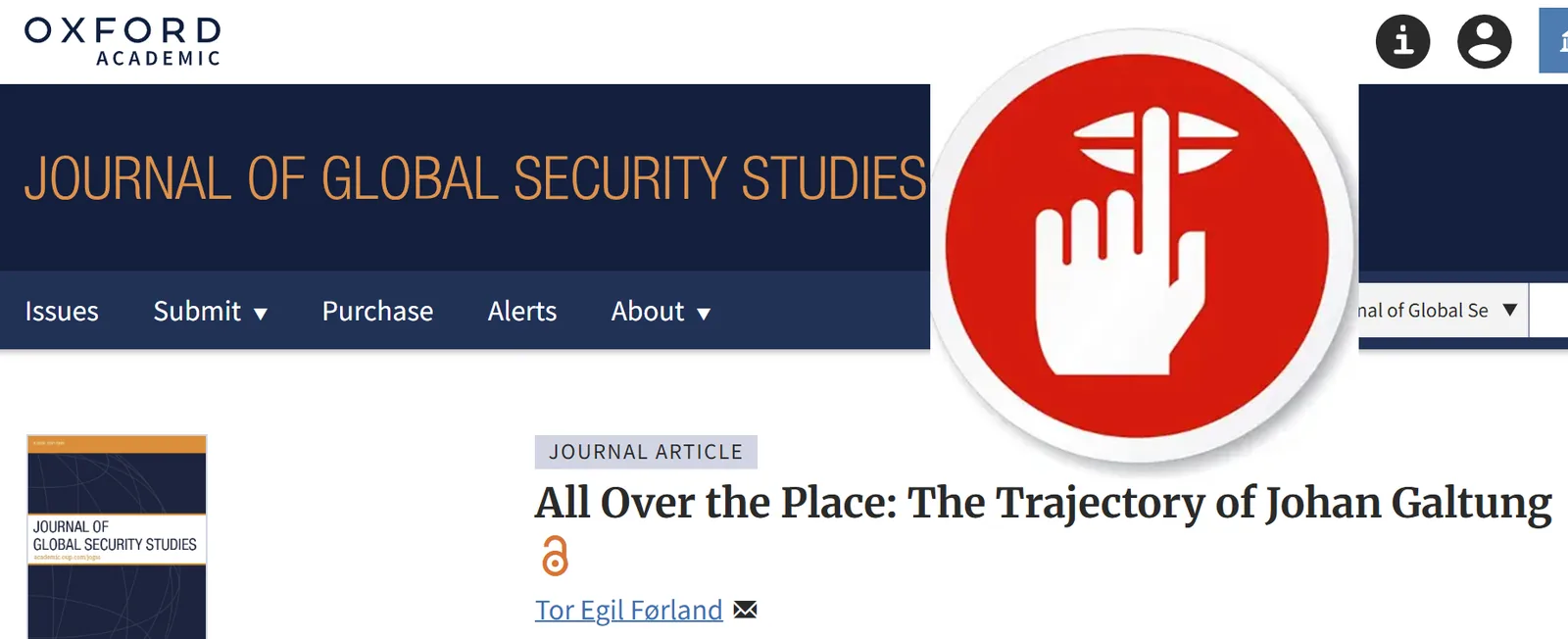
Jan Oberg TFF director October 28, 2026 Exactly one month has now passed since I published my criticism of the introduction to the special issue on Johan Galtung published by the Journal of Global Security Studies, JoGSS, and of Tor Egil Førland’s chapter about Galtung which serves as a preview to his forthcoming biography of Galtung to be published by PRIO. See the original on The Transnational here and the same article on TFF Substack with many general and critical comments and, in particular, the people who decided to withdraw from the biography project in protest. The special issue itself was extraordinary. It was devoted to the intellectual legacy of one of the founders of peace research and contained a number of strong assessments of his personality, scholarship, intellectual trajectory, and public role. Such assessments are, of course, entirely legitimate. No scholar is beyond criticism, and neither was Johan Galtung....
Screenshot 2026-10-26 115647
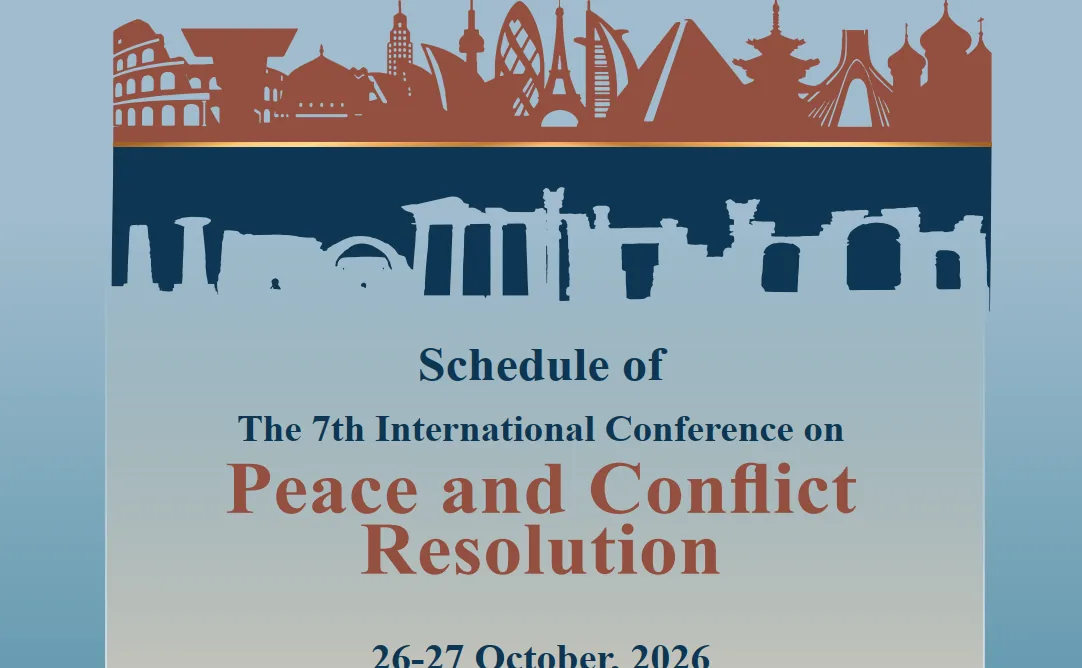
An aspect of Iran’s culture and civilisation you’ve probably never heard about. Don’t be surprised if the US and Israel also try to bomb them. Jan ObergTFF director October 26, 2026 Today – under the “USraeli” threat of new “annihilating” bombings – opens the 7th International Conference on Peace and Conflict Resolution at Tehran’s University. As far as I can tell, this is the only permanent, advanced peace research institution in West Asia/the Middle East. Perhaps more countries in that region could be inspired? I mean, how many military “security” institutes and military academies do they have? Many peace research institutes and university departments have been established since the 1950s in the West. They are now all under attack; some have closed down, some have gone mainstream, yet others kept the name but do nothing to research peace and disseminate results or advice; instead, they cooperate with militarism’s platforms such...