
August 20, 2020
(Tomdispatch.com) – For the Trump administration’s senior officials, it’s been open season on bashing China. If you need an example, think of the president’s blame game about “the invisible Chinese virus” as it spreads wildly across the U.S.
When it comes to China, in fact, the ever more virulent criticism never seems to stop.
Between the end of June and the end of July, four members of his cabinet vied with each other in spewing anti-Chinese rhetoric. That particular spate of China bashing started when FBI Director Christopher Wray described Chinese President Xi Jinping as the successor to Soviet dictator Joseph Stalin. It was capped by Secretary of State Mike Pompeo’s clarion call to U.S. allies to note the “bankrupt” Marxist-Leninist ideology of China’s leader and the urge to “global hegemony” that goes with it, insisting that they would have to choose “between freedom and tyranny.” (Forget which country on this planet actually claims global hegemony as its right.)
At the same time, the Pentagon deployed its aircraft carriers and other weaponry ever more threateningly in the South China Sea and elsewhere in the Pacific. The question is: What lies behind this upsurge in Trump administration China baiting? A likely answer can be found in the president’s blunt statement in a July interview with Chris Wallace of Fox News that “I’m not a good loser. I don’t like to lose.”
The reality is that, under Donald Trump, the United States is indeed losing to China in two important spheres. As the FBI’s Wray put it, “In economic and technical terms [China] is already a peer competitor of the United States… in a very different kind of [globalized] world.” In other words, China is rising and the U.S. is falling. Don’t just blame Trump and his cronies for that, however, as this moment has been a long time coming.
Facts speak for themselves. Nearly unscathed by the 2008-2009 global recession, China displaced Japan as the world’s second largest economy in August 2010. In 2012, with $3.87 trillion worth of imports and exports, it overtook the U.S. total of $3.82 trillion, elbowing it out of a position it had held for 60 years as the number one cross-border trading nation worldwide. By the end of 2014, China’s gross domestic product, as measured by purchasing power parity, was $17.6 trillion, slightly exceeding the $17.4 trillion of the United States, which had been the globe’s largest economy since 1872.
In May 2015, the Chinese government released a Made in China 2025 plan aimed at rapidly developing 10 high-tech industries, including electric cars, next-generation information technology, telecommunications, advanced robotics, and artificial intelligence. Other major sectors covered in the plan included agricultural technology, aerospace engineering, the development of new synthetic materials, the emerging field of biomedicine, and high-speed rail infrastructure. The plan was aimed at achieving 70% self-sufficiency in high-tech industries and a dominant position in such global markets by 2049, a century after the founding of the People’s Republic of China
Semiconductors are crucial to all electronic products and, in 2014, the government’s national integrated circuit industry development guidelines set a target: China was to become a global leader in semiconductors by 2030. In 2018, the local chip industry moved up from basic silicon packing and testing to higher value chip design and manufacturing. The following year, the U.S. Semiconductor Industry Association noted that, while America led the world with nearly half of global market share, China was the main threat to its position because of huge state investments in commercial manufacturing and scientific research.
By then, the U.S. had already fallen behind China in just such scientific and technological research. A study by Nanjing University’s Qingnan Xie and Harvard University’s Richard Freeman noted that between 2000 and 2016, China’s share of global publications in the physical sciences, engineering, and math quadrupled, exceeding that of the U.S.
In 2019, for the first time since figures for patents were compiled in 1978, the U.S. failed to file for the largest number of them. According to the World Intellectual Property Organization, China filed applications for 58,990 patents and the United States 57,840. In addition, for the third year in a row, the Chinese high-tech corporation Huawei Technologies Company, with 4,144 patents, was well ahead of U.S.-based Qualcomm (2,127). Among educational institutions, the University of California maintained its top rank with 470 published applications, but Tsinghua University ranked second with 265. Of the top five universities in the world, three were Chinese.
The Neck-and-Neck Race in Consumer Electronics
By 2019, the leaders in consumer technology in America included Google, Apple, Amazon, and Microsoft; in China, the leaders were Alibaba (founded by Jack Ma), Tencent (Tengxun in Chinese), Xiaomi, and Baidu. All had been launched by private citizens. Among the US companies, Microsoft was established in 1975, Apple in 1976, Amazon in 1994, and Google in September 1998. The earliest Chinese tech giant, Tencent, was established two months after Google, followed by Alibaba in 1999, Baidu in 2000, and Xiaomi, a hardware producer, in 2010. When China first entered cyberspace in 1994, its government left intact its policy of controlling information through censorship by the Ministry of Public Security.
In 1996, the country established a high-tech industrial development zone in Shenzhen, just across the Pearl River from Hong Kong, the first of what would be a number of special economic zones. From 2002 on, they would begin attracting Western multinational corporations keen to take advantage of their tax-free provisions and low-wage skilled workers. By 2008, such foreign companies accounted for 85% of China’s high-tech exports.
Shaken by an official 2005 report that found serious flaws in the country’s innovation system, the government issued a policy paper the following year listing 20 mega-projects in nanotechnology, high-end generic microchips, aircraft, biotechnology, and new drugs. It then focused on a bottom-up approach to innovation, involving small start-ups, venture capital, and cooperation between industry and universities, a strategy that would take a few years to yield positive results.
In January 2000, less than 2% of Chinese used the Internet. To cater to that market, Robin Li and Eric Xu set up Baidu in Beijing as a Chinese search engine. By 2009, in its competition with Google China, a subsidiary of Google operating under government censorship, Baidu garnered twice the market share of its American rival as Internet penetration leapt to 29%.
In the aftermath of the 2008-2009 global financial meltdown, significant numbers of Chinese engineers and entrepreneurs returned from Silicon Valley to play an important role in the mushrooming of high-tech firms in a vast Chinese market increasingly walled off from U.S. and other Western corporations because of their unwillingness to operate under government censorship.
Soon after Xi Jinping became president in March 2013, his government launched a campaign to promote “mass entrepreneurship and mass innovation” using state-backed venture capital. That was when Tencent came up with its super app WeChat, a multi-purpose platform for socializing, playing games, paying bills, booking train tickets, and so on.
Jack Ma’s e-commerce behemoth Alibaba went public on the New York Stock Exchange in September 2014, raising a record $25 billion with its initial public offering. By the end of the decade, Baidu had diversified into the field of artificial intelligence, while expanding its multiple Internet-related services and products. As the search engine of choice for 90% of Chinese Internet users, more than 700 million people, the company became the fifth most visited website in cyberspace, its mobile users exceeding 1.1 billion.
Xiaomi Corporation would release its first smartphone in August 2011. By 2014, it had forged ahead of its Chinese rivals in the domestic market and developed its own mobile phone chip capabilities. In 2019, it sold 125 million mobile phones, ranking fourth globally. By the middle of 2019, China had 206 privately held start-ups valued at more than $1 billion, besting the U.S. with 203.
Among the country’s many successful entrepreneurs, the one who particularly stood out was Jack Ma, born Ma Yun in 1964. Though he failed to get a job at a newly opened Kentucky Fried Chicken outlet in his home city of Hangzhou, he did finally gain entry to a local college after his third attempt, buying his first computer at the age of 31. In 1999, he founded Alibaba with a group of friends. It would become one of the most valuable tech companies in the world. On his 55th birthday, he was the second richest man in China with a net worth of $42.1 billion.
Born in the same year as Ma, his American counterpart, Jeff Bezos, gained a degree in electrical engineering and computer science from Princeton University. He would found Amazon.com in 1994 to sell books online, before entering e-commerce and other fields. Amazon Web Services, a cloud computing company, would become the globe’s largest. In 2007, Amazon released a handheld reading device called the Kindle. Three years later, it ventured into making its own television shows and movies. In 2014, it launched Amazon Echo, a smart speaker with a voice assistant named Alexa that let its owner instantly play music, control a Smart home, get information, news, weather, and more. With a net worth of $145.4 billion in 2019, Bezos became the richest person on the planet.
Deploying an artificial intelligence inference chip to power features on its e-commerce sites, Alibaba categorized a billion product images uploaded by vendors to its e-commerce platform daily and prepared them for search and personalized recommendations to its customer base of 500 million. By allowing outside vendors to use its platform for a fee, Amazon increased its items for sale to 350 million — with 197 million people accessing Amazon.com each month.
China also led the world in mobile payments with America in sixth place. In 2019, such transactions in China amounted to $80.5 trillion. Because of the Covid-19 pandemic, the authorities encouraged customers to use mobile payment, online payment, and barcode payment to avoid the risk of infection. The projected total for mobile payments: $111.1 trillion. The corresponding figures for the United States at $130 billion look puny by comparison.
In August 2012, the founder of the Beijing-based ByteDance, 29-year-old Zhang Yiming, broke new ground in aggregating news for its users. His product, Toutiao (Today’s Headlines) tracked users’ behavior across thousands of sites to form an opinion of what would interest them most, and then recommended stories.
By 2016, it had already acquired 78 million users, 90% of them under 30.
In September 2016, ByteDance launched a short-video app in China called Douyin that gained 100 million users within a year. It would soon enter a few Asian markets as TikTok. In November 2017, for $1 billion, ByteDance would purchase Musical.ly, a Shanghai-based Chinese social network app for video creation, messaging, and live broadcasting, and set up an office in California.
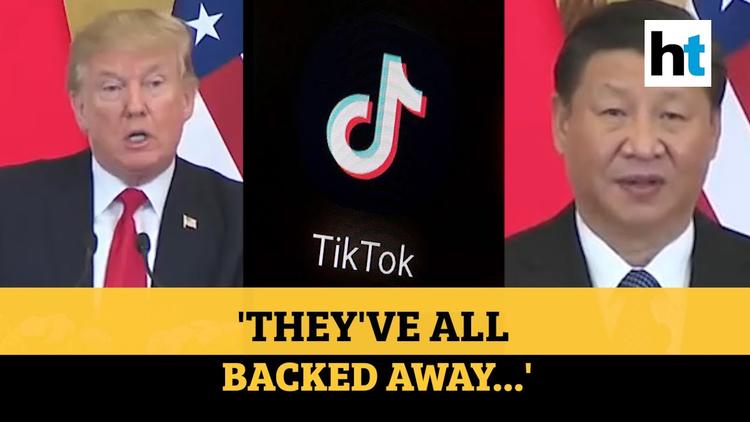
Zhang merged it into TikTok in August 2018 to give his company a larger footprint in the U.S. and then spent nearly $1 billion to promote TikTok as the platform for sharing short-dance, lip-sync, comedy, and talent videos. It has been downloaded by 165 million Americans and driven the Trump administration to distraction. A Generation Z craze, in April 2020 it surpassed two billion downloads globally, eclipsing U.S. tech giants. That led President Trump (no loser he!) and his top officials to attack it and he would sign executive orders attempting to ban both TikTok and WeChat from operating in the U.S. or being used by Americans (unless sold to a U.S. tech giant). Stay tuned.
Huawei’s Octane-Powered Rise
But the biggest Chinese winner in consumer electronics and telecommunications has been Shenzhen-based Huawei Technologies Company, the country’s first global multinational. It has become a pivot point in the geopolitical battle between Beijing and Washington.
Huawei (in Chinese, it means “splendid achievement”) makes phones and the routers that facilitate communications around the world. Established in 1987, its current workforce of 194,000 operates in 170 countries. In 2019, its annual turn-over was $122.5 billion. In 2012, it outstripped its nearest rival, the 136-year-old Ericsson Telephone Corporation of Sweden, to become the world’s largest supplier of telecommunications equipment with 28% of market share globally. In 2019, it forged ahead of Apple to become the second largest phone maker after Samsung.
Several factors have contributed to Huawei’s stratospheric rise: its business model, the personality and decision-making mode of its founder Ren Zhengfei, state policies on high-tech industry, and the firm’s exclusive ownership by its employees.
Born in 1944 in Guizhou Province, Ren Zhengfei went to Chongqing University and then joined a military research institute during Mao Zedong’s chaotic Cultural Revolution (1966-1976). He was demobilized in 1983 when China cut back on its engineering corps. But the army’s slogan, “fight and survive,” stayed with him. He moved to the city of Shenzhen and worked in the country’s infant electronics sector for four years, saving enough to co-found what would become the tech giant Huawei. He focused on research and development, adapting technologies from Western firms, while his new company received small orders from the military and later substantial R&D (research and development) grants from the state to develop GSM (Global System for Mobile Communication) phones and other products. Over the years, the company produced telecommunications infrastructure and commercial products for third generation (3G) and fourth generation (4G) smartphones.
As China’s high-tech industry surged, Huawei’s fortunes rose. In 2010, it hired IBM and Accenture PLC to design the means of managing networks for telecom providers. In 2011, the company hired the Boston Consulting Group to advise it on foreign acquisitions and investments.
Like many successful American entrepreneurs, Ren has given top priority to the customer and, in the absence of the usual near-term pressure to raise income and profits, his management team has invested $15 to 20 billion annually in research and development work. That helps explain how Huawei became one of the globe’s five companies in the fifth generation (5G) smartphone business, topping the list by shipping out 6.9 million phones in 2019 and capturing 36.9% of the market. On the eve of the release of 5G phones, Ren revealed that Huawei had a staggering 2,570 5G patents.
So it was unsurprising that in the global race for 5G, Huawei was the first to roll out commercial products in February 2019. One hundred times faster than its 4G predecessors, 5G tops out at 10 gigabits per second and future 5G networks are expected to link a huge array of devices from cars to washing machines to door bells.
Huawei’s exponential success has increasingly alarmed a Trump administration edging ever closer to conflict with China. Last month, Secretary of State Pompeo described Huawei as “an arm of the Chinese Communist Party’s surveillance state that censors political dissidents and enables mass internment camps in Xinjiang.”
In May 2019, the U.S. Commerce Department banned American firms from supplying components and software to Huawei on national security grounds. A year later, it imposed a ban on Huawei buying microchips from American companies or using U.S.-designed software. The White House also launched a global campaign against the installation of the company’s 5G systems in allied nations, with mixed success.
Ren continued to deny such charges and to oppose Washington’s moves, which have so far failed to slow his company’s commercial advance. Its revenue for the first half of 2020, $65 billion, was up by 13.1% over the previous year.
From tariffs on Chinese products and that recent TikTok ban to slurs about the “kung flu” as the Covid-19 pandemic swept America, President Trump and his team have been expressing their mounting frustration over China and ramping up attacks on an inexorably rising power on the global stage. Whether they know it or not, the American century is over, which doesn’t mean that nothing can be done to improve the U.S. position in the years to come.
Setting aside Washington’s belief in the inherent superiority of America, a future administration could stop hurling insults or trying to ban enviably successful Chinese tech firms and instead emulate the Chinese example by formulating and implementing a well-planned, long-term high-tech strategy. But as the Covid-19 pandemic has made abundantly clear, the very idea of planning is not a concept available to the “very stable genius” presently in the White House.
If this article’s perspective and wealth of information was useful to you, please show it here… then TFF can bring you more…
Dilip Hiro, a TomDispatch regular, is the author, among many other works, of After Empire: The Birth of a Multipolar World. He is currently researching a sequel to that book, which would cover several interlinked subjects, including the Covid-19 pandemic.
Follow TomDispatch on Twitter and join us on Facebook. Check out the newest Dispatch Books, John Feffer’s new dystopian novel (the second in the Splinterlands series) Frostlands, Beverly Gologorsky’s novel Every Body Has a Story, and Tom Engelhardt’s A Nation Unmade by War, as well as Alfred McCoy’s In the Shadows of the American Century: The Rise and Decline of U.S. Global Power and John Dower’s The Violent American Century: War and Terror Since World War II.
Copyright 2020 Dilip Hiro
Via Tomdispatch.com





