

The Corona – An opportunity to replace militarist security with common and human security. Part 4

Part 4

Part 1 and 2 were introductory and then made the diagnosis.
Part 3 analysed the fraudulent threat analysis that fuels militarism.
This 4th part focus on some theories and concepts about human security and how that concept differs fundamentally from the state-anchored, military policies that have dominated so far.

Part 1 of this series • Part 2 of this series • Part 3

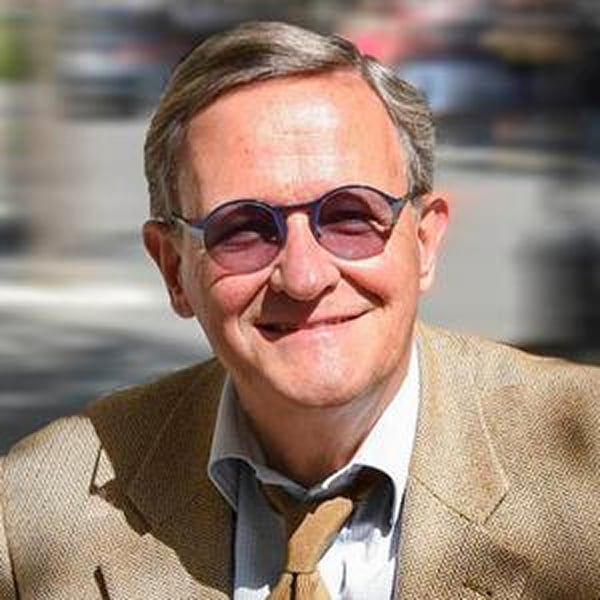
Jan Oberg

May 28, 2020

As pointed out in earlier parts of this series, the obsolete security concept was about national security – national military-first security.

A new concept must take its departure elsewhere, namely in individual security, humanity’s security and – thereby, implicitly – the security of the environment. That is, individual and global human security and the security of the environment. It’s a much-needed holistic way of looking at it – also in the sense that human life cannot be secured if the environment decays into global climate breakdown.

This lends a new dimension to the word common – common security with other human beings in the global system and common security in the Man-Nature relationship. We want to be as safe as possible from Nature’s vagaries – such as earthquakes – and Mother Nature would surely like to be safe from our exploitation and destruction.

A short history of the human security concept

So, where does human security and common security concepts come from in terms of intellectual history?

Common sense

A first approach would answer: That is common sense, philosophers have pointed to them for centuries. M K Gandhi rested his life and politics on the idea of securing basic human needs satisfaction for all – the needs for food, drink, housing, freedom from poverty and ignorance but also for spiritual enrichment, seeking truth, etc. In modern psychology, some may think of Abraham Maslow’s humanistic needs model – a theory that can be criticised but whose main argument about the centrality of human needs remains valid.

Anthropocentrism – the art of placing Man (rather than all living creature in Nature) – in the centre of everything is a dominating Western way of thinking and also to make Man the explorer of the rest of the world and of nature: discoveries ending in colonialism, on the one hand, and natural (male) science to penetrate Mother Nature, find her secret (the atom, for instance) and then controlling her, on the other.

Those are the negative sides of anthropocentrism. The positive side is that – done in benign, caring ways, placing human beings and their wellbeing in the centre of what we do – that is, the whole human being and all human beings) is essentially natural to humans. But indeed “benign and caring”: It must be in cooperation, in respect – in Partnerschaft with – all other living beings.

Or to put it in another way: What could be more important to secure but the survival, wellbeing and realization of the tremendous potentials of the human being – of the whole human being and of all human beings – of humanity?

This makes states and their governments much less central. After all, states are just a relatively recent inventions, or thought construction, and there is no promise, or need, that they shall last much longer. The world is coming together from below and above the nation-states, or the governments – in vast long-term processes of trans-nationalism and globalization.

So it is indeed time to plan for the embedding of security in the individual, from the single individual over all the groups of individuals who make up humanity as one big family with quite amazing diversities.

And that means replacing the state-military security thinking, not supplementing it. We shall illustrate now why that is an important distinction.

The UNDP and the Ogata/Sen “Human Security Now” Report

Human security was one of the noble, innovative ideas of Mahbub ul Haq who drew global attention to the concept of human security in the United Nations Development Programme‘s 1994 Human Development Report and sought to influence the UN’s 1995 World Summit on Social Development in Copenhagen.

The UNDP’s 1994 Human Development Report‘s definition of human security argues that the scope of global security should be expanded to include threats in seven areas: economic, food, health, environment, personal, community and political security – all of which you can read more about here.

Today, the concept of human security is most often related to the Japan-initiated so-called independent UN Commission headed by Sadako Ogata and Amatya Sen – “Human Security Now” (2003) which you may read here.

Among the Commission’s members, you find mostly diplomats and former ministers, plus people with a background in the Rockefeller Foundation, Goldman Sachs and the US administration.

This explains to a large extent, one can safely assume, that their concept of human security is what I would call compensatory, or supplementary and does not fundamentally address, challenge or attempt to change the Realpolitik military national security concept.

They state at the outset that:

“The Commission on Human Security’s definition of human security: to protect the vital core of all human lives in ways that enhance human freedoms and human fulfilment. Human security means protecting fundamental freedoms – freedoms that are the essence of life. It means protecting people from critical (severe) and pervasive (widespread) threats and situations. It means using processes that build on peoples strengths and aspirations. It means creating political, social, environmental, economic, military and cultural systems that together give people the building blocks of survival, livelihood and dignity.”

and…

“Human security complements “state security” in four respects:

• Its concern is the individual and the community rather than the state.

• Menaces to people’s security include threats and conditions that have not always been classified as threats to state security.

• The range of actors is expanded beyond the state alone.

• Achieving human security includes not just protecting people but also empowering people to fend for themselves.”

You may catch the flavour of this report’s many words – and platitudes if I may – when reading a paragraph about human security for refugees such as this:

“More than 50 years since its adoption, the refugee regime is under severe strain, leaving gaps in the protection of people fleeing war, violent conflict, human rights violations and discrimination. To help close these gaps, states have signed on to an Agenda for Protection, developed under the UNHCR through global consultations.
Strengthening the protection of refugees requires a better understanding of the causes and actors forcing people to flee. A narrow state-centric understanding of persecution and protection fails to address the needs of people who have fallen victim to rebel groups and criminal triads – and whom the state fails to protect. A broader understanding would include grave threats of generalized violence, internal conflicts, massive violations of human rights and other serious disturbances of public order.”

It is clear from such formulations that human security is seen as a “repair” policy: When the catastrophe, e.h. war, has happened, we must become more effective in protecting the victims.

Another way of dealing with it would be to have asked: What can be done to reduce those types of wars and other violence that cause people to flee? How do we change the standard mode of operation of the military Realpolitik – and its national-military security paradigm – that, first, consumes horrendous resources needed for making life more secure for hundreds of millions of people and, for instance, alleviate poverty – and then spends those values on killing some people and forcing others to flee?

In that sense, the entire report is about mitigating a series of consequences of a wrong-headed, over-militarised security thinking and policies – rather than changing it.

And in that sense, the report is extremely problematic because such an uncritical approach paradoxically also directly serves militarism in seeking to make its brutal consequences just a little more bearable.

One must assume that that is a major reason political leaders and many experts have embraced the Ogata/Sen conceptualization of human security and used it rhetorically again and again.

Earlier conceptualizations

As far as the present author is aware, the first time ever the term human security is used is in a research report from 1978 entitled “The New International Military Order – The Real Threat to Human Security”. An Essay on Global Armament, Structural Militarism and Alternative Security.” It was part of a collaborative research project by the Lund University Peace Research Institute, LUPRI, and the Chair in Conflict and Peace Research at Oslo University directed by the holder of that chair, professor Johan Galtung. (Papers Nr. 65).

It was written by me under Galtung’s guidance and published in stencil format in 1978. So it is no wonder that those who worked with the concept decades later did not know about it.

Additionally, it is not uncommon that new thinking takes places in smaller settings or margins of society, not in the centre or in powerful elite circles. Neither is it uncommon to expect a lead time of about 25-40 years from something radically new is stated until it is taken in, taken seriously and begins to influence politics in a concrete manner.

The point of departure of that report was that security is a basic human need.

Implementing it would require a series of structural changes towards a society which has a built-in strength – a resilience towards outer pressure – and which has a diversity of security measures but which can never become aggressive in the eyes of neighbours or anybody else, i.e. is fundamentally defensive (whether or not it has military components).

One criteria for its intellectual validity was that it would be in accordance with the UN Charter’s Article 51 about the right to self-defence (not other-offence).

In other words, we need a world system in which the security apparatus of one does not automatically represent a threat in the eyes of the other actors – neither in terms of intentions nor in terms of capabilities. It would, rather, bring capabilities and intentions on harmony – in contrast to today’s general, military-first policies in which everybody has long-range offensive weapons that can kill and destroy far away from home while the constantly declare that they have no bad intentions but want peace.

Such a way of thinking will never bring about stability and the feeling of security in the system as a whole.

It may seem to be bordering on the banal to state that human beings should be in the centre of defence, security and peace. But it isn’t.

Human beings play an extremely small and marginalized role in today’s security policies operated by elites in the MIMAC – the Military-Industrial-Media-Academic Complex – as has been documented by the Coronavirus crisis.

To even think of nuclear weapons as serving human security is bizarre, perverse or unethical – and it won’t solve their inherent problem to state that they are there only for deterrence and therefore to never be used. There can be no deterrence unless the parties are willing to use them (otherwise they won’t deter). And there exists no nuclear weapon that is defensive – i.e. shall only be used on one’s own territory.

And if you are aware of the millions upon millions who have been killed over a handful of decades – by the apparatus which worldwide is called ‘defence’, ‘security’, ‘stability’ and ‘peace’, you’ve been a spectator to the Theatre of The Absurd in the tradition of, say, Samuel Beckett or Eugene Ionesco.

Security, of course, has to do with avoidance of direct violence – bodily injury, being killed, tortured, etc. But, paradoxically, the same states and governments which provides ‘security’ are the ones that tortures and kills.

Next, human security is about survival – minimum survival. An individual who has not satisfied her or his basic human needs for, say, food, clothes, housing, health, education and employment can hardly be described as secure – irrespective of how much weaponry she or he, or the government, possesses.

The Coronavirus has shown how little real security human beings had in countries in which the governments had allocated gigantic resources to the military and against military – constructed – threats – instead of guaranteeing a minimum security when it comes to survival.

It’s reasonable to argue that many more people have died due to the Coronavirus than would otherwise have been the case had governments put people first in their defence and security thinking. The security policy that allocated all the “security” budget to weapons has caused deaths among their own citizens.

This should give rise to worldwide debates, protests and change, reorient research and stimulate political dialogue. Tragically, the elites who operate the militarist security – the MIMAC mentioned above – are likely to rather exploit the Coronavirus phenomenon than recognise the utter intellectual and moral failure they represent.

Like slave owners and absolute monarchs they should depart from civilisation. If not now, when?

In Part V we shall continue develop further the discussion of the basic elements of human security and then continue to explore the related concept of common security.

If you think this article gave you food for thought…


#coronaissecuritypolitics – please begin using this hashtag everywhere

Part 5 will deal with what types of defence and security policies would be needed in continuation of the perspectives on threats offered in this part.

Part 1 in this series • Part 2 • Part 3

Peace & future researcher + ‌Art Photographer

One Response

Related Posts

It’s a matter of principles, courage, vision and pulling together – while the militarist world is falling apart… Peter Langille October 3, 2026 “Here, then, is the problem which we present to you, stark and dreadful and inescapable: Shall we put an end to the human race; or shall mankind renounce war?”The Bertrand Russell—Albert Einstein Manifesto, July 9, 1955 ⁕ The forecast for what’s ahead is worrisome. The sharp rise in armed conflicts over the past three years is adding to what was already the highest level in over seventy years. Genocides, which should be prevented are supported. A shared climate emergency that jeopardises survival is ignored. Diverse polls now suggest that people are war-weary, worried and interested in a more effective United Nations. And, there are viable policy options for a more secure world! Yet governments are doubling-down, betting on more war and investing heavily. If current trends persist,...
Johan Galtung 1930-2024October 2015 Published here on October 3, 2026 Let us focus on Civilization for conflict analysis and remedies. Major forms of disorder use violence; war is state organized violence. The most belligerent states are the United States of America and Israel, both with civilization roots. National Evangelism, the US Protestant Christian civilization– more national than evangelical–justifies US warfare as exceptionalism of a people chosen by God, with a manifest destiny to run the world. Orthodox Judaism justifies Israeli warfare to conquer and expand from Nile to Euphrates as a religious right and duty to the Eternal One. The third most belligerent country, the UK, no longer believes it is God-chosen but chosen by the USA; not quite the same but something. But the root cause of global disorder lies in the Occident–with Islam–seeing itself as the single, universal civilization valid for all at all times, all others being...
Jan ObergPhD, director, The Transnational Foundation for Peace and Future Research, TFFLund, Sweden October 2, 2026 This is my full original manuscript. The Chinese Academy of Social Science, CASS, makes two publications out if it. 1. China’s Five-year plan emphasized the capabilities of basic research and original innovation. It is regarded as the goal of the future social development, which, as required, should be significantly enhanced. Can you comment on the importance of original innovation in research and academic study? I believe it is easier to define “original innovation” in the natural sciences than in social sciences. The breaking points of what constitutes something new, or innovative, are not quite as sharp in the latter. But in both fields it is about opening up something that was closed, unseen, unexplored before – making manifest what was earlier latent. Innovations come in many forms and shapes – naming something that was not...

Recent Articles

Tony Robinson October 4, 2026 Violence is easy to recognise when someone is being beaten, shot or killed. It becomes more difficult when nobody is holding a weapon. Poverty, discrimination, exploitation and repression can restrict a human life just as effectively, although they do so in very different ways and with very different consequences. Simply adding more categories to an ever-growing list of forms of violence does not really solve the problem. The more interesting question is what all these different situations have in common and why it makes sense to describe them using the same word. Human beings do not simply react to what happens around them. They remember the past, imagine things that do not yet exist, make plans and undertake projects. Workers organise because they imagine different working conditions; people migrate because they imagine another life somewhere else; social movements emerge because people refuse to accept the...
It’s a matter of principles, courage, vision and pulling together – while the militarist world is falling apart… Peter Langille October 3, 2026 “Here, then, is the problem which we present to you, stark and dreadful and inescapable: Shall we put an end to the human race; or shall mankind renounce war?”The Bertrand Russell—Albert Einstein Manifesto, July 9, 1955 ⁕ The forecast for what’s ahead is worrisome. The sharp rise in armed conflicts over the past three years is adding to what was already the highest level in over seventy years. Genocides, which should be prevented are supported. A shared climate emergency that jeopardises survival is ignored. Diverse polls now suggest that people are war-weary, worried and interested in a more effective United Nations. And, there are viable policy options for a more secure world! Yet governments are doubling-down, betting on more war and investing heavily. If current trends persist,...
Johan Galtung 1930-2024October 2015 Published here on October 3, 2026 Let us focus on Civilization for conflict analysis and remedies. Major forms of disorder use violence; war is state organized violence. The most belligerent states are the United States of America and Israel, both with civilization roots. National Evangelism, the US Protestant Christian civilization– more national than evangelical–justifies US warfare as exceptionalism of a people chosen by God, with a manifest destiny to run the world. Orthodox Judaism justifies Israeli warfare to conquer and expand from Nile to Euphrates as a religious right and duty to the Eternal One. The third most belligerent country, the UK, no longer believes it is God-chosen but chosen by the USA; not quite the same but something. But the root cause of global disorder lies in the Occident–with Islam–seeing itself as the single, universal civilization valid for all at all times, all others being...

TFF on Substack

Discover and subscribe to more peace materials on TFF Substack

Most Popular

Tony Robinson October 4, 2026 Violence is easy to recognise when someone is being beaten, shot or killed. It becomes more difficult when nobody is holding a weapon. Poverty, discrimination, exploitation and repression can restrict a human life just as effectively, although they do so in very different ways and with very different consequences. Simply adding more categories to an ever-growing list of forms of violence does not really solve the problem. The more interesting question is what all these different situations have in common and why it makes sense to describe them using the same word. Human beings do not simply react to what happens around them. They remember the past, imagine things that do not yet exist, make plans and undertake projects. Workers organise because they imagine different working conditions; people migrate because they imagine another life somewhere else; social movements emerge because people refuse to accept the...
It’s a matter of principles, courage, vision and pulling together – while the militarist world is falling apart… Peter Langille October 3, 2026 “Here, then, is the problem which we present to you, stark and dreadful and inescapable: Shall we put an end to the human race; or shall mankind renounce war?”The Bertrand Russell—Albert Einstein Manifesto, July 9, 1955 ⁕ The forecast for what’s ahead is worrisome. The sharp rise in armed conflicts over the past three years is adding to what was already the highest level in over seventy years. Genocides, which should be prevented are supported. A shared climate emergency that jeopardises survival is ignored. Diverse polls now suggest that people are war-weary, worried and interested in a more effective United Nations. And, there are viable policy options for a more secure world! Yet governments are doubling-down, betting on more war and investing heavily. If current trends persist,...
Johan Galtung 1930-2024October 2015 Published here on October 3, 2026 Let us focus on Civilization for conflict analysis and remedies. Major forms of disorder use violence; war is state organized violence. The most belligerent states are the United States of America and Israel, both with civilization roots. National Evangelism, the US Protestant Christian civilization– more national than evangelical–justifies US warfare as exceptionalism of a people chosen by God, with a manifest destiny to run the world. Orthodox Judaism justifies Israeli warfare to conquer and expand from Nile to Euphrates as a religious right and duty to the Eternal One. The third most belligerent country, the UK, no longer believes it is God-chosen but chosen by the USA; not quite the same but something. But the root cause of global disorder lies in the Occident–with Islam–seeing itself as the single, universal civilization valid for all at all times, all others being...
Read More
Living-Peace-Sign-Budapest-copy
Tony Robinson October 4, 2026 Violence is easy to recognise when someone is being beaten, shot or killed. It becomes more difficult when nobody is holding a weapon. Poverty, discrimination, exploitation and repression can restrict a human life just as effectively, although they do so in very different ways and with very different consequences. Simply adding more categories to an ever-growing list of forms of violence does not really solve the problem. The more interesting question is what all these different situations have in common and why it makes sense to describe them using the same word. Human beings do not simply react to what happens around them. They remember the past, imagine things that do not yet exist, make plans and undertake projects. Workers organise because they imagine different working conditions; people migrate because they imagine another life somewhere else; social movements emerge because people refuse to accept the...
b54a1f10-8c65-4f0b-9dd5-4abc0a7d04cc_2659x2659
It’s a matter of principles, courage, vision and pulling together – while the militarist world is falling apart… Peter Langille October 3, 2026 “Here, then, is the problem which we present to you, stark and dreadful and inescapable: Shall we put an end to the human race; or shall mankind renounce war?”The Bertrand Russell—Albert Einstein Manifesto, July 9, 1955 ⁕ The forecast for what’s ahead is worrisome. The sharp rise in armed conflicts over the past three years is adding to what was already the highest level in over seventy years. Genocides, which should be prevented are supported. A shared climate emergency that jeopardises survival is ignored. Diverse polls now suggest that people are war-weary, worried and interested in a more effective United Nations. And, there are viable policy options for a more secure world! Yet governments are doubling-down, betting on more war and investing heavily. If current trends persist,...
010
Johan Galtung 1930-2024October 2015 Published here on October 3, 2026 Let us focus on Civilization for conflict analysis and remedies. Major forms of disorder use violence; war is state organized violence. The most belligerent states are the United States of America and Israel, both with civilization roots. National Evangelism, the US Protestant Christian civilization– more national than evangelical–justifies US warfare as exceptionalism of a people chosen by God, with a manifest destiny to run the world. Orthodox Judaism justifies Israeli warfare to conquer and expand from Nile to Euphrates as a religious right and duty to the Eternal One. The third most belligerent country, the UK, no longer believes it is God-chosen but chosen by the USA; not quite the same but something. But the root cause of global disorder lies in the Occident–with Islam–seeing itself as the single, universal civilization valid for all at all times, all others being...
Screenshot 2026-10-02 011738
Jan ObergPhD, director, The Transnational Foundation for Peace and Future Research, TFFLund, Sweden October 2, 2026 This is my full original manuscript. The Chinese Academy of Social Science, CASS, makes two publications out if it. 1. China’s Five-year plan emphasized the capabilities of basic research and original innovation. It is regarded as the goal of the future social development, which, as required, should be significantly enhanced. Can you comment on the importance of original innovation in research and academic study? I believe it is easier to define “original innovation” in the natural sciences than in social sciences. The breaking points of what constitutes something new, or innovative, are not quite as sharp in the latter. But in both fields it is about opening up something that was closed, unseen, unexplored before – making manifest what was earlier latent. Innovations come in many forms and shapes – naming something that was not...
arctic-circle-map
The agreement is catastrophic both because of what it says and what it doesn’t mention. It reduces further the major asset of security policies: Freedom of action. Jan Oberg TFF director September 25, 2026 A couple of hours before the agreement was signed on September 22, 2026, I published the following 13 hypotheses about what it would most likely contain on TFF Substack (in English). I was wrong on only the first point. Contrary to what Trump had written on his Truth Social platform, it does not appear to come into force immediately. In fact, it turned out to be worse than even I had anticipated. After these hypotheses now come a number of reflections in light of what the agreement actually contains, and does not contain, as well as the way in which it has generally been presented by major media outlets and by the public-service broadcaster DR. My...
girl-5894831_1280
Below are TFF-related media mentions, comments, videos and social media posts published elsewhere but not on this homepage. We happen to catch and list only a fraction. Regarding video comments and debates, we recommend that you go to the TFF Video Channel on Substack where many of them are reproduced. Jan Oberg is a contributor to China Daily – 52 million daily clicks – and Global Times, CGTN and CCTV (the national television), China Investment, Xinhua News Agency and several others. Articles and videos on these media very often multiply into countless Chinese (and Western media) that re-post them from these main media. Thanks to The China Academy, his analyses, interviews and comments are frequently posted on YouTube channels such as Thinkers Forum and Wave Media. These videos are often re-posted on Bilibili (China’s YouTube), the China Content Center on TikTok, and on the Chinese edition of TikTok, Douyin.com. This means reaching hundreds of millions of viewers worldwide over a year. While there are too many to catch on all these...




