

By Pía Figueroa

February 26, 2018

I recently returned from my first trip to China and I am still thinking about everything I saw, which undoubtedly made me realize – once again – how much distortion comes from the press, manipulated by Western interests, on a daily basis.

We construct our picture of the world on the basis of information given to us by the news and we blindly believe their interpretation of the facts from their point of view.  

These are narratives are at the service of the economic and geopolitical positioning of the major European and North American powers, which take for granted that the world is the way it is and built from there.

Originally posted on December 22, 2018, by Pressenza
International News Agency here

But have we ever been told, for example, how 740 million people, according to official figures, have been able to get out of extreme poverty in less than 40 years? That’s a lot of people!  I think of Lula’s crusade in Brazil in 2003, with the goal of eradicating hunger and poverty, which was called “zero hunger” and was considered a success because it improved the living conditions of 23 million Brazilians.  Here we are talking about 32 times more human beings whose destinies have completely changed.

I was told that when Mao died in 1976, the state could barely deliver a daily food ration to every Chinese family and that the people had two fabrics to wear: grey and olive green.  It was an achievement of a revolution that took on a country decimated by poverty.

In the city of Chongqing, where I stayed, I didn’t meet anyone who didn’t have an application on their cell phone allowing them to understand each other by translating into the local language, and by the way, the iPhones were of the latest generation. Not to mention the many delicacies offered by food and clothing stores – the envy of any South American metropolis – where you pay with virtual money, scanning a QR code with a smartphone.

China’s Unparalleled Change

Why is China kept out of sight when in just four decades it has undergone an unparalleled change?  It is perhaps one of the most extraordinary phenomena that has occurred, placing the Asian country in the current position of the second largest economy in the world.

This began two years after Mao’s death, on the basis of a program called “Reform and Openness” promoted by the then leader of the Chinese Communist Party, Deng Xiaoping.  Between December 18 and 22, 1978, the third plenary of the party’s Central Committee was held, where it was approved that peasants, for the first time, could have ownership of their crops.  This was followed by the establishment of Shenzhen – then a fishing village and now a thriving technological and manufacturing hub of 12.5 million people – as a “special economic zone” to experiment with a more flexible market system. Shenzhen is now described as the “Chinese Silicon Valley”.
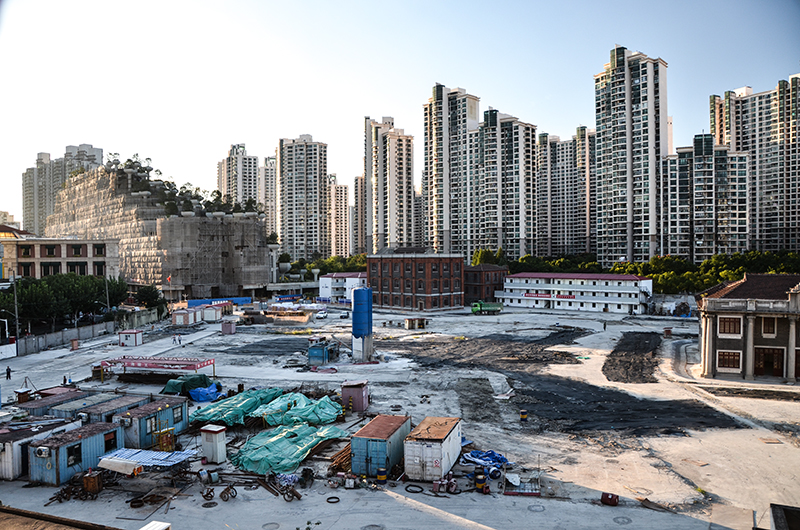
Supporting the idea of a “socialism with Chinese characteristics”, Deng broke with the establishment and promoted several economic reforms aiming at agriculture, the liberalization of the private sector, the modernization of industry and the opening of China to foreign trade.  

In the years that followed, changes were implemented that were then considered very ambitious and went ahead despite opposition to Deng from the most conservative wing of the party.

The agricultural sector abandoned Mao’s system of a planned rural economy, increasing productivity and technology to become today’s huge export industry.  It is remarkable that despite encouraging the migration of labour to the cities, today 46% of the Chinese population is still rural.

Private sector “chains” were also unleashed and, for the first time since the People’s Republic was created in 1949, the country opened up to foreign investment.

It was that opening to the outside world that contributed to increasing productive capacity, as well as new management methods.  The changes led China, after a long process, to join the World Trade Organization in 2001, which definitively opened the doors to globalization, something which has contributed so much to its economic boom.

Building the Future with China

It is curious, but in all these years a lot has been written and reported on the effects of globalization in Eastern Europe, boasting of having brought great capital to the former Soviet Union.  But much less has been reported in the Latin American press on what happened in the Asian giant.

It was not until 2008, when the global financial crisis broke out and the West embarked on the search for new markets, that China stood out from the rest, becoming the “factory of the world”.

Since then, here in my city (Santiago, Chile) we wear clothes made in China, we cook with Chinese utensils, our tools and furniture are produced by the Chinese, cars, computers and probably many other things are made in China.

Over there, women currently retire at 55 and men at 60.  However, I observed a great vocation towards work, in everyone, towards keeping busy and being able to contribute.  It’s as if they were building the future, with their eyes fixed on the horizon.  A common future, of “shared communities for the common destiny of the human species,” as Xi Jinping said in his speech at this year’s opening session of the United Nations.

One of my friends in Chongqing told me that as soon as the speech was delivered, it was immediately translated into all the dialects spoken in China, printed as a book, inserted into envelopes and distributed in less than a month by mail to every home in that huge country.  I was considerably surprised at the level of house-to-house clarification that the government does, and I asked him if he could send me a copy.

I have it now. It came to me in the mail. A copy of 197 pages printed in English, first quality.

This week Xi emphasized the importance of the “leadership” of the Communist Party in a speech celebrating the 40th anniversary of the country’s economic opening.  The President stressed that China will continue on the path of openness and development, but following its own tempo.  “We will decisively change what can be reformed and we will not decisively change what cannot be reformed.”  He gave special importance to the fight against pollution.

“In a country like China, with 5,000 years of history and a population of more than 1.4 billion people, no manual can be considered a golden rule and there is no teacher who can give orders to the people,” he said.

Xi Jing Ping, President of the People’s Republic of China

For my part, I remain alert to the process of this admirable people who captivate my interest despite the suspicious way in which the West treats any information relating to them.  A people that does not seem to suffer from the current crisis or doubt the options it has, but which is extremely busy and eager to build the future.


By Pía Figueroa,
Co-Director of Pressenza, life-long humanist, author of several monographs and books.

Image of author found here

Editorial note
To the original article has been added subheadings, italicization and photos by Severine Renard, all to enhance readability. No change of content.

Photo on top © Jan Oberg, Beijing, China 1983.

Related Posts

PART 2 — Diplomacy, Law and Nonviolent Power By Jan ObergTFF co-founder and director January 26, 2026 This is the second of four TFF-created idea portfolios designed to curb the global reach of the United States and, in both the short and long term, help catalyse a worldwide nonviolent resistance to what many observers describe as the Trump administration’s uniquely confrontational, destructive and world-threatening policies. These portfolios outline what governments and citizens across the world can do through dynamic diplomacy, creative initiatives, and strictly nonviolent means. They are typical TFF works in that we do not only tell what the problem is and how bad it will go – as 90+% of all commentators, experts and scholars do – we tell what we think can be done, inviting you to think of what you think you can do. It seems painfully clear to me that the current political dynamics in Washington increasingly resemble the most dangerous...
PART 1 — Media, Culture and Information Sovereignty By Jan ObergTFF co-founder and director January 20, 2026 This is the first of four TFF-created idea portfolios designed to curb the global reach of the United States and, in both the short and long term, help catalyse a worldwide nonviolent resistance to what many observers describe as the Trump administration’s uniquely confrontational, destructive and world-threatening policies. These portfolios outline what governments and citizens across the world can do through dynamic diplomacy, creative initiatives, and strictly nonviolent means. They are typical TFF works in that we do not only tell what the problem is and how bad it will go – as 90+% of all commentators, experts and scholars do – we tell what we think can be done, inviting you to think of what you think you can do. It seems painfully clear to me that the current political dynamics in Washington increasingly resemble the most...
Officially, the drones were not identified. By simply thinking critically – which journalists and selected experts no longer do – there may be a good reason for that. And this article will never be mentioned in Denmark… Jan Oberg October 3, 2025 Drones over Denmark. No damage. No trace. No answers. Yet the headlines scream “Russian threat,” and Prime Minister Mette Frederiksen speaks with a certainty that defies logic: “We don’t know they were Russian—but we know Russia is the biggest threat to Europe.” It could be nobody else – unless you make an interest analysis which I did two days ago. This is not security policy. It’s theatre. And the audience is being played. Let’s rewind. These drones—unphotographed, untracked, unclaimed—appear and vanish like ghosts. Airports shut down. Panic spreads. Military budgets swell. And the narrative hardens: Russia is behind it. But what if that’s not just wrong but deliberately...

Recent Articles

Tony Robinson October 4, 2026 Violence is easy to recognise when someone is being beaten, shot or killed. It becomes more difficult when nobody is holding a weapon. Poverty, discrimination, exploitation and repression can restrict a human life just as effectively, although they do so in very different ways and with very different consequences. Simply adding more categories to an ever-growing list of forms of violence does not really solve the problem. The more interesting question is what all these different situations have in common and why it makes sense to describe them using the same word. Human beings do not simply react to what happens around them. They remember the past, imagine things that do not yet exist, make plans and undertake projects. Workers organise because they imagine different working conditions; people migrate because they imagine another life somewhere else; social movements emerge because people refuse to accept the...
It’s a matter of principles, courage, vision and pulling together – while the militarist world is falling apart… Peter Langille October 3, 2026 “Here, then, is the problem which we present to you, stark and dreadful and inescapable: Shall we put an end to the human race; or shall mankind renounce war?”The Bertrand Russell—Albert Einstein Manifesto, July 9, 1955 ⁕ The forecast for what’s ahead is worrisome. The sharp rise in armed conflicts over the past three years is adding to what was already the highest level in over seventy years. Genocides, which should be prevented are supported. A shared climate emergency that jeopardises survival is ignored. Diverse polls now suggest that people are war-weary, worried and interested in a more effective United Nations. And, there are viable policy options for a more secure world! Yet governments are doubling-down, betting on more war and investing heavily. If current trends persist,...
Johan Galtung 1930-2024October 2015 Published here on October 3, 2026 Let us focus on Civilization for conflict analysis and remedies. Major forms of disorder use violence; war is state organized violence. The most belligerent states are the United States of America and Israel, both with civilization roots. National Evangelism, the US Protestant Christian civilization– more national than evangelical–justifies US warfare as exceptionalism of a people chosen by God, with a manifest destiny to run the world. Orthodox Judaism justifies Israeli warfare to conquer and expand from Nile to Euphrates as a religious right and duty to the Eternal One. The third most belligerent country, the UK, no longer believes it is God-chosen but chosen by the USA; not quite the same but something. But the root cause of global disorder lies in the Occident–with Islam–seeing itself as the single, universal civilization valid for all at all times, all others being...

TFF on Substack

Discover and subscribe to more peace materials on TFF Substack

Most Popular

Tony Robinson October 4, 2026 Violence is easy to recognise when someone is being beaten, shot or killed. It becomes more difficult when nobody is holding a weapon. Poverty, discrimination, exploitation and repression can restrict a human life just as effectively, although they do so in very different ways and with very different consequences. Simply adding more categories to an ever-growing list of forms of violence does not really solve the problem. The more interesting question is what all these different situations have in common and why it makes sense to describe them using the same word. Human beings do not simply react to what happens around them. They remember the past, imagine things that do not yet exist, make plans and undertake projects. Workers organise because they imagine different working conditions; people migrate because they imagine another life somewhere else; social movements emerge because people refuse to accept the...
It’s a matter of principles, courage, vision and pulling together – while the militarist world is falling apart… Peter Langille October 3, 2026 “Here, then, is the problem which we present to you, stark and dreadful and inescapable: Shall we put an end to the human race; or shall mankind renounce war?”The Bertrand Russell—Albert Einstein Manifesto, July 9, 1955 ⁕ The forecast for what’s ahead is worrisome. The sharp rise in armed conflicts over the past three years is adding to what was already the highest level in over seventy years. Genocides, which should be prevented are supported. A shared climate emergency that jeopardises survival is ignored. Diverse polls now suggest that people are war-weary, worried and interested in a more effective United Nations. And, there are viable policy options for a more secure world! Yet governments are doubling-down, betting on more war and investing heavily. If current trends persist,...
Johan Galtung 1930-2024October 2015 Published here on October 3, 2026 Let us focus on Civilization for conflict analysis and remedies. Major forms of disorder use violence; war is state organized violence. The most belligerent states are the United States of America and Israel, both with civilization roots. National Evangelism, the US Protestant Christian civilization– more national than evangelical–justifies US warfare as exceptionalism of a people chosen by God, with a manifest destiny to run the world. Orthodox Judaism justifies Israeli warfare to conquer and expand from Nile to Euphrates as a religious right and duty to the Eternal One. The third most belligerent country, the UK, no longer believes it is God-chosen but chosen by the USA; not quite the same but something. But the root cause of global disorder lies in the Occident–with Islam–seeing itself as the single, universal civilization valid for all at all times, all others being...
Read More
Living-Peace-Sign-Budapest-copy
Tony Robinson October 4, 2026 Violence is easy to recognise when someone is being beaten, shot or killed. It becomes more difficult when nobody is holding a weapon. Poverty, discrimination, exploitation and repression can restrict a human life just as effectively, although they do so in very different ways and with very different consequences. Simply adding more categories to an ever-growing list of forms of violence does not really solve the problem. The more interesting question is what all these different situations have in common and why it makes sense to describe them using the same word. Human beings do not simply react to what happens around them. They remember the past, imagine things that do not yet exist, make plans and undertake projects. Workers organise because they imagine different working conditions; people migrate because they imagine another life somewhere else; social movements emerge because people refuse to accept the...
b54a1f10-8c65-4f0b-9dd5-4abc0a7d04cc_2659x2659
It’s a matter of principles, courage, vision and pulling together – while the militarist world is falling apart… Peter Langille October 3, 2026 “Here, then, is the problem which we present to you, stark and dreadful and inescapable: Shall we put an end to the human race; or shall mankind renounce war?”The Bertrand Russell—Albert Einstein Manifesto, July 9, 1955 ⁕ The forecast for what’s ahead is worrisome. The sharp rise in armed conflicts over the past three years is adding to what was already the highest level in over seventy years. Genocides, which should be prevented are supported. A shared climate emergency that jeopardises survival is ignored. Diverse polls now suggest that people are war-weary, worried and interested in a more effective United Nations. And, there are viable policy options for a more secure world! Yet governments are doubling-down, betting on more war and investing heavily. If current trends persist,...
010
Johan Galtung 1930-2024October 2015 Published here on October 3, 2026 Let us focus on Civilization for conflict analysis and remedies. Major forms of disorder use violence; war is state organized violence. The most belligerent states are the United States of America and Israel, both with civilization roots. National Evangelism, the US Protestant Christian civilization– more national than evangelical–justifies US warfare as exceptionalism of a people chosen by God, with a manifest destiny to run the world. Orthodox Judaism justifies Israeli warfare to conquer and expand from Nile to Euphrates as a religious right and duty to the Eternal One. The third most belligerent country, the UK, no longer believes it is God-chosen but chosen by the USA; not quite the same but something. But the root cause of global disorder lies in the Occident–with Islam–seeing itself as the single, universal civilization valid for all at all times, all others being...
Screenshot 2026-10-02 011738
Jan ObergPhD, director, The Transnational Foundation for Peace and Future Research, TFFLund, Sweden October 2, 2026 This is my full original manuscript. The Chinese Academy of Social Science, CASS, makes two publications out if it. 1. China’s Five-year plan emphasized the capabilities of basic research and original innovation. It is regarded as the goal of the future social development, which, as required, should be significantly enhanced. Can you comment on the importance of original innovation in research and academic study? I believe it is easier to define “original innovation” in the natural sciences than in social sciences. The breaking points of what constitutes something new, or innovative, are not quite as sharp in the latter. But in both fields it is about opening up something that was closed, unseen, unexplored before – making manifest what was earlier latent. Innovations come in many forms and shapes – naming something that was not...
arctic-circle-map
The agreement is catastrophic both because of what it says and what it doesn’t mention. It reduces further the major asset of security policies: Freedom of action. Jan Oberg TFF director September 25, 2026 A couple of hours before the agreement was signed on September 22, 2026, I published the following 13 hypotheses about what it would most likely contain on TFF Substack (in English). I was wrong on only the first point. Contrary to what Trump had written on his Truth Social platform, it does not appear to come into force immediately. In fact, it turned out to be worse than even I had anticipated. After these hypotheses now come a number of reflections in light of what the agreement actually contains, and does not contain, as well as the way in which it has generally been presented by major media outlets and by the public-service broadcaster DR. My...
girl-5894831_1280
Below are TFF-related media mentions, comments, videos and social media posts published elsewhere but not on this homepage. We happen to catch and list only a fraction. Regarding video comments and debates, we recommend that you go to the TFF Video Channel on Substack where many of them are reproduced. Jan Oberg is a contributor to China Daily – 52 million daily clicks – and Global Times, CGTN and CCTV (the national television), China Investment, Xinhua News Agency and several others. Articles and videos on these media very often multiply into countless Chinese (and Western media) that re-post them from these main media. Thanks to The China Academy, his analyses, interviews and comments are frequently posted on YouTube channels such as Thinkers Forum and Wave Media. These videos are often re-posted on Bilibili (China’s YouTube), the China Content Center on TikTok, and on the Chinese edition of TikTok, Douyin.com. This means reaching hundreds of millions of viewers worldwide over a year. While there are too many to catch on all these...




