
New EU sanctions on Iran: The plank in your own eyes

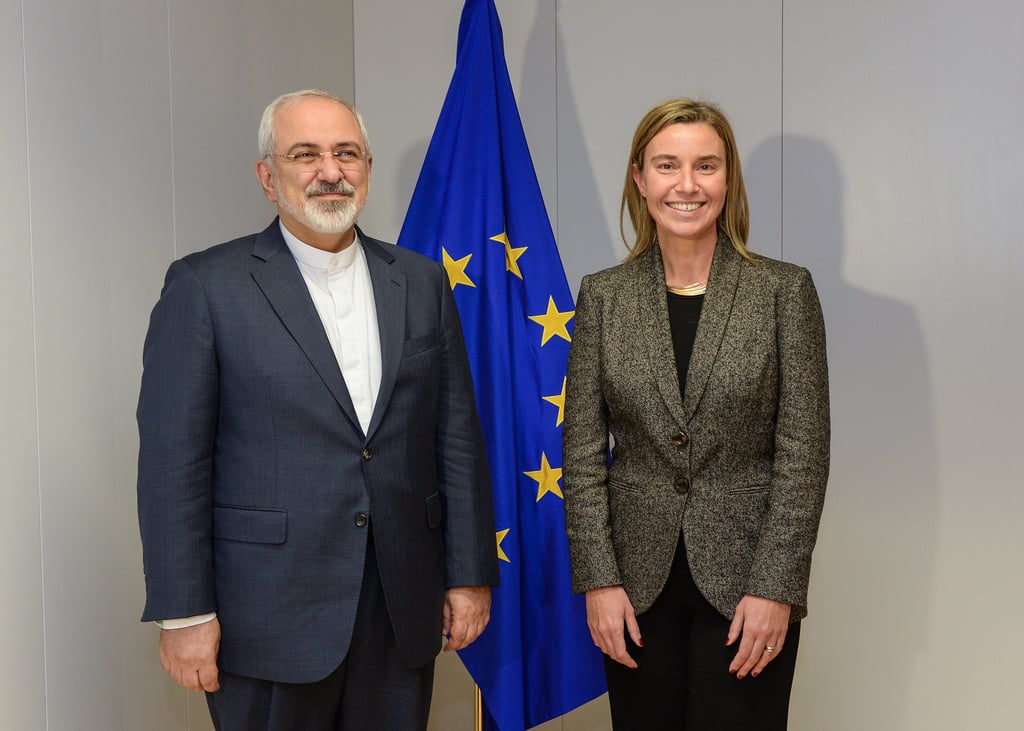
Iranian foreign minister Javad Zarif and the EU Foreign Policy chief Frederica Mogherini

UPI writes that the European Union issues sanctions on Iran over assassination plots on January 8, 2019. And US Secretary of State, Pompeo, fully supports them.

The move puts the Iranian individuals and intelligence unit on the EU terrorist list – freezing their financial assets.

It’s a brilliant example of Matthew 7:3-6: “Why do you look at the speck of sawdust in your brother’s eye and pay no attention to the plank in your own eye?”

Which, it seems, is now a standard operating policy by the Western world.

Or, one may say, an example of psycho-political projection of the West’s own dark sides onto this enemy today and that enemy tomorrow.

Here some arguments in support of that – perhaps to some – provocative statement:

1) It should be clear from contemporary history’s records that countries such as the UK, France and the US do infinitely more of what Iran is accused of here. (See point 4 below).

2) “Alleged”, “accused of attempting” and “strong evidence” are the words used by all. In other words, not a shred of hard evidence and punishment before proof. It’s no good for legal states in which anyone is to be considered innocent until the opposite has been proven. Thus, basic legal principles – not to speak of ethics – are set aside by politicians who, on a daily basis, teach others about what is unacceptable, or what they should do.

3) The self-same countries have put economic sanctions on Iran for not one good reason beyond orders issues by the US. The basic sanctions installed – in various forms and shapes since 1979 – can be categorized as terrorism as they deliberately target and hit the millions of innocent Iranian citizens.

4) Has the US and all EU countries not been fighting what they consider terrorist – the Global War on Terrorism – since September 11, 2001? Don’t they use tools such as CIA, special operating forces, agents to hunt down and kill those they consider a threat to their country – and don’t they do so on any other country’s territory if they deem it necessary – say Somalia, Afghanistan, Pakistan (Osama bin Laden), or the US in Syria against its self-created ISIS – to just mention a few among many since 1945?

Indeed, isn’t international politics filled with such cases, including systematic attempts in dozens of countries of killing people, including heads of state – Allende, Saddam Hussein, Gaddafi?

5) Iran is the victim of primary sanctions by the US and EU – has been for years. And it’s a victim of secondary sanctions – those that are applications of US law in other countries implying that if the US has put up sanctions against Iran, then it will punish countries – such as the EU, China, Russia – if they uphold their economic and cultural relations with Iran.

And the EU has been woefully split on the issue too, even unable to develop an alternative to Trumpist-CIA-State Department-Deep state constantly self-contradictory, confusing and unprincipled policies.

And why is Iran and its people targeted? Because the Islamic Revolution in 1979 had forced out the Shah who had been installed through the US/UK coup d’etat in 1953 against democratically elected Mossadegh. Since Ayatollah Khomeni took over, Iran has been considered a pariah state by the US and other Western countries and demonised ad absurdum.

Anybody who, like the author, has visited Iran and spoken with people at different levels and walks of life, know that the Western image of Iran has frighteningly little to do with the reality there: Fake and omission united.

That is the general background – “we don’t like them and what they do to our world leadership”. Simple as that.

The present specific sanctions have been installed in the wake of the US violating international law by leaving the JCPOA agreement about Iran’s nuclear policies – perhaps the single most important piece of international diplomacy and negotiated solution to a problem that could otherwise have caused war. (And it is not that there is any hard evidence that Iran attempted to acquire nuclear weapons, but so it is “alleged”, not the least by Israel and the US as pointed out so thoroughly by TFF Associate Gareth Porter).

The JCPOA is embedded in a UN Security Council resolution (2231) and, thus, a piece of international law. So, it’s the US, not Iran, that should be punished.

all these issues are so important for understanding the conflict between Iran and the West. And why sanctions, demonization and constant threats issued (also against the UN Charter) is probably all part of a build-up to some kind of violent action on Iran.

And, thus, you won’t find such arguments in the Western mainstream media. News journalists and selected experts are either conveniently ignorant about them or know how to practise self-censorship through something much much more important than fake – namely omission.

That is, the omission of facts, of conflict analysis, of the perspectives of “the others”, of peace perspectives and of even the slightest criticism of the West’s policies.

One reason, of course, is that these media and experts are dependent on being politically correct for their survival on corporate and state support.

And when the states plot wars in foreign lands, mainstream media follow His Master’s Voice.
 

Peace & future researcher + ‌Art Photographer

One Response

  1. There are many things wrong with Iran, as there are with many other countries. However, the excuse for these sanctions is very thin. When the Trump administration violated the Security Council Resolution 2231 and withdrew from the landmark Iranian nuclear deal, it was initially hoped that the EU which was a party to that agreement would put principle and its own economic and political interests above the desire to appease the current ultra-rightwing US government. Unfortunately, the latest decision shows that those hopes were misplaced and Europe lacks the backbone to stand up to illegal US demands and has decided to surrender to US Israeli diktat. This is a bad day not only for Iran, but also for the EU, for the rule of law and for international relations, and will only force Iran to turn to the East. The EU has refused to impose sanctions on Saudi Arabia after the barbaric murder and dismemberment of a respected journalist in its consulate in Istanbul or for its war crimes in Yemen that have resulted in tens of thousands of deaths and the near starvation of millions. The latest EU decision is not a sign of strength, but a sign of pitiful weakness in the face of an aggressive superpower, and it will not bode well for the future.

Related Posts

Tony Robinson October 4, 2026 Violence is easy to recognise when someone is being beaten, shot or killed. It becomes more difficult when nobody is holding a weapon. Poverty, discrimination, exploitation and repression can restrict a human life just as effectively, although they do so in very different ways and with very different consequences. Simply adding more categories to an ever-growing list of forms of violence does not really solve the problem. The more interesting question is what all these different situations have in common and why it makes sense to describe them using the same word. Human beings do not simply react to what happens around them. They remember the past, imagine things that do not yet exist, make plans and undertake projects. Workers organise because they imagine different working conditions; people migrate because they imagine another life somewhere else; social movements emerge because people refuse to accept the...
Johan Galtung 1930-2024October 2015 Published here on October 3, 2026 Let us focus on Civilization for conflict analysis and remedies. Major forms of disorder use violence; war is state organized violence. The most belligerent states are the United States of America and Israel, both with civilization roots. National Evangelism, the US Protestant Christian civilization– more national than evangelical–justifies US warfare as exceptionalism of a people chosen by God, with a manifest destiny to run the world. Orthodox Judaism justifies Israeli warfare to conquer and expand from Nile to Euphrates as a religious right and duty to the Eternal One. The third most belligerent country, the UK, no longer believes it is God-chosen but chosen by the USA; not quite the same but something. But the root cause of global disorder lies in the Occident–with Islam–seeing itself as the single, universal civilization valid for all at all times, all others being...
Jan ObergPhD, director, The Transnational Foundation for Peace and Future Research, TFFLund, Sweden October 2, 2026 This is my full original manuscript. The Chinese Academy of Social Science, CASS, makes two publications out if it. 1. China’s Five-year plan emphasized the capabilities of basic research and original innovation. It is regarded as the goal of the future social development, which, as required, should be significantly enhanced. Can you comment on the importance of original innovation in research and academic study? I believe it is easier to define “original innovation” in the natural sciences than in social sciences. The breaking points of what constitutes something new, or innovative, are not quite as sharp in the latter. But in both fields it is about opening up something that was closed, unseen, unexplored before – making manifest what was earlier latent. Innovations come in many forms and shapes – naming something that was not...

Recent Articles

Tony Robinson October 4, 2026 Violence is easy to recognise when someone is being beaten, shot or killed. It becomes more difficult when nobody is holding a weapon. Poverty, discrimination, exploitation and repression can restrict a human life just as effectively, although they do so in very different ways and with very different consequences. Simply adding more categories to an ever-growing list of forms of violence does not really solve the problem. The more interesting question is what all these different situations have in common and why it makes sense to describe them using the same word. Human beings do not simply react to what happens around them. They remember the past, imagine things that do not yet exist, make plans and undertake projects. Workers organise because they imagine different working conditions; people migrate because they imagine another life somewhere else; social movements emerge because people refuse to accept the...
It’s a matter of principles, courage, vision and pulling together – while the militarist world is falling apart… Peter Langille October 3, 2026 “Here, then, is the problem which we present to you, stark and dreadful and inescapable: Shall we put an end to the human race; or shall mankind renounce war?”The Bertrand Russell—Albert Einstein Manifesto, July 9, 1955 ⁕ The forecast for what’s ahead is worrisome. The sharp rise in armed conflicts over the past three years is adding to what was already the highest level in over seventy years. Genocides, which should be prevented are supported. A shared climate emergency that jeopardises survival is ignored. Diverse polls now suggest that people are war-weary, worried and interested in a more effective United Nations. And, there are viable policy options for a more secure world! Yet governments are doubling-down, betting on more war and investing heavily. If current trends persist,...
Johan Galtung 1930-2024October 2015 Published here on October 3, 2026 Let us focus on Civilization for conflict analysis and remedies. Major forms of disorder use violence; war is state organized violence. The most belligerent states are the United States of America and Israel, both with civilization roots. National Evangelism, the US Protestant Christian civilization– more national than evangelical–justifies US warfare as exceptionalism of a people chosen by God, with a manifest destiny to run the world. Orthodox Judaism justifies Israeli warfare to conquer and expand from Nile to Euphrates as a religious right and duty to the Eternal One. The third most belligerent country, the UK, no longer believes it is God-chosen but chosen by the USA; not quite the same but something. But the root cause of global disorder lies in the Occident–with Islam–seeing itself as the single, universal civilization valid for all at all times, all others being...

TFF on Substack

Discover and subscribe to more peace materials on TFF Substack

Most Popular

Tony Robinson October 4, 2026 Violence is easy to recognise when someone is being beaten, shot or killed. It becomes more difficult when nobody is holding a weapon. Poverty, discrimination, exploitation and repression can restrict a human life just as effectively, although they do so in very different ways and with very different consequences. Simply adding more categories to an ever-growing list of forms of violence does not really solve the problem. The more interesting question is what all these different situations have in common and why it makes sense to describe them using the same word. Human beings do not simply react to what happens around them. They remember the past, imagine things that do not yet exist, make plans and undertake projects. Workers organise because they imagine different working conditions; people migrate because they imagine another life somewhere else; social movements emerge because people refuse to accept the...
It’s a matter of principles, courage, vision and pulling together – while the militarist world is falling apart… Peter Langille October 3, 2026 “Here, then, is the problem which we present to you, stark and dreadful and inescapable: Shall we put an end to the human race; or shall mankind renounce war?”The Bertrand Russell—Albert Einstein Manifesto, July 9, 1955 ⁕ The forecast for what’s ahead is worrisome. The sharp rise in armed conflicts over the past three years is adding to what was already the highest level in over seventy years. Genocides, which should be prevented are supported. A shared climate emergency that jeopardises survival is ignored. Diverse polls now suggest that people are war-weary, worried and interested in a more effective United Nations. And, there are viable policy options for a more secure world! Yet governments are doubling-down, betting on more war and investing heavily. If current trends persist,...
Johan Galtung 1930-2024October 2015 Published here on October 3, 2026 Let us focus on Civilization for conflict analysis and remedies. Major forms of disorder use violence; war is state organized violence. The most belligerent states are the United States of America and Israel, both with civilization roots. National Evangelism, the US Protestant Christian civilization– more national than evangelical–justifies US warfare as exceptionalism of a people chosen by God, with a manifest destiny to run the world. Orthodox Judaism justifies Israeli warfare to conquer and expand from Nile to Euphrates as a religious right and duty to the Eternal One. The third most belligerent country, the UK, no longer believes it is God-chosen but chosen by the USA; not quite the same but something. But the root cause of global disorder lies in the Occident–with Islam–seeing itself as the single, universal civilization valid for all at all times, all others being...
Read More
Living-Peace-Sign-Budapest-copy
Tony Robinson October 4, 2026 Violence is easy to recognise when someone is being beaten, shot or killed. It becomes more difficult when nobody is holding a weapon. Poverty, discrimination, exploitation and repression can restrict a human life just as effectively, although they do so in very different ways and with very different consequences. Simply adding more categories to an ever-growing list of forms of violence does not really solve the problem. The more interesting question is what all these different situations have in common and why it makes sense to describe them using the same word. Human beings do not simply react to what happens around them. They remember the past, imagine things that do not yet exist, make plans and undertake projects. Workers organise because they imagine different working conditions; people migrate because they imagine another life somewhere else; social movements emerge because people refuse to accept the...
b54a1f10-8c65-4f0b-9dd5-4abc0a7d04cc_2659x2659
It’s a matter of principles, courage, vision and pulling together – while the militarist world is falling apart… Peter Langille October 3, 2026 “Here, then, is the problem which we present to you, stark and dreadful and inescapable: Shall we put an end to the human race; or shall mankind renounce war?”The Bertrand Russell—Albert Einstein Manifesto, July 9, 1955 ⁕ The forecast for what’s ahead is worrisome. The sharp rise in armed conflicts over the past three years is adding to what was already the highest level in over seventy years. Genocides, which should be prevented are supported. A shared climate emergency that jeopardises survival is ignored. Diverse polls now suggest that people are war-weary, worried and interested in a more effective United Nations. And, there are viable policy options for a more secure world! Yet governments are doubling-down, betting on more war and investing heavily. If current trends persist,...
010
Johan Galtung 1930-2024October 2015 Published here on October 3, 2026 Let us focus on Civilization for conflict analysis and remedies. Major forms of disorder use violence; war is state organized violence. The most belligerent states are the United States of America and Israel, both with civilization roots. National Evangelism, the US Protestant Christian civilization– more national than evangelical–justifies US warfare as exceptionalism of a people chosen by God, with a manifest destiny to run the world. Orthodox Judaism justifies Israeli warfare to conquer and expand from Nile to Euphrates as a religious right and duty to the Eternal One. The third most belligerent country, the UK, no longer believes it is God-chosen but chosen by the USA; not quite the same but something. But the root cause of global disorder lies in the Occident–with Islam–seeing itself as the single, universal civilization valid for all at all times, all others being...
Screenshot 2026-10-02 011738
Jan ObergPhD, director, The Transnational Foundation for Peace and Future Research, TFFLund, Sweden October 2, 2026 This is my full original manuscript. The Chinese Academy of Social Science, CASS, makes two publications out if it. 1. China’s Five-year plan emphasized the capabilities of basic research and original innovation. It is regarded as the goal of the future social development, which, as required, should be significantly enhanced. Can you comment on the importance of original innovation in research and academic study? I believe it is easier to define “original innovation” in the natural sciences than in social sciences. The breaking points of what constitutes something new, or innovative, are not quite as sharp in the latter. But in both fields it is about opening up something that was closed, unseen, unexplored before – making manifest what was earlier latent. Innovations come in many forms and shapes – naming something that was not...
arctic-circle-map
The agreement is catastrophic both because of what it says and what it doesn’t mention. It reduces further the major asset of security policies: Freedom of action. Jan Oberg TFF director September 25, 2026 A couple of hours before the agreement was signed on September 22, 2026, I published the following 13 hypotheses about what it would most likely contain on TFF Substack (in English). I was wrong on only the first point. Contrary to what Trump had written on his Truth Social platform, it does not appear to come into force immediately. In fact, it turned out to be worse than even I had anticipated. After these hypotheses now come a number of reflections in light of what the agreement actually contains, and does not contain, as well as the way in which it has generally been presented by major media outlets and by the public-service broadcaster DR. My...
girl-5894831_1280
Below are TFF-related media mentions, comments, videos and social media posts published elsewhere but not on this homepage. We happen to catch and list only a fraction. Regarding video comments and debates, we recommend that you go to the TFF Video Channel on Substack where many of them are reproduced. Jan Oberg is a contributor to China Daily – 52 million daily clicks – and Global Times, CGTN and CCTV (the national television), China Investment, Xinhua News Agency and several others. Articles and videos on these media very often multiply into countless Chinese (and Western media) that re-post them from these main media. Thanks to The China Academy, his analyses, interviews and comments are frequently posted on YouTube channels such as Thinkers Forum and Wave Media. These videos are often re-posted on Bilibili (China’s YouTube), the China Content Center on TikTok, and on the Chinese edition of TikTok, Douyin.com. This means reaching hundreds of millions of viewers worldwide over a year. While there are too many to catch on all these...





