
Obama’s foreign policy options were continually limited by Netanyahu and the lobby — Ben Rhodes

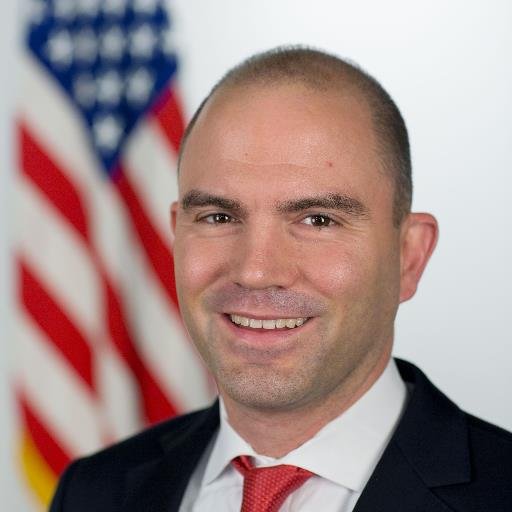
Photo: Ben Rhodes former foreign policy advisor and speechwriter for former President of the United States, Barrack Obama. Photo credit: mondoweiss.net


By Philip Weiss

September 30, 2018

Ben Rhodes’s memoir of serving as a top foreign policy aide to President Obama, titled The World As It Is, came out in June to highly favorable reviews.

I got the book to scratch my itch on Israel/Palestine and was surprised by how candid Rhodes is about the power of the Israel lobby in a Democratic administration down to the fact that chief of staff Rahm Emanuel nicknamed Rhodes “Hamas” for speaking up for Palestinian human rights.

The memoir documents that at almost every turn, Barack Obama was painted into a corner by Israeli prime minister Benjamin Netanyahu with the engaged support of the organized Jewish community.

In doing so, it echoes a book Rhodes never dares to cite, but surely read, The Israel Lobby, by John Mearsheimer and Stephen Walt, and backs up their most serious charge, that the lobby helped get us into the war in Iraq in 2003.

Originally published at mondoweiss.net

The book is hardly flattering to the former president. Obama emerges as a magnetic/enigmatic personality, but not very strong when it comes to international and intellectual challenges.

He’d rather play cards than read a book. And he prefers the company of a cold young cipher/sycophant like the author to a mature thinker.

Rhodes shows that Israel’s American friends had access to the Obama administration at all times.

As Obama prepared his famous speech to the Muslim world, delivered in Cairo in 2009, the lobbying was “intense,” Rhodes says. AIPAC, the American Israel Public Affairs Committee, “and other organizations friendly to Netanyahu had established themselves as the adjudicators of what was pro-Israel, and they had zero tolerance for any pressure on the Israeli government.”

In the days before the speech, “I was asked to sit down with Lee Rosenberg”– the Chicago recording executive who had cultivated Obama for years and was freshly minted as AIPAC’s president.

Rosenberg “wanted to make sure we weren’t breaking new ground in our support for the Palestinians,” or worse, suggesting that Israel/Palestine was a root cause of “all problems in the Middle East.” Rosenberg also urged Obama to call on the Muslim world to recognize Israel as “a Jewish state.”

The author has misgivings about how much he had to listen to Rosenberg. “The Israelis were by far the stronger party in the conflict, but we were acting as if it was the reverse.”

Some pressure came from within. When Chief of Staff Rahm Emanuel got tired of hearing Rhodes argue for empathy to the Palestinians, “he started calling me Hamas.”

“‘Hamas over here,’ he’d say, ’is going to make it impossible for my kid to have his fucking bar mitzvah in Israel.’”

Later Rhodes himself relayed the pressure to the president while going over edits in the speech. “There’s a lot of discomfort with using the word ‘occupation,’” he said.

Obama pushed back. “What else are we supposed to call it? … If we can’t criticize settlements, then we might as well go home.”

That speech early on in the administration contained Obama’s sharpest criticism of Israel.

The president slammed the “humiliations” of the “occupation,” hit the settlements in no uncertain terms (“The United States does not accept the legitimacy of continued Israeli settlements… It is time for these settlements to stop”), and didn’t refer to the Jewish state as such. (And Rahm Emanuel did celebrate a son’s bar mitzvah and a daughter’s bat mitzvah in Israel.)

But Obama spent years climbing down. In February 2011, Obama did Netanyahu and the lobby a giant favor by vetoing the UN Security Council resolution against settlements.

Soon after that, the president gave a speech calling for peace negotiations based on the 1967 lines, bringing about the signature moment of his relationship with Netanyahu, when the prime minister lectured the president in the Oval Office the next day on why Israel could not accept such lines.

Obama was humiliated, but the organized Jewish community took Netanyahu’s side. The lecture, Rhodes says, “was the perfect way to mobilize opposition to Obama among the leadership of the American Jewish community, which had internalized the vision of Israel constantly under attack.”

That community used financial pressure on Obama: donors to his reelection campaign.

“Netanyahu’s smack at Obama came just as the 2012 presidential campaign cycle was cranking up, and it succeeded in igniting a firestorm of criticism,” Rhodes relates. “A number of congressional Democrats distanced themselves from the speech.

I was given a list of leading Jewish donors to call to reassure them of Obama’s pro-Israel bona fides. It was far too painful to wade into these waters with no prospect of success.

Netanyahu had mastered a kind of leverage: using political pressure within the United States to demoralize any meaningful push for peace just as he used settlements as a means of demoralizing the Palestinians…”

A leading White House policy aide is calling Jewish donors, and surely telling them that he has a Jewish mother, grew up with Israel as a “secular religion,” and was once a member of AIPAC. But he feels he has “no prospect of success” up against the Israeli PM.

Obama then had to speak to AIPAC, and rebut Netanyahu by demonstrating his support for Israel.

“This is as annoyed as I’ve been as president,” Obama vents to Rhodes. “Dealing with Bibi is like dealing with the Republicans.” And the president cited his own bona fides as an Israel supporter.

“I came out of the Jewish community in Chicago… I’m basically a liberal Jew.” (Obama once joked that his early liberal Zionist backers in Chicago made up the “cabal” that enabled him to become president.)

At AIPAC, Obama warned about coming threats: Israel’s growing diplomatic isolation, and the growing tension between having a Jewish state and having a democracy “if the occupation endured.”

That was in 2011. And nothing changed for five years. “This is where we’d find ourselves throughout the administration: unable to nudge Israel in the direction of peace, and left holding up a mirror that showed the necessity of doing so.”

The biggest foreign policy story of the administration was the late, lamented Iran deal of 2015. As Rhodes comments mordantly, the Obama administration was involved in “multiple wars in which thousands were killed, and yet nothing in our foreign policy was as fiercely contested as the nuclear deal with Iran.”

Again, the lobby played a large part, as Israel’s agent in the US capital.

“In Washington, where support for Israel is an imperative for members of Congress, there was a natural deference to the views of the Israeli government on issues related to Iran, and Netanyahu was unfailingly confrontational, casting himself as an Israeli Churchill…. AIPAC and other organizations exist to make sure that the views of the Israeli government are effectively disseminated and opposing views discredited in Washington, and this dynamic was a permanent part of the landscape of the Obama presidency.”

Rhodes says pressure to attack Iran came from experts who had been “wrong on Iraq,” but were still influential.

“You have to bomb something,” one unnamed expert tells him.

“What?” Rhodes ask.

“It doesn’t matter. You have to use military force somewhere to show that you will bomb something.”

Again, money plays a part: Rhodes describes “a well financed and relentless effort to undermine the deal.” AIPAC “and other opposition groups” committed up to $40 million.

“They sent out long anti-Iran deal documents that would shape the arguments we’d hear made back at us from deal opponents on the Hill or in the media.”

The critics used Netanyahu’s talking points– “Iran’s non-nuclear behavior—its support for terrorism, its belligerence in the Middle East” — just as Trump has done in tearing that deal up.

And the organized Jewish community was key to that pressure.

“I was meeting regularly with Democratic members of Congress to try to convince them that we were pursuing a good deal, one that would roll back the Iranian nuclear program and avert a war,” Rhodes relates. “This included a standing meeting with the Jewish Democrats in the House. These were occasionally raucous meetings….

“[T]he Israeli government and AIPAC were focused on lawmakers who dreaded taking a position against them.”

Rhodes told his wife, “I’ve never been this stressed before.” And he told Obama’s Jewish liaison officer, Matt Nosanchuk, “I want you to talk to every Jewish person in America.”

The Obama administration tried to fight back by echoing the assertion by Walt and Mearsheimer, that the Israel lobby had helped get us into Iraq.

“[W]e pointed out that the same people who got us into Iraq wanted to take us to war in Iran. ‘Wrong then, wrong now’ became our mantra,” Rhodes says.

For instance, after Scooter Libby penned an op-ed attacking the deal, Obama held a conference call with antiwar activists, and “noted that the same people who supported the Iraq War were now opposing the Iran deal.”

“That’s when things began to take an ugly turn,” Rhodes writes. “These were anodyne and accurate statements.” Yet the other side charged that Obama and his team “were anti-Semites, conjuring up stereotypes of moneyed Jewish interests propelling us into war.”

Rhodes bristles at the dishonesty of that smear campaign.

Even to acknowledge the fact that AIPAC was spending tens of millions to defeat the Iran deal was anti-Semitic. To observe that the same people who supported the war in Iraq also opposed the Iran deal was similarly off limits. It was an offensive way for people to avoid accountability for their own positions.

(Ben, can you do a piece for Mondoweiss?)

Obama also became angered. “Come on… This is aggravating… This isn’t about anti-Semitism… They’re trying to take away our best argument, that it’s this or war.”

On August 5, 2015, Obama pushed back against the lobby in his speech at American University. It “would be an abrogation of my constitutional duty” to side with Netanyahu and Israel, he said, and again cited the Iraq war errors.

I know it’s easy to play on people’s fears, to magnify threats, to compare any attempt at diplomacy to Munich.  But none of these arguments hold up.  They didn’t back in 2002 and 2003; they shouldn’t now.  The same mindset, in many cases offered by the same people who seem to have no compunction with being repeatedly wrong, led to a war that did more to strengthen Iran, more to isolate the United States than anything we have done in the decades before or since.

Rhodes relates, “The reaction was fierce.” Tablet lamented Obama’s “anti-Jewish incitement” as a “sickening new development in American political discourse.” Rhodes read it cringing.

Support for Israel had been central to my own sense of identity as I was coming of age… Now that kind of attachment was being cynically manipulated to discredit a profoundly unbiased president, destroy a diplomatic agreement, and once again avoid any reckoning with the actual legacy of Iraq.

That’s a lot of power.

The Obama team sought to shoot down the opposition by appealing to Jewish leaders. The team marshaled the views of Israeli generals and former ambassadors to Israel, cited Jewish public opinion (highly supportive of the deal) and worked on Jewish pols.

“We also wanted to secure a healthy majority of Jewish Democrats in the House so the deal would be less polarizing,” Rhodes says. He places particular emphasis on winning then-DNC chair Debbie Wasserman Schultz. “When Debbie finally called me… we both ended up in tears.”

Rhodes notes that the day they secured the deal, Dick Cheney gave a speech against it at the American Enterprise Institute, “the heart of neoconservatism.”

Later Rhodes made a decision he regretted, to crow to New York Times writer David Samuels in a long profile about having created an “echo chamber” in the media in favor of the deal.

By doing so, Rhodes admits that he “managed to pick fights with some of the most powerful interests in Washington: the media, the foreign policy establishment, the organized Jewish community, opponents of Iran.”

He ended up writing “lengthy apologies” to several groups who had helped him cement the deal, including “the Jewish Democrats in the House.”

In sum, Rhodes has documented the power of the lobby over presidential decision-making as no former aide has done before. Dennis Ross once said that the lobby has power only over Congress, but this book makes clear that Obama was stressed by leading Jewish organizations in ways that damaged his legacy.

Not that Obama is about to reverse course. When Robert Gibbs asked who all the Arab leaders were who called the president to rally support for Egyptian dictator Hosni Mubarak, Rhodes responded tartly:

“I don’t know,” I said to Obama, “but they’re not going to be paying for your presidential library.”

That exchange is a poor reflection on both author and hero. It echoes the worst scene in the story, when Rhodes and the president meet Palestinian students in Ramallah and one rises to describe the imprisonment of friends and denial of freedom of movement before concluding:

“Mr. President, we are treated the same way the black people were treated in your country. Here, in this century. Funded by your government, Mr. President.”

Obama and Rhodes are both stunned by the statement. “That last kid… got his courage up,” Rhodes reflects. “Yes, it took a lot of guts for him to do that,” the president agrees. Then they go on their way.


Originally published at mondoweiss.net

Philip Weiss is Founder and Co-Editor of Mondoweiss.net.

Related Posts

PART 2 — Diplomacy, Law and Nonviolent Power By Jan ObergTFF co-founder and director January 26, 2026 This is the second of four TFF-created idea portfolios designed to curb the global reach of the United States and, in both the short and long term, help catalyse a worldwide nonviolent resistance to what many observers describe as the Trump administration’s uniquely confrontational, destructive and world-threatening policies. These portfolios outline what governments and citizens across the world can do through dynamic diplomacy, creative initiatives, and strictly nonviolent means. They are typical TFF works in that we do not only tell what the problem is and how bad it will go – as 90+% of all commentators, experts and scholars do – we tell what we think can be done, inviting you to think of what you think you can do. It seems painfully clear to me that the current political dynamics in Washington increasingly resemble the most dangerous...
PART 1 — Media, Culture and Information Sovereignty By Jan ObergTFF co-founder and director January 20, 2026 This is the first of four TFF-created idea portfolios designed to curb the global reach of the United States and, in both the short and long term, help catalyse a worldwide nonviolent resistance to what many observers describe as the Trump administration’s uniquely confrontational, destructive and world-threatening policies. These portfolios outline what governments and citizens across the world can do through dynamic diplomacy, creative initiatives, and strictly nonviolent means. They are typical TFF works in that we do not only tell what the problem is and how bad it will go – as 90+% of all commentators, experts and scholars do – we tell what we think can be done, inviting you to think of what you think you can do. It seems painfully clear to me that the current political dynamics in Washington increasingly resemble the most...
Introduction to TFF’s forthcoming four Idea Portfolios of Diplomatic and Nonviolent Resistance By TFF’s Board & FoundersPascal Lottaz, Biljana Vankovska, Annette Schiffmann, Christina Spannar & Jan Oberg January 19, 2026 “America, you are too arrogant.” — Martin Luther King Jr. Over the course of Trump’s first term and now a year into his second, the world has witnessed a consistent pattern of actions that challenge the basic long-standing norms of international cooperation, weaken multilateral institutions, and ignore the global norms and legal frameworks established by the UN Charter. During these years, we have witnessed military operations in Iran, Syria and Ukraine without UN authorisation; the killing of Iranian General Qassem Soleimani; repeated strikes across the Middle East; and the launch of tariff wars against allies and competitors alike. We have seen a renewed emphasis on nuclearism and zero interest in arms control and disarmament negotiations. Pentagon is now The Department...

Recent Articles

Tony Robinson October 4, 2026 Violence is easy to recognise when someone is being beaten, shot or killed. It becomes more difficult when nobody is holding a weapon. Poverty, discrimination, exploitation and repression can restrict a human life just as effectively, although they do so in very different ways and with very different consequences. Simply adding more categories to an ever-growing list of forms of violence does not really solve the problem. The more interesting question is what all these different situations have in common and why it makes sense to describe them using the same word. Human beings do not simply react to what happens around them. They remember the past, imagine things that do not yet exist, make plans and undertake projects. Workers organise because they imagine different working conditions; people migrate because they imagine another life somewhere else; social movements emerge because people refuse to accept the...
It’s a matter of principles, courage, vision and pulling together – while the militarist world is falling apart… Peter Langille October 3, 2026 “Here, then, is the problem which we present to you, stark and dreadful and inescapable: Shall we put an end to the human race; or shall mankind renounce war?”The Bertrand Russell—Albert Einstein Manifesto, July 9, 1955 ⁕ The forecast for what’s ahead is worrisome. The sharp rise in armed conflicts over the past three years is adding to what was already the highest level in over seventy years. Genocides, which should be prevented are supported. A shared climate emergency that jeopardises survival is ignored. Diverse polls now suggest that people are war-weary, worried and interested in a more effective United Nations. And, there are viable policy options for a more secure world! Yet governments are doubling-down, betting on more war and investing heavily. If current trends persist,...
Johan Galtung 1930-2024October 2015 Published here on October 3, 2026 Let us focus on Civilization for conflict analysis and remedies. Major forms of disorder use violence; war is state organized violence. The most belligerent states are the United States of America and Israel, both with civilization roots. National Evangelism, the US Protestant Christian civilization– more national than evangelical–justifies US warfare as exceptionalism of a people chosen by God, with a manifest destiny to run the world. Orthodox Judaism justifies Israeli warfare to conquer and expand from Nile to Euphrates as a religious right and duty to the Eternal One. The third most belligerent country, the UK, no longer believes it is God-chosen but chosen by the USA; not quite the same but something. But the root cause of global disorder lies in the Occident–with Islam–seeing itself as the single, universal civilization valid for all at all times, all others being...

TFF on Substack

Discover and subscribe to more peace materials on TFF Substack

Most Popular

Tony Robinson October 4, 2026 Violence is easy to recognise when someone is being beaten, shot or killed. It becomes more difficult when nobody is holding a weapon. Poverty, discrimination, exploitation and repression can restrict a human life just as effectively, although they do so in very different ways and with very different consequences. Simply adding more categories to an ever-growing list of forms of violence does not really solve the problem. The more interesting question is what all these different situations have in common and why it makes sense to describe them using the same word. Human beings do not simply react to what happens around them. They remember the past, imagine things that do not yet exist, make plans and undertake projects. Workers organise because they imagine different working conditions; people migrate because they imagine another life somewhere else; social movements emerge because people refuse to accept the...
It’s a matter of principles, courage, vision and pulling together – while the militarist world is falling apart… Peter Langille October 3, 2026 “Here, then, is the problem which we present to you, stark and dreadful and inescapable: Shall we put an end to the human race; or shall mankind renounce war?”The Bertrand Russell—Albert Einstein Manifesto, July 9, 1955 ⁕ The forecast for what’s ahead is worrisome. The sharp rise in armed conflicts over the past three years is adding to what was already the highest level in over seventy years. Genocides, which should be prevented are supported. A shared climate emergency that jeopardises survival is ignored. Diverse polls now suggest that people are war-weary, worried and interested in a more effective United Nations. And, there are viable policy options for a more secure world! Yet governments are doubling-down, betting on more war and investing heavily. If current trends persist,...
Johan Galtung 1930-2024October 2015 Published here on October 3, 2026 Let us focus on Civilization for conflict analysis and remedies. Major forms of disorder use violence; war is state organized violence. The most belligerent states are the United States of America and Israel, both with civilization roots. National Evangelism, the US Protestant Christian civilization– more national than evangelical–justifies US warfare as exceptionalism of a people chosen by God, with a manifest destiny to run the world. Orthodox Judaism justifies Israeli warfare to conquer and expand from Nile to Euphrates as a religious right and duty to the Eternal One. The third most belligerent country, the UK, no longer believes it is God-chosen but chosen by the USA; not quite the same but something. But the root cause of global disorder lies in the Occident–with Islam–seeing itself as the single, universal civilization valid for all at all times, all others being...
Read More
Living-Peace-Sign-Budapest-copy
Tony Robinson October 4, 2026 Violence is easy to recognise when someone is being beaten, shot or killed. It becomes more difficult when nobody is holding a weapon. Poverty, discrimination, exploitation and repression can restrict a human life just as effectively, although they do so in very different ways and with very different consequences. Simply adding more categories to an ever-growing list of forms of violence does not really solve the problem. The more interesting question is what all these different situations have in common and why it makes sense to describe them using the same word. Human beings do not simply react to what happens around them. They remember the past, imagine things that do not yet exist, make plans and undertake projects. Workers organise because they imagine different working conditions; people migrate because they imagine another life somewhere else; social movements emerge because people refuse to accept the...
b54a1f10-8c65-4f0b-9dd5-4abc0a7d04cc_2659x2659
It’s a matter of principles, courage, vision and pulling together – while the militarist world is falling apart… Peter Langille October 3, 2026 “Here, then, is the problem which we present to you, stark and dreadful and inescapable: Shall we put an end to the human race; or shall mankind renounce war?”The Bertrand Russell—Albert Einstein Manifesto, July 9, 1955 ⁕ The forecast for what’s ahead is worrisome. The sharp rise in armed conflicts over the past three years is adding to what was already the highest level in over seventy years. Genocides, which should be prevented are supported. A shared climate emergency that jeopardises survival is ignored. Diverse polls now suggest that people are war-weary, worried and interested in a more effective United Nations. And, there are viable policy options for a more secure world! Yet governments are doubling-down, betting on more war and investing heavily. If current trends persist,...
010
Johan Galtung 1930-2024October 2015 Published here on October 3, 2026 Let us focus on Civilization for conflict analysis and remedies. Major forms of disorder use violence; war is state organized violence. The most belligerent states are the United States of America and Israel, both with civilization roots. National Evangelism, the US Protestant Christian civilization– more national than evangelical–justifies US warfare as exceptionalism of a people chosen by God, with a manifest destiny to run the world. Orthodox Judaism justifies Israeli warfare to conquer and expand from Nile to Euphrates as a religious right and duty to the Eternal One. The third most belligerent country, the UK, no longer believes it is God-chosen but chosen by the USA; not quite the same but something. But the root cause of global disorder lies in the Occident–with Islam–seeing itself as the single, universal civilization valid for all at all times, all others being...
Screenshot 2026-10-02 011738
Jan ObergPhD, director, The Transnational Foundation for Peace and Future Research, TFFLund, Sweden October 2, 2026 This is my full original manuscript. The Chinese Academy of Social Science, CASS, makes two publications out if it. 1. China’s Five-year plan emphasized the capabilities of basic research and original innovation. It is regarded as the goal of the future social development, which, as required, should be significantly enhanced. Can you comment on the importance of original innovation in research and academic study? I believe it is easier to define “original innovation” in the natural sciences than in social sciences. The breaking points of what constitutes something new, or innovative, are not quite as sharp in the latter. But in both fields it is about opening up something that was closed, unseen, unexplored before – making manifest what was earlier latent. Innovations come in many forms and shapes – naming something that was not...
arctic-circle-map
The agreement is catastrophic both because of what it says and what it doesn’t mention. It reduces further the major asset of security policies: Freedom of action. Jan Oberg TFF director September 25, 2026 A couple of hours before the agreement was signed on September 22, 2026, I published the following 13 hypotheses about what it would most likely contain on TFF Substack (in English). I was wrong on only the first point. Contrary to what Trump had written on his Truth Social platform, it does not appear to come into force immediately. In fact, it turned out to be worse than even I had anticipated. After these hypotheses now come a number of reflections in light of what the agreement actually contains, and does not contain, as well as the way in which it has generally been presented by major media outlets and by the public-service broadcaster DR. My...
girl-5894831_1280
Below are TFF-related media mentions, comments, videos and social media posts published elsewhere but not on this homepage. We happen to catch and list only a fraction. Regarding video comments and debates, we recommend that you go to the TFF Video Channel on Substack where many of them are reproduced. Jan Oberg is a contributor to China Daily – 52 million daily clicks – and Global Times, CGTN and CCTV (the national television), China Investment, Xinhua News Agency and several others. Articles and videos on these media very often multiply into countless Chinese (and Western media) that re-post them from these main media. Thanks to The China Academy, his analyses, interviews and comments are frequently posted on YouTube channels such as Thinkers Forum and Wave Media. These videos are often re-posted on Bilibili (China’s YouTube), the China Content Center on TikTok, and on the Chinese edition of TikTok, Douyin.com. This means reaching hundreds of millions of viewers worldwide over a year. While there are too many to catch on all these...




