
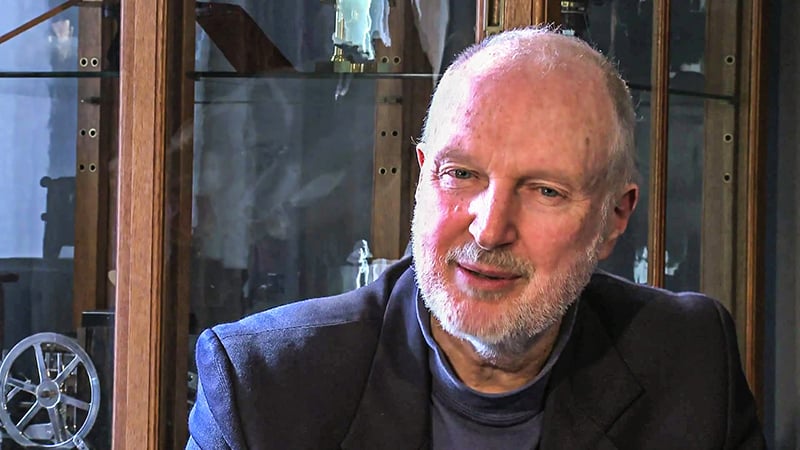
Iran: Saudi Arabia, US policy and Sunni-Shia contradictions

By Graham Fuller

• With the emergence of demonstrations and rioting in various Iranian cities earlier this month, Washington’s neoconservatives and interventionist/ imperial-minded “liberals” have been given a new lease on life in promoting their aspirations for “regime change” in Tehran. Indeed, of the three current potential global flashpoints—North Korea, Russian borderlands, and Iran in the Gulf—Iran arguably presents the most likely situation to actually turn into war.

Originally published on LobeLog and Graham Fuller’s blog


The other two regions, Russia and Korea, pose such potentially appalling nuclear dangers that, rhetoric aside, one would hope will seriously deter national leadership from contemplating.

War with Iran, on the other hand, presents no such nuclear threats. It is therefore perhaps the more dangerous situation since conflict with Iran is therefore quite “thinkable” and could potentially drag in Saudi Arabia, Qatar, Syria, Iraq, Russia, Turkey, and of course the supreme fomenter of war with Iran, Israel.

In American eyes Iran, almost by its very existence, remains a deep geopolitical affront. It humiliated the US in holding American hostages for 444 days starting in November 1979. (Grounds for Iranian anger—the US/UK 1953 coup against Iran’s first democratically elected government that put the Shah back on the throne—is all but forgotten in the US.)

Iran has consistently defied the American-constructed “international order” and continues to maintain a spirited resistance to US goals of geopolitical domination in the region. This by definition transforms Iran into a “rogue state.” And rogue states anywhere are fair game for US-directed regime change.


• • •

But the Middle East today is no longer what it was.

The character and profile of international relations there have undergone considerable change, starting at least since 9/11 and even before. This new profile markedly constrains American freedom of maneuver. Key characteristics of this new profile involve the following major shifts in geopolitics:

  • The gradual evolution of Turkey over the past 16 years from “a loyal ally of the US in NATO” into an outspokenly independent regional power; Turkey’s historic, cultural, political and economic interests today reach from Europe to Eurasia, Russia to Africa in which Washington now represents only one influence among many. Realists should note that when President Erdogan and his AK party eventually leave the scene, Turkish foreign policy will likely change very little, regardless of new leadership. It’s a different Turkey, a different ball game.
  • The return of Russia to Middle Eastern geopolitics after twenty years of impotence following the collapse of the USSR in 1991. Russia is merely reaffirming, with both skillful diplomacy and modest military input, a tradition of involvement in the Middle East that dates back centuries to the time of the Tsars. And when Putin, whom America now loves to hate, leaves the scene Russian geopolitics are unlikely to change significantly either.
  • The emergence of China as a major international player is increasingly willing to exert powerful economic incentives and a new geopolitical vision for the future of Eurasian and beyond. This reality will surely grow and Washington thinking seems to respond primarily in military terms.
  • An EU, or its individual states, are now discussing a more independent EU policy. This reflects decades-long discomfort with US policies in the Middle East, based on Washington’s unswerving support of Israel on virtually all issues, and a military-dominated foreign policy to the exclusion of diplomacy. The EU is now ready to part company with Washington on Iran.

Note that all four of the above elements have nothing to do with Trump’s presidency.

Trump has unquestionably further exacerbated global distaste for US policies, but the roots of regional shift well predate his presidency. He has simply made it easier and more plausible for Europe to part company with innumerable US policies.

The US is therefore arguably an increasingly weaker political actor; it reigns supreme militarily, but flounders in diplomatic bankruptcy. The US is in absolute decline given its longer-term crippling domestic obsessions and crises and a foreign policy largely out of touch with  world reality. But American decline must also be seen as relative to the absolute rise of other regional powers.

Add to this equation a new, invigorated and adventuristic foreign policy of Saudi Arabia under its king-to-be Muhammad bin Salman, abetted by UAE’s Crown Prince, prompting Riyadh to abandon previous characteristic caution and to intervene boldly—if failingly—in regional politics. Washington is now far less able to control or determine Saudi behavior or policies than ever.

But ideological elements also enter into this shifting scene in the Gulf.

The first such force is a kind of not very “historic” rivalry between Saudi Arabia and Iran for regional power and influence. Never mind that these two states have almost never in history been at war with each other. Yet today they represent the two major states on the two sides of the Gulf—although Iraq should not be dismissed as a Gulf power either.

And yes, since Riyadh is trying to build up a strong geopolitical case against Iran’s presence, it trumpets the threat of sectarianism—stressing that Iran is Shiite and not Sunni. Yet note that Iran’s image of Saudi Arabia rarely characterizes it in sectarian terms as a Sunni power as such, but primarily as representing a xenophobic, narrow and intolerant form of Sunni Islam, Wahhabism.

And then the fact that Iran is Persian in language and culture while Saudi Arabia is Arab adds to the list of alleged alienating factors.

But all this—sectarianism, language, ethnicity—is so much window-dressing. Arab states go to war with other Arab states vastly more often than Arabs ever have with Persians; Sunnis go to war with other Sunnis far more often than they do with Shi’a.

• • •


So what else is going on here?

It’s worth examining the true nature of the “Shiite threat.”

To a considerable extent it is a Sunni creation. Shiite Arab populations heavily populate the Arab side of the Gulf. They are minorities in every single Gulf Arab state.

Furthermore, in most states they are an oppressed minority, and above all in Saudi Arabia and Bahrain. Shi’a are both legally and traditionally discriminated against in countless ways, their religious culture reviled and isolated.

Yes, the Saudis do fear Shiites—and partly with good reason: a deeply unhappy, embittered and angry minority within the state (as such maybe12-15% of the population) can readily be turned into active enemies of the Saudi state if Riyadh continues to mishandle the situation—and there are no signs of change in Riyadh at all. So Saudi Shi’a do represent a potential fifth column.

On the other hand, If they were granted equal legal and social rights in the Kingdom, the Kingdom would have little reason to fear them or the likelihood that some of them could be recruited by Iran to act against Riyadh. But Wahhabism’s doctrinal hatred of Shiism runs so deep that one wonders if it can be overcome.

Interestingly, Iran does not pursue a “Shi’ite policy” in the region as such. Iranian religious doctrine and ideology speak in Islamic and not Shi’ite terms. It does not call itself a Shi’ite state. It has long supported Sunni Hamas in Palestine and has enjoyed good relations with the Sunni Muslim Brotherhood in the past.

There is no doubt Iran, under current conditions of isolation, often skillfully exploits Shi’ites in the region into occasional supporting roles.

But Hizballah in Lebanon and the Huthis in Yemen constitute deeply-rooted legitimate political forces within their own states and did not need to be invented by Iran. Israel and the US seek to destroy Hizballah, but Hizballah has long been an integral element in Lebanese politics and governance and is seen by many Lebanese as a barrier to Israeli aggression in Lebanon. It is not going to go away.

The more the Saudi-Israeli axis whips up anti-Shi’ite sentiment in the region, the more it actually creates a sense of solidarity among Shi’a that grows in strength to the extent that it perceives itself threatened and persecuted. Shi’ite solidarity is not a given, it is the product of Sunni attack.

Perhaps more important is the revolutionary character of Iranian ideology. It has challenged the legitimacy of kingship in Islam in the past—as do many Islamists. With Iran’s  partially authoritarian, partially democratic government and its quite real parliamentary and presidential elections it threatens those Arab autocrats who reject genuine parliaments or presidential elections, and who stand for kings-for-life.

And Iran, like Syria, has been an unceasing advocate of Palestinian rights.

• • •


Here we come to an awkward question about our own western political values. Is Iran, by dint of its genuine parliamentary and presidential elections and partially free press, more “progressive and modern” that the Saudi or UAE or Bahraini state?

If movement towards democratic institutions is the criterion the clear answer is yes, although admittedly Iran is a quite imperfect democracy: not everyone is permitted to run for office and the Supreme Leader has powerful veto powers.

But elections in Iran are surrounded by sharp debate and campaigning and a press representing multiple ideological views. Iran’s elections affect state policy mightily, as the world recognizes. Iran, not as politically and socially advanced as Turkey, but on its way, operates to a great extent as a modern state. It’s transition to greater democracy down the road will be far easier and familiar than anything in Saudi Arabia, the UAE, or Bahrain (already fairly much owned and operated by Riyadh.)

Originally published on LobeLog and Graham Fuller’s blog


So these three states plus Israel are eager to nip Iran in the bud, to bring it down, to avoid the dangerous model of transition to more open democratic rule and a genuinely vibrant public culture. These monarchs ironically are now even willing to ally with Israel if need be to protect their thrones. And they work hard to enlist Washington to crush Iran as well.

So Trump’s Washington, in which regime-change-loving neocons have powerful sway, has recently rejoiced at the demonstrations and riots within Iran. They sense blood although are almost certain to be disappointed.

Iran has a tradition of public demonstrations; indeed, it is far easier to have a demonstration in Iran than in Saudi Arabia.

Iran, like Turkey, is a socially strong and grounded nation that is moving down the road of modern institutions with a modern broad-based economy and advanced culture. It is not likely on the brink of revolution.

Iran, like Turkey, has a deeply rooted nationalist culture that is far less timid—under any ruler—than most Arab states. In any Iranian conventional military confrontation with the US there is no contest, but Iranians are masters of irregular and home-grown military solutions (much encouraged by decades of sanctions against them.)

The massively-armed but brittle armies of Saddam Hussein’s Iraq against a weak Iran in the Iran-Iraq war found out this reality to their dismay. Washington might find itself in a difficult position if it engages in war with Iran where Tehran possesses skilled unconventional force and fierce national impulses.

We should hope that the regime in Tehran will learn from these signs of domestic discontent with domestic roots —particularly economic—and take steps to alleviate problem areas.

Public pressures are supposed to work that way, even with US domestic riots and demonstrations. If Washington succeeds in provoking a war with Iran—easily concocted—the repercussions will be broad, far-reaching and long-lasting. It is a war in which the US can only  win temporarily on the ground—win the war but lose the peace. Iranian skills at irregular warfare are legend, and could well draw in other states in the periphery. But if we go looking for a war we will find it.

And finally, US neocons notwithstanding, if the present Iranian regime gives way to something less religious and more nationalist, Iran’s posture towards the US and its neighbors will probably not significantly change and could be worse. It will remain an intensely prickly nationalist state with its own national interests, as it is now even under the clerics.

• • •


It is unfortunate if the US has so far resolved to throw its weight behind an autocratic king whose state religion of Wahhabism represents the most regressive, intolerant and ultimately radical branch of Islam in existence.

Wahhabism is the ideological god-father of ISIS. Saudi Arabia is not a model for the ideal Middle Eastern state.

We should be working towards opening doors towards inclusivism with Iran rather than slamming doors and stirring up troubled waters for some fanciful regime change sought by a few nervous and retrogressive Arab kings and hard-line Israelis.


Graham E. Fuller is a former senior CIA official, author of numerous books on the Muslim World; his latest book is “Breaking Faith: A novel of espionage and an American’s crisis of conscience in Pakistan.” (Amazon, Kindle). Reprinted, with permission, from grahamefuller.com. Photo: Ayatollah Khamenei (Wikimedia Commons). More about Graham Fuller on his blog here.

Originally published on LobeLog and Graham Fuller’s blog

 

Related Posts

A friendly quarrel while we agree that the US sanctions are a weapon of mass destruction and kill more people than wars do. And that we must talk much more about sanctions than we have so far. Jan Oberg, TFF director March 16, 2026 John Mearsheimer recently stated that U.S. sanctions murdered around 38 million people between 1971 and 2021 – see the video below. It is a dramatic figure, and it has spread quickly because it captures, in one sentence, the enormous human cost of modern sanctions. I share his concern about the destructive effects of economic coercion. But the specific number he cites — and the way he attributes it — deserves a friendly academic clarification. The figure comes from a 2023 Lancet Global Health article estimating the mortality effects of unilateral U.S. and EU sanctions over the past half‑century. This is the first point where Mearsheimer’s shorthand diverges from the text: the study...
PART 2 — Diplomacy, Law and Nonviolent Power By Jan ObergTFF co-founder and director January 26, 2026 This is the second of four TFF-created idea portfolios designed to curb the global reach of the United States and, in both the short and long term, help catalyse a worldwide nonviolent resistance to what many observers describe as the Trump administration’s uniquely confrontational, destructive and world-threatening policies. These portfolios outline what governments and citizens across the world can do through dynamic diplomacy, creative initiatives, and strictly nonviolent means. They are typical TFF works in that we do not only tell what the problem is and how bad it will go – as 90+% of all commentators, experts and scholars do – we tell what we think can be done, inviting you to think of what you think you can do. It seems painfully clear to me that the current political dynamics in Washington increasingly resemble the most dangerous...
PART 1 — Media, Culture and Information Sovereignty By Jan ObergTFF co-founder and director January 20, 2026 This is the first of four TFF-created idea portfolios designed to curb the global reach of the United States and, in both the short and long term, help catalyse a worldwide nonviolent resistance to what many observers describe as the Trump administration’s uniquely confrontational, destructive and world-threatening policies. These portfolios outline what governments and citizens across the world can do through dynamic diplomacy, creative initiatives, and strictly nonviolent means. They are typical TFF works in that we do not only tell what the problem is and how bad it will go – as 90+% of all commentators, experts and scholars do – we tell what we think can be done, inviting you to think of what you think you can do. It seems painfully clear to me that the current political dynamics in Washington increasingly resemble the most...

Recent Articles

Tony Robinson October 4, 2026 Violence is easy to recognise when someone is being beaten, shot or killed. It becomes more difficult when nobody is holding a weapon. Poverty, discrimination, exploitation and repression can restrict a human life just as effectively, although they do so in very different ways and with very different consequences. Simply adding more categories to an ever-growing list of forms of violence does not really solve the problem. The more interesting question is what all these different situations have in common and why it makes sense to describe them using the same word. Human beings do not simply react to what happens around them. They remember the past, imagine things that do not yet exist, make plans and undertake projects. Workers organise because they imagine different working conditions; people migrate because they imagine another life somewhere else; social movements emerge because people refuse to accept the...
It’s a matter of principles, courage, vision and pulling together – while the militarist world is falling apart… Peter Langille October 3, 2026 “Here, then, is the problem which we present to you, stark and dreadful and inescapable: Shall we put an end to the human race; or shall mankind renounce war?”The Bertrand Russell—Albert Einstein Manifesto, July 9, 1955 ⁕ The forecast for what’s ahead is worrisome. The sharp rise in armed conflicts over the past three years is adding to what was already the highest level in over seventy years. Genocides, which should be prevented are supported. A shared climate emergency that jeopardises survival is ignored. Diverse polls now suggest that people are war-weary, worried and interested in a more effective United Nations. And, there are viable policy options for a more secure world! Yet governments are doubling-down, betting on more war and investing heavily. If current trends persist,...
Johan Galtung 1930-2024October 2015 Published here on October 3, 2026 Let us focus on Civilization for conflict analysis and remedies. Major forms of disorder use violence; war is state organized violence. The most belligerent states are the United States of America and Israel, both with civilization roots. National Evangelism, the US Protestant Christian civilization– more national than evangelical–justifies US warfare as exceptionalism of a people chosen by God, with a manifest destiny to run the world. Orthodox Judaism justifies Israeli warfare to conquer and expand from Nile to Euphrates as a religious right and duty to the Eternal One. The third most belligerent country, the UK, no longer believes it is God-chosen but chosen by the USA; not quite the same but something. But the root cause of global disorder lies in the Occident–with Islam–seeing itself as the single, universal civilization valid for all at all times, all others being...

TFF on Substack

Discover and subscribe to more peace materials on TFF Substack

Most Popular

Tony Robinson October 4, 2026 Violence is easy to recognise when someone is being beaten, shot or killed. It becomes more difficult when nobody is holding a weapon. Poverty, discrimination, exploitation and repression can restrict a human life just as effectively, although they do so in very different ways and with very different consequences. Simply adding more categories to an ever-growing list of forms of violence does not really solve the problem. The more interesting question is what all these different situations have in common and why it makes sense to describe them using the same word. Human beings do not simply react to what happens around them. They remember the past, imagine things that do not yet exist, make plans and undertake projects. Workers organise because they imagine different working conditions; people migrate because they imagine another life somewhere else; social movements emerge because people refuse to accept the...
It’s a matter of principles, courage, vision and pulling together – while the militarist world is falling apart… Peter Langille October 3, 2026 “Here, then, is the problem which we present to you, stark and dreadful and inescapable: Shall we put an end to the human race; or shall mankind renounce war?”The Bertrand Russell—Albert Einstein Manifesto, July 9, 1955 ⁕ The forecast for what’s ahead is worrisome. The sharp rise in armed conflicts over the past three years is adding to what was already the highest level in over seventy years. Genocides, which should be prevented are supported. A shared climate emergency that jeopardises survival is ignored. Diverse polls now suggest that people are war-weary, worried and interested in a more effective United Nations. And, there are viable policy options for a more secure world! Yet governments are doubling-down, betting on more war and investing heavily. If current trends persist,...
Johan Galtung 1930-2024October 2015 Published here on October 3, 2026 Let us focus on Civilization for conflict analysis and remedies. Major forms of disorder use violence; war is state organized violence. The most belligerent states are the United States of America and Israel, both with civilization roots. National Evangelism, the US Protestant Christian civilization– more national than evangelical–justifies US warfare as exceptionalism of a people chosen by God, with a manifest destiny to run the world. Orthodox Judaism justifies Israeli warfare to conquer and expand from Nile to Euphrates as a religious right and duty to the Eternal One. The third most belligerent country, the UK, no longer believes it is God-chosen but chosen by the USA; not quite the same but something. But the root cause of global disorder lies in the Occident–with Islam–seeing itself as the single, universal civilization valid for all at all times, all others being...
Read More
Living-Peace-Sign-Budapest-copy
Tony Robinson October 4, 2026 Violence is easy to recognise when someone is being beaten, shot or killed. It becomes more difficult when nobody is holding a weapon. Poverty, discrimination, exploitation and repression can restrict a human life just as effectively, although they do so in very different ways and with very different consequences. Simply adding more categories to an ever-growing list of forms of violence does not really solve the problem. The more interesting question is what all these different situations have in common and why it makes sense to describe them using the same word. Human beings do not simply react to what happens around them. They remember the past, imagine things that do not yet exist, make plans and undertake projects. Workers organise because they imagine different working conditions; people migrate because they imagine another life somewhere else; social movements emerge because people refuse to accept the...
b54a1f10-8c65-4f0b-9dd5-4abc0a7d04cc_2659x2659
It’s a matter of principles, courage, vision and pulling together – while the militarist world is falling apart… Peter Langille October 3, 2026 “Here, then, is the problem which we present to you, stark and dreadful and inescapable: Shall we put an end to the human race; or shall mankind renounce war?”The Bertrand Russell—Albert Einstein Manifesto, July 9, 1955 ⁕ The forecast for what’s ahead is worrisome. The sharp rise in armed conflicts over the past three years is adding to what was already the highest level in over seventy years. Genocides, which should be prevented are supported. A shared climate emergency that jeopardises survival is ignored. Diverse polls now suggest that people are war-weary, worried and interested in a more effective United Nations. And, there are viable policy options for a more secure world! Yet governments are doubling-down, betting on more war and investing heavily. If current trends persist,...
010
Johan Galtung 1930-2024October 2015 Published here on October 3, 2026 Let us focus on Civilization for conflict analysis and remedies. Major forms of disorder use violence; war is state organized violence. The most belligerent states are the United States of America and Israel, both with civilization roots. National Evangelism, the US Protestant Christian civilization– more national than evangelical–justifies US warfare as exceptionalism of a people chosen by God, with a manifest destiny to run the world. Orthodox Judaism justifies Israeli warfare to conquer and expand from Nile to Euphrates as a religious right and duty to the Eternal One. The third most belligerent country, the UK, no longer believes it is God-chosen but chosen by the USA; not quite the same but something. But the root cause of global disorder lies in the Occident–with Islam–seeing itself as the single, universal civilization valid for all at all times, all others being...
Screenshot 2026-10-02 011738
Jan ObergPhD, director, The Transnational Foundation for Peace and Future Research, TFFLund, Sweden October 2, 2026 This is my full original manuscript. The Chinese Academy of Social Science, CASS, makes two publications out if it. 1. China’s Five-year plan emphasized the capabilities of basic research and original innovation. It is regarded as the goal of the future social development, which, as required, should be significantly enhanced. Can you comment on the importance of original innovation in research and academic study? I believe it is easier to define “original innovation” in the natural sciences than in social sciences. The breaking points of what constitutes something new, or innovative, are not quite as sharp in the latter. But in both fields it is about opening up something that was closed, unseen, unexplored before – making manifest what was earlier latent. Innovations come in many forms and shapes – naming something that was not...
arctic-circle-map
The agreement is catastrophic both because of what it says and what it doesn’t mention. It reduces further the major asset of security policies: Freedom of action. Jan Oberg TFF director September 25, 2026 A couple of hours before the agreement was signed on September 22, 2026, I published the following 13 hypotheses about what it would most likely contain on TFF Substack (in English). I was wrong on only the first point. Contrary to what Trump had written on his Truth Social platform, it does not appear to come into force immediately. In fact, it turned out to be worse than even I had anticipated. After these hypotheses now come a number of reflections in light of what the agreement actually contains, and does not contain, as well as the way in which it has generally been presented by major media outlets and by the public-service broadcaster DR. My...
girl-5894831_1280
Below are TFF-related media mentions, comments, videos and social media posts published elsewhere but not on this homepage. We happen to catch and list only a fraction. Regarding video comments and debates, we recommend that you go to the TFF Video Channel on Substack where many of them are reproduced. Jan Oberg is a contributor to China Daily – 52 million daily clicks – and Global Times, CGTN and CCTV (the national television), China Investment, Xinhua News Agency and several others. Articles and videos on these media very often multiply into countless Chinese (and Western media) that re-post them from these main media. Thanks to The China Academy, his analyses, interviews and comments are frequently posted on YouTube channels such as Thinkers Forum and Wave Media. These videos are often re-posted on Bilibili (China’s YouTube), the China Content Center on TikTok, and on the Chinese edition of TikTok, Douyin.com. This means reaching hundreds of millions of viewers worldwide over a year. While there are too many to catch on all these...




