
Summary
North Korea and Russia may be the focus of contemporary Western fears of imminent nuclear-armed conflict but development and deployment of “useable” nuclear weapons has been a constant throughout the atomic age and by all nuclear-armed states. Current revision of the United States’ declared nuclear posture is only the most visible manifestation of adjustments to all the main nuclear arsenals, with the UK at the vanguard of deploying technologies potentially calibrated for pre-emptive rather than retaliatory strike.
Introduction
The August 2017 briefing in this series, Limited Nuclear Wars – Myth and Reality, focused on the common misconception that nuclear weapons exist as ultimate deterrents against catastrophic attack and that by maintaining the ability to retaliate they therefore deter the initial aggression. Some of the emphasis of the briefing was on the UK’s position following the Prime Minister’s firm declaration to Parliament that she was prepared to “press the button”, but this was also in the wider context of the tensions that had arisen in US-North Korean relations.
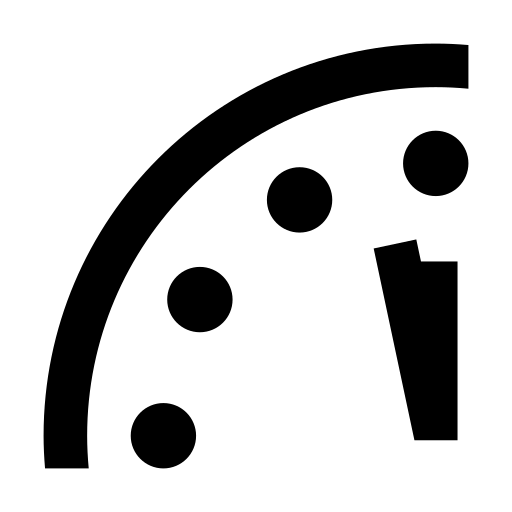
More recently, two developments have added salience to the issue. One is the leaking of details of the new US Nuclear Posture Review which points to additional circumstances that might prompt nuclear first use such as a response to a non-nuclear attack, and the other is the movement of the “Doomsday Clock” closer to midnight. In view of these developments this briefing takes a further look at the issue by placing the idea of nuclear weapons as useable weapons more fully in a longer-term context. In light of present circumstances it is critically important to raise the level of discussion about nuclear weapons and their future.
The Risk of Sliding towards Nuclear War
The Bulletin of the Atomic Scientists was started in 1945 by University of Chicago scientists who had been involved in the wartime Manhattan Project to develop the atomic bomb. Two years later the Bulletin started to publish the Doomsday Clock, a device designed to indicate how close the world was to a nuclear disaster by showing how near the minute hand of the clock was to midnight. That “gap” varied over the years, being furthest away from midnight (17 minutes) after the end of the Cold War in contrast to two minutes to midnight in the early 1950s when the United States and the Soviet Union had both developed and tested thermonuclear weapons.
In recent years, especially since the end of the Cold War, the Bulletin’s Science and Security Board has extended the risk of catastrophe beyond nuclear weapons. As the Bulletin describes the process: “The decision to move (or to leave in place) the minute hand of the Doomsday Clock is made every year by the Bulletin’s Science and Security Board in consultation with its Board of Sponsors, which includes 15 Nobel laureates. The Clock has become a universally recognized indicator of the world’s vulnerability to catastrophe from nuclear weapons, climate change, and new technologies emerging in other domains.”
Even so, this year’s moving of the clock’s hand to two minutes to midnight, is primarily through fears of a nuclear catastrophe. While the decision was made before details of US nuclear strategy were leaked, there were already indications that the strategy was moving towards a wider role for nuclear weapons, and this was compounded by the challenge presented to President Trump by North Korea’s nuclear ambitions.
Nuclear War-Fighting in the Cold War Era
The August Briefing concentrated on British nuclear attitudes but what was true of the UK was true of the much larger nuclear forces of the United States right back to the 1950s. The public perception of nuclear weapons at that time, and since, has been to see them as ultimate deterrents, and the declaratory nuclear weapons postures of the major nuclear powers has systematically endorsed this perception.
The difficulty has been that declaratory policies and actual deployment policies have never been the same, even as governments have emphasised the centrality of mutually assured destruction and the stability that follows. This contrast with military thinking was demonstrated powerfully by an exchange between Senator John Tower and General David C. Jones, then Chairman of the US Joint Chiefs of Staff, at a Senate Armed Services Committee hearing back in 1979:
“Senator Tower: General Jones, what is your opinion of the theory of mutual assured destruction?
General Jones: I think it is a very dangerous strategy. It is not the strategy we are implementing today within the military but it is a dangerous strategy…
Senator Tower: Your professional military judgement is that it is a dangerous strategy and it is not the one we should follow?
General Jones: I do not subscribe to the idea that we ever had it as our basic strategy. I have been involved with strategic forces since the early 1950s. We have always targeted military targets. There has been a lot of discussion … about different strategies. We followed orders, but basically, the strategy stayed the same in the implementation of targeting.
Senator Tower: Unfortunately I am not sure that your opinion was always shared by your civilian superiors.
General Jones: I agree that there have been some, including some in government, who have felt that all we require is a mutual assured destruction capability. I am separating that from our targeting instructions in the field…”
Even as far back as the 1950s, there are indications that US nuclear planners recognised the advantages to be gained from a first strike with nuclear weapons at a time of crisis, an outlook illustrated by a briefing from the then head of Strategic Air Command (SAC), General Curtis le May:
“Q: How do SAC’s plans fit with the stated national policy that the US will never strike the first blow?
A: I have heard this stated many times and it sounds very fine. However, it is not in keeping with United States history… I want to make it clear that I am not advocating a preventive war; however, I believe that if the US is pushed into a corner far enough we would not hesitate to strike first…” (Quoted in: D.A.Rosenberg, “A Smoking, Radiating Ruin at the end of Two Hours: Documents on American Plans for Nuclear War with the Soviet Union, 1954-55”, International Security, 6, 1982, pp.3-38.)
From the late 1950s to the 1980s the United States produced what were termed Single Integrated Operational Plans (SIOPs) to guide nuclear war-fighting, which reached their peak by the end of the 1980s and the closing years of the Cold War.
By 1983 the London-based International Institute for Strategic Studies (IISS) could publish an analysis of SIOP-5 by the Australian strategic analyst, Desmond Ball, which could report that as a result of the evolution of the plans and the US nuclear arsenal, “…the US target plans for strategic nuclear war are now extremely comprehensive. The current version of SIOP-5 includes more than 40,000 potential target installations, as compared to about 25,000 in 1974.”
In relation to first use, he further commented that “Special categories of targets have also been delineated for pre-emptive attacks against the Soviet Union and for launch-on-warning (LOW) or launch under attack (LUA) scenarios in the event of unequivocal warning of Soviet attack. (D.Ball, Targeting for Strategic Deterrence, Adelphi Paper Number 185, IISS, London, 1983.)
After the Cold War
The utility of nuclear weapons continued to engage the nuclear planners after the demise of the Soviet bloc. In 1992 the Joint Strategic Target Planning Staff commissioned former Air Force Secretary Thomas C. Reed to assess the changing global strategic environment.
A draft of the subsequent “Reed Report” was leaked and included among its proposals the establishment of a so-called nuclear expeditionary force “primarily for use against China or Third World targets”. Some of the language used was indicative of the bullish mood at the time, with the collapse of the Soviet bloc and the defeat of Iraq in 1991, and not unlike the attitude of President Trump, when it argued that “the growing wealth of petro-nations and newly hegemonistic powers is available to bullies and crazies, if they gain control, to wreak havoc on world tranquillity”
The UK also reserves the right to use nuclear weapons first and to envisage limited nuclear use, and one of the more detailed assessments of the range of options for the low-yield (“sub-strategic”) variant of the Trident warhead was made just a couple of years after the Reed Report in the authoritative military journal Jane’s International Defence Review in 1994:
At what might be called the “upper end” of the usage spectrum, they could be used in a conflict involving large-scale forces (including British ground and air forces), such as the 1990-91 Gulf War, to reply to an enemy nuclear strike. Secondly, they could be used in a similar setting, but to reply to enemy use of weapons of mass destruction, such as bacteriological or chemical weapons, for which the British possess no like-for-like retaliatory capability. Thirdly, they could be used in a demonstrative role: i.e. aimed at a non-critical uninhabited area, with the message that if the country concerned continued on its present course of action, nuclear weapons would be aimed at a high-priority target. Finally, there is the punitive role, where a country has committed an act, despite specific warnings that to do so would incur a nuclear strike. (David Miller, “Britain Ponders Single-warhead Option”, International Defence Review, September 1994)
Three of these four circumstances envisaged involve the first use of nuclear weapons by the UK.
The Current Context
The idea of fighting and even winning a nuclear war remains very largely outside any public discussion about nuclear weapons, which is why the moving of the minute hand of the Doomsday Clock closer to midnight and the reports of the US nuclear strategy extending potential nuclear first use are so significant.
With the Bulletin’s access to so many Nobel laureates and its unparalleled experience of assessing global risks its considered view is that we face the most dangerous period since the development and testing of the H-bomb 65 years ago.
Where the new US nuclear posture review comes in is that it extends the circumstances in which the United States might respond to a non-nuclear attack, such as a cyber-attack on critical infrastructure, with a nuclear strike.
Moreover, this is when new nuclear weapons systems are being planned by the United States including a low yield nuclear warhead for the Trident submarine-launched ballistic missile, which itself is being fitted with a new fusing system that substantially increases its destructive potential against well-protected targets like missile silos or bunkers. The result is to make US and British nuclear weapons seem more useable in a first strike to “disarm” a nuclear-armed opponent.
It is important to point out that this move towards the concept of fighting limited nuclear wars is by no means restricted to the United States. It certainly applies to Russia, Britain, France and Pakistan and quite probably to the other nuclear-armed states – China, India, Israel and North Korea. The UK was well ahead of the US in fitting low-yield “sub-strategic” warheads to its Trident missiles in the 1990s and has reportedly also adopted the new fusing system.
Furthermore, Belgium, the Netherlands, Germany, Italy and Turkey all remain partners in the deployment of the US’ B61 nuclear bomb in time of war and the new variant, the B61 mod 12, has a tail assembly which enables it to act as a highly accurate low yield glide bomb, designed for use in a limited nuclear attack in Europe. Russia and Pakistan have both embraced an “escalate to de-escalate” posture of “battlefield” use of nuclear weapons to try to offset the advantages of more powerful neighbours.
Even so, the US changes come at a time of an unusual incumbent in the White House. Commenting on the changes, Andrew C. Weber, an Assistant Secretary for Defense in the Obama administration, said “Almost everything about this radical new policy will blur the line between nuclear and conventional”, and he added that, if adopted, the new policy “will make nuclear war a lot more likely”.
Conclusion
During the Cold War there was a small risk of a sudden nuclear war between NATO and the Warsaw Pact, a war that would have been global and utterly catastrophic. In a sense the world was on the edge of a precipice and the evidence that has emerged in recent years about some of the crises that so nearly went disastrously wrong shows that we were lucky to avoid that catastrophe.
The risk now is that we are on a slippery slope towards “small nuclear wars in far-off places”, which themselves could either escalate or at the very least break the 70+ year taboo on treating nuclear weapons as useable.
It is far more difficult to alert people to the slippery slope unless they are in or near one of those “far-off places” but it is just as important and is given even greater urgency by the Doomsday Clock decision.
Action is needed at a number of levels, starting with the need to raise the level of public debate on these issues, across the world but especially in the nuclear-armed states. In many cases, people in particular countries may have specific roles to play.
In the UK a priority should be for the government to embrace a policy of no first use of nuclear weapons, not least because this will mean that NATO’s nuclear posture gets much wider scrutiny and discussion.
It should also accept, at least in principle, that the UN Treaty on the Prohibition of Nuclear Weapons is the right way forward and it should take further steps to limit the UK’s nuclear forces and make any process of even partial denuclearisation fully transparent.
The UK government should also use all its best endeavours, not least in Washington DC, to encourage dialogue with North Korea to counter the current unstable relationship that is the most substantial immediate risk of a nuclear conflict.
Image credit: Ryanicus Girraficus/Wikimedia Commons
About the Author
Paul Rogers is Global Security Consultant to Oxford Research Group and Professor of Peace Studies at the University of Bradford. His ‘Monthly Global Security Briefings’ are available from our website. His latest book Irregular War: ISIS and the New Threats from the Margins was published by I B Tauris in June 2016. These briefings are circulated free of charge for non-profit use, but please consider making a donation to ORG, if you are able to do so.
Copyright Oxford Research Group 2018.
Some rights reserved. This briefing is licensed under a Creative Commons Attribution-NonCommercial-NoDerivs
Availability
Our publications are circulated free of charge for non-profit use, but please consider making a donation to ORG, if you are able to do so.







One Response
The world cannot remain indifferent to such threats to the survival of humanity. We must raise our voices before it is too late. Peace lovers of the world must defeat the militarists.