Ethnic minorities expert Barry Sautman gives his take on education, the next Dalai Lama, Han chauvinism and Beijing’s treatment of Uygurs
September 24, 2024
Barry Sautman is a professor emeritus at the Hong Kong University of Science and Technology’s Division of Social Science and visiting professor at Tsinghua University. An expert on China’s ethnic minorities, particularly the Tibetan and Uygur communities, his research focuses on minority rights, cultural preservation and social change. This interview first appeared in SCMP Plus.For other interviews in the Open Questions series, click here.
This article/interview was first published by the South China Morning Post on September 23, 2024
What drew you to ethnic minority issues in China?
I’d been to Xinjiang perhaps three or four times many years ago. I was concentrating on a particular subject, which was preferential policies. At that time I was studying them broadly, going to different minority areas including Tibet, Xinjiang, Guizhou, Sichuan, Inner Mongolia. That was in the late 1990s and the beginning of the 2000s.
From that I got interested in ethnic minority policies more generally because there was a debate in China about them.
Some said preferential policies and ethnic policies were not broad enough and they weren’t directed sufficiently to closing the socioeconomic gaps that existed between Han people and minority people.
The other side was people who said that basically ethnic regional autonomy had created a vested interest on the part of minority officials particularly.
The debate intensified after 2008, 2009 because in 2008 there were the demonstrations in Tibet, and then in 2009 there were the [riots] in Urumqi.
The people who are in favour of reform of the system of ethnic regional autonomy and the diminution of preferential policies then started to have the upper hand in the debate.
So as a result of that, there have been some significant changes and preferential policies in some places have diminished.
For example, the system of “additional points” [given to ethnic minorities in college entrance exams] has diminished in some provinces but in places like Xinjiang it’s still pretty strong.
This is absolutely necessary in my view because the whole goal is to create more ethnic minority students, particularly from Xinjiang and Tibet, but also from other areas where the ethnic minority population is still quite rural, still has a substantial number of people who are relatively poor and has lower levels of education. So these places need to have lots of people from their community go to university, get training, come back to their areas and help them in terms of economic and social development.
Have you seen any big policy shifts in the past five to 10 years under the banner of building “a strong sense of community for the Chinese nation”?
There has been a shift but it’s quite variegated – it all depends upon what part of China you’re talking about.
In some places, there’s been quite a significant shift in terms of no longer putting so much emphasis on ensuring either that there be a significant core of ethnic minority officials or that ethnic minority languages be central to the educational process in ethnic minority areas. It was also the subject of controversy in Inner Mongolia [where] there is no longer any requirement that ethnic minority languages be taught in schools.
Mongolians protest Beijing’s language policy in Inner Mongolia as Chinese foreign minister visits
It’s still the case that in some places there are continuations of the programmes of teaching people their own indigenous language, their mother tongue. At a lot of boarding schools, for example, in Tibet or in Xinjiang, the Tibetan students or Uygur students are going to have maybe three, four, five hours a week of Tibetan or Uygur.
But in other places, it just depends. Such programmes have been discontinued. For example, a primary school [in Kashgar], one of the things they told us was starting last year, they no longer had any special classes in Uygur language for the primary school students. And this is because the parents overwhelmingly rejected the idea. They want their children to concentrate on learning biology and mathematics and Mandarin. They didn’t want them to spend their time [learning Uygur]. Of course, all these students were Uygur and they’re in a city where 84 per cent of the population is Uygur, so they’re not going to forget how to speak Uygur. They speak Uygur every day at home and to their classmates. But in terms of learning how to read and write Uygur, nobody’s teaching them now.
Their parents are less interested. They are urban people and they want their children to be competitive in terms of going to a good middle school and then going to a good high school and then going to university, et cetera.
But this remains a concern among some minority intellectuals. They think it’s really necessary to preserve not only speaking ability in their languages, but also reading and writing so they can have access to the literature of their ethnic groups.
Let’s talk about Tibet. The Dalai Lama turned 89 in July and he’s hinted that he will address the issue of his reincarnation when he turns 90. How should Beijing prepare for this, and what are the biggest challenges for Beijing, the Dalai Lama and his exiled government?
China has been preparing for this for decades. The central government will not just allow the Dalai Lama to name his successor without reacting to that by doing something significant.
The odds are [the Dalai Lama’s preferred candidate] will be somebody outside because [if it’s] somebody inside Tibet, he’s going to be under the surveillance of the local authorities, and he may not have any opportunity to take up his office. But nobody knows whether the Dalai Lama will name a man or a woman, a Tibetan or a non-Tibetan, a child or an adult.
All we can conceive with some assurance is that the central government will definitely try to counter whatever the Dalai Lama does.
There’s some rumours that the Dalai Lama will name an adult as a successor, despite the past practice of naming a child of four or five. Naming an adult has some advantages for the Tibetan émigrés of course, because the child will have to be studying Buddhism for many years. So there’s at least going to be a 10-year hiatus where the successor named by the Dalai Lama really can’t be taken seriously as a leader because he’s a kid.
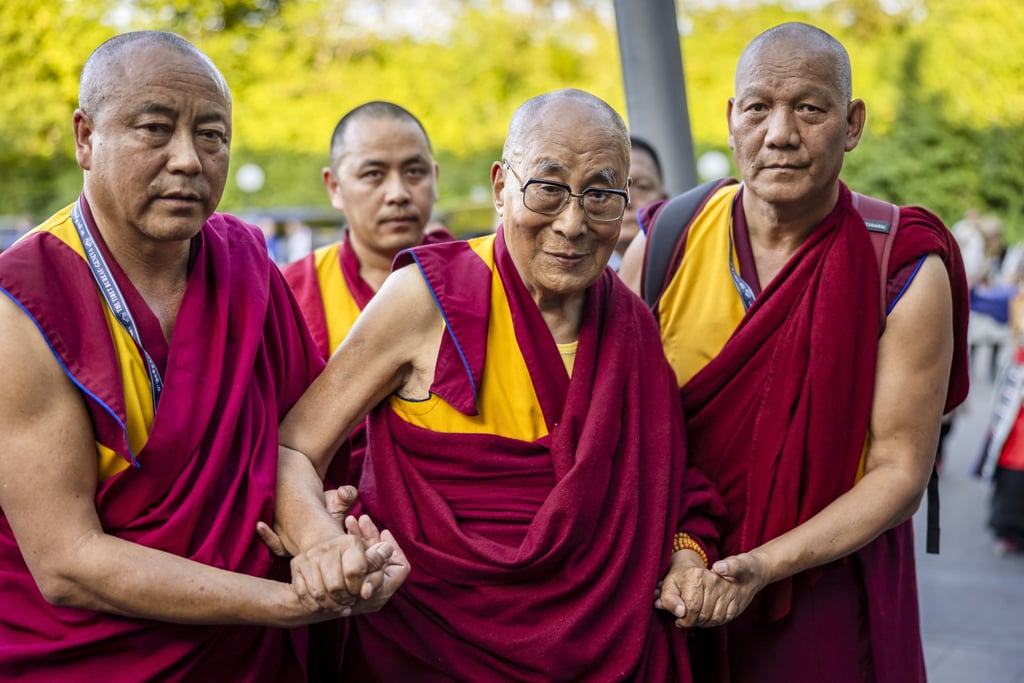
So if that happens, first of all, the Chinese government will denounce the Dalai Lama for diverging from the practice of naming a new Dalai Lama. The normal practice is a lottery: you wrap the names of candidates in a ball of tsampa [flour made from roasted barley], you put it in an urn, you have somebody pick out the winner. If it names its own Dalai Lama, the central government will probably name a kid and go through that ceremony.
There are lots of rinpoches, or reincarnated Buddha, now in Tibet who are quite loyal to the government, and they don’t care much about the Dalai Lama any more, at least not openly.
For one thing, the Dalai Lama hasn’t been in Tibet since 1959. The Dalai Lama is no longer a commanding presence among Tibetans generally. I think most Tibetans have heard of him, but they don’t know much about him. And unless they’re very devout, they probably don’t care that much about him either any more.
Plus, Tibet has also been transformed economically and the level of education has gone up tremendously. A lot of Tibetans actually do think of themselves as being Tibetan and Chinese, or Chinese Tibetans anyway. They think of themselves now as part of China, and they don’t hate Han people.
There was a period when there was a significant part of the Tibetan population, at least in Lhasa, who had a hostile attitude towards Han people. But that seems to have significantly subsided.
That’s because now Tibetans are much more closely connected to the rest of China, not just in the literal sense of trains and planes, but mostly through language. Now a large part of the urban Tibetan population can speak Mandarin. And they have gone much further in the school system than they would have in the past, and there are a lot more Tibetan professionals. So all of this makes things radically different from even, say, in 2008 at the time of the demonstrations in Lhasa and in several other cities in Tibet.
Boarding schools in Tibet – pretty much all of them I think – have maybe five hours a week of Tibetan language instruction. So those people are taught to read and write Tibetan. They must learn Mandarin as well … the children are completely bilingual. So it’s not the same situation as the primary school in Kashgar I described earlier.
Lhasa’s building boom raises concern about income gap in capital of China’s Tibet autonomous region
Do you see global attention on Tibet waning as the issue of Xinjiang has come up? Will it wane further with the passing of the current Dalai Lama?
I think if the Xinjiang issue didn’t exist at all, the Tibet issue would still fade.
Most people in the West know nothing about Tibet. But a lot of people have heard the name Dalai Lama, and they are mistaken about the Dalai Lama in the sense that most people think the Dalai Lama is the world leader of Buddhism, which of course he isn’t.
He might be called the head of Tibetan Buddhism but at most he’s really just the head of its Gelug [yellow hat] school. But there are 12 million Tibetan Buddhists in the world and there are 250 million or more Buddhists in total.
When the Dalai Lama is no longer around, the Tibet issue will almost recede into oblivion.
The Tibet issue was very much around the Dalai Lama’s personality, and of course he was framed in a certain way … as being this sort of childlike adult, very friendly and effusive and laughing and telling stories and being kind and all that.
I interviewed him once before … in the 1990s. He was a nice guy, but maybe now his image is no longer the same. He’s seen as somebody who can’t get around any more, and also there was the incident about him kissing this young boy. I think given the current perspective that people have about such matters that, at least in some quarters, he’s going to be a bit discredited as a result of that.
Dalai Lama back in the public eye after ‘suck my tongue’ video controversy
You’ve recently been to Xinjiang. In the current climate, how did it compare to earlier trips in terms of carrying out research and people’s lives?
One thing is it’s more difficult to talk to people. Foreigners can go to Xinjiang without any special permission, in contrast to Tibet. But to actually interview people is another matter – especially to get access to officials.
The first time I went to Xinjiang – in the late 1990s, early 2000s – I went to Kashgar. I wanted to interview an official from the education department, and I had a reference letter from the State Ethnic Affairs Commission. But I went to the office of this official and he just picked up a newspaper and started reading it. He wouldn’t talk to me at all.
I also interviewed the head of the Religious Affairs Bureau in Kashgar. He had just got back from the Hajj – he’s Uygur of course – and I showed my reference letter. He said, “I’ll answer any question you want.” I was really surprised. No official ever says that. He said, “I’m close to retirement.” He’s a member of the Communist Party, but he was saying that.
But nowadays, I think it’s more difficult because lots of people, particularly officials, are cautious about how they interact with outsiders. I’m the ultimate outsider since I’m a foreigner. But I think they’re cautious even with regard to people from the mainland who come to Xinjiang. And they’re even cautious with people who are Xinjiang locals at Xinjiang institutions because everything is so sensitive there now. Researchers just really have no confidence any more that they can do their research and be assured that they’ll be allowed to get the data they need. And this is even more true with regard to statistical data. It’s really a big problem now.
What do you think of international criticism of China’s minority policies?
All these claims made about Uygur genocide, or forced labour, arbitrary detentions – basically they have no cases to present with regard to any of those claims. There’s absolutely no evidence of any person being forced to labour.
As for arbitrary detention, well, there certainly were a lot of people detained and many people imprisoned, and some of them given quite long prison sentences. But this was an anti-terrorism campaign. This was also an anti-separatist and anti-religious extremism campaign.
Uygur woman describes torture in China’s Xinjiang ‘vocational training’ camps
And the terrorism in Xinjiang was very real. Although the government has really only talked about hundreds of people being killed by terrorists, every scholar I’ve talked to says that this is a gross underestimate – that actually thousands of people were killed by terrorists.
Different governments of course act in different ways in anti-terrorist campaigns. Terrorists of Isis, al-Qaeda are still very much around, still carrying out terrorist attacks in many places in the world. China basically defeated the terrorists in Xinjiang, and it defeated them by some degrees of repression. That’s true. They mobilised the army, they mobilised armed police, the Public Security Bureau.
The main method was to try to do something to alleviate the conditions which create terrorism, religious extremism and separatism. So they constructed these vocational educational training centres, which people in the West love to call concentration camps, internment camps, detention centres. But actually, none of this is accurate in terms of describing what was done in those places.
And they only existed from April of 2017 to October of 2019, after which they were closed down.
The centres had three missions. One was to teach people Mandarin – they learn some rudimentary standard Chinese. They were also taught about laws that they’re supposed to obey – stay away from religious extremism, terrorism, separatism. And then there were vocational skills – there were eight primary vocational skills that were available.
The people who went through that system – and they may or may not have been happy about going through it – some of them were sent there because they had violated laws. Other people were sent there just because they were suspected of being religious extremists.
Why China is keeping a tight grip on Xinjiang
How do you think China’s handling of the Xinjiang issue will impact its relationship with Central Asian and Middle Eastern countries and its Belt and Road Initiative?
For Xinjiang, what’s most important in terms of the Belt and Road Initiative are the neighbouring Central Asian countries.
What’s interesting in that regard is that the governments of Central Asia have a harder line than even China does against terrorism, against Islamic fundamentalism.
Now these are all Muslim countries, but their governments are dead set against religious extremism because they realise that there’s a direct relationship between adopting Salafist religious views – Salafism being the Islamic fundamentalist school of thought – and becoming a member of Isis or al-Qaeda or some other terrorist organisation.
So take for example this question of suppressing women wearing burkas in Saudi Arabia. China since 2014 has suppressed that. They’ve also suppressed men having long beards. Where did China get this idea? Directly from the Central Asian countries which passed laws earlier than China’s law about this. In Tajikistan, in Kazakhstan, Uzbekistan, people have been arrested for having long beards. People in China have also been arrested, but they’ve been treated much more leniently in Xinjiang than people are treated in Central Asia. Most people are just given a warning and then they obey it. They cut their beard shorter and women will no longer wear burkas.
These governments have a much more repressive outlook with regard to terrorism than even the authorities do in China. Authorities in China are dead set on ensuring that there are no longer terrorist incidents and they’ve been quite successful – there hasn’t been any recorded terrorist incident for seven years in Xinjiang.
Do you think Han chauvinism still exists today, and if so how does it impact minority relations?
Definitely. The main way I think it still exists today is online. And unfortunately I think the government doesn’t do enough to suppress Han chauvinism. It should be taking down posts and it should even be arresting people if they advocate discrimination against ethnic minority people. After all, there’s a law in China against that. So Han chauvinism definitely still exists, and it still very much revolves around the idea that ethnic minority people are backward.
The proportion of people in the Han population who are Han chauvinists has actually diminished. In part, that is because the government does at least promote the idea that there’s a Zhonghua minzu [Chinese nation]. So that includes Han people and minority people.
Looking ahead, are there any areas of minority policy where Beijing might make concessions or reforms?
It’s difficult to predict but I don’t think there will be any major changes, because I think major changes have already been made.
The main thing that will probably be done in terms of the minority areas is that there will be even bigger inputs to socioeconomic development. The Chinese government – while it’s certainly not an egalitarian operation – nevertheless does have the idea that they want to reduce the very significant differences that still exist between the west and the east, between minority areas and Han areas, and I think they’ll continue to do that.
Certainly there should be a major change in the leadership of the party and state in terms of minority people. It is not good that the Politburo – 25 people – is, first of all, male, and second of all, Han. This is a major embarrassment. There’s very considerable scope for changing the nature of the top leadership to incorporate more women and more minority people. So maybe that will happen, but unfortunately it probably won’t any time soon.