
What Dani Dayan says and why it is interesting

[Note: I have revised the first paragraph of this post to take some note of comments addressed to the original version, and in light of my own further thoughts]

Dani Dayan’s article, “Israel’s Settlers Are Here to Stay,” was published by the NY Times on July 26, 2012. Dayan is the chairman of the Yesha Council of Jewish Communities, and has been long known as a leading spokesperson of the settler movement.

An obvious response to such a settler screed might be to dismiss it out of hand as an extremist expression of Israeli views, which it certainly is, but it would seem a mistake to do this before taking some account of its content and timing. The moral and legal premises that underlie Dayan’s insistence that the settlers will never leave the West Bank are without substance, but the political arguments he puts forward are so strong as to be virtually irrefutable.

It may also be worthwhile to speculate as to why Dayan decided to drop this bombshell into the midst of the American electoral maelstrom as a kind of trial baloon at this time and why the NY Times, so normally careful about such matters, opened up its opinion page to views so at odd with mainstream thinking that has prevailed for decades about how to resolve the conflict. How Netanyahu stands on these issues is a bit of a mystery. Although he has backed the creation of a Palestinian state in recent years, he has also generally supported the settler movement and has not yet repudiated the recent Levy Report that reached conclusions that I would imagine that Dayan welcomes.

Dayan’s first premise contends that the settler movement is entitled to the territory obtained in 1967 because it was the Palestinians who at the time were threatening Israel with the prospect of annihilation and it was Israel that acted in self-defense whereby it came into the possession of the West Bank and the whole of Jerusalem.

This is a position lacking traction among almost all international law specialists, increasingly contested by diplomatic historians as to the actual sequence of events in 1967, and politically rejected shortly after the fact by the entire international community, including the United States.

This rejection was expressed in the authoritative and unanimous UN Security Council Resolution 242 passed in 1967 calling for an Israeli withdrawal from the territories that had been occupied in the Six Day War. No Israeli leader, including even the rejectionist Netanyahu, has openly challenged this line of interpretation, although the settler movement from its origins has fed off Israeli ambivalence as to whether a peace agreement was really in Israel’s interest if it meant the substantial return of the territories occupied in 1967.

The Israeli de facto compromise was to endorse the two state consensus by incremental stages, but simultaneously to engage in a concerted variety of actions that made its implementation increasingly implausible from the perspective of practical politics.

It is astonishing that most governments in the world and the highest officials at the UN have chosen to disregard this implausibility up to this very moment. What Dayan is in effect telling the world is that the realities of the situation make it hypocritical and useless to keep pretending that a negotiated peace between the parties is, or ever was, a political option.

In his opinion, there are now too many settlers with no intention to leave ever, and most apparently not susceptible to bribes having forgone profitable opportunities to sell their settlement property in the past. Dayan tellingly points out that it was nearly impossible for the pro-settler Sharon government to get 8,000 settlers to leave Gaza in 2005, making the idea of removing the 350,000 settlers now living in the West Bank (expected to rise to 400,000 by 2014), 160,000 of whom are outside the settlement blocs, a misguided pipedream, or in Dayan’s words, “exponentially more difficult” and hence their presence “in all of Judea and Samaria..is an irreversible fact.”

Can any responsible person doubt the force of Dayan’s reasoning on this central issue?

Dayan develops his argument by invoking a combination of “inalienable rights” and a “realpolitik” favorable to settler claims. I find Dayan convincing from a realpolitik perspective, given the realities of the current balance of forces in Israel/Palestine, in the region, and in the world, although this could prove to be short lived.

In contrast, Dayan is totally self-serving and one-sided when he also claims that inalienable rights support his conception of Greater Israel. Such a claim overlooks the relevance of the generally accepted reading of Article 49(6) of Geneva Convention IV that prohibits an occupying power from transferring its population to an occupied territory or altering the character of an occupied society.

Dayan’s views also seem blind to the immorality of displacing the Palestinian people who have lived on these lands for centuries even if one grants the underlying Zionist claim to a homeland in historic Palestine. The fact that the Palestinian leaders and the neighboring Arab governments rejected the UN endorsed partition plan back in 1948 does not mean that the Palestinian people implicitly waived or lost their right to self-determination, which is genuinely inalienable.

And it certainly doesn’t mean that Palestinians can be doomed to live indefinitely under apartheid conditions as a rightless, subjugated minority (that might soon be a majority), remembering that apartheid is enumerated as one instance of crimes against humanity in the statute of the International Criminal Court. There are, to be sure, inalienable rights, but they belong to the Palestinians, and certainly not to the settlers.

Dayan refers to the West Bank throughout as “Judea and Samaria,” their biblical names in Jewish tradition, apparently as a way of signaling his defiance of world public opinion as to the status of the territories. Again we can at least welcome this brazen expression of honesty, not hiding behind evasions and linguistic ambiguities as Israeli diplomats have tended to do over the years when it comes to acknowledging the significance of continuously expanding the settlements, creating a network of expensive settler roads, and building the separation wall while still affirming their readiness to negotiate the formation of an independent Palestinian state.

Dayan minces no words, insisting that a Palestinian state between Jordan and Israel would always have been an unsustainable security disaster for Israel. Such a Palestinian state would quickly fall under the control of Hamas as it became a place of refuge for hundred of thousands of embittered Palestinians who have been living in refugee camps for almost 65 years.

According to Dayan, such a Palestinian state would be a crucible of anti-Israeli extremism that would inevitably prompt Israeli military reoccupation. This makes some sense once more from an Israeli realpolitik viewpoint, but its implications for the Palestinians is so manifestly unacceptable as to make its a declaration of total and permanent war against Palestinian hopes, aspirations, and rights. Maybe for this reason such a logic as espoused by Dayan has rarely been articulated outside of Israel.

To be fair, Dayan does not entirely brush aside considerations bearing on Palestinian well-being. To his credit, he does not even discuss, much less support, ethnic cleansing, to ensure the maintenance of Jewish identity in a democratic polity. Dayan seems content to endure an eventual Palestinian majority population so long as the Israelis are in control, that is, Israeli domination is apparently sufficient for security, and this outweighs the search for democratic legitimacy.

Without raising the question of Palestinian rights, Dayan claims that the Palestinian Authority is not dissatisfied with the status quo, and that Palestinian economic development is proceeding in areas under their control, especially in and around Ramallah. Furthermore, if Palestinians would only give up their futile resistance, Dayan says that most checkpoints could be removed. His ‘solution’ for the refugee problem is to improve the conditions in the camps, which he acknowledges as wretched.

To think that this is morally, legally, or politically adequate is to understand how far from accepted ideas of justice Dayan strays while seeking to convince readers that not only is the occupation over but that all can be made to be okay even for the Palestinians.

Why should not this assault of human dignity be merely refuted and cast aside as confirmation of just how extremist and bold the settler movement has become? There are several reasons for a more reflective response.

Most importantly, Dayan’s analysis demolishes the existing unquestioned diplomatic framework that has locked Palestinian dreams into an endless nightmare of oppression and futility. By doing this, he opens the way to a necessary dialogue as to what kind of solution can be plausibly put in place of the two-state consensus?

Less significantly, he lends credibility to arguments from critics, such as myself, of the peace process as foisting a cruel deception on the Palestinians and public opinion, while the settlement time bomb is allowed keep on ticking without being defused.

Also, perhaps, whether deliberately or not, the NY Times by highlighting Dayan’s views so outrageously at odds with its consistent editorial position over the years, has decided belatedly to acknowledge that a new set of realities pertains to the Israel/Palestine conflict.

Maybe this august newspaper that never strays too far from the Pentagon/State Department line on Middle East foreign policy received a midnight signal from Washington that it was time to start a new debate on how to depict the conflict or even to begin the difficult task of envisioning the shape and auspices of a new peace process.

Of course, to dump such a smoke bomb into the midst of an already confusing presidential electoral campaign seems so strange as to make one wonder whether the NY Times opinion gatekeepers, normally so vigilant, may have on this occasion been caught sleeping, allowing Dayan’s radical dissent from the liberal conventional wisdom of the newspaper to slip by unnoticed.
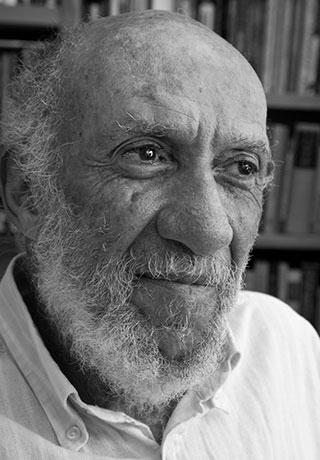

Professor Falk became an adviser to TFF when it was established in 1985.

Related Posts

The agreement is catastrophic both because of what it says and what it doesn’t mention. It reduces further the major asset of security policies: Freedom of action. Jan Oberg TFF director September 25, 2026 A couple of hours before the agreement was signed on September 22, 2026, I published the following 13 hypotheses about what it would most likely contain on TFF Substack (in English). I was wrong on only the first point. Contrary to what Trump had written on his Truth Social platform, it does not appear to come into force immediately. In fact, it turned out to be worse than even I had anticipated. After these hypotheses now come a number of reflections in light of what the agreement actually contains, and does not contain, as well as the way in which it has generally been presented by major media outlets and by the public-service broadcaster DR. My...
Below are TFF-related media mentions, comments, videos and social media posts published elsewhere but not on this homepage. We happen to catch and list only a fraction. Regarding video comments and debates, we recommend that you go to the TFF Video Channel on Substack where many of them are reproduced. Jan Oberg is a contributor to China Daily – 52 million daily clicks – and Global Times, CGTN and CCTV (the national television), China Investment, Xinhua News Agency and several others. Articles and videos on these media very often multiply into countless Chinese (and Western media) that re-post them from these main media. Thanks to The China Academy, his analyses, interviews and comments are frequently posted on YouTube channels such as Thinkers Forum and Wave Media. These videos are often re-posted on Bilibili (China’s YouTube), the China Content Center on TikTok, and on the Chinese edition of TikTok, Douyin.com. This means reaching hundreds of millions of viewers worldwide over a year. While there are too many to catch on all these...
Jan Oberg May 15, 2026 Go to this Fox News page and scroll the whole way down: President Donald Trump tells the world that his meeting with President Xi Jinping yielded a lot of very concrete political and economic results – of course, only where the Chinese side, according to him, agreed with him. He does not mention the Taiwan issue, but Secretary of State, Marco Rubio, says that it did not feature prominently in their talks and that the US policy on Taiwan has not changed. Then go to China Daily – or Global Times – and you will see that for the Chinese it is framework, principles, structure of cooperation etc. that matters – all embedded in the overall idea of “constructive bilateral relationship of strategic stability.” Nowhere is any concrete agreement or deal – all that Trump refers to – mentioned. At the general level, this gives you insights into the very different social...

Recent Articles

Tony Robinson October 4, 2026 Violence is easy to recognise when someone is being beaten, shot or killed. It becomes more difficult when nobody is holding a weapon. Poverty, discrimination, exploitation and repression can restrict a human life just as effectively, although they do so in very different ways and with very different consequences. Simply adding more categories to an ever-growing list of forms of violence does not really solve the problem. The more interesting question is what all these different situations have in common and why it makes sense to describe them using the same word. Human beings do not simply react to what happens around them. They remember the past, imagine things that do not yet exist, make plans and undertake projects. Workers organise because they imagine different working conditions; people migrate because they imagine another life somewhere else; social movements emerge because people refuse to accept the...
It’s a matter of principles, courage, vision and pulling together – while the militarist world is falling apart… Peter Langille October 3, 2026 “Here, then, is the problem which we present to you, stark and dreadful and inescapable: Shall we put an end to the human race; or shall mankind renounce war?”The Bertrand Russell—Albert Einstein Manifesto, July 9, 1955 ⁕ The forecast for what’s ahead is worrisome. The sharp rise in armed conflicts over the past three years is adding to what was already the highest level in over seventy years. Genocides, which should be prevented are supported. A shared climate emergency that jeopardises survival is ignored. Diverse polls now suggest that people are war-weary, worried and interested in a more effective United Nations. And, there are viable policy options for a more secure world! Yet governments are doubling-down, betting on more war and investing heavily. If current trends persist,...
Johan Galtung 1930-2024October 2015 Published here on October 3, 2026 Let us focus on Civilization for conflict analysis and remedies. Major forms of disorder use violence; war is state organized violence. The most belligerent states are the United States of America and Israel, both with civilization roots. National Evangelism, the US Protestant Christian civilization– more national than evangelical–justifies US warfare as exceptionalism of a people chosen by God, with a manifest destiny to run the world. Orthodox Judaism justifies Israeli warfare to conquer and expand from Nile to Euphrates as a religious right and duty to the Eternal One. The third most belligerent country, the UK, no longer believes it is God-chosen but chosen by the USA; not quite the same but something. But the root cause of global disorder lies in the Occident–with Islam–seeing itself as the single, universal civilization valid for all at all times, all others being...

TFF on Substack

Discover and subscribe to more peace materials on TFF Substack

Most Popular

Tony Robinson October 4, 2026 Violence is easy to recognise when someone is being beaten, shot or killed. It becomes more difficult when nobody is holding a weapon. Poverty, discrimination, exploitation and repression can restrict a human life just as effectively, although they do so in very different ways and with very different consequences. Simply adding more categories to an ever-growing list of forms of violence does not really solve the problem. The more interesting question is what all these different situations have in common and why it makes sense to describe them using the same word. Human beings do not simply react to what happens around them. They remember the past, imagine things that do not yet exist, make plans and undertake projects. Workers organise because they imagine different working conditions; people migrate because they imagine another life somewhere else; social movements emerge because people refuse to accept the...
It’s a matter of principles, courage, vision and pulling together – while the militarist world is falling apart… Peter Langille October 3, 2026 “Here, then, is the problem which we present to you, stark and dreadful and inescapable: Shall we put an end to the human race; or shall mankind renounce war?”The Bertrand Russell—Albert Einstein Manifesto, July 9, 1955 ⁕ The forecast for what’s ahead is worrisome. The sharp rise in armed conflicts over the past three years is adding to what was already the highest level in over seventy years. Genocides, which should be prevented are supported. A shared climate emergency that jeopardises survival is ignored. Diverse polls now suggest that people are war-weary, worried and interested in a more effective United Nations. And, there are viable policy options for a more secure world! Yet governments are doubling-down, betting on more war and investing heavily. If current trends persist,...
Johan Galtung 1930-2024October 2015 Published here on October 3, 2026 Let us focus on Civilization for conflict analysis and remedies. Major forms of disorder use violence; war is state organized violence. The most belligerent states are the United States of America and Israel, both with civilization roots. National Evangelism, the US Protestant Christian civilization– more national than evangelical–justifies US warfare as exceptionalism of a people chosen by God, with a manifest destiny to run the world. Orthodox Judaism justifies Israeli warfare to conquer and expand from Nile to Euphrates as a religious right and duty to the Eternal One. The third most belligerent country, the UK, no longer believes it is God-chosen but chosen by the USA; not quite the same but something. But the root cause of global disorder lies in the Occident–with Islam–seeing itself as the single, universal civilization valid for all at all times, all others being...
Read More
Living-Peace-Sign-Budapest-copy
Tony Robinson October 4, 2026 Violence is easy to recognise when someone is being beaten, shot or killed. It becomes more difficult when nobody is holding a weapon. Poverty, discrimination, exploitation and repression can restrict a human life just as effectively, although they do so in very different ways and with very different consequences. Simply adding more categories to an ever-growing list of forms of violence does not really solve the problem. The more interesting question is what all these different situations have in common and why it makes sense to describe them using the same word. Human beings do not simply react to what happens around them. They remember the past, imagine things that do not yet exist, make plans and undertake projects. Workers organise because they imagine different working conditions; people migrate because they imagine another life somewhere else; social movements emerge because people refuse to accept the...
b54a1f10-8c65-4f0b-9dd5-4abc0a7d04cc_2659x2659
It’s a matter of principles, courage, vision and pulling together – while the militarist world is falling apart… Peter Langille October 3, 2026 “Here, then, is the problem which we present to you, stark and dreadful and inescapable: Shall we put an end to the human race; or shall mankind renounce war?”The Bertrand Russell—Albert Einstein Manifesto, July 9, 1955 ⁕ The forecast for what’s ahead is worrisome. The sharp rise in armed conflicts over the past three years is adding to what was already the highest level in over seventy years. Genocides, which should be prevented are supported. A shared climate emergency that jeopardises survival is ignored. Diverse polls now suggest that people are war-weary, worried and interested in a more effective United Nations. And, there are viable policy options for a more secure world! Yet governments are doubling-down, betting on more war and investing heavily. If current trends persist,...
010
Johan Galtung 1930-2024October 2015 Published here on October 3, 2026 Let us focus on Civilization for conflict analysis and remedies. Major forms of disorder use violence; war is state organized violence. The most belligerent states are the United States of America and Israel, both with civilization roots. National Evangelism, the US Protestant Christian civilization– more national than evangelical–justifies US warfare as exceptionalism of a people chosen by God, with a manifest destiny to run the world. Orthodox Judaism justifies Israeli warfare to conquer and expand from Nile to Euphrates as a religious right and duty to the Eternal One. The third most belligerent country, the UK, no longer believes it is God-chosen but chosen by the USA; not quite the same but something. But the root cause of global disorder lies in the Occident–with Islam–seeing itself as the single, universal civilization valid for all at all times, all others being...
Screenshot 2026-10-02 011738
Jan ObergPhD, director, The Transnational Foundation for Peace and Future Research, TFFLund, Sweden October 2, 2026 This is my full original manuscript. The Chinese Academy of Social Science, CASS, makes two publications out if it. 1. China’s Five-year plan emphasized the capabilities of basic research and original innovation. It is regarded as the goal of the future social development, which, as required, should be significantly enhanced. Can you comment on the importance of original innovation in research and academic study? I believe it is easier to define “original innovation” in the natural sciences than in social sciences. The breaking points of what constitutes something new, or innovative, are not quite as sharp in the latter. But in both fields it is about opening up something that was closed, unseen, unexplored before – making manifest what was earlier latent. Innovations come in many forms and shapes – naming something that was not...
arctic-circle-map
The agreement is catastrophic both because of what it says and what it doesn’t mention. It reduces further the major asset of security policies: Freedom of action. Jan Oberg TFF director September 25, 2026 A couple of hours before the agreement was signed on September 22, 2026, I published the following 13 hypotheses about what it would most likely contain on TFF Substack (in English). I was wrong on only the first point. Contrary to what Trump had written on his Truth Social platform, it does not appear to come into force immediately. In fact, it turned out to be worse than even I had anticipated. After these hypotheses now come a number of reflections in light of what the agreement actually contains, and does not contain, as well as the way in which it has generally been presented by major media outlets and by the public-service broadcaster DR. My...
girl-5894831_1280
Below are TFF-related media mentions, comments, videos and social media posts published elsewhere but not on this homepage. We happen to catch and list only a fraction. Regarding video comments and debates, we recommend that you go to the TFF Video Channel on Substack where many of them are reproduced. Jan Oberg is a contributor to China Daily – 52 million daily clicks – and Global Times, CGTN and CCTV (the national television), China Investment, Xinhua News Agency and several others. Articles and videos on these media very often multiply into countless Chinese (and Western media) that re-post them from these main media. Thanks to The China Academy, his analyses, interviews and comments are frequently posted on YouTube channels such as Thinkers Forum and Wave Media. These videos are often re-posted on Bilibili (China’s YouTube), the China Content Center on TikTok, and on the Chinese edition of TikTok, Douyin.com. This means reaching hundreds of millions of viewers worldwide over a year. While there are too many to catch on all these...




