
War on Gaza: Western powers never believed in a rules-based order

Students of world politics have long understood that when it comes to the strategic interests of leading states, international law is marginalised unless it is useful in waging a propaganda war against adversaries. 

Indeed, the United Nations was designed in ways that recognised this feature of international political life. Otherwise, giving the winners of World War II a right of veto would make no sense. 

Such an exemption from international law was also evident at the war crimes trials held in Nuremberg and Tokyo after World War II, at which only the crimes of the losers were scrutinised for legal accountability, and obvious crimes of the victors – such as the indiscriminate bombing of Dresden and the atomic bomb attacks on Hiroshima and Nagasaki – were not prosecuted. 

To this day, for understandable reasons, many in Japan believe the use of weapons of mass destruction against the civilian population of these two cities constituted genocide.

At the same time, the victorious democracies after 1945 seemed genuinely committed to building a world order that was stable, protective of human rights, and respectful of the sovereign rights of weaker states. Of course, the Cold War interfered with such idealistic plans, paralysed the UN in peace and security settings, and downplayed adherence to international law to a significant degree.

This article is re-posted from The Middle East Eye, April 12, 2024

With the end of the Cold War, epitomised by the fall of the Berlin Wall and the implosion of the Soviet Union, it seemed that the values of liberal democracy – including respect for international law and global procedures – would be promoted and responsibly fill the geopolitical vacuum caused by the disappearance of the Soviet Union, which left the United States as the sole surviving superpower. 

But this was not to be. The US invested heavily in the post-Cold War world order, but it did so mainly by relying on its military and economic power, aiming to shape a future built around markets, alliances and militarism. It overlooked opportunities to strengthen the UN and achieve nuclear disarmament, and ways to combine geopolitical status with a sustainable, law-grounded conception of international politics. 

These lost opportunities to enhance the world order by merging strategic interests with a law-oriented foreign policy were never seriously considered by Washington think tanks or foreign policy elites, as domestic militarism was too deeply rooted in the economy, political culture and security consensus of the militarised bureaucracy. 

The aftermath of the Cold War led to an era of geopolitical unilateralism, including giving tangible support to special allies, such as Israel, Taiwan and Ukraine, no matter how deeply they challenged international law and evaded peaceful settlement procedures.

The rise of autocratic China, combining domestic violations of human rights and rapid ascendancy to superpower status, posed a challenge to the preferred centralism of the US-led Nato and market-driven vision of the future. 

In 2021, with the advent of the Biden-Blinken leadership in foreign policy, China was sternly lectured to conform to “a rules-based international order”, which Beijing was accused of violating in its treatment of Tibetans and the Uyghur minority, its encouragement of repressive policies in Hong Kong, and its menacing threat to Taiwanese independence. 

It seemed strange that these “rules” were never connected by Secretary of State Antony Blinken with international law or UN authority. This call for governance by rules seemed more a reassertion of US geopolitical primacy, without constraining Washington’s foreign policy behaviour. 

Then came the February 2022 Russian attack on Ukraine, which was definitively a violation of the legal prohibition of aggression, one of the few legal principles of world order that has been generally adhered to by geopolitical actors since 1945, and is supported by most states, as the UN General Assembly has confirmed by overwhelmingly condemning Russian aggression. 

Washington, as the self-proclaimed leader of an alliance of democratic states, seemed to offer the world at least generalised respect for the most fundamental rules of international law, despite its own blurring of such legal red lines through the wars in Kosovo (1999) and Iraq (2003). But their somewhat plausible legal pretexts muted opposition from governments, the UN and public opinion, although in the case of Iraq millions protested against the US-led invasion. 

That global public response 20 years ago has only been surpassed by reactions to Israel’s long record of abuse against the Palestinian people, brought to a genocidal climax during these past six months of violence in Gaza.

Of all the red lines, none was more widely acknowledged than “genocide”, despite it being often difficult to establish legally in the midst of ethnic conflicts or wartime combat. Genocide is clearly proscribed in international law and by diplomatic pressures, which have mounted as the Israeli onslaught has persisted, public outrage has intensified, and the complicity of the West has continued unabated. 

The pre-Gaza normative authority of the label of genocide was so great that former US President Bill Clinton in 1994 prohibited the use of the word in official discourse, fearing that terming the slaughter in Rwanda a “genocide” would create irresistible pressures on the US to act to stop the mass killing. 

Serbia’s mid-1990s policies of ethnic cleansing in the Bosnian War were challenged in the International Court of Justice (ICJ) as genocide, but the problems of establishing intent proved too great. Most recently, Myanmar’s repression of Rohingya Muslims was widely considered to be genocide, leading to a challenge by Gambia at the ICJ, with the case still pending. 

For years, Israel successfully invoked the Holocaust to obscure Israel’s own atrocity-laden process of coercive tactics seeking the maximum dispossession and expulsion of the indigenous majority of Palestinians in the process of establishing Israel in 1948 and occupying East Jerusalem, the West Bank and Gaza since the 1967 war. 

It deflected the hostile global chorus opposing its occupation policies as expressions of “antisemitism”, and even now meets criticism of its practices with the specious argument that it could not be guilty of genocide, as it was itself the victim of the largest genocide of all time – a contention recalling WH Auden’s famous line in a poem, “those to whom evil is done do evil in return”.

How, then, can we understand this willingness of former western colonial powers to keep providing various levels of support to Israel while it carries out, in real time, the most transparent genocide in all of human history? 

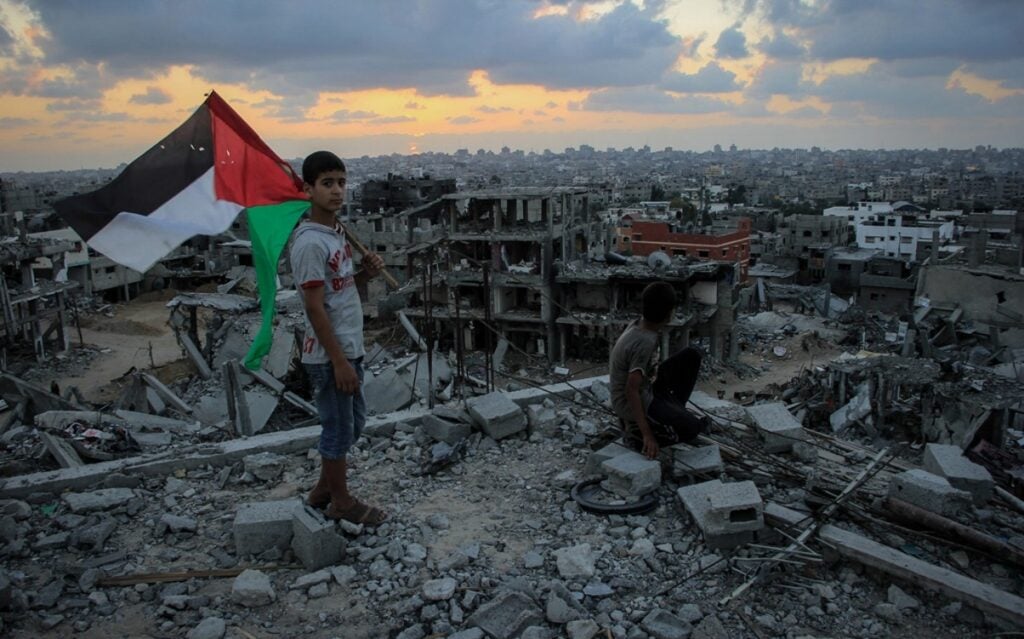
This killing process has shockingly been justified by the dehumanising language employed by Israel’s top leaders, including Prime Minister Benjamin Netanyahu and Defence Minister Yoav Gallant. For six months, the indiscriminate and disproportionate violence has devastated the 2.3 million Palestinian civilians living in Gaza, destroying their already impoverished habitat. Genocide serves as a coercive instrument to induce mass forced expulsion, enacting the settler ethos of “leave or die”.

The Netanyahu coalition government that took office in Israel in January 2023 was regarded, even in the West, as the most “extremist” leadership in all of Israel’s history. 

What made it extreme – aside from cabinet positions for leaders of the Jewish Power party (Itamar Ben Gvir) and Religious Zionism (Bezalel Smotrich) – was the immediate green-lighting of settler violence in the occupied West Bank, the erasure of any Palestinian political entity on a map of “the new Middle East” unfurled by Netanyahu at the UN, and above all, a thinly disguised resolve to complete the Zionist project by incorporating the West Bank and possibly Gaza into “Greater Israel”. 

Several months after this government took office came the 7 October Hamas attack. The Israeli onslaught followed, culminating in authoritative international pronouncements suggesting that Israel was guilty of genocide. The ICJ in January ruled that it was “plausible” Israel had committed acts of genocide in Gaza, with the court voting 15-2 to order the state to take all possible measures to stop such acts.

More conclusively, in March, a meticulous report from the UN special rapporteur on the occupied Palestinian territories found “reasonable grounds to believe that the threshold indicating Israel’s commission of genocide is met”. 

Although Israel’s leaders from the outset made no effort to hide their genocidal intentions, and the imagery of nightly TV and social media made this genocide palpable to the eyes and ears of the world, it strangely did not move the world’s liberal democracies to adjust their policies. 

Above all, the US held fast. It vetoed a series of ceasefire resolutions at the UN Security Council, called the ICJ genocide case “meritless”, and dismissed the analytically impressive genocide report of the distinguished UN special rapporteur, Francesca Albanese, as the work of an antisemite, all while pushing for congressional approval of increased military aid (bombs and munitions) to Israel, alongside continued unflagging diplomatic support in international venues. 

The US government finally toned down this unconditional posture only after it became clear that it was hurting President Joe Biden’s 2024 re-election prospects, and after the furious backlash that followed the attack this month on a World Central Kitchen convoy, which killed seven aid workers (six of whom were westerners) tasked with bringing food to starving Palestinians.

This caused a media uproar in the West so great that it prompted Netanyahu to make a rare apology. This tragic incident also validated the suspicion that the killing of innocent Europeans has much greater political resonance in the West than the killing of thousands of innocent Palestinians, including hospitalised patients and staff.

When it comes to Israel, the US has long been a choiceless democracy in which two political parties compete by boasting of their superior pro-Israel credentials

How do we explain this shameful complicity with Israel, and this total rejection of international law, in the face of such a transparent and cruel genocide? If the US is prepared to exonerate Israel from genocide, the crime of crimes, in this blatant manner, it sends a message to the world that even under the most horrifying circumstances, geopolitical affinities take precedence over law and morality – even for liberal democracies. 

There are other factors that have contributed to this dark turn in global policy, including the dehumanisation of the Palestinian people for decades by assuming the whole population of Gaza is tainted by Hamas; the Orientalist view that Palestinians and all Arab Muslims are somehow sub-human; crude pressures brought in the US by the Israel lobby; and a lingering guilty conscience in Europe, especially Germany.

Perhaps most profoundly, yet least visibly, we are witnessing a wider clash of “civilisations”, with the former European colonial powers and their settler-colonial derivatives on one side (with the exception of Spain), and on the other, Islamic societies and movements, in addition to many former colonial states – along the lines of Samuel Huntington’s 1990s prophesy of “the West against the rest”.

When it comes to Israel, the US has long been a choiceless democracy in which two political parties compete by boasting of their superior pro-Israel credentials. This will end only when at least one of the parties embraces responsible statecraft, based on respect for international law and the authority of the UN. 

In the meantime, dark clouds will hover over the planet in a menacing fashion, and the cruel victimisation of the Palestinian people will persist until new horizons of hope become visible.
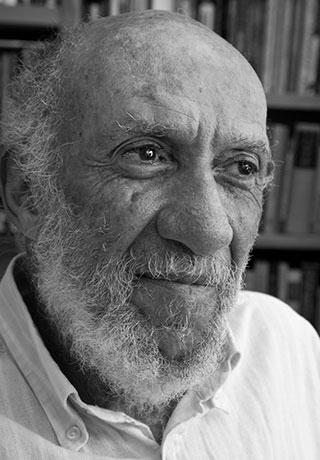



Professor Falk became an adviser to TFF when it was established in 1985.

One Response

  1. What a gratitude we must feel for Richard Falk’s lifelong endeavour for Justice in Palestine! And humble awe for the endurance and life-long resistance of martyred palestinians!

Related Posts

Tony Robinson October 4, 2026 Violence is easy to recognise when someone is being beaten, shot or killed. It becomes more difficult when nobody is holding a weapon. Poverty, discrimination, exploitation and repression can restrict a human life just as effectively, although they do so in very different ways and with very different consequences. Simply adding more categories to an ever-growing list of forms of violence does not really solve the problem. The more interesting question is what all these different situations have in common and why it makes sense to describe them using the same word. Human beings do not simply react to what happens around them. They remember the past, imagine things that do not yet exist, make plans and undertake projects. Workers organise because they imagine different working conditions; people migrate because they imagine another life somewhere else; social movements emerge because people refuse to accept the...
Johan Galtung 1930-2024October 2015 Published here on October 3, 2026 Let us focus on Civilization for conflict analysis and remedies. Major forms of disorder use violence; war is state organized violence. The most belligerent states are the United States of America and Israel, both with civilization roots. National Evangelism, the US Protestant Christian civilization– more national than evangelical–justifies US warfare as exceptionalism of a people chosen by God, with a manifest destiny to run the world. Orthodox Judaism justifies Israeli warfare to conquer and expand from Nile to Euphrates as a religious right and duty to the Eternal One. The third most belligerent country, the UK, no longer believes it is God-chosen but chosen by the USA; not quite the same but something. But the root cause of global disorder lies in the Occident–with Islam–seeing itself as the single, universal civilization valid for all at all times, all others being...
Jan ObergPhD, director, The Transnational Foundation for Peace and Future Research, TFFLund, Sweden October 2, 2026 This is my full original manuscript. The Chinese Academy of Social Science, CASS, makes two publications out if it. 1. China’s Five-year plan emphasized the capabilities of basic research and original innovation. It is regarded as the goal of the future social development, which, as required, should be significantly enhanced. Can you comment on the importance of original innovation in research and academic study? I believe it is easier to define “original innovation” in the natural sciences than in social sciences. The breaking points of what constitutes something new, or innovative, are not quite as sharp in the latter. But in both fields it is about opening up something that was closed, unseen, unexplored before – making manifest what was earlier latent. Innovations come in many forms and shapes – naming something that was not...

Recent Articles

Tony Robinson October 4, 2026 Violence is easy to recognise when someone is being beaten, shot or killed. It becomes more difficult when nobody is holding a weapon. Poverty, discrimination, exploitation and repression can restrict a human life just as effectively, although they do so in very different ways and with very different consequences. Simply adding more categories to an ever-growing list of forms of violence does not really solve the problem. The more interesting question is what all these different situations have in common and why it makes sense to describe them using the same word. Human beings do not simply react to what happens around them. They remember the past, imagine things that do not yet exist, make plans and undertake projects. Workers organise because they imagine different working conditions; people migrate because they imagine another life somewhere else; social movements emerge because people refuse to accept the...
It’s a matter of principles, courage, vision and pulling together – while the militarist world is falling apart… Peter Langille October 3, 2026 “Here, then, is the problem which we present to you, stark and dreadful and inescapable: Shall we put an end to the human race; or shall mankind renounce war?”The Bertrand Russell—Albert Einstein Manifesto, July 9, 1955 ⁕ The forecast for what’s ahead is worrisome. The sharp rise in armed conflicts over the past three years is adding to what was already the highest level in over seventy years. Genocides, which should be prevented are supported. A shared climate emergency that jeopardises survival is ignored. Diverse polls now suggest that people are war-weary, worried and interested in a more effective United Nations. And, there are viable policy options for a more secure world! Yet governments are doubling-down, betting on more war and investing heavily. If current trends persist,...
Johan Galtung 1930-2024October 2015 Published here on October 3, 2026 Let us focus on Civilization for conflict analysis and remedies. Major forms of disorder use violence; war is state organized violence. The most belligerent states are the United States of America and Israel, both with civilization roots. National Evangelism, the US Protestant Christian civilization– more national than evangelical–justifies US warfare as exceptionalism of a people chosen by God, with a manifest destiny to run the world. Orthodox Judaism justifies Israeli warfare to conquer and expand from Nile to Euphrates as a religious right and duty to the Eternal One. The third most belligerent country, the UK, no longer believes it is God-chosen but chosen by the USA; not quite the same but something. But the root cause of global disorder lies in the Occident–with Islam–seeing itself as the single, universal civilization valid for all at all times, all others being...

TFF on Substack

Discover and subscribe to more peace materials on TFF Substack

Most Popular

Tony Robinson October 4, 2026 Violence is easy to recognise when someone is being beaten, shot or killed. It becomes more difficult when nobody is holding a weapon. Poverty, discrimination, exploitation and repression can restrict a human life just as effectively, although they do so in very different ways and with very different consequences. Simply adding more categories to an ever-growing list of forms of violence does not really solve the problem. The more interesting question is what all these different situations have in common and why it makes sense to describe them using the same word. Human beings do not simply react to what happens around them. They remember the past, imagine things that do not yet exist, make plans and undertake projects. Workers organise because they imagine different working conditions; people migrate because they imagine another life somewhere else; social movements emerge because people refuse to accept the...
It’s a matter of principles, courage, vision and pulling together – while the militarist world is falling apart… Peter Langille October 3, 2026 “Here, then, is the problem which we present to you, stark and dreadful and inescapable: Shall we put an end to the human race; or shall mankind renounce war?”The Bertrand Russell—Albert Einstein Manifesto, July 9, 1955 ⁕ The forecast for what’s ahead is worrisome. The sharp rise in armed conflicts over the past three years is adding to what was already the highest level in over seventy years. Genocides, which should be prevented are supported. A shared climate emergency that jeopardises survival is ignored. Diverse polls now suggest that people are war-weary, worried and interested in a more effective United Nations. And, there are viable policy options for a more secure world! Yet governments are doubling-down, betting on more war and investing heavily. If current trends persist,...
Johan Galtung 1930-2024October 2015 Published here on October 3, 2026 Let us focus on Civilization for conflict analysis and remedies. Major forms of disorder use violence; war is state organized violence. The most belligerent states are the United States of America and Israel, both with civilization roots. National Evangelism, the US Protestant Christian civilization– more national than evangelical–justifies US warfare as exceptionalism of a people chosen by God, with a manifest destiny to run the world. Orthodox Judaism justifies Israeli warfare to conquer and expand from Nile to Euphrates as a religious right and duty to the Eternal One. The third most belligerent country, the UK, no longer believes it is God-chosen but chosen by the USA; not quite the same but something. But the root cause of global disorder lies in the Occident–with Islam–seeing itself as the single, universal civilization valid for all at all times, all others being...
Read More
Living-Peace-Sign-Budapest-copy
Tony Robinson October 4, 2026 Violence is easy to recognise when someone is being beaten, shot or killed. It becomes more difficult when nobody is holding a weapon. Poverty, discrimination, exploitation and repression can restrict a human life just as effectively, although they do so in very different ways and with very different consequences. Simply adding more categories to an ever-growing list of forms of violence does not really solve the problem. The more interesting question is what all these different situations have in common and why it makes sense to describe them using the same word. Human beings do not simply react to what happens around them. They remember the past, imagine things that do not yet exist, make plans and undertake projects. Workers organise because they imagine different working conditions; people migrate because they imagine another life somewhere else; social movements emerge because people refuse to accept the...
b54a1f10-8c65-4f0b-9dd5-4abc0a7d04cc_2659x2659
It’s a matter of principles, courage, vision and pulling together – while the militarist world is falling apart… Peter Langille October 3, 2026 “Here, then, is the problem which we present to you, stark and dreadful and inescapable: Shall we put an end to the human race; or shall mankind renounce war?”The Bertrand Russell—Albert Einstein Manifesto, July 9, 1955 ⁕ The forecast for what’s ahead is worrisome. The sharp rise in armed conflicts over the past three years is adding to what was already the highest level in over seventy years. Genocides, which should be prevented are supported. A shared climate emergency that jeopardises survival is ignored. Diverse polls now suggest that people are war-weary, worried and interested in a more effective United Nations. And, there are viable policy options for a more secure world! Yet governments are doubling-down, betting on more war and investing heavily. If current trends persist,...
010
Johan Galtung 1930-2024October 2015 Published here on October 3, 2026 Let us focus on Civilization for conflict analysis and remedies. Major forms of disorder use violence; war is state organized violence. The most belligerent states are the United States of America and Israel, both with civilization roots. National Evangelism, the US Protestant Christian civilization– more national than evangelical–justifies US warfare as exceptionalism of a people chosen by God, with a manifest destiny to run the world. Orthodox Judaism justifies Israeli warfare to conquer and expand from Nile to Euphrates as a religious right and duty to the Eternal One. The third most belligerent country, the UK, no longer believes it is God-chosen but chosen by the USA; not quite the same but something. But the root cause of global disorder lies in the Occident–with Islam–seeing itself as the single, universal civilization valid for all at all times, all others being...
Screenshot 2026-10-02 011738
Jan ObergPhD, director, The Transnational Foundation for Peace and Future Research, TFFLund, Sweden October 2, 2026 This is my full original manuscript. The Chinese Academy of Social Science, CASS, makes two publications out if it. 1. China’s Five-year plan emphasized the capabilities of basic research and original innovation. It is regarded as the goal of the future social development, which, as required, should be significantly enhanced. Can you comment on the importance of original innovation in research and academic study? I believe it is easier to define “original innovation” in the natural sciences than in social sciences. The breaking points of what constitutes something new, or innovative, are not quite as sharp in the latter. But in both fields it is about opening up something that was closed, unseen, unexplored before – making manifest what was earlier latent. Innovations come in many forms and shapes – naming something that was not...
arctic-circle-map
The agreement is catastrophic both because of what it says and what it doesn’t mention. It reduces further the major asset of security policies: Freedom of action. Jan Oberg TFF director September 25, 2026 A couple of hours before the agreement was signed on September 22, 2026, I published the following 13 hypotheses about what it would most likely contain on TFF Substack (in English). I was wrong on only the first point. Contrary to what Trump had written on his Truth Social platform, it does not appear to come into force immediately. In fact, it turned out to be worse than even I had anticipated. After these hypotheses now come a number of reflections in light of what the agreement actually contains, and does not contain, as well as the way in which it has generally been presented by major media outlets and by the public-service broadcaster DR. My...
girl-5894831_1280
Below are TFF-related media mentions, comments, videos and social media posts published elsewhere but not on this homepage. We happen to catch and list only a fraction. Regarding video comments and debates, we recommend that you go to the TFF Video Channel on Substack where many of them are reproduced. Jan Oberg is a contributor to China Daily – 52 million daily clicks – and Global Times, CGTN and CCTV (the national television), China Investment, Xinhua News Agency and several others. Articles and videos on these media very often multiply into countless Chinese (and Western media) that re-post them from these main media. Thanks to The China Academy, his analyses, interviews and comments are frequently posted on YouTube channels such as Thinkers Forum and Wave Media. These videos are often re-posted on Bilibili (China’s YouTube), the China Content Center on TikTok, and on the Chinese edition of TikTok, Douyin.com. This means reaching hundreds of millions of viewers worldwide over a year. While there are too many to catch on all these...




