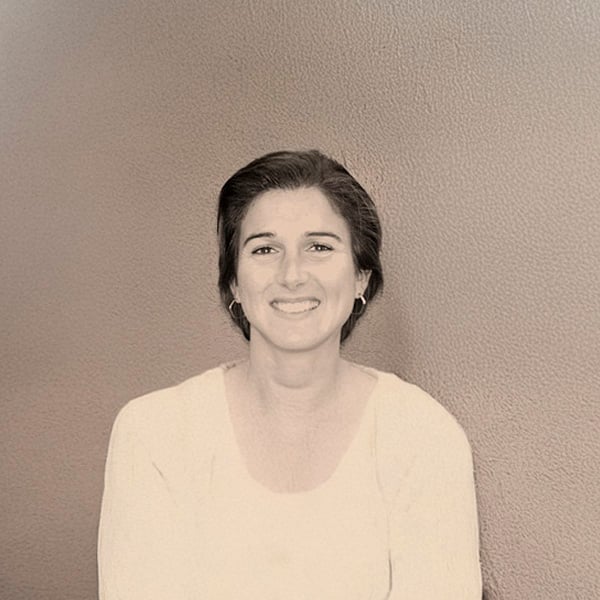
A People’s Summit for Departments of Peace was held in London, October 18 & 19 2005, in the spirit of the United Nations General Assembly’s Declaration and Programme of Action on a Culture of Peace (A/RES/53/243 dated 13 September 1999) and its definition of a culture of peace as “a set of values, attitudes, modes of behaviour, and ways of life that reject violence and prevent conflicts by tackling their root causes to solve problems through dialogue and negotiation among individuals, groups, and nations” (A/RES/52/13). The purpose of the Summit was to strengthen and grow the international movement for a culture of peace and for government Departments of Peace and Ministries for Peace.
Vicky Rossi: Where does the concept of a Ministry/Department for Peace originate?
Diana Basterfield: I went on the demonstration in February 2003. Despite the millions marching, the war went ahead nevertheless. By coincidence, I was on the mailing list for what was then called the Global Renaissance Alliance, which is something that Marianne Williamson was very much involved with – she and US Congressman Dennis Kucinich. I read that Dennis had introduced in 2001, before 9/11, a bill into Congress – it is something like an Early Day Motion gathering signatures – to set up a Department of Peace. I clicked on the contents of the Department of Peace and it talked about research into non-violence and 2% of the military budget to be dedicated to working for peace. I thought, ‘This is a fantastic idea. Let’s have one of these in the U.K. Let’s call it a Ministry for Peace, to give it a different name.’
Then, again by coincidence, the left of the Labour party was organizing a conference under the banner ‘Labour Against the War’. I went to that and the last speaker was Tony Benn. I rushed up to him and asked him if he had heard of Dennis Kucinich and what he was doing. I asked him why we weren’t introducing something like that in the U.K. He suggested that I write an article for a couple of the Labour journals to see what interest there was. So, I wrote an article on the proposal for a Ministry for Peace and I also wrote to the people at the top of the ‘Labour Against the War’ group. I received a very positive response from the MP John McDonnell. He said he’d help me to get the article published and then we could talk about it further. The article was published in “Tribune” on their website and in the magazine “Labour Left Briefing”.
Then I met John and we discussed plans to get an initiative going in the U.K. and he agreed to be the parliamentary spokesperson. That was late May or early June 2003. We decided to call a public meeting in the House of Commons on July 1st 2003. Neither he nor I had been working directly within the peace movement. We had been on peace demonstrations, of course. My previous activism had been in the feminist movement and in local politics where I was an elected Councilor in my London borough. So since neither of us had worked previously in the peace movement we decided to make the first meeting very tentative: to ask people what they thought of the idea.
We held a second meeting in September to see if people wanted to take the idea further. We had about 53 people come to the first meeting and there was a great buzz and people were very energized by it. When we came back in September around 80 people attended the meeting and gave their support for us to go ahead. John McDonnell said he had put in for a Private Member’s Ten Minute Rule Bill and that he had been given the date of 14 October. Such a young organisation and we already had to write a parliamentary bill! It got a 1st reading and it was passed unopposed, but fell due to lack of parliamentary time. It got cross-party sponsors, Conservative, Scottish Nationalist, Welsh Nationalist as well as Labour and was published by Hansard.
Vicky Rossi: Which countries are currently actively pursuing initiatives aimed at the creation of a Ministry/Department of Peace?
Diana Basterfield: Well, Dennis Kucinich put down his original bill in 2001. He has resubmitted his bill twice since then, most recently in September where it had 60 co-sponsors in Congress and one Senator. Then, during the last U.S. presidential elections, he was a presidential candidate and he mentioned the Department of Peace initiative a lot during his campaign. Once the presidential election was over, Dennis decided to proceed further in setting up a Department of Peace. Together with Dot Maver, who was his presidential campaign manager, and Mike Abkin, who was also involved in his campaign, he formed the Peace Alliance to work for a Department of Peace. They have been extremely active. They have the Peace Alliance, which is the political arm, and then there is the Peace Alliance Foundation, which is the charitable part that works on raising people’s awareness on a culture of peace.
The other people who have been very active are the Canadian Working Group for a Federal Department of Peace. They are based in Victoria. They have managed to get a number of influential people in Canada, academics and some politicians, including Lloyd Axworthy, who was Foreign Minister at one point, to sign up with their campaign. And that initiative has been going for about the same length of time as ours.
And there are also some newer groups. There was one, for example, in Australia in the 1980s – started by Stella Cornelius, co-director of the Conflict Resolution Network and a specialist mediator and conflict analyst. That kind of faded away and now it’s being resurrected and they’ve had a couple of meetings there.
There is also a very energetic Japanese woman, Yumi Kikuchi, who has set up the Global Peace Campaign and is working for a Department of Peace in Japan. Simonetta Pittaluga from Spain also took part in the People’s Summit and she’s been working, through NOVA, with the Catalan government to set up a regional Department of Peace.
Vicky Rossi: Do these national initiatives have the same ultimate goal in mind? Are they all tending towards creating a Ministry for Peace at a government level?
Diana Basterfield: They are, yes. That’s right.
We also share a strong feeling that it will not be enough just to have a structure within government. Civil society is the driving force calling for this Ministry or Department within government and we feel that once that is set up, civil society will still have a key role to play in motivating and supporting governments to work for a culture of peace.
Such a Ministry would not only focus on international relations and reducing war. That Ministry would look at the root causes of violent conflict both domestically and internationally. We have held a number of training courses taught by Kai Brand-Jacobsen of TRANSCEND and we find their ‘violence triangle’ a very useful model for the content of the future Ministry’s work. This identifies three related aspects of violence: direct violence – physical or verbal violence, including war; structural violence – political, social and economic structures that repress, harm or kill; and cultural violence, the name given to those aspects of a culture that normalise violence – religions and ideologies that condone direct violence, for example, or films that show the use of extreme violence to ‘resolve’ conflicts. The challenge for the Ministry is to tackle all three aspects of violence together.
Vicky Rossi: Do the other national initiatives see this wider meaning in the concept of “peace”?
Diana Basterfield: Well, right before the People’s Summit, all participants had a 2 day training with Kai Brand-Jacobsen from TRANSCEND, in which he went through the concepts. In the past, the Americans, for example, have included these ideas when they have spoken about a Department of Peace, but they haven’t specifically used the terms direct, structural and cultural violence in their literature. Well, they haven’t until the People’s Summit, although they may choose to now that they have had the training.
Vicky Rossi: Are the current Ministry/Department of Peace lobby initiatives civil-society led or do they already enjoy government backing?
Diana Basterfield: John McDonnell is very much on the left of the Labour party and the government is on the other end of the spectrum! So the initiative has some parliamentary backing, but it doesn’t have government backing. We also have some members of the House of Lords who support us. Although we’ve been working away for two and half years and we have had a great number of meetings in the House of Commons, with expert speakers on very interesting topics relating to direct, structural and cultural violence and a culture of peace, we very rarely get parliamentarians coming. That’s one of our tasks now for the next couple of years: to make more contacts amongst parliamentarians and to get more on board.
Vicky Rossi: Are the initiatives in Canada and the U.S. also managing to make contact with parliamentarians?
Diana Basterfield: Dennis Kucinich has been very successful. The Peace Alliance had a very successful conference in September in Washington. They’ve focused their energies in a different way to us. We focus very much on educating ourselves and educating our members of parliament on the breadth and range of issues that a Ministry for Peace needs to cover. Not just saying, ‘Stop war’.
Whereas the Peace Alliance in the U.S. has focused much more on building local grassroots organisations. These grassroots organisations are quite independent from the Peace Alliance centre. The centre sends them out templates of letters and templates of leaflets that people can reproduce and use. They also invite the grassroots organisations to Washington where they are taught how to lobby their Congress people and Senators and how to campaign. Nearly all their congressional districts now have a local Peace Alliance representative. We find this excellent and we want to copy that model.
The Canadians have mainly focused on trying to reach people of influence. They are mainly former ministers who have signed up so far. The next People’s Summit in June 2006 is going to be held at the Royal Roads University in Vancouver. A World Peace Forum &endash; the first ever &endash; is going to be held in that same university immediately following our Summit and Dennis Kucinich will speak there.
Vicky Rossi: Are there any similar initiatives at the UN level?
Diana Basterfield: One of the speakers at our Summit was Paul Van Tongeren, Executive Director of the European Centre for Conflict Prevention. In July the United Nations hosted the largest ever gathering of civil society led by Paul, where a Global Action Agenda for the Prevention of Violent Conflict was presented to the Secretary-General. The Global Partnership for the Prevention of Armed Conflict is calling on governments to work with civil society in building a safer, more peaceful world.
Vicky Rossi: What responsibilities would lie within the mandate of a Ministry/Department of Peace?
Diana Basterfield: Once you see violence in its direct, structural and cultural components, we are talking about embedding non-violent methods and approaches into all our public institutions including education, prisons, housing and of course the Ministry of Defence and disarmament.
Vicky Rossi: Would you then see a need for the Ministry for Peace to liaise with all other Cabinet departments?
Diana Basterfield: Well absolutely. On a visit to Bradford University we spoke to Paul Rogers, a professor in the Peace Studies Department, and several of his colleagues. They felt we would have a lot of difficulties with turf war, civil servants objections, etc. if we pushed for a Ministry in the first instance. They suggested we go for a “Minister” for Peace, which is something that could be created by the Prime Minister immediately. It wouldn’t require legislation. It wouldn’t require being put in the manifesto.
The Minister would be someone who would link up all these initiatives and act as an expert resource to all the other ministries. If, for example, the Department for Education and Skills was not sure what should be done to reduce violence in schools, the Minister for Peace could offer some suggestions. People in his/her department would be thoroughly imbued with the TRANSCEND model and so they could offer well-thought out and well-practiced suggestions of what could be done.
The Minister for Peace could talk to the Home Secretary and say, ‘Look, here are 10 suggestions for what you could do to prevent violence within the community, domestic violence’, or whatever. The Minister for Peace would be a bringing together person, a big-picture person. Everyone else is bogged down in their own ministries, but this person would be able to stand back and have a particular perspective on how to reduce violence.
Vicky Rossi: What kinds of advocacy methods are being used to promote the concept of a Ministry/Department of Peace? a) At the governmental level? b) At the grassroots level i.e. to raise awareness amongst “ordinary” citizens?
Eirwen Harbottle: With regard to advocacy at the government level, you understand that it’s a challenge because so many people say, ‘Oh, we don’t need a Ministry for Peace. We don’t want another level of bureaucracy. We’ve got enough bureaucracy as it is.’ So, one has to admit that initial barrage of opposition. The means of getting into government are really through individual members of parliament when one can persuade them to do this: to submit, as John McDonnell did, his 10 Minute Rule. He hopes to submit a new Bill in this session as well as to have an adjournment debate so that he can read the Summit Declaration into the parliamentary record.
To engage grassroots level, that is easier because one tries to identify issues which engage people and give them a subject of common concern. One of the things is violence in society and the need for understanding non-violence, so we have done quite a bit of training on non-violent behaviour.
People like Marshall Rosenberg, who does a lot of work on non-violence in the way one speaks and in our approaches to people. Every month, while Parliament sits, we have a meeting in the Grand Committee Room in the House of Commons. In this way, people are seen to bring their concerns to Parliament and psychologically that’s a very powerful thing. Immediately before the People’s Summit we had an excellent training with Kai Brand-Jacobsen of TRANSCEND, which made a big difference to the way we were able to proceed during the Summit itself.
At the grassroots level, we are looking about in the community to see what kinds of things a Ministry for Peace would do if it existed. We have looked at non-offensive defence for the military. We have also looked at the role of the media in peace-building, which we’re going to look into in more detail at our next House of Commons meeting on November 30th. It seems that unless there’s a disaster that they can get ravelled in, the media is not interested. That’s a big snag.
We had an interesting meeting at the end of July to mark the mid-way point of the UNESCO Decade for Peace and Non-Violence for Children. At that meeting, we had someone from the National Association for the Prevention of Cruelty to Children to talk about how a big NGO sees the Decade and what has been done during the Decade from their point of view. We had somebody representing a coalition of churches talking about their point of view. Then we looked at a profoundly disturbing problem in our society regarding a large section of young people and adults with problems of visual impairment – autism, dyslexia, etc. An optician, Ian Jordan, has been researching the beneficial effects on people afflicted in this way through the wearing of individually prescribed and tinted spectacles. The healing aspects of colour have long been understood. A recent examination of a new student intake in a Scottish school revealed that 30% of the children had some kind of visual problem.
Moreover in our prison population, 75% of adults and young people are illiterate. Very often the reason is that they simply cannot see straight: letters can dance about, merge into one another, appear upside down – nothing makes sense. Yet they are not examined for visual impairment. In school, children are scolded for inattention, poor work, simply ‘being stupid’. Adults resort to all forms of deception rather than admit they cannot read. Consequently, a huge swathe of young and older people are marginalised through no fault of their own and are virtually unemployable. Yet there is no systematic examination of their eyesight. To ignore such waste of a life is indeed an example of structural violence!
The Welsh MP who chaired the meeting was astonished to hear of this situation and promised to bring it to the attention of the relevant all-party parliamentary group which addresses such problems. It proved a telling example of how to introduce into the heart of government this particular realm of misbehaviour by disaffected youth.
Another important issue we would like to explore in a similar way relates to poor living conditions and the lack of affordable housing for those on low incomes or within immigrant/refugee groups. Help could be at hand through the growth of Community Land Trusts which offer new hope to those seeking a way to become better integrated into British society through becoming stakeholders in community land ownership.
So these are examples of aspects of peace-building which we do not currently see as peace-building.
Vicky Rossi: Are the various Ministry/Department of Peace initiatives making progress in their lobbying efforts? How is this progress measured?
Eirwen Harbottle: It’s very difficult to measure anything after just two and a half years, actually. I think, the more we can get people to talk, the more we’ll have the measure of our success. If we could get the mainstream media to even say something rude about us, it would be something! It would mean that we might be worrying them.
Vicky Rossi: What are the main obstacles to the creation of a Ministry/Department for Peace? How can these obstacles be surmounted?
Eirwen Harbottle: The obstacles, from my point of view, are the dreadful turf consciousness of our government departments, the building up of little empires and the reluctance to relinquish them in any way. This is possibly also true within the aid agencies and the peace movement. Everyone is so busy doing what they are doing that is takes a heck of a lot of facilitation to get them to do things together. Then there is the reluctance to engage young people. This is the work that I do with Peace Child – it’s fantastic what young people can do, but suggest to the government departments that the young people have got a role to play and people think that you’re talking nonsense.
Vicky Rossi: Are you doing any work with “alternative” schools like the Montessori or Rudolf Steiner schools?
Eirwen Harbottle: Not yet, but we ought to. We’re talking about education. I’ve been asked to look into education and I have asked myself, if I were a Minister for Peace what sort of areas would I be looking at? I’d be looking at culture, security, the law, the environment, health and so many things like that.
Education is so utterly wide. Like Chief Seattle said, ‘All things are connected’. This we know, but holistic thinking is very difficult to find. We did have a very successful meeting on ‘peace education’ in schools last December with speakers talking about ‘values education’, ‘Non-Violent Communication’ and Pierre Weill’s ‘Art of Living in Peace’.
Vicky Rossi: What were the main agenda items discussed at the People’s Summit for Departments of Peace in London, 18-19 October?
Eirwen Harbottle: First of all we were listening to each other – what were they doing in Canada or Australia, what did they want to do in Italy or Japan? So that took a lot of listening and a lot of learning. Then Kai Brand-Jacobsen, who facilitated the Summit brilliantly, got us talking about specific issues in small groups so that we could get more done. We looked at different aspects of what we ought to be focusing on like campaigning, what education means, what economic and business structures there are, about justice, about outreach abroad, etc. etc. We were really trying to get down to the nuts and bolts of which way we ought to go. By our next joint meeting, which will take place in June 2006 in Victoria, we will have had a lot of inter-communication with each other and have shared more about what we are doing in order to create a structured base to go forward from. We are setting up a website so that we can share things as the months progress.
At the end of Summit, we drew up a Declaration and this was presented to John McDonnell at the packed closing meeting in the House of Commons. Dot Maver, from the U.S. Peace Alliance, congratulated John on his courage in taking forward this initiative in the UK Parliament. She then read out the Declaration:
‘Today, we announce the launch of an international initiative for the creation of Departments of Peace in governments throughout the world.
Violence of all kinds is increasing. There is an urgent need to find responsible solutions, expanding on past and present peace-building successes. This international initiative will both provide resources and support for existing national Department of Peace campaigns, and assist new ones as they appear in other countries.
While the exact role of the department will differ in each country, its basic functions will be the same.
(a) To foster a culture of peace;
(b) To research, articulate and help bring about non-violent solutions to conflicts at all levels;
(c) To provide resources for training in peace-building and conflict transformation to people everywhere.
We, the undersigned, joyfully vow to support and encourage each other, to share information, to enrich each other’s experience, to listen to one another and to celebrate our commonalities and differences in our journey together towards a culture of peace.’
This Declaration was signed by representatives of the 11 countries attending the Summit.
Vicky Rossi: Eirwen ends by putting forward the following suggestion for students and young people
Eirwen Harbottle: I am encouraging all my young friends, ‘Do a role play in your university or student unions or wherever. Pretend there’s been a Ministry for Peace for one year. Identify all the government departments. Then talk about, for example, what happened in the Department of Trade and Industry in that year relating to peace. What happened in the Ministry for Health? What happened in the prison service?’
One could have great fun doing it and one could see that it’s not actually impossible to achieve this.
For further details on Eirwen’s role play idea, please contact her directly on eirwenharbottle@hotmail.com
*This transcript represents an accurate but non-verbatim representation of the original interview.
For further information, please contact:
Diana Basterfield, ministry for peace
Riverbank House
1 Putney Bridge Approach, London SW6 3JD, England
Tel: +44-20-7736 7903
diana.basterfield@ministryforpeace.org
Associated Links
Ministry/Departments of Peace Proposals
Canada: www.departmentofpeacecanada.com
Australia: Biannca Pace, Biannca.Pace@nsw.democrats.org.au
Japan: Yumi Kikuchi, yumik@awa.or.jp
Spain: Simonetta Pittaluga, mpnovaspain@hotmail.com
Department/Ministry of Peace Conferences 2005-2006
The Peace Alliance September 2005 conference updates
The London Declaration (in pdf format)
Culture of Peace
Peace Alliance Foundation (USA)
Conflict Transformation
European Centre for Conflict Prevention