

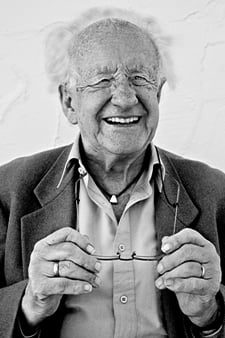
USA-Israel vs. Arab-Muslim Worlds: What Happens?

johangaltung

Kuala Lumpur, International Islamic University of Malaysia, 19 Aug 2014

Nothing good. But let us have a look at it in the standard peace studies way: Diagnosis – analyzing, Prognosis – forecasting, and Therapy – remedies, even solutions.

“Israel-Palestine” is the discourse Tel Aviv-Washington prefers. They have all the strong cards: overwhelming military power, political veto in the United Nations Security Council, the economic upper hand in interlocking economies – not just oil cash from Saudi Arabia-Qatar–and the idea of working for a solution with Washington as “mediator” – only the U.S. can bring the two together, gently or roughly–toward a sustainable peace.

A great distance from reality is needed to believe in that spin.

USA and Israel are interlocked by a much deeper tie: they came into being in the same way; flagging a divine mandate for a land without a people for a people without a land. Goes one goes the other.

Palestine is also part of something much bigger than itself: the Arab people with its tortured history of 500 years of colonialism and imperialism, and the religion of Islam. Two nationalisms, carried by Fatah and Hamas in Palestine, both potentially giving rise to a much bigger state, Arabia (not only Saudi), and to a region, the Islamic Umma, beyond an organization of the Islamic Community (of states).

USA is co-responsible for the current Israeli genocide in Gaza and seen as such by most of the world. Hate one hate the other.

Israeli expansion implies conflict with neighbors and their neighbors into the Arab-Muslim worlds. Your problems are my problems say the USA. So far. But one layer deeper is the US hyphenation of Judaism and Christianity to Judaeo-Christianity, leaving out the third Abrahamic religion. The stark reality is three religions hating and killing each other through millennia – but the hyphen, like in Israel-USA, calls for an alliance of 2 against 1. And that is a political program.

Add to this the three imperialisms suffered by the Arab nation: 1) Four centuries Ottoman Empire; 2) four decades English-French imperialism from Sykes-Picot to Nasser; 3) US-Israeli imperialism to make the Middle East region safe for Israel and democracy. However, democracy is rule by the consent of the ruled, not colonialism-imperialism by the consent – so far – of the demos in the rulers, USA and Israel.

The collisions are massive, involving ever more of the huge Muslim part of the world beyond the Arab part. How will this evolve?

More fear, more hatred; more terrorism, more state terrorism. USA-Israel will probably keep the military superiority for some time. But much else is happening. Both are heading downhill in the sense of losing the support they had. USA is losing its world hegemony – even within NATO where Germany de facto is siding more with Russia than with the USA over Ukraine – and Israel by its fall from the moral high grounds into the immoral abyss even among the many deeply touched by the shoa.

Israel aggravates its own situation by gluing the etiquette “anti-Semitic” to its increasingly numerous and powerful critics.

But where are the Arab and Muslim worlds heading? Not downhill.

The Ottoman Empire was a relatively benign Sunni “family of nations” with a caliphate also centered in Istanbul. No effort to recreate an Arabia ruled by Turkey is acceptable to the Arab nation. But also unacceptable is Sykes-Picot Western colonialism with four colonies or “mandates”; Iraq-Palestine, Syria-Lebanon.

Blindness, ignorance or stupidity is needed to be surprised at the Islamic State (IS). Sykes-Picot could not stand, but the US invasion from 2003 reified those artificial creations, one of them in the meantime divided by the UK into Israel – rump Palestine – Jordan. IS was highly predictable: extremist brutality bred by oppression, and a vision: An ottoman empire with a caliphate without a special role for Turkey.

Without Sykes-Picot no Balfour, without Balfour no Israel. The Ottoman Empire had no Israel. A problem of USA-Israel’s own making.

Patrick Cockburn in the London Review of Books 21 Aug 2014 points to a third of Syria and a quarter of Iraq, with a population beyond Denmark, quickly conquered, heading for Baghdad and Damascus – the capitals of two major Islamic dynasties.

Assad may fall, so may al-Maliki’s successor(s). Al Qaeda will join IS. Their problem is Iran and the Kurds, possibly with US-engineered wars that may unravel as such. We will soon see.

Imagine IS conquering Baghdad, what happens to the megalomaniac US embassy? IS uses Saddam Hussein assets like the Tikrit clan and his military. But Saddam reified Sykes-Picot as Iraq’s ruler installed by the USA till he turned against them in 1988 in the Arab-Persian Gulf.

Anyhow, stop the present IS and a new will emerge out of the same Arab nation holism and dialectic; much stronger forces in the longer run than USA-Israel on a downhill slope with the USA possibly heading for racist fascism at home and abroad. But how about Islam?

There ar two major factors in its favor.

The counter-cyclical pendulum between Christian and Islamic dominance – up for one means down for the other being so similar – is moving from the Christian-secular toward the Islamic pole. One factor is Islam’s message of togetherness and sharing, very attractive to the victims of egocentrism, greed and inequality in the Western world.

Add to that something similar to the IS factor: the long term move toward an Islamic umma, not a state system ruled by kings-emirs-sultans, even against the shahada.

And who created so much of that state system? The West, through its colonialism.

What we witness today is not only IS but all over Muslim youth trying to be the umma, uniting across even colonial borders, between Iraq and Syria–like the Tutsi bridge between anglophone, francophone and afrophone Africa. Be the future you want.

Solutions beyond USA-Israel going down and the Arab-Muslim worlds up? Yes: dialogue, searching together for how all four could become masters in their own house and only that. The challenge of the century.


Originally published by TRANSCEND Media Service

Related Posts

Jan Oberg TFF director October 13, 2026 According to Alfred Nobel’s will, the Nobel Peace Prize shall be awarded: ”to the person who has done the most or best to advance fellowship among nations, the abolition or reduction of standing armies, and the establishment and promotion of peace congresses.” Further down, he also expresses how the prize for the “champions of peace” shall be decided: “that for champions of peace by a committee of five persons to be selected by the Norwegian Storting. Alfred Nobel’s will is remarkably short and clear. But few seem to have read it. Nobel did not say that the committee itself should consist of members of parliament. He entrusted the Storting with appointing five persons. In principle, it could have selected diplomats, mediators, peace researchers, conflict-resolution specialists, or other individuals with recognised expertise in matters of peace from around the world. Instead, the Storting gradually...
Advocates of nuclear disarmament are regularly dismissed by the champions of nuclear deterrence as naïve and unrealistic, utopian or even irresponsible. Yet this ‘doctrine’ of deterrence, regarded by France as the ‘cornerstone’ of its national security, is based on quasi-religious beliefs, a theory that cannot be proven, risky gambles and fragile assumptions. So much so that one might legitimately ask which side the ‘Care Bears’ are on. Marc FinaudVice-President of Initiatives for Nuclear Disarmament (IDN) October 9, 2026 This article was originally published on Pressenza When it comes to these things being treated as religious concepts, look here. Idealists and realists It was Hubert Védrine, François Mitterrand’s former Foreign Minister, who repeatedly coined the phrase: ‘Europeans are a sort of Care Bears who don’t realise they’re living in Jurassic Park’. He applies this reference to the cartoon for well-behaved children not only to what he regards as weakness or idealism...
What the West Borrowed from Asia and What It Left Behind Jan Krikke October 8, 2026 The article was originally published here In the late 1960s, the musical Hair announced that the Age of Aquarius was dawning. Its opening anthem promised a transformation of human consciousness: an era of peace, harmony and understanding. Half a century later, a familiar echo of that promise is a meditation app offered by your employer. You can find it in the same list of benefits as the pension plan and the gym discount. How did a spiritual revolution become an employee benefit? The answer lies in the history of the movement known as New Age: where it came from, what it borrowed from Asia, and why the meaning of what it borrowed changed in the process. Two definitions will help. New Age is a loose label for a wide range of spiritual practices and...

Recent Articles

Below are TFF-related media mentions, comments, videos and social media posts published elsewhere but not on this homepage. We happen to catch and list only a fraction. Regarding video comments and debates, we recommend that you go to the TFF Video Channel on Substack where many of them are reproduced. Jan Oberg is a contributor to China Daily – 52 million daily clicks – and Global Times, CGTN and CCTV (the national television), China Investment, Xinhua News Agency and several others. Articles and videos on these media very often multiply into countless Chinese (and Western media) that re-post them from these main media. Thanks to The China Academy, his analyses, interviews and comments are frequently posted on YouTube channels such as Thinkers Forum and Wave Media. These videos are often re-posted on Bilibili (China’s YouTube), the China Content Center on TikTok, and on the Chinese edition of TikTok, Douyin.com. This means reaching hundreds of millions of viewers worldwide over a year. While there are too many to catch on all these...
Jan Oberg TFF director October 13, 2026 According to Alfred Nobel’s will, the Nobel Peace Prize shall be awarded: ”to the person who has done the most or best to advance fellowship among nations, the abolition or reduction of standing armies, and the establishment and promotion of peace congresses.” Further down, he also expresses how the prize for the “champions of peace” shall be decided: “that for champions of peace by a committee of five persons to be selected by the Norwegian Storting. Alfred Nobel’s will is remarkably short and clear. But few seem to have read it. Nobel did not say that the committee itself should consist of members of parliament. He entrusted the Storting with appointing five persons. In principle, it could have selected diplomats, mediators, peace researchers, conflict-resolution specialists, or other individuals with recognised expertise in matters of peace from around the world. Instead, the Storting gradually...
The Quest for Humane Survival Richard Falk Professor emeritus, Princeton UniversityTFF Associate since 1986October 12, 2026 After decades of teaching and writing about international law in academic frameworks that were not institutionally situated within law school environments—at Princeton and the University of California, Santa Barbara—I found myself most receptive to the TWAIL outlook. It has been especially illuminating in clarifying the extent to which international law evolved as a dialogical critique of Europe’s efforts to legitimize its colonial undertakings. In particular, TWAIL has exposed how international law has functioned to legalize the subjugation of Third World peoples, securing conditions for exploitative investment and trade relations, the coercive enforcement of public debts, and an ideology of cultural superiority. TWAIL’s exposure of these economic legacies of colonialism has influenced my understanding of the history and development of international law, broadly conceived, as an ideological project of the Western sub-system of the world...

TFF on Substack

Discover and subscribe to more peace materials on TFF Substack

Most Popular

Below are TFF-related media mentions, comments, videos and social media posts published elsewhere but not on this homepage. We happen to catch and list only a fraction. Regarding video comments and debates, we recommend that you go to the TFF Video Channel on Substack where many of them are reproduced. Jan Oberg is a contributor to China Daily – 52 million daily clicks – and Global Times, CGTN and CCTV (the national television), China Investment, Xinhua News Agency and several others. Articles and videos on these media very often multiply into countless Chinese (and Western media) that re-post them from these main media. Thanks to The China Academy, his analyses, interviews and comments are frequently posted on YouTube channels such as Thinkers Forum and Wave Media. These videos are often re-posted on Bilibili (China’s YouTube), the China Content Center on TikTok, and on the Chinese edition of TikTok, Douyin.com. This means reaching hundreds of millions of viewers worldwide over a year. While there are too many to catch on all these...
Jan Oberg TFF director October 13, 2026 According to Alfred Nobel’s will, the Nobel Peace Prize shall be awarded: ”to the person who has done the most or best to advance fellowship among nations, the abolition or reduction of standing armies, and the establishment and promotion of peace congresses.” Further down, he also expresses how the prize for the “champions of peace” shall be decided: “that for champions of peace by a committee of five persons to be selected by the Norwegian Storting. Alfred Nobel’s will is remarkably short and clear. But few seem to have read it. Nobel did not say that the committee itself should consist of members of parliament. He entrusted the Storting with appointing five persons. In principle, it could have selected diplomats, mediators, peace researchers, conflict-resolution specialists, or other individuals with recognised expertise in matters of peace from around the world. Instead, the Storting gradually...
The Quest for Humane Survival Richard Falk Professor emeritus, Princeton UniversityTFF Associate since 1986October 12, 2026 After decades of teaching and writing about international law in academic frameworks that were not institutionally situated within law school environments—at Princeton and the University of California, Santa Barbara—I found myself most receptive to the TWAIL outlook. It has been especially illuminating in clarifying the extent to which international law evolved as a dialogical critique of Europe’s efforts to legitimize its colonial undertakings. In particular, TWAIL has exposed how international law has functioned to legalize the subjugation of Third World peoples, securing conditions for exploitative investment and trade relations, the coercive enforcement of public debts, and an ideology of cultural superiority. TWAIL’s exposure of these economic legacies of colonialism has influenced my understanding of the history and development of international law, broadly conceived, as an ideological project of the Western sub-system of the world...
Read More
girl-5894831_1280
Below are TFF-related media mentions, comments, videos and social media posts published elsewhere but not on this homepage. We happen to catch and list only a fraction. Regarding video comments and debates, we recommend that you go to the TFF Video Channel on Substack where many of them are reproduced. Jan Oberg is a contributor to China Daily – 52 million daily clicks – and Global Times, CGTN and CCTV (the national television), China Investment, Xinhua News Agency and several others. Articles and videos on these media very often multiply into countless Chinese (and Western media) that re-post them from these main media. Thanks to The China Academy, his analyses, interviews and comments are frequently posted on YouTube channels such as Thinkers Forum and Wave Media. These videos are often re-posted on Bilibili (China’s YouTube), the China Content Center on TikTok, and on the Chinese edition of TikTok, Douyin.com. This means reaching hundreds of millions of viewers worldwide over a year. While there are too many to catch on all these...
Nobel-Prize-Plaque
Jan Oberg TFF director October 13, 2026 According to Alfred Nobel’s will, the Nobel Peace Prize shall be awarded: ”to the person who has done the most or best to advance fellowship among nations, the abolition or reduction of standing armies, and the establishment and promotion of peace congresses.” Further down, he also expresses how the prize for the “champions of peace” shall be decided: “that for champions of peace by a committee of five persons to be selected by the Norwegian Storting. Alfred Nobel’s will is remarkably short and clear. But few seem to have read it. Nobel did not say that the committee itself should consist of members of parliament. He entrusted the Storting with appointing five persons. In principle, it could have selected diplomats, mediators, peace researchers, conflict-resolution specialists, or other individuals with recognised expertise in matters of peace from around the world. Instead, the Storting gradually...
law-419057_1280
The Quest for Humane Survival Richard Falk Professor emeritus, Princeton UniversityTFF Associate since 1986October 12, 2026 After decades of teaching and writing about international law in academic frameworks that were not institutionally situated within law school environments—at Princeton and the University of California, Santa Barbara—I found myself most receptive to the TWAIL outlook. It has been especially illuminating in clarifying the extent to which international law evolved as a dialogical critique of Europe’s efforts to legitimize its colonial undertakings. In particular, TWAIL has exposed how international law has functioned to legalize the subjugation of Third World peoples, securing conditions for exploitative investment and trade relations, the coercive enforcement of public debts, and an ideology of cultural superiority. TWAIL’s exposure of these economic legacies of colonialism has influenced my understanding of the history and development of international law, broadly conceived, as an ideological project of the Western sub-system of the world...
images-2
Advocates of nuclear disarmament are regularly dismissed by the champions of nuclear deterrence as naïve and unrealistic, utopian or even irresponsible. Yet this ‘doctrine’ of deterrence, regarded by France as the ‘cornerstone’ of its national security, is based on quasi-religious beliefs, a theory that cannot be proven, risky gambles and fragile assumptions. So much so that one might legitimately ask which side the ‘Care Bears’ are on. Marc FinaudVice-President of Initiatives for Nuclear Disarmament (IDN) October 9, 2026 This article was originally published on Pressenza When it comes to these things being treated as religious concepts, look here. Idealists and realists It was Hubert Védrine, François Mitterrand’s former Foreign Minister, who repeatedly coined the phrase: ‘Europeans are a sort of Care Bears who don’t realise they’re living in Jurassic Park’. He applies this reference to the cartoon for well-behaved children not only to what he regards as weakness or idealism...
8824b09f-33a5-43f9-9fd0-550f28cda24d_1536x1024
What the West Borrowed from Asia and What It Left Behind Jan Krikke October 8, 2026 The article was originally published here In the late 1960s, the musical Hair announced that the Age of Aquarius was dawning. Its opening anthem promised a transformation of human consciousness: an era of peace, harmony and understanding. Half a century later, a familiar echo of that promise is a meditation app offered by your employer. You can find it in the same list of benefits as the pension plan and the gym discount. How did a spiritual revolution become an employee benefit? The answer lies in the history of the movement known as New Age: where it came from, what it borrowed from Asia, and why the meaning of what it borrowed changed in the process. Two definitions will help. New Age is a loose label for a wide range of spiritual practices and...
Screenshot 2026-10-04 210142
Small and different + among the 10% most active + 9,000 texts + 150 Associates + 60 000 a day — and a stubborn belief that peace is smarter and must be secured by peaceful means. In 2026, the Transnational Foundation for Peace and Future Research (TFF) turns 40. On Monday, October 5, 2026, a new TFF homepage will go live — a new gateway to more than 9,000 articles, analyses, research papers and other contributions produced over four decades of independent peace research. But this is not simply a new website. For four decades, TFF has worked from a simple conviction: peace is smarter than militarism and can be brought about by peaceful means. This is not merely an aspiration. It is the principle expressed in the UN Charter and the Gandhian tradition that has guided our work from the beginning. TFF is a research-based, independent and people-financed foundation....




