
Understanding the global threat against sacred spaces

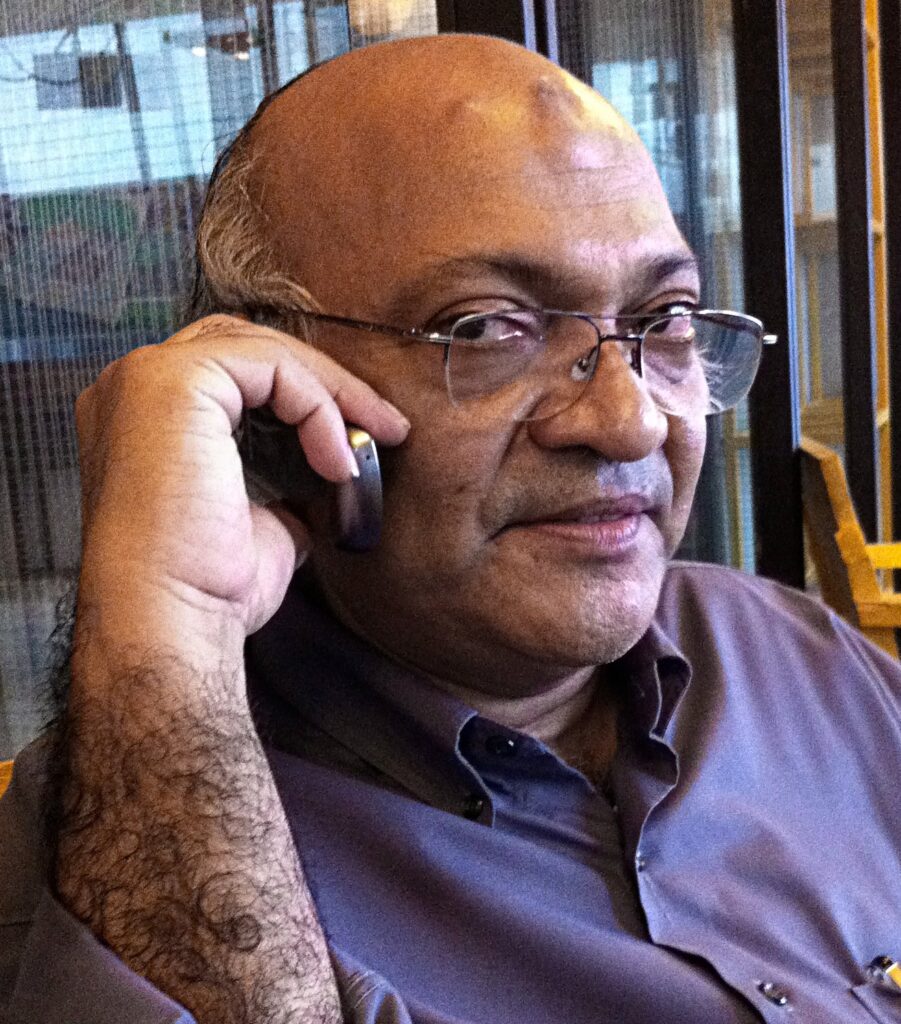
Chaiwat Satha-Anand, TFF Associate
Chairperson, Strategic Nonviolence Commisssion, Thailand Research Fund
Senior Research Fellow, TODA Institute of Global Peace and Policy Research
On August 6, 2012, the neo-Nazi Wade Michael Page walked into the gurudwara (Sikh temple) of Wisconsin in Oak Creek and murdered 6 people including the temple president. He was killed by the police in the incident.

While the Sikhs in the US had suffered from discrimination since they started coming to the United States in the early 20th century: they were driven out of Bellingham, Washington, in 1907; and out of St. John, Oregon in 1910, this most recent Oak Creek killing sparked global outcries from Washington DC to New Delhi. In India, members of Sikh communities staged protest demonstrations in several cities including New Delhi and Jammu, Kashmir.
There are many ways to understand this abominable incident.

Page’s personal history of his association with the far-right group and psychological profile would be one way. Bringing in the American history of violence with its reverence in the gun cultural economy, including the most recent killing at the screening of The Dark Knight Rises at a Denver cineplex on July 20, 2012 which claimed 12 lives, would be another. Situating this case in a larger context of growing hate-groups in the US would be yet another way.

According to the Southern Poverty Law Center, there are now 1,018 hate groups which is a 69 per cent increase since the beginning of the twenty-first century. There is also a resurgence of the anti-government “Patriot” movement, some groups with their armed militias. It grew by 775% during the first three years of the Obama administration, from 149 in 2008 to 1,274 in 2011. In Wisconsin alone, there are 8 hate groups including the neo-Nazi “New Order” in Milwaukee, “Crusaders for Yahweh” in Eau Claire, and “Aryan Nations 88” in Green Lake, among others.

Situating the Wisconsin killing in the American context is certainly important, but I would argue that the case is much more dangerous if viewed in the global context of a heinous trend conducive to deadly religio-ethnic conflicts: that of violence against sacred spaces which includes killing worshippers in their houses of worship.

This article attempts to show that there is indeed such a trend of violence against sacred spaces and that to cope with such phenomenon, it is important to understand why violence against sacred spaces is dangerous.

Violence against sacred spaces: a global trend?

In southern Thailand, there have been cases of violence against sacred spaces and religious personnel since the new round of violence re-exploded in 2004. But recently, two of the most significant cases include: the killing of 10 Malay Muslims, including the Imam, while they were praying in the Al-Furqan mosque in Narathiwat on June 8, 2009; and the bomb attack that killed two Buddhist monks from Suan Kaew temple while they were making their daily rounds of alms begging under military protection on a road in Yala on May 16, 2011, one day prior to the most important date in Buddhist calendar – the Visakha Puja day. Incidents such as these prompt me to ask if they are but isolated cases or symptomatic of a global trend.

In 2010, I conducted a study on the issue of violence against sacred spaces covering the period of 2009-2010 and found that there have been 104 incidents related to sacred spaces and religious personnel around the world, 49 took place in 2009 and it rose to 55 incidents in 2010. In 2010, the number of people killed in relation to sacred spaces increased 19.8% and those wounded increased 29.1%. These incidents combined have killed 1,730 people and wounded 3,671. Most of these incidents took place in Iraq and Pakistan which accounted for 77.2% of the casualties in 2009 and 71.2% in 2010.

If one considers the fact that Iraq is in a state of war and that Pakistan is not, it is important to point out that the number of people killed and wounded in Pakistan is 33.8% more than the number of casualties in Iraq in relation to sacred spaces and personnel. In addition, the year 2010 saw a dramatic increase of 147% in number of casualties in Pakistan resulted from violence against sacred spaces and personnel compared to 2009. (Peace & Policy 17 –forthcoming 2012)

Violence at sacred spaces in 2012

In addition, a cursory glance at what has happened to sacred spaces in the first six months of 2012 yields the following results:

January – People’s Republic of China: More than a thousand of Northwest Muslims fought against the Chinese police who demolished their mosque in the Ningxia region. (Bangkok Post, January 3, 2012)

February – Thailand: suspected insurgents threw two M 79 grenades into a Buddhist temple in Southern Thailand to avenge the earlier killings of four Malay Muslims by the Thai rangers. (Bangkok Post, February 2, 2012)

March – Australia: the Nazi symbol “KKK” and “white power” were scrawled across a wall, and several headstones were vandalized at the Fingal Head Cemetery, a burial ground for the Aboriginal people in New South Wales. (Bangkok Post, March 9, 2012)

April – Sri Lanka: Buddhist monks led an angry protest calling for the government to demolish or move a mosque in Dambala, North of Colombo. (Bangkok Post, April 24, 2012)

May – Jerusalem: Vandals, believed to be ultra-orthodox Jews, armed with hammers caused serious damages to a 4th century synagogue in the town of Tiberias on the Sea of Galilee. ( Bangkok Post, May 31, 2012

June – Iraq: Coordinated bombings and shootings took place during a major Shi’ite religious commemoration killing at least 59 people and wounding more than 200 in and near Baghdad. (Bangkok Post, June 14, 2012)

Though each case needs to be construed in the context of its own local conflict dynamic, taken together what these incidents mean is that: violence against sacred space could happen anywhere; the targets could belong to any religion/belief; the perpetrators could be organized or spontaneous; and violence that took place could be either provocative or reactive.

Moreover, some of these cases engender deadlier violence. For example, recent explosions at three churches in Northern Kaduna, Nigeria, killed at least 16 people. Very soon this incident led furious Christians to retaliate against Muslims in a subsequent riot that killed at least 45 and wounded more than a hundred. (Bangkok Post, June 19, 2012)

The use of violence against sacred spaces that has occurred around the world was possible precisely because of the uncertainty of the cultural line separating the sacred from the profane spaces. Moreover, when these sacred spaces are attacked, it is their sanctity that generates cultural power producing collective identity, often times through moral outrage.

Because of this complex conditionality, Muslims, Christians or Buddhists, among others, who witness their places of worship attacked, would react with outrage, and at times with vengeful violence. One of the reasons why attacking these targets endowed with religious symbolic meanings can be extremely dangerous with the curse of making conflicts deadlier is because they are not individuals but communal. The site that hurts is not the body or physical entity but the self – at times collective. Through anger of those communities of faith attacked, a kind of moral outrage as evident in Nigeria and elsewhere, violence against sacred spaces oftentimes engender conflicts deadlier and intractable. As a result, this kind of conflict becomes increasingly difficult to resolve.

A conference and an initiative to do more research and reduce this growing trend

Anticipating such incidents which seem to occur with increasing frequency, the TODA Institute for Global Peace and Policy Research, together with the Center for Global Nonkilling in Honolulu, Berghof Foundation, and Peace Information Center in Bangkok, organized an international conference on “Protecting Sacred Spaces and Peoples of Cloths: Academic Basis, Policy Promises” in Bangkok on May 28-29, 2011 to explore a specific class of ethno-religious conflict when perpetrators target sacred symbols and peoples, especially religious, which usually render existing conflicts deadlier and/or much more difficult to cope with.

At the conclusion of the conference, international scholars and policy makers in attendance, including the eminent Secretary-General of ASEAN, Dr.Surin Pitsuwan who was there for the whole conference, seem to agree that this issue is indeed a dangerous global problem rarely touched by researchers, and that some appropriate regional and/or global policy needs to be formulated to prevent existing conflicts from sliding further into the realm of deadlier violence.

Perhaps the beginning of the second decade of the twenty-first century is the right time for a country such as Thailand or a region such as ASEAN to do something globally significant – initiating a cultural code of conducting conflicts that would render violence against sacred spaces internationally and formally unacceptable, for example.

By overcoming its local or regional shortcomings, this country and/or ASEAN could help re-imagine a world where ethno-religious conflicts would be contained by locating sacred spaces and lives of religious personnel outside the curse of violence.

Related Posts

Jan Oberg, TFF director April 28, 2026 In this third TFF Peace Pulse, I make the important distinction between the violence and the conflict that violence is a symptom of. If you want peace, focus on the underlying conflict because that is the key to resolution, peacemaking, and a better future for the parties. The West is obsessed with violence, just look around you – and 90+ per cent of the public debate is about military issues and other violence – totally wasted for peace. These Peace Pulses will only be published here a few times. You will also not find them on YouTube and Vimeo because both platforms have blocked TFF and me; you know, peace is dangerous these days. Most TFF’s videos since 2007 are now on Rumble.
Photos © TFF 2000 Read PressInfo 90 “Lift the Sanctions and Bring More Aid to Yugoslavia” See Pictures from Belgrade © TFF 2000 Please reprint, copy, archive, quote or re-post this item, but please retain the source.
By Jan ObergTFF co-founder and director February 11, 2026 PART 3 — ECONOMICS, TRADE & FINANCIAL SOVEREIGNTY A. Trade Measures & Market Signaling Economic pressure can be applied instantly and scaled without violence. Immediate Measures (within a week) Government boycott US goods and services  A very powerful signal which over time will be felt. Targeted tariffs on selected U.S. goods Symbolic but high-visibility sectors send a clear message. Suspend trade facilitation talks A peaceful pause that signals deep concern. Freeze U.S. participation in public procurement – military procurement in particular A nonviolent way to reduce influence. Competition law review of U.S. corporations A legal tool to scrutinise market dominance. Longer-Term Measures EU–Asia–Africa trade corridors Reducing reliance on U.S. markets. European supply chains for critical minerals Strategic autonomy in resource access. European Strategic Trade Authority Monitoring coercive practices globally. Euro-denominated commodity markets Weakening the dollar’s pricing monopoly. The EU must resume contacts and negotiations with Russia, focusing on energy cooperation To...

Recent Articles

Tony Robinson October 4, 2026 Violence is easy to recognise when someone is being beaten, shot or killed. It becomes more difficult when nobody is holding a weapon. Poverty, discrimination, exploitation and repression can restrict a human life just as effectively, although they do so in very different ways and with very different consequences. Simply adding more categories to an ever-growing list of forms of violence does not really solve the problem. The more interesting question is what all these different situations have in common and why it makes sense to describe them using the same word. Human beings do not simply react to what happens around them. They remember the past, imagine things that do not yet exist, make plans and undertake projects. Workers organise because they imagine different working conditions; people migrate because they imagine another life somewhere else; social movements emerge because people refuse to accept the...
It’s a matter of principles, courage, vision and pulling together – while the militarist world is falling apart… Peter Langille October 3, 2026 “Here, then, is the problem which we present to you, stark and dreadful and inescapable: Shall we put an end to the human race; or shall mankind renounce war?”The Bertrand Russell—Albert Einstein Manifesto, July 9, 1955 ⁕ The forecast for what’s ahead is worrisome. The sharp rise in armed conflicts over the past three years is adding to what was already the highest level in over seventy years. Genocides, which should be prevented are supported. A shared climate emergency that jeopardises survival is ignored. Diverse polls now suggest that people are war-weary, worried and interested in a more effective United Nations. And, there are viable policy options for a more secure world! Yet governments are doubling-down, betting on more war and investing heavily. If current trends persist,...
Johan Galtung 1930-2024October 2015 Published here on October 3, 2026 Let us focus on Civilization for conflict analysis and remedies. Major forms of disorder use violence; war is state organized violence. The most belligerent states are the United States of America and Israel, both with civilization roots. National Evangelism, the US Protestant Christian civilization– more national than evangelical–justifies US warfare as exceptionalism of a people chosen by God, with a manifest destiny to run the world. Orthodox Judaism justifies Israeli warfare to conquer and expand from Nile to Euphrates as a religious right and duty to the Eternal One. The third most belligerent country, the UK, no longer believes it is God-chosen but chosen by the USA; not quite the same but something. But the root cause of global disorder lies in the Occident–with Islam–seeing itself as the single, universal civilization valid for all at all times, all others being...

TFF on Substack

Discover and subscribe to more peace materials on TFF Substack

Most Popular

Tony Robinson October 4, 2026 Violence is easy to recognise when someone is being beaten, shot or killed. It becomes more difficult when nobody is holding a weapon. Poverty, discrimination, exploitation and repression can restrict a human life just as effectively, although they do so in very different ways and with very different consequences. Simply adding more categories to an ever-growing list of forms of violence does not really solve the problem. The more interesting question is what all these different situations have in common and why it makes sense to describe them using the same word. Human beings do not simply react to what happens around them. They remember the past, imagine things that do not yet exist, make plans and undertake projects. Workers organise because they imagine different working conditions; people migrate because they imagine another life somewhere else; social movements emerge because people refuse to accept the...
It’s a matter of principles, courage, vision and pulling together – while the militarist world is falling apart… Peter Langille October 3, 2026 “Here, then, is the problem which we present to you, stark and dreadful and inescapable: Shall we put an end to the human race; or shall mankind renounce war?”The Bertrand Russell—Albert Einstein Manifesto, July 9, 1955 ⁕ The forecast for what’s ahead is worrisome. The sharp rise in armed conflicts over the past three years is adding to what was already the highest level in over seventy years. Genocides, which should be prevented are supported. A shared climate emergency that jeopardises survival is ignored. Diverse polls now suggest that people are war-weary, worried and interested in a more effective United Nations. And, there are viable policy options for a more secure world! Yet governments are doubling-down, betting on more war and investing heavily. If current trends persist,...
Johan Galtung 1930-2024October 2015 Published here on October 3, 2026 Let us focus on Civilization for conflict analysis and remedies. Major forms of disorder use violence; war is state organized violence. The most belligerent states are the United States of America and Israel, both with civilization roots. National Evangelism, the US Protestant Christian civilization– more national than evangelical–justifies US warfare as exceptionalism of a people chosen by God, with a manifest destiny to run the world. Orthodox Judaism justifies Israeli warfare to conquer and expand from Nile to Euphrates as a religious right and duty to the Eternal One. The third most belligerent country, the UK, no longer believes it is God-chosen but chosen by the USA; not quite the same but something. But the root cause of global disorder lies in the Occident–with Islam–seeing itself as the single, universal civilization valid for all at all times, all others being...
Read More
Living-Peace-Sign-Budapest-copy
Tony Robinson October 4, 2026 Violence is easy to recognise when someone is being beaten, shot or killed. It becomes more difficult when nobody is holding a weapon. Poverty, discrimination, exploitation and repression can restrict a human life just as effectively, although they do so in very different ways and with very different consequences. Simply adding more categories to an ever-growing list of forms of violence does not really solve the problem. The more interesting question is what all these different situations have in common and why it makes sense to describe them using the same word. Human beings do not simply react to what happens around them. They remember the past, imagine things that do not yet exist, make plans and undertake projects. Workers organise because they imagine different working conditions; people migrate because they imagine another life somewhere else; social movements emerge because people refuse to accept the...
b54a1f10-8c65-4f0b-9dd5-4abc0a7d04cc_2659x2659
It’s a matter of principles, courage, vision and pulling together – while the militarist world is falling apart… Peter Langille October 3, 2026 “Here, then, is the problem which we present to you, stark and dreadful and inescapable: Shall we put an end to the human race; or shall mankind renounce war?”The Bertrand Russell—Albert Einstein Manifesto, July 9, 1955 ⁕ The forecast for what’s ahead is worrisome. The sharp rise in armed conflicts over the past three years is adding to what was already the highest level in over seventy years. Genocides, which should be prevented are supported. A shared climate emergency that jeopardises survival is ignored. Diverse polls now suggest that people are war-weary, worried and interested in a more effective United Nations. And, there are viable policy options for a more secure world! Yet governments are doubling-down, betting on more war and investing heavily. If current trends persist,...
010
Johan Galtung 1930-2024October 2015 Published here on October 3, 2026 Let us focus on Civilization for conflict analysis and remedies. Major forms of disorder use violence; war is state organized violence. The most belligerent states are the United States of America and Israel, both with civilization roots. National Evangelism, the US Protestant Christian civilization– more national than evangelical–justifies US warfare as exceptionalism of a people chosen by God, with a manifest destiny to run the world. Orthodox Judaism justifies Israeli warfare to conquer and expand from Nile to Euphrates as a religious right and duty to the Eternal One. The third most belligerent country, the UK, no longer believes it is God-chosen but chosen by the USA; not quite the same but something. But the root cause of global disorder lies in the Occident–with Islam–seeing itself as the single, universal civilization valid for all at all times, all others being...
Screenshot 2026-10-02 011738
Jan ObergPhD, director, The Transnational Foundation for Peace and Future Research, TFFLund, Sweden October 2, 2026 This is my full original manuscript. The Chinese Academy of Social Science, CASS, makes two publications out if it. 1. China’s Five-year plan emphasized the capabilities of basic research and original innovation. It is regarded as the goal of the future social development, which, as required, should be significantly enhanced. Can you comment on the importance of original innovation in research and academic study? I believe it is easier to define “original innovation” in the natural sciences than in social sciences. The breaking points of what constitutes something new, or innovative, are not quite as sharp in the latter. But in both fields it is about opening up something that was closed, unseen, unexplored before – making manifest what was earlier latent. Innovations come in many forms and shapes – naming something that was not...
arctic-circle-map
The agreement is catastrophic both because of what it says and what it doesn’t mention. It reduces further the major asset of security policies: Freedom of action. Jan Oberg TFF director September 25, 2026 A couple of hours before the agreement was signed on September 22, 2026, I published the following 13 hypotheses about what it would most likely contain on TFF Substack (in English). I was wrong on only the first point. Contrary to what Trump had written on his Truth Social platform, it does not appear to come into force immediately. In fact, it turned out to be worse than even I had anticipated. After these hypotheses now come a number of reflections in light of what the agreement actually contains, and does not contain, as well as the way in which it has generally been presented by major media outlets and by the public-service broadcaster DR. My...
girl-5894831_1280
Below are TFF-related media mentions, comments, videos and social media posts published elsewhere but not on this homepage. We happen to catch and list only a fraction. Regarding video comments and debates, we recommend that you go to the TFF Video Channel on Substack where many of them are reproduced. Jan Oberg is a contributor to China Daily – 52 million daily clicks – and Global Times, CGTN and CCTV (the national television), China Investment, Xinhua News Agency and several others. Articles and videos on these media very often multiply into countless Chinese (and Western media) that re-post them from these main media. Thanks to The China Academy, his analyses, interviews and comments are frequently posted on YouTube channels such as Thinkers Forum and Wave Media. These videos are often re-posted on Bilibili (China’s YouTube), the China Content Center on TikTok, and on the Chinese edition of TikTok, Douyin.com. This means reaching hundreds of millions of viewers worldwide over a year. While there are too many to catch on all these...




