

By Richard Falk
Exactly a year ago, for 51 days between July 7 and August 26 Israel carried out its third major military assault (2008-09; 2012; 2014) on Gaza in the past six years.
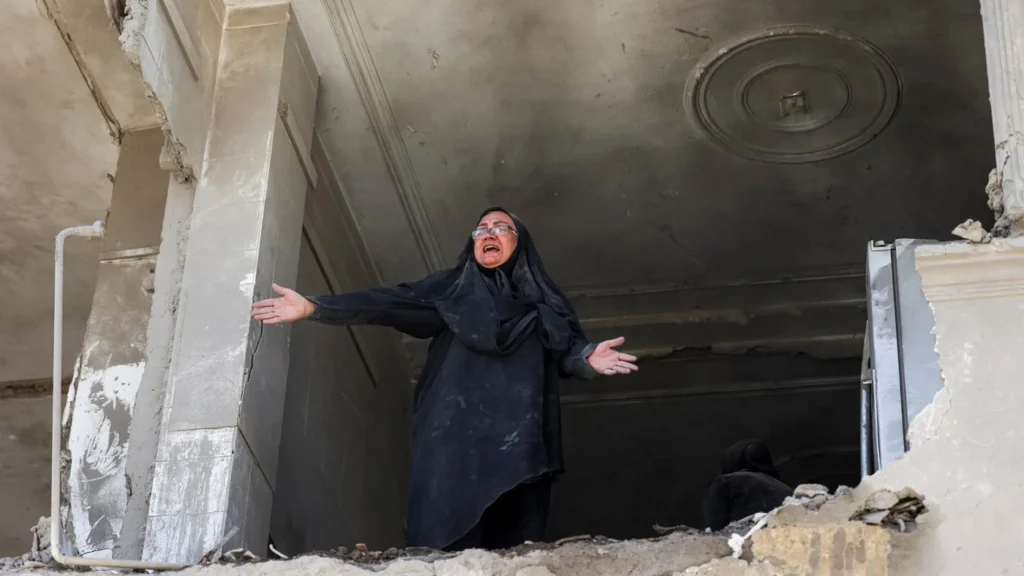
This last one, code named Operation Protective Edge by Israeli Defense Forces, was the most vicious, killing 2,251 Palestinians, of which 1,462 were civilians, and included 299 women and 551 children, as well as injuring 11,231, a number that includes 3,436 children, 10% of whom have permanent disabilities, and another 1,500 have been orphaned.
Israel also suffered casualties: 73 killed of whom 67 were military personnel, and 1,600 injured.
Additional to the human casualties, 18,000 Palestinian housing units were destroyed, along with substantial damage to Gaza’s electricity and sanitation systems, 500,000 Palestinians (almost 1/3 of Gaza’s population) were forcibly displaced during the military operations and 100,000 remain so a year later, and 73 medical facilities and ambulances were destroyed or damaged.
Due to the Israeli blockade, the aftermath of this onslaught has prevented a normal recovery, extending the period of suffering endured by the entire Gazan population. The magnitude of the Palestinian losses, as well as the comparison with Israeli losses, and the comparative ratio of civilians to military killed on the two sides, by itself suggests that the essential character of this Israeli undertaking is best understood as ‘state terror’ directed at Gaza’s population as a whole.
Such conclusions are reinforced by Israel’s provocations during the month prior to the launch of the attack and by the refusal of its government even to consider frequent proposals by Hamas to establish long-term internationally supervised ceasefire proposals.
This one-sided impression of the events is not conveyed by the much anticipated UN Report of the Commission of Inquiry (COI) set up by the Human Rights Council to investigate violations of international human rights and international humanitarian law in July of 2014 that were occurring during Operation Protective Edge.
The Commission was originally chaired by William Schabas, a leading world expert of international criminal law, but he resigned under pressure effectively mounted by Israel and the United States, centering on the discovery that Schabas has accepting a small consulting fee for some professional advice given to the Palestinian Liberation Organization a few years earlier.
This unhappy development left the commission with only two members, Mary McGowan Davis from the United States and Doudou Déne from Senegal, with Judge McGowan being named as chair. Neither is considered expert in relation to the subject matter being investigated.
Balance amid Imbalance
The report strives for ‘balance’ carefully setting off violations by Israel against those of what it calls ‘Palestinian armed groups’ creating a profoundly false sense on the part of readers as to equivalent responsibility for wrongful behavior by both Israel and Palestine. I agree with Ali Abunimah’s carefully formulated explanation for this misleading approach taken in the report and the deeper message being conveyed: “Despite the ‘balanced’ language that is now the habitual refuge of international officials hoping to avoid false accusations of anti-Israel bias, the evidence shows the scale and impact of Israel’s violence dwarfs anything allegedly done by Palestinians.” [See Ali Abunimah, “’Balance’ in UN Gaza Report can’t hide massive Israeli War Crimes,” Electronic Intifada, 22 June 2015].
Or as the widely respected international NGO, BADIL, expresses a similar reaction: “In the language employed, there appears a desire to portray the adversaries as being on an equal footing, despite this being patently untrue, as revealed in the vast disparity in respective casualties and destructive capabilities…attempts to portray ‘balance’ where there is none is extremely problematic.”
Typical of the imbalanced balance, the Report observes that “Palestinian and Israeli children were savagely affected by the events,” [§25] which is accurate in a literal sense, but a gross example of treating unequals equally, given the far greater severity of suffering endured by Palestinian children.
Looking for a glimmer of silver lining, some have endorsed this framing device of balance as justified to so as to persuade the mainstream media in the West, and especially the United States, to view the contents of the report more seriously as it cannot be dismissed simply by being called anti-Israeli, or worse, anti-Semitic.
As Abunimah emphasizes there is this strange mismatch between the strong evidence of Israeli disregard of legal constraints on military tactics that unduly imperil civilians and this rhetoric of balance, which in effect, assigns blame to both sides.
This is not to argue that the criminality of resistance tactics employed by Hamas and associated military groups in Gaza should be entirely ignored, but rather that the primary human impact of Protective Edge was to leave Gaza bleeding and devastated, while Israel endured minimal damage and dramatically less destructive impacts on its societal order.
Israeli damage was repaired almost immediately. In contrast, Israel’s refusal to allow ample reconstructions materials to enter has left substantial parts of Gaza in ruins, with many Gazans continuing to lack adequate shelter, remain homeless, displaced, and understandably traumatized.
Civilian Focus
Despite what might appear to be overly cautious language, a fair reading of the report supports three important conclusions:
• that Israel’s supposed efforts to protect the civilian population of Gaza were grossly inadequate from the perspective of international humanitarian law, and probably constituted war crimes; and
• that the military tactics employed by Israel on the battlefield were “reflective of broader policy, approved at least tacitly by decision-makers at the highest level of Government of Israel.”
• that the focus was on the civilian victims rather than on a bland acceptance of arguments premised on ‘military necessity’ or ‘asymmetric warfare’: in the words of the report, “The commission considered that the victims and their human rights were at the core of its mandate.”
Such findings, coupled with the detailed evidence set forth in the body of the report, provide the International Criminal Court with a strong, if indirect, mandate to proceed further with its preliminary investigation of Israeli criminality in the Gaza War.
Palestine is reinforcing this momentum by submitting its own body of evidence to back up allegations of Israeli criminality related to Protective Edge.
The Commission makes clear that it is relying, as is customary for non-judicial inquiries of this sort, on a ‘reasonable grounds’ test of potential criminality [§11], which is not as rigorous as would be applied in an ICC trial of accused individuals where the test is often formulated “as guilty beyond reasonable doubt” or some wording to that effect.
The Report makes no pretension of making a professional determination as to whether criminal prosecution should follow from its findings, although in its Recommendations section it does urge both the ICC and national courts relying on Universal Jurisdiction to move forward with indictments and prosecutions if the apparent criminality of either side’s conduct is confirmed by further investigation.
The ICC had already begun an investigation of its own in response to a Palestinian request after Palestine became a party to the Rome Treaty that provides the authoritative framework for addressing alleged international crimes at an international level.
Whether the ICC can bring any perpetrators of Israel’s criminal policies to justice is extremely doubtful as Israel, a non-member, is certain to denounce the effort and the institution and refuse all forms of cooperation; it is relevant also to note that the ICC is not permitted to hold trials without the presence in the courtroom of those accused.
Nevertheless, even the prospect of indictments and arrest warrants is itself a strong challenge to Israel’s approach to Gaza, and to the Palestinians generally, and it will further strengthen the BDS Campaign, as well as the wider global solidarity movement that rests on the delegitimizing of Israel’s policies and practices. It will also inhibit travel of Israeli political and military leaders to those countries that empower national courts to exercise universal jurisdiction in relation to well-evidenced allegations of violations of international criminal law.
Context
There are some definite positive elements in the Report beyond these general conclusions worth mentioning.
Unlike prior assessments – including the Goldstone Report of 2009 dealing with Operation Cast Lead, the attack on Gaza that began on December 27, 2008 – this new report specifies the context by referring to the Israeli blockade of Gaza as imposing “a continuing collective penalty against the population of Gaza,” [§15].
The Report fails to take the next logical step of identifying this penalty as a flagrant violation of Article 33 of the Fourth Geneva Convention that unconditionally prohibits any collective punishment, and hence is a continuing crime against humanity.
Helpfully, though, the Report does say that “the impact of hostilities cannot be assessed separately from the blockade imposed by Israel.”
This view is appropriately reinforced with the significant call for “a full and immediate lifting of the blockade,” [§24] although the relevance of the blockade is not stressed in the COI analysis of the combat tactics relied upon by both sides, which suffers from its resolve to appear ‘balanced.’
The Report also took innovative account of the fact that the Palestinians were suffering from ‘protracted occupation’ and that there was absent any prospect of peace between Israel and Palestine. [§14ff]
Acknowledging that this defining reality has some bearing on the reasonableness of resistance tactics, and should be treated as relevant when assessing the severity of violations. In contrast, Israel as the occupier that has long not only failed to implement, but actively subverted, the unanimous Security Council injunction to withdraw from territory occupied in 1967, should be held to higher standards of compliance with international law by the UN.
In the end, the incendiary question posed indirectly is “What are the Palestinians expected to do by way of resistance, considering that they lack precision weaponry and have long been victimized by a prolonged occupation that is oppressive and exploitative, and shows no sign of ending anytime soon?’
These contextual factors are also affected by a diplomatic context in which Israel insists on treating Hamas as a terrorist entity, despite the fact that Hamas has been offering long-term proposals for peaceful coexistence supervised by an international presence ever since it decided to pursue a political track to liberation when it participated successfully in 2006 elections in Gaza and the West Bank and effectively abandoned armed struggle, including suicide bombing, as its approach to liberation.
Such a potential diplomatic path to Israeli security is not mentioned in the Report, or its legal correlative, that since World War II, recourse to war is legally valid only as a last resort even where legal claims of self-defense are well-grounded.
In this regard, Israel’s refusal to explore a diplomatic alternative to war casts doubts on its claim to be acting in necessary self-defense.
This diplomatic option for Israeli security should have been discussed in the Report even if it could not be definitively proven to exist. Also, not discussed, is whether given stage-setting Israeli anti-Hamas provocations in the West Bank, which are set forth in the Report, along with the absence of any substantial damage from Gaza rockets fired at Israel, the legal conditions for a claim of self-defense existed given the seeming absence of a prior armed attack as required by Article 51 of the UN Charter.
The Report relies on a methodology based on a reasonable interpretation of customary international law articulated by reference to three principles: of distinction (limiting attacks to discrete military targets) ; of proportionality (avoiding uses of force disproportionate to the value of the target); of precaution (taking reasonable measures to avoid civilian death and destruction). [§13]
It is evident to the COI that Palestinian missiles, inaccurate and directed toward Israeli population centers, violate the principle of distinction even if they do little damage as do Israeli strikes directed at densely populated residential neighborhoods that inflict massive damage. For instance, the Report condemns the Israeli use of massive firepower against Rafah and Shuja’iya “in utter disregard of its devastating impact on the civilian population.” [§58]
Although the Report finds that the use of human shields by either side is a violation of the laws of war, it fails to find sufficient evidence to reach any firm conclusion.
Recommendations
In the conclusions and recommendations of the Report there are various calls made for greater vigilance in following through, arguing that imposing accountability for violations of international criminal law is relevant to avoiding a repetition of the Protective Edge experience.
In this spirit the Report indicates that the victims, in particular, stressed examining “the root causes of the conflict” as an essential step toward future. [§75] There was also a determined emphasis placed on overcoming impunity with respect to such crimes, and in particular, “Israel must break with its lamentable record in holding wrongdoers responsible.” [§76]
There is also a specific call to support the work of the ICC, and for Israel to accede to the Rome Treaty that controls the operation of the ICC.[§86(e); 89(d)]
The recommendations that are most relevant are set forth in §86(d):
“To address structural issues that fuel the conflict and have a negative impact on a wide range of human rights, including the right to self-determination; in particular, to lift, immediately and unconditionally, the blockade on Gaza; to cease all settlement-related activity, including the transfer of Israel’s own population to the occupied territory; and to implement the advisory opinion rendered on 9 July 2004 by the International Court of Justice on the legal consequences of the construction of a wall in the Occupied Palestinian Territory.”
This enumeration is a departure from the tone and substance of balance, and calls upon Israel to bring its behaviour as Occupier into conformity with international humanitarian law. It refrains from mandating the dismantling of the unlawful settlements, but otherwise goes quite far in relation to human rights, including self-determination, settlement expansion, and the wall to address the most fundamental Palestinian grievances.
Conclusion
As might have been anticipated, despite the balance of the Report, it was attacked as biased by Israel and the United Stateseven before being made public, and its presentation in an open debate at the Human Rights Council was boycotted.
Israel went further, issued extensive report prepared under the aegis of the Israel Defense Forces that exonerated Israel on all counts. [Special Report, ‘Operation Protective Edge,’ Israel Defense Forces, June 2015; “The 2014 Gaza Conflict: Factual and Legal Aspects,” Israel’s Ministry of Foreign Affairs, June 2015].
It also invited a group of ‘high-level’ military officers and diplomats to review the allegations, which also vindicated Israel’s claims in its consensus report. [“Key Preliminary Findings of the High Level International Military Group on the Gaza Conflict,” June 12, 2015, UN Watch home page]
In effect, the familiar battle lines are drawn at inter-governmental levels, making it clear that nothing can be expected to flow from this Report beyond a further recognition that if the Palestinian struggle is to advance at this stage it will depend on the activism of civil society rather than on the policies of governments or the implementation of the Report’s recommendations by the United Nations.
At the same time, as with the earlier Goldstone Report, it is important that this COI fully documented the essential charges with elaborate evidence, and legitimates the coercive tactics of Palestinian resistance and the nonviolent militancy of the global solidarity movement. As the COI noted, Israel again refused cooperation with the investigative efforts from their outset. The political weight of the Report is augmented by the fact that its findings and recommendation were formally received with approval by a vote of 41-1 in the Human Rights Council.
As could be anticipated, the United States was the lone member of the HRC that refused support to the Report. Even Europe, voting as a unit, gave its positive endorsement. Human Rights Watch made the following observation: “The lack of support by the United States—the only state to vote against shows a disappointing unwillingness to challenge impunity for serious crimes during the Gaza conflict and to stand up for the victims of war crimes during the conflict.”
It is sad that despite the abusive attitudes exhibited by the Netanyahu government toward the Obama presidency there is no willingness on the part of Washington to back international criminal law in such circumstances of gross violation.
When the United States Government, still the world’s most influential political actor, gives such precedence to the most cynical aspects of alliance politics it sends a powerful message that governments can freely abandon principled foreign policy whenever it conflicts with hard power calculations of geopolitics (and in this instance, more relevantly, with the soft power dynamics of American domestic politics).






