

U.S. military suicides and Palestinian hunger strikes

There is some awareness in the United States that suicides among American military personnel are at the highest level since the years of the Vietnam War. It is no wonder.

The sense of guilt and alienation associated with taking part in the Afghanistan War, especially multiple postings to a menacing war zone for a combat mission that is increasingly hard to justify and almost impossible to carry out successfully, seems sufficient to explain such a disturbing phenomenon.

These tragic losses of life, now outnumbering battlefield deaths, about one per day since the start of 2012, are not hidden from the American public but nor do they provoke an appropriate sense of concern, or better, outrage. This contrasts with the Vietnam years, especially toward the end of the war, when many families with children at risk in a war that had lost its way and was being lost took to the streets, pressured their Congressional representatives, spoke at anti-war rallies, and supported their sons unwillingness to take part.

Now there is a stony silence in American society, which seems to be a confirmation that we now are ‘citizens’ of or ‘patriots’ in an authoritarian democracy, or more urbanely, ‘subjects’ of a constitutional democracy. We are less than ever cognizant of the Jeffersonian imperative: the health of this democracy depends on the conscience and vigilance of its citizens.

Anthony Swofford, a former marine, seeking to comprehend what Newsweek in a cover story (May 25, 2012) acknowledges to be “an epidemic” of suicides among combat veterans takes note of the resistance to self-scrutiny on the part of the governmental branches most involved. In his words, “the Department of Veteran Affairs and the military shy away from placing blame directly on the psychological and social costs of killing during combat.”

There is some attention given apparently to improving the screening process so that potential suicides are not inducted, but no sensitivity to the deeply alienating experience of being assigned to kill in an utterly unfamiliar human environment as is the case with Afghanistan and Iraq that is naturally hostile to such an occupation by a distant country with an entirely different cultural orientation.

If you have seen pictures of heavily armed American foot soldiers on patrol in an Afghan village feelings of surreal misfit seem inescapable. And yet, there is no national sense of responsibility associated with sending young Americans into situations where the harm done to themselves not only puts their lives and well-being in jeopardy as a result of being exposed to enemy weapons but also subjects them to often invisible traumatic wounds of the assigned combat duties that rarely altogether heal even many years after leaving the war zone.

These wounds are far more widespread than even the high incidence of suicide suggests, often expressed in less dramatic and terminal ways. It is a monumental expression of insensitivity to the well-being of our youth that we put them in harm’s way to carry out a war effort that has long been drained of meaning, and that our leaders are at a loss to explain.

True patriotism in this century should produce an angry uproar and public debate before acquiescing in such a cruel indifference to the fate of our young warriors, who are disproportionately poor and frequently members of a marginalized minority. This insensitivity is, of course, far less pervasive than when the victims are ‘others.’ This is illustrated by the national failure to raise questions about the state terror associated with drone attacks on village communities in foreign countries that undoubtedly spreads acute fear and feelings of vulnerability to the entire population, and not just to those who might imagine themselves to be selected by an American president as a kill target.

The relationship of these suicides to the recent wave of Palestinian hunger strikers objecting to Israeli practices of detention without charges or trial and to deplorable arrest and prison conditions is worth commenting upon. The hunger strikers are arousing widespread sympathy among their population, and a growing commitment to protest their confinement and celebrate their courage, embracing their acts as essential expressions of Palestinian nonviolent resistance to occupation, annexation, and apartheid conditions. Unlike suicides among veterans, which are lonely acts of desperation because the conditions of living have become endurable, the hunger strikers are willingly and knowingly engaging in a punishing self-decreed refusal to accept food as the only means available to call attention to their severe grievances. Their acts express an intense desire for life, not death, but their statement to the world is that when conditions become so dreadful it is preferable to die than to be further humiliated by intolerable mistreatment.

The first hunger striker, Khader Adnan, since his release in April tells of why he engaged in such extreme violence against his body despite a deep attachment to his family and village life: “The reasons behind my hunger strike were the frequent arrests and treatment received when arrested and the third was the barbaric methods of interrogation in prison—they humiliated me. They put dust of their shoes on my moustache, they picked hairs out of my beard, they tied my hand behind my back and to the chair which was tied to the floor. They put my picture on the floor and stepped on it. They cursed my wife, and my daughter who was less than a year and four months old with the most offensive words they could use.”

The hunger strikes have finally brought to light such patterns of humiliation long imposed on imprisoned Palestinians. What Adnan did inspired many others among Palestinian prisoners, and at present there remain at least three Palestinians risking death to abide by their plea for life and dignity, and these include a prominent member of the Palestinian national football team who has been held as an ‘unlawful combatant’ since July 2009, Mahmoud Sarsak, now 90 days without food (the two others are Akram al-Rakhaw, 70 days, and Sunar al-Berq).

These dual sad set of circumstances both involve fundamental wrongs associated with the violence of states. The American suicides are essentially sacrifices of lives at the altar of the Martian god of war, while the Palestinian hunger strikes are struggles to survive in the face of state terror imposed in darkness on those who show any signs of resistance to an occupation that has gone on for 45 years and has become more and more oppressive with the passage of time. As Adnan said of his experience of arrest in the middle of the night and release: “..they are trying to hurt our dignity..and released me in the dark, late at night..they only work in the darkness.”

Despite this darkness, we should be able to see what is happening, and respond with whatever means are at our disposal. In America we are mostly kept in the dark with respect to Palestinian suffering, and as for our Americans victims of war, we are informed, but not enlightened, and thus are caught in the headlights, supposing that these military suicides are an unfathomable mystery rather than realizing that they are inevitable byproducts of wars fought in strange foreign lands for no credible defensive purpose.
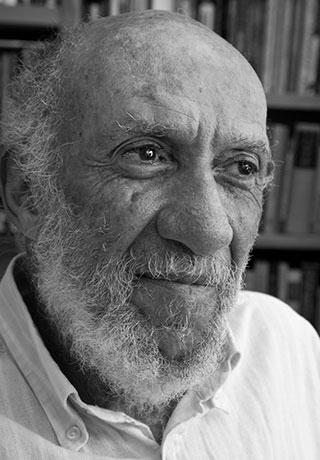

Professor Falk became an adviser to TFF when it was established in 1985.

Related Posts

Tony Robinson October 4, 2026 Violence is easy to recognise when someone is being beaten, shot or killed. It becomes more difficult when nobody is holding a weapon. Poverty, discrimination, exploitation and repression can restrict a human life just as effectively, although they do so in very different ways and with very different consequences. Simply adding more categories to an ever-growing list of forms of violence does not really solve the problem. The more interesting question is what all these different situations have in common and why it makes sense to describe them using the same word. Human beings do not simply react to what happens around them. They remember the past, imagine things that do not yet exist, make plans and undertake projects. Workers organise because they imagine different working conditions; people migrate because they imagine another life somewhere else; social movements emerge because people refuse to accept the...
It’s a matter of principles, courage, vision and pulling together – while the militarist world is falling apart… Peter Langille October 3, 2026 “Here, then, is the problem which we present to you, stark and dreadful and inescapable: Shall we put an end to the human race; or shall mankind renounce war?”The Bertrand Russell—Albert Einstein Manifesto, July 9, 1955 ⁕ The forecast for what’s ahead is worrisome. The sharp rise in armed conflicts over the past three years is adding to what was already the highest level in over seventy years. Genocides, which should be prevented are supported. A shared climate emergency that jeopardises survival is ignored. Diverse polls now suggest that people are war-weary, worried and interested in a more effective United Nations. And, there are viable policy options for a more secure world! Yet governments are doubling-down, betting on more war and investing heavily. If current trends persist,...
Johan Galtung 1930-2024October 2015 Published here on October 3, 2026 Let us focus on Civilization for conflict analysis and remedies. Major forms of disorder use violence; war is state organized violence. The most belligerent states are the United States of America and Israel, both with civilization roots. National Evangelism, the US Protestant Christian civilization– more national than evangelical–justifies US warfare as exceptionalism of a people chosen by God, with a manifest destiny to run the world. Orthodox Judaism justifies Israeli warfare to conquer and expand from Nile to Euphrates as a religious right and duty to the Eternal One. The third most belligerent country, the UK, no longer believes it is God-chosen but chosen by the USA; not quite the same but something. But the root cause of global disorder lies in the Occident–with Islam–seeing itself as the single, universal civilization valid for all at all times, all others being...

Recent Articles

Tony Robinson October 4, 2026 Violence is easy to recognise when someone is being beaten, shot or killed. It becomes more difficult when nobody is holding a weapon. Poverty, discrimination, exploitation and repression can restrict a human life just as effectively, although they do so in very different ways and with very different consequences. Simply adding more categories to an ever-growing list of forms of violence does not really solve the problem. The more interesting question is what all these different situations have in common and why it makes sense to describe them using the same word. Human beings do not simply react to what happens around them. They remember the past, imagine things that do not yet exist, make plans and undertake projects. Workers organise because they imagine different working conditions; people migrate because they imagine another life somewhere else; social movements emerge because people refuse to accept the...
It’s a matter of principles, courage, vision and pulling together – while the militarist world is falling apart… Peter Langille October 3, 2026 “Here, then, is the problem which we present to you, stark and dreadful and inescapable: Shall we put an end to the human race; or shall mankind renounce war?”The Bertrand Russell—Albert Einstein Manifesto, July 9, 1955 ⁕ The forecast for what’s ahead is worrisome. The sharp rise in armed conflicts over the past three years is adding to what was already the highest level in over seventy years. Genocides, which should be prevented are supported. A shared climate emergency that jeopardises survival is ignored. Diverse polls now suggest that people are war-weary, worried and interested in a more effective United Nations. And, there are viable policy options for a more secure world! Yet governments are doubling-down, betting on more war and investing heavily. If current trends persist,...
Johan Galtung 1930-2024October 2015 Published here on October 3, 2026 Let us focus on Civilization for conflict analysis and remedies. Major forms of disorder use violence; war is state organized violence. The most belligerent states are the United States of America and Israel, both with civilization roots. National Evangelism, the US Protestant Christian civilization– more national than evangelical–justifies US warfare as exceptionalism of a people chosen by God, with a manifest destiny to run the world. Orthodox Judaism justifies Israeli warfare to conquer and expand from Nile to Euphrates as a religious right and duty to the Eternal One. The third most belligerent country, the UK, no longer believes it is God-chosen but chosen by the USA; not quite the same but something. But the root cause of global disorder lies in the Occident–with Islam–seeing itself as the single, universal civilization valid for all at all times, all others being...

TFF on Substack

Discover and subscribe to more peace materials on TFF Substack

Most Popular

Tony Robinson October 4, 2026 Violence is easy to recognise when someone is being beaten, shot or killed. It becomes more difficult when nobody is holding a weapon. Poverty, discrimination, exploitation and repression can restrict a human life just as effectively, although they do so in very different ways and with very different consequences. Simply adding more categories to an ever-growing list of forms of violence does not really solve the problem. The more interesting question is what all these different situations have in common and why it makes sense to describe them using the same word. Human beings do not simply react to what happens around them. They remember the past, imagine things that do not yet exist, make plans and undertake projects. Workers organise because they imagine different working conditions; people migrate because they imagine another life somewhere else; social movements emerge because people refuse to accept the...
It’s a matter of principles, courage, vision and pulling together – while the militarist world is falling apart… Peter Langille October 3, 2026 “Here, then, is the problem which we present to you, stark and dreadful and inescapable: Shall we put an end to the human race; or shall mankind renounce war?”The Bertrand Russell—Albert Einstein Manifesto, July 9, 1955 ⁕ The forecast for what’s ahead is worrisome. The sharp rise in armed conflicts over the past three years is adding to what was already the highest level in over seventy years. Genocides, which should be prevented are supported. A shared climate emergency that jeopardises survival is ignored. Diverse polls now suggest that people are war-weary, worried and interested in a more effective United Nations. And, there are viable policy options for a more secure world! Yet governments are doubling-down, betting on more war and investing heavily. If current trends persist,...
Johan Galtung 1930-2024October 2015 Published here on October 3, 2026 Let us focus on Civilization for conflict analysis and remedies. Major forms of disorder use violence; war is state organized violence. The most belligerent states are the United States of America and Israel, both with civilization roots. National Evangelism, the US Protestant Christian civilization– more national than evangelical–justifies US warfare as exceptionalism of a people chosen by God, with a manifest destiny to run the world. Orthodox Judaism justifies Israeli warfare to conquer and expand from Nile to Euphrates as a religious right and duty to the Eternal One. The third most belligerent country, the UK, no longer believes it is God-chosen but chosen by the USA; not quite the same but something. But the root cause of global disorder lies in the Occident–with Islam–seeing itself as the single, universal civilization valid for all at all times, all others being...
Read More
Living-Peace-Sign-Budapest-copy
Tony Robinson October 4, 2026 Violence is easy to recognise when someone is being beaten, shot or killed. It becomes more difficult when nobody is holding a weapon. Poverty, discrimination, exploitation and repression can restrict a human life just as effectively, although they do so in very different ways and with very different consequences. Simply adding more categories to an ever-growing list of forms of violence does not really solve the problem. The more interesting question is what all these different situations have in common and why it makes sense to describe them using the same word. Human beings do not simply react to what happens around them. They remember the past, imagine things that do not yet exist, make plans and undertake projects. Workers organise because they imagine different working conditions; people migrate because they imagine another life somewhere else; social movements emerge because people refuse to accept the...
b54a1f10-8c65-4f0b-9dd5-4abc0a7d04cc_2659x2659
It’s a matter of principles, courage, vision and pulling together – while the militarist world is falling apart… Peter Langille October 3, 2026 “Here, then, is the problem which we present to you, stark and dreadful and inescapable: Shall we put an end to the human race; or shall mankind renounce war?”The Bertrand Russell—Albert Einstein Manifesto, July 9, 1955 ⁕ The forecast for what’s ahead is worrisome. The sharp rise in armed conflicts over the past three years is adding to what was already the highest level in over seventy years. Genocides, which should be prevented are supported. A shared climate emergency that jeopardises survival is ignored. Diverse polls now suggest that people are war-weary, worried and interested in a more effective United Nations. And, there are viable policy options for a more secure world! Yet governments are doubling-down, betting on more war and investing heavily. If current trends persist,...
010
Johan Galtung 1930-2024October 2015 Published here on October 3, 2026 Let us focus on Civilization for conflict analysis and remedies. Major forms of disorder use violence; war is state organized violence. The most belligerent states are the United States of America and Israel, both with civilization roots. National Evangelism, the US Protestant Christian civilization– more national than evangelical–justifies US warfare as exceptionalism of a people chosen by God, with a manifest destiny to run the world. Orthodox Judaism justifies Israeli warfare to conquer and expand from Nile to Euphrates as a religious right and duty to the Eternal One. The third most belligerent country, the UK, no longer believes it is God-chosen but chosen by the USA; not quite the same but something. But the root cause of global disorder lies in the Occident–with Islam–seeing itself as the single, universal civilization valid for all at all times, all others being...
Screenshot 2026-10-02 011738
Jan ObergPhD, director, The Transnational Foundation for Peace and Future Research, TFFLund, Sweden October 2, 2026 This is my full original manuscript. The Chinese Academy of Social Science, CASS, makes two publications out if it. 1. China’s Five-year plan emphasized the capabilities of basic research and original innovation. It is regarded as the goal of the future social development, which, as required, should be significantly enhanced. Can you comment on the importance of original innovation in research and academic study? I believe it is easier to define “original innovation” in the natural sciences than in social sciences. The breaking points of what constitutes something new, or innovative, are not quite as sharp in the latter. But in both fields it is about opening up something that was closed, unseen, unexplored before – making manifest what was earlier latent. Innovations come in many forms and shapes – naming something that was not...
arctic-circle-map
The agreement is catastrophic both because of what it says and what it doesn’t mention. It reduces further the major asset of security policies: Freedom of action. Jan Oberg TFF director September 25, 2026 A couple of hours before the agreement was signed on September 22, 2026, I published the following 13 hypotheses about what it would most likely contain on TFF Substack (in English). I was wrong on only the first point. Contrary to what Trump had written on his Truth Social platform, it does not appear to come into force immediately. In fact, it turned out to be worse than even I had anticipated. After these hypotheses now come a number of reflections in light of what the agreement actually contains, and does not contain, as well as the way in which it has generally been presented by major media outlets and by the public-service broadcaster DR. My...
girl-5894831_1280
Below are TFF-related media mentions, comments, videos and social media posts published elsewhere but not on this homepage. We happen to catch and list only a fraction. Regarding video comments and debates, we recommend that you go to the TFF Video Channel on Substack where many of them are reproduced. Jan Oberg is a contributor to China Daily – 52 million daily clicks – and Global Times, CGTN and CCTV (the national television), China Investment, Xinhua News Agency and several others. Articles and videos on these media very often multiply into countless Chinese (and Western media) that re-post them from these main media. Thanks to The China Academy, his analyses, interviews and comments are frequently posted on YouTube channels such as Thinkers Forum and Wave Media. These videos are often re-posted on Bilibili (China’s YouTube), the China Content Center on TikTok, and on the Chinese edition of TikTok, Douyin.com. This means reaching hundreds of millions of viewers worldwide over a year. While there are too many to catch on all these...




