
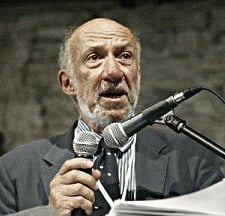
Prefatory Note:
The Israeli military operation, code name Operation Protective Edge by Israel, being carried out in the Gaza Strip continues, and seems poised to mount a ground attack that will further intensify the suffering of the Palestinian people, and lend additional credibility to the accusation of ‘collective punishment,’ both a grave breach of international humanitarian law and a crime against humanity.
The article below is a somewhat edited re-publication of an opinion piece published in AlJazeera English several days ago at the start of Operation Protective Edge.

For the third time in the last six years Israel has cruelly unleashed the full fury of its military machine against the defenseless 1.7 million people of Gaza, inflicting heavy civilian casualties and further devastation on the long besieged and impoverished Gaza Strip.

With cynical disregard of the realities of this latest one-sided confrontation between Israel and Palestine, instead of condemning such recourse to massive violence as ‘aggression’ that violates the UN Charter and fundamental international law principles, the reaction of Western diplomats and mainstream media has so far perversely sided with Israel, citing the bland rationalization repeatedly stressed by Netanyahu that ‘every nation has the right to defend itself.’

And so it does, but not by way of aggression!

From the UN Secretary General to the President of the United States, the main insistence has been that Hamas stop must all rocket attacks while Israel is requested ever so politely to show “maximum restraint.”

Up to now, the Israeli attacks have caused some two hundred deaths (more than half of whom are women and children; 80% civilians) and more than a thousand physical injuries (plus countless more injuries to mental health). In this period hundreds of rockets have been fired into Israel from Gaza, but have yet to cause a single death.

The only reported serious injury to Israelis has been suffered by a person on his way to a shelter, making one aware that there are no shelters for Gazans subjected to much more lethal forms of firepower.

Granted that such rocket attacks, indiscriminate in nature, are unlawful forms of resistance, to single out this lesser type of violence out and overlook the greater violence distorts the context in biased and unacceptable ways, and helps explain the distorted discourse in Western diplomacy.

Surely, the greater occasion of terror is that being inflicted on the hapless Gazans as disclosed by comparing the casualty disparity, and surely the political condemnation by responsible governments and even more so by the UN should be directed at the aggressor, who also happens to be the only political actor with the means to end the escalating violence, yet defiantly lacks the will.

This international reaction to this latest crisis confirms for all with eyes to see that geopolitical alignments, not law or justice, dominates the diplomacy of leading Western states and the UN, when it comes to the Middle East, and especially if it concerns Israel-Palestine, and never more so than in relation to Gaza.

After several days of the Israel attack, self-servingly code-named Protective Edge by Israel, President Obama made a low profile offer to mediate a return to the 2012 ceasefire that had been arranged through the good offices of Egypt after this earlier onslaught on Gaza. Whether the U.S. Government, the undisguised patron and unconditional supporter of Israel, has the credibility to play such a mediating role rather doubtful, but in any event, Israel showed no interest.

It is possible that Hamas, weakened by developments in Egypt and elsewhere in the region, and facing the desperation of a terrorized and totally vulnerable people entrapped in the Gaza Strip, with a health system on the verge of collapse, might accept such a move even if excluded from participating directly in the negotiations, which would mean depending on the Palestinian Authority to represent Gaza’s interests.

After all, Hamas, although prevailing in fair elections back in 2006, remains ‘a terrorist organization’ according to the Western diplomatic establishment, even though it has been in recent years mostly on the receiving end of Israeli state terrorism, and should be allowed to act diplomatically on behalf of Gaza and enhance its credentials as a political actor.

At present, the issue may be moot as Netanyahu belligerently insists that no amount of international pressure will lead Israel to stop its attack until the ambitious political goals of the military operation have been attained. These goals include as a priority the elimination of Hamas influence in the West Bank, which is the prize that the current Israeli leadership covets in its quest to complete the Likud maximalist version of the Zionist Project.

An aspect of the distorted approach to responsibility for the violence in Gaza is the refusal of the West to take note of the connection between Protective Edge and the June 12th kidnapping and killing of the three Israeli settler teenage children and the surge of public and private sector revenge violence culminating in the grisly murder of Mohammed Abu Kheir, a 17 year old Arab boy a few days later in the Shuafat neighborhood of Jerusalem.

Without ever disclosing evidence linking Hamas to such an atrocious crime the Netanyahu government and Israeli media reacted hysterically, immediately inciting a vicious campaign against suspected Hamas militants throughout the West Bank and East Jerusalem, including air strikes in Gaza. In this atmosphere many Israeli officials and media stalwarts were provocatively calling upon the Israeli citizenry to strike back at the Palestinians.

It was in this inflamed atmosphere that the Israeli government undertook a massive campaign of collective punishment, itself a war crime: hundreds of Palestinians thought to be associated with Hamas were arrested and detained; house demolitions of the homes of suspects; killings of at least six Palestinians; lockdowns of entire cities; and then the air strikes against Gaza.

All this was done despite the mounting belief of independent observers that the crime against the Israeli youths was carried out by two Palestinians unaffiliated with Hamas, perhaps with an initial plan to bargain for the release of Palestinian prisoners in an exchange.

Never has it been asserted in high profile diplomatic circles of the West that the horrible crime provided Netanyahu with a pretext for unleashing an anti-Hamas campaign to complete the process of de facto annexation of most of the West Bank.

This campaign seems far less motivated by a response to the kidnapping/murder than by the political objective of punishing the Palestinians leadership for defying the Netanyahu government for recently achieving a measure of reconciliation as between the Palestinian Authority and Hamas.

Further in the background, but part of the context, is the Israeli interest in shifting responsibility away from themselves for the failure of the Kerry direct negotiations that collapsed at the end of April. And in the foreground, are the settlers and the settlements with their avowed intention of incorporating Samaria and Judea into the state of Israel once and for all, whatever the consequences.

So far, Israel has met calls for restraint and a ceasefire with contempt. Rumors of Hamas’s receptivity to a ceasefire have not been tested. Israel’s leaders have responded defiantly, suggesting that Protective Edge will not cease until the Hamas’ infrastructure is destroyed, whatever it takes, supposedly to ensure that no rockets will ever again be fired from Gaza, which would imply that Gaza was totally subjugated and completely helpless.

When Palestinian civilians are killed and terrorized in the process of pursuing such an elusive goal, this is rationalized by Israeli officials as a regrettable side effect of what Israeli leaders are claiming to be a legitimate military undertaking. In a characteristic warped statement Netanyahu declared: “We are not eager for battle, but the security of our citizens and children takes precedence over all else.”

Some Israeli top officials were clearer about Israel’s objectives than was the prime minister. The Defense Minister, Moshe Yalon, called for the total destruction of Hamas, which is tantamount to seeking a genocidal hunting license in relation to the entrapped people of Gaza and the oppressed population of the West Bank and East Jerusalem.

The Deputy Minister of Defense, settler notable Dani Dayon, publically urged Israel to cut off fuel and electricity to Gaza. If such a policy is implemented it would virtually guaranty a grotesque humanitarian crisis.

While Gaza burns, the fiddlers at the UN content themselves by worrying about the text of a proposed Security Council resolution, which never materialized.

Israel and the United States were reported to be using all the leverage at their disposal to avoid condemnations of the Israeli air strikes on civilian targets in Gaza and even hoping that the final text of a resolution, if any, will include their preferred language about every sovereign state having a right to protect itself. It now seems that there will be no resolution as the United States is refusing to accept the language of the drafters, and only a rather innocuous non-binding Security Council ‘statement.’

On the basis of this disillusioning global response to Israeli aggression, it should become clear that the Palestinian struggle for self-determination and justice needs to be waged worldwide primarily at the grassroots level. It has never seemed more reasonable and morally necessary for persons of good will to lend maximum support to the BDS (boycott, divestment, and sanctions) campaign that has been in any event growing rapidly.

It is also time to demand that governments adopt sanctions seeking Israeli withdrawal from the occupation of Palestine. An appropriate further response would be for the UN General Assembly to recommend imposing an arms embargo on Israel, as well as a boycott on Israel’s arms exports.

This would be, at first, a largely symbolic gesture as Israel has become a major weapons maker, exporting arms to many countries with a tasteless sales pitch that stress the benefits of Israeli weaponry because it is ‘field-tested.’ There is a special challenge to American governmental institutions and its taxpaying citizenry that have been providing more than $3 billion of military assistance aid, coupled with special arrangements beneficial to Israel, for many years.

It is painfully evident that state-to-state diplomacy and the UN have failed to produce a just peace despite decades of fruitless talks. It is time to acknowledge that these talks have been carried on in bad faith: while the diplomats sat around the table, Israeli settlements relentlessly expanded, apartheid structures deepened their hold on the West Bank and Jerusalem, and Gaza was cordoned off as a hostage enclave to be attacked by Israel at will whenever a bloody sacrifice seemed useful from the perspective of national interests.

At least, the Secretary General of the Arab League, Nabil ElAraby, condemned the “dangerous Israeli escalation,” urged the Security Council to “adopt measures to stop Israeli aggression against the Gaza Strip,” and warned of the humanitarian consequences.

Turkish and Iranian issued official statements along similar lines. There is so much regional turbulence at present that it is unlikely to hope for anything more than scattered verbal denunciations from authorities in the region preoccupied with other concerns, but given the gravity of the situation, attention needs to be refocused on the Palestinian ordeal.

Pressure on Israel is urgently needed to protect the Palestinian people from further tragedy, and the Arab neighbors of Israel and the European states that long held sway in the region, are challenged as never before to do the right thing, but it is doubtful that any constructive action will be taken unless regional and global public opinion becomes sufficiently enraged to exert real pressure on these governments, and hence on Israel itself.

To pursue this goal now should be made a top priority of the Palestinian global solidarity movement.


Professor Falk became an adviser to TFF when it was established in 1985.

Related Posts

Photos © TFF 2000 Read PressInfo 90 “Lift the Sanctions and Bring More Aid to Yugoslavia” See Pictures from Belgrade © TFF 2000 Please reprint, copy, archive, quote or re-post this item, but please retain the source.
LONDON – So far so good, at least on the wider level. While internally Iraq seems on the edge of chaos, the much heralded clash of civilizations between the Muslim and Judaeo-Christian worlds has yet to become apparent. We have anger and despair aplenty in the Arab and Muslim worlds. But very little rushing to the standard and there was no great pilgrimage of warriors to join the fight, as happened when the Soviet Union invaded Afghanistan twenty years ago, and then, having driven the Red Army out, were left to ferment in that mountainous redoubt. With the armaments supplied by the CIA the mujahidin were transformed into Al Qaeda that became, for a relatively brief moment as these things go, ‘the greatest threat to the homeland that America has ever known.’ Nevertheless a ‘Cold War’ between much of the Muslim world and the West is certainly in full swing. Winston...
The Challenge of Nuclear Weaponsin the Twenty-first CenturyA Path Forward The peoples and governments of the world face an urgent challenge relating to weaponry of mass destruction and particularly to nuclear weaponry.  At the crossroads of technology, terrorism, geopolitical ambition, and policies of preemption are new and potent dangers for humanity. Despite ending the nuclear standoff of the Cold War era, nuclear weaponry is again menacing the peoples of the world with catastrophic possibilities.  We recognize the need for any government to pursue its security interests in accordance with international law; and further, we recognize that distinctive threats to these interests now exist as a result of an active international terrorist network having declared war on the United States and its allies. Nonetheless, we reject the assessment of the current US administration that upgrading a reliance on nuclear weapons is in any sense justified as a response. We find it...

Recent Articles

A Message from Jan Oberg November 6, 2026 Over the past fifty years, I have devoted roughly 175,000 hours to research and public education for a more peaceful world: thinking, researching, writing, organising, publishing, debating, maintaining websites, corresponding, reaching out, leading a foundation, work in conflict and war zones, professorships, teaching courses and giving public lectures and doing media work. In short, ten hours a day, seven days a week, for half a century. The focus was on international political peace – analysing and trying to stop wars, address underlying conflicts and making alternative peace plans – at the desk and on the ground. Important as that has been and remains, it is only one kind of peace and it is now in a tragic militarist state compared with what it could have been.  Lately, however, I have found myself thinking about a concept from economics as well as everyday...
Photo above: Carl Fredrik Reuterswärd’s Non-Violence outside UN Headquarters in New York. Kirill Levin, CC BY-NC-SA 2. Jan Oberg November 3, 2026 I am happy to be published in Horizons which is produced by the Center for International Relations and Sustainable Development, CIRSD, in Belgrade. My contribution brings out a radical re-thinking of what concepts such as defence, security, deterrence – and peace – may mean if we want to create a more peaceful world. It also summarises a few things I have been working with the last few decades. Please read it here Og her er den på dansk, takket være Johnny Baltzersens lynhurtige oversættelse
UNITE-tillid, DREAM-velstand og andre konstruktive komponenter Normally we publish articles in English here. But this is a translation of a very important TFF document that should reach as many as possible in Denmark since this country’s government has been one of the most hardline in Europe and, up till now at least, has refused to use diplomacy and, instead, spent tremendous sums on arming Ukraine with the express goal of defeating Russia. Thus this – unique – article is in Danish. Vi er Johnny Baltzersen og hans Fælles Sikkerhed – Fælles Fremtid på Substack overmåde taknemmelige for at have oversat og publiceret TFF’s 2025-portfølje for fredsidéer med henblik på Ukraines fremtid. Vi håber den nu kan nå mange flere danskere – som også vil sprede den og skabe debat – nu den danske regerings og folketingspartiernes politik på dette område siden 2022 står nu – forudsigeligt – ved vejs ende....

TFF on Substack

Discover and subscribe to more peace materials on TFF Substack

Most Popular

A Message from Jan Oberg November 6, 2026 Over the past fifty years, I have devoted roughly 175,000 hours to research and public education for a more peaceful world: thinking, researching, writing, organising, publishing, debating, maintaining websites, corresponding, reaching out, leading a foundation, work in conflict and war zones, professorships, teaching courses and giving public lectures and doing media work. In short, ten hours a day, seven days a week, for half a century. The focus was on international political peace – analysing and trying to stop wars, address underlying conflicts and making alternative peace plans – at the desk and on the ground. Important as that has been and remains, it is only one kind of peace and it is now in a tragic militarist state compared with what it could have been.  Lately, however, I have found myself thinking about a concept from economics as well as everyday...
Photo above: Carl Fredrik Reuterswärd’s Non-Violence outside UN Headquarters in New York. Kirill Levin, CC BY-NC-SA 2. Jan Oberg November 3, 2026 I am happy to be published in Horizons which is produced by the Center for International Relations and Sustainable Development, CIRSD, in Belgrade. My contribution brings out a radical re-thinking of what concepts such as defence, security, deterrence – and peace – may mean if we want to create a more peaceful world. It also summarises a few things I have been working with the last few decades. Please read it here Og her er den på dansk, takket være Johnny Baltzersens lynhurtige oversættelse
UNITE-tillid, DREAM-velstand og andre konstruktive komponenter Normally we publish articles in English here. But this is a translation of a very important TFF document that should reach as many as possible in Denmark since this country’s government has been one of the most hardline in Europe and, up till now at least, has refused to use diplomacy and, instead, spent tremendous sums on arming Ukraine with the express goal of defeating Russia. Thus this – unique – article is in Danish. Vi er Johnny Baltzersen og hans Fælles Sikkerhed – Fælles Fremtid på Substack overmåde taknemmelige for at have oversat og publiceret TFF’s 2025-portfølje for fredsidéer med henblik på Ukraines fremtid. Vi håber den nu kan nå mange flere danskere – som også vil sprede den og skabe debat – nu den danske regerings og folketingspartiernes politik på dette område siden 2022 står nu – forudsigeligt – ved vejs ende....
Read More
AbstractVision_2017_#1_800 (kopia)
A Message from Jan Oberg November 6, 2026 Over the past fifty years, I have devoted roughly 175,000 hours to research and public education for a more peaceful world: thinking, researching, writing, organising, publishing, debating, maintaining websites, corresponding, reaching out, leading a foundation, work in conflict and war zones, professorships, teaching courses and giving public lectures and doing media work. In short, ten hours a day, seven days a week, for half a century. The focus was on international political peace – analysing and trying to stop wars, address underlying conflicts and making alternative peace plans – at the desk and on the ground. Important as that has been and remains, it is only one kind of peace and it is now in a tragic militarist state compared with what it could have been.  Lately, however, I have found myself thinking about a concept from economics as well as everyday...
knotted gun
Photo above: Carl Fredrik Reuterswärd’s Non-Violence outside UN Headquarters in New York. Kirill Levin, CC BY-NC-SA 2. Jan Oberg November 3, 2026 I am happy to be published in Horizons which is produced by the Center for International Relations and Sustainable Development, CIRSD, in Belgrade. My contribution brings out a radical re-thinking of what concepts such as defence, security, deterrence – and peace – may mean if we want to create a more peaceful world. It also summarises a few things I have been working with the last few decades. Please read it here Og her er den på dansk, takket være Johnny Baltzersens lynhurtige oversættelse
TFFPortfolioVign
UNITE-tillid, DREAM-velstand og andre konstruktive komponenter Normally we publish articles in English here. But this is a translation of a very important TFF document that should reach as many as possible in Denmark since this country’s government has been one of the most hardline in Europe and, up till now at least, has refused to use diplomacy and, instead, spent tremendous sums on arming Ukraine with the express goal of defeating Russia. Thus this – unique – article is in Danish. Vi er Johnny Baltzersen og hans Fælles Sikkerhed – Fælles Fremtid på Substack overmåde taknemmelige for at have oversat og publiceret TFF’s 2025-portfølje for fredsidéer med henblik på Ukraines fremtid. Vi håber den nu kan nå mange flere danskere – som også vil sprede den og skabe debat – nu den danske regerings og folketingspartiernes politik på dette område siden 2022 står nu – forudsigeligt – ved vejs ende....
JoGSS-Silent
Jan Oberg TFF director October 28, 2026 Exactly one month has now passed since I published my criticism of the introduction to the special issue on Johan Galtung published by the Journal of Global Security Studies, JoGSS, and of Tor Egil Førland’s chapter about Galtung which serves as a preview to his forthcoming biography of Galtung to be published by PRIO. See the original on The Transnational here and the same article on TFF Substack with many general and critical comments and, in particular, the people who decided to withdraw from the biography project in protest. The special issue itself was extraordinary. It was devoted to the intellectual legacy of one of the founders of peace research and contained a number of strong assessments of his personality, scholarship, intellectual trajectory, and public role. Such assessments are, of course, entirely legitimate. No scholar is beyond criticism, and neither was Johan Galtung....
Screenshot 2026-10-26 115647
An aspect of Iran’s culture and civilisation you’ve probably never heard about. Don’t be surprised if the US and Israel also try to bomb them. Jan ObergTFF director October 26, 2026 Today – under the “USraeli” threat of new “annihilating” bombings – opens the 7th International Conference on Peace and Conflict Resolution at Tehran’s University. As far as I can tell, this is the only permanent, advanced peace research institution in West Asia/the Middle East. Perhaps more countries in that region could be inspired? I mean, how many military “security” institutes and military academies do they have? Many peace research institutes and university departments have been established since the 1950s in the West. They are now all under attack; some have closed down, some have gone mainstream, yet others kept the name but do nothing to research peace and disseminate results or advice; instead, they cooperate with militarism’s platforms such...
Screenshot 2026-10-15 141837
Let’s discuss using AI to create peace – in contrast to boring geopolitics devoid of creative healing and visions. Jan Oberg TFF director October 15, 2026 I asked VEED to create a short video exemplifying how peace is preferable to war, then chose the lady as a template. Simple as that. In less than a minute, it produced this video, which any peace-loving person would appreciate. The only problem is that human intelligence (HI), at least the one that exists among Western decision-makers, isn’t half as moral or smart as AI. I have used AI to dialogue about peace and peace plans, creative conflict resolution and visions of a better future for humankind. It so happens that I am having more stimulating, intelligent, creative and moral discussions with AI than I could possibly have with any EU or NATO leader today. Yes, AI has very problematic and dangerous aspects; used...




