

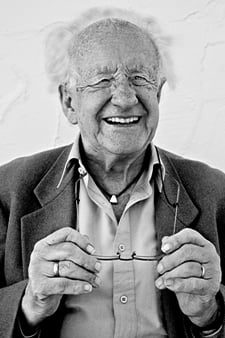
johangaltung

Islam, Christianity and Buddhism are religious cultural powers, deep, defining the ends and means of human lives. All three promise life after death – eternal salvation in paradise, eternal dissolution in nirvana – if rules are observed. Unlike Judaism and Hinduism, all three are universal, for all humans at all times. So, they caught on across faultlines, way beyond Arabia, Palestine, Nepal-India into other, even enemy, economic-political-military realities.

Arabia was Muslim; Islam expanded from Iberia to Delhi by 1192. Palestine became Muslim-Jewish; Christianity became the religion of the Roman Empire in 313; from 395 divided into Orthodox East and Catholic West, from around 1500 divided into Catholic South and Protestant North. Casteless Buddhism was evicted from Hindu Nepal-India to neighbors; a thousand years later it is rooted all over East Asia.

Three religions became three civilizations of three vast regions. Three successes? Yes, but at a price. The price was schisms inside all three, faultlines with hatred, violence, wars. What went wrong?

Economic-political-military faultlines generated schisms in the culture: We want our own Christianity-Buddhism-Islam!

Expanding Vietnam-China-Japan needed a we-culture mahayana Buddhism and not a Sri Lankan individualizing “little wagon” hinayana.

Europe transalpina, north of the Alps, did not want rule by Rome, and Martin Luther produced their Christianity in 95 theses in 31 October 1517, defended in detail in Augsburg in 1530: God is his own cause, causa sui, deciding salvation by His Grace, not steered by works, merits.

And Islam, in the Greek-Turkish-Persian, later Orthodox-Ottoman-Sassanid empires war zone, split into Sunni vs Shia Islam in the struggle over successor, caliph, when Mohammed died in 632: Abu Bakr by shura, election, or Ali, the nephew, by blood. The dividing line, like Alps for Christianity, was the Arab-Persian Gulf, continued North.

Even if the major trust in the split came from the economic-political-military divisions, the causation was circular, making the divisions long-lasting, deep. Not a clash of civilizations, but clashes within civilizations. Tragic for the strong peace messages in Buddhism, then Islam, then Christianity: they should have given rise to three vast peace regions where Buddhists do not kill Buddhists and Christians not Christians, and Muslims not Muslims.

We got Vietnamese as tools of French colonialism in Cambodia, Phnom Penh, and Khmer Rouge atrocities basically directed against that; we get Japanese with Buddhism as strong civilization factor attacking China with the same. Yet nothing relative to Christian Europe: Thirty years war 1618-48 between the two Christianities in the West; the Napoleonic, First, Second “world” (mainly Europe) wars, the Cold War and today’s confrontation over Ukraine enacting the schism between the Western and Eastern Churches. Tragic.

A key Mongolian Buddhist said, Buddhayana, not Hinayana-Mahayana. Not yet. The Westphalia “peace” after 30 years barbarism was only passive coexistence, and between only two Christianities.

An effort was made to go beyond. They met in symbolic Augsburg in 1999 on the symbolic date of 31 October, and issued a declaration [i]:

– “Together we confess: By Grace alone, in faith in God’s saving work and not because of any merit on our part, we are accepted by God and receive the Holy Spirit, who renews our hearts while equipping and calling us to good works.”

The outer human acts and the inner human believes; works and faith, in one person. The Declaration puts together what the schism split; a torn conflict basis with a split theology super-structure. But the basis changed; EU-NATO economic-political-military integration changed that, and paved the way for the Declaration. Also for Islam?

Sunni-Shia. Trying to understand the justifications on both sides, this outsider came to the following three conclusions:

• Nothing Qur’anic seems unequivocally favoring one or the other;
• Maybe the Prophet had not made up his mind or was of two minds. One reason: Abu-Bakr was his father-in-law and Ali his son-in-law;
• Abu-Bakr and Ali had a friendly, cooperative relationship.

What emerged was an either-or Islam split with sub-divisions; today strongly pitted against each other over ISIS, Sunni, invoking the Caliphate as institution (the last was Ottoman from the Sultan’s victory over the Mameluks in Egypt in 1517 till the end in 1922; after Sykes-Picot 1916, Balfour 1917, and Allies occupying Istanbul 1918.)

In hindsight the alternatives are clear: a neither-nor favoring the Prophet’s daughter Fatima (his two sons died young); a compromise with two cooperating camps, a both-and with the two joint successors. But patriarchy, the infra-structure, and One Successor ruled them out.

Sooner or later they will yield to a both-and Mohammedia. OIC consists of 57 states with 1,650 million Muslims; 22 states are Arab with 350 million, add Iran and Turkey, but still a very clear majority of states and Muslims are “outside the war zone”. Educated guess: the renewal of Islam, the both Sunni-and Shia may come from further East.

The West and USSR colonized 48 of the 57 states, and by state-building drove a wedge between the Ultimate Ruler and Muslims: emirs, monarchs, presidents, PMs; also found in the Gulf countries. State logic against ummah logic: a Community of Muslims; an archipelago of city-states, sultanates, with millets-autonomies; densely interlocked economically with sharia-compatible Islamic banking?

A family of nations with benevolent guidance, like the Ottoman Empire? A change of infrastructure, as the Islamic part of globalization? An OIC, C as Conference –> Cooperation –> Community, to Union? An Islamic Union?

Drawing on the rich experiences of all Islams, focusing on the best, weeding violent weeds making some Muslims non-Islamic in their recourse to violence; much directed against each other. Time is there to work from both sides, on the basis and the theology, to go beyond.

NOTE:

[i] From Washington Post, November 1, 1999.

Originally published by Transcend Media Service, TMS, here.

Related Posts

Jan Oberg TFF director October 13, 2026 According to Alfred Nobel’s will, the Nobel Peace Prize shall be awarded: ”to the person who has done the most or best to advance fellowship among nations, the abolition or reduction of standing armies, and the establishment and promotion of peace congresses.” Further down, he also expresses how the prize for the “champions of peace” shall be decided: “that for champions of peace by a committee of five persons to be selected by the Norwegian Storting. Alfred Nobel’s will is remarkably short and clear. But few seem to have read it. Nobel did not say that the committee itself should consist of members of parliament. He entrusted the Storting with appointing five persons. In principle, it could have selected diplomats, mediators, peace researchers, conflict-resolution specialists, or other individuals with recognised expertise in matters of peace from around the world. Instead, the Storting gradually...
Advocates of nuclear disarmament are regularly dismissed by the champions of nuclear deterrence as naïve and unrealistic, utopian or even irresponsible. Yet this ‘doctrine’ of deterrence, regarded by France as the ‘cornerstone’ of its national security, is based on quasi-religious beliefs, a theory that cannot be proven, risky gambles and fragile assumptions. So much so that one might legitimately ask which side the ‘Care Bears’ are on. Marc FinaudVice-President of Initiatives for Nuclear Disarmament (IDN) October 9, 2026 This article was originally published on Pressenza When it comes to these things being treated as religious concepts, look here. Idealists and realists It was Hubert Védrine, François Mitterrand’s former Foreign Minister, who repeatedly coined the phrase: ‘Europeans are a sort of Care Bears who don’t realise they’re living in Jurassic Park’. He applies this reference to the cartoon for well-behaved children not only to what he regards as weakness or idealism...
What the West Borrowed from Asia and What It Left Behind Jan Krikke October 8, 2026 The article was originally published here In the late 1960s, the musical Hair announced that the Age of Aquarius was dawning. Its opening anthem promised a transformation of human consciousness: an era of peace, harmony and understanding. Half a century later, a familiar echo of that promise is a meditation app offered by your employer. You can find it in the same list of benefits as the pension plan and the gym discount. How did a spiritual revolution become an employee benefit? The answer lies in the history of the movement known as New Age: where it came from, what it borrowed from Asia, and why the meaning of what it borrowed changed in the process. Two definitions will help. New Age is a loose label for a wide range of spiritual practices and...

Recent Articles

Below are TFF-related media mentions, comments, videos and social media posts published elsewhere but not on this homepage. We happen to catch and list only a fraction. Regarding video comments and debates, we recommend that you go to the TFF Video Channel on Substack where many of them are reproduced. Jan Oberg is a contributor to China Daily – 52 million daily clicks – and Global Times, CGTN and CCTV (the national television), China Investment, Xinhua News Agency and several others. Articles and videos on these media very often multiply into countless Chinese (and Western media) that re-post them from these main media. Thanks to The China Academy, his analyses, interviews and comments are frequently posted on YouTube channels such as Thinkers Forum and Wave Media. These videos are often re-posted on Bilibili (China’s YouTube), the China Content Center on TikTok, and on the Chinese edition of TikTok, Douyin.com. This means reaching hundreds of millions of viewers worldwide over a year. While there are too many to catch on all these...
Jan Oberg TFF director October 13, 2026 According to Alfred Nobel’s will, the Nobel Peace Prize shall be awarded: ”to the person who has done the most or best to advance fellowship among nations, the abolition or reduction of standing armies, and the establishment and promotion of peace congresses.” Further down, he also expresses how the prize for the “champions of peace” shall be decided: “that for champions of peace by a committee of five persons to be selected by the Norwegian Storting. Alfred Nobel’s will is remarkably short and clear. But few seem to have read it. Nobel did not say that the committee itself should consist of members of parliament. He entrusted the Storting with appointing five persons. In principle, it could have selected diplomats, mediators, peace researchers, conflict-resolution specialists, or other individuals with recognised expertise in matters of peace from around the world. Instead, the Storting gradually...
The Quest for Humane Survival Richard Falk Professor emeritus, Princeton UniversityTFF Associate since 1986October 12, 2026 After decades of teaching and writing about international law in academic frameworks that were not institutionally situated within law school environments—at Princeton and the University of California, Santa Barbara—I found myself most receptive to the TWAIL outlook. It has been especially illuminating in clarifying the extent to which international law evolved as a dialogical critique of Europe’s efforts to legitimize its colonial undertakings. In particular, TWAIL has exposed how international law has functioned to legalize the subjugation of Third World peoples, securing conditions for exploitative investment and trade relations, the coercive enforcement of public debts, and an ideology of cultural superiority. TWAIL’s exposure of these economic legacies of colonialism has influenced my understanding of the history and development of international law, broadly conceived, as an ideological project of the Western sub-system of the world...

TFF on Substack

Discover and subscribe to more peace materials on TFF Substack

Most Popular

Below are TFF-related media mentions, comments, videos and social media posts published elsewhere but not on this homepage. We happen to catch and list only a fraction. Regarding video comments and debates, we recommend that you go to the TFF Video Channel on Substack where many of them are reproduced. Jan Oberg is a contributor to China Daily – 52 million daily clicks – and Global Times, CGTN and CCTV (the national television), China Investment, Xinhua News Agency and several others. Articles and videos on these media very often multiply into countless Chinese (and Western media) that re-post them from these main media. Thanks to The China Academy, his analyses, interviews and comments are frequently posted on YouTube channels such as Thinkers Forum and Wave Media. These videos are often re-posted on Bilibili (China’s YouTube), the China Content Center on TikTok, and on the Chinese edition of TikTok, Douyin.com. This means reaching hundreds of millions of viewers worldwide over a year. While there are too many to catch on all these...
Jan Oberg TFF director October 13, 2026 According to Alfred Nobel’s will, the Nobel Peace Prize shall be awarded: ”to the person who has done the most or best to advance fellowship among nations, the abolition or reduction of standing armies, and the establishment and promotion of peace congresses.” Further down, he also expresses how the prize for the “champions of peace” shall be decided: “that for champions of peace by a committee of five persons to be selected by the Norwegian Storting. Alfred Nobel’s will is remarkably short and clear. But few seem to have read it. Nobel did not say that the committee itself should consist of members of parliament. He entrusted the Storting with appointing five persons. In principle, it could have selected diplomats, mediators, peace researchers, conflict-resolution specialists, or other individuals with recognised expertise in matters of peace from around the world. Instead, the Storting gradually...
The Quest for Humane Survival Richard Falk Professor emeritus, Princeton UniversityTFF Associate since 1986October 12, 2026 After decades of teaching and writing about international law in academic frameworks that were not institutionally situated within law school environments—at Princeton and the University of California, Santa Barbara—I found myself most receptive to the TWAIL outlook. It has been especially illuminating in clarifying the extent to which international law evolved as a dialogical critique of Europe’s efforts to legitimize its colonial undertakings. In particular, TWAIL has exposed how international law has functioned to legalize the subjugation of Third World peoples, securing conditions for exploitative investment and trade relations, the coercive enforcement of public debts, and an ideology of cultural superiority. TWAIL’s exposure of these economic legacies of colonialism has influenced my understanding of the history and development of international law, broadly conceived, as an ideological project of the Western sub-system of the world...
Read More
girl-5894831_1280
Below are TFF-related media mentions, comments, videos and social media posts published elsewhere but not on this homepage. We happen to catch and list only a fraction. Regarding video comments and debates, we recommend that you go to the TFF Video Channel on Substack where many of them are reproduced. Jan Oberg is a contributor to China Daily – 52 million daily clicks – and Global Times, CGTN and CCTV (the national television), China Investment, Xinhua News Agency and several others. Articles and videos on these media very often multiply into countless Chinese (and Western media) that re-post them from these main media. Thanks to The China Academy, his analyses, interviews and comments are frequently posted on YouTube channels such as Thinkers Forum and Wave Media. These videos are often re-posted on Bilibili (China’s YouTube), the China Content Center on TikTok, and on the Chinese edition of TikTok, Douyin.com. This means reaching hundreds of millions of viewers worldwide over a year. While there are too many to catch on all these...
Nobel-Prize-Plaque
Jan Oberg TFF director October 13, 2026 According to Alfred Nobel’s will, the Nobel Peace Prize shall be awarded: ”to the person who has done the most or best to advance fellowship among nations, the abolition or reduction of standing armies, and the establishment and promotion of peace congresses.” Further down, he also expresses how the prize for the “champions of peace” shall be decided: “that for champions of peace by a committee of five persons to be selected by the Norwegian Storting. Alfred Nobel’s will is remarkably short and clear. But few seem to have read it. Nobel did not say that the committee itself should consist of members of parliament. He entrusted the Storting with appointing five persons. In principle, it could have selected diplomats, mediators, peace researchers, conflict-resolution specialists, or other individuals with recognised expertise in matters of peace from around the world. Instead, the Storting gradually...
law-419057_1280
The Quest for Humane Survival Richard Falk Professor emeritus, Princeton UniversityTFF Associate since 1986October 12, 2026 After decades of teaching and writing about international law in academic frameworks that were not institutionally situated within law school environments—at Princeton and the University of California, Santa Barbara—I found myself most receptive to the TWAIL outlook. It has been especially illuminating in clarifying the extent to which international law evolved as a dialogical critique of Europe’s efforts to legitimize its colonial undertakings. In particular, TWAIL has exposed how international law has functioned to legalize the subjugation of Third World peoples, securing conditions for exploitative investment and trade relations, the coercive enforcement of public debts, and an ideology of cultural superiority. TWAIL’s exposure of these economic legacies of colonialism has influenced my understanding of the history and development of international law, broadly conceived, as an ideological project of the Western sub-system of the world...
images-2
Advocates of nuclear disarmament are regularly dismissed by the champions of nuclear deterrence as naïve and unrealistic, utopian or even irresponsible. Yet this ‘doctrine’ of deterrence, regarded by France as the ‘cornerstone’ of its national security, is based on quasi-religious beliefs, a theory that cannot be proven, risky gambles and fragile assumptions. So much so that one might legitimately ask which side the ‘Care Bears’ are on. Marc FinaudVice-President of Initiatives for Nuclear Disarmament (IDN) October 9, 2026 This article was originally published on Pressenza When it comes to these things being treated as religious concepts, look here. Idealists and realists It was Hubert Védrine, François Mitterrand’s former Foreign Minister, who repeatedly coined the phrase: ‘Europeans are a sort of Care Bears who don’t realise they’re living in Jurassic Park’. He applies this reference to the cartoon for well-behaved children not only to what he regards as weakness or idealism...
8824b09f-33a5-43f9-9fd0-550f28cda24d_1536x1024
What the West Borrowed from Asia and What It Left Behind Jan Krikke October 8, 2026 The article was originally published here In the late 1960s, the musical Hair announced that the Age of Aquarius was dawning. Its opening anthem promised a transformation of human consciousness: an era of peace, harmony and understanding. Half a century later, a familiar echo of that promise is a meditation app offered by your employer. You can find it in the same list of benefits as the pension plan and the gym discount. How did a spiritual revolution become an employee benefit? The answer lies in the history of the movement known as New Age: where it came from, what it borrowed from Asia, and why the meaning of what it borrowed changed in the process. Two definitions will help. New Age is a loose label for a wide range of spiritual practices and...
Screenshot 2026-10-04 210142
Small and different + among the 10% most active + 9,000 texts + 150 Associates + 60 000 a day — and a stubborn belief that peace is smarter and must be secured by peaceful means. In 2026, the Transnational Foundation for Peace and Future Research (TFF) turns 40. On Monday, October 5, 2026, a new TFF homepage will go live — a new gateway to more than 9,000 articles, analyses, research papers and other contributions produced over four decades of independent peace research. But this is not simply a new website. For four decades, TFF has worked from a simple conviction: peace is smarter than militarism and can be brought about by peaceful means. This is not merely an aspiration. It is the principle expressed in the UN Charter and the Gandhian tradition that has guided our work from the beginning. TFF is a research-based, independent and people-financed foundation....





