
Frustrated by Israeli settlement expansion, excessive violence, AIPAC maximalism, Netanyahu’s arrogance, Israel’s defiant disregard of international law, various Jewish responses claim to seek a middle ground. Israel is criticized by this loyal opposition, sometimes harshly, although so is the Palestinian Authority, Hamas, and activists around the world. Both sides are deemed responsible in equal measure for the failure to end the conflict.

With such a stance liberal Zionists seek to occupy the high moral ground without ceding political relevance. In contrast, those who believe as I do that Israel poses the main obstacle to achieving a sustainable peace are dismissed by liberal Zionists as either obstructive or unrealistic, and at worst, as anti-Israeli or even anti-Semitic.

Listen to the funding appeals of J Street or read such columnists in the NY Times as Roger Cohen and Thomas Friedman to grasp the approach of liberal Zionism.

These views are made to appear reasonable, and even just, by being set off against such maximalist support for Israel as associated with AIPAC and the U.S. Congress, or in the NY Times context by comparison with the more conservative views of David Brooks (whose son currently serves in the IDF) who published a recent ‘balanced’ column lionizing Netanyahu, “The Age of Bibi” [Jan. 2, 2014].

Of all the deformed reasoning contained in the column, perhaps the most scandalous was comparing Netanyahu to Churchill, and to suggest that his story has the grandeur that bears a resemblance to Shakespeare’s MacBeth, an observation that many would find unflattering. Of all Netanyahu’s qualities remarked upon, Brooks astoundingly finds that “his caution is the most fascinating.” According to Brooks, Netanyahu deserves to be regarded as cautious because he has refrained from attacking Iran despite threatening to do so with bellicose rhetoric.

I would have thought that Netanyahu’s inflammatory threats directed at Iran, especially as combined with covert acts including inserting viruses to disable its nuclear program and assassinating Iranian scientists, would seem reckless enough for most observers. Since Brooks fails to mention the murderous attacks on Gaza, there is no need to reconcile such aggressive behavior with this overall assessment of caution.

At the core of liberal Zionism is the indictment of the Palestinian leadership for “never missing an opportunity to miss an opportunity” to recall the self-serving quip of the Israeli diplomat, Abba Eban.

Roger Cohen would have us believe that prior to the collapse of the April negotiations the U.S. Government had presented a framework agreement, acceptable to Tel Aviv, that the Palestinian Authority irresponsibly and unreasonably rejected. And not only rejected, but the PA behaved in a manner that was provocative, signed some international agreements as if it already was a state. [“Why Israeli-Palestinian Peace Failed,” Dec. 23, 2014]

This spin comes from Netanyahu’s chief negotiator, Tzipi Livni, who is presented by Cohen as the voice of moderation, as the self-proclaimed champion of ‘two states for two peoples.’

Livni who is the leader of a small party called Hatnua, which is joined in coalition with a revamped Labor Party headed by Isaac Herzog, contesting Likud and Netanyahu. Cohen never inquires as to what sort of state she would wish upon the Palestinians, which on the basis of her past, would be thoroughly subjugated to Israeli security demands as well as accommodating the bulk of settlements and settlers while rejecting the rights under international law of Palestinians in relations to refugees.

When Livni was asked by Cohen whether she would suspend Israeli settlement expansion so as to get direct negotiations started once more, she indicated that she would “at least outside the major blocs.” Cohen calls her party ‘centrist,’ which is one way of acknowledging how far Israeli politics have drifted to the right in recent years.

A reading of the leaked documents of the secret negotiations between the Palestinian Authority and Israel represented by Livni showed how disinterested Israel seemed to be in two states for two peoples at that time of far less extensive settlement encroachment, as well as her overt rejection of the relevance of international law to the diplomatic process. [For a collection of the leaked documents showing Livni’s role see Clayton E. Swisher, ed., Palestine Papers: The End of the Road (2011)]

This expresses a second element of liberal Zionism, that despite everything the two state solution is confirmed over and over again as the only path to peace. As such, it should be endlessly activated in accordance with the Oslo formula that keeps the United States in the absurd role of intermediary and continue to insist that any Palestinian reference to rights under international law is an obstacle to peace.

After more than 47 years of occupation and over 20 years of submission to the Oslo approach it would seem that it is past time to issue a certificate of futility, and the failure to do so, is for me a sure sign of either bad faith or extreme denial.

What is baffling is that those like Friedman and Cohen who surely know better play this game that never even raises the concrete question of how to reverse a settlement process that now includes as many as 600,000 settlers many of whom are militantly opposed to any kind of solution to the conflict that challenges their present situation.

Conveniently, also, this liberal advocacy finesses the claims of the four million or so Palestinian refugees, including almost two million that have been confined to miserable refugee camps for decades, some since 1948. How can one possibly imagine a sustainable and just peace emerging from such a blinkered outlook!

Liberal Zionists also oppose as irresponsible and unhelpful all efforts to challenge this framework, especially any call for holding Israel to account under international humanitarian law for its excessive violence. Alternative futures based on the equality of the two peoples, such as some kind of living together within a single political community are dismissed out of hand, either because of colliding with Zionist expectations of a Jewish state or because after decades of hatred any effort at social integration would be bound to fail.

Intriguingly, my experience of many conversations with both Palestinian refugees and Gazans is far more hopeful about peaceful coexistence within shared political space than are the Israelis despite their prosperity, prowess, and far greater security.

In a similar vein, liberal Zionists almost always oppose as counterproductive, activist initiatives taken under the auspice of the BDS Campaign. Their argument is that Israel will never make ‘painful sacrifices’ when put under pressure deemed hostile, and without these, no peace is possible.

What these painful sacrifices might be on the Israeli side are never spelled out, but presumably would include disbanding the isolated settlements and maybe the separation wall, both of which were in any event unlawful. The real sacrifice for Israelis would be to give up the completion of the maximal version of the Zionist project, that of so-called Greater Israel that encompasses the entirety of the alleged biblical entitlement to Palestine.

For the Palestinians in contrast their sacrifice would necessitate renouncing a series of entitlements conferred by international law, pertaining to settlements, refugees, borders, self-determination, sovereignty. In effect, Israel would sacrifice part of its unlawful dominion, while Palestine would relinquish its lawful claims, and the end result would be one of the inequality of the two peoples, not a recipe for a lasting peace.

A final feature of liberal Zionism is to make concessions to the Greater Israel outlook along the following lines:

• Israel should be allowed to control the unlawfully established settlement blocs;
• Israeli security concerns should be met, including by stationing military forces within the West Bank for many ears, while any Palestinian security concerns are treated as irrelevant; • Palestinian refugees would be denied the right to return to their pre-1967 places of residence;
• Jerusalem would remain essentially under Israel’s control;
• No provision would be made to ensure non-discrimination against the 20% Palestine minority living within pre-1967 Israel;
• No acknowledgement would be made of the past injustices flowing from the 1948 dispossession of hundreds of thousands of Palestinians from their place of residence and the destruction of hundreds of Palestinian villages, the catastrophe that befell the Palestinian people, the nakba, nor the recognition that the nakba is a process that has continued to afflict Palestinians to this very moment.

Despite its claim of reasonableness and practicality, the liberal Zionist approach is an increasingly irrelevant presence on the Israeli political horizon, paralleling the decline of the Labor Party and the peace movement in the country, as well as the ascendancy of the Likud and the politics of the extreme right.

The Israeli end game is now overwhelmingly based on unilateralism, either imposing a highly subordinated and circumscribed Palestinian state confined to parts of the West Bank or establishing Greater Israel and giving up any pretense of implementing the formula of two states for two peoples.

The fact that liberal Zionism and the diplomacy of the West largely plays along with the discarded scenario of two states for two peoples is nothing more than subservience to a cruel variant of ‘the politics of delusion.’

The denigration of liberal Zionism is not meant to belittle the effort of Jews as Jews to find a just and sustainable solution for both peoples. I strongly support such organizations as Jewish Voices for Peace and Middle East Children’s Alliance, and hail the contributions of Noam Chomsky, Norman Finkelstein, Ilan Pappe, and many others to the struggle for Palestinian empowerment and emancipation.

Fortunately, Palestinian resistance will likely stymie the two variants of the Israeli end game mentioned above, but much suffering is almost certain to ensue before sufficient momentum builds within Israel and throughout the world for living together on the basis of equality and even solidarity, accompanied by the necessary acknowledgement of past injustices via some kind of truth commission mechanism. After such knowledge, anything will be possible!
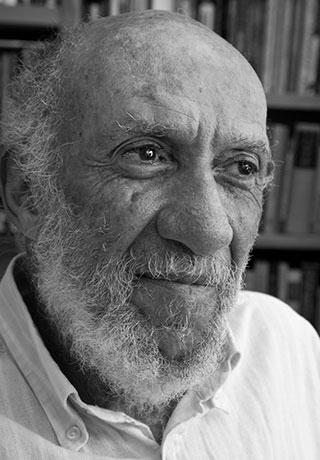

Professor Falk became an adviser to TFF when it was established in 1985.

Related Posts

This is not another geopolitical commentary on the Arctic. It is a visionary peace proposal that can save the region from militarised rivalry and ecological ruin. A blueprint for shared security, sustainable development, and human dignity — benefitting Greenland, the Arctic, and the rest of us. Jan Oberg TFF director Lund, Sweden, February 17, 2026 I. Four Principles for a New Arctic Vision The Arctic is often framed as a cold arena of rivalry — a place where great powers test each other’s resolve. But this worldview is outdated, unimaginative, and ultimately self‑defeating. The Arctic is not a vacuum waiting to be militarised; it is a living region, a climate stabiliser, and a cultural homeland whose future will shape the future of humanity. If we begin from that understanding, a far more rational Arctic order becomes possible — one that is peaceful, cooperative, and centred on the people who actually live there. This vision rests...
Photos © TFF 2000 Read PressInfo 90 “Lift the Sanctions and Bring More Aid to Yugoslavia” See Pictures from Belgrade © TFF 2000 Please reprint, copy, archive, quote or re-post this item, but please retain the source.
PART 2 — Diplomacy, Law and Nonviolent Power By Jan ObergTFF co-founder and director January 26, 2026 This is the second of four TFF-created idea portfolios designed to curb the global reach of the United States and, in both the short and long term, help catalyse a worldwide nonviolent resistance to what many observers describe as the Trump administration’s uniquely confrontational, destructive and world-threatening policies. These portfolios outline what governments and citizens across the world can do through dynamic diplomacy, creative initiatives, and strictly nonviolent means. They are typical TFF works in that we do not only tell what the problem is and how bad it will go – as 90+% of all commentators, experts and scholars do – we tell what we think can be done, inviting you to think of what you think you can do. It seems painfully clear to me that the current political dynamics in Washington increasingly resemble the most dangerous...

Recent Articles

Tony Robinson October 4, 2026 Violence is easy to recognise when someone is being beaten, shot or killed. It becomes more difficult when nobody is holding a weapon. Poverty, discrimination, exploitation and repression can restrict a human life just as effectively, although they do so in very different ways and with very different consequences. Simply adding more categories to an ever-growing list of forms of violence does not really solve the problem. The more interesting question is what all these different situations have in common and why it makes sense to describe them using the same word. Human beings do not simply react to what happens around them. They remember the past, imagine things that do not yet exist, make plans and undertake projects. Workers organise because they imagine different working conditions; people migrate because they imagine another life somewhere else; social movements emerge because people refuse to accept the...
It’s a matter of principles, courage, vision and pulling together – while the militarist world is falling apart… Peter Langille October 3, 2026 “Here, then, is the problem which we present to you, stark and dreadful and inescapable: Shall we put an end to the human race; or shall mankind renounce war?”The Bertrand Russell—Albert Einstein Manifesto, July 9, 1955 ⁕ The forecast for what’s ahead is worrisome. The sharp rise in armed conflicts over the past three years is adding to what was already the highest level in over seventy years. Genocides, which should be prevented are supported. A shared climate emergency that jeopardises survival is ignored. Diverse polls now suggest that people are war-weary, worried and interested in a more effective United Nations. And, there are viable policy options for a more secure world! Yet governments are doubling-down, betting on more war and investing heavily. If current trends persist,...
Johan Galtung 1930-2024October 2015 Published here on October 3, 2026 Let us focus on Civilization for conflict analysis and remedies. Major forms of disorder use violence; war is state organized violence. The most belligerent states are the United States of America and Israel, both with civilization roots. National Evangelism, the US Protestant Christian civilization– more national than evangelical–justifies US warfare as exceptionalism of a people chosen by God, with a manifest destiny to run the world. Orthodox Judaism justifies Israeli warfare to conquer and expand from Nile to Euphrates as a religious right and duty to the Eternal One. The third most belligerent country, the UK, no longer believes it is God-chosen but chosen by the USA; not quite the same but something. But the root cause of global disorder lies in the Occident–with Islam–seeing itself as the single, universal civilization valid for all at all times, all others being...

TFF on Substack

Discover and subscribe to more peace materials on TFF Substack

Most Popular

Tony Robinson October 4, 2026 Violence is easy to recognise when someone is being beaten, shot or killed. It becomes more difficult when nobody is holding a weapon. Poverty, discrimination, exploitation and repression can restrict a human life just as effectively, although they do so in very different ways and with very different consequences. Simply adding more categories to an ever-growing list of forms of violence does not really solve the problem. The more interesting question is what all these different situations have in common and why it makes sense to describe them using the same word. Human beings do not simply react to what happens around them. They remember the past, imagine things that do not yet exist, make plans and undertake projects. Workers organise because they imagine different working conditions; people migrate because they imagine another life somewhere else; social movements emerge because people refuse to accept the...
It’s a matter of principles, courage, vision and pulling together – while the militarist world is falling apart… Peter Langille October 3, 2026 “Here, then, is the problem which we present to you, stark and dreadful and inescapable: Shall we put an end to the human race; or shall mankind renounce war?”The Bertrand Russell—Albert Einstein Manifesto, July 9, 1955 ⁕ The forecast for what’s ahead is worrisome. The sharp rise in armed conflicts over the past three years is adding to what was already the highest level in over seventy years. Genocides, which should be prevented are supported. A shared climate emergency that jeopardises survival is ignored. Diverse polls now suggest that people are war-weary, worried and interested in a more effective United Nations. And, there are viable policy options for a more secure world! Yet governments are doubling-down, betting on more war and investing heavily. If current trends persist,...
Johan Galtung 1930-2024October 2015 Published here on October 3, 2026 Let us focus on Civilization for conflict analysis and remedies. Major forms of disorder use violence; war is state organized violence. The most belligerent states are the United States of America and Israel, both with civilization roots. National Evangelism, the US Protestant Christian civilization– more national than evangelical–justifies US warfare as exceptionalism of a people chosen by God, with a manifest destiny to run the world. Orthodox Judaism justifies Israeli warfare to conquer and expand from Nile to Euphrates as a religious right and duty to the Eternal One. The third most belligerent country, the UK, no longer believes it is God-chosen but chosen by the USA; not quite the same but something. But the root cause of global disorder lies in the Occident–with Islam–seeing itself as the single, universal civilization valid for all at all times, all others being...
Read More
Living-Peace-Sign-Budapest-copy
Tony Robinson October 4, 2026 Violence is easy to recognise when someone is being beaten, shot or killed. It becomes more difficult when nobody is holding a weapon. Poverty, discrimination, exploitation and repression can restrict a human life just as effectively, although they do so in very different ways and with very different consequences. Simply adding more categories to an ever-growing list of forms of violence does not really solve the problem. The more interesting question is what all these different situations have in common and why it makes sense to describe them using the same word. Human beings do not simply react to what happens around them. They remember the past, imagine things that do not yet exist, make plans and undertake projects. Workers organise because they imagine different working conditions; people migrate because they imagine another life somewhere else; social movements emerge because people refuse to accept the...
b54a1f10-8c65-4f0b-9dd5-4abc0a7d04cc_2659x2659
It’s a matter of principles, courage, vision and pulling together – while the militarist world is falling apart… Peter Langille October 3, 2026 “Here, then, is the problem which we present to you, stark and dreadful and inescapable: Shall we put an end to the human race; or shall mankind renounce war?”The Bertrand Russell—Albert Einstein Manifesto, July 9, 1955 ⁕ The forecast for what’s ahead is worrisome. The sharp rise in armed conflicts over the past three years is adding to what was already the highest level in over seventy years. Genocides, which should be prevented are supported. A shared climate emergency that jeopardises survival is ignored. Diverse polls now suggest that people are war-weary, worried and interested in a more effective United Nations. And, there are viable policy options for a more secure world! Yet governments are doubling-down, betting on more war and investing heavily. If current trends persist,...
010
Johan Galtung 1930-2024October 2015 Published here on October 3, 2026 Let us focus on Civilization for conflict analysis and remedies. Major forms of disorder use violence; war is state organized violence. The most belligerent states are the United States of America and Israel, both with civilization roots. National Evangelism, the US Protestant Christian civilization– more national than evangelical–justifies US warfare as exceptionalism of a people chosen by God, with a manifest destiny to run the world. Orthodox Judaism justifies Israeli warfare to conquer and expand from Nile to Euphrates as a religious right and duty to the Eternal One. The third most belligerent country, the UK, no longer believes it is God-chosen but chosen by the USA; not quite the same but something. But the root cause of global disorder lies in the Occident–with Islam–seeing itself as the single, universal civilization valid for all at all times, all others being...
Screenshot 2026-10-02 011738
Jan ObergPhD, director, The Transnational Foundation for Peace and Future Research, TFFLund, Sweden October 2, 2026 This is my full original manuscript. The Chinese Academy of Social Science, CASS, makes two publications out if it. 1. China’s Five-year plan emphasized the capabilities of basic research and original innovation. It is regarded as the goal of the future social development, which, as required, should be significantly enhanced. Can you comment on the importance of original innovation in research and academic study? I believe it is easier to define “original innovation” in the natural sciences than in social sciences. The breaking points of what constitutes something new, or innovative, are not quite as sharp in the latter. But in both fields it is about opening up something that was closed, unseen, unexplored before – making manifest what was earlier latent. Innovations come in many forms and shapes – naming something that was not...
arctic-circle-map
The agreement is catastrophic both because of what it says and what it doesn’t mention. It reduces further the major asset of security policies: Freedom of action. Jan Oberg TFF director September 25, 2026 A couple of hours before the agreement was signed on September 22, 2026, I published the following 13 hypotheses about what it would most likely contain on TFF Substack (in English). I was wrong on only the first point. Contrary to what Trump had written on his Truth Social platform, it does not appear to come into force immediately. In fact, it turned out to be worse than even I had anticipated. After these hypotheses now come a number of reflections in light of what the agreement actually contains, and does not contain, as well as the way in which it has generally been presented by major media outlets and by the public-service broadcaster DR. My...
girl-5894831_1280
Below are TFF-related media mentions, comments, videos and social media posts published elsewhere but not on this homepage. We happen to catch and list only a fraction. Regarding video comments and debates, we recommend that you go to the TFF Video Channel on Substack where many of them are reproduced. Jan Oberg is a contributor to China Daily – 52 million daily clicks – and Global Times, CGTN and CCTV (the national television), China Investment, Xinhua News Agency and several others. Articles and videos on these media very often multiply into countless Chinese (and Western media) that re-post them from these main media. Thanks to The China Academy, his analyses, interviews and comments are frequently posted on YouTube channels such as Thinkers Forum and Wave Media. These videos are often re-posted on Bilibili (China’s YouTube), the China Content Center on TikTok, and on the Chinese edition of TikTok, Douyin.com. This means reaching hundreds of millions of viewers worldwide over a year. While there are too many to catch on all these...




