
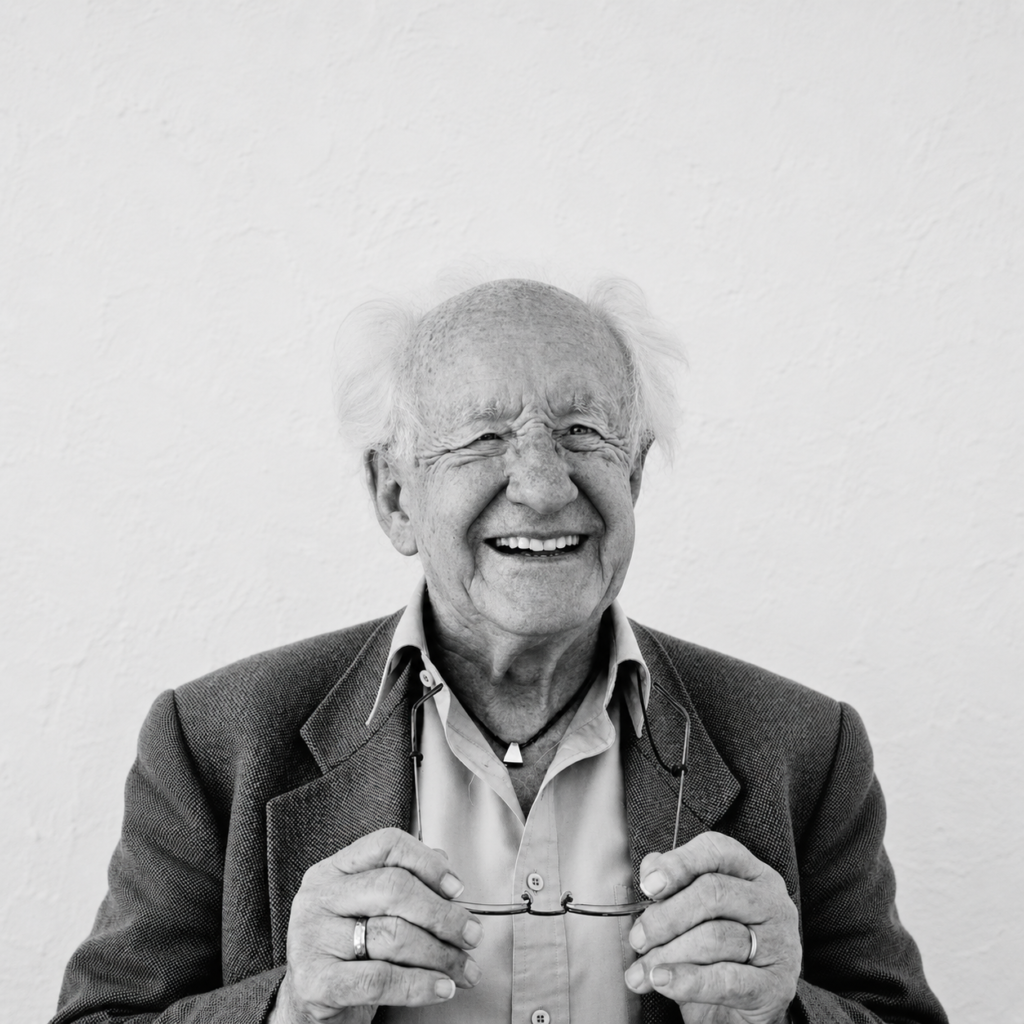
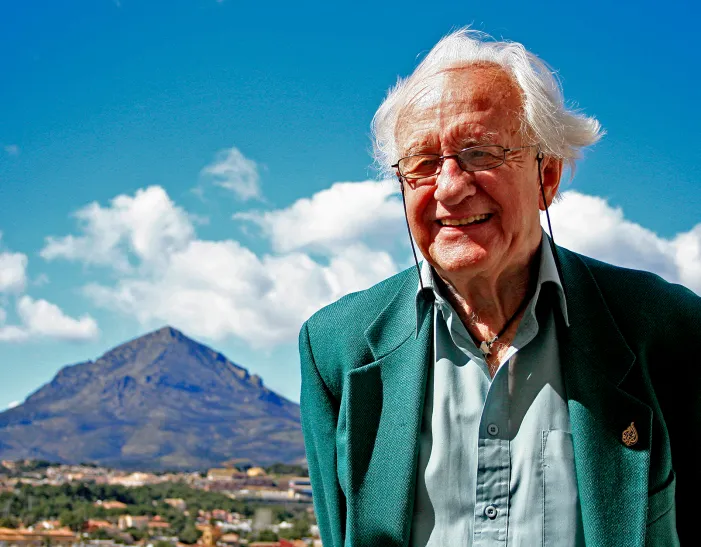
The Group of 77 approaching fifty – congratulations!

johangaltung

For one who has worked much on the theory and practice of change from systems of hierarchy to systems of equity, June 15 1964 will never be forgotten. Those at the bottom of the world system of states, fragmented away from each other by colonial and imperial structures, marginalized, exploited, came together, 77 of them, and formed–not a very revolutionary word–a Group. In 1967 the Group was confirmed by the Charter of Algiers. They used the UNCTAD-United Nations Conference on Trade and Development as their platform.

Then the follow-up in 1974: the New International Economic Order-NIEO, and the Charter of Economic Rights and Duties of States, passed by the UN General Assembly.

A trade union of states, or their governments, had been born; today 133-states strong. Not included are almost all states that are members of the Council of Europe (which includes the EU), OECD-Organization of Economic Cooperation and Development, and CIS-Commonwealth of Independent States. A very clear North-South divide: temperate zone against the tropics.

Not only did they organize, they were even proactive. They had done their homework, not only reacting to the country always upfront with clever homework, its homework: the USA, usually on behalf of the world Northwest. The shock effect was massive; how do they dare! G77+, plus China for instance, had more power potential than they probably were aware of if they had been able to act more quickly, using voting and the UNGA-United Nations General Assembly and the Specialized Agencies, and above all their own South-South cooperation. They could have changed the world.

What went wrong, what might have been done and can still be done? That will be elaborated below; at this point only once again: G77 was already a basic change in the 1960s without any economic program, just by existing as a structural fact, weaving the world system together at the bottom. Imagine the same in the EU today: a G5 of the five peripheral countries–Greece-Italy-Portugal-Spain-Ireland–could have a shock effect on a Germany-run EU–a German goal in both WWI & II.

What went wrong was not the idea of a New International Economic Order, but basing it on terms of trade (well, there was more to it, like compensation for colonialism, now coming up again). Having worked in Santiago, Chile during the 1960s as a UNESCO-United Nations Educational, Scientific and Cultural Organization professor at FLACSO-Facultad Latinoamericana de Ciencias Sociales I was familiar with CEPAL-Comisión Económica para América Latina and the path-breaking work associated forever with the name of Raúl Prebisch on the increasing amount of raw materials, resources, needed to buy, say, one tractor. That trend of deteriorating terms should be reversed. The counter-argument was to leave that decision to the market; the market knows best.

Nonetheless, there was another counter-argument. Changing the terms of trade would mean more income to the exporters of resources and cheaper processed goods and services. The elites in the G77 countries would be better off, but there was nothing in NIEO guaranteeing that the gains would be passed on to the tillers of the soil, the banana and the coffee growers, the miners. The economies of the G77+ would still be based on export of resources, foregoing huge externalities–challenges, stimulus for the development of science and technology, higher levels of workers’ health and education, better infrastructure, more equity within and between countries–processing resources instead of merely demanding better terms of trade.

But that would have presupposed a jump from the intellectual center of G77 and NIEO in Chile to Japan, and from Raúl Prebisch to Kaname Akamatsu (1896-1974), the brain behind the Japanese miracle, the “lead goose” spreading rapidly to the “flying geese” in East and Southeast Asia. Never export resource, import them, process them at ever higher levels, invest the value-added in science and technology and in health and education for workers to do more than digging a hole in the ground, extracting something, shipping it abroad to resource-processing molochs. Learn from successes, change the whole society, lift the bottom up; way beyond Manchester liberalism and Bismarck.

Discussing this in detail with Prebisch shortly before he passed away in 1986 two things became clear: the brilliant Argentinean, expelled from his country, was more focused on America South and North and less on what had happened one or two continents away; but he was totally open to another perspective.

The two perspectives do not exclude each other, and one economic genius does not overshadow the other (an indirect compliment to both: nobody in their traditions got the, falsely termed, “Nobel Prize” in economics). Profits from better prices for resources could be invested in the ways indicated above and the whole South and East, not only BRICS (Brazil, Russia, India, China, South Africa), could already in the 1960s-70s have been transformed like Japan and the “dragons”. As it was, the Northwest could enjoy its hierarchical grip on the world economy fifty extra years.

China had been exposed to the Akamatsu formula as a part of the Japanese short lived empire and has practiced the doctrine to the letter without, it seems, recognizing its origin (which is certainly not marxist-communist; Marx-Mao did not foresee this approach either). But Akamatsu had worked for the Japanese empire in the 1930s, in other words for the enemy, not only for another economy.

Whatever were the factors standing in the way of a broader approach to a NIEO serving not only the trade union leaders, the elites, but also the ordinary workers, fully benefiting from the positive externalities (an example of negative externality being pollution), G77-133 could still embrace both perspectives.

And more: badly needed is a good theory-practice of economic equity; how do we cooperate economically for mutual and equal benefit? How can G77-133 work both for its own betterment and for a reasonable and stable relation to the former masters, the Northwest in general, and the USA in particular?

G77 at 50: not an age of retirement but of experience and wisdom to transform the world economy, for poor countries and people. Go ahead!

First published here.
Related Posts

Photos © TFF 2000 Read PressInfo 90 “Lift the Sanctions and Bring More Aid to Yugoslavia” See Pictures from Belgrade © TFF 2000 Please reprint, copy, archive, quote or re-post this item, but please retain the source.
LONDON – So far so good, at least on the wider level. While internally Iraq seems on the edge of chaos, the much heralded clash of civilizations between the Muslim and Judaeo-Christian worlds has yet to become apparent. We have anger and despair aplenty in the Arab and Muslim worlds. But very little rushing to the standard and there was no great pilgrimage of warriors to join the fight, as happened when the Soviet Union invaded Afghanistan twenty years ago, and then, having driven the Red Army out, were left to ferment in that mountainous redoubt. With the armaments supplied by the CIA the mujahidin were transformed into Al Qaeda that became, for a relatively brief moment as these things go, ‘the greatest threat to the homeland that America has ever known.’ Nevertheless a ‘Cold War’ between much of the Muslim world and the West is certainly in full swing. Winston...
In the 17th century, Ming China represented roughly one-third of global output, and Mughal India a little less. Together the two countries accounted for more than half of the world’s output, with a corresponding size of populations (as a proportion of the total global population). By the 1950s, Mao China was a mere 5 per cent of global GDP. India only 1 per cent. Today, after several decades of exceptional economic progress, particularly in China, there is now a historic rise of the Global South. The two behemoths – China and India, and others in the South – are now reclaiming their historic economic weight in the world.  The 2013 UNDP Human Development Report documented this rise of the Global South presenting evidence that China, India, and Brazil were collectively in the process of exceeding western developed countries in terms of trade and global output. China is now the largest...

Recent Articles

Photo above: Carl Fredrik Reuterswärd’s Non-Violence outside UN Headquarters in New York. Kirill Levin, CC BY-NC-SA 2. Jan Oberg November 3, 2026 I am happy to be published in Horizons which is produced by the Center for International Relations and Sustainable Development, CIRSD, in Belgrade. My contribution brings out a radical re-thinking of what concepts such as defence, security, deterrence – and peace – may mean if we want to create a more peaceful world. It also summarises a few things I have been working with the last few decades. Please read it here Og her er den på dansk, takket være Johnny Baltzersens lynhurtige oversættelse
UNITE-tillid, DREAM-velstand og andre konstruktive komponenter Normally we publish articles in English here. But this is a translation of a very important TFF document that should reach as many as possible in Denmark since this country’s government has been one of the most hardline in Europe and, up till now at least, has refused to use diplomacy and, instead, spent tremendous sums on arming Ukraine with the express goal of defeating Russia. Thus this – unique – article is in Danish. Vi er Johnny Baltzersen og hans Fælles Sikkerhed – Fælles Fremtid på Substack overmåde taknemmelige for at have oversat og publiceret TFF’s 2025-portfølje for fredsidéer med henblik på Ukraines fremtid. Vi håber den nu kan nå mange flere danskere – som også vil sprede den og skabe debat – nu den danske regerings og folketingspartiernes politik på dette område siden 2022 står nu – forudsigeligt – ved vejs ende....
Jan Oberg TFF director October 28, 2026 Exactly one month has now passed since I published my criticism of the introduction to the special issue on Johan Galtung published by the Journal of Global Security Studies, JoGSS, and of Tor Egil Førland’s chapter about Galtung which serves as a preview to his forthcoming biography of Galtung to be published by PRIO. See the original on The Transnational here and the same article on TFF Substack with many general and critical comments and, in particular, the people who decided to withdraw from the biography project in protest. The special issue itself was extraordinary. It was devoted to the intellectual legacy of one of the founders of peace research and contained a number of strong assessments of his personality, scholarship, intellectual trajectory, and public role. Such assessments are, of course, entirely legitimate. No scholar is beyond criticism, and neither was Johan Galtung....

TFF on Substack

Discover and subscribe to more peace materials on TFF Substack

Most Popular

Photo above: Carl Fredrik Reuterswärd’s Non-Violence outside UN Headquarters in New York. Kirill Levin, CC BY-NC-SA 2. Jan Oberg November 3, 2026 I am happy to be published in Horizons which is produced by the Center for International Relations and Sustainable Development, CIRSD, in Belgrade. My contribution brings out a radical re-thinking of what concepts such as defence, security, deterrence – and peace – may mean if we want to create a more peaceful world. It also summarises a few things I have been working with the last few decades. Please read it here Og her er den på dansk, takket være Johnny Baltzersens lynhurtige oversættelse
UNITE-tillid, DREAM-velstand og andre konstruktive komponenter Normally we publish articles in English here. But this is a translation of a very important TFF document that should reach as many as possible in Denmark since this country’s government has been one of the most hardline in Europe and, up till now at least, has refused to use diplomacy and, instead, spent tremendous sums on arming Ukraine with the express goal of defeating Russia. Thus this – unique – article is in Danish. Vi er Johnny Baltzersen og hans Fælles Sikkerhed – Fælles Fremtid på Substack overmåde taknemmelige for at have oversat og publiceret TFF’s 2025-portfølje for fredsidéer med henblik på Ukraines fremtid. Vi håber den nu kan nå mange flere danskere – som også vil sprede den og skabe debat – nu den danske regerings og folketingspartiernes politik på dette område siden 2022 står nu – forudsigeligt – ved vejs ende....
Jan Oberg TFF director October 28, 2026 Exactly one month has now passed since I published my criticism of the introduction to the special issue on Johan Galtung published by the Journal of Global Security Studies, JoGSS, and of Tor Egil Førland’s chapter about Galtung which serves as a preview to his forthcoming biography of Galtung to be published by PRIO. See the original on The Transnational here and the same article on TFF Substack with many general and critical comments and, in particular, the people who decided to withdraw from the biography project in protest. The special issue itself was extraordinary. It was devoted to the intellectual legacy of one of the founders of peace research and contained a number of strong assessments of his personality, scholarship, intellectual trajectory, and public role. Such assessments are, of course, entirely legitimate. No scholar is beyond criticism, and neither was Johan Galtung....
Read More
knotted gun
Photo above: Carl Fredrik Reuterswärd’s Non-Violence outside UN Headquarters in New York. Kirill Levin, CC BY-NC-SA 2. Jan Oberg November 3, 2026 I am happy to be published in Horizons which is produced by the Center for International Relations and Sustainable Development, CIRSD, in Belgrade. My contribution brings out a radical re-thinking of what concepts such as defence, security, deterrence – and peace – may mean if we want to create a more peaceful world. It also summarises a few things I have been working with the last few decades. Please read it here Og her er den på dansk, takket være Johnny Baltzersens lynhurtige oversættelse
TFFPortfolioVign
UNITE-tillid, DREAM-velstand og andre konstruktive komponenter Normally we publish articles in English here. But this is a translation of a very important TFF document that should reach as many as possible in Denmark since this country’s government has been one of the most hardline in Europe and, up till now at least, has refused to use diplomacy and, instead, spent tremendous sums on arming Ukraine with the express goal of defeating Russia. Thus this – unique – article is in Danish. Vi er Johnny Baltzersen og hans Fælles Sikkerhed – Fælles Fremtid på Substack overmåde taknemmelige for at have oversat og publiceret TFF’s 2025-portfølje for fredsidéer med henblik på Ukraines fremtid. Vi håber den nu kan nå mange flere danskere – som også vil sprede den og skabe debat – nu den danske regerings og folketingspartiernes politik på dette område siden 2022 står nu – forudsigeligt – ved vejs ende....
JoGSS-Silent
Jan Oberg TFF director October 28, 2026 Exactly one month has now passed since I published my criticism of the introduction to the special issue on Johan Galtung published by the Journal of Global Security Studies, JoGSS, and of Tor Egil Førland’s chapter about Galtung which serves as a preview to his forthcoming biography of Galtung to be published by PRIO. See the original on The Transnational here and the same article on TFF Substack with many general and critical comments and, in particular, the people who decided to withdraw from the biography project in protest. The special issue itself was extraordinary. It was devoted to the intellectual legacy of one of the founders of peace research and contained a number of strong assessments of his personality, scholarship, intellectual trajectory, and public role. Such assessments are, of course, entirely legitimate. No scholar is beyond criticism, and neither was Johan Galtung....
Screenshot 2026-10-26 115647
An aspect of Iran’s culture and civilisation you’ve probably never heard about. Don’t be surprised if the US and Israel also try to bomb them. Jan ObergTFF director October 26, 2026 Today – under the “USraeli” threat of new “annihilating” bombings – opens the 7th International Conference on Peace and Conflict Resolution at Tehran’s University. As far as I can tell, this is the only permanent, advanced peace research institution in West Asia/the Middle East. Perhaps more countries in that region could be inspired? I mean, how many military “security” institutes and military academies do they have? Many peace research institutes and university departments have been established since the 1950s in the West. They are now all under attack; some have closed down, some have gone mainstream, yet others kept the name but do nothing to research peace and disseminate results or advice; instead, they cooperate with militarism’s platforms such...
Screenshot 2026-10-15 141837
Let’s discuss using AI to create peace – in contrast to boring geopolitics devoid of creative healing and visions. Jan Oberg TFF director October 15, 2026 I asked VEED to create a short video exemplifying how peace is preferable to war, then chose the lady as a template. Simple as that. In less than a minute, it produced this video, which any peace-loving person would appreciate. The only problem is that human intelligence (HI), at least the one that exists among Western decision-makers, isn’t half as moral or smart as AI. I have used AI to dialogue about peace and peace plans, creative conflict resolution and visions of a better future for humankind. It so happens that I am having more stimulating, intelligent, creative and moral discussions with AI than I could possibly have with any EU or NATO leader today. Yes, AI has very problematic and dangerous aspects; used...
girl-5894831_1280
Below are TFF-related media mentions, comments, videos and social media posts published elsewhere but not on this homepage. We happen to catch and list only a fraction. Regarding video comments and debates, we recommend that you go to the TFF Video Channel on Substack where many of them are reproduced. Jan Oberg is a contributor to China Daily – 52 million daily clicks – and Global Times, CGTN and CCTV (the national television), China Investment, Xinhua News Agency and several others. Articles and videos on these media very often multiply into countless Chinese (and Western media) that re-post them from these main media. Thanks to The China Academy, his analyses, interviews and comments are frequently posted on YouTube channels such as Thinkers Forum and Wave Media. These videos are often re-posted on Bilibili (China’s YouTube), the China Content Center on TikTok, and on the Chinese edition of TikTok, Douyin.com. This means reaching hundreds of millions of viewers worldwide over a year. While there are too many to catch on all these...





