
The face of the crisis – and some alternatives

johangaltung

From Madrid, Universidad Nacional de Educación a Distancia-UNED, Foro Los Nuevos Problemas Sociales

Here is one of the hidden faces of the economic crisis:

(¶C/¶t) + (¶C/¶S)rS + (1/2)(¶2C/¶S2)q2S2 = rC

The famous Black-Scholes equation to find the “correct price” for financial derivatives. Based on partial derivatives over time, this is classical calculus for continuous change; useful within a zone of stability, but not at the edge of that zone, the tipping points explored in René Thom’s catastrophe theory years earlier.

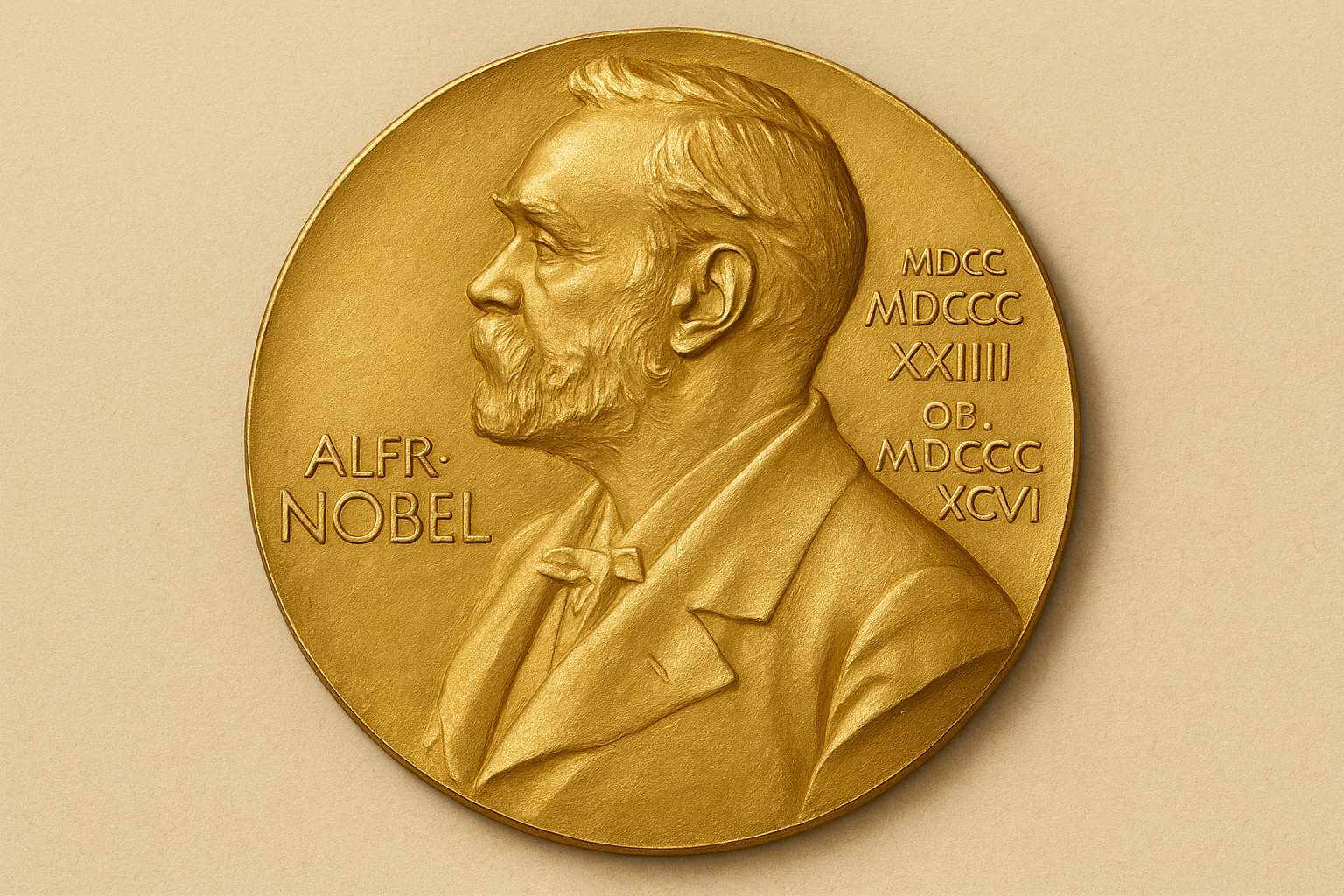
Black-Scholes is intellectually like calculating increasing speed of an accelerating car heading for a wall or an abyss. But, with warnings, no 1997 “Nobel Prize in Economics” (actually a Swedish State Bank’s prize honoring Alfred Nobel)? And one year later their company “Long Term Capital Management” had lost $100 billion and collapsed. The trade in derivatives is now at $1 quadrillion a year (15 zeros), ten times the industrial economy of the whole 20th century. Many got rich, but the system collapsed. Maybe prison would have been more adequate for intellectual sloppiness?

That equation is a part of the closed paradigm of economism. Does it offer a solution, not only for banks and bankers, but for the bottom 99.9%? The 0.1%/99.9% income ratio USA 2007 was 140; an unbelievable inequality, both cause and effect of the crisis.

They look at Germany’s decreasing unit labor cost 2005-2011 and high employment.[i] With top rate quality export products, and a single Euro currency their Eurozone trade surplus grew from 64 to Euro 140 billion in 2002-2009. They financed the trade deficit of Greece-Italy-Portugal-Spain-Ireland (GIPSI) with credits from German banks, at the end of 2009, with Euro 522 billion. However, they do not invest in GIPSI, but offer higher interest credit to pay back the credits, thereby putting the GIPSIs in debt bondage.[ii]

A very dangerous policy, close to a tipping edge, endangering not only the Euro but also the European Union as a peace project. A policy of debt forgiveness, buying out legitimate net creditors, letting other banks collapse, would be better than a debt bondage feeding nazism memories with hatred, like in Greece.

Terrorism next? We need good debt maps to design intelligent forgiveness policies for households, municipalities, countries, regions. The way out of a complex man-made catastrophe is not to punish the victims.

But we also need political action unlikely to come from the Berlin-Frankfurt-Brussels triangle. The strong formula would be GIPSIs unite; you have only your German banks to lose. They could jointly negotiate much better terms, compare successful policies, increase trade with each other, and lift themselves out of bondage. But, the illegitimate, perhaps illegal, Goldman-Sachs have former employees as prime ministers in Greece and Italy, economy minister in Spain and head of the ECB-European Central Bank. That spells finance, not real economy.

Inside victim countries periphery-periphery cooperation could alleviate much suffering from basic needs deficits. Class warfare from above displaced the economic shocks down to the vulnerable: the women, the older, the younger, the excluded, depriving them of money for food-clothes-housing-health-education. But the old lady in poor health with little money may offer housing for the younger at good health, against cleaning, helping, company. Money may not change hands: service for service, hours for hours, togetherness.

A farmer produces food; student farm hands could bring them closer to culture. Neighboring farms could have sales points directly from producers to consumers. At a world level four lane highways through Africa could make Latin America, Africa and Asia revive, and expand, the 500-1500 AD globalized real economy trade. GIPSI countries might link to South-South-South through North Africa.

Periphery-periphery cooperation is the best remedy against hierarchy and exploitation, not legislation when State politicians have been bought by Capital. The other approach is to lift the bottom up. In the giant Chinese 1991-2004 lifting of 400 million, the local community was the unit of development. The five-pronged approach – the public, private, civil society, technical sectors and a coordinator – gave micro credit to small companies dedicated to produce necessities, food-clothes-housing-polyclinics-schools, at low cost and price, employing the most needy.

When their needs were met, they sold to others at low prices, paid back the credit, and entered the economy with some cash in the pockets. Capi-communism, the latter for needs, the former for wants and markets. But the extreme West, the USA, might not bridge this gap mentally.

Some of the finance economy should be criminalized such as those who give credit far beyond their capital and those who contract loans far beyond their earning capacity. Failing that, the worst finance economy dealers should be boycotted.

The trend towards globalization should be away from Western neo-liberalism to more rational and human Buddhist, Islamic, Japanese and Chinese models. And global economies should be balanced with more local economies.

But the whole focus of economics should be changed, from the economism growth of market economy to meeting basic needs. From GNP-Gross National Product to the UNDP-United Nations Development Program HDI-Human Development Index, focusing on how many and who suffer basic needs deficits.

The Czech economist Tomás Sedlácek[iii] concludes from the years after communism that egoism is not the alternative; some state regulation is indispensable. There will be more approaches and alternatives as more economists leave the sinking ship of neo-liberal economism.[iv]

And hopefully not the likely and available use of war as the stimulus to get a stagnant inflation-deflation economy running again.

NOTES

[i]. Floyd Norris, IHT 17-02-2012.

[ii]. Rune Skarstein, the leading Norwegian economist specialist on the crisis, Klassekampen, 16 March 2011.

[iii]. Der Spiegel, 12/2012.

[iv]. And from non-economists. Thus, Galtung’s book, Peace Economics: From a Killing to a Living Economy, will be published by TRANSCEND University Press summer 2012.

Related Posts

Photos © TFF 2000 Read PressInfo 90 “Lift the Sanctions and Bring More Aid to Yugoslavia” See Pictures from Belgrade © TFF 2000 Please reprint, copy, archive, quote or re-post this item, but please retain the source.
LONDON – So far so good, at least on the wider level. While internally Iraq seems on the edge of chaos, the much heralded clash of civilizations between the Muslim and Judaeo-Christian worlds has yet to become apparent. We have anger and despair aplenty in the Arab and Muslim worlds. But very little rushing to the standard and there was no great pilgrimage of warriors to join the fight, as happened when the Soviet Union invaded Afghanistan twenty years ago, and then, having driven the Red Army out, were left to ferment in that mountainous redoubt. With the armaments supplied by the CIA the mujahidin were transformed into Al Qaeda that became, for a relatively brief moment as these things go, ‘the greatest threat to the homeland that America has ever known.’ Nevertheless a ‘Cold War’ between much of the Muslim world and the West is certainly in full swing. Winston...
In the 17th century, Ming China represented roughly one-third of global output, and Mughal India a little less. Together the two countries accounted for more than half of the world’s output, with a corresponding size of populations (as a proportion of the total global population). By the 1950s, Mao China was a mere 5 per cent of global GDP. India only 1 per cent. Today, after several decades of exceptional economic progress, particularly in China, there is now a historic rise of the Global South. The two behemoths – China and India, and others in the South – are now reclaiming their historic economic weight in the world.  The 2013 UNDP Human Development Report documented this rise of the Global South presenting evidence that China, India, and Brazil were collectively in the process of exceeding western developed countries in terms of trade and global output. China is now the largest...

Recent Articles

Tony Robinson October 4, 2026 Violence is easy to recognise when someone is being beaten, shot or killed. It becomes more difficult when nobody is holding a weapon. Poverty, discrimination, exploitation and repression can restrict a human life just as effectively, although they do so in very different ways and with very different consequences. Simply adding more categories to an ever-growing list of forms of violence does not really solve the problem. The more interesting question is what all these different situations have in common and why it makes sense to describe them using the same word. Human beings do not simply react to what happens around them. They remember the past, imagine things that do not yet exist, make plans and undertake projects. Workers organise because they imagine different working conditions; people migrate because they imagine another life somewhere else; social movements emerge because people refuse to accept the...
It’s a matter of principles, courage, vision and pulling together – while the militarist world is falling apart… Peter Langille October 3, 2026 “Here, then, is the problem which we present to you, stark and dreadful and inescapable: Shall we put an end to the human race; or shall mankind renounce war?”The Bertrand Russell—Albert Einstein Manifesto, July 9, 1955 ⁕ The forecast for what’s ahead is worrisome. The sharp rise in armed conflicts over the past three years is adding to what was already the highest level in over seventy years. Genocides, which should be prevented are supported. A shared climate emergency that jeopardises survival is ignored. Diverse polls now suggest that people are war-weary, worried and interested in a more effective United Nations. And, there are viable policy options for a more secure world! Yet governments are doubling-down, betting on more war and investing heavily. If current trends persist,...
Johan Galtung 1930-2024October 2015 Published here on October 3, 2026 Let us focus on Civilization for conflict analysis and remedies. Major forms of disorder use violence; war is state organized violence. The most belligerent states are the United States of America and Israel, both with civilization roots. National Evangelism, the US Protestant Christian civilization– more national than evangelical–justifies US warfare as exceptionalism of a people chosen by God, with a manifest destiny to run the world. Orthodox Judaism justifies Israeli warfare to conquer and expand from Nile to Euphrates as a religious right and duty to the Eternal One. The third most belligerent country, the UK, no longer believes it is God-chosen but chosen by the USA; not quite the same but something. But the root cause of global disorder lies in the Occident–with Islam–seeing itself as the single, universal civilization valid for all at all times, all others being...

TFF on Substack

Discover and subscribe to more peace materials on TFF Substack

Most Popular

Tony Robinson October 4, 2026 Violence is easy to recognise when someone is being beaten, shot or killed. It becomes more difficult when nobody is holding a weapon. Poverty, discrimination, exploitation and repression can restrict a human life just as effectively, although they do so in very different ways and with very different consequences. Simply adding more categories to an ever-growing list of forms of violence does not really solve the problem. The more interesting question is what all these different situations have in common and why it makes sense to describe them using the same word. Human beings do not simply react to what happens around them. They remember the past, imagine things that do not yet exist, make plans and undertake projects. Workers organise because they imagine different working conditions; people migrate because they imagine another life somewhere else; social movements emerge because people refuse to accept the...
It’s a matter of principles, courage, vision and pulling together – while the militarist world is falling apart… Peter Langille October 3, 2026 “Here, then, is the problem which we present to you, stark and dreadful and inescapable: Shall we put an end to the human race; or shall mankind renounce war?”The Bertrand Russell—Albert Einstein Manifesto, July 9, 1955 ⁕ The forecast for what’s ahead is worrisome. The sharp rise in armed conflicts over the past three years is adding to what was already the highest level in over seventy years. Genocides, which should be prevented are supported. A shared climate emergency that jeopardises survival is ignored. Diverse polls now suggest that people are war-weary, worried and interested in a more effective United Nations. And, there are viable policy options for a more secure world! Yet governments are doubling-down, betting on more war and investing heavily. If current trends persist,...
Johan Galtung 1930-2024October 2015 Published here on October 3, 2026 Let us focus on Civilization for conflict analysis and remedies. Major forms of disorder use violence; war is state organized violence. The most belligerent states are the United States of America and Israel, both with civilization roots. National Evangelism, the US Protestant Christian civilization– more national than evangelical–justifies US warfare as exceptionalism of a people chosen by God, with a manifest destiny to run the world. Orthodox Judaism justifies Israeli warfare to conquer and expand from Nile to Euphrates as a religious right and duty to the Eternal One. The third most belligerent country, the UK, no longer believes it is God-chosen but chosen by the USA; not quite the same but something. But the root cause of global disorder lies in the Occident–with Islam–seeing itself as the single, universal civilization valid for all at all times, all others being...
Read More
Living-Peace-Sign-Budapest-copy
Tony Robinson October 4, 2026 Violence is easy to recognise when someone is being beaten, shot or killed. It becomes more difficult when nobody is holding a weapon. Poverty, discrimination, exploitation and repression can restrict a human life just as effectively, although they do so in very different ways and with very different consequences. Simply adding more categories to an ever-growing list of forms of violence does not really solve the problem. The more interesting question is what all these different situations have in common and why it makes sense to describe them using the same word. Human beings do not simply react to what happens around them. They remember the past, imagine things that do not yet exist, make plans and undertake projects. Workers organise because they imagine different working conditions; people migrate because they imagine another life somewhere else; social movements emerge because people refuse to accept the...
b54a1f10-8c65-4f0b-9dd5-4abc0a7d04cc_2659x2659
It’s a matter of principles, courage, vision and pulling together – while the militarist world is falling apart… Peter Langille October 3, 2026 “Here, then, is the problem which we present to you, stark and dreadful and inescapable: Shall we put an end to the human race; or shall mankind renounce war?”The Bertrand Russell—Albert Einstein Manifesto, July 9, 1955 ⁕ The forecast for what’s ahead is worrisome. The sharp rise in armed conflicts over the past three years is adding to what was already the highest level in over seventy years. Genocides, which should be prevented are supported. A shared climate emergency that jeopardises survival is ignored. Diverse polls now suggest that people are war-weary, worried and interested in a more effective United Nations. And, there are viable policy options for a more secure world! Yet governments are doubling-down, betting on more war and investing heavily. If current trends persist,...
010
Johan Galtung 1930-2024October 2015 Published here on October 3, 2026 Let us focus on Civilization for conflict analysis and remedies. Major forms of disorder use violence; war is state organized violence. The most belligerent states are the United States of America and Israel, both with civilization roots. National Evangelism, the US Protestant Christian civilization– more national than evangelical–justifies US warfare as exceptionalism of a people chosen by God, with a manifest destiny to run the world. Orthodox Judaism justifies Israeli warfare to conquer and expand from Nile to Euphrates as a religious right and duty to the Eternal One. The third most belligerent country, the UK, no longer believes it is God-chosen but chosen by the USA; not quite the same but something. But the root cause of global disorder lies in the Occident–with Islam–seeing itself as the single, universal civilization valid for all at all times, all others being...
Screenshot 2026-10-02 011738
Jan ObergPhD, director, The Transnational Foundation for Peace and Future Research, TFFLund, Sweden October 2, 2026 This is my full original manuscript. The Chinese Academy of Social Science, CASS, makes two publications out if it. 1. China’s Five-year plan emphasized the capabilities of basic research and original innovation. It is regarded as the goal of the future social development, which, as required, should be significantly enhanced. Can you comment on the importance of original innovation in research and academic study? I believe it is easier to define “original innovation” in the natural sciences than in social sciences. The breaking points of what constitutes something new, or innovative, are not quite as sharp in the latter. But in both fields it is about opening up something that was closed, unseen, unexplored before – making manifest what was earlier latent. Innovations come in many forms and shapes – naming something that was not...
arctic-circle-map
The agreement is catastrophic both because of what it says and what it doesn’t mention. It reduces further the major asset of security policies: Freedom of action. Jan Oberg TFF director September 25, 2026 A couple of hours before the agreement was signed on September 22, 2026, I published the following 13 hypotheses about what it would most likely contain on TFF Substack (in English). I was wrong on only the first point. Contrary to what Trump had written on his Truth Social platform, it does not appear to come into force immediately. In fact, it turned out to be worse than even I had anticipated. After these hypotheses now come a number of reflections in light of what the agreement actually contains, and does not contain, as well as the way in which it has generally been presented by major media outlets and by the public-service broadcaster DR. My...
girl-5894831_1280
Below are TFF-related media mentions, comments, videos and social media posts published elsewhere but not on this homepage. We happen to catch and list only a fraction. Regarding video comments and debates, we recommend that you go to the TFF Video Channel on Substack where many of them are reproduced. Jan Oberg is a contributor to China Daily – 52 million daily clicks – and Global Times, CGTN and CCTV (the national television), China Investment, Xinhua News Agency and several others. Articles and videos on these media very often multiply into countless Chinese (and Western media) that re-post them from these main media. Thanks to The China Academy, his analyses, interviews and comments are frequently posted on YouTube channels such as Thinkers Forum and Wave Media. These videos are often re-posted on Bilibili (China’s YouTube), the China Content Center on TikTok, and on the Chinese edition of TikTok, Douyin.com. This means reaching hundreds of millions of viewers worldwide over a year. While there are too many to catch on all these...