Part 2
Governments have spent trillions upon trillions of dollars on a ‘security’ politics that has had only destructive effects on humanity and on Nature.
What are the security theories and concepts – the way of thinking – that have led governments to run only militarist and military-dominated security policies to the extent that their own populations are left completely unprotected when a thing like the Coronavirus happens?
And why have people accepted to be cheated so grossly?
Part 1 of this series • Part 3 • Part 4
April 7, 2020
How threat analyses are constructed to assist elites rather than provide security
“There is nothing so practical as a good theory,” said the father of social psychology, Kurt Lewin, as far back as in 1943. It’s still true.
One reason so many countries are hit now by the Coronavirus is that their governments have based their policies on a theory that is outdated, proven counterproductive and insecurity-creating and, in spite of the obvious, have wasted every opportunity to replace it with one that would both fit moral and intellectual thinking about security, defence and peace as well as humanity’s future.
This Part 2 will seeks to explain why this is so. It is based on the author’s thinking and writing about security intellectual matters since the mid-1970s.*
In yet another part, this series will illustrate how to think true security and peace in stark contrast to the contemporary militarism that can neither create stability and security in the larger world not provide protection for its own citizens. In contrast, it is brilliant in operating as a perpetuum mobile that wastes horrendous sums and destroys both economies, countries, cultures and, worst of all:
a) has killed millions of people since 1945 and has
b) never brought the world the defence, stability, security and peace it constantly promises if just given enough funds.
Intellectual disarmament
One problem is that the last few decades have seen an almost complete de-coupling of theory from political discussions and decision-making. The defence and security discourse is devoid of creative thinking, new concepts and is simply – well, enormously boring.
Making assertions with no evidence, repeating mantras – like NATO’s #stability, security and peace” no matter what it does – and stating positions has become more important than knowing what, how and why. The powers that be define what shall and what shall not be considered relevant in the discussion of a problem or policy.
Of course, such a de-intellectualization can be seen in other fields of society too and in other discourses but its influence in the field of defence and security politics has now been tragically revealed by the total lack of government preparations for a world epidemic and by the panick-like reactions when it comes to human security and the closing down not only of societies but also of democracy and freedoms.
Over the years, the intellectual decay in this field is quite easy to see in just two circumstances: a) Somebody powerful, for instance, a government – backed by the military, academics in a government-funded research institution together with some leading media – points out that this or that country is a threat to “us”; and b) therefore, “we” need this or that new weapons system and a future budget which is higher than the present.
What they happen to have in common is an interest in more, not less, military. It will increase their job security as well as their income – which disarmament would not.
Invariably this reductionist reasoning is based on elite interests and not on genuine, diverse research approaches to what, in reality, threatens societies and human beings – militarily and in civilian terms, nationally and globally.
Why are threat analyses just made to make us fear – and pay?
First of all, threats and/enemies are selected according to what the security system has already been built and geared to handle. Since that system is dominated by the military – meaning both a tool (with weapons and the infrastructures needed to use them) and an institutional interest, what citizens are told is that there is someone that threatens their society militarily.
In this respect, let’s not forget that social interests tend to settle for a worldview that maximises the utility of their own profession. To put it crudely, the priest is likely to look at many things as sinful, the peace researcher tends to point out that there are alternatives to war, such as peaceful, nonviolent conflict-resolution; and the doctor will argue that this or that is a health risk.
They all – knowingly or not, intentionally or not – see what happens as something that must be met with the professional expertise they have.
Likewise, the military will argue that there are enemies out there that we have to defend against – and that the main tool to use against this enemy is more weapons which, incidentally, the military is the only appropriate institution (interest) to handle provided, that is, that it gets a larger budget.
So, whereas most citizens, the mainstream media and political decision-makers still believe that, first, somebody develops an objective, comprehensive and adequate threat analysis and then the appropriate means are chosen to meet it, the reality is rather much the opposite: The threat analysis is constructed ex-post to fit the interests of the elites who are to benefit from an already ongoing policy – and would loose if it changed radically.
Already in the 1970-80s, we used to state that: If the Soviet Union falls into the bottom of the ocean tomorrow, the US/NATO will not disarm. Rather, they will, as soon as they can, find a new “enemy” with which to legitimize their ongoing armament dynamics.
To make citizens pay to satisfy these elite interests, governments have to paint a world view that is perceived as threatening – if overdone it is called fearology. And since it is usually overdone, everybody are more or less victims of fearology – of being intimidated or blackmailed to pay: We your government will take care of your safety but you will have to accept a higher price.
The idea is simple and goes like this: Today we may be rather secure vis-a-vis the enemy but the enemy is rapidly developing his potential – more weapons and better weapons and better-trained and disciplined personnel – so in the near future, we shall fall behind if we don’t do something- and do it now. Thus, the only realistic remedy is this: We must increase our military strength as soon as we can to bring about a ‘balance’ with the enemy and thereby deter him from attacking us.
An added standard ingredient is: We, on our side, have only defensive intentions but we are anything but sure that the same can be said about the enemy with his behaviour, ideology, history or type of government.
It doesn’t take an Einstein to see the obvious: When the appointed enemy thinks exactly the same way about us, there is a perfect armament dynamics in place, always upward – no matter what the real world looks like.
And it will continue undisturbed by reality until some people begin to – think. Think of what is actually going on – and how they are fooled – and begin to think that perhaps there could be other ways of creating security and peace than this.
The theory of the calibrated threat
Here appears a sub-theory about all this: The theory of the calibrated threat. What does that mean?
It means that the enemy/threat has to look big and serious enough to legitimize our armament and the allocation of taxpayers money to it. If the threat is presented as too small or having too little probability, it may dawn upon the citizens that they could just as well do without a military and spend the money on something more fun and rewarding such as schools or culture.
That would be terrible for the military and the government whose policies rest exclusively on it.
On the famous other hand, the threat/enemy must not be painted as huge, overwhelming and too likely – such as an impending nuclear attack. Why not?
Because, if the enemy and the threat is much much larger than we on our side can realistically meet with our means, there would be a strong argument for closing down our defence establishment: If that threat happens, there is anyhow nothing we can meaningfully do to guard against it or fight it if it happens – so that would be a waste of funds.
In consequence, we always learn about threats that are big enough to be meaningful for our defence to meet (with more money) – but never the type that is too small to need any action and also never so devasting, probable and so much beyond our capacity that we could just as well do nothing and spend society’s funds on something better and hope for the best.
The military’s radical monopoly – and militarism’s isomorphism
In a brilliantly creative book, “Tools for Conviviality,” Ivan Illich (1973) defines ‘radical monopoly’ in this manner:
“The establishment of radical monopoly happens people give up their native ability to do what they can do for themselves and for each other, in exchange for something “better” that can be done for them by a major tool.
Radical monopoly reflects the industrial institutionalization of values. It substitutes the standard package for the personal response…Against this radical monopoly, people need protection … The costs of radical monopoly is already borne by the public and will be broken only if the public realizes that it would be better off paying the costs of ending the monopol than by continuing to pay for its maintenance.”
Many years later – today – this radical monopoly has also developed into a military monopolization.
Over time, the military as an institution has become all-powerful. It professes to be able to do all kinds of things: Yes, it can defend our country against external enemies if attacked but it can also fight the enemy far away – think for instance of the US’s 600+ military bases and tens of thousands of troops, technicians and secret operatives in virtually every country around the world. And not only that.
The military supports re-building of destroyed societies and nation-building, protects and develop democracy and human rights. It can be used as law-and-order domestically, it’s involved in cyber defence, the Global War on Terror (a war that has only created more terrorism and hatred worldwide and also, here and there like in Syria, supported terrorism as part of a regime-change policy. Lately, the military has also presented itself as the great defender of the environment, ready to assist in environmental protection, stop asylum seekers at the border (walls), move refugees around etc – and itself become a ‘green’ military and reduce its carboon footprint, etc.
We are in a situation where democracies have become manifestly militaristic which has little to do with the traditional indicators of militarism such as military parades, uniform, discipline, music and the flag but has everything to do with the military institutions taking over civilian functions of our society.
The overarching term for this is isomorphism: The military sector becomes more and more civilian too and society becomes militarised. With that follows that the civil society becomes more and more like the military – increasingly vertical, non-democratic and ready for the stong leadership on top – not unlike an army.
Militarism spells the end of democracy and of the vision of the good society at peace with itself and others.
A militarist society is one in which the military takes over more and more of the purely civilian functions while, simultaneously, maintaining and expanding its traditional military roles. To such an extent that there is no civilian, human security policies left.
That is where the far majority of the world’s countries are today – the larger military spenders, in particular. Addicted as they are to militarism, no matter the problem they face.
Indeed, vis-a-vis the overarmament, wars and depletion of resources much needed for the development/justice issue, climate change and other global issues and reforms, the people need protection against this monopoly, as it increases the insecurity for all, perhaps with the exception of the elites whose interests it serves.
This ‘radical’ monopoly can also be interpreted to mean that the military – among many other institutions – have gained top priority.
Try to ask anybody around the world with what she or he associates the word “defence” or the word “security”? The first associative word 99% of them will come up with is “the military” or “defence.”
Few – very few – would answer something like – oh, then I think first and foremost of me and my family having a good protection in terms or health, safety in the streets, a high degree of self-reliance so that we shall not be in need of any basic things if there is an economic crisis – or something similar.
Humanity has been programmed to believe that defence and security is, first and foremost, a matter of having a strong military. That sort of security is national, governmental, about 97% military and 3% civil and elitist/professional. We call this concept “national security” or “defence” policy” in daily conversation, debates – and in the state budgets.
Potentially, it is the most fatal myth humanity has been fed with. Its end station is called nuclear annihilation – omnicide.
The MIMAC
You may indeed wonder now: Who are these basic interests referred to repeatedly above?
In his farewell speech in 1961, President Dwight D. Eisenhower devoted a considerable part to what he called the military-industrial complex (MIC). As part of a much longer discussion about it, he said:
“In the councils of government, we must guard against the acquisition of unwarranted influence, whether sought or unsought, by the military-industrial complex. The potential for the disastrous rise of misplaced power exists and will persist.
We must never let the weight of this combination endanger our liberties or democratic processes.”
This is soon 60 years ago. During these six decades, the MIC has only expanded vertically deep into every corner of the United States’ society ( a society in which at least 20% live under the statistically defined poverty line) and horizontally to the US Empire and to almost all other countries which today also have a MIC.
For years I have seen it as an ever broader Complex and broadened the term to a Military-Industrial-Media-Academic Complex (MIMAC). Corporations and governments have, since then, co-opted a huge part of the security research and thrown out conflict, peace and nonviolence research; probably the largest group of scientists and engineers are paid today by the military budgets.
As of 2020 – and much before – there is no peace discourse anywhere. Expertise on peace-making is unwanted with ministries, governments, industries, the media, international organisations, labour unions, and even universities.
Not only are traditional scientists needed in the military industry; they also form the ‘priesthood’ which churns out reports, analyses, books, documentaries, television program and news expert comment, etc – which present militarism and warfare in a non-problematic light, ask no fundamental questions, or make mention of, let alone devise, alternatives to the military.
In this complex there is also no doubt that the mainstream media belong – as well as organizations where these elites meet such as in the US the Council of Foreign Relations, CFR, to mention just one.
Convert and transfer
It is this type of security that costs, globally, close to US $ 2000 billions – or 2 trillion dollars. The US alone spends 700 of these. Compare that with, say, the total expenditures of the UN – the government peace-maker par excellence and according to international law (its Charter) – which amount to about US $ 50 billion, of which the US covers about 10.
Militarism consumes absurdly large sums which are urgently needed to solve humanity’s much more urgent problems – such as poverty, maldevelopment and climate change. A new global prioritizing that permits governments to solve these urgent problems and future pandemics, as well as other civil challenges, is essential – if not existential.
The governmental ‘national security’ system has become a mass killing armament system that had already, way before the Corona, caused grotesque resource waste, ever more plans for new weapons, nuclear-war fighting doctrines and endless wars, interventions, infiltrations, meddlings and regime changes. In Europe, a New Cold War more unstable than the one that ended in 1989-90.
The truth, in contrast, is that it is completely unable to provide human security and protect people against fairly predictable civilian threats such as the Coronavirus.
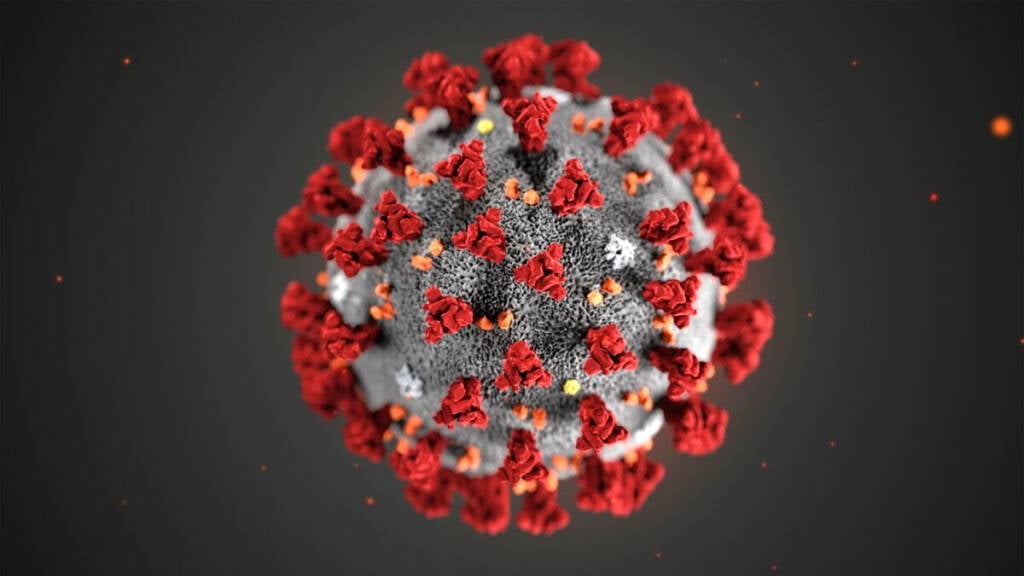
The Coronavirus shows, more than anything, that that thinking and those policies can be compared with a virus, the Militarismvirus.
There can be no “business as usual” after this pandemic.
It must force through a huge conversion from a predominantly military to a predominantly civilian security thinking, doctrine, threat analyses and general policy.
It must imply a huge transfer of resources from the world’s military and war budgets to civil human and global security. The world’s military budgets are the only reservoirs from which funds can be taken to finance the solutions to the other mentioned global problems.
If you think this article gave you food for thought…
#coronaissecuritypolitics – please begin using this hashtag everywhere
Part 3 will deal with how a genuine threat analysis should be constructed and what it would have led to had it been done by any government.
Part 1 of this series • Part 3 • Part 4