
TFF is proud to present yet another book by its Associate, John Scales Avery, who at the age of 83 remains an incredibly productive global thinker and author of books about our world’s essential problems, what causes them and what must be done. And all of Avery’s books are freely downloadable…

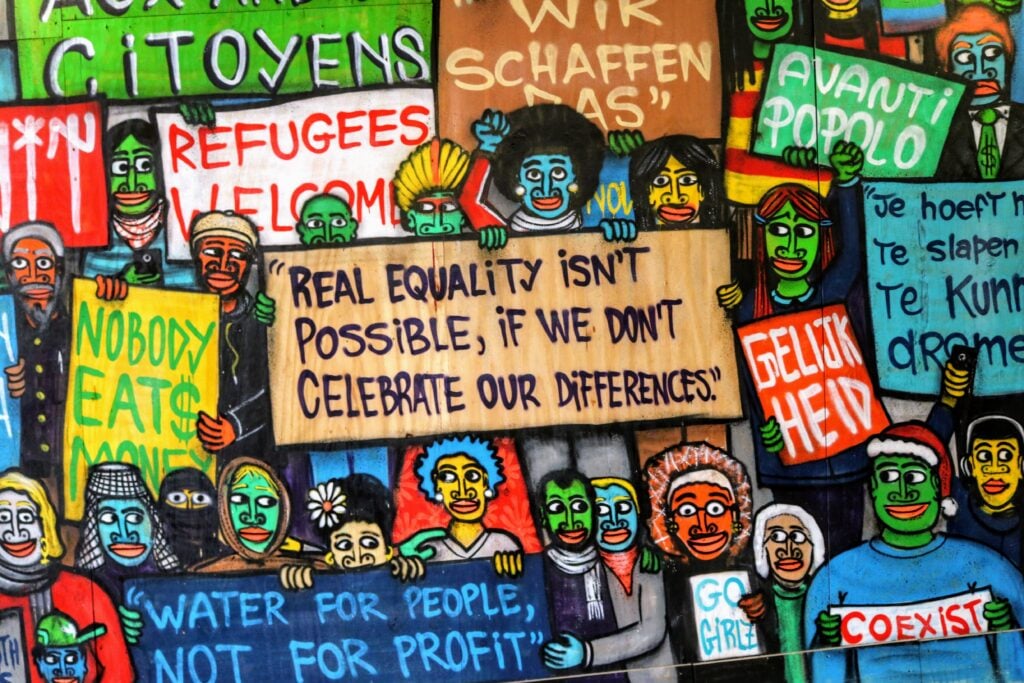
The book is – Benefits of Equality – which presents evidence supporting the thesis that elimination of excessive economic inequality makes societies happier and better.

It’s just out, 451 pages and freely downloadable Benefits of Equality

Avery’s life work is presented beautifully by the online Wall Street International and by the Eqbal Ahmad Centre for Public Education. And his Collected Essays and others are published by another TFF Associate, Jørgen Johansen at Irene Publishing.

Ideals of the Enlightenment

The Age of Reason, or the Enlightenment was an intellectual and philosophical movement that dominated the world of ideas during the 17th to 19th centuries. Sir Isaac Newton’s rational explanations for cosmic phenomena demonstrated that reason is better than superstition. Diderot’s Encyclopedia and the writings of Voltaire and Rousseau paved the way for the end of Feudalism, the end of the theory of the Divine Right of Kings, and the liberation of serfs and slaves throughout the world.

In England, John Locke was expressing the spirit of the times when he wrote: “Men living together according to reason, without a common superior on earth with authority to judge between them, is properly the state of nature… A state also of equality, wherein all the power and jurisdiction is reciprocal, no one having more than another; there being nothing more evident than that creatures of the same species, promiscuously born to all the same advantages of nature and the use of the same facilities, should also be equal amongst one another without subordination or subjection…”

“But though this be a state of liberty, yet it is not a state of licence… The state of nature has a law to govern it, which obliges every one; and reason, which is that law, teaches all mankind who will but consult it, that being equal and independent, no one ought to harm another in his life, health, liberty or possessions.”

Locke’s ideas were reflected in the wording of the American Declaration of Independence:

“We hold these truths to be self-evident, that all men are created equal, that they are endowed by their Creator with certain inalinable Rights, that among these are Life, Liberty and the pursuit of Happiness. – That to secure these rights, Governments are instituted among Men, deriving their just powers from the consent of the governed…”

Sadly, these ideals do not hold in the United States today, and perhaps they never did. Although years of slavery were ended after the Civil War, and despite the efforts of the Civil Rights Movement, racism is widespread today, and in fact, US President Donald Trump was elected on an openly racist platform. During his term of office, he has been a racist in both word and deed.

Recently many American cities have erupted in protests over the senseless killing by police of yet another black man – George Floyd. The country is deeply divided.

Racism, colonialism and exceptionalism

It seems to be possible for nations, and the majority of their citizens, to commit the worst imaginable atrocities, including torture, murder and genocide, while feeling that what they are doing is both noble and good. Some understanding of how this is possible can be gained by watching the 3-part BBC documentary, “The History of Racism”:

The series was broadcast by BBC Four in March 2007, and videos of the broadcasts are available on the Internet. Watching this eye-opening documentary can give us much insight into the link between racism and colonialism. We can also begin to see how both racism and colonialism are linked to US exceptionalism and neocolonialism.

Looking at the BBC documentary we can see how often in human history economic greed and colonial exploitation have been justified by racist theories. The documentary describes almost unbelievable cruelties committed against the peoples of the Americas and Africa by Europeans. For example, in the Congo, a vast region which King Leopold II of Belgium claimed as his private property, the women of villages were held as hostages while the men were forced to gather rubber in the forests. Since neither the men nor the women could produce food under these circumstances, starvation was the result.

Leopold’s private army of 90,000 men were issued ammunition, and to make sure that they used it in the proper way, the army was ordered to cut off the hands of their victims and send them back as proof that the bullets had not been wasted. Human hands became a kind of currency, and hands were cut off from living men, women and children when rubber quotas were not fulfilled. Sometimes more than a thousand human hands were gathered in a single day. During the rule of Leopold, roughly 10,000,000 Congolese were killed, which was approximately half the population of the region.

Oligarchy and war

Today the world spends almost two trillion dollars ( $ 2,000,000,000,000) every year on armaments. This vast river of money, almost too large to be imagined, is the “devil’s dynamo” driving the institution of war. Politicians notoriously can be bought with a tiny fraction of this enormous amount; hence the decay of democracy. It is also plain that if the almost unbelievable sums now wasted on armaments were used constructively, most of the pressing problems now facing humanity could be solved.

Because the world spends almost two thousand billion dollars each year on armaments, it follows that very many people make their living from war. This is the reason why it is correct to speak of war as an institution, and why it persists, although we know that it is the cause of much of the suffering that inflicts humanity, and that we live under the constant threat of an all-destroying thermonuclear war.

Money from wealthy oligarchs in military-industrial complexes buys the propaganda of the mass media and the votes of politicians. Numbed by the propaganda, citizens allow politicians to vote for obscenely bloated military budgets, the oligarchs are further enriched, and thus the circular flow of money continues. Excessive economic inequality is at the root of the problem of war, as well as the loss of our democratic institutions.

The poor suffer most in the COVID-19 pandemic

The poor are suffering most from the COVID-19 pandemic. While the rich can isolate themselves in comfort, working people with no savings are faced with the choice between risking their lives in unsafe work-places or starvation because of lack of income. Here are quotations from a recently-published article by Jake Johnson entitled “Grotesque’: While 41 Million People Lost Jobs Due to Covid-19, US Billionaires Grew Nearly $500 Billion Richer”, Common Dreams, May 28, 2020:

“Billionaire wealth is surging at the same time that millions face suffering, hardship, and loss of life. This is a grotesque indicator of the deep inequalities in U.S. Society.

“Statistics released Thursday by the U.S. Department of Labor show that with 2.1 million new unemployment claims filed last week, a staggering 40.7 million Americans have lost their jobs over just the past 10 weeks as mass layoffs induced by the coronavirus pandemic continue.

“During that same 10-week period, according to a new analysis by the Institute for Policy Studies (IPS), the combined net worth of America’s billionaires soared by nearly half a trillion dollars, bringing their total wealth to $3.4 trillion.”

Equality, happiness and renewable energy in Scandanavia

The Green New Deal can simultaneously address the climate crisis and the problem of excessive economic inequality. In this context, it is interesting to look at the social and economic systems of the Scandinavian countries, Norway, Sweden, Finland, Denmark and Iceland.

In these countries the contrast between the rich and poor has been very much reduced. It is almost true to say that poverty has been eliminated in these countries. At the same time, the Scandinavians have strong policies to address the climate emergency. Thus Scandinavian successes are a counter-argument to those who say that the Green New Deal cannot be put into practice.

The Scandinavian countries also rank very highly on the Global Happiness Index and the Human Development Index, thus demonstrating the benefits of equality,

To achieve a happy and sustainable world, we urgently need to decrease excessive economic inequality, both within and between nations

Info

Avery’s life work is presented beautifully by the online Wall Street International and by the Eqbal Ahmad Centre for Public Education. And his Collected Essays and others are published by another TFF Associate, Jørgen Johansen at Irene Publishing.

TFF urges you to circulate these links to friends and contacts who might be interested.
Related Posts

Below are TFF-related media mentions, comments, videos and social media posts published elsewhere but not on this homepage. We happen to catch and list only a fraction. Regarding video comments and debates, we recommend that you go to the TFF Video Channel on Substack where many of them are reproduced. Jan Oberg is a contributor to China Daily – 52 million daily clicks – and Global Times, CGTN and CCTV (the national television), China Investment, Xinhua News Agency and several others. Articles and videos on these media very often multiply into countless Chinese (and Western media) that re-post them from these main media. Thanks to The China Academy, his analyses, interviews and comments are frequently posted on YouTube channels such as Thinkers Forum and Wave Media. These videos are often re-posted on Bilibili (China’s YouTube), the China Content Center on TikTok, and on the Chinese edition of TikTok, Douyin.com. This means reaching hundreds of millions of viewers worldwide over a year. While there are too many to catch on all these...
Jan Oberg TFF director October 13, 2026 According to Alfred Nobel’s will, the Nobel Peace Prize shall be awarded: ”to the person who has done the most or best to advance fellowship among nations, the abolition or reduction of standing armies, and the establishment and promotion of peace congresses.” Further down, he also expresses how the prize for the “champions of peace” shall be decided: “that for champions of peace by a committee of five persons to be selected by the Norwegian Storting. Alfred Nobel’s will is remarkably short and clear. But few seem to have read it. Nobel did not say that the committee itself should consist of members of parliament. He entrusted the Storting with appointing five persons. In principle, it could have selected diplomats, mediators, peace researchers, conflict-resolution specialists, or other individuals with recognised expertise in matters of peace from around the world. Instead, the Storting gradually...
The Quest for Humane Survival Richard Falk Professor emeritus, Princeton UniversityTFF Associate since 1986October 12, 2026 After decades of teaching and writing about international law in academic frameworks that were not institutionally situated within law school environments—at Princeton and the University of California, Santa Barbara—I found myself most receptive to the TWAIL outlook. It has been especially illuminating in clarifying the extent to which international law evolved as a dialogical critique of Europe’s efforts to legitimize its colonial undertakings. In particular, TWAIL has exposed how international law has functioned to legalize the subjugation of Third World peoples, securing conditions for exploitative investment and trade relations, the coercive enforcement of public debts, and an ideology of cultural superiority. TWAIL’s exposure of these economic legacies of colonialism has influenced my understanding of the history and development of international law, broadly conceived, as an ideological project of the Western sub-system of the world...

Recent Articles

Below are TFF-related media mentions, comments, videos and social media posts published elsewhere but not on this homepage. We happen to catch and list only a fraction. Regarding video comments and debates, we recommend that you go to the TFF Video Channel on Substack where many of them are reproduced. Jan Oberg is a contributor to China Daily – 52 million daily clicks – and Global Times, CGTN and CCTV (the national television), China Investment, Xinhua News Agency and several others. Articles and videos on these media very often multiply into countless Chinese (and Western media) that re-post them from these main media. Thanks to The China Academy, his analyses, interviews and comments are frequently posted on YouTube channels such as Thinkers Forum and Wave Media. These videos are often re-posted on Bilibili (China’s YouTube), the China Content Center on TikTok, and on the Chinese edition of TikTok, Douyin.com. This means reaching hundreds of millions of viewers worldwide over a year. While there are too many to catch on all these...
Jan Oberg TFF director October 13, 2026 According to Alfred Nobel’s will, the Nobel Peace Prize shall be awarded: ”to the person who has done the most or best to advance fellowship among nations, the abolition or reduction of standing armies, and the establishment and promotion of peace congresses.” Further down, he also expresses how the prize for the “champions of peace” shall be decided: “that for champions of peace by a committee of five persons to be selected by the Norwegian Storting. Alfred Nobel’s will is remarkably short and clear. But few seem to have read it. Nobel did not say that the committee itself should consist of members of parliament. He entrusted the Storting with appointing five persons. In principle, it could have selected diplomats, mediators, peace researchers, conflict-resolution specialists, or other individuals with recognised expertise in matters of peace from around the world. Instead, the Storting gradually...
The Quest for Humane Survival Richard Falk Professor emeritus, Princeton UniversityTFF Associate since 1986October 12, 2026 After decades of teaching and writing about international law in academic frameworks that were not institutionally situated within law school environments—at Princeton and the University of California, Santa Barbara—I found myself most receptive to the TWAIL outlook. It has been especially illuminating in clarifying the extent to which international law evolved as a dialogical critique of Europe’s efforts to legitimize its colonial undertakings. In particular, TWAIL has exposed how international law has functioned to legalize the subjugation of Third World peoples, securing conditions for exploitative investment and trade relations, the coercive enforcement of public debts, and an ideology of cultural superiority. TWAIL’s exposure of these economic legacies of colonialism has influenced my understanding of the history and development of international law, broadly conceived, as an ideological project of the Western sub-system of the world...

TFF on Substack

Discover and subscribe to more peace materials on TFF Substack

Most Popular

Below are TFF-related media mentions, comments, videos and social media posts published elsewhere but not on this homepage. We happen to catch and list only a fraction. Regarding video comments and debates, we recommend that you go to the TFF Video Channel on Substack where many of them are reproduced. Jan Oberg is a contributor to China Daily – 52 million daily clicks – and Global Times, CGTN and CCTV (the national television), China Investment, Xinhua News Agency and several others. Articles and videos on these media very often multiply into countless Chinese (and Western media) that re-post them from these main media. Thanks to The China Academy, his analyses, interviews and comments are frequently posted on YouTube channels such as Thinkers Forum and Wave Media. These videos are often re-posted on Bilibili (China’s YouTube), the China Content Center on TikTok, and on the Chinese edition of TikTok, Douyin.com. This means reaching hundreds of millions of viewers worldwide over a year. While there are too many to catch on all these...
Jan Oberg TFF director October 13, 2026 According to Alfred Nobel’s will, the Nobel Peace Prize shall be awarded: ”to the person who has done the most or best to advance fellowship among nations, the abolition or reduction of standing armies, and the establishment and promotion of peace congresses.” Further down, he also expresses how the prize for the “champions of peace” shall be decided: “that for champions of peace by a committee of five persons to be selected by the Norwegian Storting. Alfred Nobel’s will is remarkably short and clear. But few seem to have read it. Nobel did not say that the committee itself should consist of members of parliament. He entrusted the Storting with appointing five persons. In principle, it could have selected diplomats, mediators, peace researchers, conflict-resolution specialists, or other individuals with recognised expertise in matters of peace from around the world. Instead, the Storting gradually...
The Quest for Humane Survival Richard Falk Professor emeritus, Princeton UniversityTFF Associate since 1986October 12, 2026 After decades of teaching and writing about international law in academic frameworks that were not institutionally situated within law school environments—at Princeton and the University of California, Santa Barbara—I found myself most receptive to the TWAIL outlook. It has been especially illuminating in clarifying the extent to which international law evolved as a dialogical critique of Europe’s efforts to legitimize its colonial undertakings. In particular, TWAIL has exposed how international law has functioned to legalize the subjugation of Third World peoples, securing conditions for exploitative investment and trade relations, the coercive enforcement of public debts, and an ideology of cultural superiority. TWAIL’s exposure of these economic legacies of colonialism has influenced my understanding of the history and development of international law, broadly conceived, as an ideological project of the Western sub-system of the world...
Read More
girl-5894831_1280
Below are TFF-related media mentions, comments, videos and social media posts published elsewhere but not on this homepage. We happen to catch and list only a fraction. Regarding video comments and debates, we recommend that you go to the TFF Video Channel on Substack where many of them are reproduced. Jan Oberg is a contributor to China Daily – 52 million daily clicks – and Global Times, CGTN and CCTV (the national television), China Investment, Xinhua News Agency and several others. Articles and videos on these media very often multiply into countless Chinese (and Western media) that re-post them from these main media. Thanks to The China Academy, his analyses, interviews and comments are frequently posted on YouTube channels such as Thinkers Forum and Wave Media. These videos are often re-posted on Bilibili (China’s YouTube), the China Content Center on TikTok, and on the Chinese edition of TikTok, Douyin.com. This means reaching hundreds of millions of viewers worldwide over a year. While there are too many to catch on all these...
Nobel-Prize-Plaque
Jan Oberg TFF director October 13, 2026 According to Alfred Nobel’s will, the Nobel Peace Prize shall be awarded: ”to the person who has done the most or best to advance fellowship among nations, the abolition or reduction of standing armies, and the establishment and promotion of peace congresses.” Further down, he also expresses how the prize for the “champions of peace” shall be decided: “that for champions of peace by a committee of five persons to be selected by the Norwegian Storting. Alfred Nobel’s will is remarkably short and clear. But few seem to have read it. Nobel did not say that the committee itself should consist of members of parliament. He entrusted the Storting with appointing five persons. In principle, it could have selected diplomats, mediators, peace researchers, conflict-resolution specialists, or other individuals with recognised expertise in matters of peace from around the world. Instead, the Storting gradually...
law-419057_1280
The Quest for Humane Survival Richard Falk Professor emeritus, Princeton UniversityTFF Associate since 1986October 12, 2026 After decades of teaching and writing about international law in academic frameworks that were not institutionally situated within law school environments—at Princeton and the University of California, Santa Barbara—I found myself most receptive to the TWAIL outlook. It has been especially illuminating in clarifying the extent to which international law evolved as a dialogical critique of Europe’s efforts to legitimize its colonial undertakings. In particular, TWAIL has exposed how international law has functioned to legalize the subjugation of Third World peoples, securing conditions for exploitative investment and trade relations, the coercive enforcement of public debts, and an ideology of cultural superiority. TWAIL’s exposure of these economic legacies of colonialism has influenced my understanding of the history and development of international law, broadly conceived, as an ideological project of the Western sub-system of the world...
images-2
Advocates of nuclear disarmament are regularly dismissed by the champions of nuclear deterrence as naïve and unrealistic, utopian or even irresponsible. Yet this ‘doctrine’ of deterrence, regarded by France as the ‘cornerstone’ of its national security, is based on quasi-religious beliefs, a theory that cannot be proven, risky gambles and fragile assumptions. So much so that one might legitimately ask which side the ‘Care Bears’ are on. Marc FinaudVice-President of Initiatives for Nuclear Disarmament (IDN) October 9, 2026 This article was originally published on Pressenza When it comes to these things being treated as religious concepts, look here. Idealists and realists It was Hubert Védrine, François Mitterrand’s former Foreign Minister, who repeatedly coined the phrase: ‘Europeans are a sort of Care Bears who don’t realise they’re living in Jurassic Park’. He applies this reference to the cartoon for well-behaved children not only to what he regards as weakness or idealism...
8824b09f-33a5-43f9-9fd0-550f28cda24d_1536x1024
What the West Borrowed from Asia and What It Left Behind Jan Krikke October 8, 2026 The article was originally published here In the late 1960s, the musical Hair announced that the Age of Aquarius was dawning. Its opening anthem promised a transformation of human consciousness: an era of peace, harmony and understanding. Half a century later, a familiar echo of that promise is a meditation app offered by your employer. You can find it in the same list of benefits as the pension plan and the gym discount. How did a spiritual revolution become an employee benefit? The answer lies in the history of the movement known as New Age: where it came from, what it borrowed from Asia, and why the meaning of what it borrowed changed in the process. Two definitions will help. New Age is a loose label for a wide range of spiritual practices and...
Screenshot 2026-10-04 210142
Small and different + among the 10% most active + 9,000 texts + 150 Associates + 60 000 a day — and a stubborn belief that peace is smarter and must be secured by peaceful means. In 2026, the Transnational Foundation for Peace and Future Research (TFF) turns 40. On Monday, October 5, 2026, a new TFF homepage will go live — a new gateway to more than 9,000 articles, analyses, research papers and other contributions produced over four decades of independent peace research. But this is not simply a new website. For four decades, TFF has worked from a simple conviction: peace is smarter than militarism and can be brought about by peaceful means. This is not merely an aspiration. It is the principle expressed in the UN Charter and the Gandhian tradition that has guided our work from the beginning. TFF is a research-based, independent and people-financed foundation....





