
The 1300 Palestinians on hunger strike in Israeli prisons: Where is the media attention?

Can anyone doubt that if there were more than 1300 hunger strikers in any country in the world other than Palestine, the media in the West would be obsessed with the story? It would be featured day after day, and reported on from all angles, including the severe medical risks associated with such a lengthy refusal to take food.

At this time two Palestinians who were the first to start this current wave of resistance, Thaer Halaheh and Bilal Diab, entering their 64th day without food, are reported by the prisoner protection association, Addameer, and the NGO, Physician for Human Rights-Israel, to be in critical condition with their lives hanging in the balance. Despite this dramatic state of affairs there is scant attention in Europe, and literally none in North America.

In contrast, consider the attention that the Western media has devoted to a lone blind Chinese human rights lawyer, Chen Guangcheng, who managed to escape from house arrest in Beijing a few days ago and find a safe haven at the U.S. Embassy. This is an important international incident, to be sure, but is it truly so much more significant than the Palestinian story as to explain the total neglect of the extraordinary exploits of these thousands of Palestinians who are sacrificing their bodies, quite possibly their lives, to nonviolently protest severe mistreatment in the Israeli prison system?

Except among their countrymen, and to some extent the region, these many thousand Palestinian prisoners have been languishing within an opaque black box ever since 1967, are denied protection, exist without rights, and cope as best they can without even the acknowledgement of their plight.

There is another comparison to be made. Recall the outpouring of concern and sympathy throughout the West for Gilad Shalit, the Israeli soldier who was captured on the Gaza border and held captive by Palestinians for five years. A powerful global campaign for his release on humanitarian ground was organized, and received constant reinforcement in the media.

World leaders pleaded for his release, and Israeli commanding officers even told IDF fighting forces during the massive attacks on Gaza at the end of 2008 that killed more than 1450 Palestinians that their real mission was to free Shalit or at least hold accountable the entire civilian population of Gaza.

When Shalit finally released in a prisoner exchange a few months ago there was a brief celebration that abruptly ended when, much to the disappointment of the Israeli establishment, Shalit reported good treatment during captivity. Shalit’s father went further, saying if he was a Palestinian he would have tried to capture Israeli soldiers. Not surprisingly, Shalit, instead of being revered as an Israeli hero, has quietly disappeared from public view.

This current wave of hunger strikes started on April 17th, Palestinian Prisoners’ Day, and was directly inspired by the recently completed long and heroic hunger strikes of Khader Adnan (66 days) and Hana Shalabi (43 days) both of whom protested against the combination of administrative detention and abusive arrest and interrogation procedures. It should be understood that administrative detention is validated by secret evidence and allows Israel to imprison Palestinians for six months at a time without bringing any criminal charges, with terms renewable as they expire.

Hana Shalabi was among those released in the prisoner exchange, but then barely recovering from her prior detention period, was rearrested in a night arrest raid, and sentenced once again to a term of confinement for four months. Or consider the experience of Thaer Halahla, eight times subject to administrative detention for a total of six and a half years.

Both Mr. Adnan and Ms. Shalabi were released by deals negotiated at a time when their physical survival seemed in doubt, making death seem imminent. Israel apparently did not want to risk a third intifada resulting as a reaction to such martyrdom. At the same time Israel, as usual, did not want to seem to be retreating, or draw into question its reliance on administrative detention and imprisonment.

Israel has refused, until the present, to examine the grievances that gave rise to these hunger strikes. In Hana Shalabi’s case her release was coupled with a punitive deportation order, which cruelly confines her to Gaza for the next three years, away from her family and the familiar surroundings of her home village of Burqin near Jenin in the West Bank.

There are some indications that Ms. Shalabi was not fully informed about the deportation feature of her release, and was manipulated by prison authorities and the lawyer representing her interests. The current hunger strikers have been offered similar conditional releases, but have so far steadfastly refused to resume eating if it led to deportation or exile.

At this time it is unclear how Israel will respond. There is a fierce struggle of wills between the strikers and the prison authorities, between those with hard power of domination and those with the soft power of moral and spiritual courage. The torment of these striking prisoners is not only a consequence of their refusal to accept food until certain conditions are met. Israeli prison guards and authorities are intensifying the torments of hunger.

There are numerous reports that the strikers are being subjected to belittling harassment and a variety of punishments, including solitary confinement, confiscation of personal belongings, denial of family visits, denial of examination by humanitarian NGOs, and a hardhearted refusals to transfer to medically threatened strikers to civilian hospitals where they could receive the kinds of medical treatment their critical conditions require.

The Israeli response to the hunger strikes is shocking, but hardly surprising, within the wider setting of the occupation. Instead of heeding the moral appeal implicit in such extreme forms of resistance, there are widespread reliable reports of punitive responses by Israeli prison authorities.

Hunger strikers have been placed in solitary confinement, held in shackles despite their weakened conditions, denied family visits, had personal belongings confiscated, were subjected to harassing comments by guards intended to demoralize. Israeli media has generally taken a cynical attitude toward the strikes, suggesting that these hunger strikers are publicity seeking, aiming to receive ‘a get out of jail free’ card, and deserve no empathy even if their life is in jeopardy because they voluntarily gave up food by their own free will, and hence Israeli prison authorities have no responsibility for their fate.

Some news reports in Israel have speculated about whether if one or more hunger strikers dies in prison it will spark an uprising among the Palestinians, but this is less an expression of concern or a willingness to look at the substantive issues than it is a source of worry about future stability.

Broader issues are also at stake. When in the past Palestinians resorted to violent forms of resistance they were branded by the West as terrorists, their deeds were covered to bring out sensationalist aspects, but when Palestinians resort to nonviolent forms of resistance, whether hunger strikes or BDS or an intifada, their actions fall mainly on deaf ears and blind eyes, or worse, there is a concerted propaganda spin to depict the particular tactic of nonviolent resistance as somehow illegitimate, either as a cheap trick to gain sympathy or as a dirty trick to destroy the state of Israel.

All the while, Israel’s annexationist plans move ahead, with settlements expanding, and now recently, with settler outposts, formerly illegal even under Israeli law, being in the process of being retroactively legalized. Such moves signal once and for all that the Netanyahu leadership exhibits not an iota of good faith when it continues to tell the world that it is dedicated to negotiating a peace treaty with the Palestinians.

It is a pity that the Palestinian Authority has not yet had the diplomatic composure to call it quits when it comes to heeding the calls of the Quartet for a resumption of direct talks. It is long past time to crumble bridge to nowhere.

That rock star of liberal pontificators, Thomas Friedman, has for years been preaching nonviolence to the Palestinians, implying that Israel as a democratic country with a strong moral sensitivity would yield in the face of such a principled challenge. Yet when something as remarkable as this massive expression of a Palestinian commitment to nonviolent resistance in the form of this open-ended hunger strike, dubbed ‘the war of empty stomachs’, takes place, Friedman along with his liberal brothers is stony silent, and the news sections of the newspaper of the New York Times are unable to find even an inch of space to report on these dramatic protests against Israel’s use of administrative detention and abusive treatment during arrest, interrogation, and imprisonment.

Shame on you, Mr. Friedman!

Robert Malley, another influential liberal voice who had been a Middle East advisor to Bill Clinton when he was president, while more constrained than Friedman, suggests that any sustained display of Palestinian nonviolence if met with Israeli violence would be an embarrassment for Washington. Malley insists that if the Palestinians were to take to the streets in the spirit of Tahrir Square, and Israelis responded violently, as the Netanyahu government certainly would, it “would put the United States in an ..acute dilemma about how to react to Israel’s reaction.”

The dilemma depicted by Malley derives from Obama constant encouragement of the democratic aspirations of a people who he has repeatedly said deserve their own state on the one side and the unconditional alignment with Israel on the other. Only a confirmed liberal would call this a genuine dilemma, as any informed and objective observer would know, that the U.S. Government would readily accept, as it has repeatedly done in the past, an Israeli claim that force was needed to maintain public order. In this manner, Palestinian nonviolence would be disregarded, and the super-alliance of these two partners in crime once more reaffirmed.

Let there be no mistake about the moral and spiritual background of the challenge being mounted by these Palestinians. Undertaking an open ended hunger strike is an inherently brave act that is fraught with risks and uncertainties, and is only undertaken as an expression of extreme frustration or acute deprivation. It is not an act undertaken lightly or as a stunt.

For anyone who has attempted to express protest in this manner, and I have for short periods during my decade of opposition to the Vietnam War, it is both scary and physically taxing even for a day or so, but to maintain the discipline and strength of will to sustain such a strike for weeks at a time requires a rare combination of courage and resolve. Only specially endowed individuals can adopt such a tactic. For a hunger strike to be done on such a scale of collective action underscores the horrible ordeal of the Palestinians that has been all but erased from the political consciousness of the West in the hot aftermath of the Arab Spring.

The world has long refused to take notice of Palestinian one-sided efforts over the years to reach a peaceful outcome of their conflict with Israel.

It is helpful to recall that in 1988 the PLO officially accepted Israel within 1967 borders, a huge territorial concession, leaving the Palestinians with only 22% of historical Palestine on which to establish an independent and sovereign state. In recent years, the main tactics of Palestinian opposition to the occupation, including on the part of Hamas, has been to turn away from violence, adhering to a diplomacy and practice that looked toward long-term peaceful coexistence between two peoples.

Israel has not taken note of either development, and has instead continuous thrown sand in Palestinian eyes. The official Israeli response to Palestinian moves toward political restrain and away from violence have been to embark upon a program of feverish settlement expansion, extensive targeted killing, reliance on excessive retaliatory violence, as well as an intensifying oppressiveness that gave rise to these hunger strikes.

One dimension of this oppressiveness is the 50% increase in the number of Palestinians held under administrative detention during of the last year, along with an officially mandated worsening of conditions throughout its prison system.


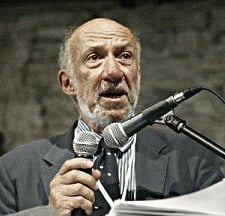
Professor Falk became an adviser to TFF when it was established in 1985.

Related Posts

The Quest for Humane Survival Richard Falk Professor emeritus, Princeton UniversityTFF Associate since 1986October 12, 2026 After decades of teaching and writing about international law in academic frameworks that were not institutionally situated within law school environments—at Princeton and the University of California, Santa Barbara—I found myself most receptive to the TWAIL outlook. It has been especially illuminating in clarifying the extent to which international law evolved as a dialogical critique of Europe’s efforts to legitimize its colonial undertakings. In particular, TWAIL has exposed how international law has functioned to legalize the subjugation of Third World peoples, securing conditions for exploitative investment and trade relations, the coercive enforcement of public debts, and an ideology of cultural superiority. TWAIL’s exposure of these economic legacies of colonialism has influenced my understanding of the history and development of international law, broadly conceived, as an ideological project of the Western sub-system of the world...
Tony Robinson October 4, 2026 Violence is easy to recognise when someone is being beaten, shot or killed. It becomes more difficult when nobody is holding a weapon. Poverty, discrimination, exploitation and repression can restrict a human life just as effectively, although they do so in very different ways and with very different consequences. Simply adding more categories to an ever-growing list of forms of violence does not really solve the problem. The more interesting question is what all these different situations have in common and why it makes sense to describe them using the same word. Human beings do not simply react to what happens around them. They remember the past, imagine things that do not yet exist, make plans and undertake projects. Workers organise because they imagine different working conditions; people migrate because they imagine another life somewhere else; social movements emerge because people refuse to accept the...
The agreement is catastrophic both because of what it says and what it doesn’t mention. It reduces further the major asset of security policies: Freedom of action. Jan Oberg TFF director September 25, 2026 A couple of hours before the agreement was signed on September 22, 2026, I published the following 13 hypotheses about what it would most likely contain on TFF Substack (in English). I was wrong on only the first point. Contrary to what Trump had written on his Truth Social platform, it does not appear to come into force immediately. In fact, it turned out to be worse than even I had anticipated. After these hypotheses now come a number of reflections in light of what the agreement actually contains, and does not contain, as well as the way in which it has generally been presented by major media outlets and by the public-service broadcaster DR. My...

Recent Articles

Photo above: Carl Fredrik Reuterswärd’s Non-Violence outside UN Headquarters in New York. Kirill Levin, CC BY-NC-SA 2. Jan Oberg November 3, 2026 I am happy to be published in Horizons which is produced by the Center for International Relations and Sustainable Development, CIRSD, in Belgrade. My contribution brings out a radical re-thinking of what concepts such as defence, security, deterrence – and peace – may mean if we want to create a more peaceful world. It also summarises a few things I have been working with the last few decades. Please read it here Og her er den på dansk, takket være Johnny Baltzersens lynhurtige oversættelse
UNITE-tillid, DREAM-velstand og andre konstruktive komponenter Normally we publish articles in English here. But this is a translation of a very important TFF document that should reach as many as possible in Denmark since this country’s government has been one of the most hardline in Europe and, up till now at least, has refused to use diplomacy and, instead, spent tremendous sums on arming Ukraine with the express goal of defeating Russia. Thus this – unique – article is in Danish. Vi er Johnny Baltzersen og hans Fælles Sikkerhed – Fælles Fremtid på Substack overmåde taknemmelige for at have oversat og publiceret TFF’s 2025-portfølje for fredsidéer med henblik på Ukraines fremtid. Vi håber den nu kan nå mange flere danskere – som også vil sprede den og skabe debat – nu den danske regerings og folketingspartiernes politik på dette område siden 2022 står nu – forudsigeligt – ved vejs ende....
Jan Oberg TFF director October 28, 2026 Exactly one month has now passed since I published my criticism of the introduction to the special issue on Johan Galtung published by the Journal of Global Security Studies, JoGSS, and of Tor Egil Førland’s chapter about Galtung which serves as a preview to his forthcoming biography of Galtung to be published by PRIO. See the original on The Transnational here and the same article on TFF Substack with many general and critical comments and, in particular, the people who decided to withdraw from the biography project in protest. The special issue itself was extraordinary. It was devoted to the intellectual legacy of one of the founders of peace research and contained a number of strong assessments of his personality, scholarship, intellectual trajectory, and public role. Such assessments are, of course, entirely legitimate. No scholar is beyond criticism, and neither was Johan Galtung....

TFF on Substack

Discover and subscribe to more peace materials on TFF Substack

Most Popular

Photo above: Carl Fredrik Reuterswärd’s Non-Violence outside UN Headquarters in New York. Kirill Levin, CC BY-NC-SA 2. Jan Oberg November 3, 2026 I am happy to be published in Horizons which is produced by the Center for International Relations and Sustainable Development, CIRSD, in Belgrade. My contribution brings out a radical re-thinking of what concepts such as defence, security, deterrence – and peace – may mean if we want to create a more peaceful world. It also summarises a few things I have been working with the last few decades. Please read it here Og her er den på dansk, takket være Johnny Baltzersens lynhurtige oversættelse
UNITE-tillid, DREAM-velstand og andre konstruktive komponenter Normally we publish articles in English here. But this is a translation of a very important TFF document that should reach as many as possible in Denmark since this country’s government has been one of the most hardline in Europe and, up till now at least, has refused to use diplomacy and, instead, spent tremendous sums on arming Ukraine with the express goal of defeating Russia. Thus this – unique – article is in Danish. Vi er Johnny Baltzersen og hans Fælles Sikkerhed – Fælles Fremtid på Substack overmåde taknemmelige for at have oversat og publiceret TFF’s 2025-portfølje for fredsidéer med henblik på Ukraines fremtid. Vi håber den nu kan nå mange flere danskere – som også vil sprede den og skabe debat – nu den danske regerings og folketingspartiernes politik på dette område siden 2022 står nu – forudsigeligt – ved vejs ende....
Jan Oberg TFF director October 28, 2026 Exactly one month has now passed since I published my criticism of the introduction to the special issue on Johan Galtung published by the Journal of Global Security Studies, JoGSS, and of Tor Egil Førland’s chapter about Galtung which serves as a preview to his forthcoming biography of Galtung to be published by PRIO. See the original on The Transnational here and the same article on TFF Substack with many general and critical comments and, in particular, the people who decided to withdraw from the biography project in protest. The special issue itself was extraordinary. It was devoted to the intellectual legacy of one of the founders of peace research and contained a number of strong assessments of his personality, scholarship, intellectual trajectory, and public role. Such assessments are, of course, entirely legitimate. No scholar is beyond criticism, and neither was Johan Galtung....
Read More
knotted gun
Photo above: Carl Fredrik Reuterswärd’s Non-Violence outside UN Headquarters in New York. Kirill Levin, CC BY-NC-SA 2. Jan Oberg November 3, 2026 I am happy to be published in Horizons which is produced by the Center for International Relations and Sustainable Development, CIRSD, in Belgrade. My contribution brings out a radical re-thinking of what concepts such as defence, security, deterrence – and peace – may mean if we want to create a more peaceful world. It also summarises a few things I have been working with the last few decades. Please read it here Og her er den på dansk, takket være Johnny Baltzersens lynhurtige oversættelse
TFFPortfolioVign
UNITE-tillid, DREAM-velstand og andre konstruktive komponenter Normally we publish articles in English here. But this is a translation of a very important TFF document that should reach as many as possible in Denmark since this country’s government has been one of the most hardline in Europe and, up till now at least, has refused to use diplomacy and, instead, spent tremendous sums on arming Ukraine with the express goal of defeating Russia. Thus this – unique – article is in Danish. Vi er Johnny Baltzersen og hans Fælles Sikkerhed – Fælles Fremtid på Substack overmåde taknemmelige for at have oversat og publiceret TFF’s 2025-portfølje for fredsidéer med henblik på Ukraines fremtid. Vi håber den nu kan nå mange flere danskere – som også vil sprede den og skabe debat – nu den danske regerings og folketingspartiernes politik på dette område siden 2022 står nu – forudsigeligt – ved vejs ende....
JoGSS-Silent
Jan Oberg TFF director October 28, 2026 Exactly one month has now passed since I published my criticism of the introduction to the special issue on Johan Galtung published by the Journal of Global Security Studies, JoGSS, and of Tor Egil Førland’s chapter about Galtung which serves as a preview to his forthcoming biography of Galtung to be published by PRIO. See the original on The Transnational here and the same article on TFF Substack with many general and critical comments and, in particular, the people who decided to withdraw from the biography project in protest. The special issue itself was extraordinary. It was devoted to the intellectual legacy of one of the founders of peace research and contained a number of strong assessments of his personality, scholarship, intellectual trajectory, and public role. Such assessments are, of course, entirely legitimate. No scholar is beyond criticism, and neither was Johan Galtung....
Screenshot 2026-10-26 115647
An aspect of Iran’s culture and civilisation you’ve probably never heard about. Don’t be surprised if the US and Israel also try to bomb them. Jan ObergTFF director October 26, 2026 Today – under the “USraeli” threat of new “annihilating” bombings – opens the 7th International Conference on Peace and Conflict Resolution at Tehran’s University. As far as I can tell, this is the only permanent, advanced peace research institution in West Asia/the Middle East. Perhaps more countries in that region could be inspired? I mean, how many military “security” institutes and military academies do they have? Many peace research institutes and university departments have been established since the 1950s in the West. They are now all under attack; some have closed down, some have gone mainstream, yet others kept the name but do nothing to research peace and disseminate results or advice; instead, they cooperate with militarism’s platforms such...
Screenshot 2026-10-15 141837
Let’s discuss using AI to create peace – in contrast to boring geopolitics devoid of creative healing and visions. Jan Oberg TFF director October 15, 2026 I asked VEED to create a short video exemplifying how peace is preferable to war, then chose the lady as a template. Simple as that. In less than a minute, it produced this video, which any peace-loving person would appreciate. The only problem is that human intelligence (HI), at least the one that exists among Western decision-makers, isn’t half as moral or smart as AI. I have used AI to dialogue about peace and peace plans, creative conflict resolution and visions of a better future for humankind. It so happens that I am having more stimulating, intelligent, creative and moral discussions with AI than I could possibly have with any EU or NATO leader today. Yes, AI has very problematic and dangerous aspects; used...
girl-5894831_1280
Below are TFF-related media mentions, comments, videos and social media posts published elsewhere but not on this homepage. We happen to catch and list only a fraction. Regarding video comments and debates, we recommend that you go to the TFF Video Channel on Substack where many of them are reproduced. Jan Oberg is a contributor to China Daily – 52 million daily clicks – and Global Times, CGTN and CCTV (the national television), China Investment, Xinhua News Agency and several others. Articles and videos on these media very often multiply into countless Chinese (and Western media) that re-post them from these main media. Thanks to The China Academy, his analyses, interviews and comments are frequently posted on YouTube channels such as Thinkers Forum and Wave Media. These videos are often re-posted on Bilibili (China’s YouTube), the China Content Center on TikTok, and on the Chinese edition of TikTok, Douyin.com. This means reaching hundreds of millions of viewers worldwide over a year. While there are too many to catch on all these...




