
TFF PressInfo # 413: The U.S. Attack on al-Shayrat Airfield

In early morning darkness on April 7th the United States fired 59 Tomahawk cruise missiles at the Syrian al-Shayrat Airfield from two American destroyers stationed in the Eastern Mediterranean. It described the targets as Syrian fighter jets, radar, fuel facilities used for the aircraft. It asserted prior notification of Russian authorities, and offered the assurance that precautions were taken to avoid risks to Russian or Syrian military personnel.

Pentagon spokespersons suggested that in addition to doing damage to the airfield, the attack had the intended effect of “reducing the Syrian government’s ability to deliver chemical weapons.”

President Donald Trump in a short public statement justified the attack as a proportionate response to the Syrian use of chemical weapons against the town of Khan Sheikhoun in the western Syrian province of Idlib a few days earlier, which killed an estimated 80 persons, wounding hundreds more.

Although there were denials of Syrian responsibility for the attack from Damascus and Moscow, a strong international consensus supported the U.S. view that Bashar al-Assad had ordered the attack allegedly as a means of convincing opposition forces concentrated in Idlib that it was time to surrender.

In the background, is the conviction among the more militaristic policy advisors and political figures, including Trump, that President Barack Obama’s failure to enforce his 2012 ‘red line’ warning to Syria emboldened Assad to launch this latest attack with chemical weapons.

Of course, this is all hawkish speculation that can be neither proven nor disproven, but it undoubtedly influenced the Trump entourage to suppose that it was presented with an opportunity to exhibit a greater readiness to use American military force in the Syrian conflict, incidentally, an outlook long advocated by Hillary Clinton and many of her advisors and foreign policy supporters.

To do so, abandoned one of Trump’s signature pledges, to avoid military engagement in the conflicts raging throughout the Middle East, which he portrayed as a costly failure of prior American political leaders.

Trump under pressure due to the growing evidence of ties with Russian political leaders during the 2016 presidential campaign may have welcomed an occasion on which to demonstrate his independence from Moscow and Putin.

The departure from the Trump campaign agenda is particularly pointed as there were no American casualties resulting from the attack on Khan Sheikhoun 60 hours earlier than the Tomahawk response.

In Trump’s brief public rationale, the red line argument was not relied upon, but rather the combination of humanitarian outrage and grief with an assertion of the “national security interest of the United States to prevent and deter the spread and use of deadly chemical weapons.”

This geopolitical purpose was reinforced by a cursory appeal to international law and even the UN Security Council: “There can be no dispute that Syria used banned chemical weapons, violated its obligations under the Chemical Weapons Convention and ignored the urging of the U.N. Security Council.”

Yet identifying Syria’s evident violation of international law should not be confused with an international law justification for the use of retaliatory force.

In using this language Trump was evidently seeking to weaken the impression of an irresponsible unilateral American recourse to non-defensive force without bothering to seek an endorsement from the U.S. Congress or the UN.

Not surprisingly Moscow and Damascus both condemned the attack as an act of ‘aggression’ and ‘a flagrant violation of international law.’

Trump used some additional words designed to draw attention away from the unilateral nature of the attack by contending that it fulfilled the common goals of “civilized nations” to deter Assad and defeat terrorism, thereby linking the American initiative to what he called ‘justice’ rather than basing legitimacy exclusively on an appeal to ‘law’ or ‘order.’

Trump expressed this sentiment as follows: “And we hope that as long as America stands for justice, that peace and harmony will in the end prevail.” This is very different in tone, substance, and policy from Trump’s campaign rhetoric, which stridently stressed ‘America first,’ clarified as a call to act with reinvigorated resolve to devote military capabilities exclusively to promoting U.S. material national interests, and to stop wasting resources and energy by trying to address the larger concerns of the world, especially in the Middle East.

This abrupt affinity with an internationalist spirit is made explicit in Trump’s final words — “Good night, and God bless America and the entire world.” As far as I know, this ritualistic invocation of God so much associated with George W. Bush and mimicked by Barack Obama never was extended to include “the entire world,” which is such an unfamiliar wording as to suggest that it was deliberately inserted to stake a quite unexpected and renewed claim to American moral leadership in world affairs.

As with the attack itself, it seems likely to be a one/off embrace of cosmopolitan sentiments, but it is still worth noting. After all, language matters.

As has been suggested, bombing a Syrian airfield is unlikely to help Syrian children exposed to the terrible ravages of this war, that is, unless it does create a new momentum for a sustainable ceasefire.

Already, the Russian reaction signals a worsening of relations with the United States in Syria and generally, and may end up producing the kind of confrontation that had led Republicans in the national security establishment to abandon Trump during the presidential campaign a year ago.

With the removal of Bannon from the National Security Council it may not be premature to suggest that the deep state has found ways to reestablish its influence on national security policy after all seemed lost due to Trump’s electoral victory and vindictive attitude toward ‘the intelligence community.’

It is far too early to say that bureaucratic wars are over, but there is at the very least clear movement evident toward the restoration of the pre-Trump established order in Washington.

The Khan Sheikhoun attack raises more fundamental questions that are neither raised nor resolved by Trump’s speech.

Despite making a gesture in the direction of international law by reference to the Chemical Weapons Convention and Security Council directives, the strike against al-Shayrat Airfield was a non-defensive use of force by the United States that violates the core UN Charter prohibition unless carried out on the basis of an explicit Security Council authorization.

It is precisely the sort of unilateralism that the Charter, and post-1945 international law, made unlawful.

In this context there was no urgency or necessity to strike immediately that might have made the departure from Charter norms seem more reasonable.

Of course, Security Council authorization would not have been forthcoming, given the near certainty that Russia would use its veto.

In that sense, assuming the attribution of responsibility for the chemical weapons attack to the Assad regime holds up, which is by no means assured, there is a dilemma presented when the moral and political case for action is strong, but lacks an ample justification in international law.

Of course, international law has for more three decades given way to the dictates of counterterrorism policies, which have featured retaliatory strikes ordered by American presidents without international authorization.

Has this pattern of essentially unchallenged practice by the U.S. Government done away with the legal constraints of the UN Charter?

Some jurists suggest that state practice of this character creates new expectations about the scope of legality of international uses of force by states in addressing security threats posed by non-state actors or by internal threats of state/society atrocities as here and in the Kosovo War of 1999.

In a decentralized world, lacking governmental authority at regional and global levels, it seems regressive to endorse this return to a state of affairs where warfare is discretionary, and international law and respect for the authority of the United Nations are reduced to considerations of convenience and self-interest, and thus, as here, when inconvenient, a powerful state can use force with unconditional impunity in pursuit of its foreign policy goals.

There are also accompanying prudential questions about recourse to a military response in this instance where the intended target is the internationally recognized government of a sovereign state that is engaged in a protracted civil war.

Is this a further challenge to state-centric world order?

Will the attack magnify the conflict still further rather than deter Assad and make a political compromise more likely?

Will the antagonism of Russia and Iran make it more difficult to bring the conflict to an end by reliance on diplomacy?

There is no way to answer such questions beyond the observation that where, as here, international law opposes recourse to force, the risks of further escalation are considerable, and the rise of geopolitical tensions inevitable, the presumption should be strongly against a military response.

Then there are domestic questions about whether it is okay for an American president to resort to an international use of force without some sort of Congressional debate and authorization (short of a Declaration of War).

Again Trump has plenty of precedents for acting without a specific Congressional authorization from the presidencies of Ronald Reagan, Bill Clinton, and George W. Bush. Executive warmaking authority was definitely increased after the 9/11 attacks, and given a limited, although broad, legislative imprimatur in the Authorization for the Use of Military Force (AUMF) statute of 2001.

AUMF is limited to those forces responsible for the 9/11 attacks and ‘associated forces,’ which the Obama presidency interpreted to extend to Al Qaeda wherever located, and without any time horizon. It seems beyond doubt that constitutionalism in the war/peace context has been severely weakened over the course of the last 70 years, and this latest episode just continues the trend.

It would seem that where there is no necessity to act instantly and where there is no formal UN authorization, the underlying republican commitment to checks and balances to avoid abuses of power, should have led Trump to seek authorization from Congress, and in light of his failure to do so, a critical reaction from Congress.

There are two clusters of serious questions raised:

Is this a new turn toward belligerent internationalism by the Trump presidency that will shape the near future of American foreign policy in the Middle East, and possibly elsewhere?

Does the reversion to unilateralism with respect to international uses of force heighten the risks of geopolitical escalation and large-scale warfare, including possibly the threat or use of nuclear weapons?


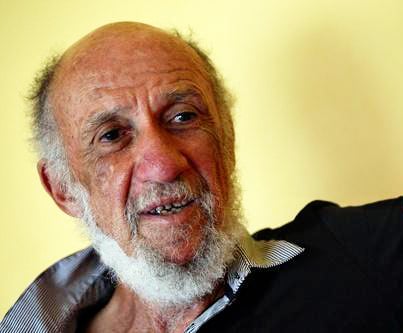
Professor Falk became an adviser to TFF when it was established in 1985.

Related Posts

Photo above: Carl Fredrik Reuterswärd’s Non-Violence outside UN Headquarters in New York. Kirill Levin, CC BY-NC-SA 2. Jan Oberg November 3, 2026 I am happy to be published in Horizons which is produced by the Center for International Relations and Sustainable Development, CIRSD, in Belgrade. My contribution brings out a radical re-thinking of what concepts such as defence, security, deterrence – and peace – may mean if we want to create a more peaceful world. It also summarises a few things I have been working with the last few decades. Please read it here Og her er den på dansk, takket være Johnny Baltzersens lynhurtige oversættelse
UNITE-tillid, DREAM-velstand og andre konstruktive komponenter Normally we publish articles in English here. But this is a translation of a very important TFF document that should reach as many as possible in Denmark since this country’s government has been one of the most hardline in Europe and, up till now at least, has refused to use diplomacy and, instead, spent tremendous sums on arming Ukraine with the express goal of defeating Russia. Thus this – unique – article is in Danish. Vi er Johnny Baltzersen og hans Fælles Sikkerhed – Fælles Fremtid på Substack overmåde taknemmelige for at have oversat og publiceret TFF’s 2025-portfølje for fredsidéer med henblik på Ukraines fremtid. Vi håber den nu kan nå mange flere danskere – som også vil sprede den og skabe debat – nu den danske regerings og folketingspartiernes politik på dette område siden 2022 står nu – forudsigeligt – ved vejs ende....
Jan Oberg TFF director October 28, 2026 Exactly one month has now passed since I published my criticism of the introduction to the special issue on Johan Galtung published by the Journal of Global Security Studies, JoGSS, and of Tor Egil Førland’s chapter about Galtung which serves as a preview to his forthcoming biography of Galtung to be published by PRIO. See the original on The Transnational here and the same article on TFF Substack with many general and critical comments and, in particular, the people who decided to withdraw from the biography project in protest. The special issue itself was extraordinary. It was devoted to the intellectual legacy of one of the founders of peace research and contained a number of strong assessments of his personality, scholarship, intellectual trajectory, and public role. Such assessments are, of course, entirely legitimate. No scholar is beyond criticism, and neither was Johan Galtung....

Recent Articles

Photo above: Carl Fredrik Reuterswärd’s Non-Violence outside UN Headquarters in New York. Kirill Levin, CC BY-NC-SA 2. Jan Oberg November 3, 2026 I am happy to be published in Horizons which is produced by the Center for International Relations and Sustainable Development, CIRSD, in Belgrade. My contribution brings out a radical re-thinking of what concepts such as defence, security, deterrence – and peace – may mean if we want to create a more peaceful world. It also summarises a few things I have been working with the last few decades. Please read it here Og her er den på dansk, takket være Johnny Baltzersens lynhurtige oversættelse
UNITE-tillid, DREAM-velstand og andre konstruktive komponenter Normally we publish articles in English here. But this is a translation of a very important TFF document that should reach as many as possible in Denmark since this country’s government has been one of the most hardline in Europe and, up till now at least, has refused to use diplomacy and, instead, spent tremendous sums on arming Ukraine with the express goal of defeating Russia. Thus this – unique – article is in Danish. Vi er Johnny Baltzersen og hans Fælles Sikkerhed – Fælles Fremtid på Substack overmåde taknemmelige for at have oversat og publiceret TFF’s 2025-portfølje for fredsidéer med henblik på Ukraines fremtid. Vi håber den nu kan nå mange flere danskere – som også vil sprede den og skabe debat – nu den danske regerings og folketingspartiernes politik på dette område siden 2022 står nu – forudsigeligt – ved vejs ende....
Jan Oberg TFF director October 28, 2026 Exactly one month has now passed since I published my criticism of the introduction to the special issue on Johan Galtung published by the Journal of Global Security Studies, JoGSS, and of Tor Egil Førland’s chapter about Galtung which serves as a preview to his forthcoming biography of Galtung to be published by PRIO. See the original on The Transnational here and the same article on TFF Substack with many general and critical comments and, in particular, the people who decided to withdraw from the biography project in protest. The special issue itself was extraordinary. It was devoted to the intellectual legacy of one of the founders of peace research and contained a number of strong assessments of his personality, scholarship, intellectual trajectory, and public role. Such assessments are, of course, entirely legitimate. No scholar is beyond criticism, and neither was Johan Galtung....

TFF on Substack

Discover and subscribe to more peace materials on TFF Substack

Most Popular

Photo above: Carl Fredrik Reuterswärd’s Non-Violence outside UN Headquarters in New York. Kirill Levin, CC BY-NC-SA 2. Jan Oberg November 3, 2026 I am happy to be published in Horizons which is produced by the Center for International Relations and Sustainable Development, CIRSD, in Belgrade. My contribution brings out a radical re-thinking of what concepts such as defence, security, deterrence – and peace – may mean if we want to create a more peaceful world. It also summarises a few things I have been working with the last few decades. Please read it here Og her er den på dansk, takket være Johnny Baltzersens lynhurtige oversættelse
UNITE-tillid, DREAM-velstand og andre konstruktive komponenter Normally we publish articles in English here. But this is a translation of a very important TFF document that should reach as many as possible in Denmark since this country’s government has been one of the most hardline in Europe and, up till now at least, has refused to use diplomacy and, instead, spent tremendous sums on arming Ukraine with the express goal of defeating Russia. Thus this – unique – article is in Danish. Vi er Johnny Baltzersen og hans Fælles Sikkerhed – Fælles Fremtid på Substack overmåde taknemmelige for at have oversat og publiceret TFF’s 2025-portfølje for fredsidéer med henblik på Ukraines fremtid. Vi håber den nu kan nå mange flere danskere – som også vil sprede den og skabe debat – nu den danske regerings og folketingspartiernes politik på dette område siden 2022 står nu – forudsigeligt – ved vejs ende....
Jan Oberg TFF director October 28, 2026 Exactly one month has now passed since I published my criticism of the introduction to the special issue on Johan Galtung published by the Journal of Global Security Studies, JoGSS, and of Tor Egil Førland’s chapter about Galtung which serves as a preview to his forthcoming biography of Galtung to be published by PRIO. See the original on The Transnational here and the same article on TFF Substack with many general and critical comments and, in particular, the people who decided to withdraw from the biography project in protest. The special issue itself was extraordinary. It was devoted to the intellectual legacy of one of the founders of peace research and contained a number of strong assessments of his personality, scholarship, intellectual trajectory, and public role. Such assessments are, of course, entirely legitimate. No scholar is beyond criticism, and neither was Johan Galtung....
Read More
knotted gun
Photo above: Carl Fredrik Reuterswärd’s Non-Violence outside UN Headquarters in New York. Kirill Levin, CC BY-NC-SA 2. Jan Oberg November 3, 2026 I am happy to be published in Horizons which is produced by the Center for International Relations and Sustainable Development, CIRSD, in Belgrade. My contribution brings out a radical re-thinking of what concepts such as defence, security, deterrence – and peace – may mean if we want to create a more peaceful world. It also summarises a few things I have been working with the last few decades. Please read it here Og her er den på dansk, takket være Johnny Baltzersens lynhurtige oversættelse
TFFPortfolioVign
UNITE-tillid, DREAM-velstand og andre konstruktive komponenter Normally we publish articles in English here. But this is a translation of a very important TFF document that should reach as many as possible in Denmark since this country’s government has been one of the most hardline in Europe and, up till now at least, has refused to use diplomacy and, instead, spent tremendous sums on arming Ukraine with the express goal of defeating Russia. Thus this – unique – article is in Danish. Vi er Johnny Baltzersen og hans Fælles Sikkerhed – Fælles Fremtid på Substack overmåde taknemmelige for at have oversat og publiceret TFF’s 2025-portfølje for fredsidéer med henblik på Ukraines fremtid. Vi håber den nu kan nå mange flere danskere – som også vil sprede den og skabe debat – nu den danske regerings og folketingspartiernes politik på dette område siden 2022 står nu – forudsigeligt – ved vejs ende....
JoGSS-Silent
Jan Oberg TFF director October 28, 2026 Exactly one month has now passed since I published my criticism of the introduction to the special issue on Johan Galtung published by the Journal of Global Security Studies, JoGSS, and of Tor Egil Førland’s chapter about Galtung which serves as a preview to his forthcoming biography of Galtung to be published by PRIO. See the original on The Transnational here and the same article on TFF Substack with many general and critical comments and, in particular, the people who decided to withdraw from the biography project in protest. The special issue itself was extraordinary. It was devoted to the intellectual legacy of one of the founders of peace research and contained a number of strong assessments of his personality, scholarship, intellectual trajectory, and public role. Such assessments are, of course, entirely legitimate. No scholar is beyond criticism, and neither was Johan Galtung....
Screenshot 2026-10-26 115647
An aspect of Iran’s culture and civilisation you’ve probably never heard about. Don’t be surprised if the US and Israel also try to bomb them. Jan ObergTFF director October 26, 2026 Today – under the “USraeli” threat of new “annihilating” bombings – opens the 7th International Conference on Peace and Conflict Resolution at Tehran’s University. As far as I can tell, this is the only permanent, advanced peace research institution in West Asia/the Middle East. Perhaps more countries in that region could be inspired? I mean, how many military “security” institutes and military academies do they have? Many peace research institutes and university departments have been established since the 1950s in the West. They are now all under attack; some have closed down, some have gone mainstream, yet others kept the name but do nothing to research peace and disseminate results or advice; instead, they cooperate with militarism’s platforms such...
Screenshot 2026-10-15 141837
Let’s discuss using AI to create peace – in contrast to boring geopolitics devoid of creative healing and visions. Jan Oberg TFF director October 15, 2026 I asked VEED to create a short video exemplifying how peace is preferable to war, then chose the lady as a template. Simple as that. In less than a minute, it produced this video, which any peace-loving person would appreciate. The only problem is that human intelligence (HI), at least the one that exists among Western decision-makers, isn’t half as moral or smart as AI. I have used AI to dialogue about peace and peace plans, creative conflict resolution and visions of a better future for humankind. It so happens that I am having more stimulating, intelligent, creative and moral discussions with AI than I could possibly have with any EU or NATO leader today. Yes, AI has very problematic and dangerous aspects; used...
girl-5894831_1280
Below are TFF-related media mentions, comments, videos and social media posts published elsewhere but not on this homepage. We happen to catch and list only a fraction. Regarding video comments and debates, we recommend that you go to the TFF Video Channel on Substack where many of them are reproduced. Jan Oberg is a contributor to China Daily – 52 million daily clicks – and Global Times, CGTN and CCTV (the national television), China Investment, Xinhua News Agency and several others. Articles and videos on these media very often multiply into countless Chinese (and Western media) that re-post them from these main media. Thanks to The China Academy, his analyses, interviews and comments are frequently posted on YouTube channels such as Thinkers Forum and Wave Media. These videos are often re-posted on Bilibili (China’s YouTube), the China Content Center on TikTok, and on the Chinese edition of TikTok, Douyin.com. This means reaching hundreds of millions of viewers worldwide over a year. While there are too many to catch on all these...




