
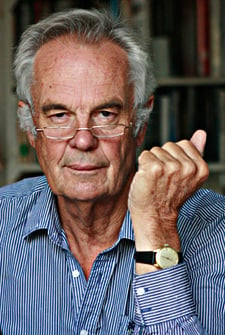
By Jonathan Power

Those, like some highly placed people in the US government and Congress, who say it is inevitable that Taiwan with its population of 23 million will one day return as part of mainland China rather as Hong King did, have really missed a beat. There is simply no likelihood that an overwhelming majority of Taiwanese will ever agree to that.

The leader of the independence-minded Democratic Progressive party, Ms Tsai Ing-wen, may have gone down to defeat in Saturday’s election but she did gave the victor, Ma Ying-jeou of the Kuomintang party, who is pro reunification- although at some distant date- a close run.
 
In the Chinese government’s eyes it has two rebellious provinces on its plate – Tibet and Taiwan. In Tibet protestors have clashed with police and soldiers. In Taiwan there is no occupation but over 1000 Chinese missiles are pointed at its heart.

The Tibetans, by and large, no longer try and argue for independence, but even the notion of autonomy is not acceptable to Beijing. In marked contrast, while confronting Taiwan and its significant independence movement, the Chinese offer autonomy as long as Taiwan will accept sovereign rule from Beijing. At the moment, however, there are a minority of takers- certainly not in the opposition party, which likes to talk about independence and membership of the UN nor, for the most part, in the governing party, descended from the Nationalists of China, settled by a retreating General Chiang Kai-shek, which for historical reasons has a soft spot for “One China”.

During the last 12 years Taiwan’s China debate has matured at a fast rate. Ms Tsai’s predecessor, President Chen Shui-bian, may not have won many converts to his independence line (which is supported by about 30% of the voters) but he undoubtedly shifted the terms of the debate. He persuaded the electorate that they must never kow tow to China.

At the same time they have been convinced by the present governing party that Taiwan should not provoke China and that Taiwan must increase its economic links, its direct air flights and an influx of significant numbers of Chinese tourists (all of which under the first Ma administration it began to do).

In broad terms it might seem that this is just the policy of the status quo- neither independence nor union. In many aspects this is so. But it is not the same status quo as 12 years ago – it is both more independent (not independence) minded and more conciliatory.

One of Taiwan’s troubles is that it too easily exaggerates its vulnerability.

It is a great moral and political wrong that Taiwan is excluded from the UN, from where it was summarily ejected when President Richard Nixon made his historic peace with Mao tse-tung. But Taiwan has also carved out a great deal of economic and even political space for itself. It has become, despite a population less than half the size of Britain’s, an industrial and technological giant with over $150 billion of foreign exports each year. Its investments of capital, machinery and personnel in China largely made possible China’s own technological revolution. It has a fine national health service, only second in the world to Sweden’s, according to the Economist Intelligence Unit.

However under the Ma government its income distribution has worsened.
Politically it becomes maturer by the year. Its democracy appears to have put down deeper roots than many much older ones. The human rights abuses prevalent under the dictatorship of Chiang Kai-shek and his son are history. The press is sophisticated and the NGO sector thrives. Justice is honest, if at times erratic.


The Beijing dragon can and does growl, although much less than it used to. But it wouldn’t dare bite, despite China’s arms build up and its missiles pointing at Taiwan. China surely knows it could never swallow mighty, if small, Taiwan. And it knows that the US with its off shore submarines and F-15s based in nearby Okinawa would never let it try.

The last two presidents of China have been far less polemical and demanding about Taiwan than their predecessors.
 
Besides, if China does move towards democracy it could be that the Taiwanese will be less fearful about a closer relationship although I doubt if they would ever give up their independence. They might they accept a European Union-type relationship.


The Chinese, for their part, should think hard about their historical claim to Taiwan. It is a tenuous one and would not pass muster in the International Court of Justice (the World Court).
 
Taiwan does exceedingly well on its own. Its democracy has just flourished again (even if there were some serious irregularities). It is a self-confident country. It is striding towards freedom.

Copyright © 2011 Jonathan Power

Foreign affairs columnist, film-maker and author

3 Responses

  1. Dear Sir, take note that Tibet is offially a self governing autonomous region within the People’s Republic of China. It has not been conquered by China but added to it by the Mogol rulers. It has not been occupied but freed from an archaic theocracy to the benefit of many young people now entitled to study scattered all over Chinese territory and also protected against mohammedanist theocracy unlike Europeans. Stop your USA agit prop which you nornally never adhere to.

  2. I have a different viewpoint on Taiwan than this article… I have worked with, started and or advised social betterment projects in Taiwan for 12 years, been in Taiwan back and forth from my office in Sydney many many times – and spoken with many hundreds of people and talked with them about their country, culture, as well as pro and con ”going back” to China… and my experience or impression is that there is a majority who feel that its as desirable as inevitable that Taiwan will ”go back” to China…

  3. I believe that the sentence towards the end of the article where you say “They might they accept a European Union-type relationship,” provides a workable solution. The time for one country gobbling up another country is long gone. The future trend is towards more cooperation and bridge building as in the EU, despite what President Trump thinks and what Brexit has sadly demonstrated. The same recipe can also provide a solution to the unending disputes and conflicts in the Middle East. An economic union comprising the Middle East Arab states, Iran, Turkey, and in time a democratic Israel can lead to a lasting solution to the current conflicts. None of the countries, with or without US backing for some such as the insane Arab NATO to confront Iran will have the capability of swallowing up all the others.

Related Posts

Jan Oberg TFF director October 13, 2026 According to Alfred Nobel’s will, the Nobel Peace Prize shall be awarded: ”to the person who has done the most or best to advance fellowship among nations, the abolition or reduction of standing armies, and the establishment and promotion of peace congresses.” Further down, he also expresses how the prize for the “champions of peace” shall be decided: “that for champions of peace by a committee of five persons to be selected by the Norwegian Storting. Alfred Nobel’s will is remarkably short and clear. But few seem to have read it. Nobel did not say that the committee itself should consist of members of parliament. He entrusted the Storting with appointing five persons. In principle, it could have selected diplomats, mediators, peace researchers, conflict-resolution specialists, or other individuals with recognised expertise in matters of peace from around the world. Instead, the Storting gradually...
Small and different + among the 10% most active + 9,000 texts + 150 Associates + 60 000 a day — and a stubborn belief that peace is smarter and must be secured by peaceful means. In 2026, the Transnational Foundation for Peace and Future Research (TFF) turns 40. On Monday, October 5, 2026, a new TFF homepage will go live — a new gateway to more than 9,000 articles, analyses, research papers and other contributions produced over four decades of independent peace research. But this is not simply a new website. For four decades, TFF has worked from a simple conviction: peace is smarter than militarism and can be brought about by peaceful means. This is not merely an aspiration. It is the principle expressed in the UN Charter and the Gandhian tradition that has guided our work from the beginning. TFF is a research-based, independent and people-financed foundation....
It’s a matter of principles, courage, vision and pulling together – while the militarist world is falling apart… Peter Langille October 3, 2026 “Here, then, is the problem which we present to you, stark and dreadful and inescapable: Shall we put an end to the human race; or shall mankind renounce war?”The Bertrand Russell—Albert Einstein Manifesto, July 9, 1955 ⁕ The forecast for what’s ahead is worrisome. The sharp rise in armed conflicts over the past three years is adding to what was already the highest level in over seventy years. Genocides, which should be prevented are supported. A shared climate emergency that jeopardises survival is ignored. Diverse polls now suggest that people are war-weary, worried and interested in a more effective United Nations. And, there are viable policy options for a more secure world! Yet governments are doubling-down, betting on more war and investing heavily. If current trends persist,...

Recent Articles

Photo above: Carl Fredrik Reuterswärd’s Non-Violence outside UN Headquarters in New York. Kirill Levin, CC BY-NC-SA 2. Jan Oberg November 3, 2026 I am happy to be published in Horizons which is produced by the Center for International Relations and Sustainable Development, CIRSD, in Belgrade. My contribution brings out a radical re-thinking of what concepts such as defence, security, deterrence – and peace – may mean if we want to create a more peaceful world. It also summarises a few things I have been working with the last few decades. Please read it here Og her er den på dansk, takket være Johnny Baltzersens lynhurtige oversættelse
UNITE-tillid, DREAM-velstand og andre konstruktive komponenter Normally we publish articles in English here. But this is a translation of a very important TFF document that should reach as many as possible in Denmark since this country’s government has been one of the most hardline in Europe and, up till now at least, has refused to use diplomacy and, instead, spent tremendous sums on arming Ukraine with the express goal of defeating Russia. Thus this – unique – article is in Danish. Vi er Johnny Baltzersen og hans Fælles Sikkerhed – Fælles Fremtid på Substack overmåde taknemmelige for at have oversat og publiceret TFF’s 2025-portfølje for fredsidéer med henblik på Ukraines fremtid. Vi håber den nu kan nå mange flere danskere – som også vil sprede den og skabe debat – nu den danske regerings og folketingspartiernes politik på dette område siden 2022 står nu – forudsigeligt – ved vejs ende....
Jan Oberg TFF director October 28, 2026 Exactly one month has now passed since I published my criticism of the introduction to the special issue on Johan Galtung published by the Journal of Global Security Studies, JoGSS, and of Tor Egil Førland’s chapter about Galtung which serves as a preview to his forthcoming biography of Galtung to be published by PRIO. See the original on The Transnational here and the same article on TFF Substack with many general and critical comments and, in particular, the people who decided to withdraw from the biography project in protest. The special issue itself was extraordinary. It was devoted to the intellectual legacy of one of the founders of peace research and contained a number of strong assessments of his personality, scholarship, intellectual trajectory, and public role. Such assessments are, of course, entirely legitimate. No scholar is beyond criticism, and neither was Johan Galtung....

TFF on Substack

Discover and subscribe to more peace materials on TFF Substack

Most Popular

Photo above: Carl Fredrik Reuterswärd’s Non-Violence outside UN Headquarters in New York. Kirill Levin, CC BY-NC-SA 2. Jan Oberg November 3, 2026 I am happy to be published in Horizons which is produced by the Center for International Relations and Sustainable Development, CIRSD, in Belgrade. My contribution brings out a radical re-thinking of what concepts such as defence, security, deterrence – and peace – may mean if we want to create a more peaceful world. It also summarises a few things I have been working with the last few decades. Please read it here Og her er den på dansk, takket være Johnny Baltzersens lynhurtige oversættelse
UNITE-tillid, DREAM-velstand og andre konstruktive komponenter Normally we publish articles in English here. But this is a translation of a very important TFF document that should reach as many as possible in Denmark since this country’s government has been one of the most hardline in Europe and, up till now at least, has refused to use diplomacy and, instead, spent tremendous sums on arming Ukraine with the express goal of defeating Russia. Thus this – unique – article is in Danish. Vi er Johnny Baltzersen og hans Fælles Sikkerhed – Fælles Fremtid på Substack overmåde taknemmelige for at have oversat og publiceret TFF’s 2025-portfølje for fredsidéer med henblik på Ukraines fremtid. Vi håber den nu kan nå mange flere danskere – som også vil sprede den og skabe debat – nu den danske regerings og folketingspartiernes politik på dette område siden 2022 står nu – forudsigeligt – ved vejs ende....
Jan Oberg TFF director October 28, 2026 Exactly one month has now passed since I published my criticism of the introduction to the special issue on Johan Galtung published by the Journal of Global Security Studies, JoGSS, and of Tor Egil Førland’s chapter about Galtung which serves as a preview to his forthcoming biography of Galtung to be published by PRIO. See the original on The Transnational here and the same article on TFF Substack with many general and critical comments and, in particular, the people who decided to withdraw from the biography project in protest. The special issue itself was extraordinary. It was devoted to the intellectual legacy of one of the founders of peace research and contained a number of strong assessments of his personality, scholarship, intellectual trajectory, and public role. Such assessments are, of course, entirely legitimate. No scholar is beyond criticism, and neither was Johan Galtung....
Read More
knotted gun
Photo above: Carl Fredrik Reuterswärd’s Non-Violence outside UN Headquarters in New York. Kirill Levin, CC BY-NC-SA 2. Jan Oberg November 3, 2026 I am happy to be published in Horizons which is produced by the Center for International Relations and Sustainable Development, CIRSD, in Belgrade. My contribution brings out a radical re-thinking of what concepts such as defence, security, deterrence – and peace – may mean if we want to create a more peaceful world. It also summarises a few things I have been working with the last few decades. Please read it here Og her er den på dansk, takket være Johnny Baltzersens lynhurtige oversættelse
TFFPortfolioVign
UNITE-tillid, DREAM-velstand og andre konstruktive komponenter Normally we publish articles in English here. But this is a translation of a very important TFF document that should reach as many as possible in Denmark since this country’s government has been one of the most hardline in Europe and, up till now at least, has refused to use diplomacy and, instead, spent tremendous sums on arming Ukraine with the express goal of defeating Russia. Thus this – unique – article is in Danish. Vi er Johnny Baltzersen og hans Fælles Sikkerhed – Fælles Fremtid på Substack overmåde taknemmelige for at have oversat og publiceret TFF’s 2025-portfølje for fredsidéer med henblik på Ukraines fremtid. Vi håber den nu kan nå mange flere danskere – som også vil sprede den og skabe debat – nu den danske regerings og folketingspartiernes politik på dette område siden 2022 står nu – forudsigeligt – ved vejs ende....
JoGSS-Silent
Jan Oberg TFF director October 28, 2026 Exactly one month has now passed since I published my criticism of the introduction to the special issue on Johan Galtung published by the Journal of Global Security Studies, JoGSS, and of Tor Egil Førland’s chapter about Galtung which serves as a preview to his forthcoming biography of Galtung to be published by PRIO. See the original on The Transnational here and the same article on TFF Substack with many general and critical comments and, in particular, the people who decided to withdraw from the biography project in protest. The special issue itself was extraordinary. It was devoted to the intellectual legacy of one of the founders of peace research and contained a number of strong assessments of his personality, scholarship, intellectual trajectory, and public role. Such assessments are, of course, entirely legitimate. No scholar is beyond criticism, and neither was Johan Galtung....
Screenshot 2026-10-26 115647
An aspect of Iran’s culture and civilisation you’ve probably never heard about. Don’t be surprised if the US and Israel also try to bomb them. Jan ObergTFF director October 26, 2026 Today – under the “USraeli” threat of new “annihilating” bombings – opens the 7th International Conference on Peace and Conflict Resolution at Tehran’s University. As far as I can tell, this is the only permanent, advanced peace research institution in West Asia/the Middle East. Perhaps more countries in that region could be inspired? I mean, how many military “security” institutes and military academies do they have? Many peace research institutes and university departments have been established since the 1950s in the West. They are now all under attack; some have closed down, some have gone mainstream, yet others kept the name but do nothing to research peace and disseminate results or advice; instead, they cooperate with militarism’s platforms such...
Screenshot 2026-10-15 141837
Let’s discuss using AI to create peace – in contrast to boring geopolitics devoid of creative healing and visions. Jan Oberg TFF director October 15, 2026 I asked VEED to create a short video exemplifying how peace is preferable to war, then chose the lady as a template. Simple as that. In less than a minute, it produced this video, which any peace-loving person would appreciate. The only problem is that human intelligence (HI), at least the one that exists among Western decision-makers, isn’t half as moral or smart as AI. I have used AI to dialogue about peace and peace plans, creative conflict resolution and visions of a better future for humankind. It so happens that I am having more stimulating, intelligent, creative and moral discussions with AI than I could possibly have with any EU or NATO leader today. Yes, AI has very problematic and dangerous aspects; used...
girl-5894831_1280
Below are TFF-related media mentions, comments, videos and social media posts published elsewhere but not on this homepage. We happen to catch and list only a fraction. Regarding video comments and debates, we recommend that you go to the TFF Video Channel on Substack where many of them are reproduced. Jan Oberg is a contributor to China Daily – 52 million daily clicks – and Global Times, CGTN and CCTV (the national television), China Investment, Xinhua News Agency and several others. Articles and videos on these media very often multiply into countless Chinese (and Western media) that re-post them from these main media. Thanks to The China Academy, his analyses, interviews and comments are frequently posted on YouTube channels such as Thinkers Forum and Wave Media. These videos are often re-posted on Bilibili (China’s YouTube), the China Content Center on TikTok, and on the Chinese edition of TikTok, Douyin.com. This means reaching hundreds of millions of viewers worldwide over a year. While there are too many to catch on all these...





