
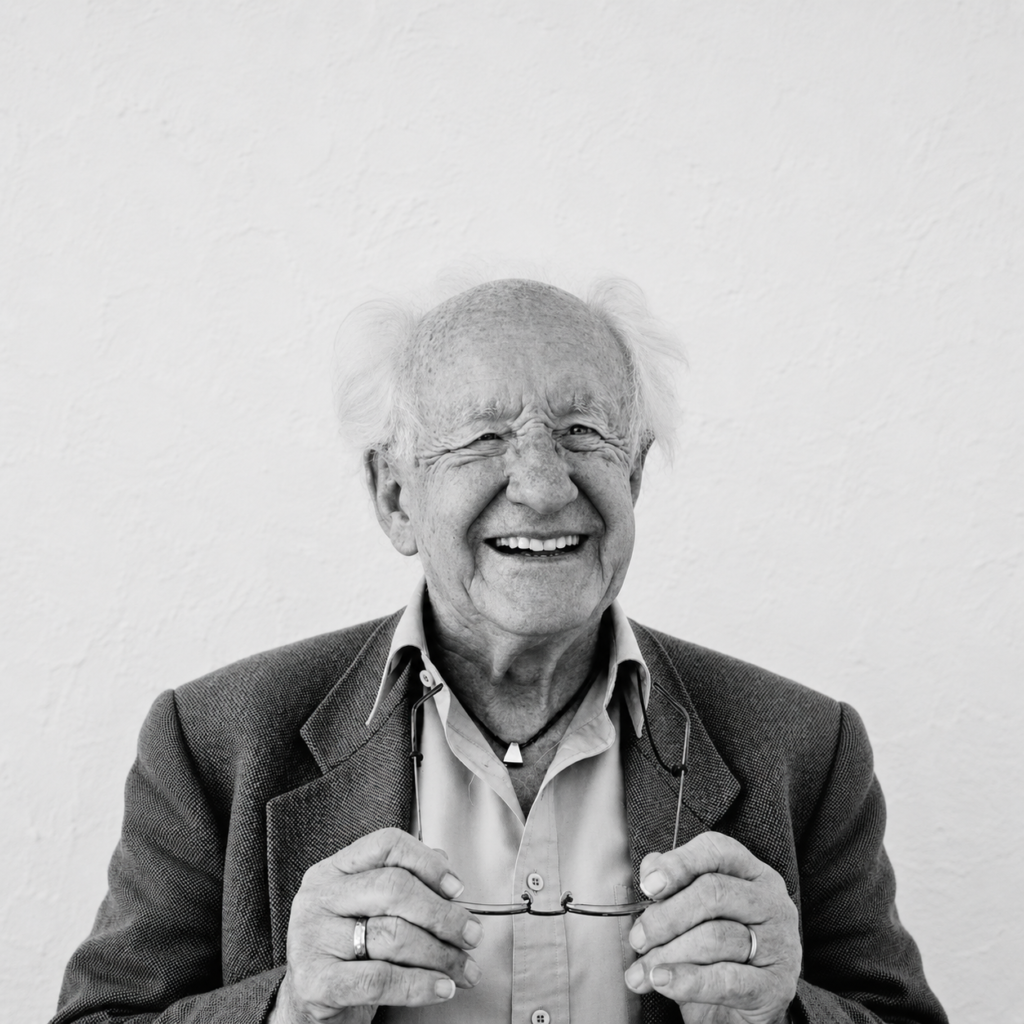
johangaltung

Churchill and Hitler made history but did not change it; after the war their societies found their old forms. Stalin and Mao changed their much bigger societies basically, and gave the Westphalian state system new fault-lines, alliances: anti-Russia-USSR, anti-China-DPRC.

There was also a short lasting USSR-DPRC alliance 1949-53, when Stalin was alive. But when he was murdered the banner as leader of the rapidly expanding Communist World was not passed on to the biggest country, but stayed in Moscow. The new leader was not Mao Zedong but the colorless Malenkov. Surface level conflict; and important.

But the concept of a monolithic Communist as opposed to a Free world survived in a US mind slow at capturing or admitting deeper aspects of reality, but quick at projecting themselves on the world.

The deep differences between the Western civilization of which Russia was and is a part, and Chinese civilization of course also affected their communisms. So let us explore what happened to these two huge projects.

They were similar on three basic points: ending feudalism in the countryside; capitalism in the cities down; and imperialists – foreign forces – out. This is already a lot, and since the imperialism was mainly Western forces strongly linked to feudal-capitalist economic interests and systems – also culturally in both cases – strong political and military cleavages took shape; with the USA playing double roles.

They were also similar in rejecting world revolution, concerned with consolidating their own. Trotsky, Jewish, cosmopolitan, aimed at the world and was murdered by a more nationalist Stalin basking in the glory of “socialism in one country”. Something similar probably happened to Lin Biao at the hands of Mao; but for different reasons. Stalin may have preferred to be No. 1 and-or decided time is not ripe; Mao may have been uninterested in the external world of barbarians.

The differences were not in their Leninist analysis of the past, and what to do about it. The differences were and are in what next? Where are we heading?

The Western God–omnipotent, omniscient and omnipresent–found a secular abode in a USSR State with the same three characteristics. And a century later, now, in the USA Capital. The reincarnation of the Christian God in the former Soviet State lasted, say, 70 years; the reincarnation in US neoliberal Capital will be much shorter.

But the point here is that China has no such God. China is based on three civilizations pulling in different directions without pulling China apart. Confucian verticality will find its place inside Western inspired strong states and strong capital markets, as dictatorship and growth-based inequality. But Buddhism will pull in a horizontal and distribution-based direction and toward smaller units, like communes. So will Daoism, also seeing changes from one to the other to the next, and combinations of them, as natural, normal. As a result there is nothing surprising in a China combining all of the above, in changing proportions; except to people like economists unable to figure culture into their constructions of a homo economicus built into our genes.

Western History comes equipped with beginning and end and a lot in-between, the model being the Bible from Genesis to Revelations. There is a final state with something perfect about it, perfectly good or perfectly bad, and a final battle. Hence the Stalinist model, from Marx-Engels, of history ending in the perfect communist society after the final battle, the world revolution. Big, Final, Perfect–like the Savior finding His place in Heaven.

But the point here is that China has and sees no such history. There are endless successions of histories–in plural–of this and that dialectic, contradictions, in this and that holon; the Daoist message. Permanent revolution is like mothers’ milk for Chinese.

Mao’s anti-imperial/feudal/capitalist revolution built a strong state; after only nine years adding (People’s) commune characteristics. Then came the imitation of the strong Soviet industrializing state. Then the Cultural Revolution challenging what to them was the excessive Confucian verticality of both. And shortly after that the Deng revolution opening for ever bigger capital markets and inequality followed by the efforts to control inequality, corruption, and so on. Centuries of different Western histories as decades in one country.

I remember traveling on the Transsiberian railway Moscow-Beijing September 1988. As we came close to China loads of anti-Chinese propaganda were unloaded on the passengers, referring to the Chinese revolution as “bourgeois”. Officially the worst term possible; in response to the Chinese accusation of “revisionist”–state capitalism still being capitalism. They both had valid points against each other within a Marxist discourse–both leaderships were actually bourgeois-revisionist. But they both failed to see how different they were deeper down, enacting as they did their deep cultures.

To repeat the questions, what next? Where are they heading now?

Russia is confused. Putin is hated in the West because he rejects the pre-revolution past, and resists US-EU neo-imperialism in Georgia and Ukraine; but Russia cannot live on such negative messages. Gorbachev’s social democratic compromise with cooperatives is within the Western discourse, but carries no glory, nothing new. And it is against dualist Russian thinking: if socialism is bad, then capitalism must be good. The Chinese message is too complex, too eclectic, with no clear end in sight. China, however, will continue being China; not joining any Western camp, having the freedom to be its own self.

And Russia? Do not underestimate the column of Russian history: Orthodox spirituality, optimism in the long run. Easter Sunday is coming; God has arisen: with Gazprom–and Putin’s foreign policy.

First published at Transcend Media Service here.

Related Posts

The agreement is catastrophic both because of what it says and what it doesn’t mention. It reduces further the major asset of security policies: Freedom of action. Jan Oberg TFF director September 25, 2026 A couple of hours before the agreement was signed on September 22, 2026, I published the following 13 hypotheses about what it would most likely contain on TFF Substack (in English). I was wrong on only the first point. Contrary to what Trump had written on his Truth Social platform, it does not appear to come into force immediately. In fact, it turned out to be worse than even I had anticipated. After these hypotheses now come a number of reflections in light of what the agreement actually contains, and does not contain, as well as the way in which it has generally been presented by major media outlets and by the public-service broadcaster DR. My...
Lena Petrova of “World Affairs In Context” with more than half a million subscribers on YouTube wanted to explore what a peace researcher like me has to say about, among other things, the First and the Second Cold War and why eethics has disappeared from politics. I am particularly happy about this conversation that also yielded an amazing number of very appreciative comments on YouTube. No doubt, people are longing for alternatives, including peace perspectives.
Photos © TFF 2000 Read PressInfo 90 “Lift the Sanctions and Bring More Aid to Yugoslavia” See Pictures from Belgrade © TFF 2000 Please reprint, copy, archive, quote or re-post this item, but please retain the source.

Recent Articles

Photo above: Carl Fredrik Reuterswärd’s Non-Violence outside UN Headquarters in New York. Kirill Levin, CC BY-NC-SA 2. Jan Oberg November 3, 2026 I am happy to be published in Horizons which is produced by the Center for International Relations and Sustainable Development, CIRSD, in Belgrade. My contribution brings out a radical re-thinking of what concepts such as defence, security, deterrence – and peace – may mean if we want to create a more peaceful world. It also summarises a few things I have been working with the last few decades. Please read it here Og her er den på dansk, takket være Johnny Baltzersens lynhurtige oversættelse
UNITE-tillid, DREAM-velstand og andre konstruktive komponenter Normally we publish articles in English here. But this is a translation of a very important TFF document that should reach as many as possible in Denmark since this country’s government has been one of the most hardline in Europe and, up till now at least, has refused to use diplomacy and, instead, spent tremendous sums on arming Ukraine with the express goal of defeating Russia. Thus this – unique – article is in Danish. Vi er Johnny Baltzersen og hans Fælles Sikkerhed – Fælles Fremtid på Substack overmåde taknemmelige for at have oversat og publiceret TFF’s 2025-portfølje for fredsidéer med henblik på Ukraines fremtid. Vi håber den nu kan nå mange flere danskere – som også vil sprede den og skabe debat – nu den danske regerings og folketingspartiernes politik på dette område siden 2022 står nu – forudsigeligt – ved vejs ende....
Jan Oberg TFF director October 28, 2026 Exactly one month has now passed since I published my criticism of the introduction to the special issue on Johan Galtung published by the Journal of Global Security Studies, JoGSS, and of Tor Egil Førland’s chapter about Galtung which serves as a preview to his forthcoming biography of Galtung to be published by PRIO. See the original on The Transnational here and the same article on TFF Substack with many general and critical comments and, in particular, the people who decided to withdraw from the biography project in protest. The special issue itself was extraordinary. It was devoted to the intellectual legacy of one of the founders of peace research and contained a number of strong assessments of his personality, scholarship, intellectual trajectory, and public role. Such assessments are, of course, entirely legitimate. No scholar is beyond criticism, and neither was Johan Galtung....

TFF on Substack

Discover and subscribe to more peace materials on TFF Substack

Most Popular

Photo above: Carl Fredrik Reuterswärd’s Non-Violence outside UN Headquarters in New York. Kirill Levin, CC BY-NC-SA 2. Jan Oberg November 3, 2026 I am happy to be published in Horizons which is produced by the Center for International Relations and Sustainable Development, CIRSD, in Belgrade. My contribution brings out a radical re-thinking of what concepts such as defence, security, deterrence – and peace – may mean if we want to create a more peaceful world. It also summarises a few things I have been working with the last few decades. Please read it here Og her er den på dansk, takket være Johnny Baltzersens lynhurtige oversættelse
UNITE-tillid, DREAM-velstand og andre konstruktive komponenter Normally we publish articles in English here. But this is a translation of a very important TFF document that should reach as many as possible in Denmark since this country’s government has been one of the most hardline in Europe and, up till now at least, has refused to use diplomacy and, instead, spent tremendous sums on arming Ukraine with the express goal of defeating Russia. Thus this – unique – article is in Danish. Vi er Johnny Baltzersen og hans Fælles Sikkerhed – Fælles Fremtid på Substack overmåde taknemmelige for at have oversat og publiceret TFF’s 2025-portfølje for fredsidéer med henblik på Ukraines fremtid. Vi håber den nu kan nå mange flere danskere – som også vil sprede den og skabe debat – nu den danske regerings og folketingspartiernes politik på dette område siden 2022 står nu – forudsigeligt – ved vejs ende....
Jan Oberg TFF director October 28, 2026 Exactly one month has now passed since I published my criticism of the introduction to the special issue on Johan Galtung published by the Journal of Global Security Studies, JoGSS, and of Tor Egil Førland’s chapter about Galtung which serves as a preview to his forthcoming biography of Galtung to be published by PRIO. See the original on The Transnational here and the same article on TFF Substack with many general and critical comments and, in particular, the people who decided to withdraw from the biography project in protest. The special issue itself was extraordinary. It was devoted to the intellectual legacy of one of the founders of peace research and contained a number of strong assessments of his personality, scholarship, intellectual trajectory, and public role. Such assessments are, of course, entirely legitimate. No scholar is beyond criticism, and neither was Johan Galtung....
Read More
knotted gun
Photo above: Carl Fredrik Reuterswärd’s Non-Violence outside UN Headquarters in New York. Kirill Levin, CC BY-NC-SA 2. Jan Oberg November 3, 2026 I am happy to be published in Horizons which is produced by the Center for International Relations and Sustainable Development, CIRSD, in Belgrade. My contribution brings out a radical re-thinking of what concepts such as defence, security, deterrence – and peace – may mean if we want to create a more peaceful world. It also summarises a few things I have been working with the last few decades. Please read it here Og her er den på dansk, takket være Johnny Baltzersens lynhurtige oversættelse
TFFPortfolioVign
UNITE-tillid, DREAM-velstand og andre konstruktive komponenter Normally we publish articles in English here. But this is a translation of a very important TFF document that should reach as many as possible in Denmark since this country’s government has been one of the most hardline in Europe and, up till now at least, has refused to use diplomacy and, instead, spent tremendous sums on arming Ukraine with the express goal of defeating Russia. Thus this – unique – article is in Danish. Vi er Johnny Baltzersen og hans Fælles Sikkerhed – Fælles Fremtid på Substack overmåde taknemmelige for at have oversat og publiceret TFF’s 2025-portfølje for fredsidéer med henblik på Ukraines fremtid. Vi håber den nu kan nå mange flere danskere – som også vil sprede den og skabe debat – nu den danske regerings og folketingspartiernes politik på dette område siden 2022 står nu – forudsigeligt – ved vejs ende....
JoGSS-Silent
Jan Oberg TFF director October 28, 2026 Exactly one month has now passed since I published my criticism of the introduction to the special issue on Johan Galtung published by the Journal of Global Security Studies, JoGSS, and of Tor Egil Førland’s chapter about Galtung which serves as a preview to his forthcoming biography of Galtung to be published by PRIO. See the original on The Transnational here and the same article on TFF Substack with many general and critical comments and, in particular, the people who decided to withdraw from the biography project in protest. The special issue itself was extraordinary. It was devoted to the intellectual legacy of one of the founders of peace research and contained a number of strong assessments of his personality, scholarship, intellectual trajectory, and public role. Such assessments are, of course, entirely legitimate. No scholar is beyond criticism, and neither was Johan Galtung....
Screenshot 2026-10-26 115647
An aspect of Iran’s culture and civilisation you’ve probably never heard about. Don’t be surprised if the US and Israel also try to bomb them. Jan ObergTFF director October 26, 2026 Today – under the “USraeli” threat of new “annihilating” bombings – opens the 7th International Conference on Peace and Conflict Resolution at Tehran’s University. As far as I can tell, this is the only permanent, advanced peace research institution in West Asia/the Middle East. Perhaps more countries in that region could be inspired? I mean, how many military “security” institutes and military academies do they have? Many peace research institutes and university departments have been established since the 1950s in the West. They are now all under attack; some have closed down, some have gone mainstream, yet others kept the name but do nothing to research peace and disseminate results or advice; instead, they cooperate with militarism’s platforms such...
Screenshot 2026-10-15 141837
Let’s discuss using AI to create peace – in contrast to boring geopolitics devoid of creative healing and visions. Jan Oberg TFF director October 15, 2026 I asked VEED to create a short video exemplifying how peace is preferable to war, then chose the lady as a template. Simple as that. In less than a minute, it produced this video, which any peace-loving person would appreciate. The only problem is that human intelligence (HI), at least the one that exists among Western decision-makers, isn’t half as moral or smart as AI. I have used AI to dialogue about peace and peace plans, creative conflict resolution and visions of a better future for humankind. It so happens that I am having more stimulating, intelligent, creative and moral discussions with AI than I could possibly have with any EU or NATO leader today. Yes, AI has very problematic and dangerous aspects; used...
girl-5894831_1280
Below are TFF-related media mentions, comments, videos and social media posts published elsewhere but not on this homepage. We happen to catch and list only a fraction. Regarding video comments and debates, we recommend that you go to the TFF Video Channel on Substack where many of them are reproduced. Jan Oberg is a contributor to China Daily – 52 million daily clicks – and Global Times, CGTN and CCTV (the national television), China Investment, Xinhua News Agency and several others. Articles and videos on these media very often multiply into countless Chinese (and Western media) that re-post them from these main media. Thanks to The China Academy, his analyses, interviews and comments are frequently posted on YouTube channels such as Thinkers Forum and Wave Media. These videos are often re-posted on Bilibili (China’s YouTube), the China Content Center on TikTok, and on the Chinese edition of TikTok, Douyin.com. This means reaching hundreds of millions of viewers worldwide over a year. While there are too many to catch on all these...





