
Skrump forsvaret for klimaet, velfærden og flygtningene

Forsvaret er sandsynligvis ikke det emne, som interesserer dig mest ved folketingsvalget. Det er du heller ikke ene om, for hverken de danske medier eller danske politikere har bidraget til en offentlig debat om Danmarks forhold til forsvar, krig og fred. Ser man på dr.dk, hvor Detektor har lavet en oversigt over partiernes medieomtale og hvilke emner, de har talt om, rammer kategorien, som DR har døbt ”forsvaret,” bunden.

Ud af 5252 artikler har en folketingskandidat 52 gange svarende til ca. 1 pct., talt om forsvaret i valgkampens første uge frem til den 11. maj 2019.

De populærest emner var EU, hvilket naturligvis hang sammen med valget til Europa-Parlamentet. Udlændinge naturligvis, takket være de danske medier og politiske modstanderes modproduktive kamp mod Stram Kurs. Klimaet som er den nye darling, som breder sig fra Liberal Alliance til Enhedslisten og så velfærd i form af pension, sundhed og daginstitutioner.

Men et mindre forsvar vil sænke Co2-udslippet, skabe færre flygtninge og bedre velfærd. Jeg vil i denne artikel fortælle hvorfor.

Færre krige, færre flygtninge

Hvis man er nervøs for, om der kommer for mange flygtninge til Danmark eller er ked af, at så mange mennesker er tvunget til at flygte fra deres hjemland til Danmark. Så kan man spørge sig selv, hvorfor er det, at de her mennesker flygter til at starte med? Og hvor kommer de her mennesker fra?

Ser man på tallene for mennesker, som har søgt asyl i Danmark inden for de senest fem år er mønstert tydeligt. De mennesker kommer fra lande i Mellemøsten, som Danmark og NATO har ført krig i siden 2001 – Og krig leder til, at mennesker må flygte af frygt for at blive dræbt.

Som tabellen ovenfor fra refugees.dk viser, er der de seneste fem år kommet flest flygtninge fra Syrien. Sammenlagt har 18.485 menneker fra Syrien søgt om asyl i Danmark.

I 2016 var der en eksplosion af mennesker som søgte asyl i Danmark fra Irak, hvilket kunne have noget at gøre med NATO’s krig mod terrorgruppen ISIS, som har foregået og stadig foregår i netop Irak og Syrien.

I 2015 og 2016 kom der et stort antal flygtninge fra Afghanistan, hvor krigen nu kører på 18 år i træk. De tal viser, at flygtningene blandt andet kommer fra de lande, vi invaderer.

Nogen vil hævde, at landene i Mellemøsten selv er skyld i deres krige, pga. diktaturer, terrorister og islamister, og at de flygter fra ISIS og Al-Quada og fra ikke fra os.

Det er muligt, men de mennesker flygtede ikke i så høj grad fra de lande, som efter vi invaderede dem. Det er et kaos, vi har været med til at skabe, og hvad det har medført af islamister og terrorgrupper efterfølgende, er vi også medansvarlige for. Når landene stadigvæk er ustabile i dag, beviser det, at vores indsats ikke har bidraget til mere fred, men til drab og flugt.

Så spørgsmålet burde være, hvordan vi sikrer os, at vi kan få en offentlig debat om vores udenrigspolitik, så vi ikke begår den slags fejl igen og flere flygtninge kommer til Europa.

Allerede nu er der en humanitær katastrofe i Yemen på grund af krigen med Saudi Arabien – Der blokerer for nødhjælp kan komme ind i landet, hvilket har resulteret i at 80 pct. af en befolkning på 24 millioner mennesker har akut behov for nødhjælp, heriblandt 12 millioner børn ifølge FN’s børneorganisation Unicef. 70.000 mennesker er døde indtil videre. Men det står der desværre ikke en linje om i de danske medier.

Krigen i Yemen deltager Danmark ikke i med militær, men det gør Danmarks NATO-allierede Storbritannien og USA ved at sælge de våben til Saudi Arabien, som de anvender i deres angreb mod Yemen. Det kunne man gøre en indsats for at påvirke fra dansk side, hvis man vil undgå, at de mennesker dør eller en dag flygter mod Europa.

Mindre militær, bedre klima

Klimaområdet bliver der talt varmt og bredt om i valgkampen, men af en eller anden grund slipper forsvaret uden om den debat, selvom de udleder pæne mængder af Co2 og ikke har minimeret deres udslip væsentligt de senere år.

Ser man på Forsvarsministeriets Klimaregnskab fra 2017, udledte de 280.152 Co2e- i 2017 mod 304.168 i 2013. Det er på fem år en reduktion på 7,89 pct.

280.152 Co2e- svarer til ca. 140 flyvninger fra New York til Danmark tur/retur, ifølge FN’s Klimapanel IPCC.

Det som trækker forureningen op i forsvaret er drivmidler, som primært er brændstof og står for 210.706 Co2e- tons i 2017. Den store mængde skriver forsvaret kommer fra to hangarskibe og F-16 fly:

”Ser man isoleret på F-16 og de to mest forbrugende skibsklasser (IVER HUITFELDT- og ABSALON-klassen), forbruger disse tre kapaciteter til sammen ca. halvdelen af Forsvarsministeriets samlede forbrug af drivmidler på 80 millioner liter. Kampflyene F-16 forbruger stadig mest, men de to skibsklassers andel af drivmiddelforbruget har overtaget en større del af de tre kapaciteters samlede forbrug i år.” – Forsvarsministeriets Klimaregnskab 2017, side 20.

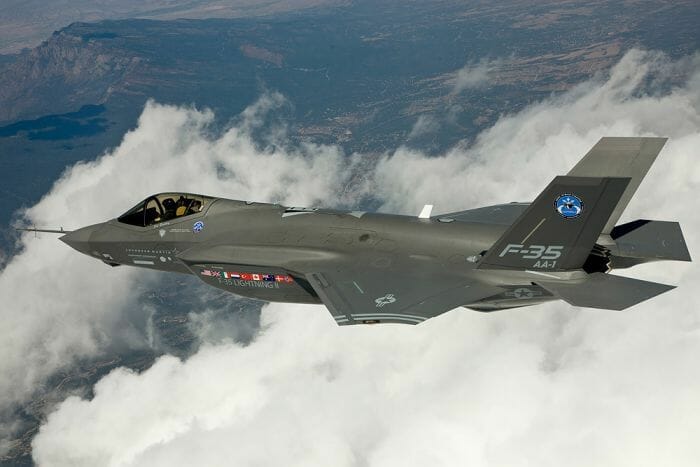
Forsvarsministeriet købte i 27 nye kampfly i 2016, men købet blev knap debatteret, og den miljømæssig vinkel blev overhovedet ikke debatteret. Men hvis man har indkøbt flyene med et formål om, at de skal i aktion i fremtiden, gør det både ondt på nogle stakkels mennesker og klimaet.

Hvis man reducerede forsvaret og køb af den slags materiel, vil der blive udledt mindre Co2.

Hver krone på våben kunne være brugt på velfærd

Hvis man tager kampflyene som eksempel igen, kostede de i indkøb 20 milliarder kroner, men de vil i deres levetid løbe op i 56,4 milliarder kroner.

Hvis man smider en milliard kroner i militærindustrien, så kan vi som samfund få nogle arbejdspladser med mænd i uniform for dem. For samme penge kunne man hyre sygeplejersker eller pædagoger, som vi hører, at der er mangel på. Den milliard bliver vekslet til nogle mennesker, som tager sig af borgerne, så de bliver hurtigere raske, deres børn trives bedre, øger livskvaliteten osv. Det vi kalder velfærd.

Eller hvis man vil anvende et økonomisk argument, så kunne man investere den milliard i ny motorvej, bedre toge, nye strækninger, busruter, som vil gavne erhvervslivet og binde landet sammen.

Forsvaret har over 20 milliarder at forsvare Danmark for. Og senest i januar blev der tilført 45 milliarder ekstra, fordi man i NATO mener, at vi skal op og bruge 2 pct. af bnp på vores militær.

Den trussel vi ofte hører om hedder Rusland.

Vi hører, at Rusland kunne finde på at invadere Europa, hvis vi ikke opruster og øger vores forsvarsbudget.

Fra et militært perspektiv er Ruslands militær relativt lille i forhold til NATO, hvor USA trækker det tunge læs. I 2014-2015 stod USA alene for 36 % af verdenssamlede militærudgifter svarende til 3.905 mia. kr.. Og ligger man alle NATO-landenes militærudgifter sammen er det 10 gange større end Ruslands, som lå på 435 mia. kr. i 2014-2015. Så hvis Rusland skulle få den ide, at invandre et NATO-land i morgen, så er Putin, som fleste danske medier skriver på lederplads, sindssyg, for det vil være selvmord.

Så med mindre man mener, at Rusland står klar til at invandere Europa, kunne de milliarder være brugt på velfærd for borgerne i stedet for.   

For freden og for folk

Forsvar, krig og fred er altså et politisk område, som påvirker os selv, og det handler ikke kun om de konflikter og mennesker, som er langt fra os.

I den opfordring ligger en ærgelige erkendelse af, at fred, konflikter og menneskelige lidelser i sig selv ikke er nok til at få danskerne til at interessere sig for det.

Men måske der er en chance, hvis man indser, at forsvaret og dets aktiviteter sætter mennesker på flugt, er en betydelig klimasynder og tager penge fra andre områder, som kunne skabe bedre velfærd. 

Jeg siger ikke, at forsvaret skal afskaffes i morgen. Men måske vi skulle tag bare én milliard af de 22-24 milliarder, som kunne gå til flygtninge, klimaet eller velfærden?  

Tænk på alle de uskyldige mennesker det, det danske forsvar har været med til at slå ihjel i Mellemøsten. Tænk på alle de familiemedlemmer og venner, som har mistet et menneske de elsker, fordi de stod det forkerte sted, da en af vores bomber sprang, og tænk på de mennesker som så den bombe sprænge og er traumeret for resten af livet på grund af det.

Vi skal mindre af den slags, og det skal vi kunne tale om, inden vi gør det igen. Vi har ikke talt om det ved dette folketingsvalg, og tabet af den samtale vil ramme os i bevidstheden som en bommerang, når det får konsekvenser for os selv, som er større end bare flygtninge ved grænsen.

Vi kan ikke deltage i krige rundt omkring i verden og forvente ingen mennesker bliver vrede over, at deres liv er blevet ødelagt. Vores ignorance og mangel på medfølelse har konsekvenser for andre og for os selv.

Related Posts

Below are TFF-related media mentions, comments, videos and social media posts published elsewhere but not on this homepage. We happen to catch and list only a fraction. Regarding video comments and debates, we recommend that you go to the TFF Video Channel on Substack where many of them are reproduced. Jan Oberg is a contributor to China Daily – 52 million daily clicks – and Global Times, CGTN and CCTV (the national television), China Investment, Xinhua News Agency and several others. Articles and videos on these media very often multiply into countless Chinese (and Western media) that re-post them from these main media. Thanks to The China Academy, his analyses, interviews and comments are frequently posted on YouTube channels such as Thinkers Forum and Wave Media. These videos are often re-posted on Bilibili (China’s YouTube), the China Content Center on TikTok, and on the Chinese edition of TikTok, Douyin.com. This means reaching hundreds of millions of viewers worldwide over a year. While there are too many to catch on all these...
Jan Oberg TFF director October 13, 2026 According to Alfred Nobel’s will, the Nobel Peace Prize shall be awarded: ”to the person who has done the most or best to advance fellowship among nations, the abolition or reduction of standing armies, and the establishment and promotion of peace congresses.” Further down, he also expresses how the prize for the “champions of peace” shall be decided: “that for champions of peace by a committee of five persons to be selected by the Norwegian Storting. Alfred Nobel’s will is remarkably short and clear. But few seem to have read it. Nobel did not say that the committee itself should consist of members of parliament. He entrusted the Storting with appointing five persons. In principle, it could have selected diplomats, mediators, peace researchers, conflict-resolution specialists, or other individuals with recognised expertise in matters of peace from around the world. Instead, the Storting gradually...
The Quest for Humane Survival Richard Falk Professor emeritus, Princeton UniversityTFF Associate since 1986October 12, 2026 After decades of teaching and writing about international law in academic frameworks that were not institutionally situated within law school environments—at Princeton and the University of California, Santa Barbara—I found myself most receptive to the TWAIL outlook. It has been especially illuminating in clarifying the extent to which international law evolved as a dialogical critique of Europe’s efforts to legitimize its colonial undertakings. In particular, TWAIL has exposed how international law has functioned to legalize the subjugation of Third World peoples, securing conditions for exploitative investment and trade relations, the coercive enforcement of public debts, and an ideology of cultural superiority. TWAIL’s exposure of these economic legacies of colonialism has influenced my understanding of the history and development of international law, broadly conceived, as an ideological project of the Western sub-system of the world...

Recent Articles

Below are TFF-related media mentions, comments, videos and social media posts published elsewhere but not on this homepage. We happen to catch and list only a fraction. Regarding video comments and debates, we recommend that you go to the TFF Video Channel on Substack where many of them are reproduced. Jan Oberg is a contributor to China Daily – 52 million daily clicks – and Global Times, CGTN and CCTV (the national television), China Investment, Xinhua News Agency and several others. Articles and videos on these media very often multiply into countless Chinese (and Western media) that re-post them from these main media. Thanks to The China Academy, his analyses, interviews and comments are frequently posted on YouTube channels such as Thinkers Forum and Wave Media. These videos are often re-posted on Bilibili (China’s YouTube), the China Content Center on TikTok, and on the Chinese edition of TikTok, Douyin.com. This means reaching hundreds of millions of viewers worldwide over a year. While there are too many to catch on all these...
Jan Oberg TFF director October 13, 2026 According to Alfred Nobel’s will, the Nobel Peace Prize shall be awarded: ”to the person who has done the most or best to advance fellowship among nations, the abolition or reduction of standing armies, and the establishment and promotion of peace congresses.” Further down, he also expresses how the prize for the “champions of peace” shall be decided: “that for champions of peace by a committee of five persons to be selected by the Norwegian Storting. Alfred Nobel’s will is remarkably short and clear. But few seem to have read it. Nobel did not say that the committee itself should consist of members of parliament. He entrusted the Storting with appointing five persons. In principle, it could have selected diplomats, mediators, peace researchers, conflict-resolution specialists, or other individuals with recognised expertise in matters of peace from around the world. Instead, the Storting gradually...
The Quest for Humane Survival Richard Falk Professor emeritus, Princeton UniversityTFF Associate since 1986October 12, 2026 After decades of teaching and writing about international law in academic frameworks that were not institutionally situated within law school environments—at Princeton and the University of California, Santa Barbara—I found myself most receptive to the TWAIL outlook. It has been especially illuminating in clarifying the extent to which international law evolved as a dialogical critique of Europe’s efforts to legitimize its colonial undertakings. In particular, TWAIL has exposed how international law has functioned to legalize the subjugation of Third World peoples, securing conditions for exploitative investment and trade relations, the coercive enforcement of public debts, and an ideology of cultural superiority. TWAIL’s exposure of these economic legacies of colonialism has influenced my understanding of the history and development of international law, broadly conceived, as an ideological project of the Western sub-system of the world...

TFF on Substack

Discover and subscribe to more peace materials on TFF Substack

Most Popular

Below are TFF-related media mentions, comments, videos and social media posts published elsewhere but not on this homepage. We happen to catch and list only a fraction. Regarding video comments and debates, we recommend that you go to the TFF Video Channel on Substack where many of them are reproduced. Jan Oberg is a contributor to China Daily – 52 million daily clicks – and Global Times, CGTN and CCTV (the national television), China Investment, Xinhua News Agency and several others. Articles and videos on these media very often multiply into countless Chinese (and Western media) that re-post them from these main media. Thanks to The China Academy, his analyses, interviews and comments are frequently posted on YouTube channels such as Thinkers Forum and Wave Media. These videos are often re-posted on Bilibili (China’s YouTube), the China Content Center on TikTok, and on the Chinese edition of TikTok, Douyin.com. This means reaching hundreds of millions of viewers worldwide over a year. While there are too many to catch on all these...
Jan Oberg TFF director October 13, 2026 According to Alfred Nobel’s will, the Nobel Peace Prize shall be awarded: ”to the person who has done the most or best to advance fellowship among nations, the abolition or reduction of standing armies, and the establishment and promotion of peace congresses.” Further down, he also expresses how the prize for the “champions of peace” shall be decided: “that for champions of peace by a committee of five persons to be selected by the Norwegian Storting. Alfred Nobel’s will is remarkably short and clear. But few seem to have read it. Nobel did not say that the committee itself should consist of members of parliament. He entrusted the Storting with appointing five persons. In principle, it could have selected diplomats, mediators, peace researchers, conflict-resolution specialists, or other individuals with recognised expertise in matters of peace from around the world. Instead, the Storting gradually...
The Quest for Humane Survival Richard Falk Professor emeritus, Princeton UniversityTFF Associate since 1986October 12, 2026 After decades of teaching and writing about international law in academic frameworks that were not institutionally situated within law school environments—at Princeton and the University of California, Santa Barbara—I found myself most receptive to the TWAIL outlook. It has been especially illuminating in clarifying the extent to which international law evolved as a dialogical critique of Europe’s efforts to legitimize its colonial undertakings. In particular, TWAIL has exposed how international law has functioned to legalize the subjugation of Third World peoples, securing conditions for exploitative investment and trade relations, the coercive enforcement of public debts, and an ideology of cultural superiority. TWAIL’s exposure of these economic legacies of colonialism has influenced my understanding of the history and development of international law, broadly conceived, as an ideological project of the Western sub-system of the world...
Read More
girl-5894831_1280
Below are TFF-related media mentions, comments, videos and social media posts published elsewhere but not on this homepage. We happen to catch and list only a fraction. Regarding video comments and debates, we recommend that you go to the TFF Video Channel on Substack where many of them are reproduced. Jan Oberg is a contributor to China Daily – 52 million daily clicks – and Global Times, CGTN and CCTV (the national television), China Investment, Xinhua News Agency and several others. Articles and videos on these media very often multiply into countless Chinese (and Western media) that re-post them from these main media. Thanks to The China Academy, his analyses, interviews and comments are frequently posted on YouTube channels such as Thinkers Forum and Wave Media. These videos are often re-posted on Bilibili (China’s YouTube), the China Content Center on TikTok, and on the Chinese edition of TikTok, Douyin.com. This means reaching hundreds of millions of viewers worldwide over a year. While there are too many to catch on all these...
Nobel-Prize-Plaque
Jan Oberg TFF director October 13, 2026 According to Alfred Nobel’s will, the Nobel Peace Prize shall be awarded: ”to the person who has done the most or best to advance fellowship among nations, the abolition or reduction of standing armies, and the establishment and promotion of peace congresses.” Further down, he also expresses how the prize for the “champions of peace” shall be decided: “that for champions of peace by a committee of five persons to be selected by the Norwegian Storting. Alfred Nobel’s will is remarkably short and clear. But few seem to have read it. Nobel did not say that the committee itself should consist of members of parliament. He entrusted the Storting with appointing five persons. In principle, it could have selected diplomats, mediators, peace researchers, conflict-resolution specialists, or other individuals with recognised expertise in matters of peace from around the world. Instead, the Storting gradually...
law-419057_1280
The Quest for Humane Survival Richard Falk Professor emeritus, Princeton UniversityTFF Associate since 1986October 12, 2026 After decades of teaching and writing about international law in academic frameworks that were not institutionally situated within law school environments—at Princeton and the University of California, Santa Barbara—I found myself most receptive to the TWAIL outlook. It has been especially illuminating in clarifying the extent to which international law evolved as a dialogical critique of Europe’s efforts to legitimize its colonial undertakings. In particular, TWAIL has exposed how international law has functioned to legalize the subjugation of Third World peoples, securing conditions for exploitative investment and trade relations, the coercive enforcement of public debts, and an ideology of cultural superiority. TWAIL’s exposure of these economic legacies of colonialism has influenced my understanding of the history and development of international law, broadly conceived, as an ideological project of the Western sub-system of the world...
images-2
Advocates of nuclear disarmament are regularly dismissed by the champions of nuclear deterrence as naïve and unrealistic, utopian or even irresponsible. Yet this ‘doctrine’ of deterrence, regarded by France as the ‘cornerstone’ of its national security, is based on quasi-religious beliefs, a theory that cannot be proven, risky gambles and fragile assumptions. So much so that one might legitimately ask which side the ‘Care Bears’ are on. Marc FinaudVice-President of Initiatives for Nuclear Disarmament (IDN) October 9, 2026 This article was originally published on Pressenza When it comes to these things being treated as religious concepts, look here. Idealists and realists It was Hubert Védrine, François Mitterrand’s former Foreign Minister, who repeatedly coined the phrase: ‘Europeans are a sort of Care Bears who don’t realise they’re living in Jurassic Park’. He applies this reference to the cartoon for well-behaved children not only to what he regards as weakness or idealism...
8824b09f-33a5-43f9-9fd0-550f28cda24d_1536x1024
What the West Borrowed from Asia and What It Left Behind Jan Krikke October 8, 2026 The article was originally published here In the late 1960s, the musical Hair announced that the Age of Aquarius was dawning. Its opening anthem promised a transformation of human consciousness: an era of peace, harmony and understanding. Half a century later, a familiar echo of that promise is a meditation app offered by your employer. You can find it in the same list of benefits as the pension plan and the gym discount. How did a spiritual revolution become an employee benefit? The answer lies in the history of the movement known as New Age: where it came from, what it borrowed from Asia, and why the meaning of what it borrowed changed in the process. Two definitions will help. New Age is a loose label for a wide range of spiritual practices and...
Screenshot 2026-10-04 210142
Small and different + among the 10% most active + 9,000 texts + 150 Associates + 60 000 a day — and a stubborn belief that peace is smarter and must be secured by peaceful means. In 2026, the Transnational Foundation for Peace and Future Research (TFF) turns 40. On Monday, October 5, 2026, a new TFF homepage will go live — a new gateway to more than 9,000 articles, analyses, research papers and other contributions produced over four decades of independent peace research. But this is not simply a new website. For four decades, TFF has worked from a simple conviction: peace is smarter than militarism and can be brought about by peaceful means. This is not merely an aspiration. It is the principle expressed in the UN Charter and the Gandhian tradition that has guided our work from the beginning. TFF is a research-based, independent and people-financed foundation....




