

Serbiens barn och andraflyktinger fem år senare

Förslaget om en barnombudsman i Serbien skulle inte lösa alla problem, men kanske något, skrev Barombudsmannen, BO i Sverige, Lena Nyberg i ett veckobrev i somras. I Serbien pågick en diskussion om att inrätta en motsvarighet till Barnombudsmannen i Sverige. Hon har därför besökt Belgrad, för att beskriva den svenska verksamheten och försöka dela med sig av sina erfarenheter.

Intresset för det svenska arbetet är stort, men hon insåg, att ett barnrättsarbete i Serbien, måste se helt annorlunda ut än det gör i Sverige. BO skriver att hennes besök i ett flyktingläger med hundratals barn, kommer hon aldrig att glömma.

Det är alltid barnen, som får betala det högsta priset när vuxna väljer krig istället för fredliga lösningar, påpekar hon. Krig innebär att barn växer upp med våld och otrygghet, förlust av hem och anhöriga och det ger dem sämre förutsättningar.

Den stora frågan är varför få – nästan ingen – förvånats över att Sveriges regering, av alla, valde kriget, för dessa barn. Det är också en fråga för FN:s Barnkonvention. Hur kan man i vår förhållandevis rika del av världen, låta barn leva år efter år i läger, vars förhållanden vi i Sverige aldrig skulle acceptera, undrar BO. Det är också en s.k. bra fråga, för FN:s barnkonvention.

I lägret träffade Lena Nyberg en familj med fyra barn, som bott de senaste fyra åren i en förfallen industribyggnad. Familjen är serbisk, men bodde tidigare i Kosovo. De tvingades fly från Kosovo, när det blev för farligt där.

Detta veckobrev, av Barnombudsmannen Lena Nyberg, är det första brev, där en offentlig person i Sverige, uttalar någon form av medkänsla med de serber, som i hundratusentals föll offer för de olagliga bombningarna av Jugoslavien, under våren 1999. Sveriges regering har däremot uttryckt sin stora förståelse för kriget om Kosovo, trots att det var olagligt.

Jag var i Serbien i början av oktober 2004, då jag träffade chefen för det serbiska Röda korset. Hon berättade att det finns en miljon arbetslösa i Serbien och att 500 000 av dem idag lever på svältgränsen. Röda Korset i Serbien vet nu, att hälften av de arbetslösa måste lämnas för att dö av svält, under den kommande vintern.

Detta sker just nu i Europa!!!

Innan den serbiska ekonomin slagits sönder av krig, sanktioner och bombningar, kunde Röda Korset ge de mest utsatta ett mål mat om dagen från soppköken. Nu finns det inga sådana resurser mer. Det civila serbiska samhället slogs ut av bombningarna. Befolkningens försörjningsmöjligheter förstördes. Till detta kommer att Sverige och de andra EU-länderna, under mer än tio år, belagt Serbien med sanktioner, för att straffa den demoniserade presidenten, men det vet ju alla: att det drabbar folket.

Bombningar, sanktioner och restriktioner har fått detta land, som under 70-talet var ett välkomnande semesterparadis för nordbor, till att nu bli Europas fattigaste, fråntaget sina försörjningsmöjligheter.

När muren föll behövdes inte Jugoslavien längre, som buffert mellan öst och väst. Det jugoslaviska ekonomiska systemet rämnade, när de mest välmående jugoslaviska områdena erbjöds medlemskap i rikemansklubben, mot att man lämnade den Jugoslaviska gemenskapen. Följden blev ett blodigt inbördeskrig. Det får inte kallas inbördeskrig. Västmakterna som iscensatte och stödde sönderfallet har hela tiden pekat ut Serbien som ensam skyldigt till dessa krig.

Sanningen finns skildrad på olika håll. I Bo Pellnäs bok “Utan slut”, utgiven 1995, beskiver han sin avsky för de kroatiska soldaterna, som i det serbiska Krajina gick från hus till hus och slaktade allt i sin väg. Anfallet inleddes med amerikansk-stödda flyganfall den 4 augusti 1995.

Carl Bildt beskriver också denna händelse, som han anser vara den värsta massakern och etniska rensningen under sina år som EU:s främste representant i Bosnien, under arbetet med Daytonavtalet.

Anfallet på Knin, huvudstaden i det helt serbiska Krajina den 4 augusti 1995, samma år som massakern i Srebrenica skedde den 6 juli, men det klara folkmordet i Knin, är inte är lika uppmärksammat. Ingen har heller anklagats för det. Får se vad som händer i samband med 10-års dagen 4 augusti 2005?

Företagen, kommunikationerna, elsystemen, bostäderna, skolorna och sjukhusen slogs ut, när det serbiska samhället bombades dag och natt, under 80 dygn av USA, Nato och EU, från den 24 mars till den 19 juni 1999. Nato fick därefter ta över ansvaret för Kosovo, istället för FN, som det var planerat – men som USA lyckades ändra på, genom att krångla till en översättning. (Chomsky, “The New Military Humanism.- Lessons from Kosovo”).

Därefter vidtog under överinseende av Nato ock K-for, etnisk rensning av den icke-albanska befolkningen i Kosovo – serber, och romer. Den etniska rensningen omfattade minst 300 000 av den icke-albanska befolkningen, som tog sin tillflykt till det fattiga, bombade Serbien, med redan en miljon flyktingar.

Jag besökte ett läger för romer, som flytt från Kosovo, när jag var i Belgrad, i början av oktober 2004. Dessa romer hade också tidigare bott i Kosovo, men tvingats fly till Serbien. Romerna i lägret bodde i några brädskjul, med breda springor mellan bräderna. Flera spädbarn kröp omkring på golvet. En baby sov fastbunden i en vagga. Alla de unga kvinnorna, som uppskattningsvis var mellan 14 och 18 år, var gravida.

Ute i leran lekte ett tjugotal småbarn, smutsiga, okammade, nyfikna och helt underbara! Det var 24 grader varmt när jag var där, men inlandsklimatet gör, att vintern kommer tidigt till området. Risken är stor, att dessa våra minsta, på grund av den allt sämre ekonomin, inte kommer att överleva vintern med sina svavelstickor vid det rika Europas port.

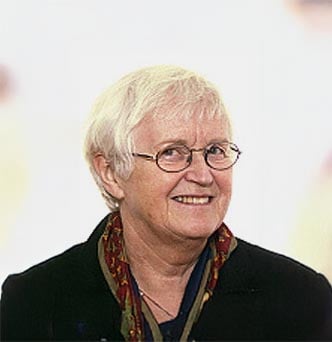
Karin Wegestål

Socionom. F.d. riksdagsledamot (s) & TFF rådgivare
Related Posts

LONDON – So far so good, at least on the wider level. While internally Iraq seems on the edge of chaos, the much heralded clash of civilizations between the Muslim and Judaeo-Christian worlds has yet to become apparent. We have anger and despair aplenty in the Arab and Muslim worlds. But very little rushing to the standard and there was no great pilgrimage of warriors to join the fight, as happened when the Soviet Union invaded Afghanistan twenty years ago, and then, having driven the Red Army out, were left to ferment in that mountainous redoubt. With the armaments supplied by the CIA the mujahidin were transformed into Al Qaeda that became, for a relatively brief moment as these things go, ‘the greatest threat to the homeland that America has ever known.’ Nevertheless a ‘Cold War’ between much of the Muslim world and the West is certainly in full swing. Winston...
The Challenge of Nuclear Weaponsin the Twenty-first CenturyA Path Forward The peoples and governments of the world face an urgent challenge relating to weaponry of mass destruction and particularly to nuclear weaponry.  At the crossroads of technology, terrorism, geopolitical ambition, and policies of preemption are new and potent dangers for humanity. Despite ending the nuclear standoff of the Cold War era, nuclear weaponry is again menacing the peoples of the world with catastrophic possibilities.  We recognize the need for any government to pursue its security interests in accordance with international law; and further, we recognize that distinctive threats to these interests now exist as a result of an active international terrorist network having declared war on the United States and its allies. Nonetheless, we reject the assessment of the current US administration that upgrading a reliance on nuclear weapons is in any sense justified as a response. We find it...
By Karin Wegestal MP, the Social Democratic Partyon behalf of the Swedish Committee for Solidarity with the Yugoslav People During the last decade, the Federal Republic of Yugoslavia has received more than 500,000 refugees from Croatia and Bosnia, and another 300,000 internally displaced persons, mainly from the province Kosovo and Metohia. For a country with about ten million inhabitants, such an influx of homeless people is obviously a very heavy burden – even under peaceful conditions. But in addition to that, the Federal Republic of Yugoslavia has been the subject to sanctions from the western powers for close to ten years and its infrastructure was badly hurt through Nato’s intense bombardment during 78 days in 1999. The result of all this is that Yugoslavia, once the most developed industrial country in Eastern Europe, is today the poorest country in Europe. In Serbia excluding Kosovo, with about ten million inhabitants and...

Recent Articles

Below are TFF-related media mentions, comments, videos and social media posts published elsewhere but not on this homepage. We happen to catch and list only a fraction. Regarding video comments and debates, we recommend that you go to the TFF Video Channel on Substack where many of them are reproduced. Jan Oberg is a contributor to China Daily – 52 million daily clicks – and Global Times, CGTN and CCTV (the national television), China Investment, Xinhua News Agency and several others. Articles and videos on these media very often multiply into countless Chinese (and Western media) that re-post them from these main media. Thanks to The China Academy, his analyses, interviews and comments are frequently posted on YouTube channels such as Thinkers Forum and Wave Media. These videos are often re-posted on Bilibili (China’s YouTube), the China Content Center on TikTok, and on the Chinese edition of TikTok, Douyin.com. This means reaching hundreds of millions of viewers worldwide over a year. While there are too many to catch on all these...
Jan Oberg TFF director October 13, 2026 According to Alfred Nobel’s will, the Nobel Peace Prize shall be awarded: ”to the person who has done the most or best to advance fellowship among nations, the abolition or reduction of standing armies, and the establishment and promotion of peace congresses.” Further down, he also expresses how the prize for the “champions of peace” shall be decided: “that for champions of peace by a committee of five persons to be selected by the Norwegian Storting. Alfred Nobel’s will is remarkably short and clear. But few seem to have read it. Nobel did not say that the committee itself should consist of members of parliament. He entrusted the Storting with appointing five persons. In principle, it could have selected diplomats, mediators, peace researchers, conflict-resolution specialists, or other individuals with recognised expertise in matters of peace from around the world. Instead, the Storting gradually...
The Quest for Humane Survival Richard Falk Professor emeritus, Princeton UniversityTFF Associate since 1986October 12, 2026 After decades of teaching and writing about international law in academic frameworks that were not institutionally situated within law school environments—at Princeton and the University of California, Santa Barbara—I found myself most receptive to the TWAIL outlook. It has been especially illuminating in clarifying the extent to which international law evolved as a dialogical critique of Europe’s efforts to legitimize its colonial undertakings. In particular, TWAIL has exposed how international law has functioned to legalize the subjugation of Third World peoples, securing conditions for exploitative investment and trade relations, the coercive enforcement of public debts, and an ideology of cultural superiority. TWAIL’s exposure of these economic legacies of colonialism has influenced my understanding of the history and development of international law, broadly conceived, as an ideological project of the Western sub-system of the world...

TFF on Substack

Discover and subscribe to more peace materials on TFF Substack

Most Popular

Below are TFF-related media mentions, comments, videos and social media posts published elsewhere but not on this homepage. We happen to catch and list only a fraction. Regarding video comments and debates, we recommend that you go to the TFF Video Channel on Substack where many of them are reproduced. Jan Oberg is a contributor to China Daily – 52 million daily clicks – and Global Times, CGTN and CCTV (the national television), China Investment, Xinhua News Agency and several others. Articles and videos on these media very often multiply into countless Chinese (and Western media) that re-post them from these main media. Thanks to The China Academy, his analyses, interviews and comments are frequently posted on YouTube channels such as Thinkers Forum and Wave Media. These videos are often re-posted on Bilibili (China’s YouTube), the China Content Center on TikTok, and on the Chinese edition of TikTok, Douyin.com. This means reaching hundreds of millions of viewers worldwide over a year. While there are too many to catch on all these...
Jan Oberg TFF director October 13, 2026 According to Alfred Nobel’s will, the Nobel Peace Prize shall be awarded: ”to the person who has done the most or best to advance fellowship among nations, the abolition or reduction of standing armies, and the establishment and promotion of peace congresses.” Further down, he also expresses how the prize for the “champions of peace” shall be decided: “that for champions of peace by a committee of five persons to be selected by the Norwegian Storting. Alfred Nobel’s will is remarkably short and clear. But few seem to have read it. Nobel did not say that the committee itself should consist of members of parliament. He entrusted the Storting with appointing five persons. In principle, it could have selected diplomats, mediators, peace researchers, conflict-resolution specialists, or other individuals with recognised expertise in matters of peace from around the world. Instead, the Storting gradually...
The Quest for Humane Survival Richard Falk Professor emeritus, Princeton UniversityTFF Associate since 1986October 12, 2026 After decades of teaching and writing about international law in academic frameworks that were not institutionally situated within law school environments—at Princeton and the University of California, Santa Barbara—I found myself most receptive to the TWAIL outlook. It has been especially illuminating in clarifying the extent to which international law evolved as a dialogical critique of Europe’s efforts to legitimize its colonial undertakings. In particular, TWAIL has exposed how international law has functioned to legalize the subjugation of Third World peoples, securing conditions for exploitative investment and trade relations, the coercive enforcement of public debts, and an ideology of cultural superiority. TWAIL’s exposure of these economic legacies of colonialism has influenced my understanding of the history and development of international law, broadly conceived, as an ideological project of the Western sub-system of the world...
Read More
girl-5894831_1280
Below are TFF-related media mentions, comments, videos and social media posts published elsewhere but not on this homepage. We happen to catch and list only a fraction. Regarding video comments and debates, we recommend that you go to the TFF Video Channel on Substack where many of them are reproduced. Jan Oberg is a contributor to China Daily – 52 million daily clicks – and Global Times, CGTN and CCTV (the national television), China Investment, Xinhua News Agency and several others. Articles and videos on these media very often multiply into countless Chinese (and Western media) that re-post them from these main media. Thanks to The China Academy, his analyses, interviews and comments are frequently posted on YouTube channels such as Thinkers Forum and Wave Media. These videos are often re-posted on Bilibili (China’s YouTube), the China Content Center on TikTok, and on the Chinese edition of TikTok, Douyin.com. This means reaching hundreds of millions of viewers worldwide over a year. While there are too many to catch on all these...
Nobel-Prize-Plaque
Jan Oberg TFF director October 13, 2026 According to Alfred Nobel’s will, the Nobel Peace Prize shall be awarded: ”to the person who has done the most or best to advance fellowship among nations, the abolition or reduction of standing armies, and the establishment and promotion of peace congresses.” Further down, he also expresses how the prize for the “champions of peace” shall be decided: “that for champions of peace by a committee of five persons to be selected by the Norwegian Storting. Alfred Nobel’s will is remarkably short and clear. But few seem to have read it. Nobel did not say that the committee itself should consist of members of parliament. He entrusted the Storting with appointing five persons. In principle, it could have selected diplomats, mediators, peace researchers, conflict-resolution specialists, or other individuals with recognised expertise in matters of peace from around the world. Instead, the Storting gradually...
law-419057_1280
The Quest for Humane Survival Richard Falk Professor emeritus, Princeton UniversityTFF Associate since 1986October 12, 2026 After decades of teaching and writing about international law in academic frameworks that were not institutionally situated within law school environments—at Princeton and the University of California, Santa Barbara—I found myself most receptive to the TWAIL outlook. It has been especially illuminating in clarifying the extent to which international law evolved as a dialogical critique of Europe’s efforts to legitimize its colonial undertakings. In particular, TWAIL has exposed how international law has functioned to legalize the subjugation of Third World peoples, securing conditions for exploitative investment and trade relations, the coercive enforcement of public debts, and an ideology of cultural superiority. TWAIL’s exposure of these economic legacies of colonialism has influenced my understanding of the history and development of international law, broadly conceived, as an ideological project of the Western sub-system of the world...
images-2
Advocates of nuclear disarmament are regularly dismissed by the champions of nuclear deterrence as naïve and unrealistic, utopian or even irresponsible. Yet this ‘doctrine’ of deterrence, regarded by France as the ‘cornerstone’ of its national security, is based on quasi-religious beliefs, a theory that cannot be proven, risky gambles and fragile assumptions. So much so that one might legitimately ask which side the ‘Care Bears’ are on. Marc FinaudVice-President of Initiatives for Nuclear Disarmament (IDN) October 9, 2026 This article was originally published on Pressenza When it comes to these things being treated as religious concepts, look here. Idealists and realists It was Hubert Védrine, François Mitterrand’s former Foreign Minister, who repeatedly coined the phrase: ‘Europeans are a sort of Care Bears who don’t realise they’re living in Jurassic Park’. He applies this reference to the cartoon for well-behaved children not only to what he regards as weakness or idealism...
8824b09f-33a5-43f9-9fd0-550f28cda24d_1536x1024
What the West Borrowed from Asia and What It Left Behind Jan Krikke October 8, 2026 The article was originally published here In the late 1960s, the musical Hair announced that the Age of Aquarius was dawning. Its opening anthem promised a transformation of human consciousness: an era of peace, harmony and understanding. Half a century later, a familiar echo of that promise is a meditation app offered by your employer. You can find it in the same list of benefits as the pension plan and the gym discount. How did a spiritual revolution become an employee benefit? The answer lies in the history of the movement known as New Age: where it came from, what it borrowed from Asia, and why the meaning of what it borrowed changed in the process. Two definitions will help. New Age is a loose label for a wide range of spiritual practices and...
Screenshot 2026-10-04 210142
Small and different + among the 10% most active + 9,000 texts + 150 Associates + 60 000 a day — and a stubborn belief that peace is smarter and must be secured by peaceful means. In 2026, the Transnational Foundation for Peace and Future Research (TFF) turns 40. On Monday, October 5, 2026, a new TFF homepage will go live — a new gateway to more than 9,000 articles, analyses, research papers and other contributions produced over four decades of independent peace research. But this is not simply a new website. For four decades, TFF has worked from a simple conviction: peace is smarter than militarism and can be brought about by peaceful means. This is not merely an aspiration. It is the principle expressed in the UN Charter and the Gandhian tradition that has guided our work from the beginning. TFF is a research-based, independent and people-financed foundation....





