On the occasion of the Summer University in Tamera, Portugal, I had the good fortune to gain many insights, away from the well known government rhetoric, into the issues that underlie the Israeli-Palestinian conflict. As part of the Summer University, Sami Awad, Reuven Moskovitz and others gave open, constructive and inspiring talks on the historico-political foundations of the conflict and also on possible ways forward to a sustainable peace.
The 10 day Summer University offered me the opportunity also to conduct one formal interview and three informal conversations with participating Palestinians and Israelis. Through the views and initiatives of these grassroots activists, a clear and plausible way forward to peace and reconciliation can be envisioned.
Interview # 1 of 4
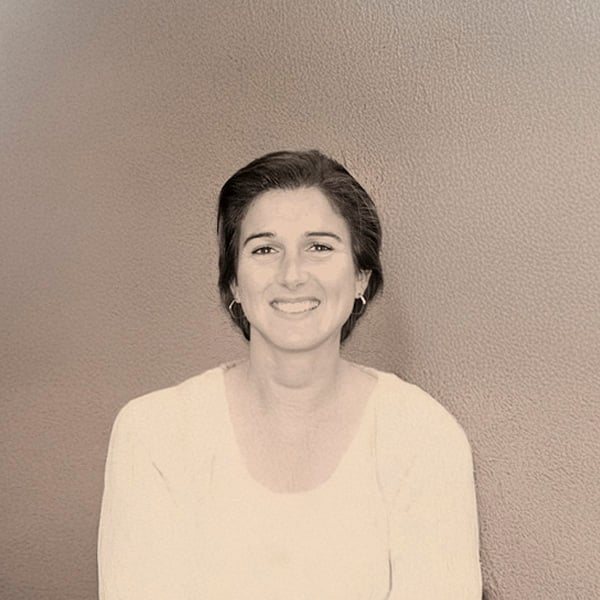
Reuven Moskovitz
Peace activist, co-founder of Neve Shalom,
winner of the Aachen Peace Award 2003.Dr. Reuven Moskovitz was born in 1928 in Schtetl Frumsiaca in the northern part of Romania. Expulsed from his home by the Nazis, he managed to avoid the concentration camps and emigrated to Palestine in 1947, where he became a co-founder of the Kibbutz Misgav-Am situated on the Lebanese border. He studied history and Hebrew culture at the University of Tel Aviv and the Hebrew University in Jerusalem. In 1974 he completed his doctorate on the subject of “Germans and Jews between the power of spirit and the powerlessness of violence”.
Since his arrival in the Middle East he has been actively and vocally working for a just and sustainable peace between Jews and Palestinians. In 1972 he co-founded the peace village Neve Shalom / Wahat al Salam in Israel, where Israeli Jews and Palestinians are learning how to live together in peace. After the Six Day War, he became the secretary of the Movement for Peace and Security.
Reuven Moskovitz has consistently shown the courage to question the policies of his own government. In 2001 he was awarded the Mount Sion Award and then in 2003 he was jointly awarded, together with Nabila Espanioly, the international Aachen Peace Award.
Vicky Rossi: You were born in Romania. When then did you move to Israel?
Reuven Moskovitz: The first time I came to Israel was in 1947, but before the shooting began I went back to Rumania for a time. Then I returned to Israel in 1949. The war was over and that for me was a shock because I couldn’t believe that Jews and Jewish soldiers were also able to commit atrocities.
Vicky Rossi: What was the first incident that really brought this realization to you?
Reuven Moskovitz: The first incident was when I was brought by my friends to a kibbutz and there they sat me in an armchair. I wondered, since we were a new kibbutz, where the armchair came from. They answered, “Oh, from our neighbours”. I asked, “What do you mean from our neighbours, did we buy them?” They said, “No, they have left.” But I had a friend who explained to me what really happened. I was really, really shocked. They were driven out and some were also massacred. Not mass massacres, just small numbers, for example they put 10 or 15 people to death in the small villages in order to keep the population quiet.
Vicky Rossi: How did your friends know all of this? Did they witness it or did they hear second hand?
Reuven Moskovitz: I myself didn’t witness any of this, but my friends they did. They told me exactly what they experienced. For example, there was a group of soldiers and they saw an Arab peasant working. One of the soldiers said to the others, “I will show you that I can shoot him directly in the bottom” and he did it. When I heard that I was shocked. I couldn’t believe it. Or cases of robbery, not just in houses where they were driven out but even in places where they refused to leave. For gold, for money, for…
Vicky Rossi: When we talk about “they” are we talking about the Israeli soldiers?
Reuven Moskovitz: The soldiers, yes. But also – and I was shocked – also the kibbutz because it was evident that they had war bounty, confiscated property.
Vicky Rossi: What was your immediate reaction to the knowledge that people had been badly treated and property had been stolen?
Reuven Moskovitz: My reaction was to say we have to protest, to make an outcry. Before the war, in a village not far from us there was an attempt to have I would not say friendly but correct relations between us. After the war, the kibbutz tried to convince the army to bring the refugees back, but we discovered later that there was a clear policy by Ben Gurion that nobody should be allowed to come back.
Vicky Rossi: The military would have had their orders then, but how did the ordinary people become supportive of this policy? Did the media play a role?
Reuven Moskovitz: You must understand that it was the time after 1945, after the liberation from the camps. At that time the British didn’t allow the Jews to return so they were fighting for the right to come here. You know it was a very important achievement for the Zionist movement. That movement succeeded in convincing the majority of the Jewish refugees that the only place they could go was Israel. As a matter of fact, at the time, the Americans didn’t want it and other countries didn’t want it either. So we were under the shock of thousands and thousands of Jews coming from Europe and explaining about the fire and destruction there and their experiences in the concentration camps.
What most people are unable to understand is the concept that to build a new identity for the Jews living in Israel that identity is that we are the survivors of the Holocaust even if the majority of Jews living in Israel were not refugees, they were not survivors. But that’s our identity, yes. The Arab countries then made a huge mistake. They didn’t recognise the decision to partition the land. And then the Arab countries made the invasion in 1948. But, for example, although the Egyptians invaded they did not go as far as Tel Aviv. They invaded the southern part of Palestine and they stopped exactly on the border where the United Nations decided it should be the place of the Palestinians. However, this fact was ignored. In the schools and in the army, it was said, “Look 5 armies tried to destroy us.” There was consensus that the most important thing was security…we are the survivors. The supreme task is security. It doesn’t matter what or how we do it. We have to keep quiet. There was a kind of censorship, not everything could be published – although there were some protests against this – for example even in 1952 Palestinians were driven out from Ashkelon and other places. However there was a systematic process of indoctrination which said that although the Nazis were defeated in Europe they continued to be represented in the form of the Arabs and the Palestinians, who want nothing else but to destroy Israel.
There was a ceasefire agreement in 1949 and according to this agreement we annexed 20% of what was supposed to be Palestine according to the United Nations Resolution. There again Ben Gurion established the slogan: “Not one square metre of land back to the Palestinians. Not one Palestinian back.” The remaining Palestinians – there were about 180,000 of them – they would be citizens of Israel, but second class citizens because they had to live under military rule, very harsh military rule until 1965.
Vicky Rossi: You mentioned the word “indoctrination”. I can understand the importance of the idea of security immediately after the events of the World War II, yet Israel continues to this day to suggest that its actions, many of which are violent in nature, are necessary for its own security. When you co-founded Neve Shalom / Wahat al-Salam, were you motivated by the need to move away from this indoctrination?
Reuven Moskovitz: Yes of course, but you must understand that for me Neve Shalom was in 1975/76. Prior to that there was the period of the military government and military retaliations. For example, there was a case where a mother and her 2 children were murdered – a frightful thing of course but then the decision was taken to teach “them” a lesson.
Vicky Rossi: Which year are we talking about here?
Reuven Moskovitz: It was 1952/53. In response, Ariel Sharon was sent by Ben Gurion to make a military action to blow up about 50 houses, but Ariel Sharon didn’t warn the people to leave the village. He went there, laid the dynamite in the houses and about 69 persons died.
Vicky Rossi: In which village was this?
Reuven Moskovitz: Qibia. This was a terrible thing. The world was shocked that 69 civilians in the night were killed by such an explosion and Ariel Sharon was the military commander of these actions.
Vicky Rossi: So in those times, prior to you co-founding Neve Shalom, what actions were you taking in the face of such events?
Reuven Moskovitz: First of all, I joined the peace movement, but at that time there was the problem of who exactly was the peace movement. There was a very small peace movement by Martin Buber, but it wasn’t really relevant. Another peace movement was the peace movement supported by the Soviet Union, so then there was the question of collaboration with the communists. The left wing party, Mapam, they didn’t want to collaborate with the communist party because the communists were anti-Zionists. But the only party, aside from the small movement of Martin Buber that was calling for the return of the refugees of 1948/49 was the communist party. It was a Jewish-Palestinian party.
There were other problems too. About 3 years after the war, there was the question of what we should do with the villages nearby. The houses had been destroyed and there were only ruins there, but there were fig plantations and other fruits. The idea came from the Jewish government to annexe this land from our neighbours. Representatives came and said, “Listen, you do not have land. You can have the land of your neighbours. It has remained unharvested for years, so you can have it.”
At the beginning this was a moral problem, but then the majority consensus was that if we didn’t take the land, the land would be given to people who had arrived just yesterday. The majority felt that they had been there over the bad times and had suffered, so why should they have land 50 kilometres from their homes when they could have land right there. However, I was part of a group of 50 young persons and we had principles. We asked ourselves why we should take the land of our neighbours. We felt guilty. I didn’t want to join the communist party as I was very happy in the kibbutz, but when the majority agreed to take the land of our neighbours, we openly declared that as a sign of protest in the coming elections we would vote for the communist party. But the communist party was anti-Zionist so there was a rule in place that each person who voted for the communist party must be expelled from the kibbutz. So although we had been working very hard in the kibbutz for some years, we were expelled.
Vicky Rossi: That was a form of nonviolent protest then. You knew what the results would be for you personally.
Reuven Moskovitz: Exactly. I hoped that they would understand. I told them, “So what if I voted for the communist party. I want to continue working in the kibbutz”, but rules were rules and so we were expelled from the kibbutz. We continued to work and demonstrate against the military government.
Vicky Rossi: What kind of demonstrations?
Reuven Moskovitz: There were huge demonstrations for example against the agreement with Adenauer on compensation. We said it is impossible to compensate with money the loss of million of Jewish lives. Nowadays I think that perhaps we were not right as it helped the State of Israel to bring hundreds of thousands of Jews to this land.
In 1956/57 my dream was to try to work together with Arabs. When I finished university, I wanted to build a Jewish-Arab school. That was my dream, but it wasn’t so easy. There was the problem of money.
Vicky Rossi: Was that the only problem?
Reuven Moskovitz: No, there was also the problem of place, of trust. The Arabs didn’t know if they wanted to take part. The Jews didn’t know if they wanted it either.
Vicky Rossi: And these were the Arabs in Israel that you wanted to work with?
Reuven Moskovitz: In Israel, yes, in Israel. What I did was to arrange meetings between peace schools in the Arab villages. In the 1950s I had decided through teaching to change the minds of our people, of the students, to make them understand that the concept of security and retaliation is wrong and will bring us to nothing. It will only sow hatred. But the turning point in my life was the Six Day War in 1967 because I was sure that this war was provoked by Israel. We attacked. But again, through indoctrination, the government and the newspapers succeeded in frightening our people. There was an atmosphere of Holocaust: if we don’t do anything then such and such will happen, so we must…And I was almost certain that it was provoked by our own policy. Why? Because I began to study history. For example, I discovered that in 1953, the Commander-in-Chief of the Israeli army gave a lecture to certain politicians in which he said that the army was convinced that Israel is not able to maintain security along the 1949 borders. He said the borders were unnatural, very complicated and we would never be assured of security. We must do something in order to straighten the borders. It was clear that there were Israeli military retaliations going on which were not only responses to acts initiated from the other side, but were also retaliations i.e. simply provocations, to provoke the Arab side into a war. In the meantime we had become the strongest army in the Middle East.
Vicky Rossi: Where did you find this information about the Commander-in-Chief’s lecture in 1953?
Reuven Moskovitz: It was mentioned in the diary of our foreign minister, who later became the Prime Minister of Israel, Moshe Sharett. He stated in his diary that he was shocked to listen to that lecture.
Vicky Rossi: Is this a published diary then?
Reuven Moskovitz: Yes, it was published but after 1967, although I myself got hold of the document earlier. It was clear, for example, that Ben Gurion had once said that Israel needed to find an Arab politician – a Prime Minister or a General – that could be bribed with some millions into making the first moves towards war in order to give Israel the opportunity to change its borders. Even in the Yom Kippur War, we were attacked, but as a matter of fact we also provoked the attack because we didn’t want to go back to the earlier borders.
At the time I was secretary of the peace movement and I was sure that the Egyptians, under Nasser, wanted peace with Israel. Later, this was even truer of Sadat, who – following the War of Attrition – was persuaded through US mediation to prepare a document stating that Egypt would be prepared to recognise Israel – the first time an Arab country was going to do that – on the condition that Israel would withdraw to the internationally recognised borders with Egypt. Sadat didn’t even ask for the Gaza Strip to be returned.
But Golda Meir didn’t want this. She and her closest advisors wanted other borders, not exactly along the Suez Canal but to annexe from El Harish to Sharm El Sheik, half of Sinai, in order to create the “necessary” security borders for Israel.
Vicky Rossi: With regard your dream to start a Jewish-Arab school, when and how did that come about?
Reuven Moskovitz: Well, it happened after my studies in Germany in 1974 when I completed my doctoral dissertation on the subject of “Germans and Jews between the power of spirit and the powerlessness of violence”. Many people were revolted because they felt that I was making the claim that Israel was Nazi. In fact I wanted to warn that even if we are strong now, this path will bring us to the same point as Germany if we do like the Germans in the past and continue to believe that we can only succeed through power and violence.
When I came back to Israel, the peace movement was in a very difficult situation after the Yom Kippur War (1973). I knew a man called Bruno Hussar who had tried to set up a Jewish kibbutz but had not been successful. I went to visit him on his land, which was a very beautiful place, and I suggested to him that we could build there a peace school in a community of tolerance, a community of dialogue – not only dialogue between us and the Palestinians but also dialogue between cultures, between Islam and Judaism. Bruno accepted and so I became a co-founder. I used my past experience in the kibbutz to bring water and electricity, to build roads and houses. My own students were ready to come there so I built homes for them and their families.
Vicky Rossi: What were the challenges and the rewards of working together as Israelis with Palestinians? Can you see how your these experiences could be used to promote further initiatives today?
Reuven Moskovitz: Listen, I am not a politician, but I am a political thinker. I’m a dreamer on the one hand, but a realist on the other. I know something about history: I know it is good to take small steps, but I also know that unless the political system encourages those small steps they will not succeed. In Neve Shalom the problem was that I proposed not only to do spiritual work – work on spirituality – but also to be ready to speak with our neighbours about politics. That was a problem for Bruno, the first founder of Neve Shalom, and others. They were afraid that that would bring a bad name to Neve Shalom as a nest for Palestinian nationalism.
We had many harsh discussions on this issue. It was my opinion that we should mix spiritual work and political work. In an article I wrote at the time, I stated that although we are not politicians, we must educate the people coming to Neve Shalom in the spirit and consciousness that this is a land of two peoples, of more than one religion. Each attempt to transform this land into the land of one people only will bring war. We must finally understand that the only way to keep peace is through the recognition that this is a land of two people.
Vicky Rossi: So, a one-state solution would be your preference then?
Reuven Moskovitz: Eventually a one-state solution, in the future, yes. But meanwhile we have to agree to two states and we have to give up the structure of a Jewish state. In my opinion we can’t consider the Palestinians as a “minority”. They are not a minority. They didn’t come from outside. They were born here as were their parents and grandparents. They have been here for hundreds and thousands of years. We must give them a special status. So that’s one problem, but then there is also the issue that we must declare the state of Israel not as a Jewish state but as a state of all the people living there like the Palestinian people. But still to this day this issue is not resolved and it is a very, very contentious topic.
Vicky Rossi: You say that small, grassroots initiatives will not work unless they are supported by the higher political structures. Right now (August 2006) it looks like the situation in the Middle East is very challenging and that the Israeli government is not particularly supportive of grassroots peace initiatives, of which there are quite a number, so how can those initiatives develop and strengthen?
Reuven Moskovitz: Projects like Neve Shalom do not present a danger for the Israeli state. Without an agreement which gives the Palestinians the possibility to establish a state, I can’t see a future for Neve Shalom and similar projects. For Israel it is very important to have the fame of being a democratic state, but I don’t think they can maintain this image much longer because it seems clear to me that the policy is to get rid of the Palestinians some how, or to enclose them in three bantustans. I think in the future there will be resistance from the Israeli Palestinian side, who make up 20% of the population of Israel.
In the future there is no chance of continuing with the system of two states because in 40 or 50 years time we will be a minority not only in the Middle East but in Israel/Palestine itself. This is not only a problem that we face – it is an international problem.
Vicky Rossi: Are you talking about demographics, the number of children that are being born?
Reuven Moskovitz: Exactly. There are two possibilities: either to be an apartheid state that oppresses the majority in Israel/Palestine; or if we want to be democratic, there will be a Palestinian state. The solution is the one-state system like in Belgium, where there is a political balance that safeguards the interests of the minority. Unfortunately, today only 5-10% of Israelis would be open to such a solution.
Vicky Rossi: What can the international community do to assist this process? The international community has come under heavy criticism recently for remaining silent. The recent escalation in violence in Gaza and the war in Lebanon has presented the world with a moral issue, yet the “international community”, for want of a better word, has been slow in making any declarations, the United Nations seems powerless because of the US veto. So, what should the “international community” be doing?
Reuven Moskovitz: I think that’s a historical task for you. I think also it is a test for the vitality of the democratic basis of the European Union. I think what is needed is to find a way to bring Israel to accept the building of a Palestinian state along the borders of 1967. Those borders represent no more than 20% of what Palestine used to be and yet the Palestinians would accept that. The Palestinians are not even asking for the borders of 1948 which represented 46% of what Palestine used to be. In order to do this, I think Europe must give up the American concept of using Israel to keep the Middle East under control. There is a huge opportunity today to develop in Palestine a democratic society. I think people like Sami Awad [See interview here] are going to be important in the future in this democratic process.
If there is one people in the Middle East ripe for democracy it is the Palestinians. But it all depends on international decisions, for example, the existence of a Jewish state and a Palestinian state could be guaranteed through the establishment of an international force along each border so that no other state could threaten Israel or the Palestinians. The international community must create a framework in which Israel finally gives the Palestinian community the chance over 3, 4 or 5 years to show that they are able to manage a state. And they are able. The problem is that as soon as we make some agreements, it is not the Palestinian side, it is our side that then takes some steps back in order to avoid the establishment of a Palestinian state.
To solve this problem as a matter of fact is very simple. We human beings are able to complicate things in such a way. Europe just needs to put Israel on the spot more. We no longer have the unconditional support of Germany, or of Europe, and in spite of the fact that we are so connected to the United States, for the future of Israel and for the Israeli economy the relations with Europe are much more important.
*This transcript represents an accurate but non-verbatim representation of the original interview.
For further information, please contact:
Reuven Moskovitz
Email: vardamos@hotmail.com
Portland Independent Media Centre
An interview with Reuven Moskovitz on the Israeli military offensive in Lebanon, July 2006
Neve Shalom / Wahat al-Salam
http://nswas.org/rubrique22.html
The 4 interviews