

Responding to the unspeakable killings at Newtown, Connecticut

Once again, perhaps in the most anguishing manner ever, the deadly shooting of 20 children (and 8 adults) between the ages of 5 and 10 at the Newton, Connecticut Sandy Hook Elementary School, has left America in a stunned posture of tragic bemusement. Why should such incidents be happening here, especially in such a peaceful and affluent town?

The shock is accompanied by spontaneous outpourings of grief, bewilderment, empathy, communal esprit, and a sense of national tragedy. Such an unavoidably dark mood is officially confirmed by the well-crafted emotional message of the president, Barack Obama.

The template of response has become a national liturgy in light of the dismal pattern of public response: media sensationalism of a totalizing kind, at once enveloping, sentimental, and tasteless (endless interviewing of surviving children and teachers, and even family members of victims), but dutifully avoiding deeper questions relating to guns, violence, and cultural stimulants and conditioning. What are called ‘difficult issues’ in the media reduce to what some refer to as ‘reasonable gun control’ (that is, a ban on assault weapons, large magazine clips, and somewhat stiffer gun registration rules) and to improved procedures for identifying those suffering the kind of mental disorders that could erupt in violent sociopathic behavior.

These are sensible steps to take, but so far below the level of credible diagnosis as to promote collective denial rather than constituting a responsible effort to restore a semblance of security to our most cherished institutions (schools, churches, family dwellings).

It is ironically relevant that almost simultaneous with the massacre at Newtown there occurred an attack on children in an elementary school in the Chinese city of Xinyang in the province of Henan, approximately 300 miles south of Beijing. The attacker slashed 22 children with a knife, and significantly there were no fatalities, suggesting the important differences in outcome that reflect the weapons deployed by an assailant. Although this is an anecdotal bit of evidence, it is suggestive that strict gun control is the least that should be done in light of recent experience, with seven instances of mass violence reported in the United States during 2012. It should be noted that Connecticut was one of the few states in the country that had enacted ‘reasonable’ gun control laws, but clearly without a sufficient impact.

If what is being proposed by politicians and pundits is so far below what seems prudent there is fostered a societal illusion of problem-solving while sidestepping the deeper causes, and the truly ‘difficult issues.’ It would be a mistake to attribute the overall concerns entirely to the violent texture of the American public imagination, but surely inquiry must address this atrocity-inducing cultural environment.

America leads the world in per capita gun possession, violent crime, and prison population, and is among the few developed countries that continues to impose capital punishment. Beyond this, America vindicates torture and glamorizes violence in films, video games, and popular culture. Political leaders support ‘enhanced interrogation’ of terror suspects, and claim an authority to order the execution of alleged terrorist advocates in foreign countries by drone strikes oblivious to the sovereign rights of foreign states, a practice that if attempted against American targets would produce a massive retaliatory response preceded by an outburst of self-righteous outrage.

At work, here, is American exceptionalism when it comes to lethal violence, with a claimed right to do unto others what others are forbidden to do unto us, a defiance of that most fundamental norm of civilized peoples an inversion of ‘the golden rule’ and basic biblical commandments.

There are other features of American political culture that are disturbing, including the uncritical celebration of American soldiers as ‘the finest young Americans,’ ‘true heroes,’ and the like. Or of America as the greatest country that ever existed, such a claim especially in light of recent history, is a rather pure form of hubris long understood as the fallibility that comes with excessive individual or collective inability to recognize and correct one’s own faults.

It is certainly true that the government is asking American servicemen to risk their lives and mental health in ambiguous circumstances that produce aberrant behavior. To undertake counterinsurgency missions in distant countries at a lesser stage of development and much different cultural standards invites deep confusion, incites national resistance and hatred in the combat zones, and prompts responses driven by fear and rage. Recall such incidents in Afghanistan as American servicemen urinating on dead Afghan corpses, burning the Koran, and random shootings of Afghan unarmed villagers. In effect, this ethos of violence against others, constrained by the most minimal standards of accountability has to be part of the violence inducing behavior that is these days haunting civic life here in America.

In effect, until we as Americans look in the mirror with a critical eye we will not begin to comprehend the violence of Newtown, Portland, Aurora, Oak Creek, Tucson, Columbine, Virginia Tech. No amount of tears, however genuine, can make our children and citizens safer in the future, and even gestures of gun control seem likely, if treated as solutions rather than palliatives, are likely to be no more than a spit in a national ocean of sanctioned violence.

What may be most depressing is that it seems ‘utopian,’ that is, beyond the horizon of possibility, to advocate the repeal of the Second Amendment on the right to bear arms or to renounce the kill doctrines associated with drone warfare or counterinsurgency rules of engagement.

Only moves of such magnitude would exhibit the political will to take measures commensurate with this disruptive and horrifying pattern of violence that has been an increasing source of national torment.

President Obama has called, as he has on prior occasions, for “meaningful action,” which is too vague to be of much encouragement. Almost certainly the main effort in American public space will be to explore the individuality of this shocking crime by way of mental disorder or tensions at home rather than to address its systemic character, which remains a taboo inquiry.
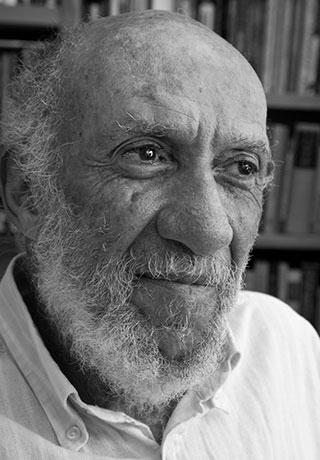

Professor Falk became an adviser to TFF when it was established in 1985.

Related Posts

Tony Robinson October 4, 2026 Violence is easy to recognise when someone is being beaten, shot or killed. It becomes more difficult when nobody is holding a weapon. Poverty, discrimination, exploitation and repression can restrict a human life just as effectively, although they do so in very different ways and with very different consequences. Simply adding more categories to an ever-growing list of forms of violence does not really solve the problem. The more interesting question is what all these different situations have in common and why it makes sense to describe them using the same word. Human beings do not simply react to what happens around them. They remember the past, imagine things that do not yet exist, make plans and undertake projects. Workers organise because they imagine different working conditions; people migrate because they imagine another life somewhere else; social movements emerge because people refuse to accept the...
It’s a matter of principles, courage, vision and pulling together – while the militarist world is falling apart… Peter Langille October 3, 2026 “Here, then, is the problem which we present to you, stark and dreadful and inescapable: Shall we put an end to the human race; or shall mankind renounce war?”The Bertrand Russell—Albert Einstein Manifesto, July 9, 1955 ⁕ The forecast for what’s ahead is worrisome. The sharp rise in armed conflicts over the past three years is adding to what was already the highest level in over seventy years. Genocides, which should be prevented are supported. A shared climate emergency that jeopardises survival is ignored. Diverse polls now suggest that people are war-weary, worried and interested in a more effective United Nations. And, there are viable policy options for a more secure world! Yet governments are doubling-down, betting on more war and investing heavily. If current trends persist,...
Johan Galtung 1930-2024October 2015 Published here on October 3, 2026 Let us focus on Civilization for conflict analysis and remedies. Major forms of disorder use violence; war is state organized violence. The most belligerent states are the United States of America and Israel, both with civilization roots. National Evangelism, the US Protestant Christian civilization– more national than evangelical–justifies US warfare as exceptionalism of a people chosen by God, with a manifest destiny to run the world. Orthodox Judaism justifies Israeli warfare to conquer and expand from Nile to Euphrates as a religious right and duty to the Eternal One. The third most belligerent country, the UK, no longer believes it is God-chosen but chosen by the USA; not quite the same but something. But the root cause of global disorder lies in the Occident–with Islam–seeing itself as the single, universal civilization valid for all at all times, all others being...

Recent Articles

Tony Robinson October 4, 2026 Violence is easy to recognise when someone is being beaten, shot or killed. It becomes more difficult when nobody is holding a weapon. Poverty, discrimination, exploitation and repression can restrict a human life just as effectively, although they do so in very different ways and with very different consequences. Simply adding more categories to an ever-growing list of forms of violence does not really solve the problem. The more interesting question is what all these different situations have in common and why it makes sense to describe them using the same word. Human beings do not simply react to what happens around them. They remember the past, imagine things that do not yet exist, make plans and undertake projects. Workers organise because they imagine different working conditions; people migrate because they imagine another life somewhere else; social movements emerge because people refuse to accept the...
It’s a matter of principles, courage, vision and pulling together – while the militarist world is falling apart… Peter Langille October 3, 2026 “Here, then, is the problem which we present to you, stark and dreadful and inescapable: Shall we put an end to the human race; or shall mankind renounce war?”The Bertrand Russell—Albert Einstein Manifesto, July 9, 1955 ⁕ The forecast for what’s ahead is worrisome. The sharp rise in armed conflicts over the past three years is adding to what was already the highest level in over seventy years. Genocides, which should be prevented are supported. A shared climate emergency that jeopardises survival is ignored. Diverse polls now suggest that people are war-weary, worried and interested in a more effective United Nations. And, there are viable policy options for a more secure world! Yet governments are doubling-down, betting on more war and investing heavily. If current trends persist,...
Johan Galtung 1930-2024October 2015 Published here on October 3, 2026 Let us focus on Civilization for conflict analysis and remedies. Major forms of disorder use violence; war is state organized violence. The most belligerent states are the United States of America and Israel, both with civilization roots. National Evangelism, the US Protestant Christian civilization– more national than evangelical–justifies US warfare as exceptionalism of a people chosen by God, with a manifest destiny to run the world. Orthodox Judaism justifies Israeli warfare to conquer and expand from Nile to Euphrates as a religious right and duty to the Eternal One. The third most belligerent country, the UK, no longer believes it is God-chosen but chosen by the USA; not quite the same but something. But the root cause of global disorder lies in the Occident–with Islam–seeing itself as the single, universal civilization valid for all at all times, all others being...

TFF on Substack

Discover and subscribe to more peace materials on TFF Substack

Most Popular

Tony Robinson October 4, 2026 Violence is easy to recognise when someone is being beaten, shot or killed. It becomes more difficult when nobody is holding a weapon. Poverty, discrimination, exploitation and repression can restrict a human life just as effectively, although they do so in very different ways and with very different consequences. Simply adding more categories to an ever-growing list of forms of violence does not really solve the problem. The more interesting question is what all these different situations have in common and why it makes sense to describe them using the same word. Human beings do not simply react to what happens around them. They remember the past, imagine things that do not yet exist, make plans and undertake projects. Workers organise because they imagine different working conditions; people migrate because they imagine another life somewhere else; social movements emerge because people refuse to accept the...
It’s a matter of principles, courage, vision and pulling together – while the militarist world is falling apart… Peter Langille October 3, 2026 “Here, then, is the problem which we present to you, stark and dreadful and inescapable: Shall we put an end to the human race; or shall mankind renounce war?”The Bertrand Russell—Albert Einstein Manifesto, July 9, 1955 ⁕ The forecast for what’s ahead is worrisome. The sharp rise in armed conflicts over the past three years is adding to what was already the highest level in over seventy years. Genocides, which should be prevented are supported. A shared climate emergency that jeopardises survival is ignored. Diverse polls now suggest that people are war-weary, worried and interested in a more effective United Nations. And, there are viable policy options for a more secure world! Yet governments are doubling-down, betting on more war and investing heavily. If current trends persist,...
Johan Galtung 1930-2024October 2015 Published here on October 3, 2026 Let us focus on Civilization for conflict analysis and remedies. Major forms of disorder use violence; war is state organized violence. The most belligerent states are the United States of America and Israel, both with civilization roots. National Evangelism, the US Protestant Christian civilization– more national than evangelical–justifies US warfare as exceptionalism of a people chosen by God, with a manifest destiny to run the world. Orthodox Judaism justifies Israeli warfare to conquer and expand from Nile to Euphrates as a religious right and duty to the Eternal One. The third most belligerent country, the UK, no longer believes it is God-chosen but chosen by the USA; not quite the same but something. But the root cause of global disorder lies in the Occident–with Islam–seeing itself as the single, universal civilization valid for all at all times, all others being...
Read More
Living-Peace-Sign-Budapest-copy
Tony Robinson October 4, 2026 Violence is easy to recognise when someone is being beaten, shot or killed. It becomes more difficult when nobody is holding a weapon. Poverty, discrimination, exploitation and repression can restrict a human life just as effectively, although they do so in very different ways and with very different consequences. Simply adding more categories to an ever-growing list of forms of violence does not really solve the problem. The more interesting question is what all these different situations have in common and why it makes sense to describe them using the same word. Human beings do not simply react to what happens around them. They remember the past, imagine things that do not yet exist, make plans and undertake projects. Workers organise because they imagine different working conditions; people migrate because they imagine another life somewhere else; social movements emerge because people refuse to accept the...
b54a1f10-8c65-4f0b-9dd5-4abc0a7d04cc_2659x2659
It’s a matter of principles, courage, vision and pulling together – while the militarist world is falling apart… Peter Langille October 3, 2026 “Here, then, is the problem which we present to you, stark and dreadful and inescapable: Shall we put an end to the human race; or shall mankind renounce war?”The Bertrand Russell—Albert Einstein Manifesto, July 9, 1955 ⁕ The forecast for what’s ahead is worrisome. The sharp rise in armed conflicts over the past three years is adding to what was already the highest level in over seventy years. Genocides, which should be prevented are supported. A shared climate emergency that jeopardises survival is ignored. Diverse polls now suggest that people are war-weary, worried and interested in a more effective United Nations. And, there are viable policy options for a more secure world! Yet governments are doubling-down, betting on more war and investing heavily. If current trends persist,...
010
Johan Galtung 1930-2024October 2015 Published here on October 3, 2026 Let us focus on Civilization for conflict analysis and remedies. Major forms of disorder use violence; war is state organized violence. The most belligerent states are the United States of America and Israel, both with civilization roots. National Evangelism, the US Protestant Christian civilization– more national than evangelical–justifies US warfare as exceptionalism of a people chosen by God, with a manifest destiny to run the world. Orthodox Judaism justifies Israeli warfare to conquer and expand from Nile to Euphrates as a religious right and duty to the Eternal One. The third most belligerent country, the UK, no longer believes it is God-chosen but chosen by the USA; not quite the same but something. But the root cause of global disorder lies in the Occident–with Islam–seeing itself as the single, universal civilization valid for all at all times, all others being...
Screenshot 2026-10-02 011738
Jan ObergPhD, director, The Transnational Foundation for Peace and Future Research, TFFLund, Sweden October 2, 2026 This is my full original manuscript. The Chinese Academy of Social Science, CASS, makes two publications out if it. 1. China’s Five-year plan emphasized the capabilities of basic research and original innovation. It is regarded as the goal of the future social development, which, as required, should be significantly enhanced. Can you comment on the importance of original innovation in research and academic study? I believe it is easier to define “original innovation” in the natural sciences than in social sciences. The breaking points of what constitutes something new, or innovative, are not quite as sharp in the latter. But in both fields it is about opening up something that was closed, unseen, unexplored before – making manifest what was earlier latent. Innovations come in many forms and shapes – naming something that was not...
arctic-circle-map
The agreement is catastrophic both because of what it says and what it doesn’t mention. It reduces further the major asset of security policies: Freedom of action. Jan Oberg TFF director September 25, 2026 A couple of hours before the agreement was signed on September 22, 2026, I published the following 13 hypotheses about what it would most likely contain on TFF Substack (in English). I was wrong on only the first point. Contrary to what Trump had written on his Truth Social platform, it does not appear to come into force immediately. In fact, it turned out to be worse than even I had anticipated. After these hypotheses now come a number of reflections in light of what the agreement actually contains, and does not contain, as well as the way in which it has generally been presented by major media outlets and by the public-service broadcaster DR. My...
girl-5894831_1280
Below are TFF-related media mentions, comments, videos and social media posts published elsewhere but not on this homepage. We happen to catch and list only a fraction. Regarding video comments and debates, we recommend that you go to the TFF Video Channel on Substack where many of them are reproduced. Jan Oberg is a contributor to China Daily – 52 million daily clicks – and Global Times, CGTN and CCTV (the national television), China Investment, Xinhua News Agency and several others. Articles and videos on these media very often multiply into countless Chinese (and Western media) that re-post them from these main media. Thanks to The China Academy, his analyses, interviews and comments are frequently posted on YouTube channels such as Thinkers Forum and Wave Media. These videos are often re-posted on Bilibili (China’s YouTube), the China Content Center on TikTok, and on the Chinese edition of TikTok, Douyin.com. This means reaching hundreds of millions of viewers worldwide over a year. While there are too many to catch on all these...




