
Resolving the Syrian chemical weapons crisis: Sunlight and shadows

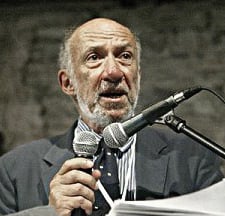
By Richard Falk

The Putin Moment

Not only did Vladimir Putin exhibit a new constructive role for Russia in 21st statecraft, spare Syria and the Middle East from another cycle of escalating violence, but he articulated this Kremlin initiative in the form of a direct appeal to the American people. There were reasons to be particularly surprised by this display of Russian diplomacy: not since Nikita Khrushchev helped save the world from experiencing the catastrophe of nuclear war in the Cuban missile crisis of 1962 by backing down and agreeing to a face-saving formula for both superpowers, had Moscow distinguished itself in any positive way with respect to the conduct of international relations.

For Putin to be so forthcoming, without being belligerent, was particularly impressive in view of Obama’s rather ill-considered cancellation only a few weeks ago of a bilateral meeting with the Russian leader because of Washington’s supposed anger at the refusal of the Russian government to turn the NSA whistleblower, Edward Snowden, over to the United States for criminal prosecution under American espionage laws; and finally, considering that Putin has much blood on his hands given past policies pursued in relation to Chechnya and in the autocratic treatment of domestic political opposition, it was hard to expect anything benevolent during his watch.

And so Putin is emerging as a virtual ‘geopolitical black swan,’ making unanticipated moves of such a major character as to have the potential to transform the character of conflict management and resolution in the 21st century. It should be understood that Putin could have stayed on the sidelines, and benefitted from seeing Obama sink deeper and deeper into the Syrian quagmire, and instead he stepped in with a momentous move that seems to have served the regional and global interest.

Putin has explained in a coherent manner in his opinion piece that was published in the NY Times on September 11th (without invoking the symbolism of the twelfth anniversary of the 9/11 attacks) that his approach to Russian foreign policy relies on two instruments: soft power and economic diplomacy.

He acknowledged American leadership, but only if exercised within a framework of respect for international law and the UN Charter. And he appropriately took issue with Obama’s sentiments expressed a night earlier to the effect that America in its leadership role had a unique entitlement to use force to overcome injustice in situations other than self-defense and even without authorization by the UN Security Council. It was Putin, perhaps disingenuously, who claimed (quite correctly) that such a prerogative was “extremely dangerous.”

He rejected Obama’s pretension that a unilateral discretion with respect to the use of force could be inferred from American exceptionalism. Whether disingenuous or not, the requirement of a Security Council authorization for non-defensive uses of force, while sometimes preventing a peacekeeping response by the UN to certain tragic situations of civil strife and humanitarian crisis overall contributed to finding diplomatically agreed upon solutions for conflict and enabled the UN (unlike the League of Nations) to persist despite severe tensions among its dominant members.

Let us hope that this Putin vituoso exhibition of creative diplomacy prompts his counterpart in the White House to explore more diligently soft power opportunities that will better protect American national interests, while simultaneously serving the global interest in war prevention and the rejection of militarism, and might also have the added benefit of reversing the steady decline of American credibility as a benevolent global leader ever since the end of the Cold War.

Constitutional Balance

Perhaps what might be of even greater importance than averting an ill-considered punitive attack on Syria, is the grounding of recourse to war on the major republican premise of Congressional authorization. There is little doubt that here the efficient cause and anti-hero was David Cameron, who turned to Parliament to support his wish to join with Obama in the attack coalition despite the anti-war mood in British public opinion. Cameron was politically spared by the vote of the House of Commons to withhold authorization.

It is hard to believe that Obama’s decision to seek authorization from the U.S. Congress was not a belated realization that if Britain deferred to its Parliament as an expression of constitutional democracy, it would be unseemly for the United States to go to war without the formal backing of Congress. Of course, the Putin initiative saved Obama from the near certain embarrassment of being turned down by Congress, which would mean that either he would follow in Cameron’s and face savage criticism from his hawkish boosters or insist upon his authority as Commander in Chief to act on his own, a prerogative that seems constitutional dubious to support a bill of impeachment. Beyond this, the War Powers Act that would seem to require some emergency justification for the presidential bypassing of Congress in the context of a proposed military action.

Hopefully, we are witnessing, without an accompanying acknowledgement, the downfall of the ‘imperial presidency’ that got its start during the Vietnam War. The governmental pendulum in the United States may have started to swing back toward the separation of powers and checks and balances, and thus be more in keeping with the original republican hopes of limited executive authority, especially in relation to war making. This renewal of republican constitutionalism, combined with growing populist skepticism about military adventures abroad, might make this Syrian crisis of decision a welcome tipping point, reversing the unhealthy subordination of Congress in war/peace situations during the last half century and anti-democratic disregard of the views of the citizenry.

But it is also possible that the imprudence of the proposed punitive strike against Syria will turn out to be a one-off experience, and that when and if Iran clearly crosses the weapons threshold in its nuclear program, the presidency will retrieve its lost claims to be the unilateral guardian of national, regional, and global interests without feeling that it must await authorization from the Congress and the UN.

Note that Congressional approval, even if in concert with the President, cannot sanitize a use of force that is illegal under international law. It is the state as a whole that is bound by the constraints of international law, and not just the head of state. There are two distinct issues present: the domestic constitutional requirement of collective authorization for recourse to war by the United States; and the complementary international requirement of acting in compliance with international law and the UN Charter (which is itself acknowledged in supremacy clause of the Constitution with respect to validly ratified treaties).

Coercive Diplomacy

Obama/Kerry contend that Syria’s chemical weapons would never have been put under international controls and in an atmosphere of unprecedented international cooperation, but for the credible threats mounted by the U.S. Government. In this regard, the poker style bluff can be said to have worked without any sure proof that the threat would have been carried out in the face of a refusal by Congress to authorize and the public failure to show support for an attack. As matters now seem to be unfolding, assuming that the plans for abolishing the chemical weapons of Syria proceed as agreed, threat diplomacy will be applauded by the Obama administration without any widespread sensitivity to the fact that the international law as embodied in Article 2(4) of the UN Charter prohibits ‘threats’ as well as ‘uses’ of force, although such a prohibition has not been taken seriously as part of the ‘living law’ despite its status as a prime instance of ‘positive law.’ The categorical language of Article 2(4) is unmistakeable: “All Members shall refrain in their international relations from the threat or use of force against the territorial integrity and political independence of any state, or in any other manner inconsistent with the Purposes of the United Nations.”

Syria and its People

In the background of the diplomatic controversy about what to do in response to the large-scale lethal use of sarin gas against the people of Syria on August 21st, was the awareness that such an attack did not even pretend to end the violence in Syria or to produce regime change in Damascus or to change the balance of force in the civil war. From this perspective, it seemed mainly a punitive strike that upheld Obama’s red line credibility, although there was an additional argument set forth that a military strike would have a deterrent impact on any contemplated future recourse to chemical weaponry by the Assad regime and other political actors, assuming that the allegations that the Syrian government order the attack are confirmed and reinforced by the reports of the UN inspection team and other respected sources.

What tends to be given only a secondary glance is the effects of an attack on the Syrian people who have been subject to a harrowing ordeal these past two years that has resulted in over 100,000 deaths, countless wounded, and an estimated 7,000,000, almost one-third of the population, as either internally displaced or forced into overcrowded and under-resourced refugee camps in neighboring countries. Beyond this, the always vulnerable Palestinians have endured Syrian attacks on their refugee camps forcing them to flee once more, to become, quite incredibly, refugees from their refugee arrangements, a largely untold Palestinian tragedy hidden within the larger Syrian tragedy.

There is almost no political will on the outside to do anything to stop either the proxy war being waged by states external to Syria or the internal struggle being waged by a fragmented opposition against a discredited government that has been incredibly cruel to its own citizens and strangely indifferent to the great cultural and religious heritage of their own country. There are even grotesque murmurings in the background of strategic chatter in Western circles, suggesting that the best outcome is not an end to the violence, but its indefinite continuation with an effort to calibrate future arms supplies and humanitarian aid with the principal aim of making sure that neither side can achieve victory.

If this is not an exposure of the raw immorality of strategic discourse at its immoral nadir, I am not sure what would be.

Related Posts

The agreement is catastrophic both because of what it says and what it doesn’t mention. It reduces further the major asset of security policies: Freedom of action. Jan Oberg TFF director September 25, 2026 A couple of hours before the agreement was signed on September 22, 2026, I published the following 13 hypotheses about what it would most likely contain on TFF Substack (in English). I was wrong on only the first point. Contrary to what Trump had written on his Truth Social platform, it does not appear to come into force immediately. In fact, it turned out to be worse than even I had anticipated. After these hypotheses now come a number of reflections in light of what the agreement actually contains, and does not contain, as well as the way in which it has generally been presented by major media outlets and by the public-service broadcaster DR. My...
This is not another geopolitical commentary on the Arctic. It is a visionary peace proposal that can save the region from militarised rivalry and ecological ruin. A blueprint for shared security, sustainable development, and human dignity — benefitting Greenland, the Arctic, and the rest of us. Jan Oberg TFF director Lund, Sweden, February 17, 2026 I. Four Principles for a New Arctic Vision The Arctic is often framed as a cold arena of rivalry — a place where great powers test each other’s resolve. But this worldview is outdated, unimaginative, and ultimately self‑defeating. The Arctic is not a vacuum waiting to be militarised; it is a living region, a climate stabiliser, and a cultural homeland whose future will shape the future of humanity. If we begin from that understanding, a far more rational Arctic order becomes possible — one that is peaceful, cooperative, and centred on the people who actually live there. This vision rests...
Photos © TFF 2000 Read PressInfo 90 “Lift the Sanctions and Bring More Aid to Yugoslavia” See Pictures from Belgrade © TFF 2000 Please reprint, copy, archive, quote or re-post this item, but please retain the source.

Recent Articles

Tony Robinson October 4, 2026 Violence is easy to recognise when someone is being beaten, shot or killed. It becomes more difficult when nobody is holding a weapon. Poverty, discrimination, exploitation and repression can restrict a human life just as effectively, although they do so in very different ways and with very different consequences. Simply adding more categories to an ever-growing list of forms of violence does not really solve the problem. The more interesting question is what all these different situations have in common and why it makes sense to describe them using the same word. Human beings do not simply react to what happens around them. They remember the past, imagine things that do not yet exist, make plans and undertake projects. Workers organise because they imagine different working conditions; people migrate because they imagine another life somewhere else; social movements emerge because people refuse to accept the...
It’s a matter of principles, courage, vision and pulling together – while the militarist world is falling apart… Peter Langille October 3, 2026 “Here, then, is the problem which we present to you, stark and dreadful and inescapable: Shall we put an end to the human race; or shall mankind renounce war?”The Bertrand Russell—Albert Einstein Manifesto, July 9, 1955 ⁕ The forecast for what’s ahead is worrisome. The sharp rise in armed conflicts over the past three years is adding to what was already the highest level in over seventy years. Genocides, which should be prevented are supported. A shared climate emergency that jeopardises survival is ignored. Diverse polls now suggest that people are war-weary, worried and interested in a more effective United Nations. And, there are viable policy options for a more secure world! Yet governments are doubling-down, betting on more war and investing heavily. If current trends persist,...
Johan Galtung 1930-2024October 2015 Published here on October 3, 2026 Let us focus on Civilization for conflict analysis and remedies. Major forms of disorder use violence; war is state organized violence. The most belligerent states are the United States of America and Israel, both with civilization roots. National Evangelism, the US Protestant Christian civilization– more national than evangelical–justifies US warfare as exceptionalism of a people chosen by God, with a manifest destiny to run the world. Orthodox Judaism justifies Israeli warfare to conquer and expand from Nile to Euphrates as a religious right and duty to the Eternal One. The third most belligerent country, the UK, no longer believes it is God-chosen but chosen by the USA; not quite the same but something. But the root cause of global disorder lies in the Occident–with Islam–seeing itself as the single, universal civilization valid for all at all times, all others being...

TFF on Substack

Discover and subscribe to more peace materials on TFF Substack

Most Popular

Tony Robinson October 4, 2026 Violence is easy to recognise when someone is being beaten, shot or killed. It becomes more difficult when nobody is holding a weapon. Poverty, discrimination, exploitation and repression can restrict a human life just as effectively, although they do so in very different ways and with very different consequences. Simply adding more categories to an ever-growing list of forms of violence does not really solve the problem. The more interesting question is what all these different situations have in common and why it makes sense to describe them using the same word. Human beings do not simply react to what happens around them. They remember the past, imagine things that do not yet exist, make plans and undertake projects. Workers organise because they imagine different working conditions; people migrate because they imagine another life somewhere else; social movements emerge because people refuse to accept the...
It’s a matter of principles, courage, vision and pulling together – while the militarist world is falling apart… Peter Langille October 3, 2026 “Here, then, is the problem which we present to you, stark and dreadful and inescapable: Shall we put an end to the human race; or shall mankind renounce war?”The Bertrand Russell—Albert Einstein Manifesto, July 9, 1955 ⁕ The forecast for what’s ahead is worrisome. The sharp rise in armed conflicts over the past three years is adding to what was already the highest level in over seventy years. Genocides, which should be prevented are supported. A shared climate emergency that jeopardises survival is ignored. Diverse polls now suggest that people are war-weary, worried and interested in a more effective United Nations. And, there are viable policy options for a more secure world! Yet governments are doubling-down, betting on more war and investing heavily. If current trends persist,...
Johan Galtung 1930-2024October 2015 Published here on October 3, 2026 Let us focus on Civilization for conflict analysis and remedies. Major forms of disorder use violence; war is state organized violence. The most belligerent states are the United States of America and Israel, both with civilization roots. National Evangelism, the US Protestant Christian civilization– more national than evangelical–justifies US warfare as exceptionalism of a people chosen by God, with a manifest destiny to run the world. Orthodox Judaism justifies Israeli warfare to conquer and expand from Nile to Euphrates as a religious right and duty to the Eternal One. The third most belligerent country, the UK, no longer believes it is God-chosen but chosen by the USA; not quite the same but something. But the root cause of global disorder lies in the Occident–with Islam–seeing itself as the single, universal civilization valid for all at all times, all others being...
Read More
Living-Peace-Sign-Budapest-copy
Tony Robinson October 4, 2026 Violence is easy to recognise when someone is being beaten, shot or killed. It becomes more difficult when nobody is holding a weapon. Poverty, discrimination, exploitation and repression can restrict a human life just as effectively, although they do so in very different ways and with very different consequences. Simply adding more categories to an ever-growing list of forms of violence does not really solve the problem. The more interesting question is what all these different situations have in common and why it makes sense to describe them using the same word. Human beings do not simply react to what happens around them. They remember the past, imagine things that do not yet exist, make plans and undertake projects. Workers organise because they imagine different working conditions; people migrate because they imagine another life somewhere else; social movements emerge because people refuse to accept the...
b54a1f10-8c65-4f0b-9dd5-4abc0a7d04cc_2659x2659
It’s a matter of principles, courage, vision and pulling together – while the militarist world is falling apart… Peter Langille October 3, 2026 “Here, then, is the problem which we present to you, stark and dreadful and inescapable: Shall we put an end to the human race; or shall mankind renounce war?”The Bertrand Russell—Albert Einstein Manifesto, July 9, 1955 ⁕ The forecast for what’s ahead is worrisome. The sharp rise in armed conflicts over the past three years is adding to what was already the highest level in over seventy years. Genocides, which should be prevented are supported. A shared climate emergency that jeopardises survival is ignored. Diverse polls now suggest that people are war-weary, worried and interested in a more effective United Nations. And, there are viable policy options for a more secure world! Yet governments are doubling-down, betting on more war and investing heavily. If current trends persist,...
010
Johan Galtung 1930-2024October 2015 Published here on October 3, 2026 Let us focus on Civilization for conflict analysis and remedies. Major forms of disorder use violence; war is state organized violence. The most belligerent states are the United States of America and Israel, both with civilization roots. National Evangelism, the US Protestant Christian civilization– more national than evangelical–justifies US warfare as exceptionalism of a people chosen by God, with a manifest destiny to run the world. Orthodox Judaism justifies Israeli warfare to conquer and expand from Nile to Euphrates as a religious right and duty to the Eternal One. The third most belligerent country, the UK, no longer believes it is God-chosen but chosen by the USA; not quite the same but something. But the root cause of global disorder lies in the Occident–with Islam–seeing itself as the single, universal civilization valid for all at all times, all others being...
Screenshot 2026-10-02 011738
Jan ObergPhD, director, The Transnational Foundation for Peace and Future Research, TFFLund, Sweden October 2, 2026 This is my full original manuscript. The Chinese Academy of Social Science, CASS, makes two publications out if it. 1. China’s Five-year plan emphasized the capabilities of basic research and original innovation. It is regarded as the goal of the future social development, which, as required, should be significantly enhanced. Can you comment on the importance of original innovation in research and academic study? I believe it is easier to define “original innovation” in the natural sciences than in social sciences. The breaking points of what constitutes something new, or innovative, are not quite as sharp in the latter. But in both fields it is about opening up something that was closed, unseen, unexplored before – making manifest what was earlier latent. Innovations come in many forms and shapes – naming something that was not...
arctic-circle-map
The agreement is catastrophic both because of what it says and what it doesn’t mention. It reduces further the major asset of security policies: Freedom of action. Jan Oberg TFF director September 25, 2026 A couple of hours before the agreement was signed on September 22, 2026, I published the following 13 hypotheses about what it would most likely contain on TFF Substack (in English). I was wrong on only the first point. Contrary to what Trump had written on his Truth Social platform, it does not appear to come into force immediately. In fact, it turned out to be worse than even I had anticipated. After these hypotheses now come a number of reflections in light of what the agreement actually contains, and does not contain, as well as the way in which it has generally been presented by major media outlets and by the public-service broadcaster DR. My...
girl-5894831_1280
Below are TFF-related media mentions, comments, videos and social media posts published elsewhere but not on this homepage. We happen to catch and list only a fraction. Regarding video comments and debates, we recommend that you go to the TFF Video Channel on Substack where many of them are reproduced. Jan Oberg is a contributor to China Daily – 52 million daily clicks – and Global Times, CGTN and CCTV (the national television), China Investment, Xinhua News Agency and several others. Articles and videos on these media very often multiply into countless Chinese (and Western media) that re-post them from these main media. Thanks to The China Academy, his analyses, interviews and comments are frequently posted on YouTube channels such as Thinkers Forum and Wave Media. These videos are often re-posted on Bilibili (China’s YouTube), the China Content Center on TikTok, and on the Chinese edition of TikTok, Douyin.com. This means reaching hundreds of millions of viewers worldwide over a year. While there are too many to catch on all these...