PressInfo #81 – Questions to Clinton in Kosovo

“Given that democratic countries have free and independent media, President Clinton’s visit to Kosovo on November 23 would be a golden opportunity to take stock of the US-led Western policies to bring peace to the region. Here is a selection of questions with some media advisory. In other words, if I imagine I had been granted an interview as a journalist, this is what I would focus on,” says TFF director Jan Oberg.

(1) Mr. President, US warplanes bombed Yugoslavia and the Kosovo province with you as the Commander-in-Chief of US forces. Does it worry you that the whole campaign was justified and conducted on the basis of what has turned out to be grossly mistaken or falsified information about a genocide planned by Belgrade?

[During the campaign, President Clinton, Secretary Cohen and Secretary Albright are on record with figures of between 10,000 and 100,000 missing and probably killed in consequence of the alleged plan by Milosevic, “Operation Horseshoe.” However, the Hague Tribunal has recently revealed that, so far, 2,108 bodies have been identified — of more than one ethnicity and dead from different causes; in short, not all Albanians massacred by Serbs. From a human point of view, of course, this is a great relief. But it raises serious issues as to the information and intelligence basis on which decisions with far-reaching consequences are made. And it begs the question: what is world public opinion informed about and what not — and who produces information for what purposes?]

(2) What are your thoughts on the fact that NATO, with your country in the lead, killed at least 2,000 innocent civilians in Serbia due to stray missiles and bombs? You have apologised to the Chinese people for bombing their embassy. Did you consider the possibility of personally apologising to the relatives or, for instance, paying some form of compensation? And how do you feel about the indictment of you, your Secretaries and all other NATO leaders to the Hague War Crimes Tribunal?

[Click here for the indictment of NATO leaders.
Click here for the indictment of Slobodan Milosevic for, among other things, being responsible for the death of more than 300 people during the Kosovo war.]

(3) Mr. President, the American Camp Bondsteel here, at which you celebrate Thanksgiving Day with your soldiers, is said to be the largest US military facility built from the ground up since Vietnam. I have three questions about it:
a) What long-term strategic aims does this huge investment serve?
b) How is it possible to build such a facility on territory which, according to concurrent legal judgment — and all UN resolutions — belongs to the sovereign, recognised state of Yugoslavia whose integrity you are also obliged to respect?
c) Are you not sending a very strong signal that Kosovo’s future status is somehow already settled by fait accompli?

[Camp Bondsteel is described in a November 22 Christian Science Monitor article. The base is gigantic — 775 acres, costs US $36.6 million, has every convenience and facility needed for its 6,300 US soldiers, including two chapels and a mobile Burger King. The way it is constructed is said to be indicative of a multi-year engagement and wider-than-Kosovo aims.]

(4) It is hardly wrong to say that the US was sympathetic to the plight of the Albanians and cultivated the leaders of the Kosovo Liberation Army (KLA/UCK), such as the present self-appointed prime minister of this province, Mr. Hacim Thaci. Are you disappointed by the fact that these allies of yours — and I think we can call them that since KLA and NATO helped each other — are also responsible for an ethnic cleansing policy that has driven 234,000 legitimate non-Albanian citizens out of the province, according to UNHCR figures? If so, what will you do during your visit to put enough pressure on Hacim Thaci and his military and civilian colleagues to ensure that you can say what you said about the Albanian refugees in Macedonia and Kosovo: that you are going to bring them back to a safe environment?

(5) A follow-up from a different angle: according to the UN mandate under which KFOR, UNMIK and OSCE operate, Kosovo’s citizens and their multi-ethnic composition should be protected. However, the 234,000 have left under the very eyes of these missions present on the ground. I am sure that you, as the single most responsible leader, regret this failure, given that this is the biggest and most heavily armed peacekeeping mission ever — and the ultimate test of NATO in that role. In what ways do America and its NATO and UN allies intend to change the structure and function of the entire Kosovo operation before it decays beyond repair?

(6) Mr. President, in every speech you have held — also on this tour — you emphasise human rights, humanitarian concerns and freedom. There are now almost 1 million refugees in Serbia — in fact, more than there were Kosovo-Albanian refugees in Macedonia and Albania. They have fled from Croatia, Bosnia and now Kosovo, driven away for exactly the same reasons you repeatedly cited about the Albanian victims: “not because of anything they have done, but because of who they are.” Yugoslavia and Serbia are in deep crisis because of political blunders and economic mismanagement, that is true, but also because of NATO’s destruction and many years of sanctions and exclusion from the international community. A humanitarian catastrophe cannot be excluded this winter. How do you reconcile your personal commitment to humanism and moral leadership with actively preventing that these human beings are helped? Do you see any historical evidence that this is the way to overthrow authoritarian leaders?

(7) In your speeches before the bombing campaign, you emphasised that a major goal — apart from stopping a genocide — was to create stability in the Balkan region. Quite a few diplomats and security experts would agree that neither Albania, Macedonia, Serbia, Montenegro, nor Bosnia and Croatia are more secure now than before March 24 — rather, less so. Many would be grateful for your guidance as to where and when the Balkan situation has improved in any proportion to the political, moral, military and economic investment we have made here.

(8) Do you intend to compensate, in one way or another, Macedonia and Albania for America’s/NATO’s use of their territory and facilities — in more substantial terms than “keeping the door open” for much later NATO membership?

(9) You have stated time and again, Mr. President, that you are proud that America intervened both in Bosnia and here. It did so forcefully and with determination — so much so that EU countries are now starting a “turbo-militarization” with aims such as military-industrial and political integration, common policies, EU-WEU fusion — in short, big steps toward a European army. The reason? They think they looked timid compared with America and want to be able to fix problems in their own backyard. At the same time, the United States has arguably antagonised China and Russia — NATO expansion, Ballistic Missile Defence plans, Test Ban policy, bombing of Yugoslavia, failed economic aid, the oil pipeline agreement signed in Istanbul, Georgia’s future NATO membership, the “noise” about Chechnya — the list is long. Do you sometimes feel that the US has taken the lead to such an extent that it has antagonised its European friends and that this could backfire — that they are now turning away from the Atlantic dimension? Even Tony Blair’s UK seems to want Europe to become more of a superpower and less dependent on the US.

(10) Finally — and you have been extremely generous with your time — I would like to ask a question that has only indirect bearing on the Balkans. Wherever you go you promote human rights, freedom and democracy. I am sure that the right to privacy and freedom of speech are central in your thinking. Therefore, how come the US has developed technology that permits it to listen to and automatically register not only e-mail and fax traffic worldwide but also — now — the human voice as we speak on phones with each other? It is done by your National Security Agency, but — forgive what may sound naive — does the United States have to feel so insecure? I relate this also to the fact that US defence spending for the year 2000 will be more than three times greater than the combined military spending of China, Russia and the so-called rogue states Iran, Iraq, Syria, Libya, North Korea and Cuba.

[The tapping of communication was reported recently by The Independent. The military expenditure figures were reported by The Christian Science Monitor.]

“Well, only carefully chosen people get the opportunity to ask the President of the United States questions. But we can ask ourselves questions and ponder answers such as: why on earth are questions like these not asked by those who do get the chance? And why are they not analysed and debated much more in our local and global media?

Philip Knightly has stated that war’s first victim is truth. Peace researcher Johan Galtung maintains that complex understanding is its second victim. It seems to me that war’s third victim is self-criticism — and thus we prevent ourselves from learning about the real motives behind wars as well as the alternatives to war,” ends TFF’s director.

© TFF 1999

You are welcome to reprint, copy, archive, quote or re-post this item, but please retain the source.
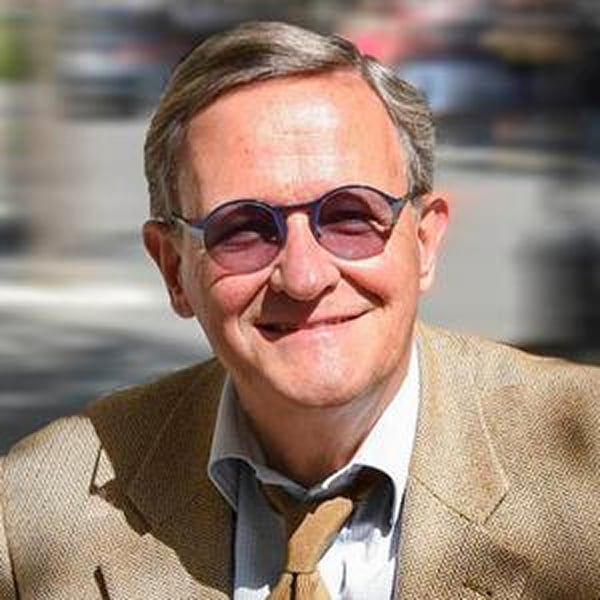

Peace & future researcher + ‌Art Photographer

Related Posts

The agreement is catastrophic both because of what it says and what it doesn’t mention. It reduces further the major asset of security policies: Freedom of action. Jan Oberg TFF director September 25, 2026 A couple of hours before the agreement was signed on September 22, 2026, I published the following 13 hypotheses about what it would most likely contain on TFF Substack (in English). I was wrong on only the first point. Contrary to what Trump had written on his Truth Social platform, it does not appear to come into force immediately. In fact, it turned out to be worse than even I had anticipated. After these hypotheses now come a number of reflections in light of what the agreement actually contains, and does not contain, as well as the way in which it has generally been presented by major media outlets and by the public-service broadcaster DR. My...
Below are TFF-related media mentions, comments, videos and social media posts published elsewhere but not on this homepage. We happen to catch and list only a fraction. Regarding video comments and debates, we recommend that you go to the TFF Video Channel on Substack where many of them are reproduced. Jan Oberg is a contributor to China Daily – 52 million daily clicks – and Global Times, CGTN and CCTV (the national television), China Investment, Xinhua News Agency and several others. Articles and videos on these media very often multiply into countless Chinese (and Western media) that re-post them from these main media. Thanks to The China Academy, his analyses, interviews and comments are frequently posted on YouTube channels such as Thinkers Forum and Wave Media. These videos are often re-posted on Bilibili (China’s YouTube), the China Content Center on TikTok, and on the Chinese edition of TikTok, Douyin.com. This means reaching hundreds of millions of viewers worldwide over a year. While there are too many to catch on all these...
Jan Oberg May 15, 2026 Go to this Fox News page and scroll the whole way down: President Donald Trump tells the world that his meeting with President Xi Jinping yielded a lot of very concrete political and economic results – of course, only where the Chinese side, according to him, agreed with him. He does not mention the Taiwan issue, but Secretary of State, Marco Rubio, says that it did not feature prominently in their talks and that the US policy on Taiwan has not changed. Then go to China Daily – or Global Times – and you will see that for the Chinese it is framework, principles, structure of cooperation etc. that matters – all embedded in the overall idea of “constructive bilateral relationship of strategic stability.” Nowhere is any concrete agreement or deal – all that Trump refers to – mentioned. At the general level, this gives you insights into the very different social...

Recent Articles

Tony Robinson October 4, 2026 Violence is easy to recognise when someone is being beaten, shot or killed. It becomes more difficult when nobody is holding a weapon. Poverty, discrimination, exploitation and repression can restrict a human life just as effectively, although they do so in very different ways and with very different consequences. Simply adding more categories to an ever-growing list of forms of violence does not really solve the problem. The more interesting question is what all these different situations have in common and why it makes sense to describe them using the same word. Human beings do not simply react to what happens around them. They remember the past, imagine things that do not yet exist, make plans and undertake projects. Workers organise because they imagine different working conditions; people migrate because they imagine another life somewhere else; social movements emerge because people refuse to accept the...
It’s a matter of principles, courage, vision and pulling together – while the militarist world is falling apart… Peter Langille October 3, 2026 “Here, then, is the problem which we present to you, stark and dreadful and inescapable: Shall we put an end to the human race; or shall mankind renounce war?”The Bertrand Russell—Albert Einstein Manifesto, July 9, 1955 ⁕ The forecast for what’s ahead is worrisome. The sharp rise in armed conflicts over the past three years is adding to what was already the highest level in over seventy years. Genocides, which should be prevented are supported. A shared climate emergency that jeopardises survival is ignored. Diverse polls now suggest that people are war-weary, worried and interested in a more effective United Nations. And, there are viable policy options for a more secure world! Yet governments are doubling-down, betting on more war and investing heavily. If current trends persist,...
Johan Galtung 1930-2024October 2015 Published here on October 3, 2026 Let us focus on Civilization for conflict analysis and remedies. Major forms of disorder use violence; war is state organized violence. The most belligerent states are the United States of America and Israel, both with civilization roots. National Evangelism, the US Protestant Christian civilization– more national than evangelical–justifies US warfare as exceptionalism of a people chosen by God, with a manifest destiny to run the world. Orthodox Judaism justifies Israeli warfare to conquer and expand from Nile to Euphrates as a religious right and duty to the Eternal One. The third most belligerent country, the UK, no longer believes it is God-chosen but chosen by the USA; not quite the same but something. But the root cause of global disorder lies in the Occident–with Islam–seeing itself as the single, universal civilization valid for all at all times, all others being...

TFF on Substack

Discover and subscribe to more peace materials on TFF Substack

Most Popular

Tony Robinson October 4, 2026 Violence is easy to recognise when someone is being beaten, shot or killed. It becomes more difficult when nobody is holding a weapon. Poverty, discrimination, exploitation and repression can restrict a human life just as effectively, although they do so in very different ways and with very different consequences. Simply adding more categories to an ever-growing list of forms of violence does not really solve the problem. The more interesting question is what all these different situations have in common and why it makes sense to describe them using the same word. Human beings do not simply react to what happens around them. They remember the past, imagine things that do not yet exist, make plans and undertake projects. Workers organise because they imagine different working conditions; people migrate because they imagine another life somewhere else; social movements emerge because people refuse to accept the...
It’s a matter of principles, courage, vision and pulling together – while the militarist world is falling apart… Peter Langille October 3, 2026 “Here, then, is the problem which we present to you, stark and dreadful and inescapable: Shall we put an end to the human race; or shall mankind renounce war?”The Bertrand Russell—Albert Einstein Manifesto, July 9, 1955 ⁕ The forecast for what’s ahead is worrisome. The sharp rise in armed conflicts over the past three years is adding to what was already the highest level in over seventy years. Genocides, which should be prevented are supported. A shared climate emergency that jeopardises survival is ignored. Diverse polls now suggest that people are war-weary, worried and interested in a more effective United Nations. And, there are viable policy options for a more secure world! Yet governments are doubling-down, betting on more war and investing heavily. If current trends persist,...
Johan Galtung 1930-2024October 2015 Published here on October 3, 2026 Let us focus on Civilization for conflict analysis and remedies. Major forms of disorder use violence; war is state organized violence. The most belligerent states are the United States of America and Israel, both with civilization roots. National Evangelism, the US Protestant Christian civilization– more national than evangelical–justifies US warfare as exceptionalism of a people chosen by God, with a manifest destiny to run the world. Orthodox Judaism justifies Israeli warfare to conquer and expand from Nile to Euphrates as a religious right and duty to the Eternal One. The third most belligerent country, the UK, no longer believes it is God-chosen but chosen by the USA; not quite the same but something. But the root cause of global disorder lies in the Occident–with Islam–seeing itself as the single, universal civilization valid for all at all times, all others being...
Read More
Living-Peace-Sign-Budapest-copy
Tony Robinson October 4, 2026 Violence is easy to recognise when someone is being beaten, shot or killed. It becomes more difficult when nobody is holding a weapon. Poverty, discrimination, exploitation and repression can restrict a human life just as effectively, although they do so in very different ways and with very different consequences. Simply adding more categories to an ever-growing list of forms of violence does not really solve the problem. The more interesting question is what all these different situations have in common and why it makes sense to describe them using the same word. Human beings do not simply react to what happens around them. They remember the past, imagine things that do not yet exist, make plans and undertake projects. Workers organise because they imagine different working conditions; people migrate because they imagine another life somewhere else; social movements emerge because people refuse to accept the...
b54a1f10-8c65-4f0b-9dd5-4abc0a7d04cc_2659x2659
It’s a matter of principles, courage, vision and pulling together – while the militarist world is falling apart… Peter Langille October 3, 2026 “Here, then, is the problem which we present to you, stark and dreadful and inescapable: Shall we put an end to the human race; or shall mankind renounce war?”The Bertrand Russell—Albert Einstein Manifesto, July 9, 1955 ⁕ The forecast for what’s ahead is worrisome. The sharp rise in armed conflicts over the past three years is adding to what was already the highest level in over seventy years. Genocides, which should be prevented are supported. A shared climate emergency that jeopardises survival is ignored. Diverse polls now suggest that people are war-weary, worried and interested in a more effective United Nations. And, there are viable policy options for a more secure world! Yet governments are doubling-down, betting on more war and investing heavily. If current trends persist,...
010
Johan Galtung 1930-2024October 2015 Published here on October 3, 2026 Let us focus on Civilization for conflict analysis and remedies. Major forms of disorder use violence; war is state organized violence. The most belligerent states are the United States of America and Israel, both with civilization roots. National Evangelism, the US Protestant Christian civilization– more national than evangelical–justifies US warfare as exceptionalism of a people chosen by God, with a manifest destiny to run the world. Orthodox Judaism justifies Israeli warfare to conquer and expand from Nile to Euphrates as a religious right and duty to the Eternal One. The third most belligerent country, the UK, no longer believes it is God-chosen but chosen by the USA; not quite the same but something. But the root cause of global disorder lies in the Occident–with Islam–seeing itself as the single, universal civilization valid for all at all times, all others being...
Screenshot 2026-10-02 011738
Jan ObergPhD, director, The Transnational Foundation for Peace and Future Research, TFFLund, Sweden October 2, 2026 This is my full original manuscript. The Chinese Academy of Social Science, CASS, makes two publications out if it. 1. China’s Five-year plan emphasized the capabilities of basic research and original innovation. It is regarded as the goal of the future social development, which, as required, should be significantly enhanced. Can you comment on the importance of original innovation in research and academic study? I believe it is easier to define “original innovation” in the natural sciences than in social sciences. The breaking points of what constitutes something new, or innovative, are not quite as sharp in the latter. But in both fields it is about opening up something that was closed, unseen, unexplored before – making manifest what was earlier latent. Innovations come in many forms and shapes – naming something that was not...
arctic-circle-map
The agreement is catastrophic both because of what it says and what it doesn’t mention. It reduces further the major asset of security policies: Freedom of action. Jan Oberg TFF director September 25, 2026 A couple of hours before the agreement was signed on September 22, 2026, I published the following 13 hypotheses about what it would most likely contain on TFF Substack (in English). I was wrong on only the first point. Contrary to what Trump had written on his Truth Social platform, it does not appear to come into force immediately. In fact, it turned out to be worse than even I had anticipated. After these hypotheses now come a number of reflections in light of what the agreement actually contains, and does not contain, as well as the way in which it has generally been presented by major media outlets and by the public-service broadcaster DR. My...
girl-5894831_1280
Below are TFF-related media mentions, comments, videos and social media posts published elsewhere but not on this homepage. We happen to catch and list only a fraction. Regarding video comments and debates, we recommend that you go to the TFF Video Channel on Substack where many of them are reproduced. Jan Oberg is a contributor to China Daily – 52 million daily clicks – and Global Times, CGTN and CCTV (the national television), China Investment, Xinhua News Agency and several others. Articles and videos on these media very often multiply into countless Chinese (and Western media) that re-post them from these main media. Thanks to The China Academy, his analyses, interviews and comments are frequently posted on YouTube channels such as Thinkers Forum and Wave Media. These videos are often re-posted on Bilibili (China’s YouTube), the China Content Center on TikTok, and on the Chinese edition of TikTok, Douyin.com. This means reaching hundreds of millions of viewers worldwide over a year. While there are too many to catch on all these...