Here’s a joke, borrowed from a Russian website. The Russians always have had a dry humour. “Trump, Merkel, May and Macon – Putin is heartily sick of them all. They keep calling and calling, so he switches his phone to voicemail. His message says; “Hello, you have called Russian President Vladimir Putin. Unfortunately I cannot take your call at the moment. If you want to surrender, press 1. If you want to threaten sanctions, please press 2. If you want to discuss the situation in Ukraine, press 3. All buttons other than 1 activate our Topol-M intercontinental missiles. Have a nice day!”

After you’ve laughed remember it does not reflect current Russian attitudes.

Most people in Russia are not seized with the vigorous animosity towards the West as they were in Soviet times. And most people in Russia support Putin. He may have lost a sizeable slice of his supporters for now because he pushed through last year a necessary pension reform and because the economy has gone through a bad patch, but he’s still riding reasonably high in the polls.

Most of those who aren’t happy with him are largely passive. Those who are liberally minded who do not like his autocracy are maybe 15% of the population. Those who are active dissidents on the street or the hustings are less than 5%.

Putin mostly tolerates them, knowing their influence is modest if not slight.

Sometimes at the rallies the police are gentle with protestors, sometimes rough, sometimes protest leaders get a 14-day sentence.

Occasionally, Putin appears to turn half a blind eye to a political assassination of his opponents, usually carried out by Chechens, who after two barbaric wars against Russia now seem to be over-enthusiastic Putin supporters since he heaps largesse on their region.

According to Memorial, the Russian civil rights organization, in May 2017 there were 117 political prisoners and prisoners of conscience. Amnesty International has made a similar count. Putin’s Russia certainly doesn’t compare with the days of the Gulag, but it compares unfavorably with the last years of Gorbachev and with the era of Yeltsin.

If you want to find what is going on, there are two newspapers, a magazine, an on-line magazine, a nation-wide radio station and two nation-wide television stations plus some local stations that are independently minded. The Internet, unlike in China, is freely available, as are foreign broadcasters such as the BBC.

Films, theatre, art and literature are uncensored, although sometimes the Orthodox Church and its supporters get angry about content and demand the offending item be banned. (Remember the pop group, Pussy Riot, singing in the cathedral or the sensual, erotic, ballet, performed at the Bolshoi, on the life of the great male dancer, Nureyev?) It usually isn’t, although in the case of the Pussy Rioters they went to jail, a rare case.

If you are content with your ignorance you can relax in front of your TV after a hard day’s work and watch the government’s popular channels, 1 and 2 and be gently entertained and brainwashed.

Perhaps, unlike China, state censorship and self-censorship is about to lessen. Recently an investigative journalist who had irritated the police with his probes into corruption was arrested and charged with a crime, selling drugs, that could have given him a long prison sentence.

Three important financial papers rallied to his defense, posting on their front page the same slogan “We are Ivan Gulanov”. Even on state-controlled TV there were some critical words. Soon after he was freed and later two high-up police officers were sacked.

In Russia these days you can sit in a restaurant or bar and say what you want to whoever will listen to you. You are probably much better paid than your parents. Health and schooling are better. Infant mortality and maternal death rates are down especially in the west of this huge country which straddles six time zones – social indicators in Siberia, the Artic, the south and the east bring the overall Russian averages down.

The people, well educated in Soviet times, are even more so. In science and technology, Russian achievements are world class. Poverty has sharply fallen. The trains, buses, trams and planes are more sophisticated.

NGOs proliferate for all sorts of good causes. All this is in contrast to the economic and social chaos during the time of the democratically elected Boris Yeltsin.

Moreover, in Moscow and St Petersburg and other large cities in the European part of Russia, the sanctions imposed by the West don’t seem to affect day-to-day life that much – maybe they have had to cut their lifestyle by 10% but that is only a small pinch.

The shops and restaurants are full, the people quite well dressed and there are too many cars. Children’s day care from the age of one to seven remains universal in the cities.

Putin’s position was not achieved by the sword or by fiat – power in Russia is co-constructed. It was achieved by the support and emotional commitment of millions of Russians who respond to the central axes of his policies. 

Most Russian people do believe in democracy, and presumably so does Putin, even though in his eyes it is a construct that must at times be constrained. Factions around Putin exist but no one has the public standing to be a credible challenger. Yet he is not omnipotent.

On occasion he complains publically that his orders and wishes are slowed down, diverted, consumed by the bureaucracy or even ignored. 

The Russians are little different from most of us. They want the fruits of capitalism, but not the corruption – and for some, the selfishness – that often goes with it. They want to vote. Quite a few of them demonstrate. Most Russians, if not as happy as the Scandinavians, are reasonably content and enjoy family life. They are attached to their country and their culture.

Confronting Russia on Ukraine or threatening it with more modern types of nuclear weapons will not undermine Putin. We had peace with Russia at the time of George H.W. Bush.

Bill Clinton destroyed it with his mission to expand NATO.

Some bold steps could take us back to the wise, sensible, and full of foresight, days of Bush Senior.

When will we get a US president and European leaders prepared to step out and wind the clock back, and make peace with Putin – which means making peace with the Russian people?
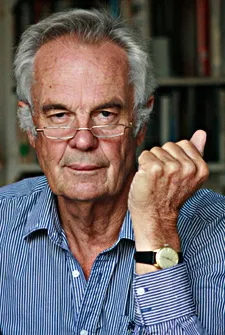

Foreign affairs columnist, film-maker and author

One Response

Related Posts

Johan Galtung 1930-2024October 2015 Published here on October 3, 2026 Let us focus on Civilization for conflict analysis and remedies. Major forms of disorder use violence; war is state organized violence. The most belligerent states are the United States of America and Israel, both with civilization roots. National Evangelism, the US Protestant Christian civilization– more national than evangelical–justifies US warfare as exceptionalism of a people chosen by God, with a manifest destiny to run the world. Orthodox Judaism justifies Israeli warfare to conquer and expand from Nile to Euphrates as a religious right and duty to the Eternal One. The third most belligerent country, the UK, no longer believes it is God-chosen but chosen by the USA; not quite the same but something. But the root cause of global disorder lies in the Occident–with Islam–seeing itself as the single, universal civilization valid for all at all times, all others being...
Jan ObergPhD, director, The Transnational Foundation for Peace and Future Research, TFFLund, Sweden October 2, 2026 This is my full original manuscript. The Chinese Academy of Social Science, CASS, makes two publications out if it. 1. China’s Five-year plan emphasized the capabilities of basic research and original innovation. It is regarded as the goal of the future social development, which, as required, should be significantly enhanced. Can you comment on the importance of original innovation in research and academic study? I believe it is easier to define “original innovation” in the natural sciences than in social sciences. The breaking points of what constitutes something new, or innovative, are not quite as sharp in the latter. But in both fields it is about opening up something that was closed, unseen, unexplored before – making manifest what was earlier latent. Innovations come in many forms and shapes – naming something that was not...
The agreement is catastrophic both because of what it says and what it doesn’t mention. It reduces further the major asset of security policies: Freedom of action. Jan Oberg TFF director September 25, 2026 A couple of hours before the agreement was signed on September 22, 2026, I published the following 13 hypotheses about what it would most likely contain on TFF Substack (in English). I was wrong on only the first point. Contrary to what Trump had written on his Truth Social platform, it does not appear to come into force immediately. In fact, it turned out to be worse than even I had anticipated. After these hypotheses now come a number of reflections in light of what the agreement actually contains, and does not contain, as well as the way in which it has generally been presented by major media outlets and by the public-service broadcaster DR. My...

Recent Articles

Tony Robinson October 4, 2026 Violence is easy to recognise when someone is being beaten, shot or killed. It becomes more difficult when nobody is holding a weapon. Poverty, discrimination, exploitation and repression can restrict a human life just as effectively, although they do so in very different ways and with very different consequences. Simply adding more categories to an ever-growing list of forms of violence does not really solve the problem. The more interesting question is what all these different situations have in common and why it makes sense to describe them using the same word. Human beings do not simply react to what happens around them. They remember the past, imagine things that do not yet exist, make plans and undertake projects. Workers organise because they imagine different working conditions; people migrate because they imagine another life somewhere else; social movements emerge because people refuse to accept the...
It’s a matter of principles, courage, vision and pulling together – while the militarist world is falling apart… Peter Langille October 3, 2026 “Here, then, is the problem which we present to you, stark and dreadful and inescapable: Shall we put an end to the human race; or shall mankind renounce war?”The Bertrand Russell—Albert Einstein Manifesto, July 9, 1955 ⁕ The forecast for what’s ahead is worrisome. The sharp rise in armed conflicts over the past three years is adding to what was already the highest level in over seventy years. Genocides, which should be prevented are supported. A shared climate emergency that jeopardises survival is ignored. Diverse polls now suggest that people are war-weary, worried and interested in a more effective United Nations. And, there are viable policy options for a more secure world! Yet governments are doubling-down, betting on more war and investing heavily. If current trends persist,...
Johan Galtung 1930-2024October 2015 Published here on October 3, 2026 Let us focus on Civilization for conflict analysis and remedies. Major forms of disorder use violence; war is state organized violence. The most belligerent states are the United States of America and Israel, both with civilization roots. National Evangelism, the US Protestant Christian civilization– more national than evangelical–justifies US warfare as exceptionalism of a people chosen by God, with a manifest destiny to run the world. Orthodox Judaism justifies Israeli warfare to conquer and expand from Nile to Euphrates as a religious right and duty to the Eternal One. The third most belligerent country, the UK, no longer believes it is God-chosen but chosen by the USA; not quite the same but something. But the root cause of global disorder lies in the Occident–with Islam–seeing itself as the single, universal civilization valid for all at all times, all others being...

TFF on Substack

Discover and subscribe to more peace materials on TFF Substack

Most Popular

Tony Robinson October 4, 2026 Violence is easy to recognise when someone is being beaten, shot or killed. It becomes more difficult when nobody is holding a weapon. Poverty, discrimination, exploitation and repression can restrict a human life just as effectively, although they do so in very different ways and with very different consequences. Simply adding more categories to an ever-growing list of forms of violence does not really solve the problem. The more interesting question is what all these different situations have in common and why it makes sense to describe them using the same word. Human beings do not simply react to what happens around them. They remember the past, imagine things that do not yet exist, make plans and undertake projects. Workers organise because they imagine different working conditions; people migrate because they imagine another life somewhere else; social movements emerge because people refuse to accept the...
It’s a matter of principles, courage, vision and pulling together – while the militarist world is falling apart… Peter Langille October 3, 2026 “Here, then, is the problem which we present to you, stark and dreadful and inescapable: Shall we put an end to the human race; or shall mankind renounce war?”The Bertrand Russell—Albert Einstein Manifesto, July 9, 1955 ⁕ The forecast for what’s ahead is worrisome. The sharp rise in armed conflicts over the past three years is adding to what was already the highest level in over seventy years. Genocides, which should be prevented are supported. A shared climate emergency that jeopardises survival is ignored. Diverse polls now suggest that people are war-weary, worried and interested in a more effective United Nations. And, there are viable policy options for a more secure world! Yet governments are doubling-down, betting on more war and investing heavily. If current trends persist,...
Johan Galtung 1930-2024October 2015 Published here on October 3, 2026 Let us focus on Civilization for conflict analysis and remedies. Major forms of disorder use violence; war is state organized violence. The most belligerent states are the United States of America and Israel, both with civilization roots. National Evangelism, the US Protestant Christian civilization– more national than evangelical–justifies US warfare as exceptionalism of a people chosen by God, with a manifest destiny to run the world. Orthodox Judaism justifies Israeli warfare to conquer and expand from Nile to Euphrates as a religious right and duty to the Eternal One. The third most belligerent country, the UK, no longer believes it is God-chosen but chosen by the USA; not quite the same but something. But the root cause of global disorder lies in the Occident–with Islam–seeing itself as the single, universal civilization valid for all at all times, all others being...
Read More
Living-Peace-Sign-Budapest-copy
Tony Robinson October 4, 2026 Violence is easy to recognise when someone is being beaten, shot or killed. It becomes more difficult when nobody is holding a weapon. Poverty, discrimination, exploitation and repression can restrict a human life just as effectively, although they do so in very different ways and with very different consequences. Simply adding more categories to an ever-growing list of forms of violence does not really solve the problem. The more interesting question is what all these different situations have in common and why it makes sense to describe them using the same word. Human beings do not simply react to what happens around them. They remember the past, imagine things that do not yet exist, make plans and undertake projects. Workers organise because they imagine different working conditions; people migrate because they imagine another life somewhere else; social movements emerge because people refuse to accept the...
b54a1f10-8c65-4f0b-9dd5-4abc0a7d04cc_2659x2659
It’s a matter of principles, courage, vision and pulling together – while the militarist world is falling apart… Peter Langille October 3, 2026 “Here, then, is the problem which we present to you, stark and dreadful and inescapable: Shall we put an end to the human race; or shall mankind renounce war?”The Bertrand Russell—Albert Einstein Manifesto, July 9, 1955 ⁕ The forecast for what’s ahead is worrisome. The sharp rise in armed conflicts over the past three years is adding to what was already the highest level in over seventy years. Genocides, which should be prevented are supported. A shared climate emergency that jeopardises survival is ignored. Diverse polls now suggest that people are war-weary, worried and interested in a more effective United Nations. And, there are viable policy options for a more secure world! Yet governments are doubling-down, betting on more war and investing heavily. If current trends persist,...
010
Johan Galtung 1930-2024October 2015 Published here on October 3, 2026 Let us focus on Civilization for conflict analysis and remedies. Major forms of disorder use violence; war is state organized violence. The most belligerent states are the United States of America and Israel, both with civilization roots. National Evangelism, the US Protestant Christian civilization– more national than evangelical–justifies US warfare as exceptionalism of a people chosen by God, with a manifest destiny to run the world. Orthodox Judaism justifies Israeli warfare to conquer and expand from Nile to Euphrates as a religious right and duty to the Eternal One. The third most belligerent country, the UK, no longer believes it is God-chosen but chosen by the USA; not quite the same but something. But the root cause of global disorder lies in the Occident–with Islam–seeing itself as the single, universal civilization valid for all at all times, all others being...
Screenshot 2026-10-02 011738
Jan ObergPhD, director, The Transnational Foundation for Peace and Future Research, TFFLund, Sweden October 2, 2026 This is my full original manuscript. The Chinese Academy of Social Science, CASS, makes two publications out if it. 1. China’s Five-year plan emphasized the capabilities of basic research and original innovation. It is regarded as the goal of the future social development, which, as required, should be significantly enhanced. Can you comment on the importance of original innovation in research and academic study? I believe it is easier to define “original innovation” in the natural sciences than in social sciences. The breaking points of what constitutes something new, or innovative, are not quite as sharp in the latter. But in both fields it is about opening up something that was closed, unseen, unexplored before – making manifest what was earlier latent. Innovations come in many forms and shapes – naming something that was not...
arctic-circle-map
The agreement is catastrophic both because of what it says and what it doesn’t mention. It reduces further the major asset of security policies: Freedom of action. Jan Oberg TFF director September 25, 2026 A couple of hours before the agreement was signed on September 22, 2026, I published the following 13 hypotheses about what it would most likely contain on TFF Substack (in English). I was wrong on only the first point. Contrary to what Trump had written on his Truth Social platform, it does not appear to come into force immediately. In fact, it turned out to be worse than even I had anticipated. After these hypotheses now come a number of reflections in light of what the agreement actually contains, and does not contain, as well as the way in which it has generally been presented by major media outlets and by the public-service broadcaster DR. My...
girl-5894831_1280
Below are TFF-related media mentions, comments, videos and social media posts published elsewhere but not on this homepage. We happen to catch and list only a fraction. Regarding video comments and debates, we recommend that you go to the TFF Video Channel on Substack where many of them are reproduced. Jan Oberg is a contributor to China Daily – 52 million daily clicks – and Global Times, CGTN and CCTV (the national television), China Investment, Xinhua News Agency and several others. Articles and videos on these media very often multiply into countless Chinese (and Western media) that re-post them from these main media. Thanks to The China Academy, his analyses, interviews and comments are frequently posted on YouTube channels such as Thinkers Forum and Wave Media. These videos are often re-posted on Bilibili (China’s YouTube), the China Content Center on TikTok, and on the Chinese edition of TikTok, Douyin.com. This means reaching hundreds of millions of viewers worldwide over a year. While there are too many to catch on all these...